COOL SHIRT
COOL SHIRT
Couldn't load pickup availability
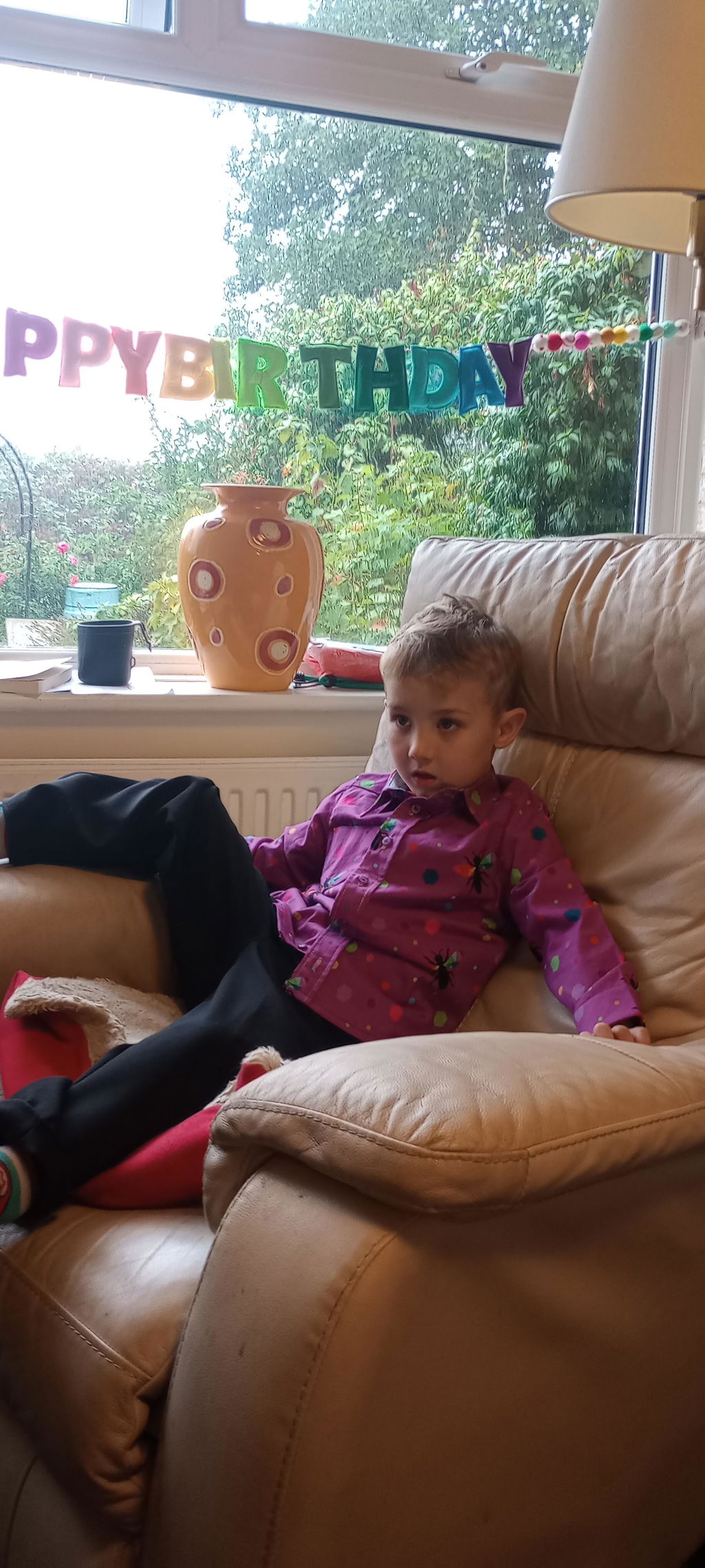
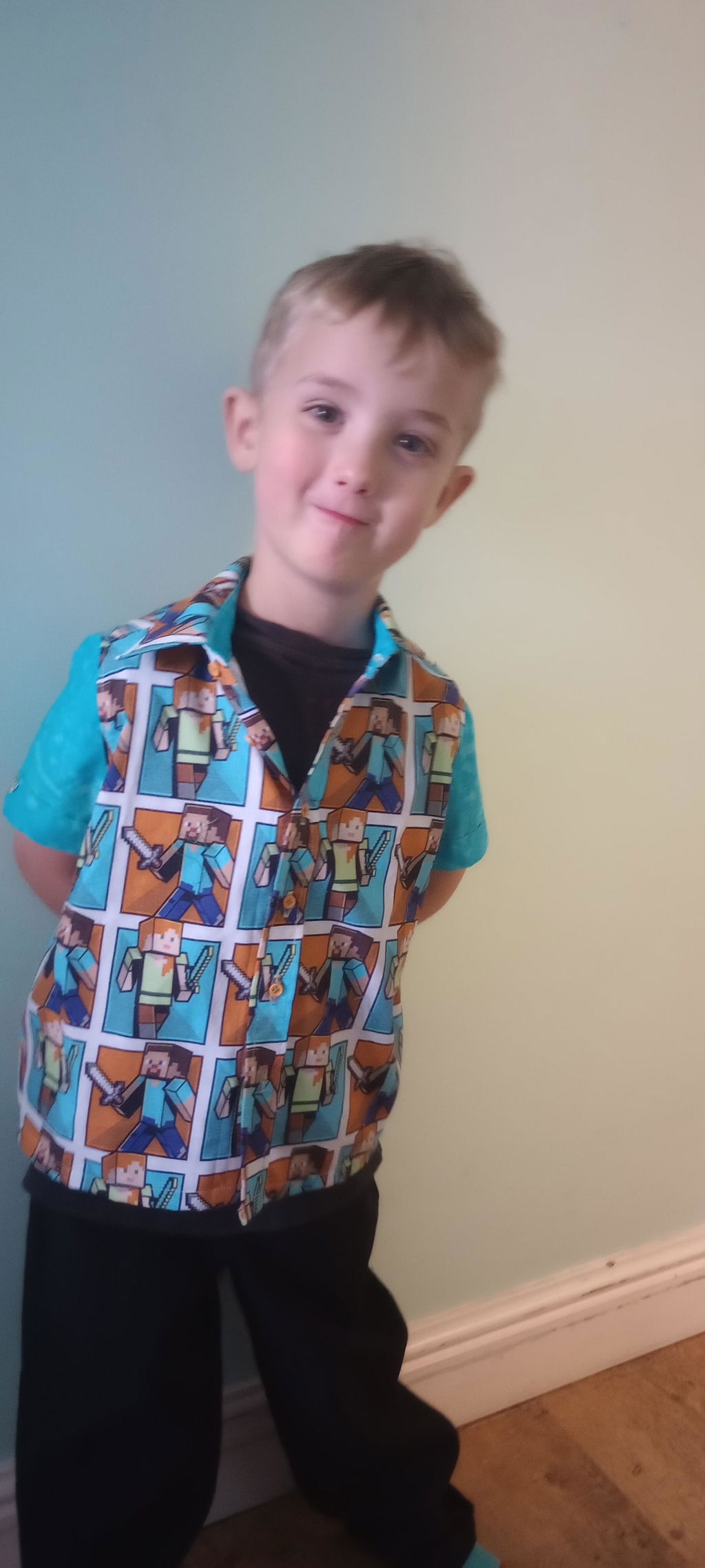
This classic boys shirt sewing pattern loves clean lines and a whisper of vintage charm. Designed as a smart button‑down for little gents, it features a tidy yoke and a crisp stand‑up collar. Choose long sleeves with cuffs for dressy days, or short sleeves rolled up for an easy 50ies style. A curved high–low hem and playful fashion tabs add a modern twist.
Perfect as a school uniform shirt or a relaxed weekend style in linen or checks, this pattern adapts beautifully to any wardrobe. And when you’re ready to sew, Marina’s video tutorials are waiting just below — scroll down and start sewing.
Pattern Download Includes
- Instant Download
- DIN A4 & US Letter Size
- Individual PDF files for every Size
- All Sizes included
- Detailed eBook
- Video Tutorials
Design Options
Design Options
- Short sleeves & 50' turn up
- Long sleeves with cuffs
- Collar with collar stand
- Slim collar shape for pre-teens
- Wider collar for little boys
- Back & front shoulder yoke
- Integrated button down front
- Slim fit for pre-teens
- Boxy fit for younger boys
- Shirt hem with trendy tabs
Fabric Requirements
Fabric Requirements
BEST MATERIAL CHOICE
Lightweight to medium weight fabrics, plain weave cotton, chambray, lighter weight wool, linen.
FABRIC REQUIREMENTS
- Shell Fabric: 24-47 inches (60cm-1,2m)
NOTIONS
- Interfacing: 12 inches (30cm)
- Shirt buttons: 6-10
Available Sizes
Available Sizes
Sizes: 1-14 Years
Please Read
Please Read
- This is a digital pattern or PDF file, not a physical product. It will be delivered electronically via a download link delivered to the email used for the purchase.
- To ensure the pattern prints at its actual size, it's recommended that you use Adobe Acrobat Reader.
- The pattern creator, Frocks & Frolics, welcomes small-scale production using their patterns.
Customers are encouraged to tag Frocks & Frolics when sharing projects made using their patterns on social media.
@frocksandfrolics #frocksandfrolics
Share

STEP-BY-STEP VIDEO TUTORIALS
VIDEO TEXT
Everything you need to know about the Pattern
Transcript for the Video: Cool Shirt - The Pattern
Test Scale and Printing
This is what your pattern looks like once it’s printed. At the top you’ll find a test scale of one inch or five centimeters. Measure this before you start and check that it is exact. Always print at 100% so you don’t end up with pieces that are too big or too small and have to print everything again.
Assembly Plan and Pattern Pieces
Every pattern comes with an assembly plan. It shows all the pattern pieces at a glance and how they fit together. The pieces are always alphabetical and in order, so you can see immediately how to assemble them. I arrange the pieces to minimize waste, especially important with multi‑size patterns.
Color‑Coded Flowers
To help you identify the pieces quickly, the sleeve always has a yellow flower, the front has a white flower, and the back has a pink flower. Cut everything out and then assemble the pieces.
Layout Plans
You also have layout plans for the short sleeve and the long sleeve. These show you exactly how to place the pieces, where the fold is, and where the selvage is.
Cutting and Taping the Pattern
Once everything is cut out, you’ll have lots of pieces. I’ve already put some together: the white flower, the pink flower, and the yellow flower for the sleeves. To assemble, place A onto B, use something weighted like a coffee cup to keep the paper from shifting, make sure the attachment line is covered, and tape the pieces together. Repeat this for all sections. It’s much easier than tracing multiple lines on a big sheet.
Back, Front, and Yoke
For the Cool Shirt you have the back, the front, and the yoke. The yoke attaches to the back and wraps around to the front. Some people notice that the front looks lower than the back when the pieces are laid together. That is correct because the yoke wraps forward, so the shoulder seam sits slightly toward the front.
Back Piece Details
The back has a small pleat. Mark it when cutting, then fold it as shown. Attach the yoke with a one‑centimeter seam allowance. Once sewn, you have the complete back piece. You will also see markings on the sides. These match the markings on the front and on the sleeve.
Sleeve Markings and Ease
When inserting the sleeve, match snip to snip and work your way around. The markings will line up perfectly. I have reduced the sleeve cap ease compared to the previous version, so it is now very easy to sew in. For a men’s shirt I might leave more ease, but for a boy’s shirt this is better.
Front Piece and Integrated Pleat
The front is where people sometimes struggle because of the integrated pleat. Unlike most shirts where you fold the facing in or have a separate facing, this pattern combines both in one clever fold. Fold at the snip, fold one way first, then roll it over and fold the other way. Keep everything perfectly straight. When you fold the facing over, it slips neatly inside the pleat. No raw edges and no extra placket needed.
Professional Placket Method
If you want the industry look, the side underneath gets a simple fold. Fold it at the same distance as the pleated side. Accuracy matters only in the finished width. As long as both sides match, the collar will fit perfectly.
Pocket Options
You have a pocket placement marking. Cut out the window so you can place the finished pocket exactly. There are three pocket styles: a cute rounded pocket, a more grown‑up angled pocket, and a traditional straight pocket. Choose whichever suits your project.
Collar Construction
I always create two full collar pieces, not one on the fold. Some patterns give you a “cut on fold” collar, but it’s easy to get wrong. Two full pieces ensure correct dimensions and a clean, professional collar. I’ve marked where the collar stand attaches. Snip that point for accuracy.
Sleeve Options
This pattern includes a short sleeve with a turn‑up. There is a separate video showing how it works. The turn‑up is high and gives a cute 50s style roll‑up sleeve. For the short sleeve, cut along the short‑sleeve line. For the long sleeve, cut along the long‑sleeve line. Mark the front so you don’t insert the sleeve backwards. The front is always cut away more because arms move forward.
Placket for the Long Sleeve
For the long sleeve you have a placket with two pieces. You can add a bit of interfacing if you want, but it’s usually thick enough without it. Industry uses very lightweight interfacing. Fold the sides over as shown in the video to get a professional‑looking placket.
Interfacing Template and Cuff
You also have a small template for the iron‑on interfacing and of course the cuff pieces. And that’s everything. You’re ready to go.
Sewing the Front Placket of the Shirt
Transcript for the video: Cool Shirt - The Front Placket
This video is part of the Cool Shirt series, and it uses the Cool Shirt pattern available from Frocks and Frolics. Links are available in the video description.
In this section, we are focusing on creating the perfect pleat in the placket, which gives the shirt its structured and professional finish.
Preparing the Interfacing and Markings
First, place interfacing between the two marked lines on the fabric. These markings are also repeated at the lower end, and this is where the interfacing strip must sit.
Use an air-erasable textile marker to mark the pleat lines. Avoid permanent pens, as these marks should disappear after construction.
Once marked, press the pleat line firmly at the ironing board to set the shape.
Forming the Pleat
Next, mark the pleat extension points by measuring equal distances from the original markings at both the top and bottom. Connect these points to create an accurate fold line.
Return to the ironing board and press the fabric along these lines. This forms a clean, structured pleat.
The pleat will later catch and hold the facing when topstitched.
Industry Method for Placket Construction
In professional garment construction, especially menswear, one side of the placket is often kept plain.
This simplifies button placement and improves accuracy.
To replicate this:
- Place one side on top of the other
- Match both sides evenly
- Press the plain side to match the pleated side width
This ensures both sides remain symmetrical in finished appearance.
Finishing the Placket Edges
Turn in the seam allowance by approximately 1 cm or slightly less, depending on preference.
Pin the folded edge securely in place before stitching.
Accuracy here is flexible, as this section is not highly visible once finished.
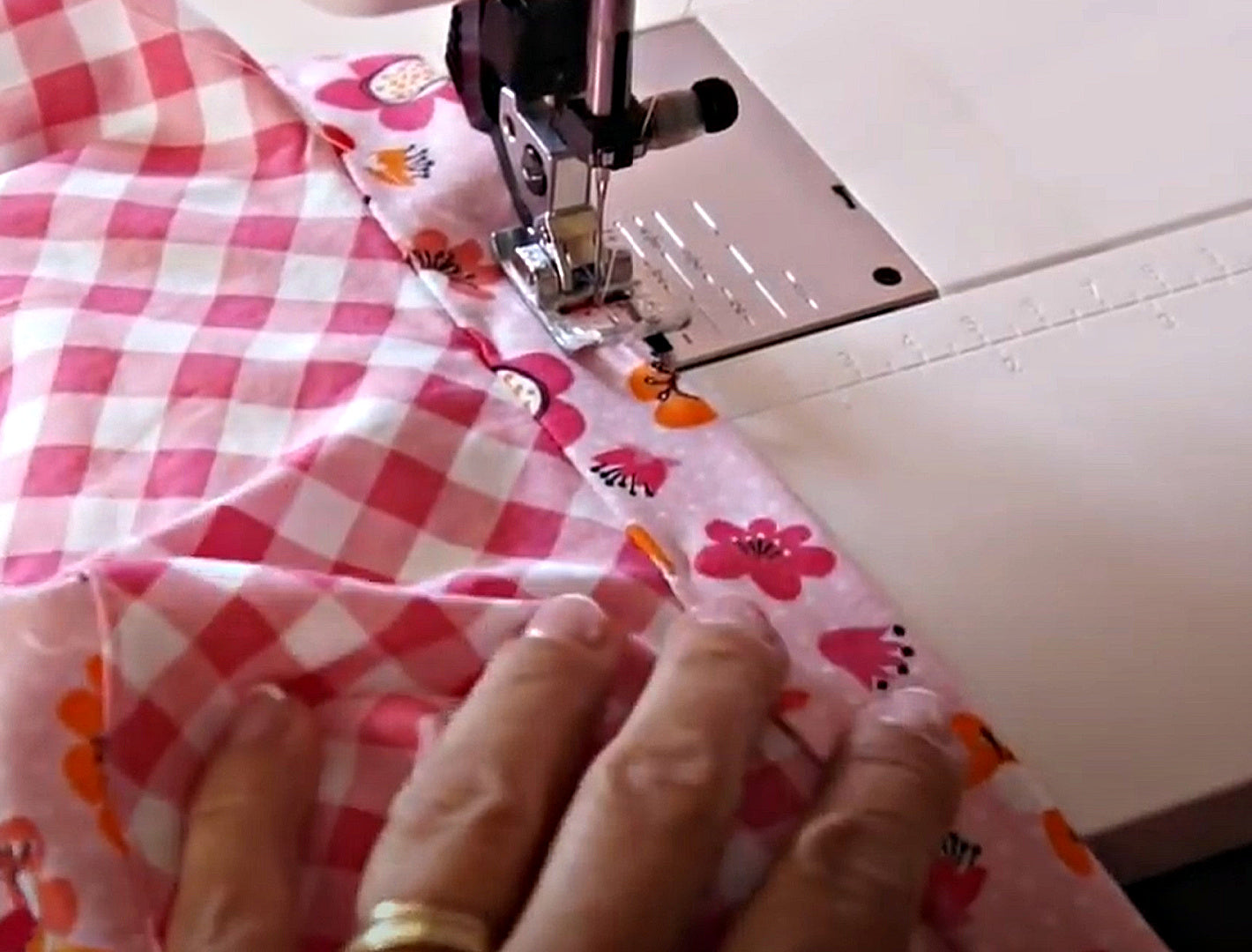
Top Stitching the Placket
Now begin top stitching:
- On the pleated side, sew multiple parallel stitching lines (typically 3 to 4 rows)
- On the plain side, sew a single topstitch line
Use a consistent guide point on your presser foot to maintain even stitching.
Creating the Structured Placket Finish
Start by sewing one clean line down the placket using your presser foot as a guide. A stitch length of around 3 to 3.5 mm is recommended for a professional finish.
Then add a second stitching line approximately 3–5 mm away from the first. This secures the facing and prevents shifting.
Repeat the same process on the opposite side.
Buttonhole Placement
The buttonhole is placed in the center of the stitched placket area.
This completes the structured placket construction and ensures proper alignment for button placement.
Final Notes on the Cool Shirt Series
This technique is part of the Cool Shirt series, where each week introduces a new construction method.
You can follow the full series at frocksandfrolics.com, where all lessons are available.
Thank you for watching, and see you in the next Cool Shirt video.
Attaching a Yoke to a Shirt or Blouse
Transcript for the video: Cool Shirt - Short Sleeves Yoke
In this video, I’m going to show you how to attach a yoke to a shirt or blouse using the burrito method.
I am cutting my yoke into pieces and choosing white fabric so that the pattern does not show through. On most shirts, regardless of the pattern you are using, you will find pleats included. These allow extra movement for the wearer.
You can also widen these pleats if needed. This is especially useful for shirts, as it gives more comfort across the back. For a broader back, you can increase the pleat allowance for additional ease.
Attaching the Upper Yoke and Lining
First, place the upper yoke onto the back. The right sides should face each other, and you should pin it in place.
Next, take the lining (in my case, white fabric so it does not show through) and place it so that both yoke pieces are positioned right sides together with the back sandwiched in between.
This means:
- The lining sits on the wrong side of the back
- The yoke fabric sits on the right side of the back
Think of it as a simple sandwich structure. Do not overthink it. Pin edge to edge all the way along.
Now sew along the edge using a 1 cm seam allowance. This is a very simple method that ensures all seams are enclosed neatly on the inside.
After sewing, press the seam with the back opened out. Then flip the yoke over and press again. Check both sides carefully to ensure the seam is lying flat. If anything is uneven, press again until it sits correctly.
Introducing the Burrito Method
Now we move to the burrito method, which creates a clean enclosed finish.
Start by attaching the front pieces to the yoke. Pin only the outer fabric to the yoke, leaving the lining free.
Next, roll the entire garment upward until the lining becomes visible. This is the “burrito” part of the method.
Once rolled, bring the lining over and pin it to the corresponding edge. If you are experienced, you can skip pinning, but for beginners it is recommended.
Sewing the Yoke Sandwich
Now sew across the edge using a 1 cm seam allowance.
This method ensures that all seams are enclosed inside the garment, giving a very clean professional finish.
After sewing, carefully pull the garment right side out from the burrito roll. Everything should now be neatly enclosed with no raw seams visible.
Pressing and Preparing for Topstitching
Press the yoke area thoroughly again to ensure everything lies flat. Use one hand to gently guide and slightly pull the fabric while pressing to avoid unwanted pleats or puckering.
Check both sides to make sure the seam is smooth and even before continuing.
Topstitching the Yoke
Now topstitch the yoke.
Use a longer stitch length of 3 to 3.5 so the stitching does not look too heavy or homemade.
In this example, only one line of topstitching is used. You can guide your stitching using the presser foot edge if desired, especially for boys’ shirts. For a more decorative or softer look, you can keep it slightly away from the edge, as shown here.
Final Notes
That is the burrito method complete. It creates a clean, enclosed yoke with very little visible stitching on the inside.
If you want to see the full course, you can visit the frocksandrolics.com, where you can access the full series and purchase the pattern.
In this series, I also show you variations like the grandad collar and other shirt-making techniques, so there is plenty more to learn.
Thank you for watching, and I’ll see you next week for the next part of the shirt.
Sewing the Patch Pockets
Transcript for the video: Cool Shirt - Sewing the Patch Pockets
Hi, this is Marina from frocksandfrolics.com and I’ve got a special little pocket for you. It’s part of the Cool Shirt series. You can watch the whole series on academy.frocksandfrolics.com, where you also get your pattern, or you can watch it right here on YouTube. Every week we release another video, so let’s get started with our pockets.
Preparing the Pocket
Place your outer fabric or shell fabric on top of the lining with the right sides facing each other. That means you see the underside of the fabric while you’re working. When we’re done, we’ll turn it right side out and get this super cute little pocket.
Sew all the way around and leave a turning gap. Make sure the turning gap is on a straight section, not on a curve, because turning on a curve is much harder. Sew with a one‑centimeter seam allowance — all my patterns use one centimeter.
Sewing Around the Pocket
When you reach a corner, make sure the needle is down before you pivot. This is especially important at the tip. If you’re unsure where the tip is, mark it with a little dot before you start so you know exactly where to turn.
Sew all the way around, lifting the presser foot as needed to keep the curve smooth. Lock your stitches at the end.
Trimming and Turning
Trim back the seam allowance a little, but do not trim the area where the turning gap is. Leaving that seam allowance intact makes it easier to close later when we topstitch.
Turn the pocket right side out. Always push out the furthest point first — that makes turning any shape easier. Work out the corners nicely and give the pocket a really good press.
If a little bit of fabric is stuck inside a corner, use a pin to tease it out so everything is crisp and sharp.
Pressing the Top Edge
Turn over the upper edge of the pocket. The exact height is up to you — a little lower or a little higher depending on how tall you want the pocket to be.
When you make the second pocket, place the finished pocket on top of the new one and fold the upper edge to match. That way both pockets will be exactly the same height. Press well.
Topstitching the Pocket Edge
Topstitch the upper edge from the underside, because that’s the side that rolls to the outside. Only topstitch that area, nowhere else.
Start slightly before the edge so you don’t get a visible starting point. You can use a triple stitch, which goes forward, backward, forward and looks like embroidery thread. It’s thicker and works well with jeans thread or embroidery thread. If you use embroidery thread, increasing the tension to around eight helps avoid loops.
What Happens Next
In another chapter you’ll see how we attach the pocket to the shirt. For now, we’re just preparing the pocket itself.
This is part of the Cool Shirt series, and every week you get another video. If you want to watch the whole series, catch up, or binge‑watch everything from start to finish, you can sign up at academy.frocksandfrolics.com — the link is in the description. It’s all free, just like on YouTube.
If you’ve already purchased the pattern and want to be included in the course so you can comment and ask questions, send me a message inside the Academy. I’ll add you to the course and you can join the conversation.
Thank you very much for watching, and see you in the next Cool Shirt video.
Sewing the Patch Pocket to the Front
Transcript for the video: Cool Shirt - Sewing the Patch Pocket to the Front
Positioning the Pocket
Now I’m going to show you how to attach the patch pocket to the front.
Take your pattern piece and cut out the area where your pocket will sit. Then place the pocket into position, lining it up with the edges. Pin it in place while the pattern is still on. Once it is securely pinned, remove the paper pattern and voilà, the pocket is now in exactly the right position.
Positioning the Second Pocket
Now repeat the same process on the other side. Place the second pocket on top, then position the other front piece over it as well. This is the simplest way to do it because it ensures everything ends up exactly in the right position.
One pocket is positioned using the pattern piece, and the second is simply matched by placing it on top of the first pocket.
At this point, you can quickly measure and double-check the placement if you want to, but 99% of the time it will already be correct.
Top Stitching the Pocket
Now we are going to top stitch along the edge and secure the corners so the pockets don’t lift up. You can also add buttons if you want them to look extra decorative and really cool.
I’m sewing from the crease that we created, all the way around.
When sewing around curves, make sure you use a guide point on your presser foot. A clear plastic presser foot is ideal because you can see exactly where you are lining up. Use that point to follow the pocket edge and carefully guide your way around the curve.
Then stitch just over the edge to secure everything in place so nothing lifts or shifts.
And that’s it, the pocket is done. We can now move on to the next step.
See you in the next video.
Sewing a Granddad Collar
Transcript for the video: Cool Shirt - Grandad Collar Hack
Hi, this is Marina from Frocks and Frolics, and I’m going to show you how to sew a granddad collar.
We are using my Cool Shirt pattern for this, and I am working with a contrast fabric for the collar stand and the shell fabric for the main shirt.
The important thing when attaching the collar stand is to leave an overlap of 1 cm on either side. This is a fairly industrial method of attaching a collar. Instead of constructing the collar stand first and then attaching it, you attach it directly to the garment, which creates a much cleaner finish.
I start by pinning at the center back. Then I align the overlap at the center front and continue pinning all the way across.
If you want to see the full construction of this shirt, you can find all the videos at academy.frocksandfrolics.com, where the complete series is already available.
Sewing the Collar Stand
Next, sew the collar stand in place. You can see the 1 cm overlap here, and I’ve already sewn one side.
Now press the seam so that the seam allowance faces into the collar. I’ve made quite a few videos for this shirt pattern, including earlier versions with long sleeves, cuffs, and a gentleman’s placket. These demonstrate different construction methods, so feel free to explore them on the academy.
Now I attach the contrast collar stand, placing it over the top. The seam allowance is now facing downward and will be tucked in later.
Before sewing, it is important to adjust the shape. On larger sizes the collar is already slightly slimmer, but for smaller sizes it needs to be narrower for a better fit. I reduce the seam allowance to about 1.5 cm and slightly soften the front curve.
Make sure both sides match exactly. You can measure or create a separate template if needed.
Now sew along the marked line. Use a smaller stitch length around the curves, then lengthen it again on straighter sections. Lock in your stitches when finished.
Trimming and Pressing
Now trim the seam allowance back to about 3 mm, but leave extra at the lower end so it can be tucked in later. Do not cut too much away in that area, as it helps with finishing.
Turn the seam allowance inward so it wraps neatly over the cut edge. If needed, trim a little more so everything lies flat.
Press thoroughly with lots of steam. This step is important as it helps the seam sit neatly and makes pinning much easier.
Tucking and Finishing the Edge
Start at the centre back and work toward the front, then fill in the middle sections. Make sure the folded edge just covers the stitching line so it will be caught when topstitched.
If you prefer, you can slip stitch this instead of topstitching, especially if your machine does not feed smoothly.
Pin carefully as you go. If anything shifts, adjust before sewing.
Topstitching the Collar Stand
Now topstitch around the collar stand. Do not start at the centre front; begin at the back instead.
Lock in your stitches and use a consistent guide point on your presser foot to keep an even seam.
Go slowly and lift the presser foot with the needle down when turning corners. Keep the fabric firmly supported so the seam allowance does not shift.
Continue around carefully, adjusting as needed. If pins are removed too early, the fabric may shift, so work with control and precision.
If your machine tends to create small loops underneath, take extra care to hold the fabric steady and consider tacking first if needed.
Once you reach the end, lock in your stitches.
Final Step
You have now completed a beautiful granddad collar. Give it a final press and admire your work before moving on to the next step.
If you want the full series, you can find it at frocksandfrolics.com, where all videos are available and free to watch, along with the pattern and community access.
Thank you for watching.
Introduction to Sleeve Insertion
Transcript for the video: Cool Shirt - Inserting the Sleeve (Short Sleeve)
Hi, this is Marina from Frocks and Frolics, and I’m going to show you how to insert the sleeve into the Cool Shirt. This is part of the full shirt series.
For most sleeves, you will have markings for the front and back. I always make the front marking more obvious so you can’t get it wrong. Make sure you match the sleeve front to the shirt front, then pin it all the way around.
Using Notches for Accurate Construction
This pattern includes markings at every point of the sleeve. If you have snipped your sleeve and armhole correctly, you can even sew it without pins.
I’m going to demonstrate that method now. We start on one side, placing just one pin, and then go straight to the sewing machine.
Clear notches make this process much easier. Not all patterns include this level of detail, usually only the shoulder, front, and back notches. In this pattern, extra markings are added for precision.
Sewing the Sleeve
We begin sewing from one side and continue around the armhole, following the notches carefully.
This allows the sleeve to be set in smoothly and accurately without needing constant pinning.
Finishing the Seam
Once sewn, I overlock the seam to finish it neatly, then press everything toward the sleeve. This is the best way to set the sleeve in place.
You can optionally topstitch afterwards if you prefer a more structured finish.
Pressing for a Clean Finish
I press the sleeve from the right side of the fabric so you can see how neatly it sits.
The seam allowance should always be directed correctly; otherwise, it will not lie as cleanly and may look bulky.
Final Notes and Course Access
Every week you get another video in the Cool Shirt series, so there will be more next week.
If you want to watch the full series or binge-watch the entire process, you can at frocksandfrolics.com. All content is free to watch.
Thank you for watching, and see you in the next video.
How to sew a 50ies style turn up of a short sleeve
Transcript for the video: Cool Shirt - Short Sleeves Sleeve Turn Up
Hi, this is Marina from Frocks & Frolics, and I'm going to show you how to sew a shirt hem and close the side seams of the Cool Shirt. It's very simple. We are just putting the sleeve and the side seam on top of each other. We are putting a vertical pin on the underarm seam so that it can't go anywhere, but that's basically all you have to pin.
Pinning and Preparation
Because we want to do this really nicely, we're also going to put a little pin in the sleeve and then a couple of pins, one at the hem and one in the center, and then we're ready to go to the sewing machine and just simply sew this with a 1 cm seam allowance from the hem all the way up to the sleeve. You need to line up the edges with each other.
Sewing the Seam
Don't forget to take your pins out. I tend to take the pin out as I get close to the presser foot in this case, and you can sew straight over that vertical pin. It shouldn't break your needle, but you can take it out if you like. Then the seam is ironed towards the back, and at the sleeve bit it's a little bit harder. So if you don't have a sleeve ironing board, just force it apart with your hands.
Preparing and Attaching the Tabs
Then we're going to take the tabs. The tabs were ironed in from all sides apart from where we're going to sew it to at the bottom, and we're going to put the tab on so that it sits inside this hem. That means that we need to have it about 5 to 6 mm above the edge of the hem so that the first turn-in doesn't catch it because it's going to be a bit thick. I'm also going to snip off the tab a little bit so that it sits nicely and can't slip out and follows the same line as your hem.
You can also cut back the seam allowance a bit. The narrow rolled edge hem is difficult when you have too much fabric. So I'm just turning this in about 5 mm and 5 mm again, as small as you can really get, and I pin that.
Sewing the Hem
Then it will just roll to the outside and then we will top stitch it all the way around. We are turning in the front as well. I tend to do all the straight bits or the difficult bits first and then I turn in the curves.
We start at a thick point here, so you want to maybe leave some long threads hanging and pull those from the back so that's easier to do. Then we're stitching fairly close to the edge with a stitch length of maybe 3. You can go a little bit smaller, but it tends to look more homemade if you do that. The stitch also shouldn't be too long so that none of it can slip out in between stitch lengths.
You can use your finger or fingernail to smooth in the seam allowance as you go. Some people might also ask why not use a narrow rolled edge hemmer foot. One reason is that when you have differing thickness, the hemming foot is difficult, and also the beginning is difficult. Hemmer feet are only really good when you've got a very long length that you need to hem.
If you slip off slightly, just go backwards and start again. No need to cut your threads off and start again. Nobody is going to even see it.
Final Points
We're working all the way around to the other side. Don't forget to lock in your stitches. Then you're rolling that tab to the outside and top stitching it all the way around, just close to the edge, and then we're just going to press the hem and that's a super duper shirt hem. We're almost done with our shirt now.
And every week you get another video for the Cool Shirt, so there will be another one next week.
How sew the Placket & Cuff and insert the Sleeve into the Armhole
Transcript for the Video: Cool Shirt – Sleeve Placket , Cuff and Insertion
Now we are moving on to the sleeve, which is a part many people have been waiting for. It may look complicated at first, but the technique is actually very logical and not something to be afraid of.
With a good pattern and careful pressing, this step works really well.
Preparing the Sleeve Placket
For the sleeve placket, there is one long pattern piece that first needs to be cut in half.
After that, the edges are pressed in – at the top and along both sides. We are working with about 7 millimetres here, but anything between 5 millimetres and 1 centimetre is generally fine.
The exact width is not critical as long as it is neat and even.
Preparing the Cuff
For the cuff, trim the pattern back to the dotted line so the edge can fold over neatly.
Accuracy is important here because the cuff width needs to be exact. It is best to use the pattern piece as a guide rather than estimating.
The narrower strip has a little more flexibility, but the cuff itself should be prepared precisely.
Pressing and Shaping
Once the edges are pressed, place the pieces together and press them sharply.
The top edge can be straight, slightly angled, or at a 90-degree angle. That is simply a matter of preference.
The most important thing is that the edges are crisp and well pressed, using plenty of heat and steam.
Attaching the Sleeve Placket
The narrow strip is placed underneath the shorter side of the sleeve slit, with the folded edge in place.
Everything is pinned, and the other side is folded over the top edge.
The placket is then topstitched securely, often using a triple stitch for extra durability.
Completing the Upper Placket Side
The other side is attached next.
The top edge does not need to be folded here because it will later be covered by the cuff, and folding it would only create unnecessary bulk.
This is also where you can see why the narrow strip really does need to stay narrow – when topstitching later, you do not want to accidentally catch the fabric underneath.
Topstitching and Finishing the Slit
The stitching is sewn along the edges, and at the top of the slit a small diagonal reinforcement is sewn across.
It is important to work slowly, keep the fabric layers flat, and always turn with the needle down.
This helps the placket lie flat and look neat.
Checking the Finished Placket
If everything has been done correctly, the placket should look clean on the outside, and all the raw edges should be enclosed on the inside.
With a good pattern, this technique is actually much easier than it first appears.
Preparing the Sleeve Head
Now the sleeve is prepared.
A basting stitch is sewn around the top curve of the sleeve using the longest stitch length – not to gather it, but to help shape the sleeve cap.
Then the bobbin thread is gently pulled so the sleeve cap can ease into the armhole more smoothly.
Sleeve Markings
There are markings on the sleeve that match the markings on the armhole.
These notches help ensure the front and back are aligned correctly.
As you gain experience, you may find that you only need the notches rather than pinning everything in place.
Setting in the Sleeve
The sleeve is pinned carefully from notch to notch.
This step takes patience, especially with shaped sleeves, because they are designed to fit properly rather than simply hanging straight.
Work slowly and make sure the fabric lies flat.
Sewing the Sleeve
When sewing the sleeve in, work in small sections.
With the needle down, adjust the fabric as you go to prevent puckers or excess fabric from being caught.
The shoulder area especially needs careful attention so nothing is pulled past the seam line.
Finishing and Pressing
Once the sleeve is sewn in, the seam allowance is finished – either with an overlocker or another finishing stitch.
If needed, trim away a little excess fabric first.
Then press the seam allowance toward the shirt body.
This gives a professional finish and follows classic shirt-making construction.
Topstitching the Sleeve
The sleeve seam can then be topstitched.
Some people stitch into the sleeve, others prefer stitching toward the shirt. Here, the seam allowance is pressed toward the shirt and topstitched.
This usually gives the cleanest result.
Closing the Sleeve
Now the sleeve is sewn closed along its length.
Pin from the cuff edge up to the underarm and sew with a 1 centimetre seam allowance.
Then finish the seam and trim if necessary.
Press the seam allowance toward the back and topstitch up to the underarm.
Attaching the Cuff
Now the cuff is attached to the sleeve.
The advantage here is that any slight difference in width can be adjusted through the pleat.
If the placket ended up a little wider or narrower, this is where it can be corrected.
The cuff is pinned all the way around, with extra pins at pleats and seam points.
Sewing the Outer Cuff
First, sew the outer side of the cuff in place.
This is done from the inside because it is much easier.
As you sew, rotate the sleeve gradually under the machine.
Finishing the Inner Cuff
Next, fold the inner cuff side over the seam.
Just like with the collar, position the inner layer so the original seam line is just barely covered.
Everything should be pressed very carefully beforehand.
Final Topstitching
Now the cuff is topstitched all the way around.
It helps to keep the shirt fabric facing upward so you can clearly see the visible edge.
Work slowly, remove pins as you go, and keep the stitching even.
Conclusion
The cuff is now finished.
This step is not difficult – it is simply made up of several smaller steps that need to be done neatly and carefully.
Most importantly, keep pressing as you work. A professional result comes not only from the sewing machine, but just as much from the ironing board.
How to close the Side Seams and finish the Hem
Transcript for the video: Cool Shirt - Short Sleeves Side Seams & Hem
Hi, this is Marina from Frocks and Frolics, and I'm going to show you how to sew a shirt hem and close the side seams of the Cool Shirt. It's very simple. We are just putting the sleeve and the side seam on top of each other. We are putting a vertical pin on the underarm seam so that it can't go anywhere, but that's basically all you have to pin.
Pinning and Preparation
Because we want to do this really nicely, we're also going to put a little pin in the sleeve and then a couple of pins, one at the hem and one in the center, and then we're ready to go to the sewing machine and just simply sew this with a 1 cm seam allowance from the hem all the way up to the sleeve. You need to line up the edges with each other.
Sewing the Seam
Don't forget to take your pins out. I tend to take the pin out as I get close to the presser foot in this case, and you can sew straight over that vertical pin. It shouldn't break your needle, but you can take it out if you like. Then the seam is ironed towards the back, and at the sleeve bit it's a little bit harder. So if you don't have a sleeve ironing board, just force it apart with your hands.
Preparing and Attaching the Tabs
Then we're going to take the tabs. The tabs were ironed in from all sides apart from where we're going to sew it to at the bottom, and we're going to put the tab on so that it sits inside this hem. That means that we need to have it about 5 to 6 mm above the edge of the hem so that the first turn-in doesn't catch it because it's going to be a bit thick. I'm also going to snip off the tab a little bit so that it sits nicely and can't slip out and follows the same line as your hem.
You can also cut back the seam allowance a bit. The narrow rolled edge hem is difficult when you have too much fabric. So I'm just turning this in about 5 mm and 5 mm again, as small as you can really get, and I pin that.
Sewing the Hem
Then it will just roll to the outside and then we will top stitch it all the way around. We are turning in the front as well. I tend to do all the straight bits or the difficult bits first and then I turn in the curves.
We start at a thick point here, so you want to maybe leave some long threads hanging and pull those from the back so that's easier to do. Then we're stitching fairly close to the edge with a stitch length of maybe 3. You can go a little bit smaller, but it tends to look more homemade if you do that. The stitch also shouldn't be too long so that none of it can slip out in between stitch lengths.
You can use your finger or fingernail to smooth in the seam allowance as you go. Some people might also ask why not use a narrow rolled edge hemmer foot. One reason is that when you have differing thickness, the hemmer foot is difficult, and also the beginning is difficult. Hemmer feet are only really good when you've got a very long length that you need to hem.
If you slip off slightly, just go backwards and start again. No need to cut your threads off and start again. Nobody is going to even see it.
We're working all the way around to the other side. Don't forget to lock in your stitches. Then you're rolling that tab to the outside and top stitching it all the way around, just close to the edge, and then we're just going to press the hem and that's a super duper shirt hem. We're almost done with our shirt now.
And every week you get another video for the Cool Shirt, so there will be another one next week.
How to insert Buttonholes
Transcript for the video: Cool Shirt - The Buttonholes
Jetzt bringe ich die Knopflöcher an. Viele haben davor ein bisschen Angst – und ehrlich gesagt, zurecht, denn manche Maschinen machen sie nicht besonders gut. Aber mit ein paar Tricks klappt es wunderbar. Ich zeige euch hier, wie ich das auf meiner elektronischen Maschine mache.
Zuerst markiere ich mir 1 cm vom oberen Rand, damit ich weiß, wo die Knopflöcher sitzen sollen. Ihr müsst meine Markierungen nicht übernehmen – setzt eure Knöpfe so, wie es euch gefällt. Wichtig ist nur, dass der oberste Knopf 2,5 bis maximal 3 cm vom oberen Rand entfernt sitzt.
Dann stecke ich eine Stecknadel an das Ende des Knopflochs, weil elektronische Maschinen rückwärts nähen. Bei mechanischen Maschinen markiert man dagegen den Anfang.
Mittellinie bestimmen
Ich messe den Abstand zwischen meinen beiden Steppnähten – bei mir sind das 2,5 cm – und teile ihn durch zwei. So finde ich die optische Mitte. Auch wenn die Steppnaht mal nicht perfekt sitzt, sollte das Knopfloch immer genau in der Mitte zwischen den Nähten liegen.
Ich markiere alles mit einem Bleistift. Keine Kreide, die ist zu ungenau, und keine radierbaren Stifte, die manchmal Flecken hinterlassen. Ein normaler Bleistift wäscht sich problemlos aus.
Der oberste Punkt muss 2 mm versetzt sein, damit er genau über dem Knopfloch der Knopfleiste sitzt.
Knopflochfuß einstellen
Jetzt kommt der Knopf in den Knopflochfuß. Viele Maschinen machen das Knopfloch viel zu groß – also unbedingt vorher auf einem Reststück testen.
Bei meiner Pfaff liebe ich die Knopflöcher – sie werden jedes Mal perfekt. Ich setze die Nadel genau auf meinen Punkt und achte darauf, dass der Knopflochfuß parallel zur Steppnaht liegt.
Sensor-Trick bei elektronischen Maschinen
Der Sensor an der Seite ist empfindlich. Wenn man ihn berührt, „schaltet er sich ab“ und das Knopfloch wird nur halb genäht. Wenn ich mir nicht sicher bin, ob ich ihn berührt habe, schalte ich die Maschine kurz aus und wieder ein. Das erspart mir das Auftrennen.
Ich lasse die Maschine arbeiten und halte den Stoff gut fest, damit nichts verrutscht. Besonders beim obersten Knopfloch muss ich den Stoff richtig nach unten drücken, damit der Kragen nicht an den Sensor kommt.
Knopflöcher an der Manschette
Bei der Manschette beginne ich von hinten nach vorne. Ich messe 1,5 cm vom Rand, lege ein fertiges Knopfloch zum Vergleich auf und markiere die Länge.
Auf einer Seite muss der Stoff links liegen – da halte ich ihn besonders gut fest, damit der Sensor nicht auslöst. Auf der anderen Seite ist es einfacher.
Wenn alle Knopflöcher fertig sind, kann ich aufatmen.
Knopflöcher öffnen
Zum Öffnen nutze ich zuerst den Nahttrenner, um einen kleinen Anfang zu machen. Dann schneide ich mit der Schere bis in die Ecken. Das ist für mich die sauberste Methode.
Knöpfe annähen
Beim Annähen des Knopfes an der Manschette steche ich genau in die Ecke ein. Und jetzt kommt mein wichtigster Tipp:
Ich lege meinen Daumennagel unter den Knopf, während ich ihn annähe. So entsteht automatisch ein kleiner Abstand. Wenn der Knopf zu fest angenäht ist, lässt er sich schlecht schließen und sieht unschön aus.
Wenn ihr keinen Nagel habt – nehmt einfach den ganzen Daumen. Ihr braucht dafür wirklich keine teuren Gadgets.
Ich nähe immer mit doppeltem Faden, mache einen Knoten und weiter geht’s.
Knöpfe am Vorderteil
Hier setze ich den Knopf nicht ganz oben in die Ecke, sondern 2–3 mm tiefer. Sonst wird es zu eng und die Knopfleiste zieht.
Außerdem setze ich den Knopf leicht nach links versetzt, damit die Untertritt‑Knopfleiste nicht hervorblitzt. In der Industrie löst man das oft, indem die linke Seite gar keine richtige Knopfleiste hat, sondern nur eingeschlagen wird. Das könnt ihr natürlich auch machen.
Ich persönlich mag es aber, wenn beide Seiten eine richtige Knopfleiste haben – das sieht hochwertig aus, besonders wenn man sie öffnet.
Letzter Knopf und Abschluss
Der oberste Knopf kommt wieder genau in die Ecke. Dann nähe ich alle weiteren Knöpfe an – und fertig ist das Hemd.
Ihr könnt natürlich auch Knöpfe auf die Tabs setzen.
Attaching Metal Snap Buttons
Transcript for the video: Cool Shirt - Attaching Metal Snap Buttons
Welcome everyone. Here I want to introduce you to my new snap setter tool from Snap Source, and it works a treat. It is really easy to use and works with three parts, which I think is brilliant.
We begin by attaching the top part of the snap button.
Marking Button Placement
Start with your pattern and locate the center of the button placement on the placket. Mark this position clearly on the fabric.
I usually mark all the button positions down the placket using small dots. You can measure them if you prefer, but consistency is key.
The top button is especially important and must align perfectly with all the others down the placket.
You can also decide the spacing for the sleeve cuff button and transfer the same marking to the other side.
Preparing the Snap Fasteners
Now we are ready to attach the snaps.
Each snap has a sharp side with small teeth that need to go through the fabric.
Place the snap through the marked point, then insert it into the lower part of the tool. The middle part goes on top to hold everything in place.
Make sure the teeth are visible through the fabric before continuing.
Finally, place the top part of the tool on. This part is usually easy to identify.
Then hammer it firmly into place.
It is very satisfying when you see how securely it locks in. I have had issues before with other tools where snaps were damaged and did not close properly, but this system works really well.
Attaching Snaps Down the Placket
Continue this process down the entire placket:
- Position at each marked dot
- Push the snap through the fabric
- Secure with the tool
- Hammer into place
Take your time to ensure accuracy at each point.
Marking the Matching Snap Side
Now we need to mark the opposite side of the snaps.
One method is to secure the fabric with a pin at the bottom to prevent shifting. Then use a fabric pen to mark directly where each snap lands.
You can also press the snap into place lightly to create an impression and mark it that way.
Repeat this for each position so you get accurate alignment.
Installing the Receiving Snap Parts
Next, we attach the receiving side of the snaps.
Place a pin through the fabric to find the exact center point. Then position the ring underneath the marked area.
Push the teeth through the fabric so they catch properly.
If needed, you can press them down slightly to help them through.
Securing the Snap Closure
Now assemble the second half:
- Place the lower part into the tool base
- Position the ring correctly in the center
- Add the top piece
- Ensure correct orientation of the rim side
The correct side has a thicker rim facing outward.
Then hammer it into place until secure.
Alternative Method on Cuff Area
There is also an easier method for cuffs.
You can press the snap position first, then use that indentation as your guide. Place the ring directly over the mark and continue assembly as before.
This method is slightly easier and more intuitive.
Final Tips and Placement Advice
It is better to install snaps before attaching sleeves, as it becomes more difficult once the garment is fully assembled.
Both methods work, but the cuff method is usually quicker.
Finished Shirt Overview
I think these snaps give the shirt a more structured, jacket-like look, which works especially well for boys.
Here we have the shirt modelled by children in different sizes, showing that the fit is quite generous and will last longer as they grow.
Thank you very much for watching.
All-in-One Tutorial!
Transcript for the video: Cool Shirt - All-in-One Tutorial
Hi everyone, I want to introduce you to my boy's shirt. In this video, we’ll take a quick look at the design. I’m using contrast fabric for the collar, cuffs, and also the yoke on the inside. I’ve added two pleats at the back and plenty of top stitching to create a really nice shape.
The sleeves sit slightly over the shoulders and are fairly fitted, even though they are set in before the side seams are closed. You can adapt this shirt to make it look more grown up with two little buttons here. I’ve also used contrast fabric on the inside.
What I really like about this shirt are the little side tabs. They’re not essential, but they add a nice detail. The back is slightly longer, which gives a really nice finish.
For this version, I used double buttons so you can place them where you like. I left it open slightly at the bottom and used a check fabric I also used on the matching shirt. I’ll also show you how to make a gentleman’s cuff using this R technique.
Pattern Printing Instructions
When you receive the pattern, it comes in A4 or Letter size. These are not the same: Letter is shorter and wider, so make sure you choose the correct format.
Open your file and select print. In the print settings, choose “Actual size” or 100%. If it doesn’t print correctly, try 105% because some printers add margins automatically.
Check the scale on the pattern and ensure it measures either 1 inch or 5 cm correctly before cutting.
Pattern Layout and Assembly
The pattern includes dashed lines showing where pieces need to be joined. Some pieces are split and must be assembled before cutting.
Each fabric section is marked with different colored flowers:
- Yellow flower: sleeve
- White flower: front
- Pink flower: back
This helps you keep everything organized.
Understanding Pattern Pieces
The back piece varies by size. Larger sizes have more sections, while smaller sizes have fewer. Do not worry if your pattern has fewer pieces than another size.
The same applies to the front and sleeves. The yoke is always in two parts (A and B). The cuff is cut four times, and the collar stand can be cut as one piece on the fold.
The shirt also includes:
- Two pocket options (curved or straight)
- Side tabs
- Front placket construction pieces
Front Placket Pleat Technique
To form the front pleat, fold over about 2 mm from the dashed line marked on the pattern.
Then fold again along the next marked point so that a small gap is formed. This creates the pleat structure.
Turn it over, fold along the dotted line, and tuck it underneath the pleat. Top stitch along the dotted line to secure everything in place.
This creates a clean built-in placket without needing a separate one.
Materials and Fabric Choice
For this shirt, I’m using:
- Quilting cotton for structure
- Lightweight cotton as contrast fabric
- Iron-on interfacing (vilene) for collar, cuffs, and front
- 10 buttons (or 12 if adding tabs)
- Matching thread
For this version, I used contrast fabric for the collar, stand, and yoke, which also saves fabric when cutting.
Cutting Out the Fabric
Cut everything carefully using the “dry cutting” method: keep the pattern on the right side of your scissors if you are right-handed for better control.
For smaller sizes, you may only need around 70 cm of fabric, but I recommend buying 1 metre to allow for contrast pieces or mistakes.
Cut:
- Back on the fold
- Front pieces in main and contrast fabric
- Sleeves following grain direction
- Collar, stand, and cuffs with interfacing
If your fabric has a directional print, make sure all pieces align correctly.
Cutting Interfacing
Cut interfacing for:
- Collar
- Collar stand
- Two cuffs
- Front placket strips
For the front strips, you can either use the template or draw directly using a ruler. The width is 2.8 cm (not 3 cm) to allow for pressing adjustments.
Notching and Preparation
Before sewing, make sure to clip all notches:
- Center back
- Sleeve attachment points
- Yoke alignment points
- Pleat fold markings
- Pocket fold lines
Do not cut too deeply into the fabric—just a small snip is enough.
Also mark where interfacing stops, especially on plackets and curved sections.
Final Preparation Notes
Taking time to prepare and cut everything properly makes sewing much faster later. Once everything is marked and organized, you can sit at the machine and sew smoothly without interruptions.
That completes the preparation stage for the boys shirt.
Is there an adult pattern for the cool shirt?
I am still working on the mock up, I am struggleing with the collar, Your instructions are clear, but my backwardness is the problem. I do like the shirt and pattern is a really good one. I am making it with the shorts that went quickly for me. Making a size 1-2.
Pattern is very nice. Kids love it. But they would like a larger size.
I haven't made the long sleeve version yet but the short sleeve fits well to the sizes listed. So far, I made the 1 year, 7-8 year and 9-10 year sizes. I had a bit of trouble understanding the pleat on the button placket but managed to figure it out after watching the video and trial and error. There were a couple of patter label errors on the pieces vs the assembly diagram but nothing that could not be easily fixed. Overall, I like this pattern and will make many more shirts.