Skip to product information
1 of 10

BOBBY DAZZLER DUNGAREES

BOBBY DAZZLER DUNGAREES

Filled Circle
Filled Circle
Filled Circle
Empty Circle
Empty Circle
Regular price €7,95 EUR
Regular price Sale price €7,95 EUR
Sale Sold out

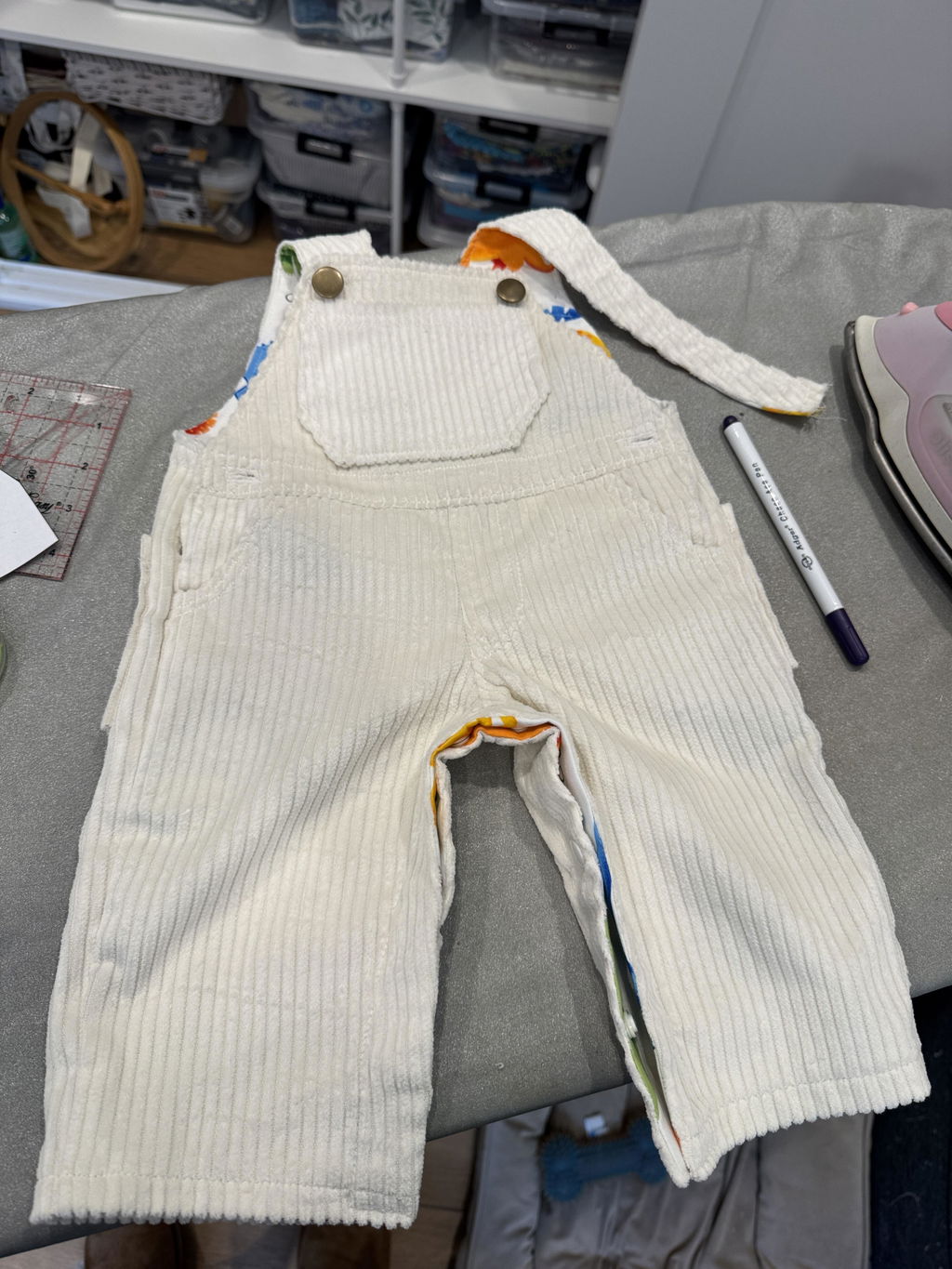
Bobby Dazzler is our cheeky little dungaree PDF sewing pattern, stitching up adorable baby overalls with a classic bib front and roomy cargo and patch pockets for all those tiny treasures. Clever details — like the inner leg snap closure for speedy nappy changes and sturdy metal buckles and straps — make these overalls wonderfully practical for everyday adventures.

When you’re ready to sew, Marina’s video tutorials are just a couple of scrolls away, ready to guide you from the first stitch to the last.

Pattern Download Includes

  • Instant Download
  • DIN A4 & US Letter Size
  • Individual PDF Files for every Size
  • All Sizes included
  • Detailed eBook
  • Video Tutorials

Design Options

  • Length option: Short, ankle & long
  • Classic side pockets
  • Side plackets with snaps
  • Patch pockets on the bib
  • Builder pockets on the back legs
  • Optional snap placket fastening (diaper change)

Fabric Requirements

BEST MATERIAL CHOICE
• Medium to heavyweight woven fabrics
• Recommended: Denim, chino, twill weave

FABRIC REQUIREMENTS

• Shell: 26-46 inches (65-120cm)
• Accent Fabric for straps and bib: max 26 inches (65cm)

NOTIONS
• Buttons: 4 x
• Buckles and Sliders: 2 sets
• Hardware available in my Amazon Shop

Available Sizes

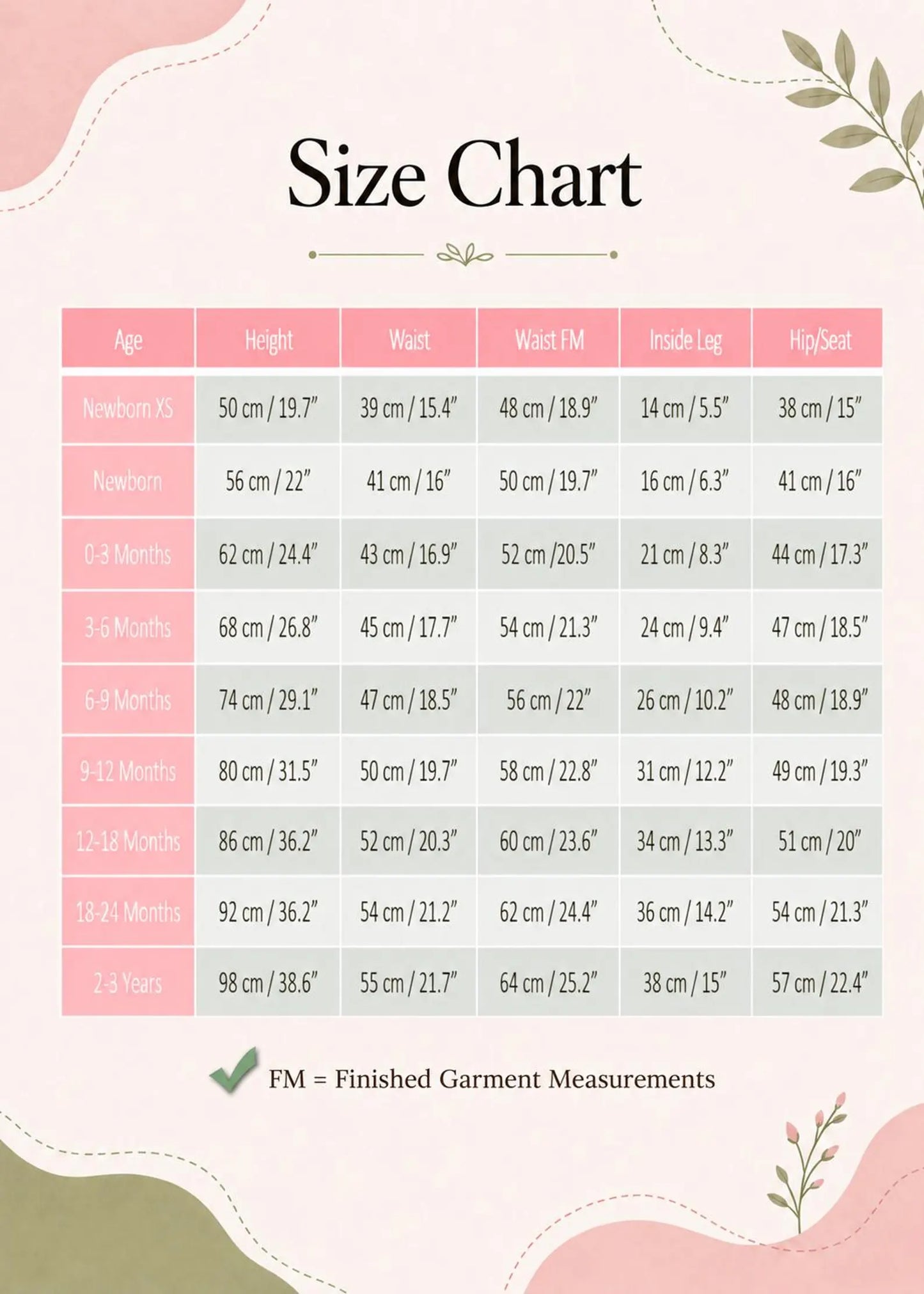
Sizes: 0 - 3 Years

Please Read

  1. This is a digital pattern or PDF file, not a physical product. It will be delivered electronically via a download link delivered to the email used for the purchase.
  2. To ensure the pattern prints at its actual size, it's recommended that you use Adobe Acrobat Reader.
  3. The pattern creator, Frocks & Frolics, welcomes small-scale production using their patterns. 

Customers are encouraged to tag Frocks & Frolics when sharing projects made using their patterns on social media.

@frocksandfrolics #frocksandfrolics

View full details

STEP-BY-STEP VIDEO TUTORIALS

Thumbnail
INTRODUCTION TO THE PROJECT
Thumbnail
THE PATTERN
Thumbnail
CUTTING OUT
Thumbnail
THE PATCH POCKET
Thumbnail
THE SIDE POCKETS
Thumbnail
THE FRONT PIECE
Thumbnail
THE BIB
Thumbnail
INSERTING THE BUTTONHOLES
Thumbnail
THE BACK
Thumbnail
PLACKET SIDE CLOSURE
Thumbnail
TOPSTITCHING
Thumbnail
INNER LEG SNAP CLOSURE
Thumbnail
THE HARDWARE
Thumbnail
ALL-IN-ONE VIDEO

VIDEO TEXT

Introduction to the Bobby Dungarees

Transcript for the video: Bobby Dazzler - Introduction

Welcome to the introduction to the Bobby Dungarees. I'm Marina from Frocks and Frolics, and I'm going to teach you this course that I hope you are going to enjoy very much.

You can make the dungarees in three lengths: full length, ankle length, and short length.

Let's have a quick look at the details.

Design Features and Pocket Details

We have little side pockets here. What I did was add a slight corner to them, which I think is great. It makes them look much prettier than having the pocket go straight down.

Then there are pockets on the right side of the back pants as well. These are full pockets, although you cannot really put much in them, but they look very cute.

We also have classic patch pockets. I ironed on a motif, which I think is quite nice.

When you are making the extra pockets on the little pants, they actually go quite far down. I preferred to keep them more structured and not too small.

On one version, I sewed the racing car motif all the way around. On the other, I only ironed it on and it is already coming off. I would recommend ironing it on and then stitching around it, because I am a bit worried it might come off. I will have to sew around it before this goes to my grandchild because I do not want it to come off.

Zip, Construction, and Inside Details

We have a full zip here. I have not added anything underneath it. There is no need to do that. I stitched across it and put a little bit of paper underneath while stitching so it does not stretch too much in this area. Then you can simply tear the paper away.

One thing I want to show you is how beautiful the contrast fabric looks on the inside.

Use your contrast fabric for the bib, for the back, and also for the snap placket. Have a look inside at the closure. We have a back placket and a shorter front placket.

When everything is put together, it creates a very neat closure. The important thing is to make sure everything is at the same height. If something is off, it will show.

Placket Closure and Snap Options

Let’s start with the placket closure using cam snaps. I have found cam snaps nicer and flatter than metal snaps.

We are using facings or a snap placket. I am using a contrast fabric, which I think is really nice. It not only looks good but also makes it much flatter.

Denim can be quite thick, so using a contrast fabric for the snap placket is important.

We are working so that none of the snaps are visible on the front. They go only through the placket facing. This means we need to interface it well, but it gives a much more professional finish.

At the back, the snaps go through all layers.

Cam Snaps vs Metal Snaps

When using metal snaps, the look is nice, but they are much heavier. By the time you finish, it can feel like there is too much bulk.

You can choose either cam snaps or metal snaps. The advantage of metal snaps is the look, but you do not actually see them when the dungarees are done up.

I found cam snaps last better and do not come apart, so they are my preferred option.

Construction Variations and Fit Options

If you go through all layers instead of just the front layer, it becomes thicker. I made a larger version for my grandchild, so there are different sizes.

In this version, I used metal poppers through all layers with a larger placket facing. I was not a big fan of this because it felt too thick. It takes a lot of pressure to close, which is not ideal for a baby.

You can also leave the snap placket off entirely. I did that in the 6 to 9 month version with ankle length. It is very cute and great for rolling up.

If you do this version, the only difference is that you sew the inner leg seam first and then do the hem. If you are using the snap placket, you do the hem first and then attach the placket.

Fabric Choices and Versions

I made a classic black denim version, which looks great with contrast topstitching in orange or cream. Denim really works well for this pattern.

I also made a striped linen version. I am not a huge fan of this fabric for this design, but it still works.

For a newborn, I used a soft flannel version. My buckles were too big, so I adjusted the pattern to 3 cm straps to match the buckles better.

I also made a lighter denim version. It looks a bit homemade with the C snaps, but it still works fine. I also used buttons instead of a buttonhole in some versions.

Buttonholes, Thickness, and Practical Tips

Buttonholes in this area can be very difficult, especially with heavy denim. The thicker the fabric, the harder it is for the buttonhole to go through neatly.

With proper jeans denim, it can be extremely difficult and may require multiple passes of stitching.

One solution is to use a strong metal popper instead of a buttonhole.

Another method is to construct the bib first, then add the buttonhole, and finally attach the waistband. This helps reduce bulk and makes construction easier.

This method gives a cleaner finish, even though it may be slightly bulkier in one area.

Hardware and Tools

I also used jeans buttons from Amazon. These are hammered in with a simple tool. Some of them may look slightly uneven, but once done up, you do not notice it.

For buckles and sliders, I have included links so you can find the correct 3 cm size. There are also links for European customers so you can source them easily.

Now we can move on to looking at the sewing pattern in more detail in the next chapter.

Getting Started with the Pattern

Transcript for the video: Bobby Dazzler Dungarees - The Pattern 

Let’s get started on the pattern. The first thing to do before you put it together with cotton tape is to check your test square. I am just putting this on, and if it measures 2.5 cm in either direction, you can get started.

What I have noticed when I print it from Adobe is that if you set it to portrait instead of auto, it actually shrinks the pattern a tiny bit. So set it to Auto, and then print at 100% or actual size.

The other thing I want to repeat is that the pattern does not need seam allowance added. It is already included in the pattern, and it is 1 cm.

Pattern Assembly Lines and Printing Notes

On your pattern pieces, you will see dashed lines. These are attachment lines where we join the pattern together.

If you try to match edges directly without overlap, it is very difficult. With the attachment strip underneath, it is much easier to align and tape the pieces together accurately.

The last page is your assembly plan. This shows how all the pieces go together. It changes for every size because smaller sizes use less paper.

I am going to cut everything out now, and then we will put the pieces together.

Sorting Pattern Pieces

One thing you will notice is that all the back pieces have a pink flower on them. That makes it much easier to identify what goes with what.

I usually sort them into two piles, pink flowers for the back pieces and white flowers for the front pieces. Anything without flowers is straightforward and does not need extra marking.

This makes it very easy to see front and back at a glance.

Assembling the Back Pieces

I have cut everything out, and I am going to demonstrate how to assemble the pattern using the back piece.

I am grabbing all the pieces with the pink flower. We have back leg A and back leg B. I am going to tape those together along the marked lines.

There are little diamond markers that need to line up. If they do not match, you immediately know something is wrong.

Now we need pieces C and D. If you look at your chart, you can see C and D, so we join those next.

It is a bit like a puzzle, and much easier than trying to match long continuous lines.

I actually developed this method when I was teaching sewing courses. I often had multiple students, and instead of buying many printed patterns, I would print only what was needed for each person.

At the start of class, everyone would choose their size, and we would print it. Then they could sit, cut, and assemble while having a coffee. It worked really well and made the process very beginner friendly.

Completing the Back Pattern

We continue down to piece E, and then finally F. Once all of these are joined, the back pattern is complete.

It is very simple and does not take long at all.

We will do the same process for the front pieces next. Because this is a children’s pattern, there are fewer pieces, so assembly is quick.

Understanding the Length Options

Both front and back pieces have three length options.

You have full length, which is great for winter or for rolling up. Then ankle length, which works for spring and summer. And then shorts for warmer weather.

Snap Placket Option vs No Placket

If you do not want the snap placket, you cut along the dashed line.

Most trousers have a fairly standard front curve, but here the front is more scooped because of the snap placket construction.

If you remove the placket, you do not want that deep scoop. It will not sit correctly.

So if you are not using the snap placket, cut along the first dashed line on the front piece only. The back stays the same because it is naturally shaped for the body.

Pocket Construction

The front has pockets. There is a pocket lining that attaches here.

If you are using the pocket, you can remove this section, but it is helpful to keep it in case you want to adjust the design later.

The pocket lining is best done in a contrast fabric. I really like the little corner detail here. It adds a nice design feature.

The denim pocket sits underneath and attaches cleanly into this shape.

Hem Extensions and Fit Adjustments

You will also see small hem extensions. These help ensure the side seams align when folded up.

You do not need to cut these if they are not part of your size. They are only relevant to the version you are making.

You can fold them over during cutting instead.

Back Pattern Details

On the back, there is a back facing that goes here. It is cut on the fold and does not need the extra seam allowance in the center back.

This is also a great place to use contrast fabric. The bib uses the same principle.

There is also a back patch pocket. You can use the cut-out pocket piece as a template for easier placement.

Layered Pocket System

There are additional small pockets underneath the main pocket. The upper pocket does not have a fold line because it sits inside the lower pocket. This reduces bulk and keeps everything flat.

The upper pocket slots into the lower one, then the main pocket sits over the top.

Placement on Fabric

These back pockets are only for the right-hand side. Place them on the fabric accordingly before cutting.

Bib and Button Placement

The bib has a patch pocket as well. You can use the same template method to position it correctly.

It also includes markings for buttons and buttonholes.

When marking buttonholes, always fold away the seam allowance first so you do not place them too far toward the edge.

Snap Placket Construction Overview

The snap placket sits on both front and back pieces. It is positioned 1 cm below the top because of the seam allowance.

It extends slightly below the hem line, which is consistent across all lengths. There are separate marking pieces for snaps. You only use the one that matches your chosen size.

Cut out the circles and use them as exact placement guides. This ensures perfect alignment for your cam snaps.

Placket Layer Order

The bib, front placket, and back placket all layer together. The facing sits on one side, the front placket sits opposite, and the back placket attaches at the top.

All seam allowances align at 1 cm, so everything matches precisely when sewn.

A stitching guide is also included to help shape the curve of the placket neatly.

Next Step

That completes the pattern overview. Now we are ready to cut it out.

If you are watching on YouTube, check the playlist in the video description and continue to the next lesson where we cut out the Bobby dungarees.

See you there.

Cutting Out the Fabric

Transcript for the video: Bobby Dazzler Dungarees - Cutting Out 

Get your pins and scissors ready. We are going to start cutting out.

The first thing to do is to look at your cutting plan. I have the German plan here, so do not let that confuse you.

We are going to cut out exactly as shown on the plan. The goal is to use your fabric efficiently so you do not waste anything.

On the layout, we have the front piece, the two plackets that need to go on as well, two back pockets, and two front pockets.

Place everything carefully and check your fabric width so you can plan the layout properly. Some pieces are only cut once, from the top layer only.

So for those, you pin the pattern down and make sure the grainline arrow runs parallel to the fabric edge.

This piece only needs the top layer, so you can position it to maximise leftover fabric for other pieces.

Cutting Technique and Tips

When cutting out, it is best to cut from the left side so your scissors sit next to the paper.

Sometimes you might naturally do it the other way because it feels easier, but generally this method gives a cleaner edge, especially if you are a beginner.

I learned this as an apprentice. It really helps keep everything neater.

If space is tight, you may need to rotate your fabric and cut from different angles, but try to keep the cutting method consistent where possible.

Once everything is pinned, you can move the fabric slightly as needed to make cutting easier.

Make sure all pieces are securely pinned before you start cutting.

Interfacing and Additional Pieces

Do not forget the interfacing. You need to cut that out as well, along with one facing piece.

You can remove the seam allowance from the facing if you prefer a cleaner finish.

If you are making the dungarees without the snap placket closure, you only need the facings and pocket linings. You can leave out the placket pieces entirely.

Final Preparation

Everything is now cut out. We are ready to begin sewing.

Next, we will start with the first construction step, which is working on the patch pockets.

The Patch Pocket

Transcript for the video: Bobby Dungarees – Patch Pockets Tutorial

In this chapter, I’m going to show you how to sew those lovely patch pockets on both the front and back of the Bobby dungarees. We’ll start by preparing the pockets, finishing the edges, pressing them into shape, and then top-stitching them before attaching them to the garment.

Preparing the Pocket Edges

First, we’re going to serge or overlock around the edges of our pockets.

For the small upper back pocket, we only finish the slanted upper edge. The side edge that sits in the side seam remains open, while the lower edge and the remaining outer edge are overlocked.

For the lower back pocket, we leave the side edge open as well because that will be caught in the side seam later. The remaining edges are serged.

For the bib pocket, we overlock all the way around. I usually go down one side, around the bottom, and up the other side, then do the top edge separately because sharp corners are harder to navigate in one continuous motion.

The back patch pockets are finished in the same way. I overlock down one side, around the bottom, and up the other side, then remove the piece and overlock the top edge separately. This makes the process easier to manage.

Once that’s done, the bib pocket is fully finished, the back patch pockets are finished all the way around, and the lower back pocket has the side edges left open as intended.

Using Templates for Pressing

Now we use templates for the back pocket and bib pocket to press all seam allowances into place.

The templates are created by cutting away the seam allowance along the dashed line, giving a precise folding guide. This is faster and more accurate than measuring each fold manually.

Start by pressing the side edges in first, then move to the lower curved or pointed sections.

For sharp corners, make a tiny snip—not all the way through—so the fabric layers can overlap cleanly instead of bunching up. This helps create a sharper point.

Press everything well, then fold over the top edge and press again. If you have a tailor’s clapper, you can use it to make the edges extra crisp.

Turn the pocket over and press from the right side, then compare both pockets to ensure they match.

For the lower back pocket, only press the top and bottom edges—the side edges remain open because they will be caught in the seam later.

Top-Stitching the Pocket Edges

Now that all pockets are pressed, we can top-stitch them.

For the lower back pocket, stitch the top edge about 1.2 cm from the edge (around 3/8 inch), catching the folded seam allowance underneath.

If you want a second decorative line, add it using a consistent spacing such as foot width or half a presser foot.

For the upper back pocket, the first stitch line goes 1.8 cm from the edge (about half an inch), followed by a second decorative line at your chosen spacing.

For the bib pocket, the first line is stitched at 2.3 cm from the edge (about 1 inch), with a second decorative stitch beside it.

For the back patch pockets, the first stitch is about 2.5 cm from the edge (about 1 inch), ensuring the seam allowance is fully caught. Add a second line for a classic denim look.

For all top-stitching, use a longer stitch length—around 3.5 to 4 mm. This gives a clean, professional finish.

Lock stitches at the beginning and end each time.

Adding Decorative Details to the Bib Pocket

Before attaching the bib pocket, I added a small racing car patch I found at a market in Los Angeles.

It’s for my brand-new grandchild, so I wanted something personal and fun added.

If you add appliqué, make sure it is securely stitched. You can sew all the way around it for extra durability.

Positioning the Bib Pocket

To position the bib pocket, cut out the pocket placement area from the bib pattern piece.

Place the pocket into the cut-out section and pin it in place. This ensures correct positioning immediately.

Remove the pattern piece and double-check measurements if needed. I measured from the lower edge to the waistline and checked both sides because pockets can easily end up slightly off.

Positioning the Back Pockets

The same method applies to the back patch pockets.

Cut out the placement area, insert the pocket, and pin it in position. This guarantees accuracy.

Attaching the Lower Utility Pockets

Now we move to the lower utility pockets.

The lower edge of the upper pocket is left unfolded because it slots into the lower pocket.

So the upper pocket slides into the lower pocket, aligning with the side seam.

Fold both side edges in by 1 cm and pin them. No pressing is needed here.

Pin the pocket assembly onto the leg, keeping it straight.

The top of the lower pocket will be hidden under the patch pocket, so we sew the lower pockets first before adding the patch pocket on top.

This order is important—otherwise you’ll have to unpick later.

Alternative Pocket Placement Method

Here’s another method if you don’t have pocket markings on your pattern.

Place one pocket right side down onto the already positioned pocket on the opposite leg.

Lay the second leg piece over the top.

This automatically mirrors the pocket position.

Pin from the top, making sure you only catch the pocket layer and not anything underneath.

This is especially useful when drafting your own patterns.

Sewing the Pockets Onto the Garment

Now we top-stitch the pockets onto the garment.

At the start of stitching, gently pull the fabric slightly so it doesn’t get stuck in the machine.

For denim or structured fabric, stay about 3 mm from the edge. Not too close, not too far.

At corners, stop with the needle down, lift the presser foot, rotate the fabric, then continue.

Lock stitches at the beginning and end.

For the second decorative line, I used foot width from the first line to keep everything consistent.

If unsure, test on a scrap first and stick to that spacing throughout the garment.

Securing Pocket Edges

On the lower utility pocket, I also stitched down the side to ensure it is fully secured in the seam.

Again, pivot at corners using needle-down technique.

The second stitch follows the same foot-width spacing.

Sewing the Upper Patch Pocket

Once the lower pockets are done, we sew the upper patch pocket on top.

This seals the lower pocket underneath for a clean finish.

Always sew the lower pocket first—otherwise you’ll realize too late and have to unpick.

Stitch around, lock stitches, then add the second decorative line.

Perfection vs Reality

If your stitching isn’t perfect, don’t stress.

You notice every small mistake while sewing, but once the garment is finished, most imperfections disappear.

Even store-bought jeans aren’t perfectly stitched—you just don’t notice.

Optional Pocket Customizations

For the other leg, you can keep it simple or add extra design features like tabs or different pocket shapes.

Look at other dungaree designs for inspiration.

Optional Rivets

If you want to add rivets, do it at this stage—after the pockets are attached but before final assembly.

Once the garment is fully constructed, rivets are much harder to install.

Final Thoughts

This method works not only for Bobby dungarees but for many other sewing patterns as well.

Once you understand edge finishing, pressing, top-stitching, and placement, you can apply it broadly.

For more details on the dungarees, check the video description or info section.

Thank you for watching.

The Side Pocket

Transcript for the video: Bobby Dungarees – Side Pocket Insertion Tutorial

In this chapter I’m going to explain how to insert these side pockets. We’ll be sewing the pocket and pocket lining onto the front legs first, preparing the opening, turning the pocket, and finishing everything with clean top-stitching.

Preparing the Pocket and Lining

Start with the pocket lining. You’ll notice one side of the fabric looks darker and the other lighter. Either side can work, but choose the side you prefer for the inside and outside of the pocket.

Place the right sides of the front leg and pocket lining together. Pin them in place. Pins can go either vertically or along the seam either works fine as long as everything is stable.

Before sewing, make sure your machine is using standard thread for construction seams. Do not use top-stitching thread at this stage, as it’s unnecessary and wasteful.

Sewing the Pocket Opening

Sew the pocket opening carefully, making sure to follow the curve and corner points accurately.

When you reach the corner, reduce your stitch length slightly (around 1.5 mm). This helps stabilize the curve and prepares it for turning.

At the corner, stop with the needle down, pivot the fabric, and continue stitching to the end.

Repeat the same process on the other side.

Clipping and Turning the Pocket

Once sewn, snip into the corner point carefully—cut right up to the stitching line, but not through it. This is what allows the corner to turn cleanly without bulk.

Turn the pocket through to the right side and press it flat with an iron.

Roll the seam between your fingers so the stitching sits exactly on the edge. This helps create a clean, professional pocket opening.

Use steam generously, especially with denim or heavier fabric, and press until the edge is crisp.

Top-Stitching the Pocket Opening

Now switch back to top-stitching thread and increase your stitch length to around 4 mm.

Top-stitch along the pocket opening, following the edge carefully. Work slowly around the curve and lock your stitches at both ends.

If needed, check constantly that your distance from the edge remains consistent.

Add a second decorative stitching line using a consistent spacing—typically foot width from the first line.

At corners, check positioning carefully before committing. It’s better to be slightly short than too long, since unpicking is much more difficult.

Pull your threads slightly at the start to avoid the machine catching and creating tight starter stitches.

Attaching the Pocket Bag

Switch back to standard thread before attaching the pocket bag.

Place the pocket lining and front leg right sides together, aligning the edges and ensuring the pocket opening sits correctly.

Pin vertically along the seam so the pins can stay in while sewing.

Repeat on the other side of the pocket.

Sewing the Pocket Bag

Sew around the pocket bag using a standard seam allowance (foot width is fine).

When you reach curves, do not stop constantly to pivot. Instead, guide the fabric using your left hand, pulling it gently sideways to help the curve feed naturally.

This produces a smoother curve than repeatedly lifting the presser foot.

Lock stitches at the beginning and end.

Overlocking the Edge

Now overlock or serge the edge of the pocket bag.

Always serge from the side that will be visible in the finished garment. In this case, that is the underside of the pocket.

Make sure all pins are removed before serging to avoid damaging your machine blade.

Guide the fabric firmly with your left hand to maintain even tension and smooth feeding through the serger.

Finishing

Press the completed pocket well. The shape should now sit cleanly with a defined opening and smooth internal structure.

At this point, the side pocket is fully inserted and finished, ready for the next construction step, where the front pieces will be joined and the faux zipper will be added.

The Front & Faux Fly Topstitching

Transcript for video: Bobby Dungarees – Faux Fly & Center Front Construction Tutorial

In this chapter we’re going to create the faux zipper (it’s not a real zip, just top-stitching) and we’re also going to close the center front seam and top-stitch it to give the appearance of a proper fly.

Preparing the Front Pieces

Start by placing the front legs right sides together, aligning them carefully. Pin along the center front seam, following the curve.

I like placing pins directly along the seam line rather than perpendicular. This helps reveal any distortion in the seam—if one leg is slightly longer or shorter, it becomes obvious before sewing.

On long curved seams like this, you need to guide the fabric rather than forcing it flat. Use your hands to push and pull gently as you sew, and pivot with the needle down when needed so you follow the natural curve without creating dips.

Sewing the Center Front Seam

Sew the center front seam with care, especially through the curved section.

When you reach the curve, stop with the needle down, lift the presser foot, and rotate the fabric to stay aligned with the seam line.

While overlocking or sewing this seam, use your hands actively:

  • Right hand gently pulls fabric left
  • Left hand feeds fabric into the presser foot

This keeps tension balanced and ensures a clean seam.

After sewing, press the seam toward the right side of the front trousers. Pressing from the outside helps keep everything aligned and easier to control.

Marking the Faux Fly

Now we mark the faux fly stitching lines.

The first line is about 2.5 cm from the edge. Then add a second line one presser foot width inside that. A lower stopping point is usually around the pocket opening length.

Use a ruler or tailor’s chalk, especially on darker fabrics, to clearly define the curve and stitching path.

Double-check your markings before sewing.

Top-Stitching the Faux Fly

Begin top-stitching the first line using a longer stitch length (around stitch length 4).

Sew carefully along the marked curve. If your fabric is difficult to feed, you can place tissue paper or embroidery stabilizer underneath to help the machine move smoothly. This can be torn away afterward.

This stitching does not hold structural stress—it is purely decorative—so precision in appearance matters more than strength.

You can start stitching from the top or from below the fly area depending on the look you want. Starting below the marked fly gives a more realistic denim-style finish.

Adding the Second Stitch Line

Now add the second parallel stitch line, keeping a consistent distance (typically foot width).

It doesn’t matter whether you sew the inner or outer line first, as long as spacing stays consistent.

This double stitching creates the illusion of a real zipper fly.

Reinforcing the Fly Detail

To finish the faux fly, add a small bar tack at the base.

This is done using a tight zigzag stitch, moving back and forth to create a reinforced tab-like finish. It mimics the reinforcement found on real jeans where the fly joins the garment.

Make sure to lock the stitches well so it does not unravel.

Final Notes

This faux fly construction is purely decorative but gives a very realistic denim look when done correctly.

Once complete, the front of the dungarees should resemble a traditional fly opening while still being a clean, closed seam underneath.

If you want to explore more techniques, patterns, or bonus content from the Bobby dungarees course, check the playlist or links provided in the video description.

The Bib

Transcript for the video: Bobby Dungarees – The Bib

In this chapter, I’m going to explain how to attach the bib to the front trousers, prepare and sew the plackets, and construct the full front bib section including the faux waistband and top-stitching.

Preparing the Front and Bib

Start by placing the front legs right sides together. Align the center front carefully and pin along the full curved seam.

Pins should follow the seam line rather than sitting perpendicular to it. This helps reveal any mismatch in length or alignment early.

Because this is a long curved seam, you need to actively guide the fabric as you sew. Do not force it flat. Use your hands to control the curve and pivot with the needle down when needed so you stay aligned with the seam line.

Sewing the Center Front Seam

Sew the center front seam carefully through the curve.

At tighter curves, reduce stitch length slightly (around 1.5 mm) to stabilize the seam before turning.

At each curve point, stop with the needle down, lift the presser foot, and rotate the fabric to continue smoothly.

When overlocking, use both hands actively:

  • Left hand pushes fabric into the presser foot
  • Right hand stabilizes and removes pins

This ensures the seam stays aligned and prevents shifting.

Press the seam toward the bib side once finished.

Marking the Faux Fly and Stitch Lines

Before top-stitching, mark the faux fly area.

The first stitch line sits approximately 2.5 cm from the edge. A second line is placed one presser foot width inside that. The length generally follows the pocket opening area, with a gentle curve drawn using chalk or a marker.

Always double-check markings before sewing.

Top-Stitching the Faux Fly

Begin top-stitching using a longer stitch length (around stitch length 4).

Sew along the marked curve slowly and consistently. If the fabric feeds poorly, place tissue paper or stabilizer underneath to help movement, then tear it away afterward.

This stitching is decorative and does not carry structural load, so focus on even spacing and smooth curves.

You may start at the top or below the fly area depending on the desired denim-style effect.

Adding the Second Stitch Line

Add a second parallel line using a consistent spacing (typically foot width from the first line).

Keep spacing consistent throughout the garment so the design looks intentional and professional.

Both lines together create the illusion of a real zipper fly.

Reinforcing the Fly Detail

Finish the fly area with a bar tack.

Use a tight zigzag stitch, going back and forth several times to create a reinforced tab. This mimics traditional denim reinforcement at the base of a fly.

Lock stitches securely at the end.

Attaching the Bib

Place the bib onto the front trouser section, aligning the center front and edges carefully.

You may feel slight excess at the bib edges due to curvature, this is normal. The seam line itself matches correctly even if the outer edge appears slightly longer.

Pin the bib in place, ensuring edges align cleanly.

Attaching Plackets and Preparing Details

Prepare the plackets by folding them lengthwise and pressing the crease.

Sew one short edge of each placket, then attach them to the bib lining.

The folded edge should face inward, while raw edges face outward before attachment. Ensure right sides are facing where required.

Pin and sew using a 1 cm seam allowance, locking stitches at the start and end.

Joining Bib to Front Trousers

Now attach the bib to the front trousers.

Keep your left hand controlling the fabric alignment while your right hand removes pins as you sew. This helps prevent shifting along curved edges.

The bib naturally wants to shift due to its shape, so maintain steady control and ensure layers stay aligned.

Sew through the seam carefully and lock stitches at the end.

Pressing and Reducing Bulk

Press the seam allowance toward the bib side first.

Always press thoroughly since this step significantly improves the final appearance.

Reduce bulk by trimming seam allowances in stages:

  • Trim bib seam allowance slightly
  • Trim front trouser seam allowance where needed
  • Reduce pocket corners and thick intersections

Check by feel. Any bulky areas should be trimmed further until the seam sits flat.

Press again with steam for a clean finish.

Shaping the Corner and Reducing Bulk

For the corner area, cut into the seam allowance carefully to release tension.

This allows the fabric layers to sit flat and prevents puckering when turned.

Fold seam allowances inward and shape the corner using fingers and nails for precision.

If needed, add a pin to hold shape before final pressing.

Final Pressing and Refinement

Press the bib thoroughly using high heat and steam suitable for denim.

Roll seams between fingers before pressing to ensure the seam sits exactly on the edge.

You may continue trimming small amounts of excess seam allowance where needed to reduce bulk around the buttonhole area.

Attaching and Top-Stitching the Bib Lining

Place the bib lining right sides together with the outer bib.

Pin carefully along the edges, placing pins vertically so they can be removed while sewing.

Sew with stitch length 4, maintaining a consistent 2 to 3 mm distance from the edge.

At corners, always stop with needle down, pivot, and continue.

Remove pins as you sew to avoid damaging the machine or distorting stitches.

Top-Stitching the Waist and Faux Waistband

After attaching the lining, top-stitch the waistline.

Ensure the fabric is flat and forced into alignment as you sew for a crisp finish.

Maintain consistent spacing to match all other top-stitching on the garment.

Finally, sew the faux waistband stitching line. This simulates a real waistband even though none is constructed, completing the denim illusion.

Final Notes

The bib section is now fully constructed, pressed, and top-stitched.

This step brings together structure, reinforcement, and decorative detailing, creating a clean denim-style front.

Next step will focus on buttonholes and closures.

Inserting the Buttonholes

Transcript for the video: Bobby Dungarees – Buttonholes and Closure

In this chapter, we’re going to sew the buttonholes. If your sewing machine struggles with buttonholes, you can replace them with snap buttons instead. The result will still look clean and professional.

Marking the Buttonhole Position

Start by marking the buttonhole placement between the two existing stitching lines.

It can help to use your actual button to check positioning. Flip it into place and ensure it does not extend beyond the edge of the fabric.

The button stem should sit approximately 1.3 cm from the edge. Mark this clearly with a vertical guideline.

Do this on both sides, then find the center point between the two stitching lines so the buttonhole sits evenly and aligned.

Always double-check alignment before sewing.

Testing the Buttonhole

Before sewing on the garment, always test a buttonhole on a scrap piece of fabric.

The buttonhole should be about 2 to 3 mm longer than the button itself so it can pass through easily.

Most sewing machines include a buttonhole foot with a space for measuring the button size automatically, but results can still vary depending on fabric thickness.

Sewing the Buttonhole

Set your machine to buttonhole mode and position the fabric correctly under the presser foot.

In this case, stitching problems occurred due to thickness in the seam area. The machine could not feed properly because the layered seam created uneven height.

Several adjustments may be needed depending on your machine:

  • Reversing fabric direction
  • Flipping orientation
  • Adding support under the fabric to level thickness

A useful solution is placing a fabric or stabilizer “bumper” under the lower side of the presser foot to balance the height.

Once properly supported, the machine should stitch the buttonhole smoothly.

If your machine still struggles, consider switching to snap buttons or sewing the buttonholes before attaching the bib to reduce bulk.

Cutting Open the Buttonhole

After sewing, carefully open the buttonhole.

Do not cut straight through in one motion. Instead:

  • Fold the fabric
  • Make a small initial snip in the center crease
  • Then cut toward each end in stages

This gives better control and prevents accidentally cutting through the stitches.

Test the button fit before fully opening the entire hole. Adjust gradually if needed.

Final Adjustments

Secure any nearby areas such as pocket edges or seams to ensure nothing shifts before moving to the next step.

Once the buttonholes are complete, the difficult part of the construction is finished.

Final Notes

Buttonholes are often the most challenging step in this process due to fabric thickness and machine limitations. If they do not work cleanly, snap buttons are a valid alternative.

Another option is to sew buttonholes earlier in the construction process before attaching thicker layers like the bib.

With the buttonholes complete, the next step is closing the back seam and top-stitching the garment.

The Back

Transcript for the video: Bobby Dungarees – Back Seam, Facing, and Top-Stitching Tutorial

In this chapter we’re going to sew the back seam together, top-stitch it, and then attach the facing. After that, we’ll finish everything with final top-stitching so the back section looks clean and structured.

Sewing the Center Back Seam

Start by placing the back pieces right sides together and aligning the center back seam.

Sew with a 1 cm seam allowance, which is standard across the pattern. Stitch all the way down the seam.

When sewing curved areas, avoid lifting the presser foot unnecessarily. Instead, use your left hand to guide and rotate the fabric so the seam follows the curve smoothly.

This technique creates a cleaner, more controlled curve without distortion.

Overlocking and Pressing the Seam

Overlock the seam from the top side of the left leg so the visible side of the overlock looks cleaner.

Always serge from the side that will be visible in the finished garment.

After overlocking, press the seam toward the left side.

If unsure, pressing from the right side will naturally direct the seam into the correct position.

Pressing here is important because it controls bulk and ensures both sides of the garment lie flat.

Top-Stitching the Back Seam

Begin top-stitching the seam.

The first line is 2 to 3 mm from the edge. The second line is approximately a presser foot width away from the first.

Keep fabric flat by gently pulling it open with your hands so the seam does not fold or crease under the stitch line.

Maintain consistent spacing throughout both lines.

At curved sections, spread your fingers and guide the fabric carefully to avoid puckering.

Finish with a strong press to set the stitches and improve the final appearance.

Preparing the Facing

The facing is interfaced because lightweight cotton needs additional stability.

Apply interfacing to the wrong side of the fabric.

When fusing interfacing, do not slide the iron. Instead:

  • Place iron down
  • Hold for several seconds
  • Lift and move to the next section

Count roughly to eight seconds per area to ensure proper bonding.

Once fused, optionally press again from the opposite side for stability.

Finishing Facing Edges

Overlock or zigzag the lower edge of the facing.

If you do not have a serger, a zigzag stitch is an acceptable alternative.

Next, pin the armhole and neckline edges.

You may leave the upper strap edges open if preferred. This reduces bulk and makes final construction easier, especially when feeding through later steps.

If you want a fully clean finish at the top, those edges can also be overlocked beforehand.

Sewing the Facing

Sew the facing to the garment along the pinned edges.

Maintain a consistent seam allowance and guide the fabric carefully through curves.

At tighter curves, reduce stitch length to about 1.5 mm to prevent fraying when clipped later.

At less curved sections, return to a standard stitch length of around 2.5 mm.

Avoid excessive lifting of the presser foot. Instead, guide fabric smoothly with both hands for a natural curve.

Ensure you are using standard thread and correct tension settings for construction sewing.

Trimming and Clipping Seam Allowances

Trim seam allowances down to around 3 mm where possible.

Avoid leaving large seam bulk, as this will create stiffness and distortion.

Only clip deeply into curves where absolutely necessary. Over-clipping can weaken the seam and cause distortion.

For sharp curves such as neckline dips, clipping is required to release tension and allow the fabric to lie flat.

Reduce bulk carefully, especially at intersections like the center back seam.

Turning and Shaping the Straps

Use a safety pin to turn narrow straps right side out.

Attach the pin securely, push it through, and guide the fabric through carefully.

Once turned, roll the seams between your fingers until the seam sits exactly on the edge.

This step is critical. If the seam sits too far inside, it becomes difficult to correct later.

Press thoroughly after shaping.

Final Pressing

Press all edges carefully using steam.

Ensure the seam lines sit exactly on the edge and the shape is clean and flat.

Good pressing at this stage determines the final professional appearance of the garment.

Closing the Back Plackets

Now close the back plackets at the top with a 1 cm seam allowance.

Sew both sides, locking stitches at the start and end.

Press seams open or to one side depending on preference.

This step completes the back construction and prepares the garment for final closure details.

Final Notes

The back section is now fully assembled, top-stitched, and structured.

Proper control of seam direction, pressing, and trimming is what creates a clean finish at this stage.

Next step will focus on the placket closure system, which is more technical but follows the same principles of controlled stitching and careful alignment.

Placket Side Closure

Transcript for the video: Bobby Dungarees – Side Placket Closure Tutorial

In this chapter we are going to construct the side placket closure. It can feel intimidating if you have never done it before, but the method is broken down into clear steps so it becomes manageable. This technique can also be applied to other garment patterns.

Preparing the Layers

Start by moving the facing out of the way so it does not get caught in the stitching for now.

Place the front piece on top of the back piece. Align two key points:

  • The hem at the bottom
  • The top alignment where the additional stitching line on the front meets the back edge

These alignment points are critical for a clean closure.

Pin the front to the back, making sure everything lies flat and smooth.

Step One: Sewing Front to Back

Begin sewing from the small jut-out corner on the front placket. This corner is an important pivot point.

Sew from this corner all the way down to the hem.

Repeat the same process on the other side.

When aligning the second side, ensure the top edge matches the marked stitching line on the front bib area. This ensures both sides sit evenly.

Some may attempt to sew everything in one pass, but splitting the process into steps reduces mistakes and improves accuracy, especially around the corner.

At the corner, aim directly into the pivot point rather than sewing straight down. This ensures the folded shape behaves correctly when turned.

Reducing Bulk

Before continuing, reduce thickness in high bulk areas.

Trim back seam allowances on:

  • The pocket areas
  • The placket intersections
  • Any stacked layers that create bulk

Do not over-trim, only remove enough to allow the fabric to sit flat.

Denim in particular becomes very thick at layered junctions, so careful trimming is essential.

Step Two: Attaching the Back Placket

Place the back placket over the front placket.

Align edges precisely so both plackets sit directly on top of each other.

Because of pocket bulk, use vertical pins to secure all layers firmly.

Ensure nothing folds underneath and that all layers remain flat before sewing.

Sewing from the Reverse Side

Sew this section from the opposite side so you can clearly see the previous stitching line.

This allows you to stitch just slightly over the existing line, ensuring accuracy.

Follow the marked stopping point carefully. If needed, mark it clearly before sewing.

Maintain control of the fabric by pulling it flat as you sew, especially over thicker pocket areas.

Sew to the top alignment point and lock your stitches securely.

Step Three: Attaching the Facing

Now bring the facing back into position.

Align it carefully so it matches the placket top and sits flush with previous stitching lines.

Pin securely so nothing shifts.

Sew along the existing line, following it precisely. The previous stitching acts as a guide, making this step much easier.

At this stage, you are essentially closing the structure and locking the placket system into place.

Final Placket Reinforcement

Overlock or serge the seam, always from the visible side so the finished overlock sits neatly on the inside.

Trim any remaining bulk at corners to reduce thickness and improve folding.

Press the seam toward the back piece.

Ensure all layers align cleanly and lie flat.

Final Pressing and Result

Press the entire placket carefully.

All edges should line up cleanly, with no twisting or puckering. The structure should now sit flat and symmetrical on both sides.

This method produces a clean, controlled placket closure with accurate alignment and reduced bulk compared to doing it in a single step.

Final Notes

The side placket is now complete and fully secured.

The next stage will focus on hemming and adding the snap placket, which is significantly simpler after this construction step is finished.

Topstitching

Transcript for the video: Bobby Dungarees – Top-Stitching Side Seams and Armholes

In this chapter we are going to top-stitch the side seams, armholes, and neckline to create a clean, professional denim-style finish.

Preparing the Garment

Start by turning the trousers to the wrong side. This makes it much easier to access and control the seams while top-stitching.

Use your fingers, especially the index and middle finger, to open and guide the seam allowance as you sew. This helps keep everything flat and controlled.

Top-Stitching the Side Seams

Begin at the hem and sew upward along the side seam.

Use a foot-width distance from the edge for the second stitching line after completing the first pass. This creates consistent double top-stitching.

Work slowly, especially when approaching thicker areas. Use your hands to pull the fabric apart slightly and guide it through the machine.

At the top, you can either lock stitches or sew a few reinforcing stitches across the area before moving back down. This helps secure the stress point while avoiding excessive bulk at the top edge.

Repeat the same process on the other side seam.

Managing Thick Sections

When passing over thick intersections such as pocket areas or placket joins, slow down significantly.

You may need to:

  • Pull the fabric gently from the back
  • Push slightly from the front
  • Help the machine feed over the bulk

Do not force the machine too quickly. Let it gradually step over the thick sections to avoid skipped stitches or jamming.

Curves and Armhole Control

When sewing curves such as armholes, try not to lift the presser foot unnecessarily.

Instead, guide the fabric smoothly using your left hand, allowing the seam to naturally follow the curve.

Keeping the fabric under tension while feeding it evenly produces a smoother, more professional arc.

Top-Stitching the Placket Area

Start top-stitching from the end of the placket.

This helps stabilize the thread at the most stressed point. Small tight stitches at the beginning are acceptable here.

When you reach the corner, ensure both threads are secured before turning.

Continue sewing around the curve in one continuous motion where possible. Use your left hand to guide fabric direction and maintain a smooth curve.

Avoid stopping unless necessary, as continuous stitching produces a cleaner round shape.

Stitching Technique and Control

Maintain steady pressure and fabric control throughout.

Do not rely on lifting the presser foot for direction changes unless absolutely necessary. Instead, steer the fabric smoothly as it feeds through the machine.

This results in more natural curves and reduces visible angular points in the stitching line.

Completing the Curve

Continue around the armhole and neckline curves, ensuring consistent spacing and smooth movement.

If the fabric feels tight or resistant, adjust your hand positioning rather than forcing the machine.

Finishing the Side Seams

Once both sides are complete, ensure all threads are secured and trimmed.

The top-stitching should appear even and consistent, with both lines running parallel and clean.

Reinforcing the Placket Area

At the placket junction, sew across the corner to secure the layers.

This acts as reinforcement and prevents the placket from shifting during wear.

It should sit flat and align with all existing stitching lines.

Final Notes

At this stage, the garment is fully top-stitched, including side seams, armholes, neckline, and placket reinforcement.

If you’ve followed along, the structure should now look clean, symmetrical, and professional.

The next step will focus on hemming and completing the snap placket closure, which is a simpler finishing stage after this work is done.

Inner Leg Snap Closure

Transcript for the video: Bobby Dungarees – Snap Placket Closure Tutorial

In this chapter we are working on the snap placket closure for the dungarees. This is a structured finishing method that keeps the closure clean on the outside while remaining functional and durable.

Preparing The Facings

Start by preparing the snap placket facings according to fabric weight. Interfacing is required on at least the front facing to reinforce the area where the snap fasteners will be installed. Lighter fabrics may require both facings to be interfaced.

Remove seam allowance from the interfacing where needed so the fabric can lie flat and reduce bulk.

Preparing The Hem

Turn in the hem by 1 cm and press it carefully. Fold it over again by 2 cm and press the full length. This creates a stable hem structure that supports the placket finish.

Ensure both legs are measured evenly to maintain symmetry across the garment.

Top Stitching The Hem

Top stitch from the upper side of the fabric using a longer stitch length. A stitch length of around four is used for a more visible denim style finish.

Increase tension as needed to around 8 to 11 depending on your machine. The goal is to achieve a clean, even top stitch without loose loops.

Work slowly and keep the hem flat while stitching. Remove pins as you go to avoid uneven tension or thread distortion.

Preparing The Facings For Attachment

Press the curved edge of the facing by 1 cm before attaching. This helps the facing roll neatly to the inside after stitching.

Pin the interfaced facing to the front leg and the non-interfaced facing to the back leg. Ensure all alignment points match, especially the top edge and hem line.

Keep the fabric flat while pinning to avoid shifting in curved areas.

Marking The Snap Positions

Use a template to mark snap positions accurately. Align the center fold of the placket with the garment center to ensure correct placement.

Mark through the template holes so the snap positions are consistent on both sides.

This step ensures that the snaps will align perfectly once installed and closed.

Installing The Snap Fasteners

Insert the snap fasteners through the marked points. A tool or awl can be used if needed, but in firmer denim it may not be necessary.

Place the stud and socket components correctly on each side of the placket. Press firmly using snap pliers until secure.

Repeat the process for all snap positions, ensuring alignment at every step.

Securing The Facings

After installing snaps, re-pin the facings into their original position. This ensures the final stitching keeps everything aligned exactly where it was measured and pressed.

Stitch the facings in place carefully, avoiding the snap hardware where possible by adjusting needle position slightly if needed.

Work slowly around edges to maintain a clean line and prevent shifting of layers.

Final Stitching And Finishing

Complete the stitching around the facing edges, ensuring all layers are secured evenly.

Check that the hem sits flat and that the placket aligns cleanly when closed.

Press the entire area thoroughly to set the shape and reduce bulk.

Final Notes

The snap placket is now fully constructed and functional. The structure should be clean on the outside with evenly spaced snaps and a stable internal finish.

The next stage will move on to hardware installation and final assembly details.

The Hardware

Transcript for the video: Bobby Dungarees – Sliders and Buckles Tutorial

In this chapter we are working on the sliders and buckles. These components are a bit fiddly, but once you understand the sequence they are straightforward to assemble.

Marking The Button Positions

Begin by selecting the button you will be using and checking its fit against the buckle area. Ensure the button does not extend beyond the edge of the strap.

For accurate placement, position the button within the buckle and identify the correct mounting point. A measurement of approximately 1.5 cm from the top and side works well for the button size used in this project.

Transfer this position to the opposite side using either direct measurement or an awl to push through all layers so both sides align precisely.

Installing The Buttons

Use the correct hardware set for the buttons, ensuring compatibility with the sliders and buckles. These components are designed to work together as a system.

To protect the visible side of the button during installation, place a protective layer underneath when applying pressure. This helps prevent surface damage during setting.

Ensure the prong is inserted straight through the fabric and seated correctly in the button before securing it.

Use firm, controlled pressure to set the button. Avoid excessive force as this can distort the hardware or damage the fabric.

Positioning The Waist Buttons

Use the edge of the buttonhole to determine vertical alignment for the waist button placement. This ensures the closure functions correctly when fastened.

Move the position to the center of the placket to maintain symmetry. Minor offset at this stage is acceptable as the fabric will adjust when worn.

Use an awl or similar tool to create a clean entry point through all layers before inserting the button hardware.

Secure the button carefully, ensuring it remains perfectly straight during installation. Misalignment at this stage can cause long-term fastening issues.

Repeat the same process on the opposite side to complete both waist closures.

Installing The Sliders And Buckles

Begin by feeding the strap through the slider from underneath and over the central bar. Pull it through until secure, leaving enough length for adjustment.

Next, attach the buckle, ensuring the curved side faces the correct direction. Feed the strap through the buckle and return it through the slider following the correct routing path.

This process can feel fiddly due to the compact size and multiple direction changes required in the strap path.

Maintain tension on the strap while guiding it through each point to avoid twisting or misalignment.

Completing The Strap Assembly

Repeat the same sequence on the second strap.

Feed through the slider, loop through the buckle, and return through the slider again, ensuring the strap lies flat throughout the process.

Once both sides are assembled, trim any excess material and secure the ends with a pin to hold position for stitching.

Securing The Straps

Stitch the strap ends in place close to the edge for a clean finish. A second reinforcing line can be added for durability if needed.

Ensure stitching is tight and secure, as this area will experience regular tension during use.

Final Notes

At this stage, the sliders, buckles, and waist buttons are fully installed and functional. The assembly should feel secure, adjustable, and aligned on both sides.

The garment is now complete, with only final finishing checks and adjustments remaining.

All-In-One Video

Transcript for the video: Bobby Dazzler - All-in-One-Tutorial

Welcome and Overview

Welcome to the Bobby Dazzler dungarees.
I'm Marina from Frocks and Frolics and I'm going to teach you this course that hopefully you're going to enjoy very much.

You can make the dungarees in three lengths: full length, ankle length, and short length.
Let’s have a quick look at the details now.

We have the little side pockets here, and then the other pockets you have just on the right side of the back pants. They are really full pockets — I mean, you can't really put anything in there, but they look very, very cute.

We’ve got those, and then we’ve got the classic patch pockets as well.
Then we have a full zip here.

One thing I quickly wanted to do is show you how beautiful the contrast fabric looks on the inside as well.
I'm going to open this up and we’re going to have a look on the inside.

Use your contrast fabric for the bib, for the back, and also of course in here for your snap placket.
And then in here, just have a quick look at this fabulous closure.
We have a back placket, we’ve got a shorter front placket, and when this is all put together it’s just the best closure.
What I’ve done here is make sure that everything is on the same height.

Snap Placket Closure

Hidden Snaps and Professional Finish

Let’s get started by having a look at the placket closure with the trusty snaps.
We are working this so that we see none of the snaps on the front, which I think is really nice.
They only go through the snap placket facing.

To do that, we have to interface that really well, but it makes it look way more professional.

You can also leave that snap placket off — I’ve done that in this example.
This is the size 6–9 months and I’ve got the ankle length.
It’s really nice for rolling up; I think it looks so, so cute.
It’s absolutely gorgeous.

Sewing Pattern Overview

Test Square, Printing, Seam Allowances

We can now go on to having a look at the sewing pattern in detail in the next chapter.

The first thing to do before you put it together with sellotape is to check your test square.
If it’s 2.5 in either direction, you can get started.

What I’ve noticed when printing in Adobe is that if you set it to “portrait,” it actually shrinks it a tiny bit.
So go to “Auto” and print at 100% or “actual size.”

The pattern does not need seam allowance added — it’s already included, and it’s 1 cm.

Some pieces have dashed lines — these are attachment lines.
They make it easier to overlap the pattern pieces when assembling the PDF.

The last page is your assembly plan, and it’s different for every size — smaller sizes need fewer pages.

Both the front and back come in three lengths:

  • full length (winter or rolled up)
  • ankle length (spring/summer)
  • shorts (warm weather)

Cutting Out

Fabric Layout and Interfacing

Get your pins and scissors ready — we’re going to cut out.

Look at your cutting‑out plan.
Don’t let the German plan confuse you — cut exactly as shown.

We want to work efficiently so we don’t waste fabric.

We need:

  • the front piece
  • the two plackets
  • two back pockets
  • two front pockets

These are cut once from the top layer.

Pin everything on, making sure the grainline arrow is parallel to the fabric edge.

It’s best to cut from the left side so your scissors sit next to the paper.
Sometimes you cut from the other side because of space, but generally left‑side cutting is tidier.

Finally, cut your interfacing.
You need one of the facings — you can remove the seam allowance if you like.

If you’re making the dungarees without the snap placket closure, you only need:

  • the facing
  • the pocket lining
  • the bib lining

You can leave out the plackets.

Everything’s cut out — we can start sewing.

Patch Pockets

Serging, Templates, Pressing

First, we’re going to serge around the edges of our pockets.

For the bib pocket, we go all the way around.
I go down the sides, around, and back up, then do the top separately because the corner is sharp.

We’ve created templates for the back pocket and the bib.
Cut away the seam allowance along the dashed line — this gives you a brilliant pressing template.

Fold the edges over the template and press.
Use a tailor’s clapper if you have one — it makes the edges crisp.

Check that both pockets match.

Topstitching Patch Pockets

Distances and Secondary Stitch Lines

Now we’re ready to topstitch.

Distances:

  • lower back pocket: 1.2 cm
  • patch pockets: 2.5 cm (or slightly less to ensure you catch the fold)

You can add a secondary stitch line — I use a marking on my presser foot, but you can use foot width or half a foot.

Once all pockets are stitched, we can apply them.

Applying the Pockets

Bib Pocket, Back Pockets, Lower Pockets

On the bib, I added a little racing car patch I found in Los Angeles — perfect for my new grandchild.

Cut out the pocket placement on the pattern, place the pocket into the gap, pin, and it’s perfectly positioned.

Do the same for the back.

For the lower pockets:

  • the upper pocket is not folded at the bottom
  • it slots into the lower pocket
  • align with the side seam
  • fold both pockets in by 1 cm
  • pin

The top part of the lower pocket disappears under the patch pocket.

Topstitch the lower pockets first, then the upper.

Topstitching Tips

Avoiding Stuck Stitches and Achieving Clean Lines

When topstitching, pull the threads at the beginning so the machine doesn’t get stuck.
Mine did — constantly — and I kept forgetting.

Distance from the edge should be about 3 mm for denim.
Not too close like on a silk blouse, but not too far either.

Add your secondary stitch line foot‑width from the first.

Secure the side of the pocket so it doesn’t shift.

Move the top pocket out of the way when stitching the lower one.

If it’s not perfect — don’t worry.
Once the garment is finished, you won’t see the tiny imperfections.
Store‑bought jeans are often far less perfect.

Side Pockets

Pocket Lining, Corner Snip, Turning and Pressing

Now we’re going to sew our pocket and pocket lining to the front legs.

Place the lining right sides together with the front leg.
Pin and sew.

Make sure you’ve changed your thread — we don’t want topstitching thread here.

At the corner, reduce your stitch length to 1.5 so the fabric won’t fray when we snip into it.

Snip right to the stitching line — not halfway.

Turn and press to create a clean pocket opening.

Roll the seam out with your fingers until it sits exactly in the edge.

Topstitch all the way down.
Pull your threads at the beginning so it doesn’t get stuck.

Add a second line foot‑width from the first.

Sewing the Pocket Bag

Aligning, Pinning, Sewing, Serging

Change back to standard thread.

Align the upper edge and side seam of the pocket bag under the opening.
Pin vertically so you can sew over the pins.

Sew around the pocket bag — foot‑width seam allowance is fine.

Serg the edge from the visible side — in this case, the underside of the pocket.

Press everything nicely.

Sewing the Front Center

Curved Seam, Snaps Area, Topstitching

Place the front legs right sides together and pin along the curved center front.

Pins follow the stitching line — this helps you see mistakes early.

You cannot pivot this curve without lifting the presser foot.
Lift, turn, continue.

Serg the seam — pull with the right hand, push with the left so everything feeds evenly.

Press the seam toward the right leg.

Topstitch:

  • first line: 2.5 cm from center front
  • second line: foot‑width from the first
  • third line: 5 cm down (approx. pocket opening length)

If your fabric drags, place paper underneath and tear it away afterward.

Add the little bar‑tack tab at the end — makes it look like real jeans.

Sewing the Bib

Attaching Bib, Plackets, Lining, Corners

Place the bib on top of the front trouser.
It may look like there’s too much bib — that’s because of the curve.
At the seam line, it fits perfectly.

Fold the plackets lengthwise and press.
Serg one short edge.

Pin the plackets to the bib lining, right sides together, fold facing inward.

Sew with 1 cm seam allowance.

Sew the bib to the front trouser.
Use your left hand to control the fabric so it doesn’t creep upward.

Press the seam flat.
Cut back the seam allowances — bib slightly shorter.

Press the lining and fold up the seam allowance.

Place lining and shell right sides together.
Pin from the waistline up and around.

Snip seam allowances where needed so layers don’t stack.

Mark the little corner for the closure.

Reduce stitch length to 1.5 at the corner.
Sew around.

Cut into the corner.
Turn and shape the corner with your nails.

Roll the seam into the edge and press with lots of steam.

Topstitch the bib edge with stitch length 4.

Topstitch the waistline — same distance as all other topstitching.

Add the faux waistband stitching line 3 cm above the waist.

Buttonholes

Marking, Machine Issues, Solutions

Mark the buttonhole between the two topstitching lines.

The button should not sit over the edge.
The stem should sit about 1.3 cm from the edge.

Mark both sides and the center.

Test your buttonhole length — some machines make them too long.

Most buttonhole systems work backward.

I set everything up — and the machine didn’t move.
It hammered in place because the seam allowance underneath was too thick.

I tried flipping it — no luck.
Tried adding fabric under the plastic side — still stuck.
Added more — still stuck.

Finally, I put the “bumper” under the metal side of the foot — and it worked.

“Hallelujah!”

Cut open the buttonhole carefully — not all the way at once.

Sewing the Back

Center Back, Serging, Topstitching

Sew the center back with 1 cm seam allowance.

Try to sew the curve without lifting the presser foot — use your left hand to turn the fabric.

Serg from the top side — it looks nicer.

Press to the left side.

Topstitch:

  • first line: 2–3 mm
  • second line: foot‑width

Pull the fabric apart slightly so no folds form.

Back Facing

Interfacing, Serging, Curves

Interface the facing.
Serg the lower edge, armhole, and neckline.

Sew around the curves — try not to lift the presser foot.
Reduce stitch length to 1.5 in tight curves.

Cut back seam allowances to about 3 mm.
Do not cut triangles like old commercial patterns.

Turn the straps with a safety pin.
Press the edges by rolling the seam outward.

Back Placket

Closing the Upper Edge

Sew the little back placket closed across the top.
The lower edge is already serged.
You can also finish and then serge — either way works.

Back Placket

Closing the Upper Edge

And the final thing now is we are going to do the little placket for the back.
We’re going to close it just across the top.
The lower end is already serged.
You could of course finish this part and then serge it afterward — that would also work.
It doesn’t have to be done earlier.

Preparing the Facing

Interfacing, Serging, and Attaching

Next, we’re going to prepare the facing.
This needs to be interfaced because we want stability, especially when working with lighter cottons.

Iron the interfacing to the wrong side of the facing.
Then serge the lower edge, the armhole curve, and the neckline.

Place the facing right sides together with the back piece.
Pin all around the neckline and armholes.

Sew with a 1 cm seam allowance.
Try not to lift the presser foot when going around the curves — it gives a smoother, rounder stitching line.

At the tighter curves, reduce your stitch length to 1.5 so nothing frays when you clip into the seam allowance.

Trimming and Turning

Clean Curves and Crisp Edges

Trim the seam allowance back to about 3 mm.
Do not cut triangles like in old commercial patterns — it never looks good.

Clip only where the curve is very pronounced, such as the dip at the neckline.

Attach a safety pin to the top of the straps and pull them through to turn them right side out.

Roll the seam between your fingers until it sits right in the edge.
Press with lots of steam — denim can take the heat.

Attaching the Facing

Securing and Topstitching

Now we’re going to attach the facing to the back.
Pin the facing down along the edges.

Topstitch around the neckline and armholes with stitch length 4.
Pull the threads at the beginning so the machine doesn’t get stuck.

Make sure the distance from the edge matches the rest of your topstitching so everything looks even.

Hardware Installation

Buttons, Snaps, Sliders, and Buckles

Now we’re ready to install the hardware.

For the buttons, mark the placement carefully.
The button should not sit too close to the edge.
Measure 1.3 cm from the edge for the button stem.

Use an awl to open the fabric — don’t punch a hole, just spread the fibers.
Insert the tack from the back and place the button on top.
Hammer gently but firmly, keeping everything straight.

For the second button, repeat the process, making sure the height matches the first.

Next, we’re going to attach the sliders and buckles.

Thread the strap through the slider, then through the buckle, and back through the slider.
This can be fiddly, especially on small sizes.
Pull enough length through — at least 2 cm — so you can sew it securely.

Stitch back and forth several times.
This seam will never be seen, but it must hold.

Repeat for the second strap.

Final Assembly

Side Seams, Hemming, and Finishing Touches

Now we’re going to sew the side seams.
Place the front and back right sides together and sew with a 1 cm seam allowance.

Serg the seam and press it toward the back.

Hem the legs according to the length you chose:

  • full length
  • ankle length
  • shorts

Turn up the hem, press, and stitch.

Final Press and Review

The Finished Bobby Dazzler

Give the entire dungaree a really good press.
Check all your topstitching, corners, and pockets.

Your Bobby Dazzler is now finished — and it looks absolutely gorgeous.

I hope you enjoyed sewing along with me.
If you want to learn more about sewing, patterns, and techniques, visit my website and the Nähakademie — all videos are free.

I hope you’ll join me again for the next project.

YOU MAY ALSO LIKE

Dungies

SHOP NOW

Bobby Dazzler

SHOP NOW

Bubble Gum

SHOP NOW

Lollipop

SHOP NOW

Jelly Bean

SHOP NOW