Skip to product information
1 of 20

BEATRICE BLOUSE

BEATRICE BLOUSE

Filled Circle
Filled Circle
Filled Circle
Empty Circle
Empty Circle
Regular price $8.50 USD
Regular price Sale price $8.50 USD
Sale Sold out

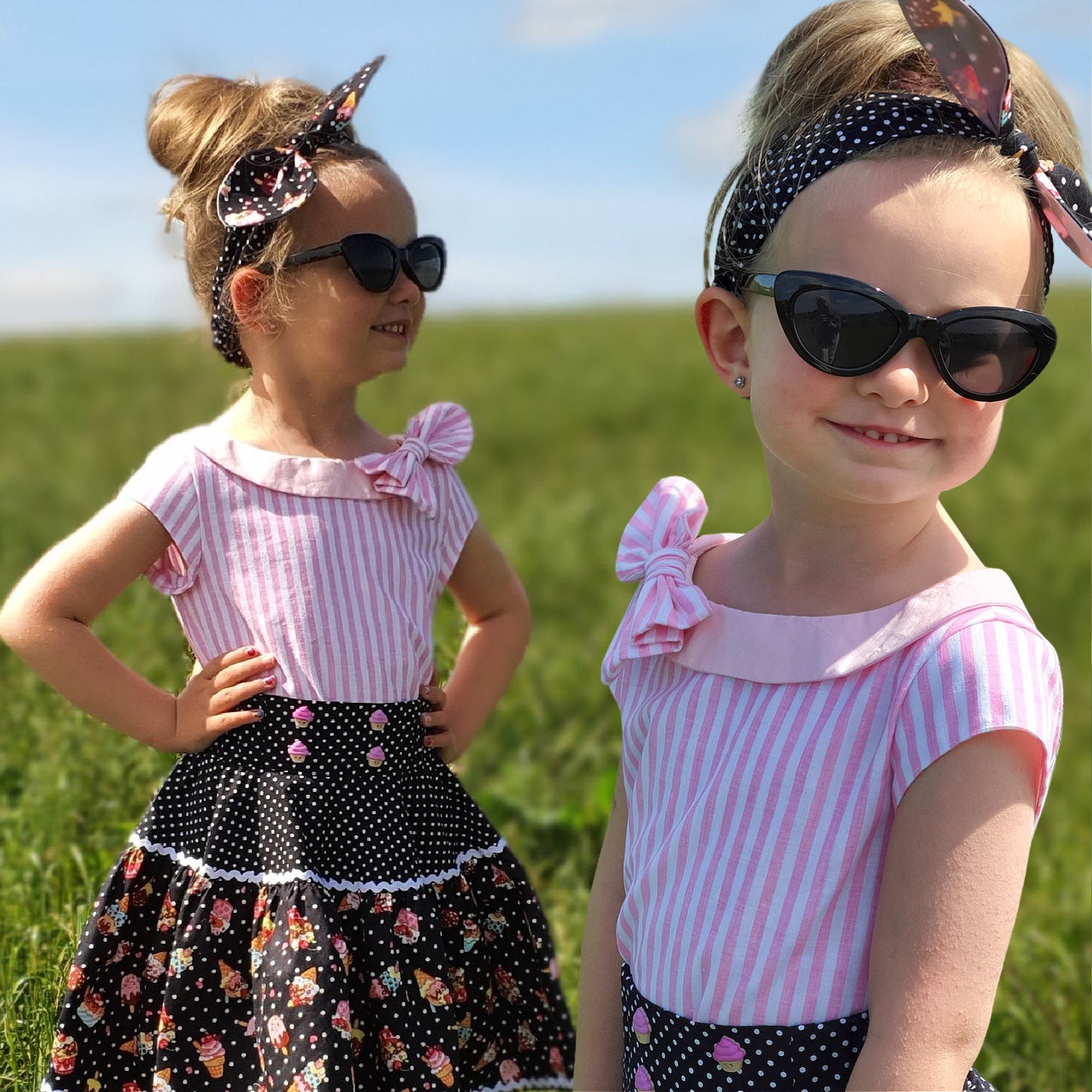
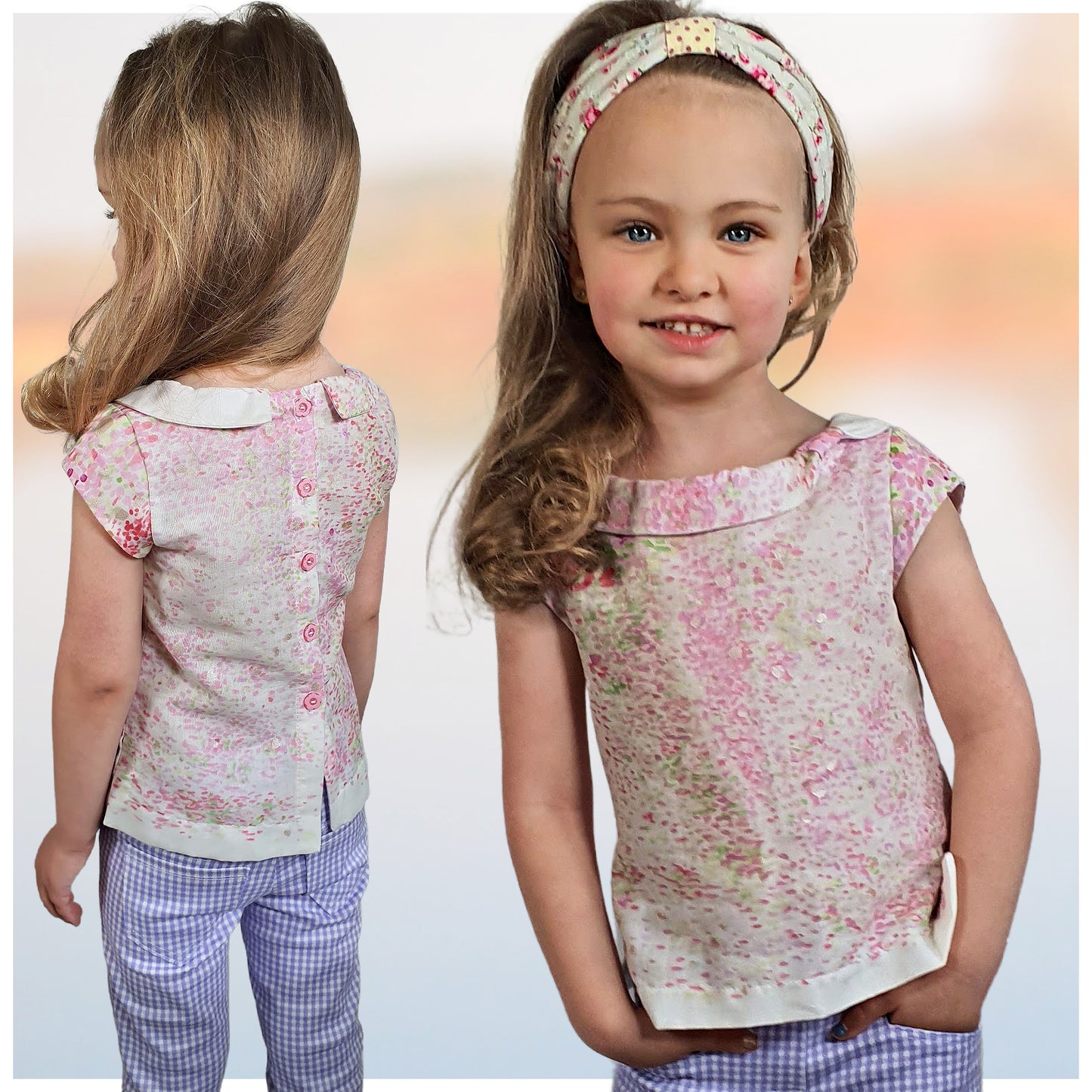
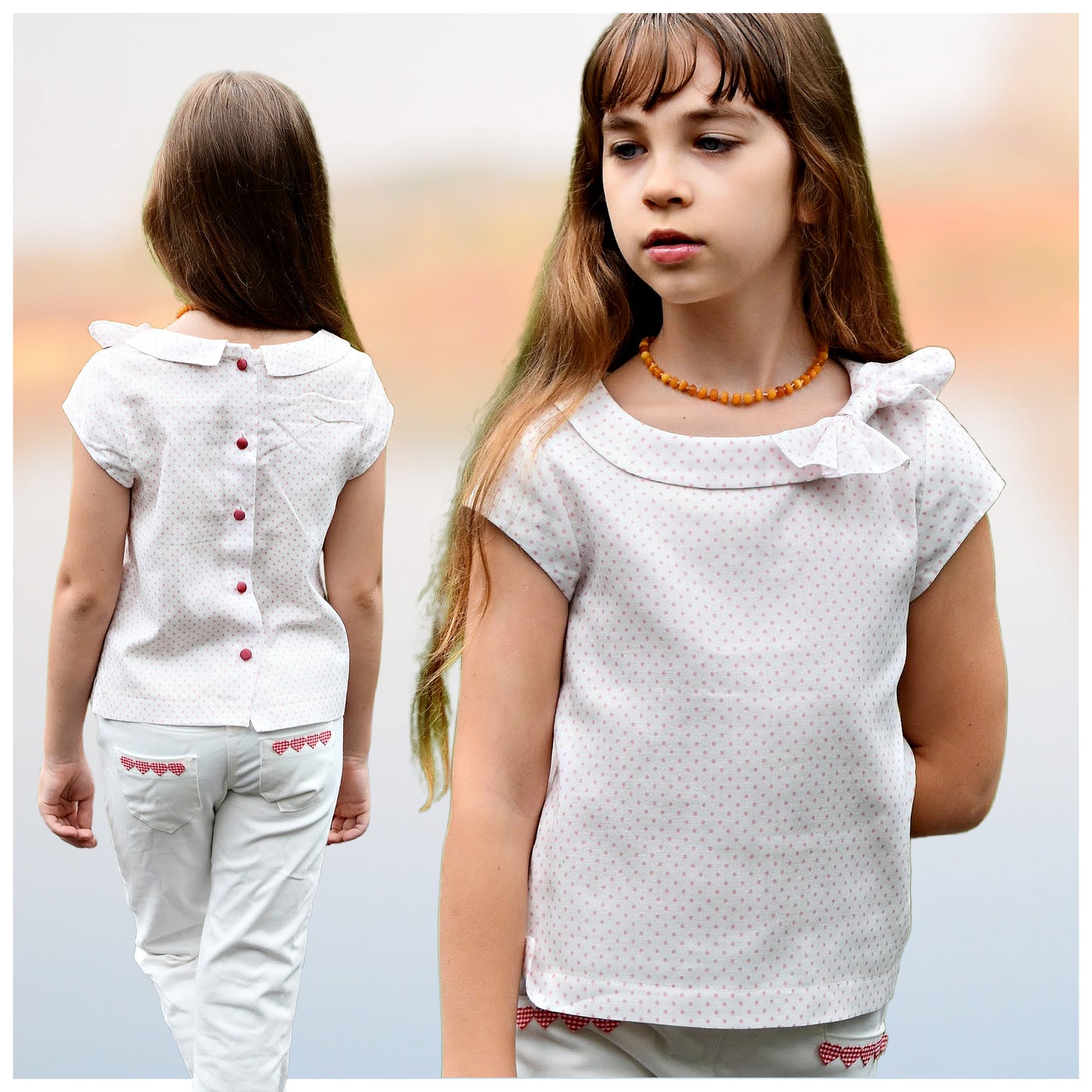
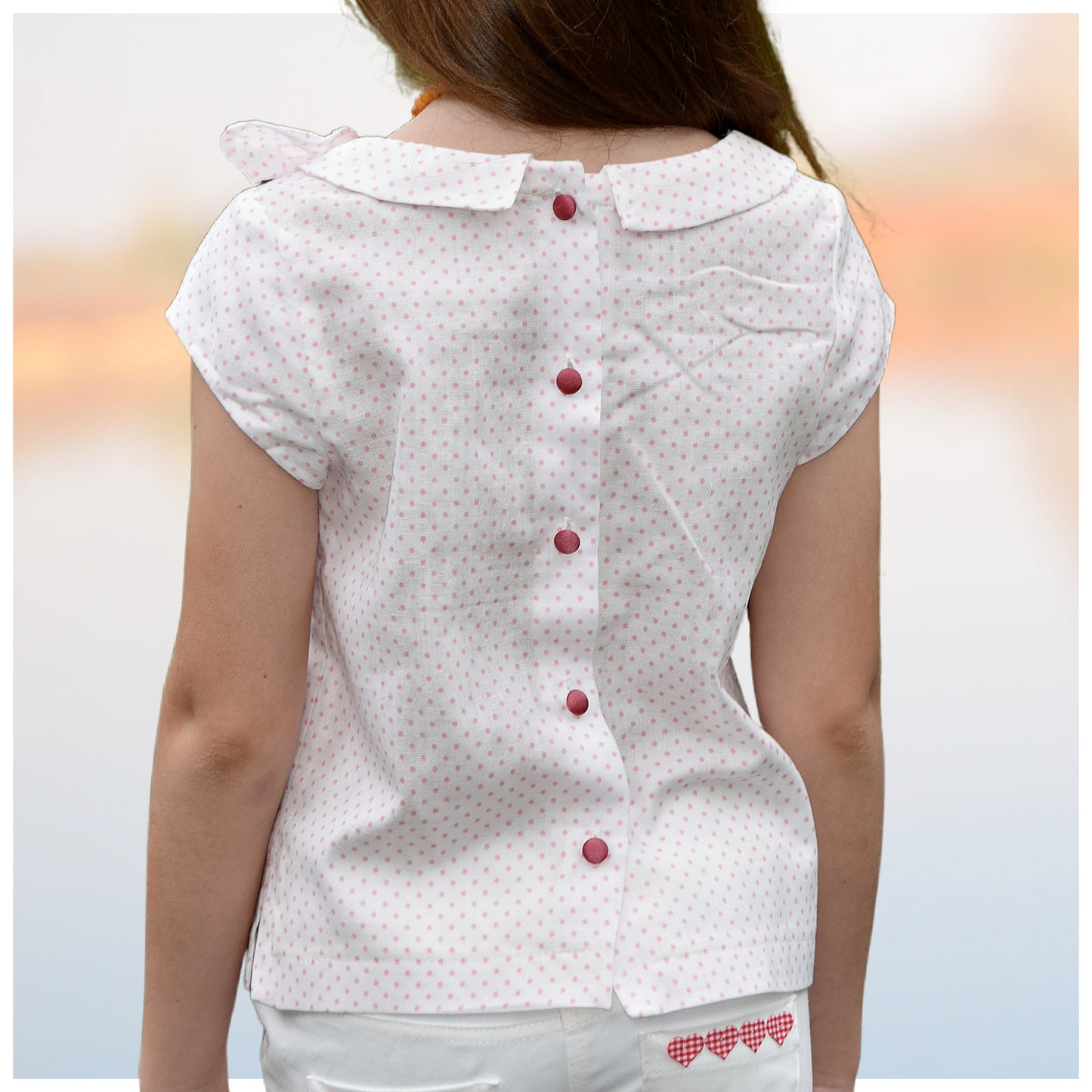
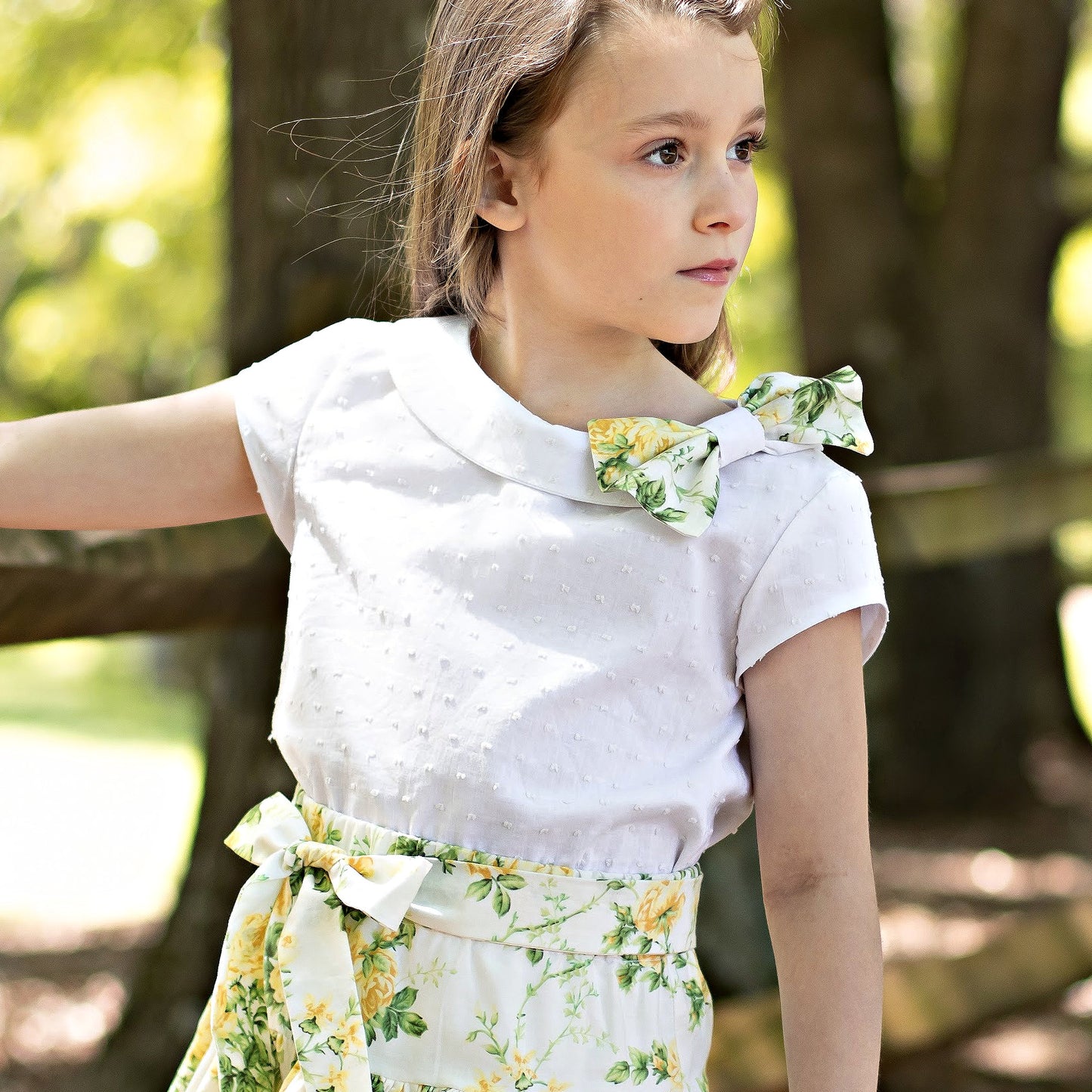
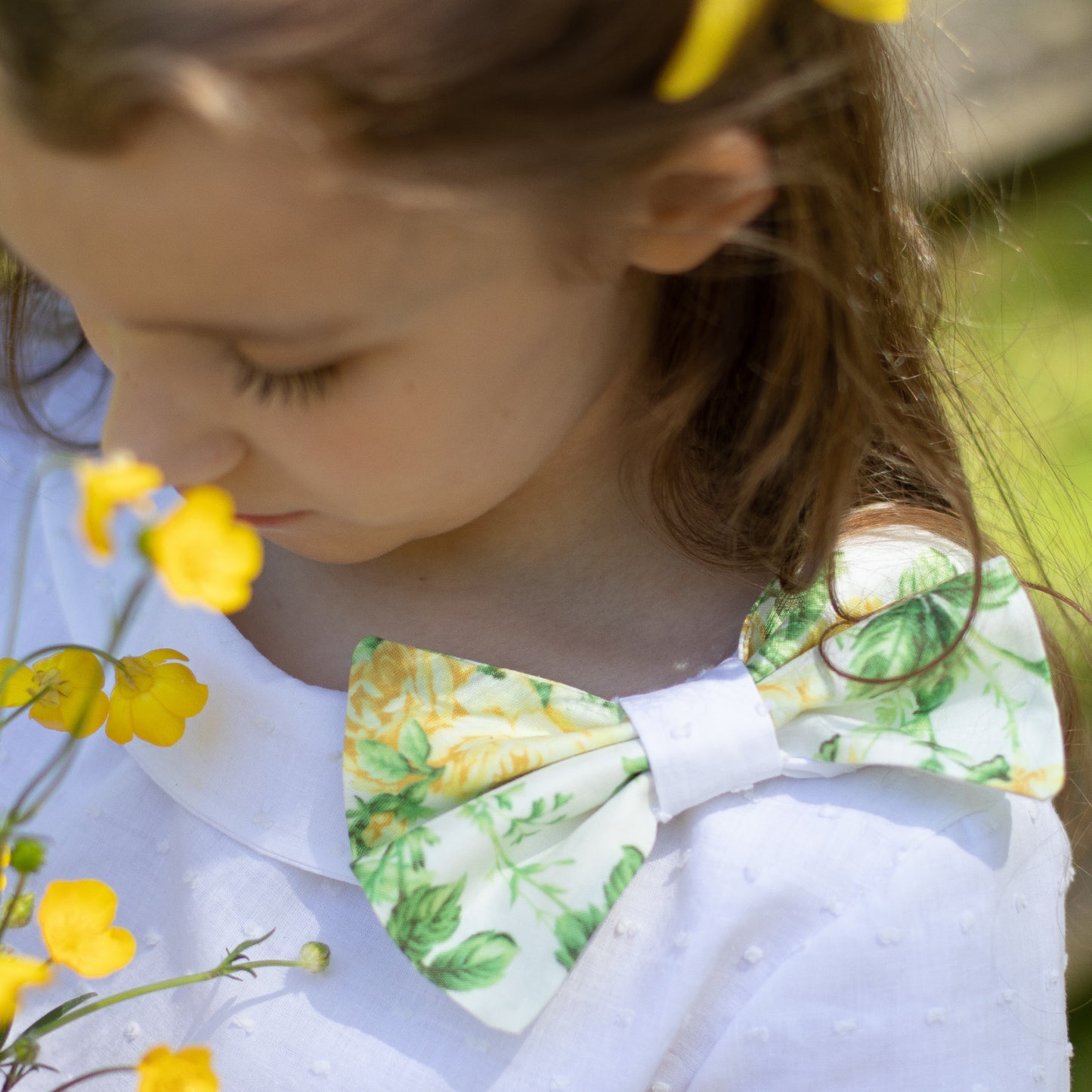
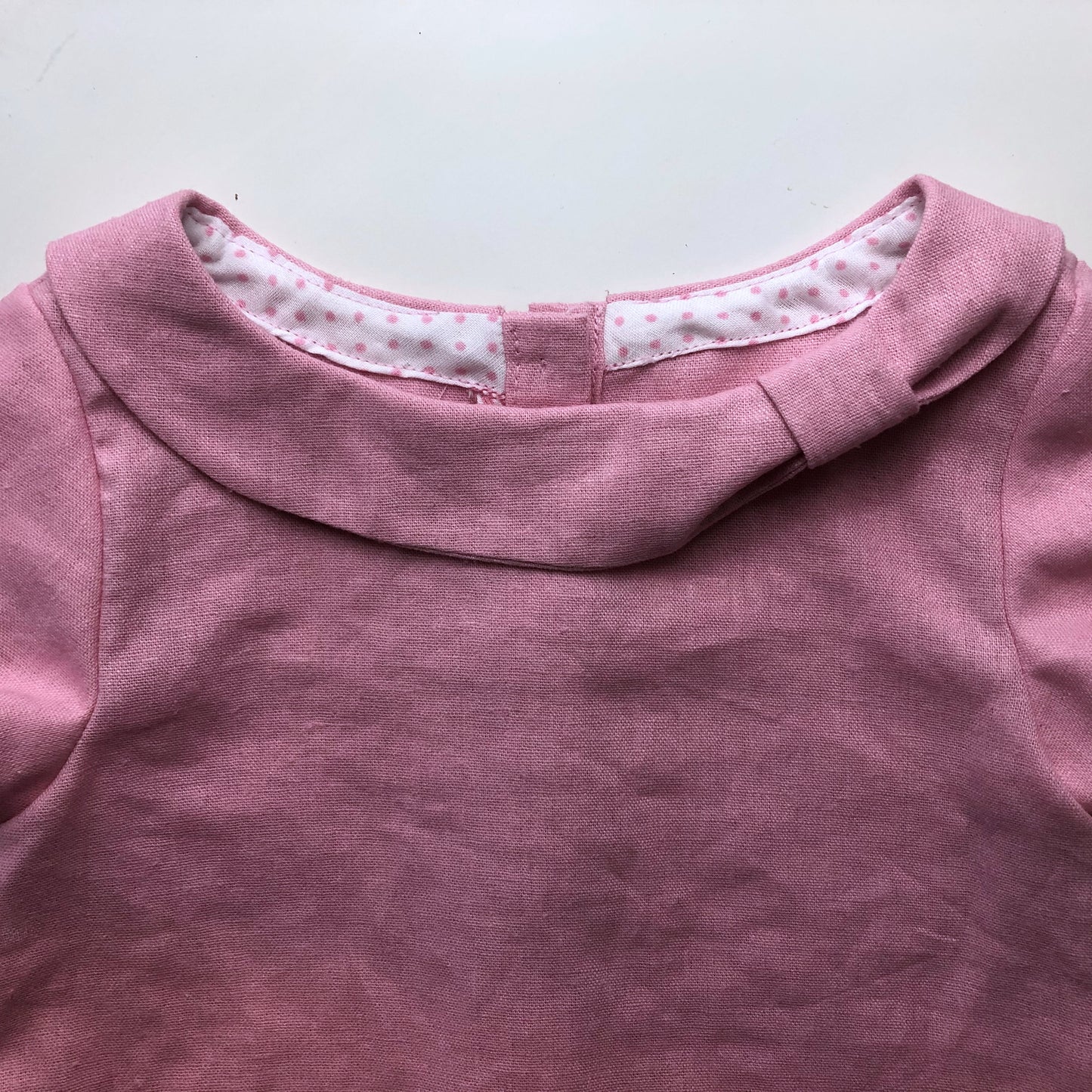
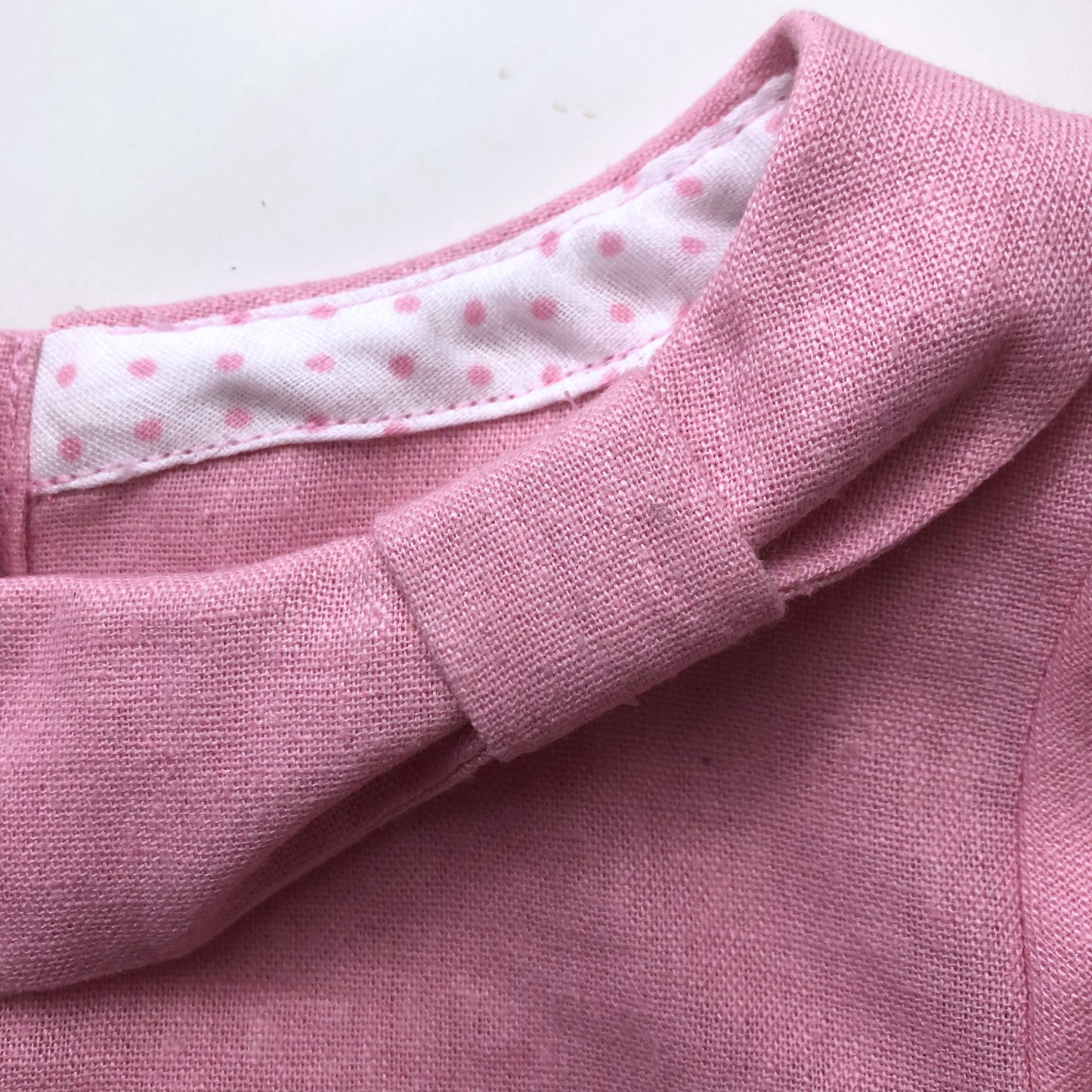
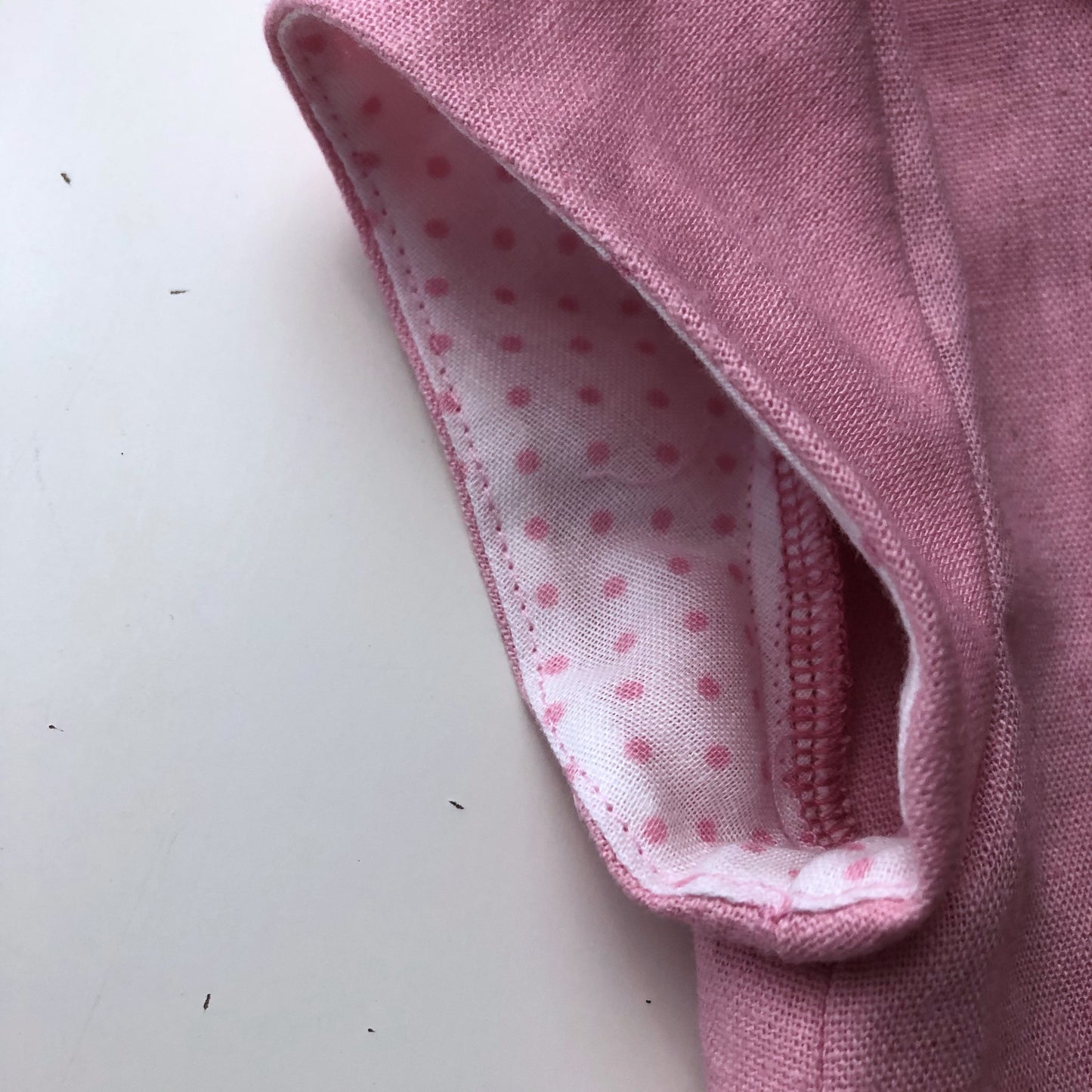
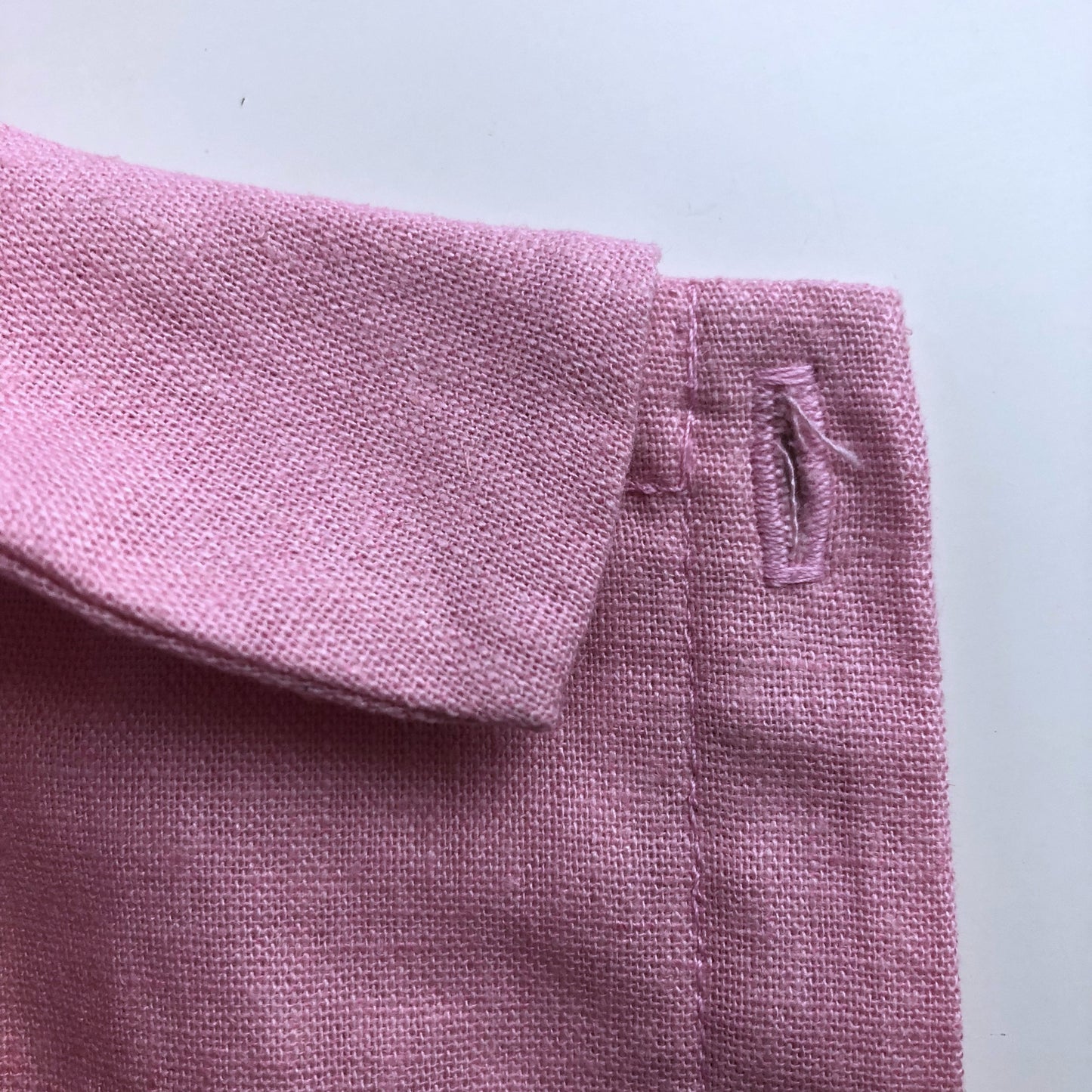
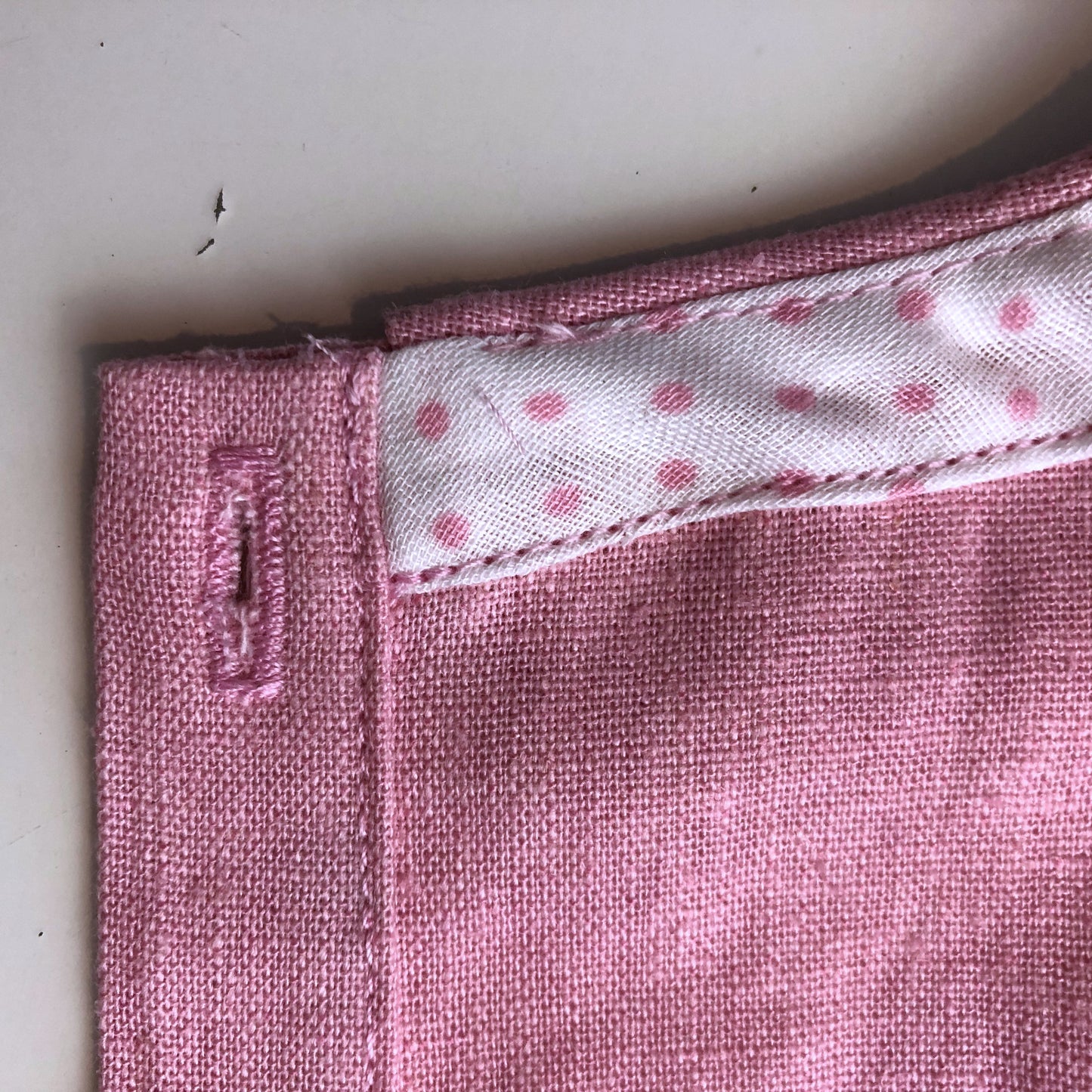
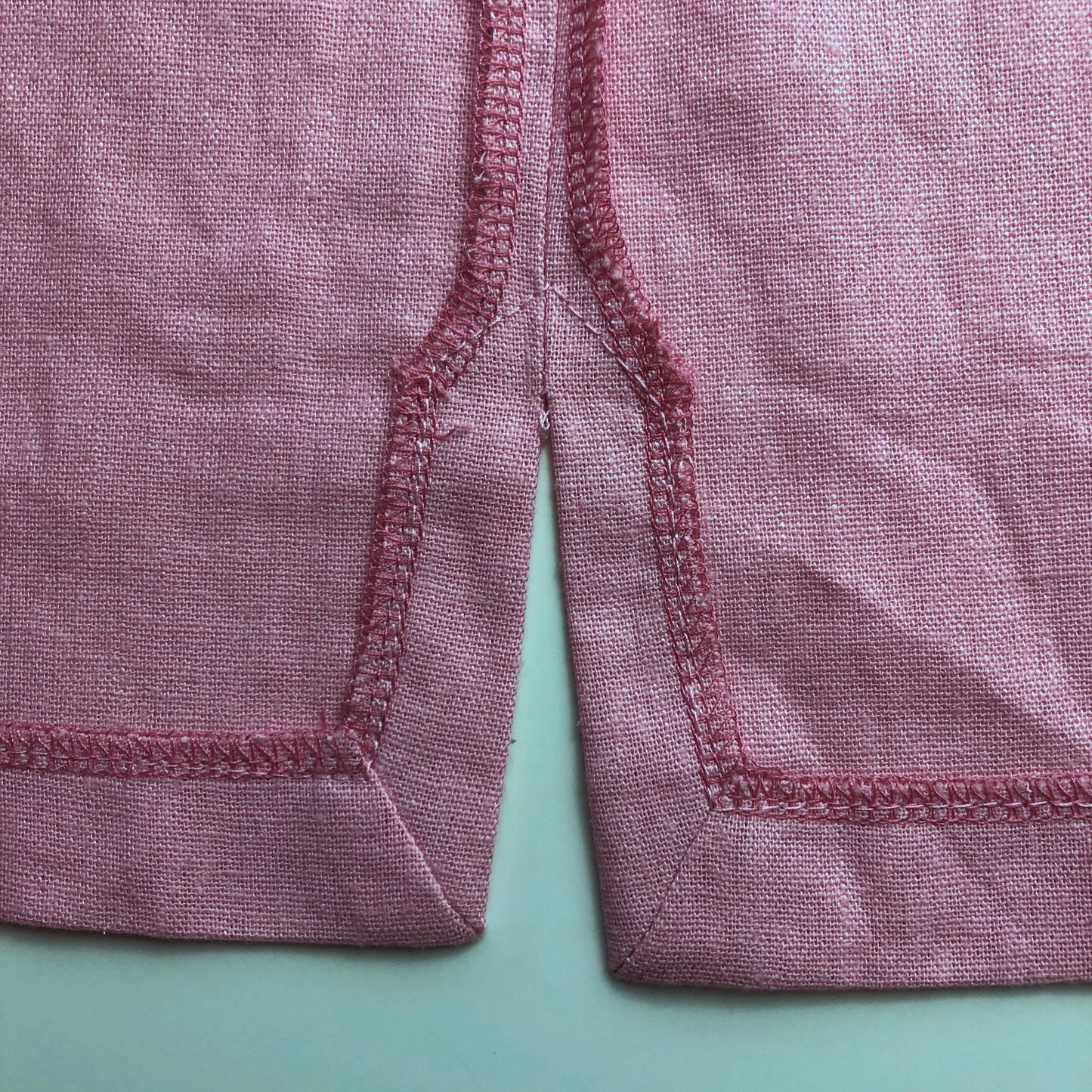
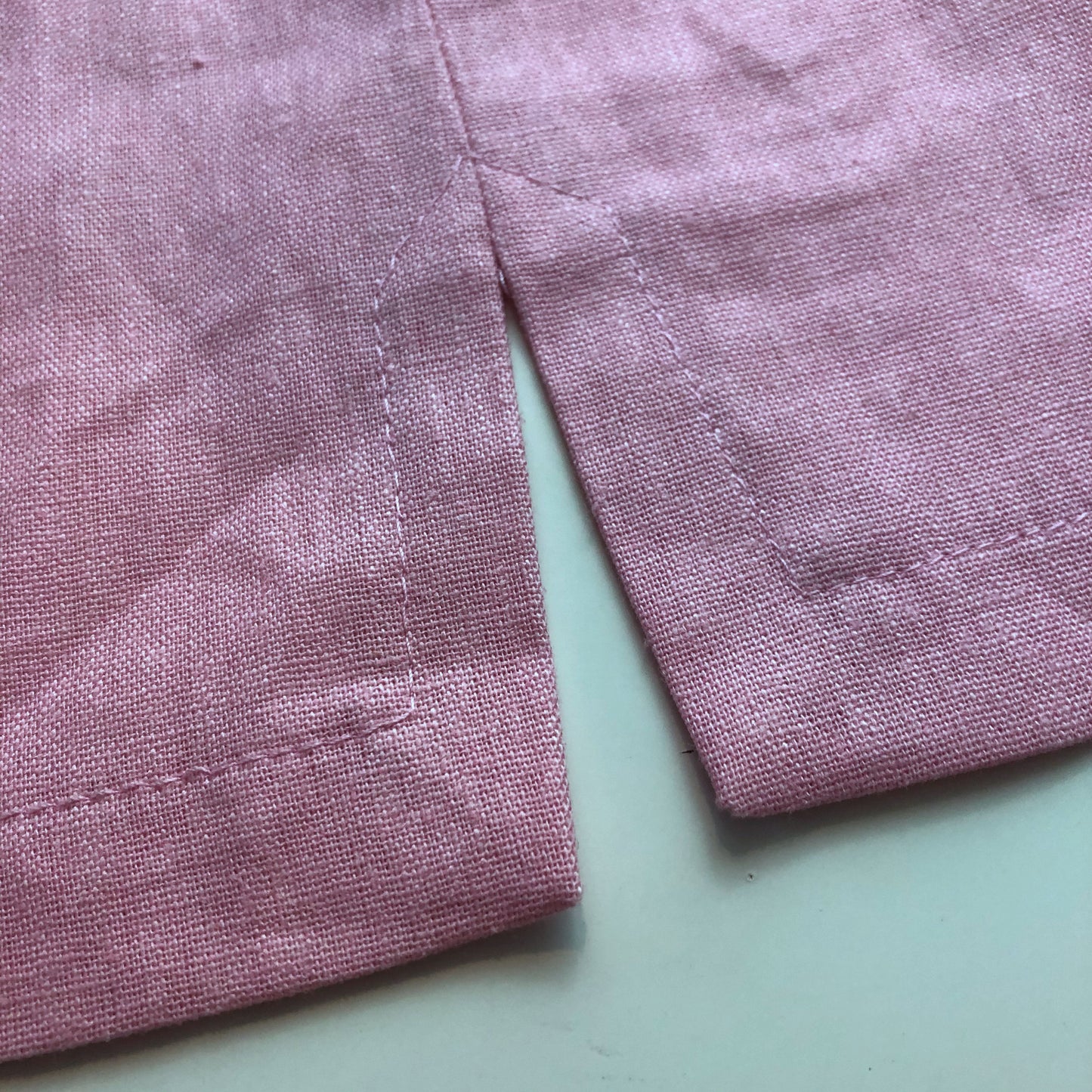
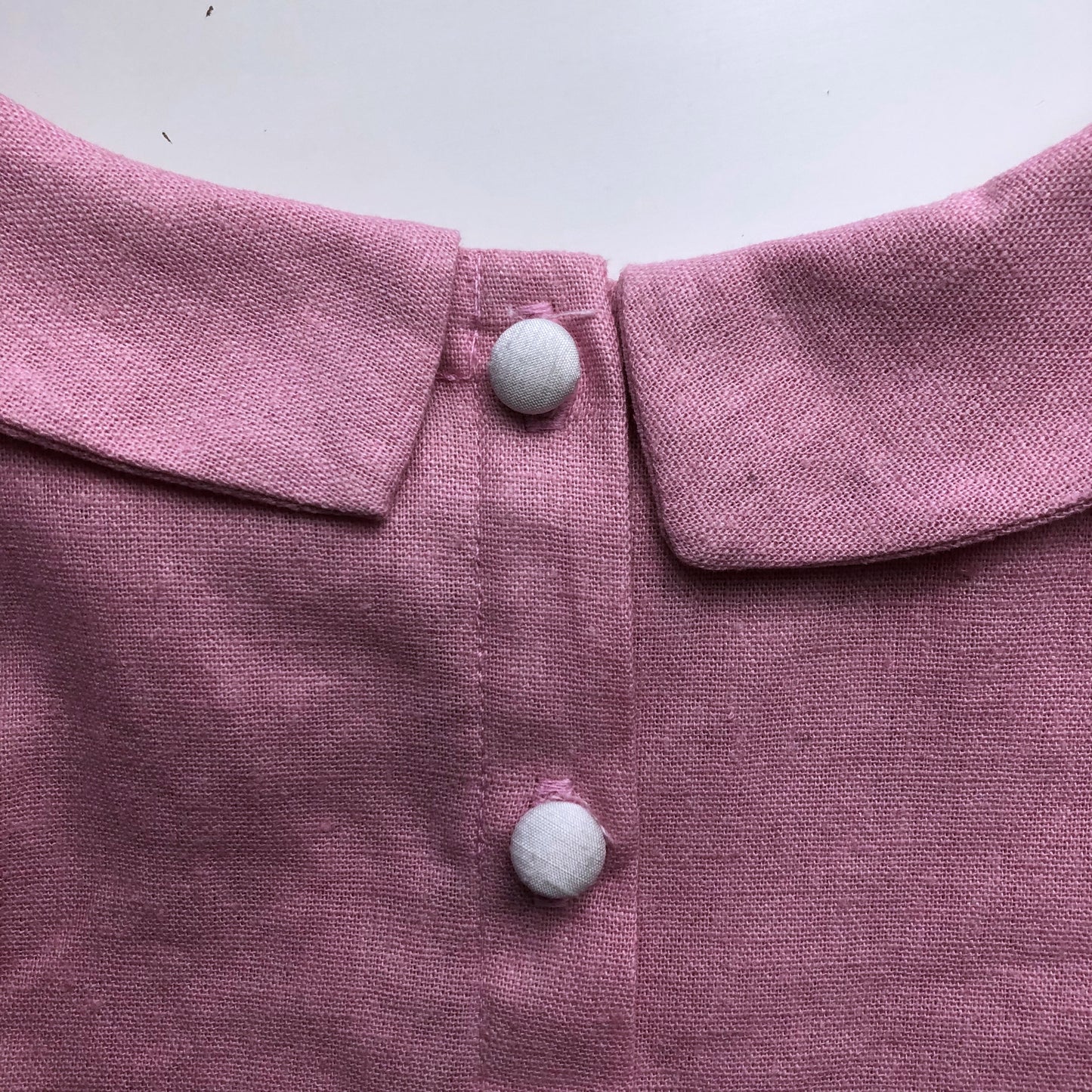
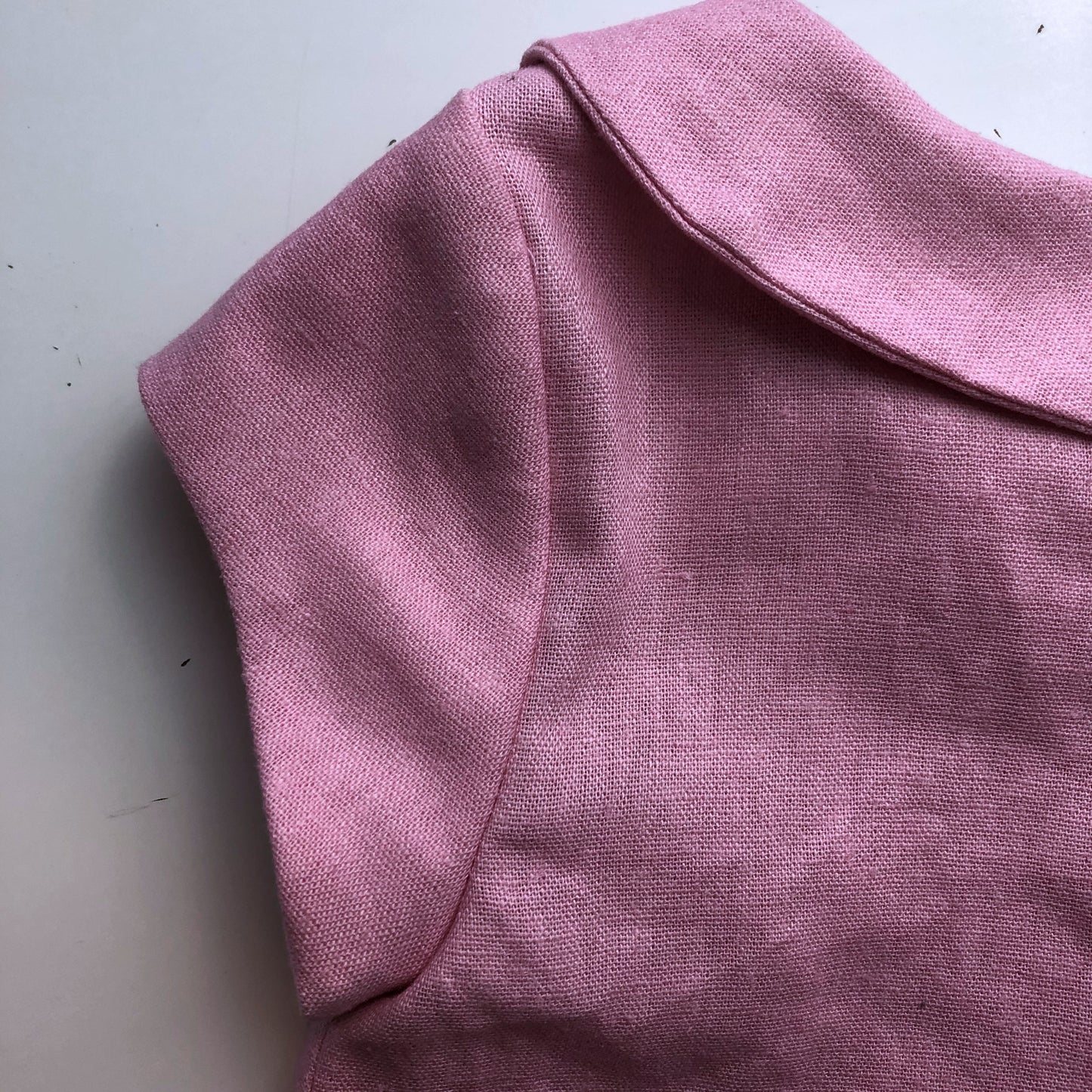
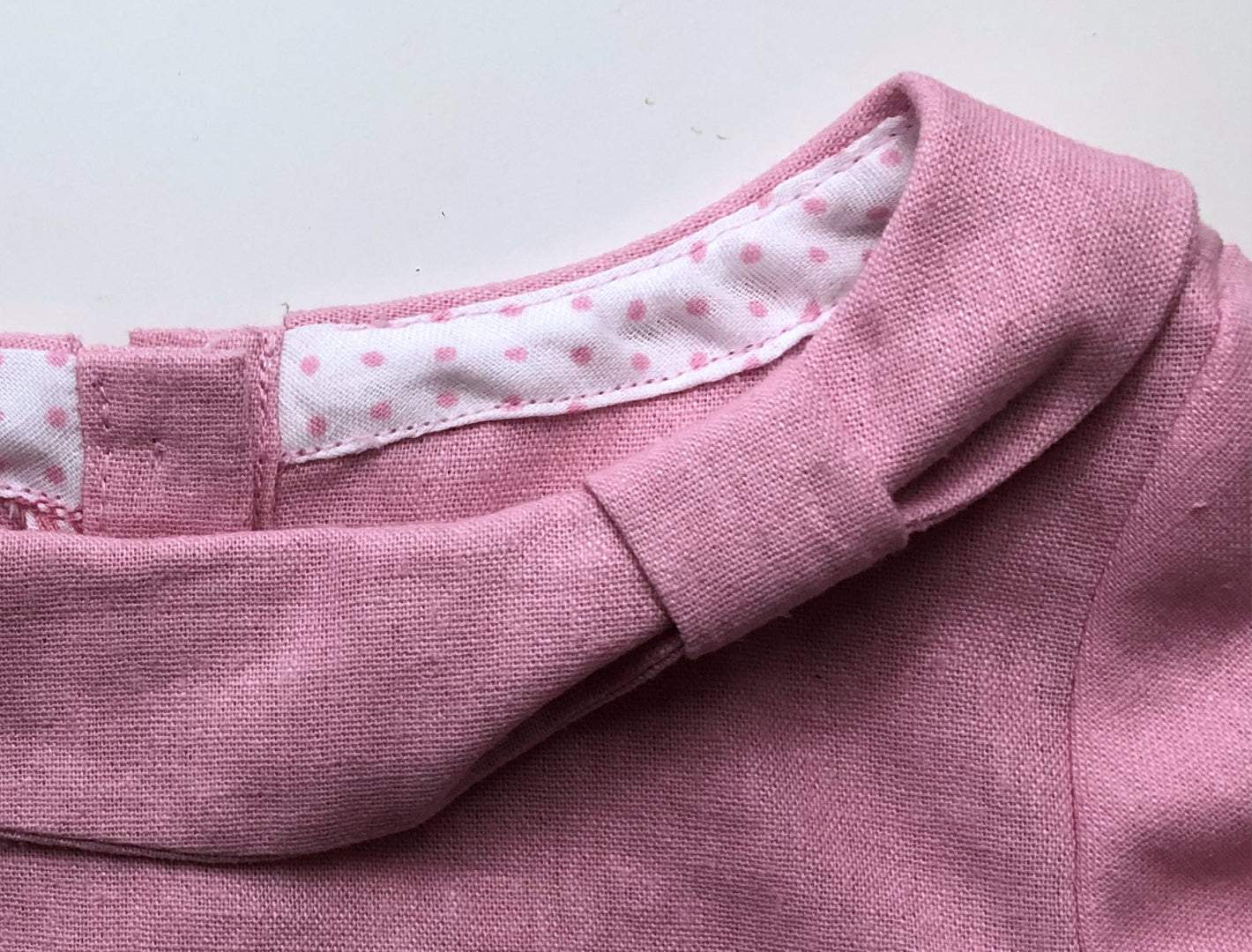
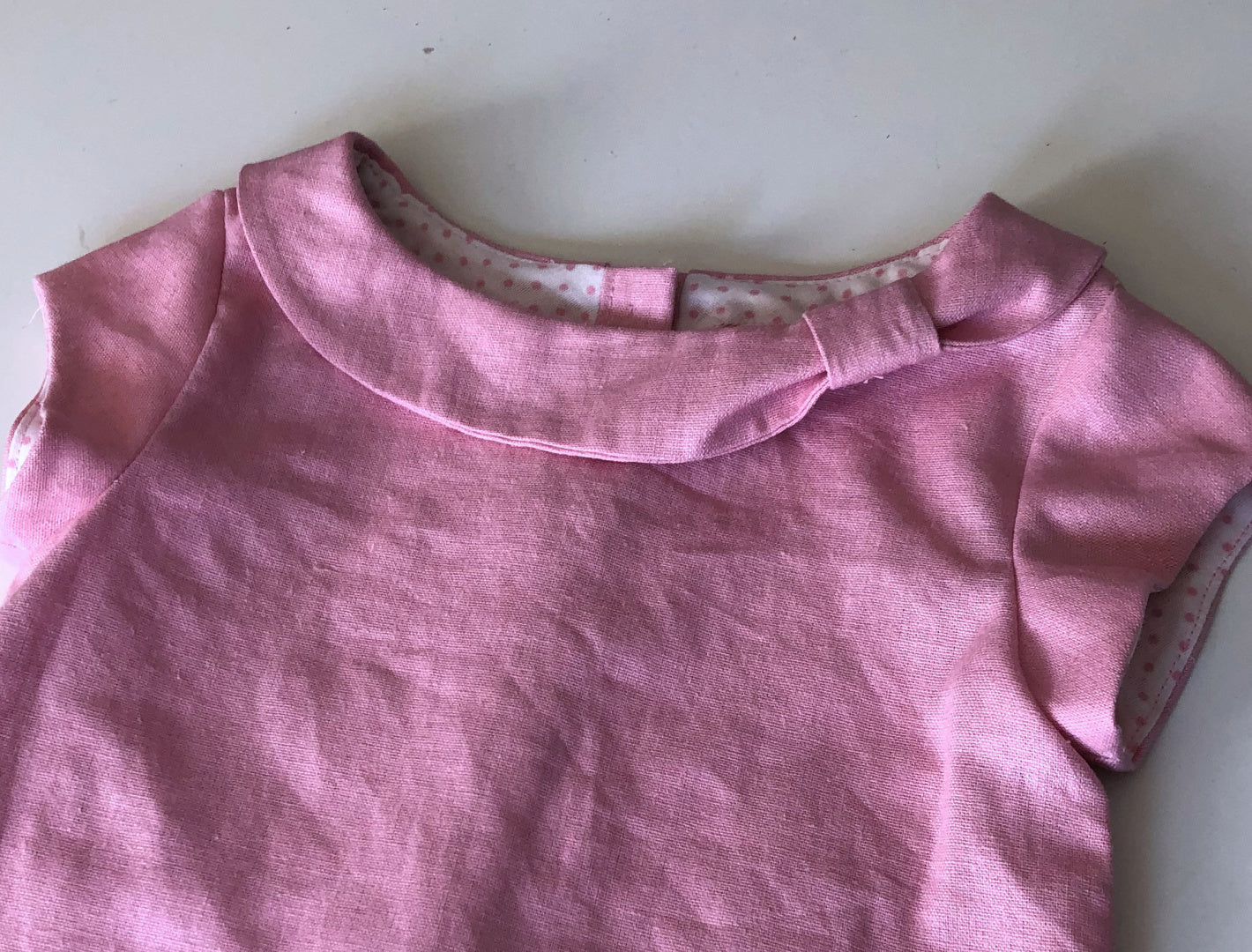
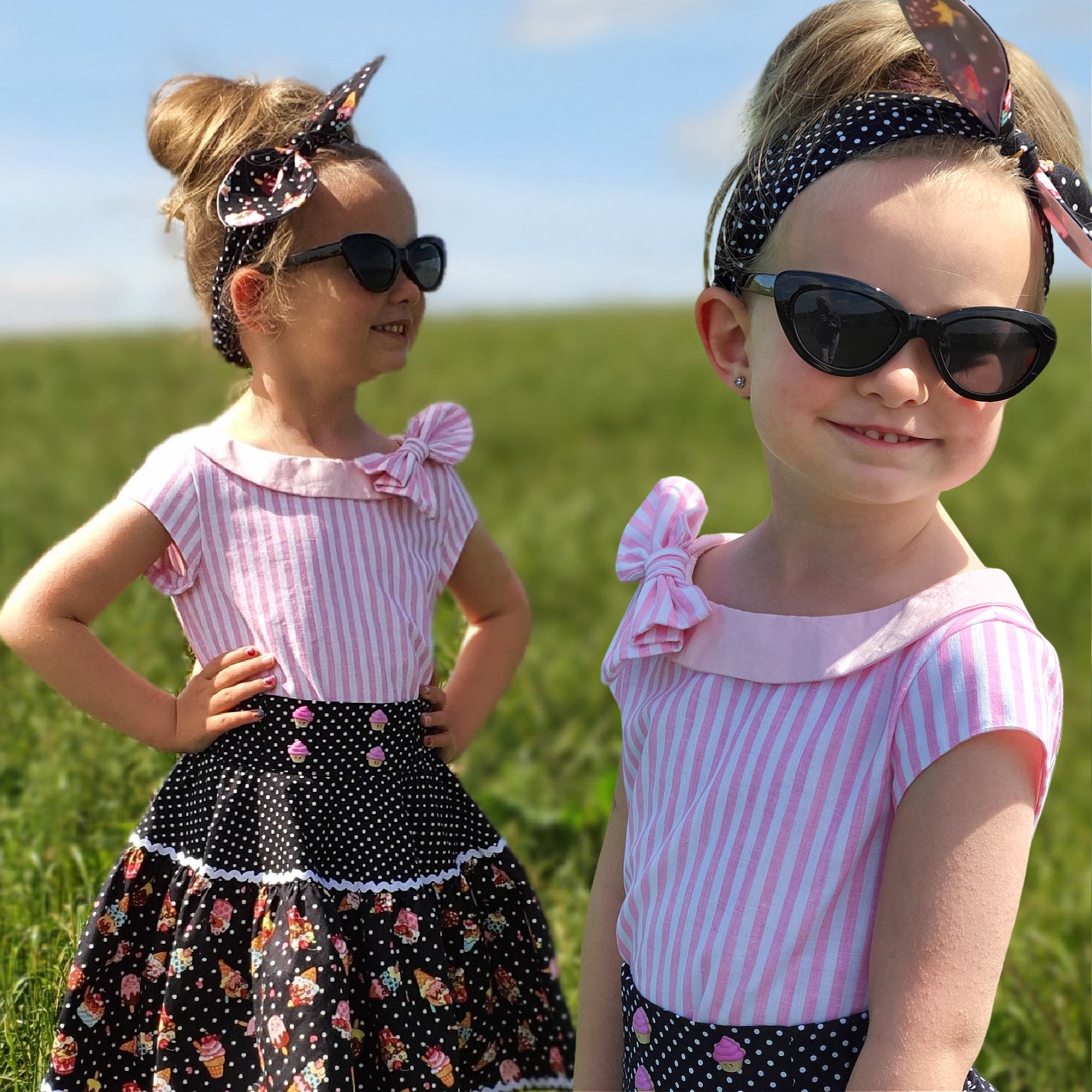
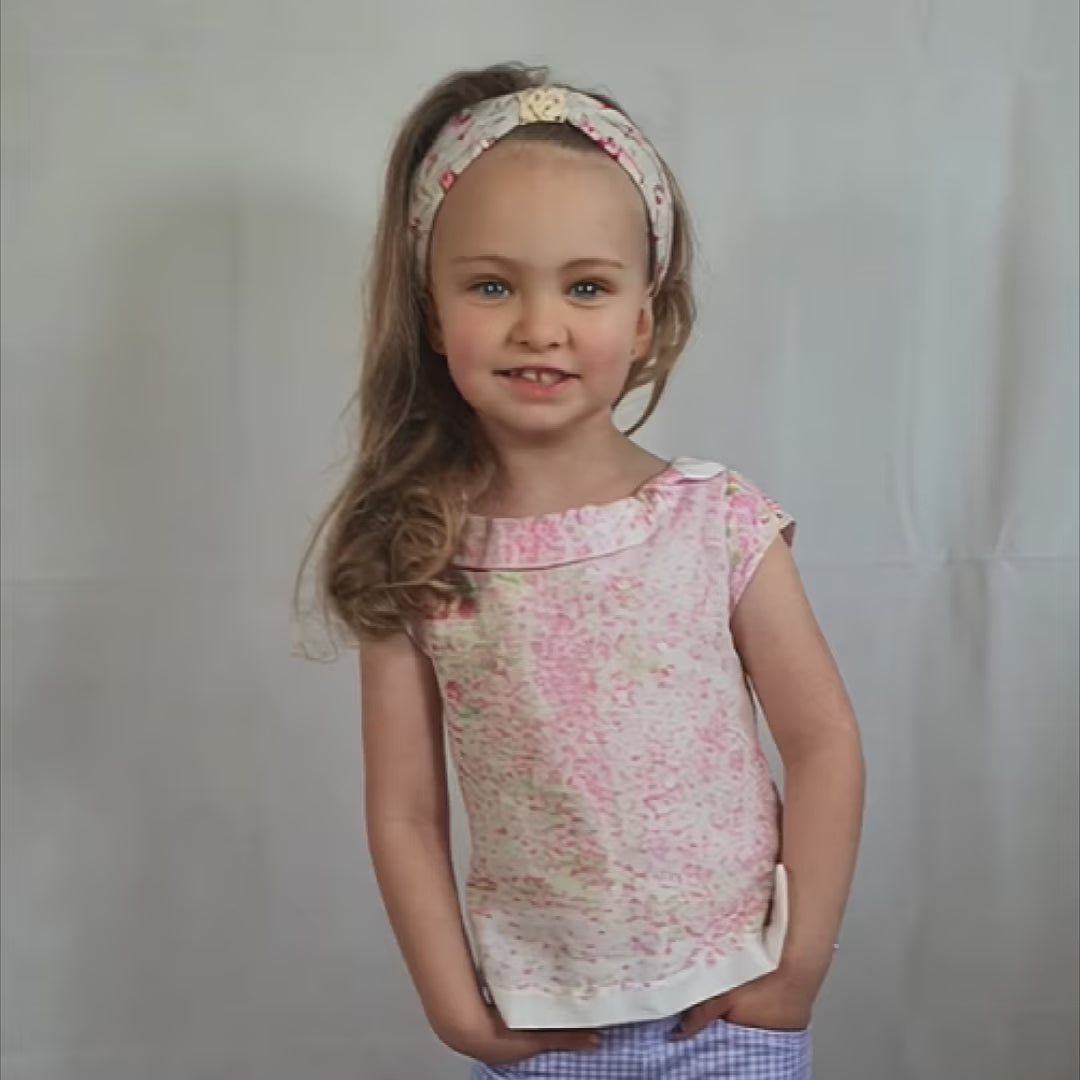
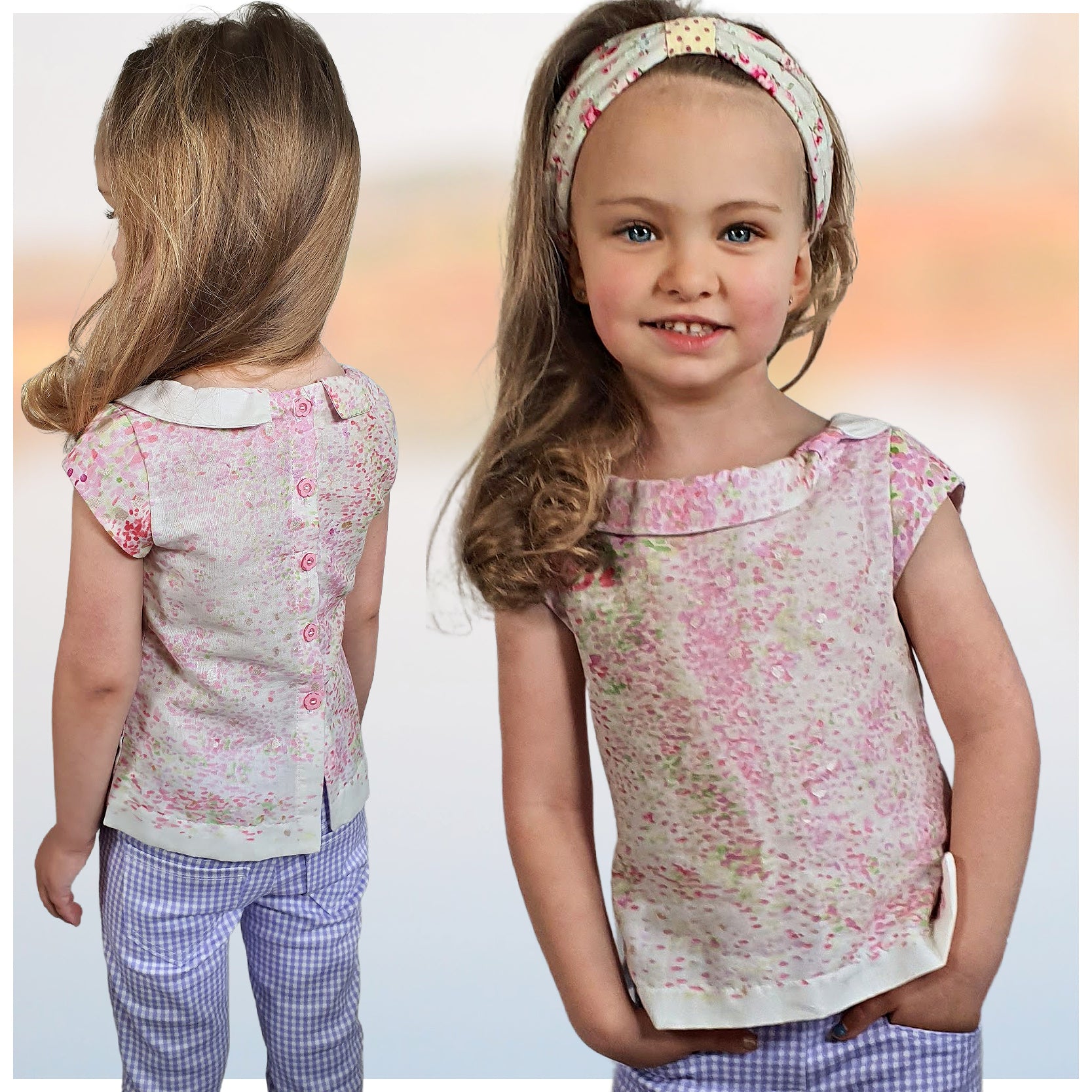
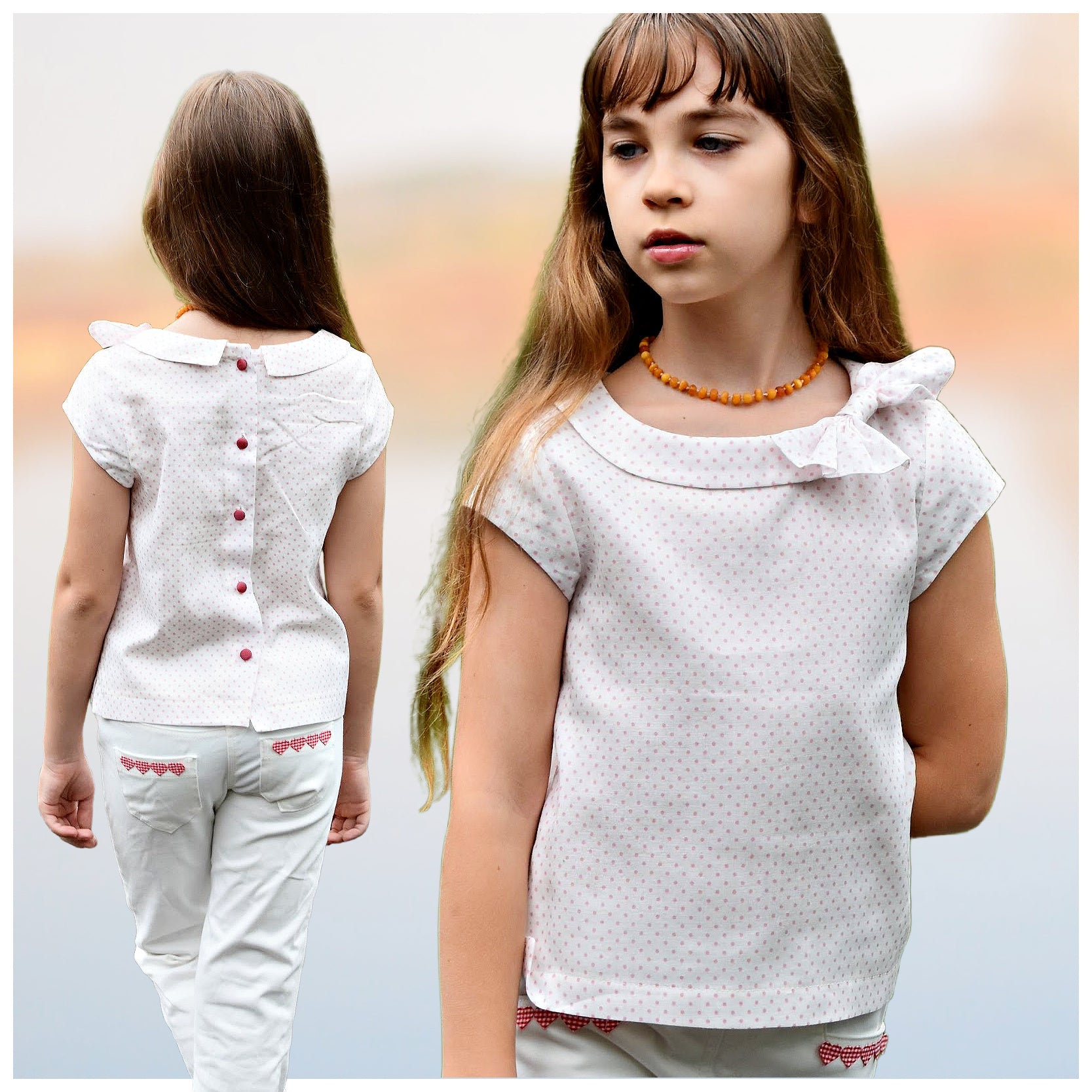
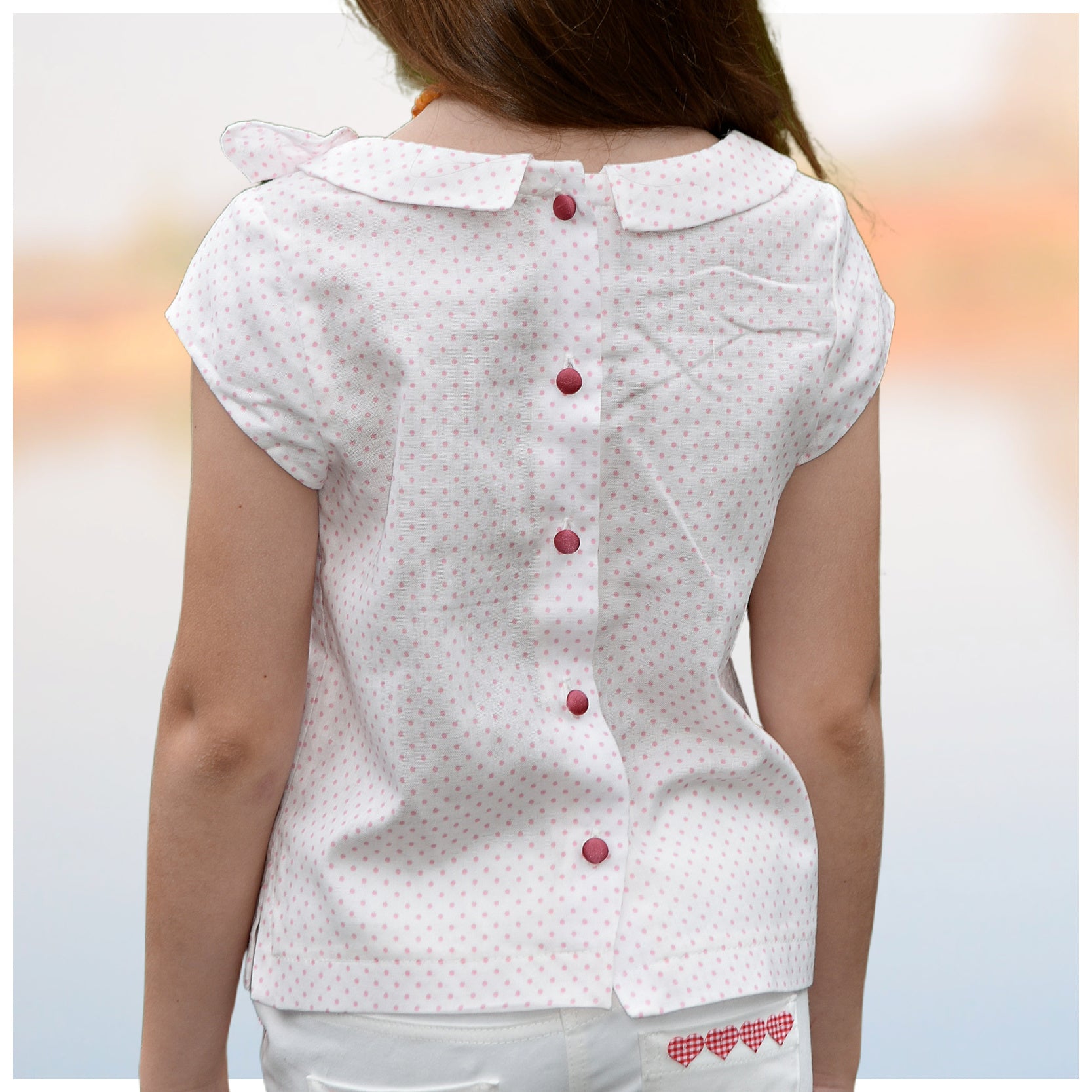
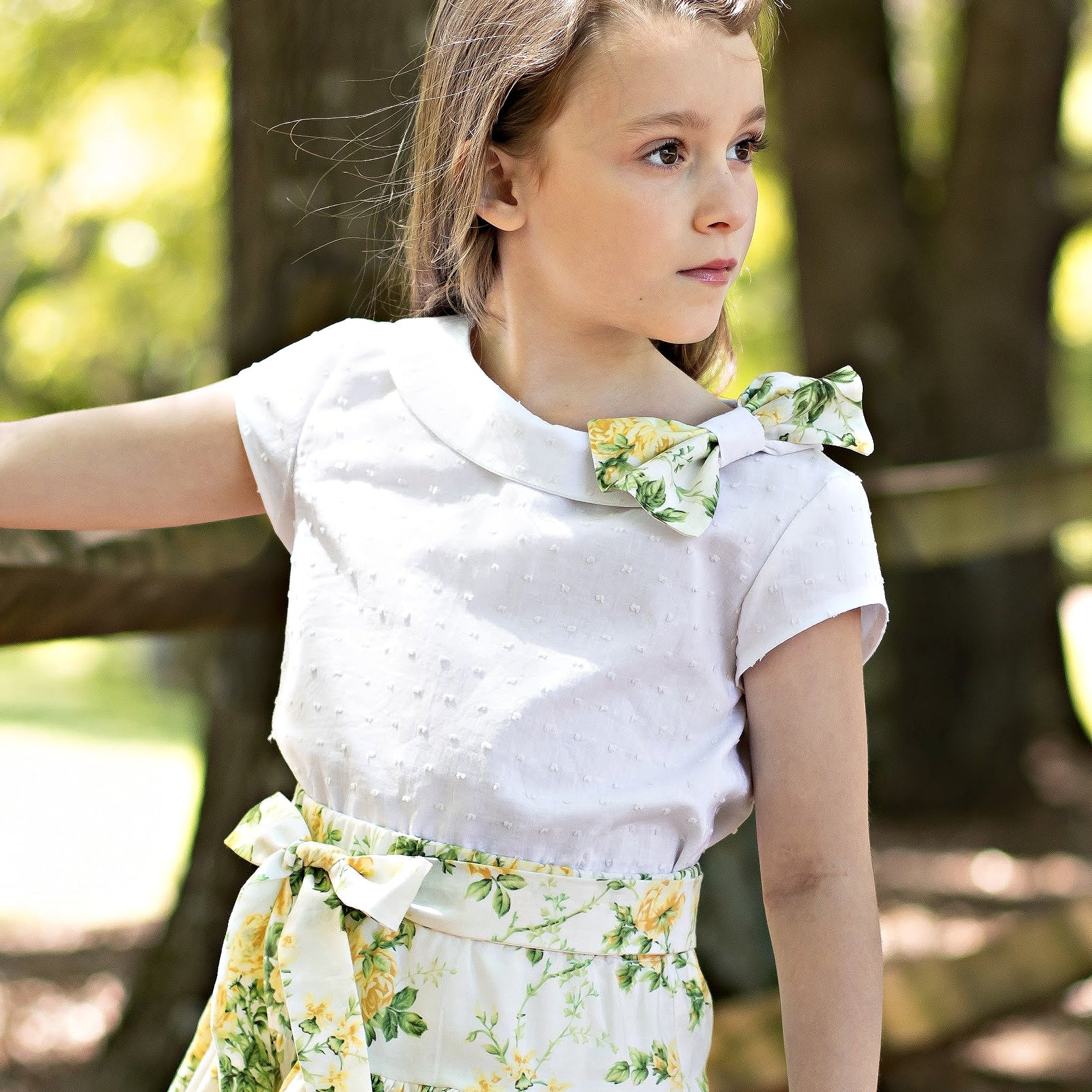
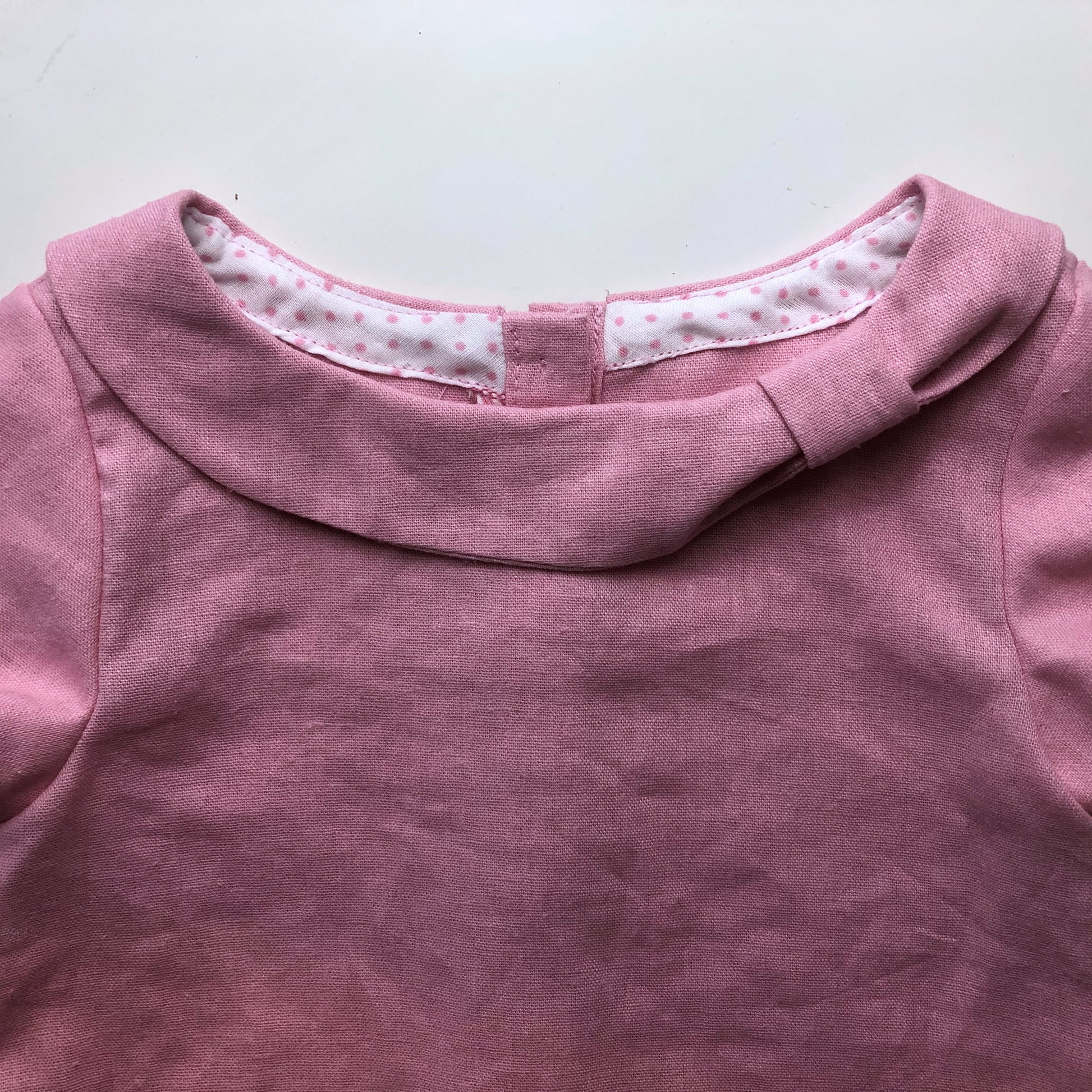
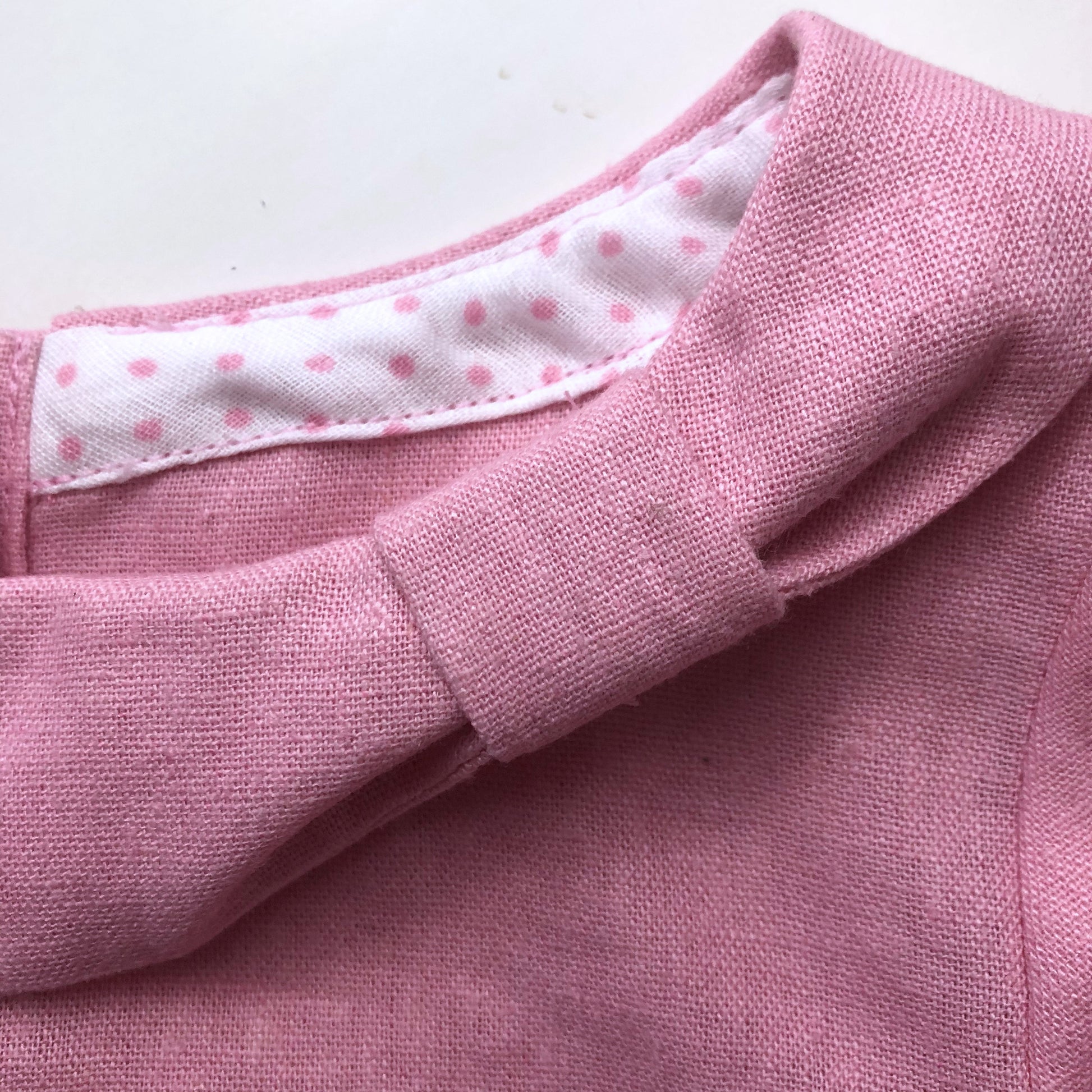
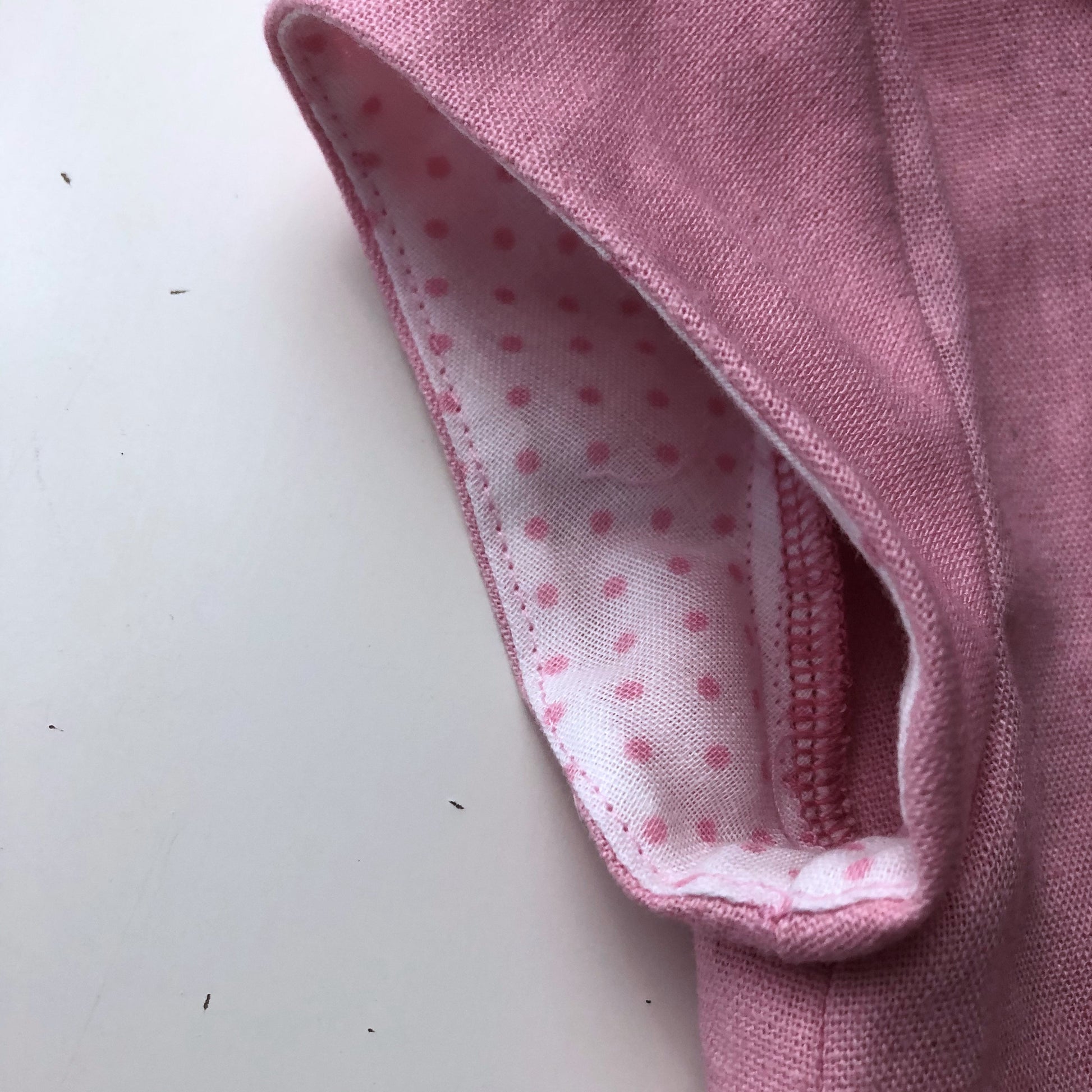
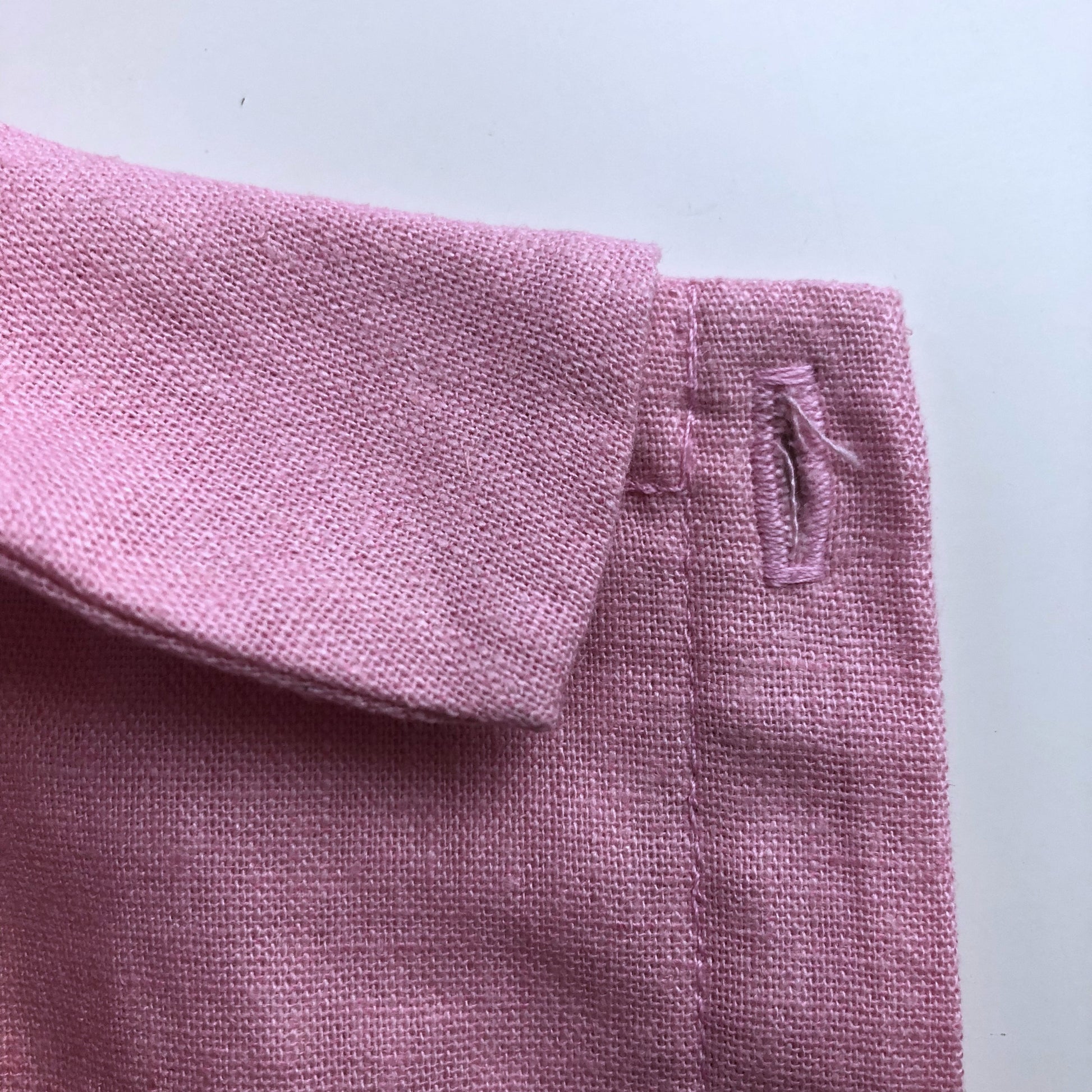
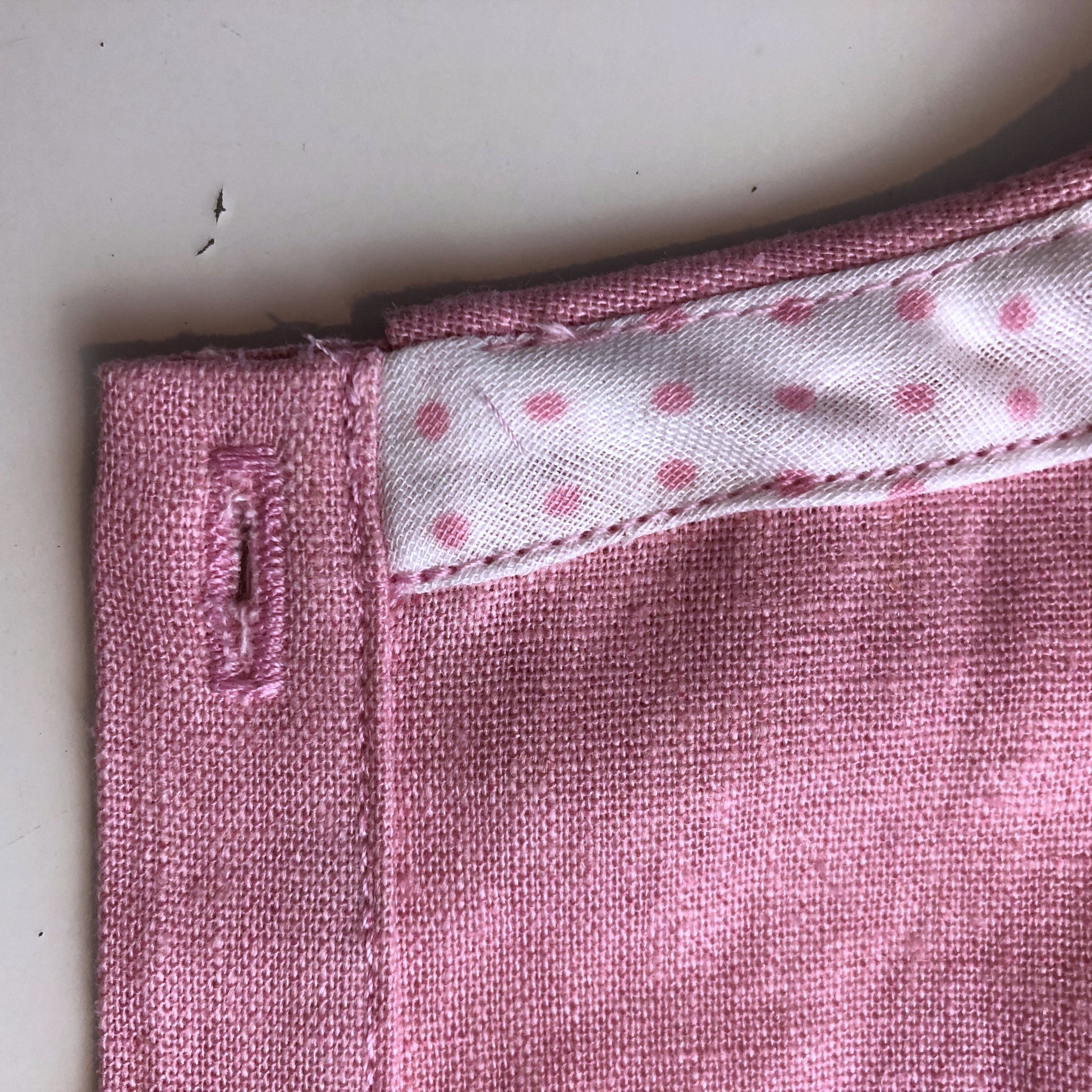
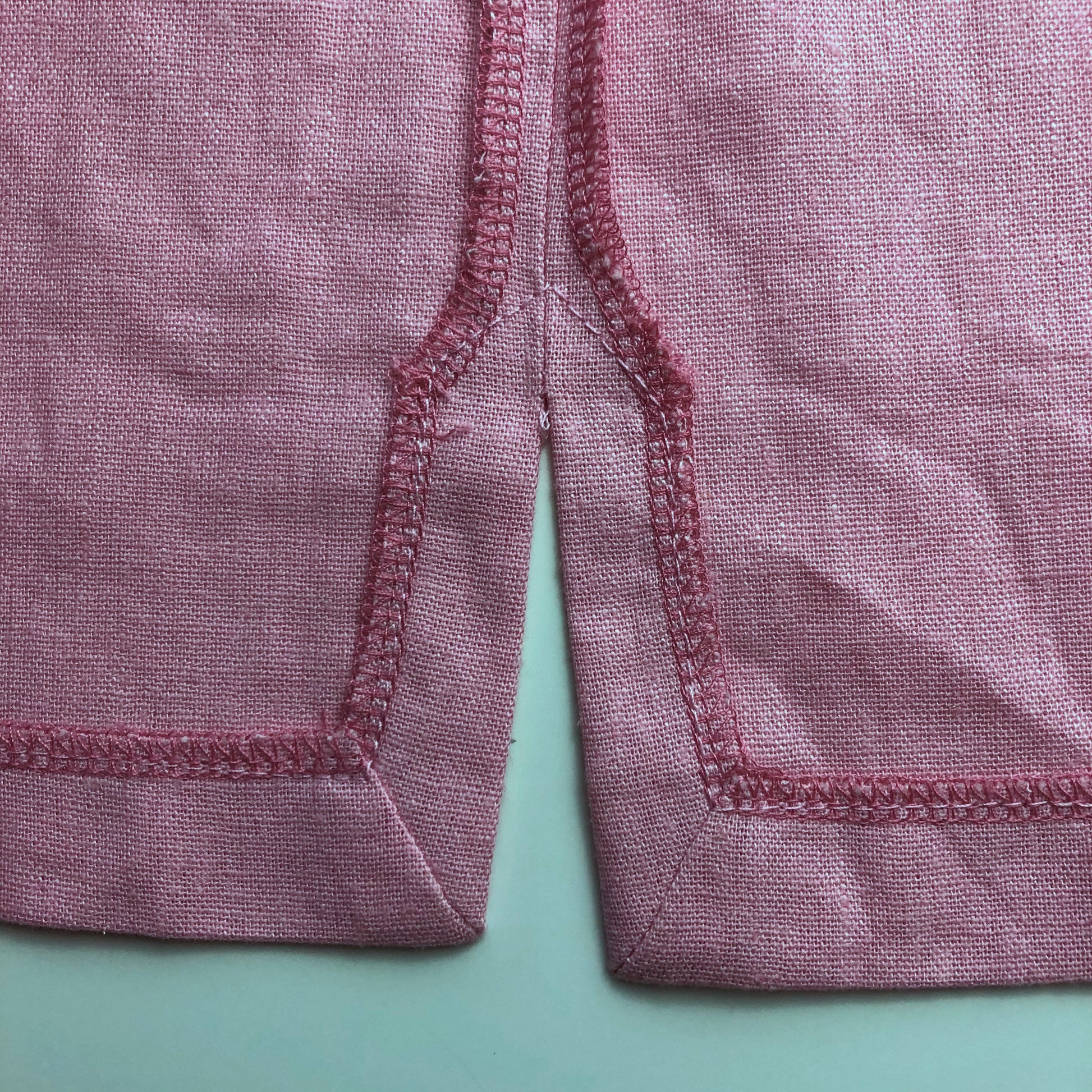
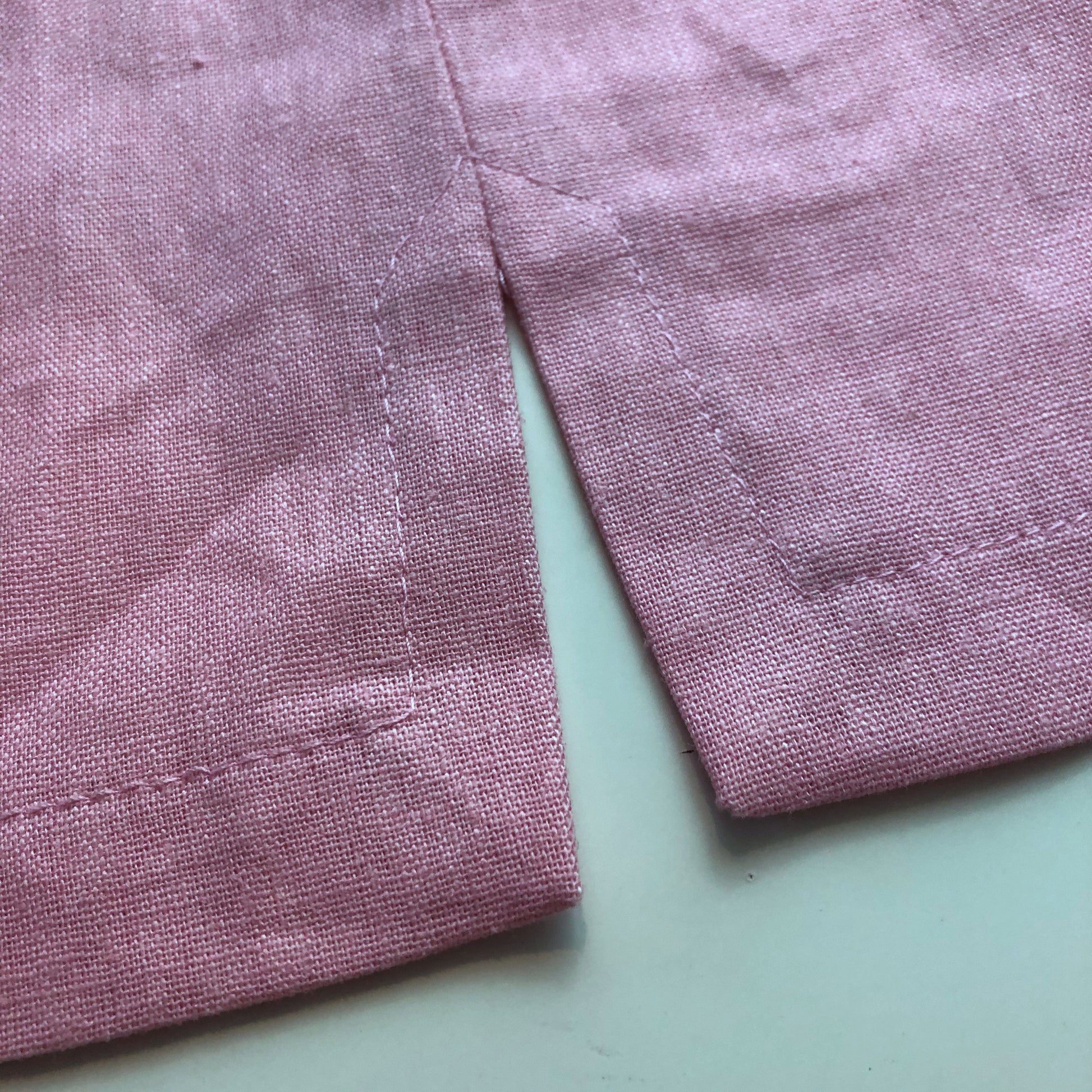
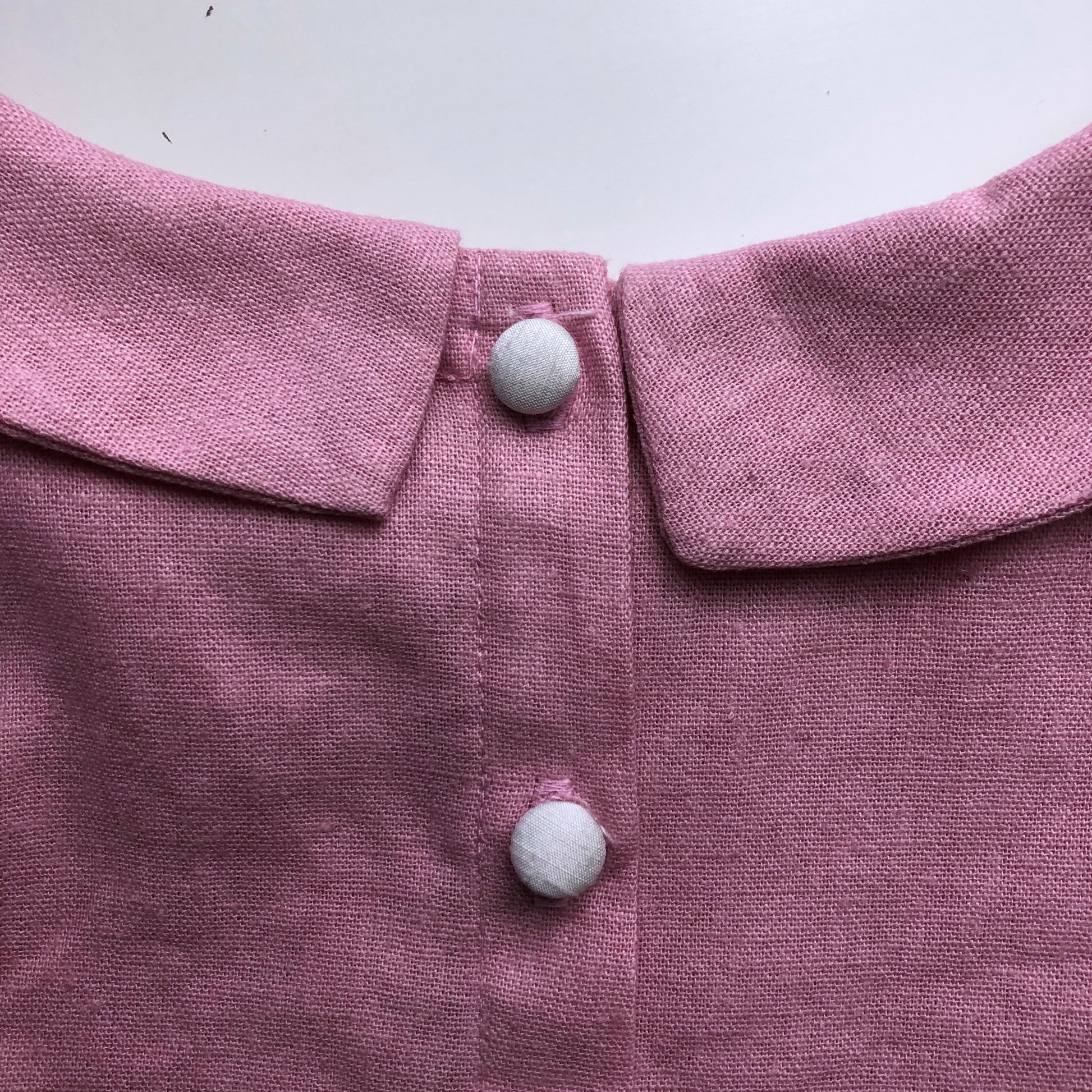
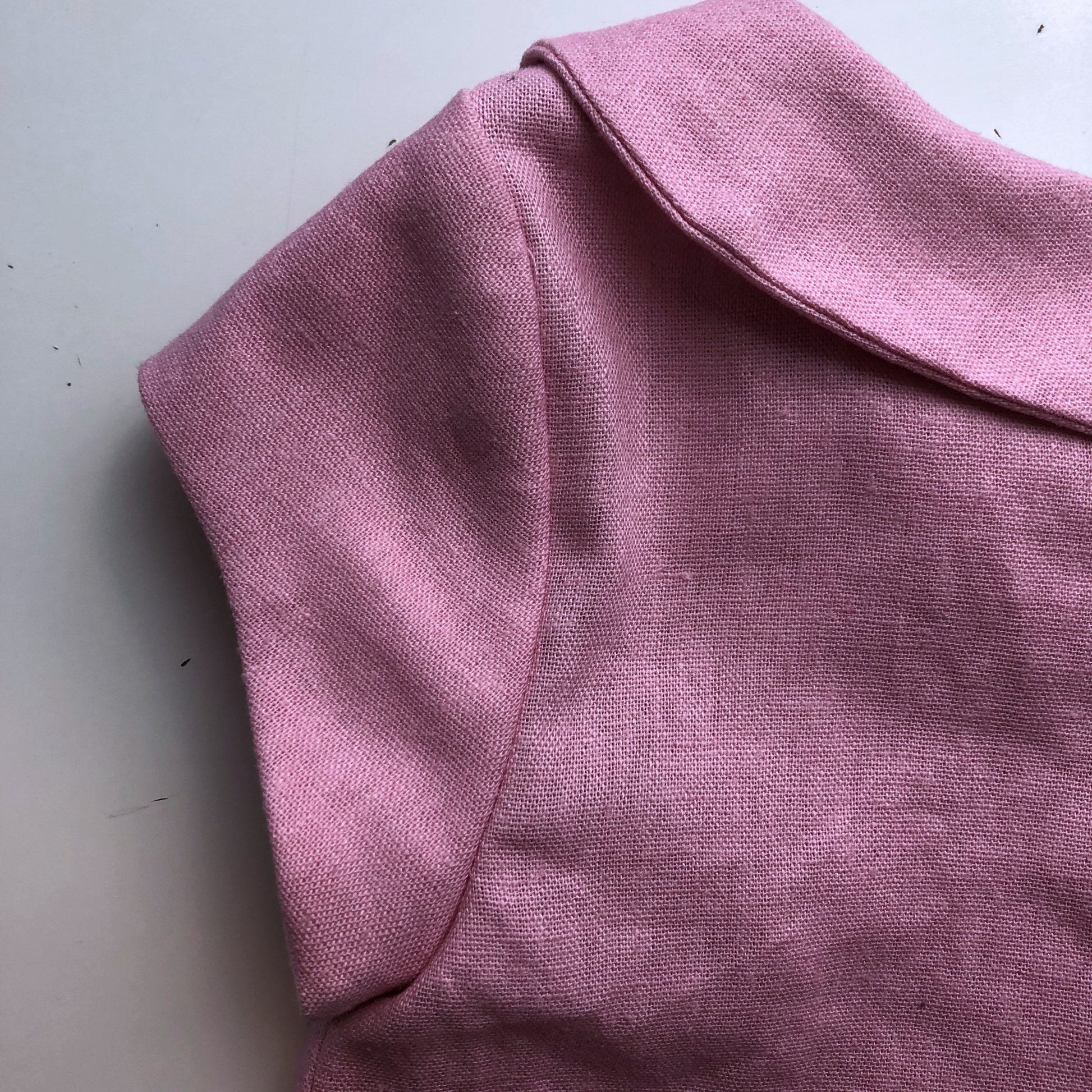
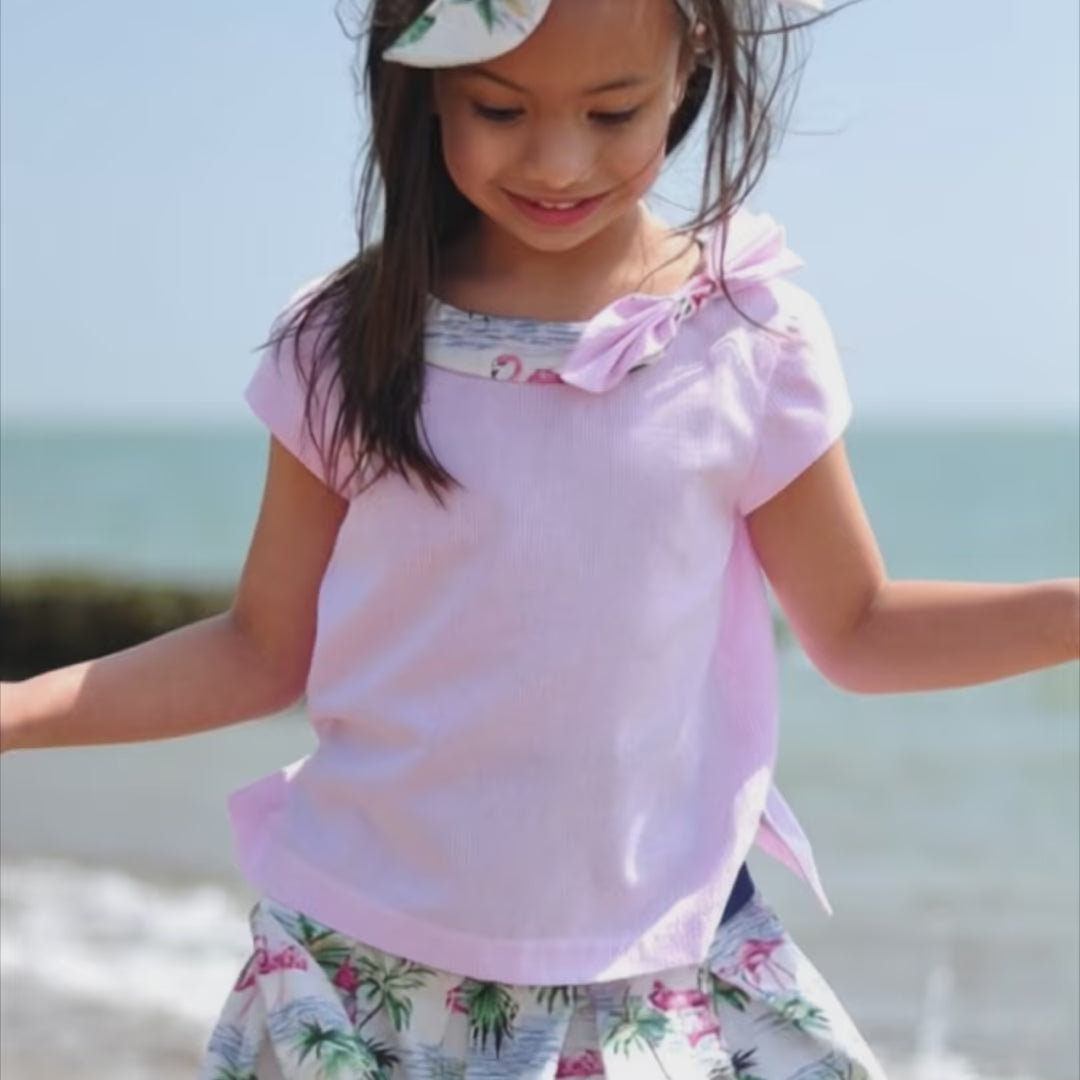
The Beatrice Blouse is a sweet little vintage‑style top that brings back all the soft charm of the 50s! She’s got the cutest vintage collar, tidy set‑in cap sleeves, a neat button‑down back closure, and darling little side seam vents — all those tiny details that make her feel extra special.

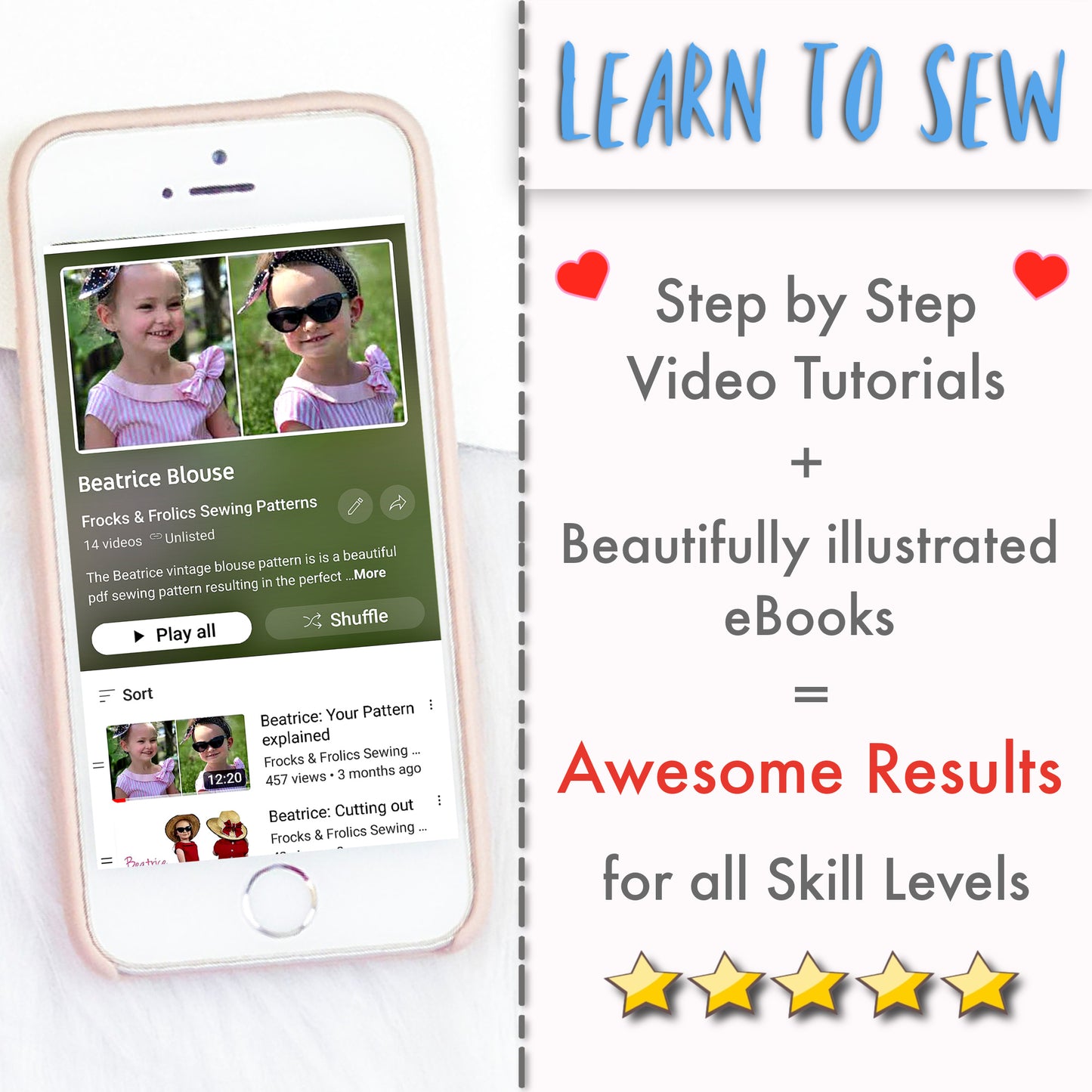
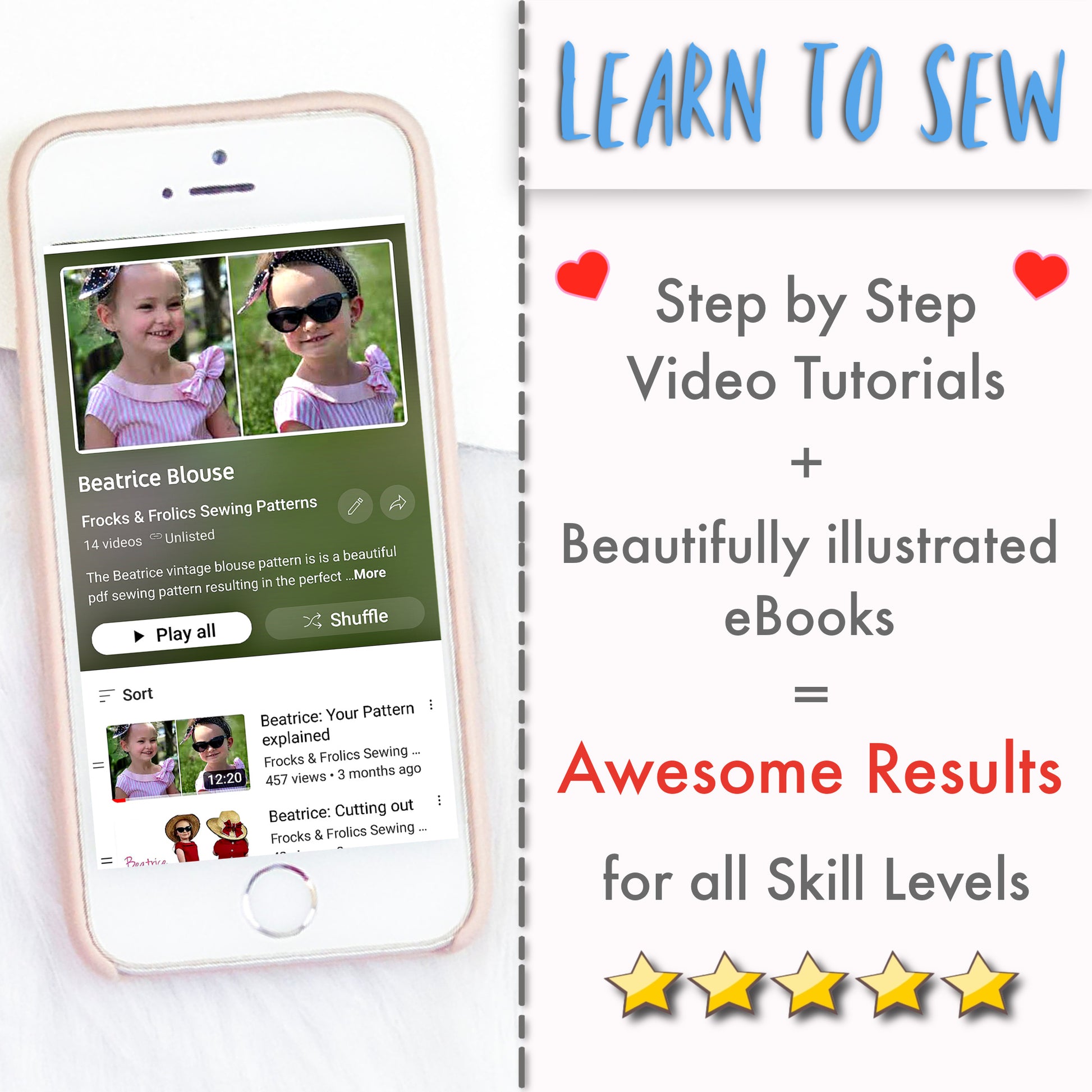
And the best part? She’s wonderfully approachable. With clear step‑by‑step instructions and video tutorials waiting just below, you can jump right in and start sewing. You’ll be adding this girl top pattern to your go‑to favorites before you know it.

Pattern Download Includes

  • Instant Download
  • DIN A4 & US Letter Size
  • Individual PDF files for every Size
  • All Sizes included
  • Detailed eBook
  • Video Tutorials

Design Options

  • Asymmetrical collar
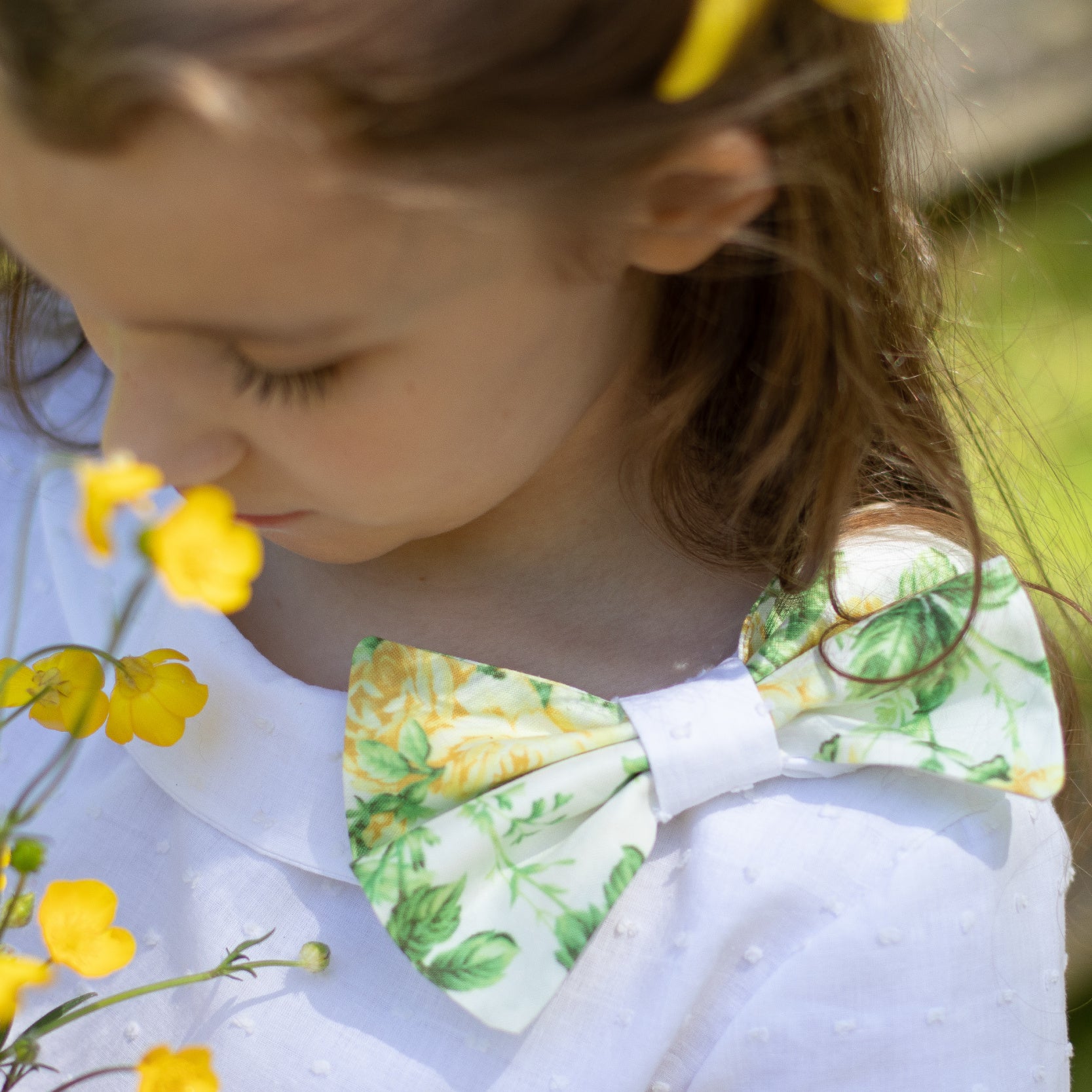
  • Optional bow feature (collar)
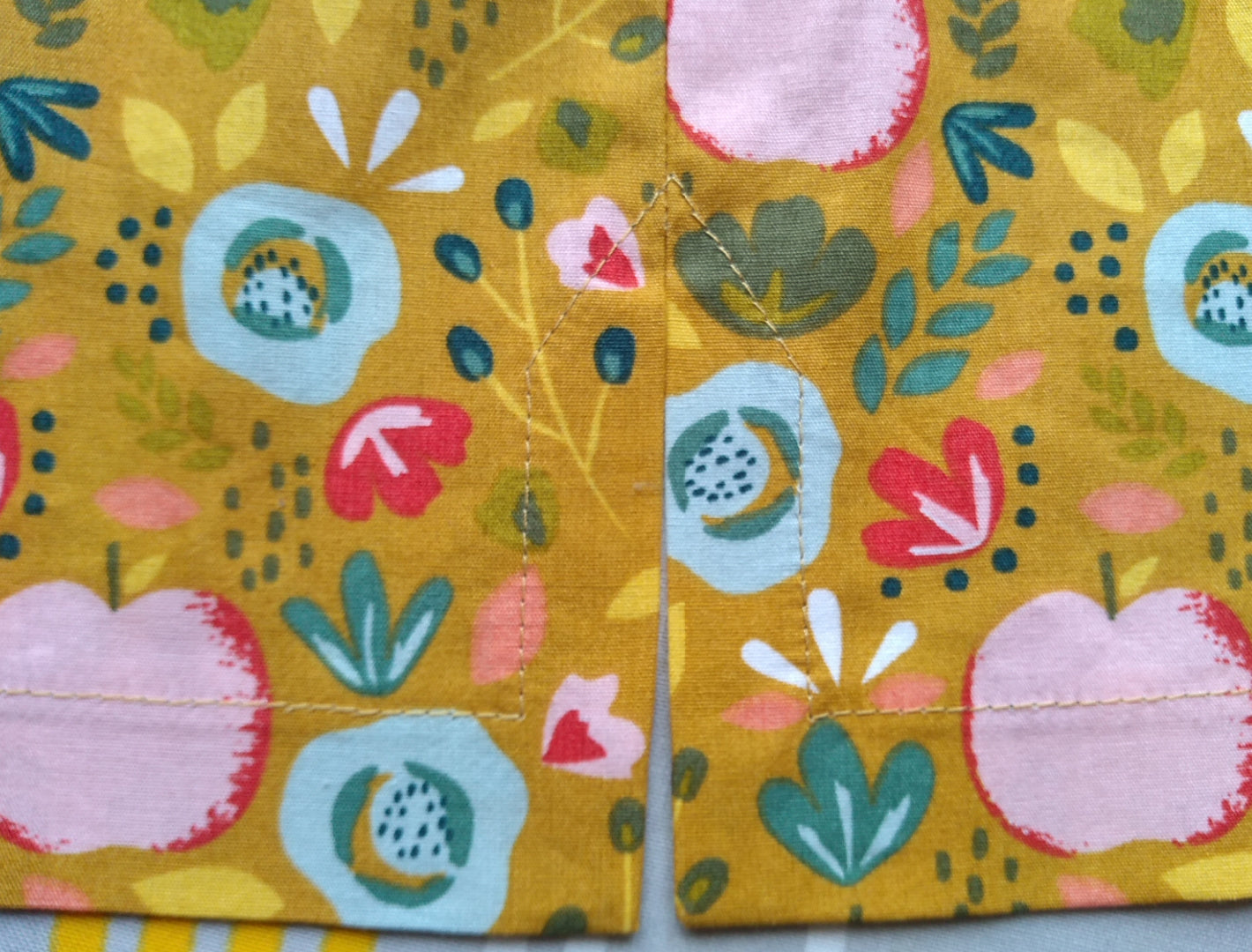
  • Optional side seam vents
  • Button closure on the back
  • Set in cap short sleeve

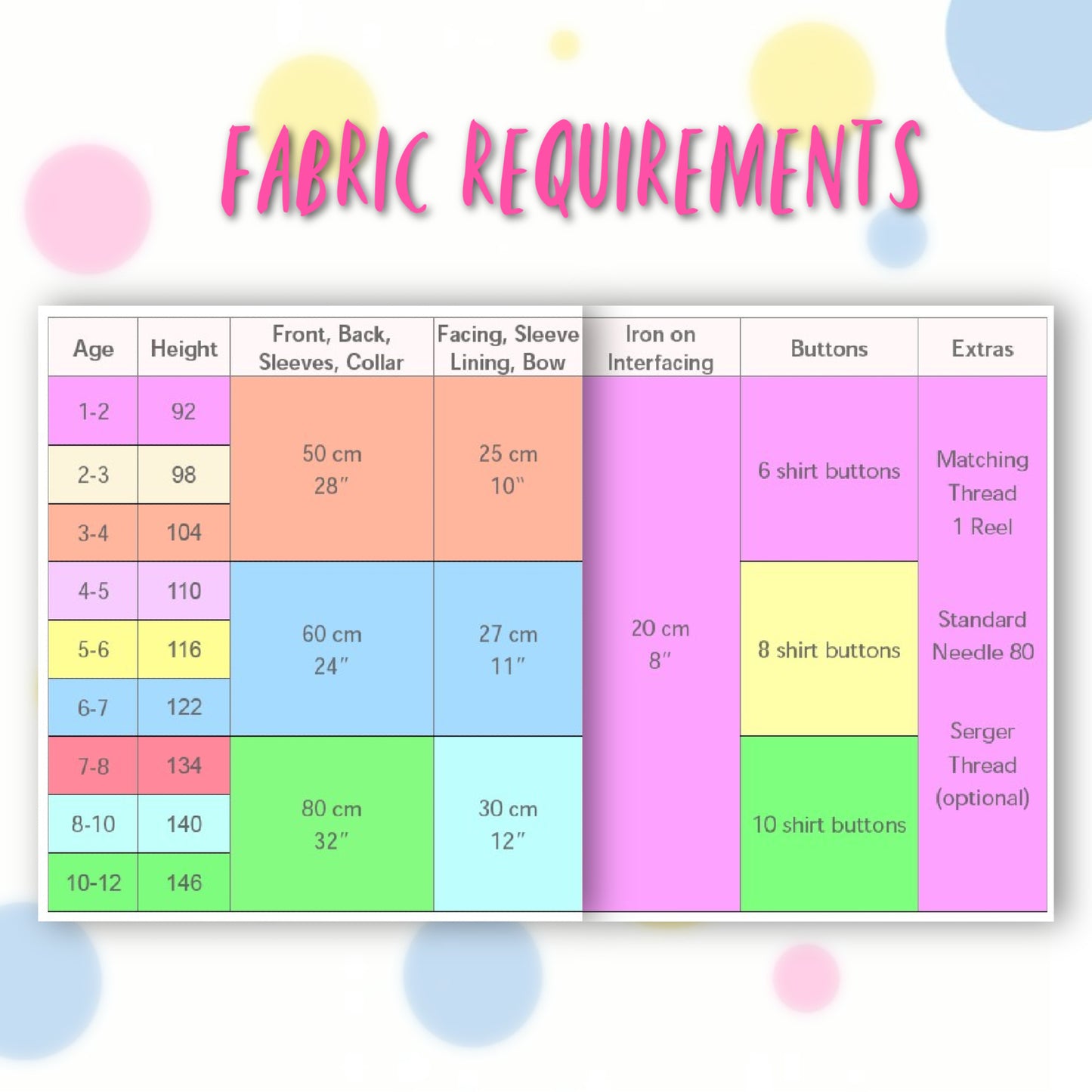
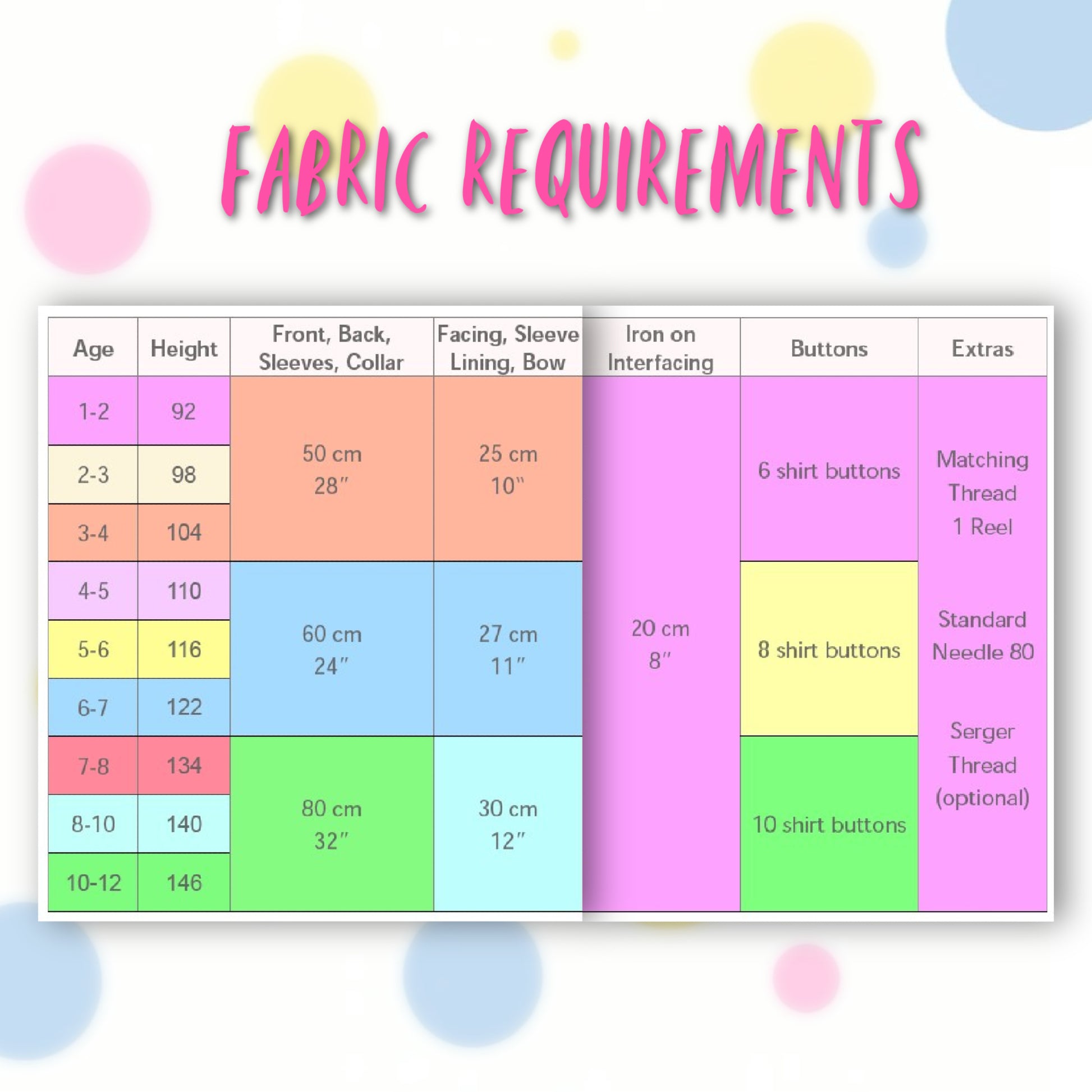
Fabric Requirements

BEST FABRIC CHOICES

Light weight fabrics in cotton or linen such as cotton lawn, gingham, chambray and printed cotton fabrics.

FABRIC RECOMMENDATION

  • Shell Fabric: You will need 38–44 inches (75cm-1,10 m)
  • Buttons: 6-10
  • Interfacing: 8 inches (20cm)

Available Sizes

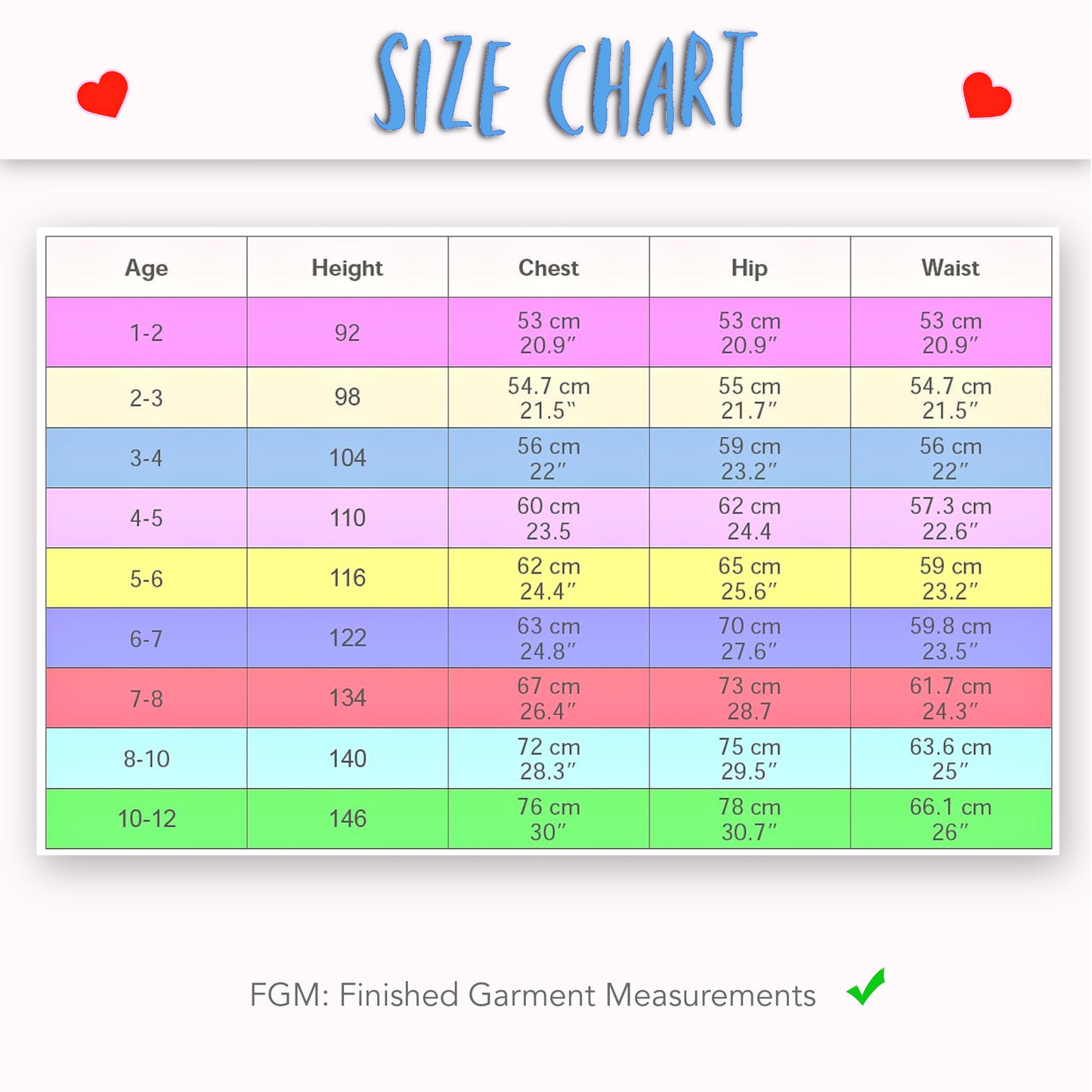
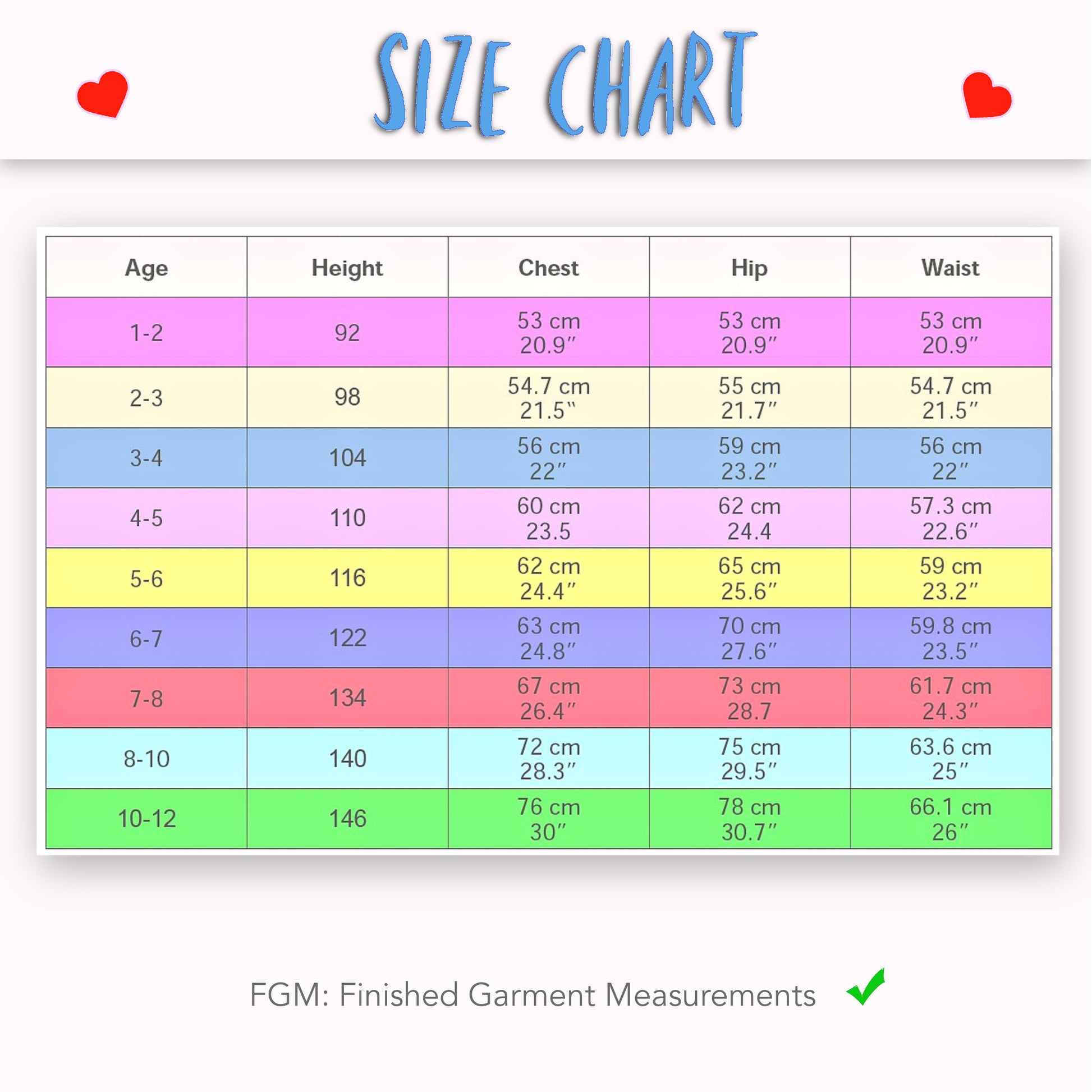
Sizes: 1-12 years

Please Read

  1. This is a digital pattern or PDF file, not a physical product. It will be delivered electronically via a download link delivered to the email used for the purchase.
  2. To ensure the pattern prints at its actual size, it's recommended that you use Adobe Acrobat Reader.
  3. The pattern creator, Frocks & Frolics, welcomes small-scale production using their patterns. 

Customers are encouraged to tag Frocks & Frolics when sharing projects made using their patterns on social media.

@frocksandfrolics #frocksandfrolics

View full details

STEP-BY-STEP VIDEO TUTORIALS
Thumbnail
THE PATTERN
Thumbnail
CUTTING OUT
Thumbnail
PREPARATION
Thumbnail
THE SHOULDER SEAMS
Thumbnail
THE LOOP
Thumbnail
THE COLLAR
Thumbnail
THE FACING
Thumbnail
THE SIDE SEAMS
Thumbnail
MITRED CORNERS
Thumbnail
THE HEM
Thumbnail
THE SLEEVES
Thumbnail
INSERTING THE SLEEVES
Thumbnail
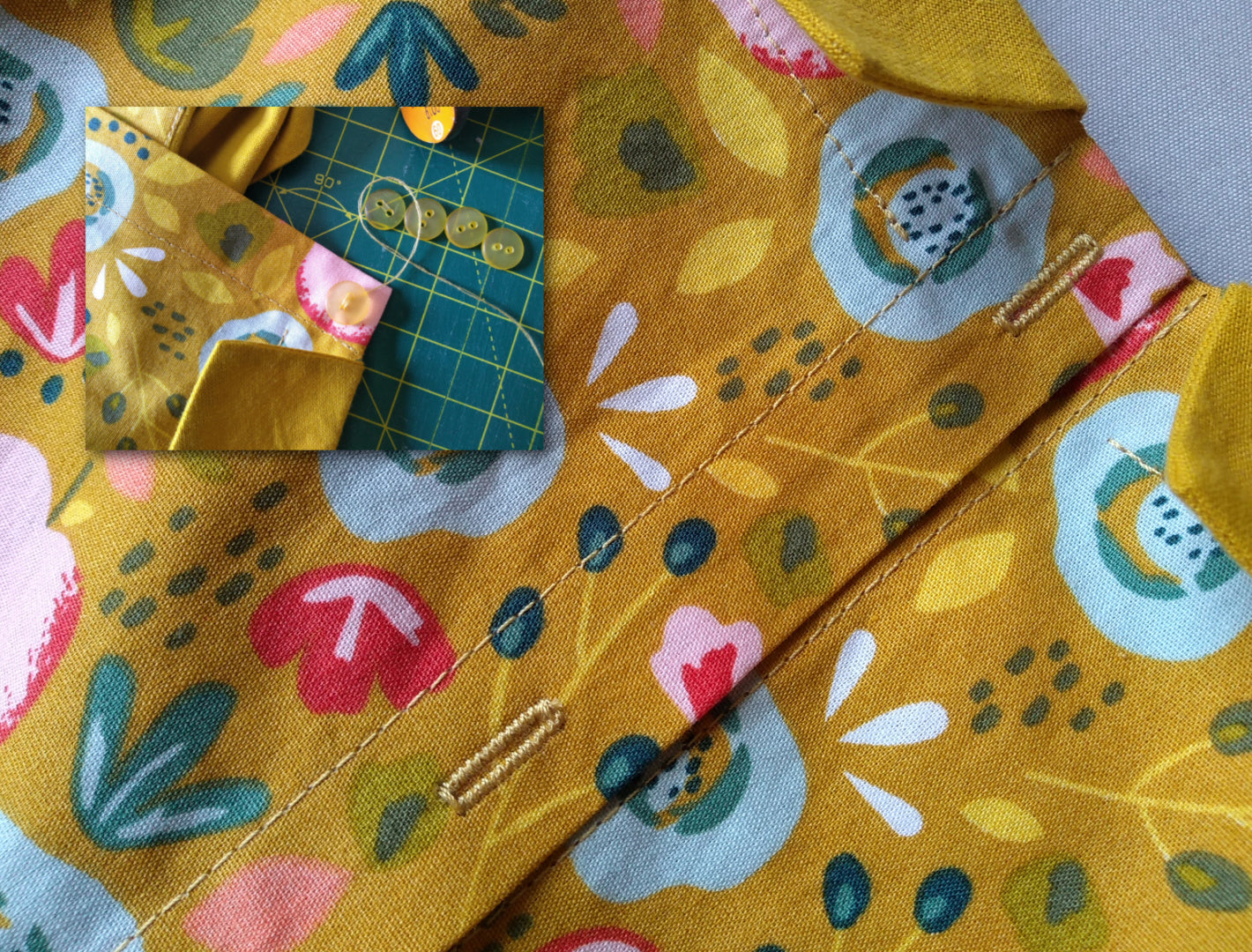
THE BUTTONHOLES
Thumbnail
THE BOW

VIDEO TEXT

Pattern Assembly

Transcript for the video: Beatrice Blouse - The Pattern

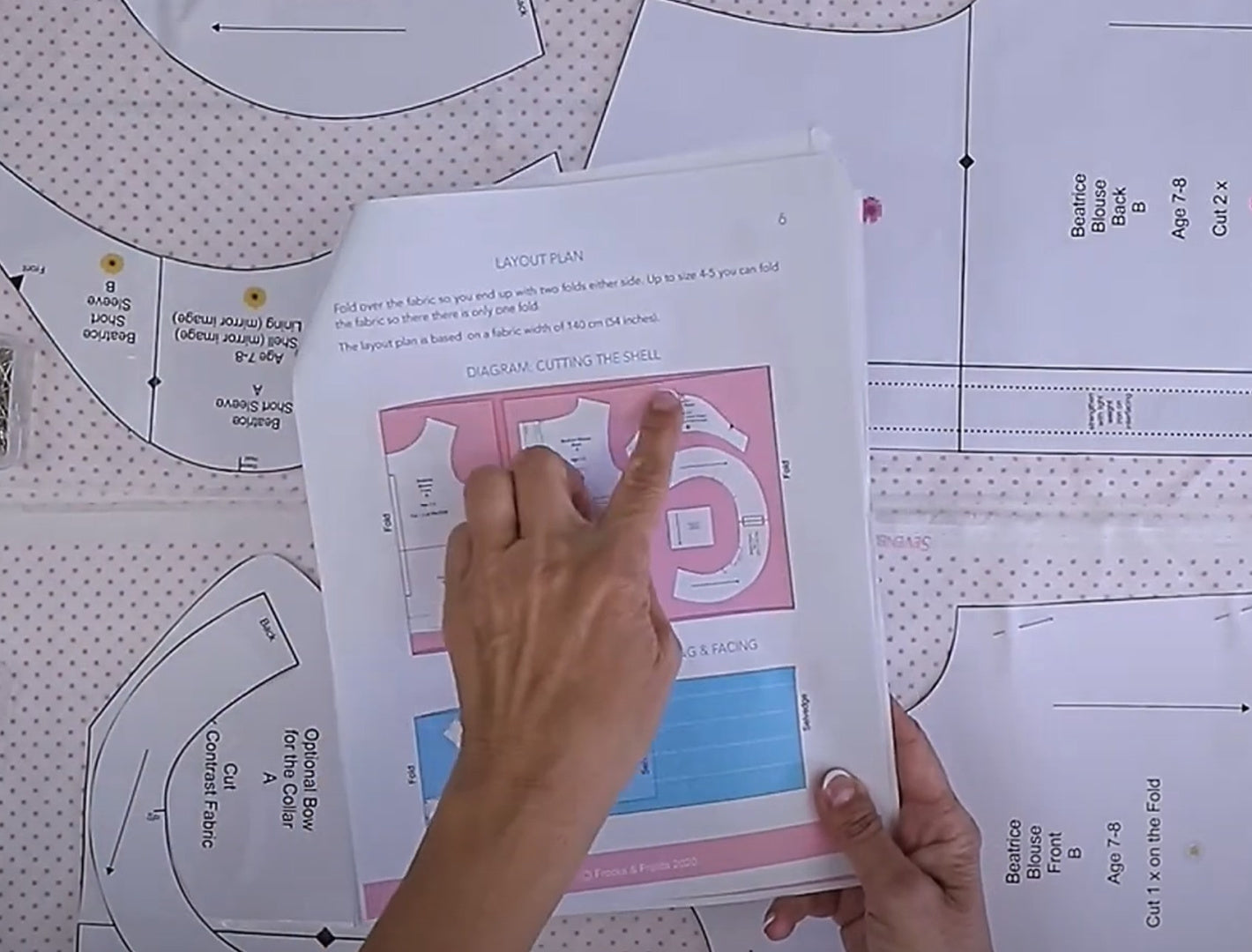
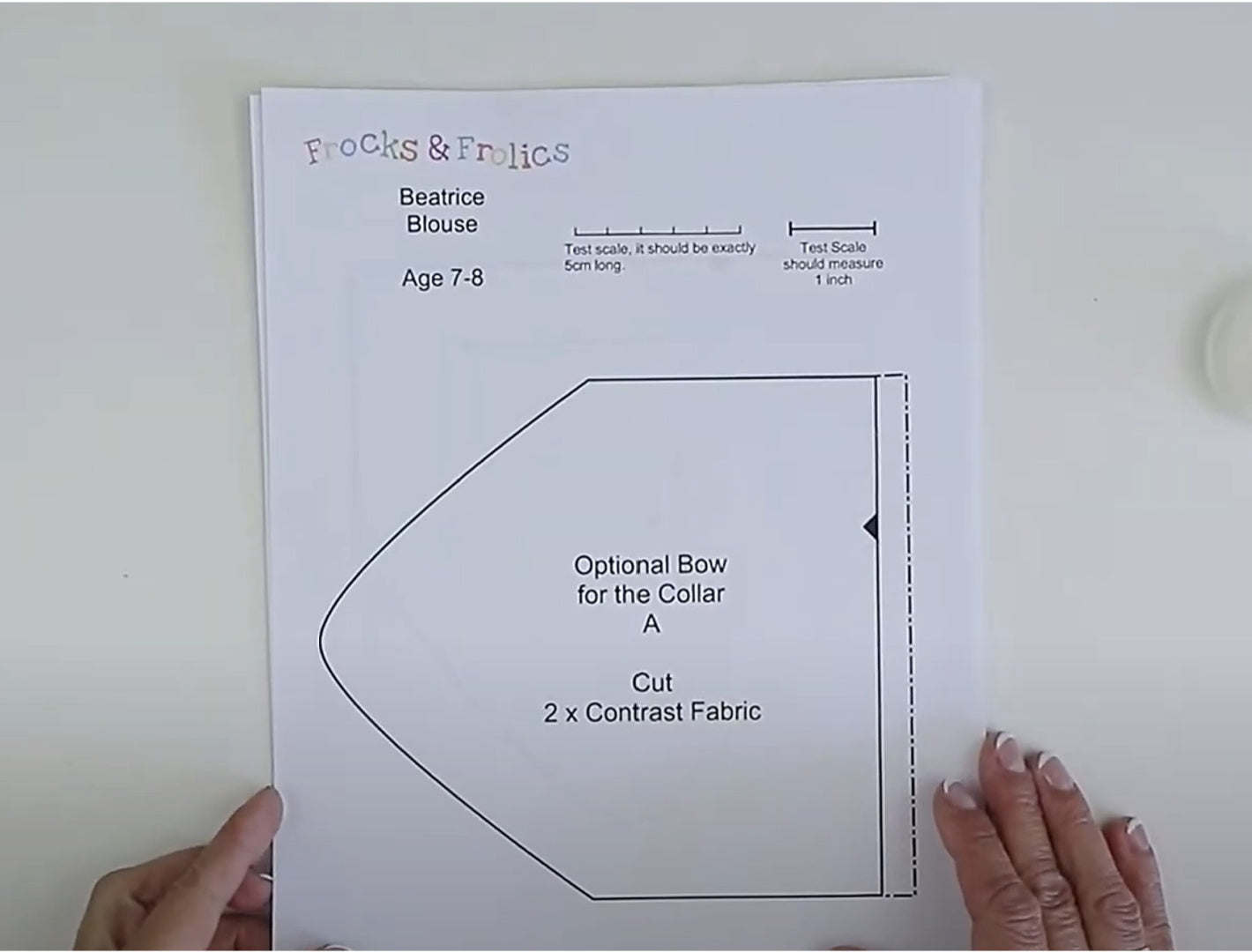
Once you have printed everything, you can start assembling the pattern. At the top, you will find a scale that must measure 5 cm, and if it does, the pattern has been printed correctly. Now you can cut out all the pieces, and along the edges you will see dashed lines which are the joining lines used to tape the individual pages together. For example, the bow has an additional pattern piece which is simply aligned along the dashed line and taped in place. The system works the same for all patterns: Part A is joined to Part B, everything is arranged alphabetically, and this makes the pattern very easy to assemble. Normally you would cut everything out first and then tape it together afterward, but here it is shown step by step so the process is easier to understand. If you are unsure which pieces belong together, look at the last page of the printout where you will find an overview plan of the entire pattern. For example, the front piece is A + B and the back piece is A + B + C. Depending on the size, the number of pages may vary because smaller sizes fit better on A4 pages.

Pattern Pieces

Now we have all the pattern pieces prepared.

Back Piece

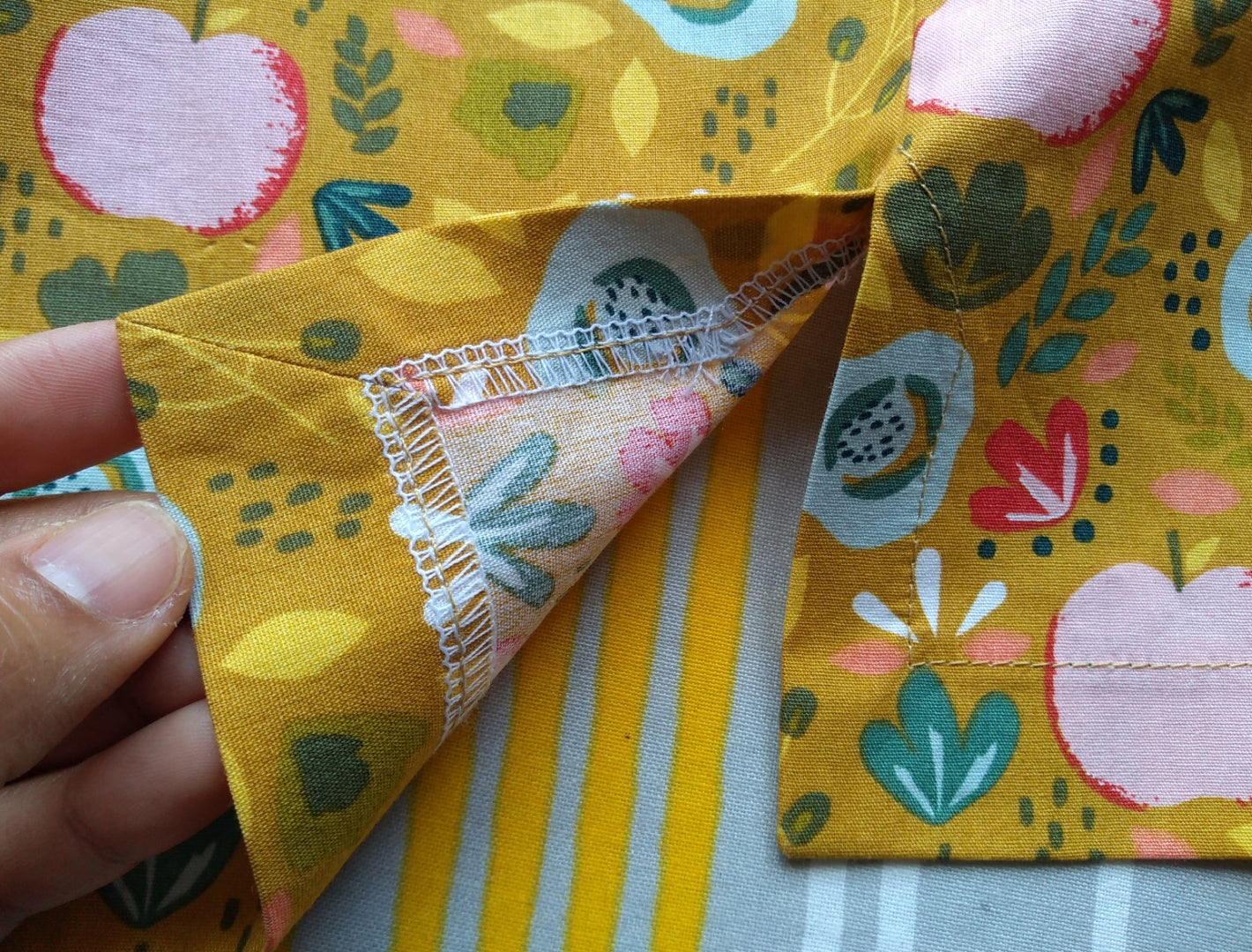
The back piece has an integrated button placket and slits on both sides. When cutting, you snip into the marked areas for the slits, and if you do not want slits you can simply leave this section straight which will leave a little more fabric there. The slits look very professional and beautiful and were carefully designed so the corners line up perfectly. On the back piece you will also find the center back and a marking for interfacing, and it is recommended to reinforce only the center back as more than that is not necessary.

Front Piece

The front piece also has a slit, and if you do not want the slit you can simply cut the edge straight. Many customers particularly like these slits because they look very elegant, and the same slits are also used in the Capri pants.

The Collar

The collar is cut on the fold and runs from the shoulder seam to the front and from the shoulder seam to the back. The collar ends approximately here so that when the back overlaps a small gap is created which looks much nicer. There is also a facing attached to it which is sewn to the inside.

The Loop and Bow

Now comes the special detail where everything is slightly gathered and shaped before the collar is attached, creating the sweet effect where the bow will later be fastened. The bow is folded, gathered together, and threaded through the small loop, and this will be shown in more detail later during sewing. The fabric for the bow must be very lightweight because heavy fabrics do not work well here. If you want to use linen it is recommended to use only a single layer of fabric, roll hem the edges, or bind them with bias tape. With very lightweight fabrics you can cut the bow as intended, fold it, and gather it together.

The Facing

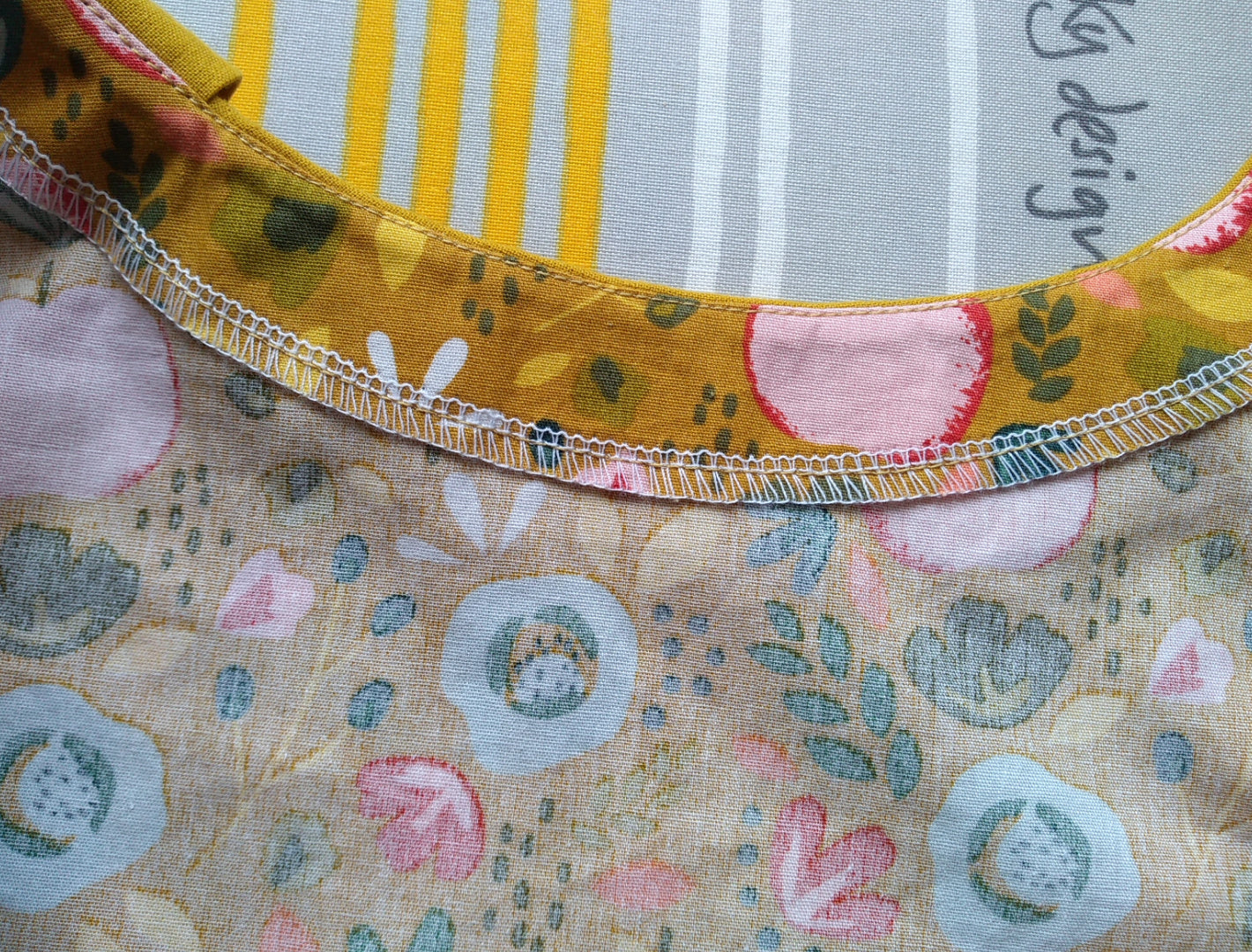
The integrated facing is folded along the marked line and then the separate facing is sewn on. You can either finish the edge or apply bias tape, and anyone who does not have an overlock or serger can solve this very well with bias tape.

The Sleeve

Now we come to the sleeve, which is a set-in sleeve. In this collection there are also other sleeve variations that can be used as well. The sleeve is narrower at the front and slightly wider at the back to provide more freedom of movement. It is important to mark the front and back and pay attention to the shoulder markings so it will be much easier to sew the sleeve in later.

Cutting Out

Now we can cut everything out and then begin sewing.

Cutting Out the Blouse

Transcript for the video: Beatrice Blouse - Cutting Out

The fabric I’m using is from Michael Miller, specifically the “Baby Basics” gauze fabric. The problem is that it’s only 110 cm wide.

To make everything fit, I folded over one edge so I could place the front piece on the fabric. Then I folded the remaining fabric again so I could cut the back pieces.

The back piece needs to be cut:

  • either mirrored
  • or on the fold

So make sure the fold line is placed exactly where marked on the pattern.

According to the layout plan, the pieces should fit side by side, but with this fabric width they simply don’t. The layout plan is designed for:

  • 54 inches
  • or 140 cm wide fabric

That means if the pattern says you need 1 meter of fabric, with this fabric you’ll actually need around 1.5 meters.

Honestly, it’s a bit frustrating that Michael Miller made this fabric only 110 cm wide because you end up needing so much more fabric.

That said, the fabric itself is beautiful:

  • soft gauze/muslin
  • effectively double layered
  • lightweight and very comfortable

Cutting Tips

Try cutting from the left side of the pattern piece whenever possible.

That way:

  • your left hand can lift and control the fabric
  • while your right hand does the cutting

It makes the process much easier and smoother.

Cutting the Front Piece

The front piece is now cut out.

Make sure to snip the center front marking immediately so it’s ready for sewing later.

Once that’s done, the piece can be set aside.

Cutting the Back Piece

I shifted the back piece slightly because I didn’t want to waste any fabric.

Even if you don’t yet know what you’ll use the leftover fabric for, it’s still worth saving as much as possible.

Again, cut from the left-hand side.

Before putting the piece away, mark the fold line where indicated on the pattern. That way you’ll know exactly where the fabric needs to fold later.

Saving Fabric for the Bow

Because of the way the fabric was folded, I ended up with a long leftover strip.

That leftover piece is large enough to cut:

  • the bow
  • and the loop

So almost no fabric is wasted.

Cutting the Collar Pieces

Now another fold is created so the pieces that need to be cut on the fold can be prepared.

The collar pieces need to be cut twice.

Unfortunately, rounded collars always use a surprising amount of fabric, but they do look beautiful, so it’s worth continuing.

Cutting the Facing

Next comes the facing.

A lot of people probably cut fabric exactly the same way:

  • ignoring the official layout plan
  • and simply arranging the pieces efficiently themselves

Honestly, that often works perfectly fine.

The key is:

  • place pattern pieces close to the edges
  • never in the middle of the fabric

The instructor jokes that students often placed pattern pieces right in the center of the fabric, which wastes huge amounts of material.

So always try to maximize the fabric width.

Cutting the Sleeves

The final pieces to cut are the sleeves.

The sleeves can be cut along the grainline in either direction.

You’ll need to cut the sleeves four times:

  • two in the outer fabric
  • two in the lining

The same fabric is being used for both, so everything has to be cut again, which unfortunately uses a lot of fabric.

Bonus Sleeve Tutorials

In the bonus section, there are also sleeve construction videos from the “Virginia Sew Along.”

They show:

  • different sleeve styles
  • sleeve variations
  • ways to modify sleeves for different looks

Very useful if you want to experiment.

Final Cutting and Markings

The sleeves are cut again by placing the pattern directly on top and pinning it in place.

Sometimes you can’t cut from the left side, and when cutting from the opposite side the edge usually becomes a little more jagged. That’s completely normal.

Now all pattern pieces are cut out.

The only remaining markings are:

  • the sleeve head
  • and the front markings

so nothing gets mixed up later.

Separating the Gauze Layers

One of the best things about gauze fabric is that the two layers can actually be separated.

The tiny connecting threads between the layers pull apart very easily, and although one thread line may become visible, it’s barely noticeable.

This creates:

  • a very lightweight lining
  • instead of ending up with four thick layers of fabric

After separating the layers:

  1. simply press the fabric
  2. and use it as the lining

It works brilliantly.

Preparing the Bow

The same process can be used for the bow.

Carefully separate the fabric layers so the bow becomes lightweight and soft.

A heavy bow would not work well for this design.

One layer can be discarded while the other is kept.

All that’s left is:

  • a quick press
  • and the bow is ready to sew

The leftover fabric scraps are saved for future projects because the gauze fabric is too nice to throw away accidentally.

Preparation of the Back Piece

Transcript is for the video: Beatrice - Preparation

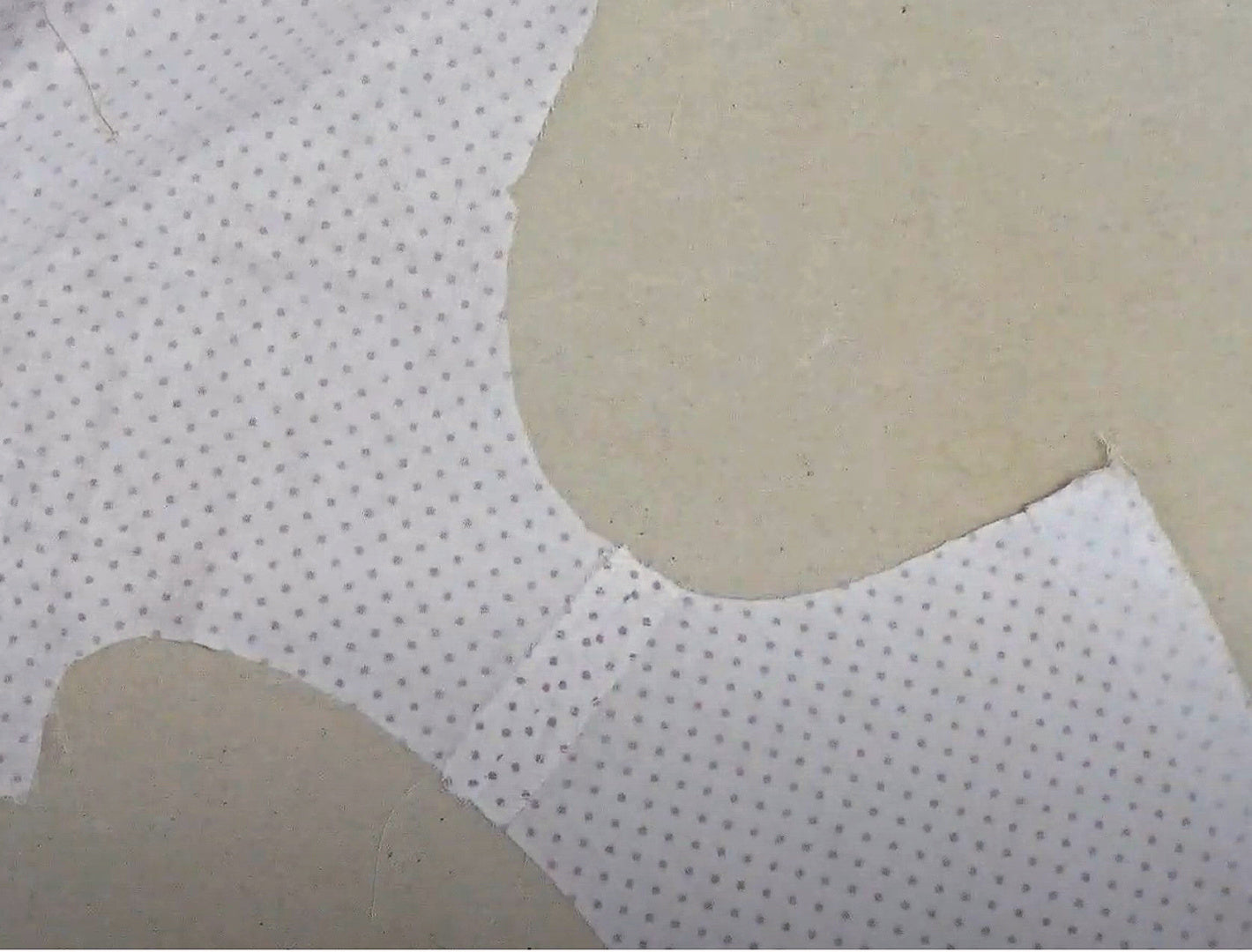
The back piece is prepared first, and interfacing will be applied along the designated area. The pattern pieces are removed at this stage.

A roll of iron-on interfacing is used for this step. It is positioned precisely at the marked snip line, where the fabric will later be folded. The interfacing is then pressed with an iron to ensure it maintains an even distance throughout. This process is repeated on both sides.

After positioning, the iron-on interfacing is securely fused to the underside of the fabric.

Finishing the Raw Edges

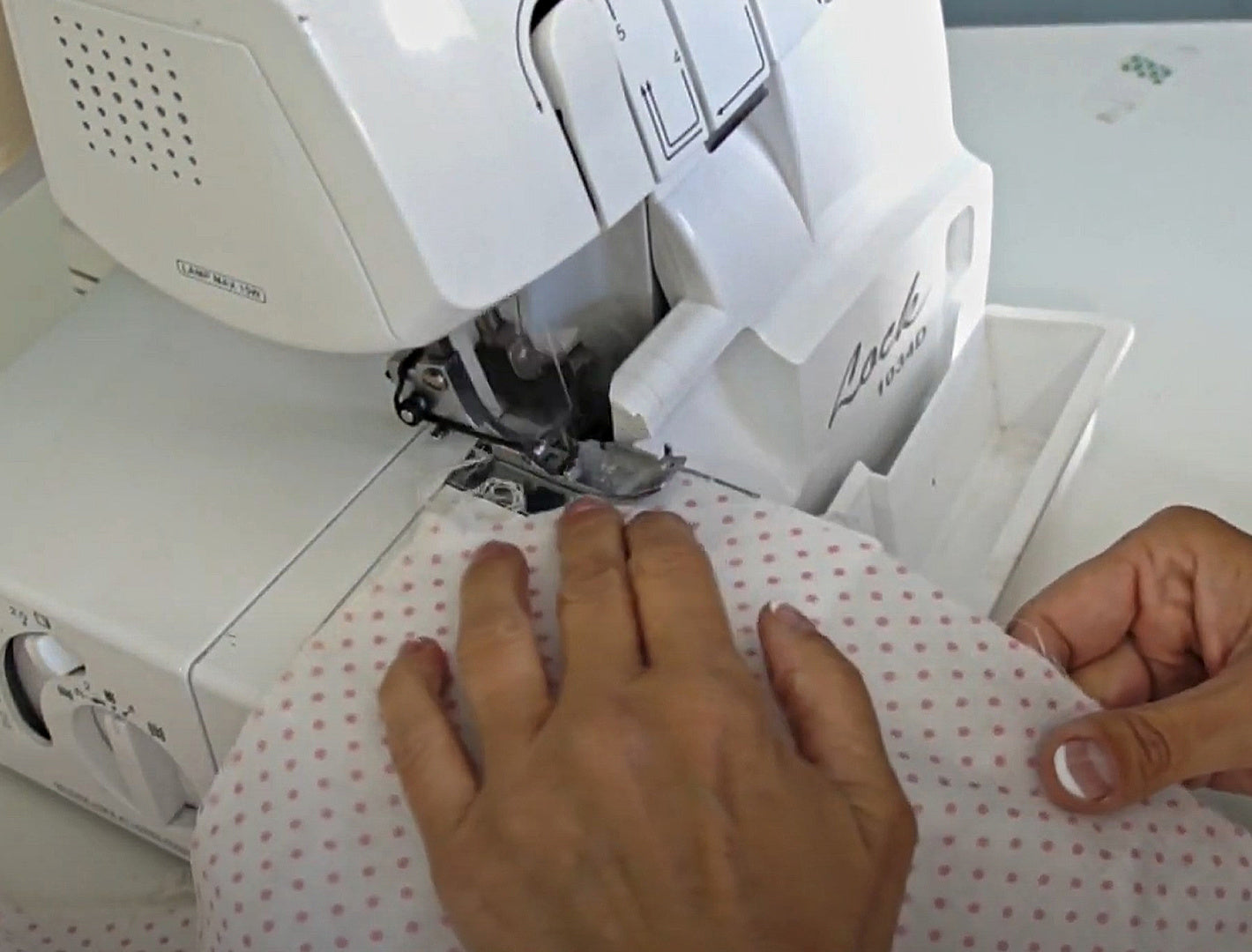
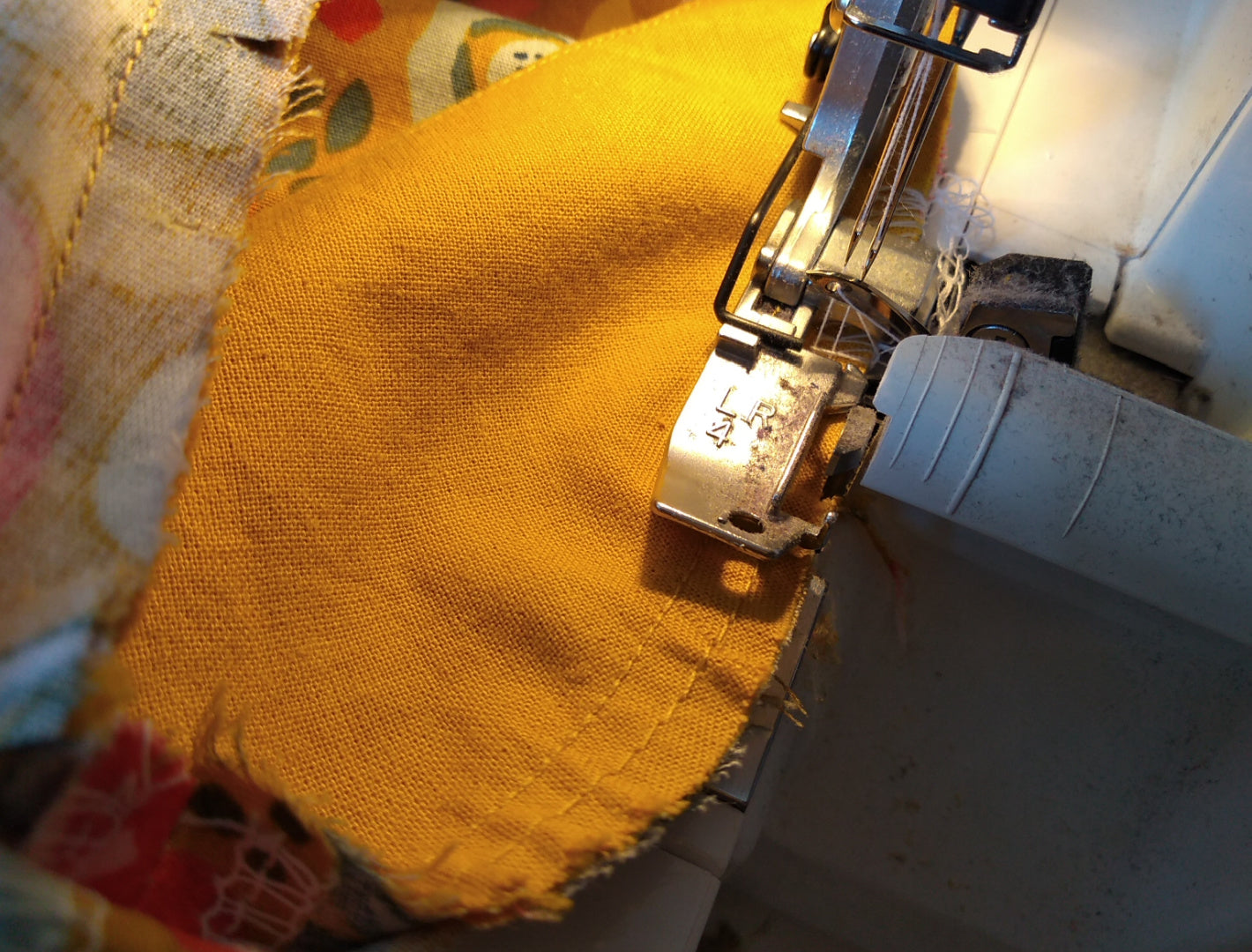
The next step is to begin assembly by finishing the raw edges. A serger or overlocker is used to finish the side seams and hem, depending on preference.

All edges are processed; however, the section where the vents will be formed is excluded. The diagonal line in this area must remain unsewn and uncut at this stage.

The hem is also finished during this step. Care must be taken when serging the side seams to avoid cutting into the fabric.

Side Seams and Assembly Preparation

The side seams, hem, and shoulder seams are all overlocked to ensure a clean finish and prevent fraying.

Once all components have been finished with the overlocker, the garment pieces are fully prepared for final assembly and sewing.

Shoulder Seam Closure

Transcript for the video: Beatrice Blouse - The Shoulder Seams

Next, the shoulder seams are closed. The front and back pieces are placed together, aligning the shoulder edges accurately. The shoulder seams are then sewn with a 1 cm seam allowance.

Pressing the Seams

After sewing, the seams are pressed thoroughly using steam. The pressing is done from the wrong side to set the seam properly, and it may also be pressed again from the right side for a cleaner finish.


Collar Attachment Preparation and Pressing

The collar is then prepared for attachment. The facing area is also pressed at this stage.

Starting from the snip mark, the fabric is pressed evenly along the edge of the interfacing. Care is taken to maintain a consistent and smooth edge throughout the pressing process.

Sewing the Loop

Transcript for the video: Beatrice Blouse - The Loop

The first step is to construct the loop. The fabric is folded and sewn closed using the specified seam allowance. The presser foot is aligned with the edge of the fabric, and stitching is carried out along the length.

Stitches are secured at both the beginning and end by backstitching to lock them in place.

Pressing the Seam

The seam is then pressed open lightly. Excessive pressing is avoided to maintain the shape of the loop.

Turning and Finishing the Loop

The loop is then turned right side out. The seam is centered and aligned properly before pressing. A small amount of steam is applied to set the shape and ensure a clean, even finish.

Collar Construction

Transcript for the video: Beatrice Blouse - The Collar

The collar is constructed by placing the pieces right sides together. The outer edge is then sewn, while leaving the neckline open.

The collar is pinned carefully along the edge using vertical pins for stability. It is then sewn from one point to the other, continuing around the outer edge and returning to the starting point. A seam allowance of 1 cm is used throughout.

To ensure a clean and precise finish at the corners, the stitch length is reduced to approximately 1.5 mm at the beginning and end of each corner section. This helps prevent fraying when the seam allowance is trimmed later.

Trimming and Turning

After sewing, the seam allowance is trimmed back. The corners may be clipped or trimmed diagonally depending on fabric thickness. In this case, due to the thickness of the fabric, the corners are cut diagonally to reduce bulk and improve the final shape.

The collar is then turned right side out, and the corners are carefully pushed out using a pin or similar tool. The seams are lightly pressed in one direction to set the shape.

Collar Positioning and Adjustment

The collar placement is then marked using the pattern as a guide. The position for the loop is also identified at this stage.

A shaping adjustment is made to the top collar by slightly easing it down. This creates additional length in the upper collar layer, allowing it to sit more naturally when worn. This adjustment is applied evenly around the collar.

The stitch line is then trimmed slightly back to the marked point to reduce bulk.

Attaching the Collar

The collar is first pinned at the center front, ensuring accurate alignment. It is then positioned approximately 1.5 cm from the edge and carefully eased into place around the neckline.

The seam allowance is intentionally staggered slightly to reduce bulk, which does not affect the final appearance.

Loop Placement and Facing Preparation

The loop is then attached and wrapped around the collar as part of the construction.

Finally, the facing is placed over the top. Before final stitching, a holding stitch (basting stitch) is applied around the entire edge. This stabilizes the layers and ensures easier handling during the final assembly stage.

Attaching the Facing

Transcript for the video: Beatrice Blouse - The Facing

Here comes a part that some of you may not have done before, but it’s really simple.
We’re going to attach the facing now.

The first thing to do is serge/overlock the lower edge of the facing so it looks nice and neat.
Alternatively, you can finish it with binding, which also looks beautiful.
Then we’re ready to sew it on.

Now comes the step many people don’t know — maybe it’s new for you too.
You want to sew the front facing to the back facing.
When this is folded back later, it will sit perfectly along the neckline.
It gives you a super clean finish.

We do the same on the other side: pin it to the edge, roll it back, and it will fit beautifully to the neckline.

So the first step is to go to the sewing machine and sew the facings together.

Rolling Back and Securing the Seam Allowance

Now comes the exciting part.
Roll the facing back along the snip mark.
The seam allowance should lie inside the facing.

You can also press the seam allowance to one side and topstitch it down if you want a cleaner edge.
If you’re using a zigzag stitch and it doesn’t look great, don’t worry — I’m doing it the way it’s done in industry: simply pin it in place.

We repeat the same on the other side.

Now place the facing onto the center front and line everything up neatly all the way around.

You can sew this with a foot‑width seam allowance or with 1 cm.
I drafted it for 1 cm, but when sewing I preferred foot width because it gives a bit more room.
Choose whichever you prefer.

Now sew all the way around the neckline. Lock your stitches at the beginning.
Work slowly with a stitch length of 2.5. You can leave the needle down, lift the presser foot slightly, and pivot around the curves.

Try to gently push the fabric into the presser foot so nothing stretches. At the end, lock your stitches again.

Trimming and Understitching

Now that the collar is sewn in, trim back the seam allowance — not too much, because we’ll understitch.

It’s easier to trim from the right side so the scissors are on the correct side.

Now we understitch the whole neckline. Understitching means sewing the seam allowance to the facing. This creates a beautiful roll on the collar so it sits perfectly against the bodice and doesn’t flip up.

Sew as close as possible to the start of the collar — just where the facing begins is perfect.
Use a stitch length of 3.

It gets a bit thick where the bow is, but that’s okay. This is why the bow fabric must be very lightweight — there are many layers here.

Lock your stitches at the end.

Turning the Facing and Pressing the Collar

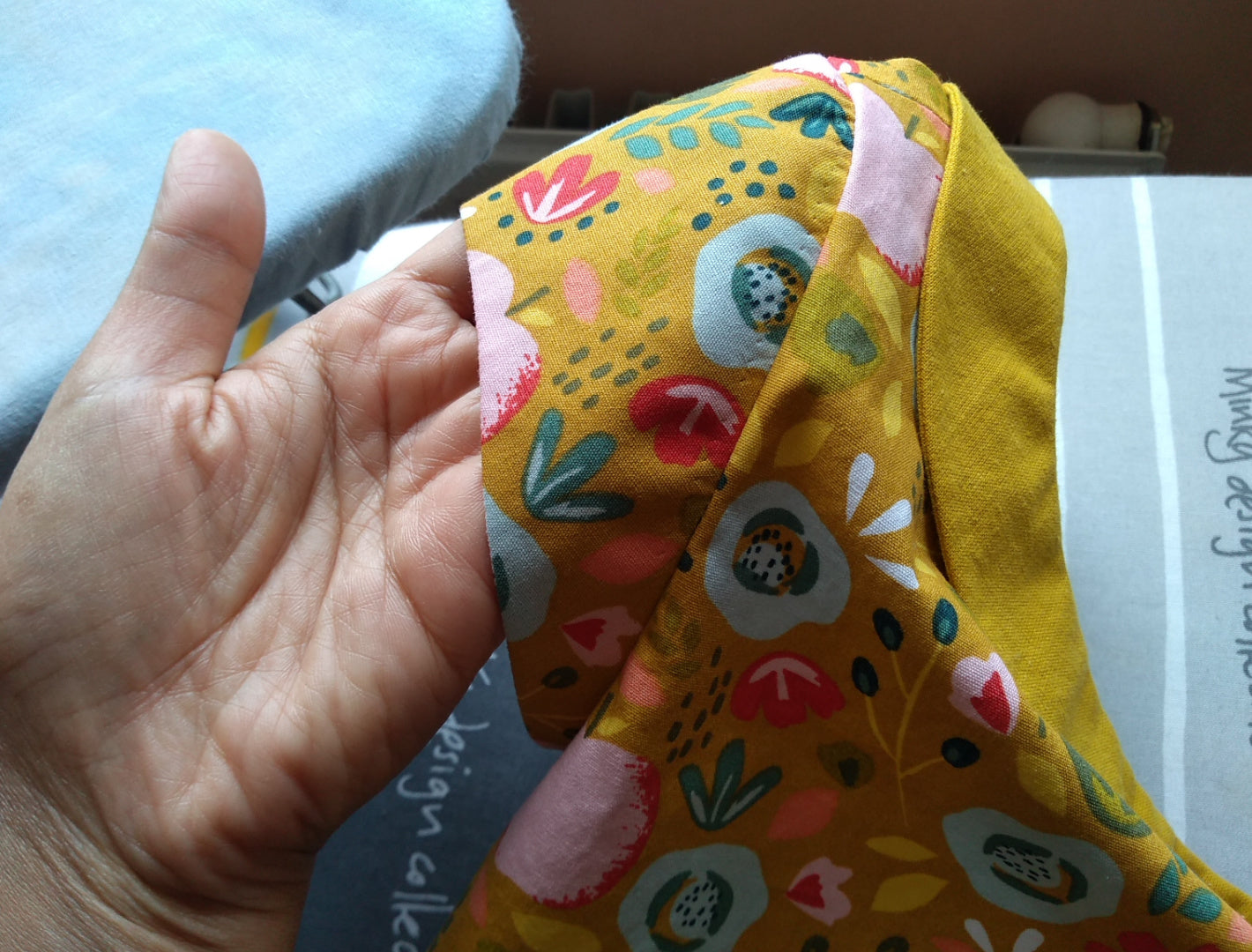
Now turn the integrated facing inwards and you’ll get a beautifully clean finish.
The collar should naturally roll down because we added that extra length to the upper collar.

Pick out the corner carefully with a pin. You’ll see a lovely overlap where your dainty buttons will go.

Use a sleeve board and press the collar flat first — don’t fold it down yet. Pressing it flat is essential. Then add a bit of steam around the bow area so it sits nicely.

Finishing the Facing

I overlocked my facing, but you can also simply turn the edge under, as written in the instructions.
Move to the shoulder seam and fold the facing in.
Keep the distance even all the way around — it looks really pretty.

Stitch it down. Once the collar lies over it, you won’t see it.

I recommend stitching the center front first, then working outwards. If you lay the blouse flat on the table, it’s easy to get an even curve. Be gentle so you don’t distort anything.

You’ll get a beautiful finish every time.

You could also bind the facing edge, but on a household machine it’s hard to get it perfectly neat — in industry they use special machines. So for beginners, I don’t recommend binding here.

Topstitching Around the Collar

Now stitch all the way around the collar close to the edge.

A few things to remember:

If you place the fabric incorrectly at the start, you’ll get little pleats.
Make sure the fabric is perfectly flat for the first 5–6 cm.

Don’t pull from the back. Let the fabric feed straight into the presser foot.

Your left hand smooths the fabric, your right hand guides it around the curve.

This is where most people make mistakes. At the end, lock your stitches.
Use a stitch length of 3–3.5 for topstitching.

Final Pressing

Now give everything a really good press.

First press the collar flat — don’t fold it over yet. Use steam and your hand to shape it.

If this were a jacket collar, you would never press the fold line directly — but for a blouse it’s okay in small areas.

And here it is — your beautiful collar.
It lies perfectly flat, nothing stands up, and the structure is just gorgeous.

Side Seam Construction

Transcript for the video: Beatrice - The Side Seams

The first step is to align the garment by placing the corresponding ends directly on top of each other. This allows you to verify how accurately the previous construction steps have been completed. Minor discrepancies may occur, but the critical factor is that the lower edges align correctly.

Once alignment is confirmed, the side seam edges are placed right sides together and carefully matched edge to edge. Vertical pins are recommended to secure the layers and prevent shifting during sewing.

Sewing the Side Seam

The side seam is sewn with a 1 cm seam allowance. Stitching begins at the top, and the seam is backstitched at the start to secure it.

The seam continues downwards in a straight line. In areas where the seam allowance widens slightly, the stitching continues smoothly without interruption, ensuring a consistent seam line throughout.

At the end, the seam is securely backstitched again. The fabric should remain flat at all times to avoid distortion. Pins are removed as needed while sewing to maintain control and accuracy.

Pressing the Seam

After sewing, the seam is first pressed flat to set the stitches. It is then pressed open.

This pressing sequence ensures a clean finish and improves the overall structure of the garment. The seam should lie smooth, even, and well-defined.

Final Result

A properly constructed side seam results in a clean, professional finish with strong structural integrity and smooth lines. This step completes the side seam construction and prepares the garment for the next stage of assembly.

Mitered Corner Construction

Transcript for the video: Beatrice Blouse - Mitred Corners

To create a mitered corner, begin by aligning one corner so the edges sit directly on top of each other. Do not attempt to align the folded edges at this stage, as this will not produce an accurate result. Instead, focus on aligning edge to edge and secure the corner with a pin.

Stitching the Corner

The seam is sewn with a 1 cm seam allowance. This process is repeated for all corners to ensure consistency.

At the back, the edge is overlocked. When the fabric is then folded and pinned correctly, the mitered corner forms a clean intersection. This technique ensures that when turned through, the corner will sit neatly without pulling directly into the point, resulting in a much cleaner finish.

Turning and Preparing the Corner

Once stitched, the corner is turned right side out. Excess threads are trimmed to maintain a clean working surface.

The seam is opened and shaped using the fingers rather than an iron at this stage. Care is taken to ensure the corner is fully formed and lies flat. The same process is repeated for the remaining corners.

It is good practice to keep the work clean and remove loose threads throughout the process.

Pressing the Mitered Corners

After all corners are formed, the piece is taken to the ironing board. The mitered corners are pressed carefully and thoroughly to achieve a sharp, professional finish.

For garments with a center back seam, seam direction should be considered during pressing. Depending on whether the edge is overlocked or turned in, the seam may need to be pressed in a specific direction to maintain a clean finish at the center back.

Proper pressing is essential, as it defines the crisp geometry of the mitered corners and significantly improves the final appearance.

Completion

Once pressed, the mitered corners are complete. This step provides a clean, structured finish and prepares the garment for the next stage, which is closing the side seams.

Topstitching Preparation

Transcript is for the video: Beatrice Blouse - The Hem

The final step is to topstitch the garment. Before sewing, the stitching line is marked to ensure accuracy. When the exact position is unclear, a measurement of approximately 1.5 cm from the edge can be used as a guide.

A guideline line is drawn at the desired distance (for example, 2.5 cm, depending on the intended design line). This helps maintain consistency and makes sewing more precise. Marking both sides ensures symmetry.

Stitching Method

Topstitching begins at the edge of the fabric. In this case, the stitching is placed just underneath the overlocked edge or directly along the serged stitching line, following the previously marked guide.

The drawn line is used as the primary reference during sewing.

At corners, the needle is lowered into the fabric, the work is pivoted, and sewing continues along the next section. This ensures clean, controlled transitions.

Where helpful, stitch counts can be used to maintain symmetry between sections, particularly when matching opposite sides.

Precision and Alignment

Consistency is essential throughout the topstitching process. All sides should align evenly with the serged edges or guideline markings. Small deviations are acceptable as long as spacing remains uniform across the garment.

Careful handling ensures the stitching remains straight and visually minimal, blending into the construction lines.

Completion

Once finished, the topstitching should appear clean and even, with minimal visible disruption to the fabric surface. Temporary marking lines will disappear over time if using air-erasable fabric markers.

This step completes the visible finishing details of the garment and prepares it for the final assembly stage.

Sleeve Preparation

Transcript is for the video: Beatrice Blouse - The Sleeves

The sleeve piece is taken and positioned with the right sides together. Any loose threads are left in place and not removed, as they will not affect the construction.

The lower edge of the sleeve is then closed. In areas where additional stability is required, stay tape may be applied to prevent stretching during sewing.

The sleeve is sewn using a 1 cm seam allowance.

Seam Allowance and Stabilisation

After stitching, the seam allowance is trimmed back carefully, ensuring it is not cut too short. This is important to allow for later attachment to the lining and additional topstitching.

During sewing, the fabric is gently eased and controlled to prevent stretching, particularly in areas prone to distortion. Supporting the fabric evenly helps maintain the intended sleeve shape.

Pressing and Finishing the Edge

The seam allowance is pressed and shaped using steam. The edge is folded neatly and pressed again to create a firm, structured finish.

This technique can be adapted depending on design requirements. Decorative options such as piping, gathers, or lace can be incorporated at this stage if desired.

Both sleeves are processed in the same manner before proceeding to the next step.

Closing the Sleeve Seam

The side seam of the sleeve is then closed. The fabric is opened out and aligned carefully on both sides before pinning.

The seam is sewn straight across with a consistent seam allowance.

Pressing Sequence

After sewing, the seam is first pressed flat to set the stitches. It is then pressed open to reduce bulk and improve shape definition.

Final Sleeve Shaping

The sleeve edge is folded neatly and pressed once more to refine the shape.

A holding stitch (basting stitch) is then applied around the edge to secure the structure and prevent shifting during further assembly.

This step ensures stability and prepares the sleeves for attachment in the next stage of construction.

Sleeve Insertion Preparation

Transcript for the video: Beatrice Blouse - Inserting The Sleeves

The sleeve is positioned with the correct orientation. The notches must be aligned, with the front sleeve notch facing the front of the garment. This ensures proper alignment during insertion.

The sleeve is matched to the armhole by first aligning the side seams. A vertical pin is placed to secure this point. The shoulder notch is then matched to the shoulder seam and also pinned. A third reference point is the opposite side seam, which is aligned and pinned in the same way.

Setting the Sleeve (No Ease Method)

The sleeve is inserted without ease in the sleeve cap. The underarm area must remain completely flat, with no gathering or pulling.

Care is taken to distribute the fabric evenly. The sleeve and armhole run in opposite directions in certain sections, which can create the illusion of excess fabric, but the lengths are matched precisely.

The sleeve is manipulated using the fingers to ensure it lies flat and smooth. No gathers are introduced at the sleeve head in this construction.

A test fit is performed from the outside to confirm that no puckering or pleating is present and that the sleeve sits cleanly within the armhole.

Sewing the Sleeve In

The sleeve is sewn from the inside, working all the way around the armhole.

During sewing, control of the fabric is essential. One hand supports and flattens the sleeve, while the other guides the fabric through the machine. Pins are removed one at a time, and each removal is immediately replaced with hand control to prevent shifting.

Special attention is required at the sleeve cap area, where the fabric can unintentionally creep over the armhole edge. This must be avoided, as it can shorten the sleeve and create a tight, distorted fit once turned.

For beginner construction, edge-to-edge alignment is maintained throughout without adjusting seam distribution.

Checking the Sleeve Fit

Once inserted, the sleeve is checked from the outside to ensure there are no pleats, puckers, or distortions. The sleeve should hang smoothly and naturally when placed over the hand.

If the insertion has been done correctly, the sleeve will sit evenly without visible strain lines.

Pressing the Sleeve

The seam is then finished by pressing. First, the seam is pressed flat using steam to set the stitches. Direct ironing from the outside of the sleeve is avoided to prevent unwanted creasing.

Instead, the iron is held just above the fabric while steam is applied, and the seam is shaped using the hand. This helps the seam settle into the sleeve naturally without creating a harsh edge.

This pressing technique results in a clean, structured sleeve suitable for lightweight garments such as blouses.

Button Placement Overview

Transcript for the video: Beatrice Blouse - The Buttonholes

Buttons may also be replaced with poppers if preferred. However, in this case, covered buttons are used for a more decorative finish.

Before sewing buttonholes, the button layout must be determined carefully. The spacing is not fixed, as it depends on button size, garment design, and visual balance.

A key rule is to use an uneven number of buttons for a balanced appearance. In this case, five buttons are used.

Button Spacing Guidelines

A minimum distance of approximately 3 inches (7.5 cm) should be maintained from the bottom edge to the last button to ensure a clean finish.

At the top, the button position must be carefully considered. The button should not be placed too high, as this would cause it to sit awkwardly and pull the fabric upward.

The top button position is typically set slightly below the edge (approximately 0.5 cm allowance for button stand considerations). The placement is aligned with the center of the button.

The first buttonhole position is generally around 1.2 cm from the top, adjusted depending on button size.

Spacing between buttons is kept consistent, approximately 3 inches (7.5 cm) between each placement. All positions are marked clearly before sewing.

Buttonhole Machine Setup

For mechanical sewing machines, the buttonhole width must be set according to the button size. In this case, a width of approximately 1.5 cm is suitable for a 1 cm button, allowing adequate clearance.

Machine settings are adjusted as follows:

  • Buttonhole stitch mode selected
  • Zigzag function enabled (depending on machine type)
  • Stitch length set to buttonhole setting
  • Tension adjusted for buttonhole stitching

A test buttonhole is always recommended before working on the garment to confirm correct sizing and fit.

Sewing the Buttonholes

The fabric is positioned so the stitching line aligns with the marked placement (approximately 1.5 cm from the edge).

Each buttonhole is sewn in sequence:

  1. Stitch down one side
  2. Secure at the end
  3. Complete the bar tack
  4. Stitch back up the opposite side
  5. Finish with final securing stitches

The machine may require manual guidance to ensure smooth feeding, especially on mechanical models.

This process is repeated for all marked buttonhole positions.

Cutting Open the Buttonholes

Once sewn, the buttonholes are carefully opened.

A small controlled incision is made at the center of each buttonhole, gradually widening it as needed. Care is taken not to cut into the stitching.

Sharp embroidery scissors are preferred for precision.

Seam rippers are generally avoided due to the risk of accidentally cutting through stitches or fabric.

Button Attachment

The button position is determined by aligning it with the corresponding buttonhole. A practical method is to mark the position directly through the buttonhole to ensure accurate placement.

Each button is sewn securely by passing thread through multiple times to reinforce stability. The thread is then wrapped around the base to create a small shank, improving flexibility and closure function.

The thread is secured and trimmed neatly.

Final Adjustment and Fit Check

Once attached, the garment is buttoned up and checked for alignment.

Correct placement ensures:

  • Smooth closure without pulling
  • Even spacing between buttons
  • Proper alignment at the center front

Adjustments are made if necessary before final securing.

Completion

With all buttons and buttonholes completed, the garment construction is nearly finished. The final step will be the addition of the decorative bow at the front, completing the design.

Bow Construction

Transcript for the video: Beatrice Blouse - The Bow

The bow is constructed using the provided pattern pieces. The fabric is placed right sides together, and the pattern is traced and cut according to the template.

Depending on design preference, the bow can be made as a single large piece or as a narrower strip, which can be styled similarly to a scarf or wrapped detail. The edges may also be finished with decorative trimming if desired.

Sewing the Bow

The bow is sewn all the way around using a 1 cm seam allowance. A turning gap is intentionally left open to allow the piece to be turned right side out.

During stitching:

  • The needle is lowered into the fabric when pausing
  • The presser foot is lifted when adjusting direction
  • The seam is backstitched at the start and end of stitching sections
  • The turning gap is left unsewn

Trimming and Turning

After sewing, the seam allowance is trimmed to reduce bulk.

The bow is then turned right side out through the opening. Turning is done carefully, starting from the furthest point away from the opening to ensure smooth fabric movement.

Corners are gently pushed out using a pin or similar tool to define the shape clearly.

Pressing and Closing the Opening

The bow is pressed thoroughly, shaping the edges and rolling them neatly with the fingers to define the final form. This process also helps close the turning gap naturally.

The remaining opening is then closed using a slip stitch by hand to ensure an invisible finish.

Styling the Bow

The bow is then threaded or shaped into its final design position. The fabric can be gathered or fanned out depending on the desired aesthetic.

It may be wrapped, tied, or arranged to create volume and structure at the front of the garment.

For softer fabrics, such as chiffon or lightweight materials, edge finishing options include:

  • Narrow rolled hem
  • Overlocking
  • Hand-finished hem

Final Shaping

The bow is adjusted into its final position, ensuring symmetry and balanced volume. It is lightly twisted or arranged to create a soft drape and secured in place.

The final shape should be adjustable if needed, allowing the bow to be reshaped after washing or pressing.

Completion

With the bow attached and styled, the garment is complete. The final result includes a structured yet soft decorative front detail, finishing the construction process.

YOU MAY ALSO LIKE

Beatrice

SHOP NOW

Audrey

SHOP NOW

Bonnie

SHOP NOW

Connie

SHOP NOW

Isabella

SHOP NOW