




Skip to product information
1 of 15

CONNIE BLOUSE

CONNIE BLOUSE

Filled Circle
Filled Circle
Empty Circle
Empty Circle
Empty Circle
Regular price $6.50 USD
Regular price Sale price $6.50 USD
Sale Sold out

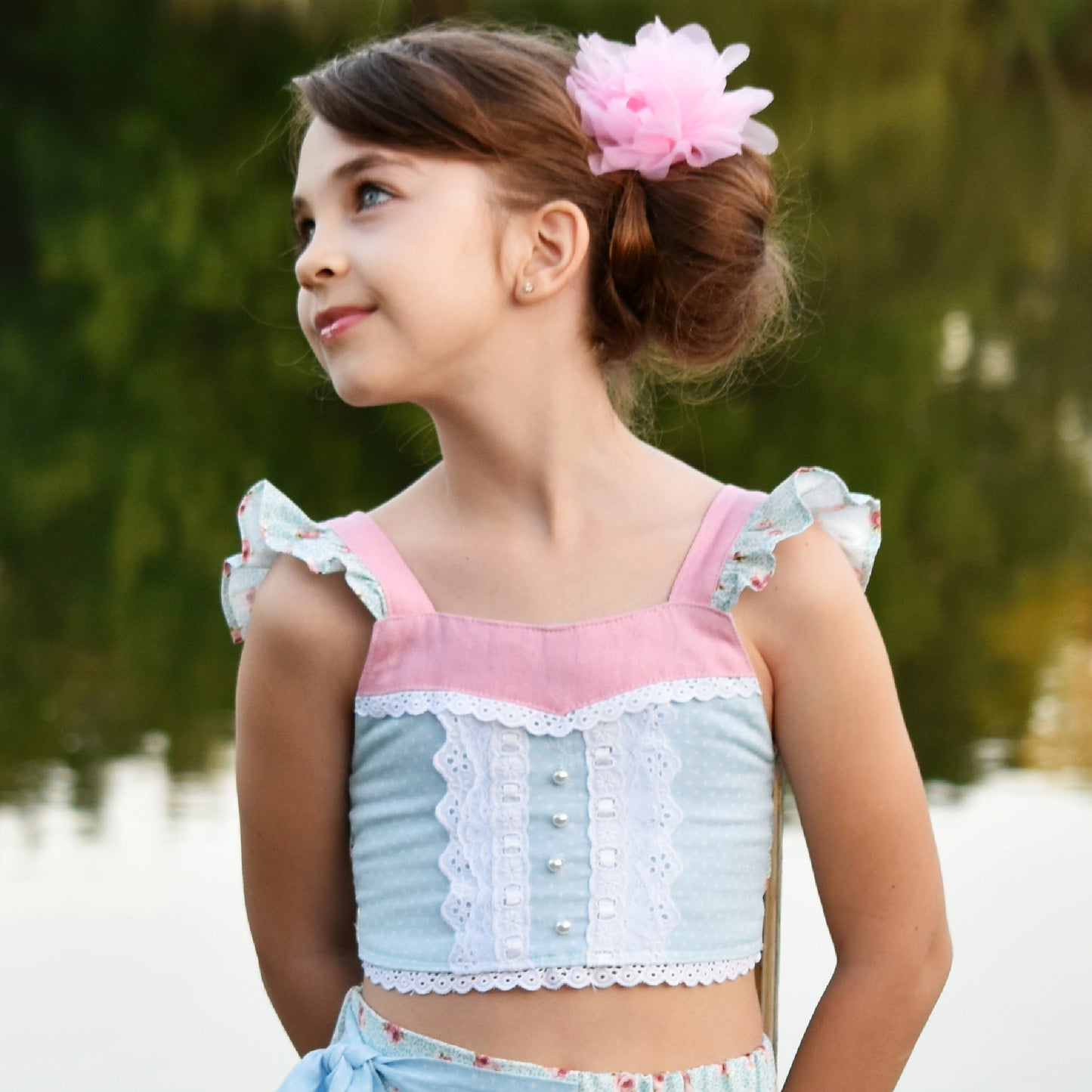
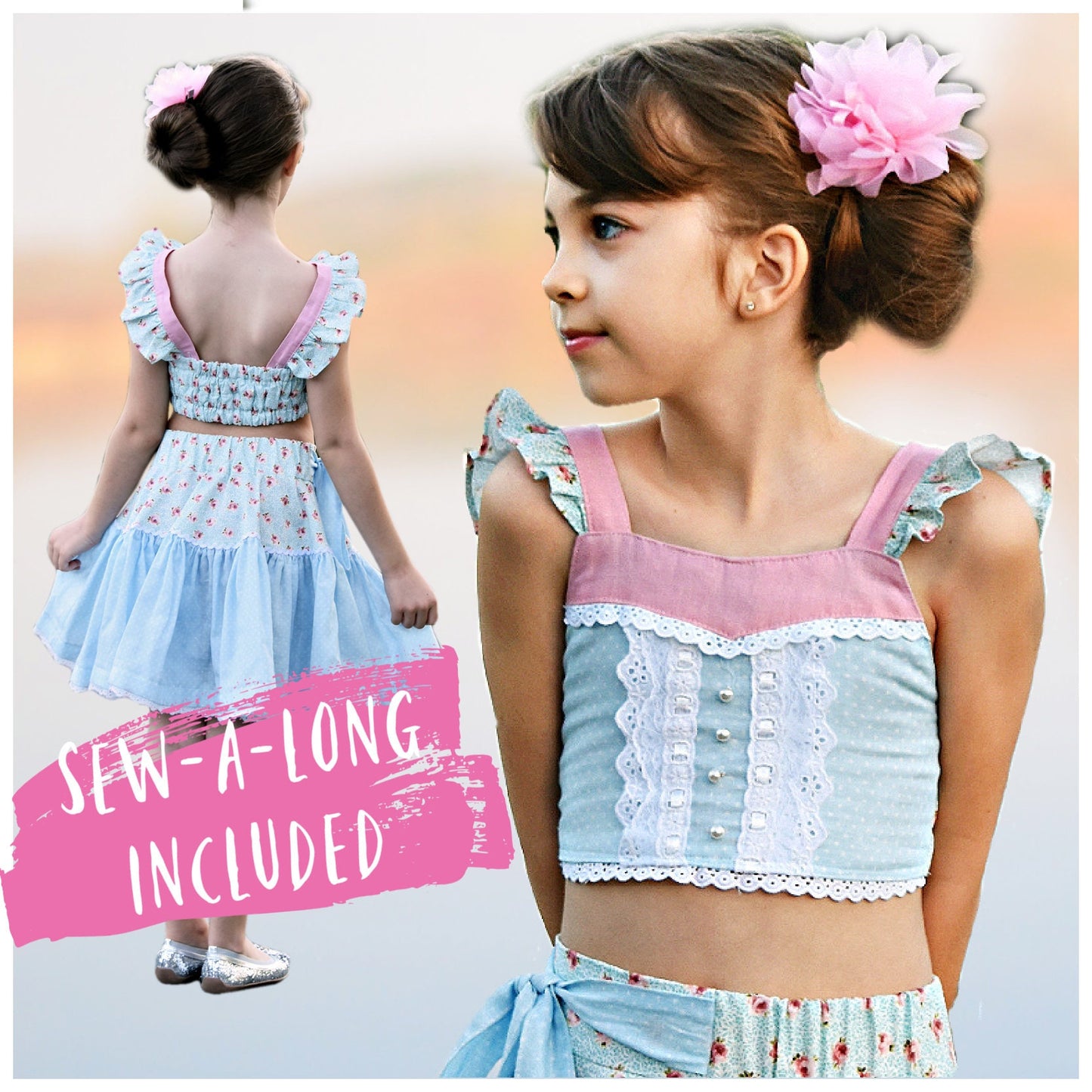
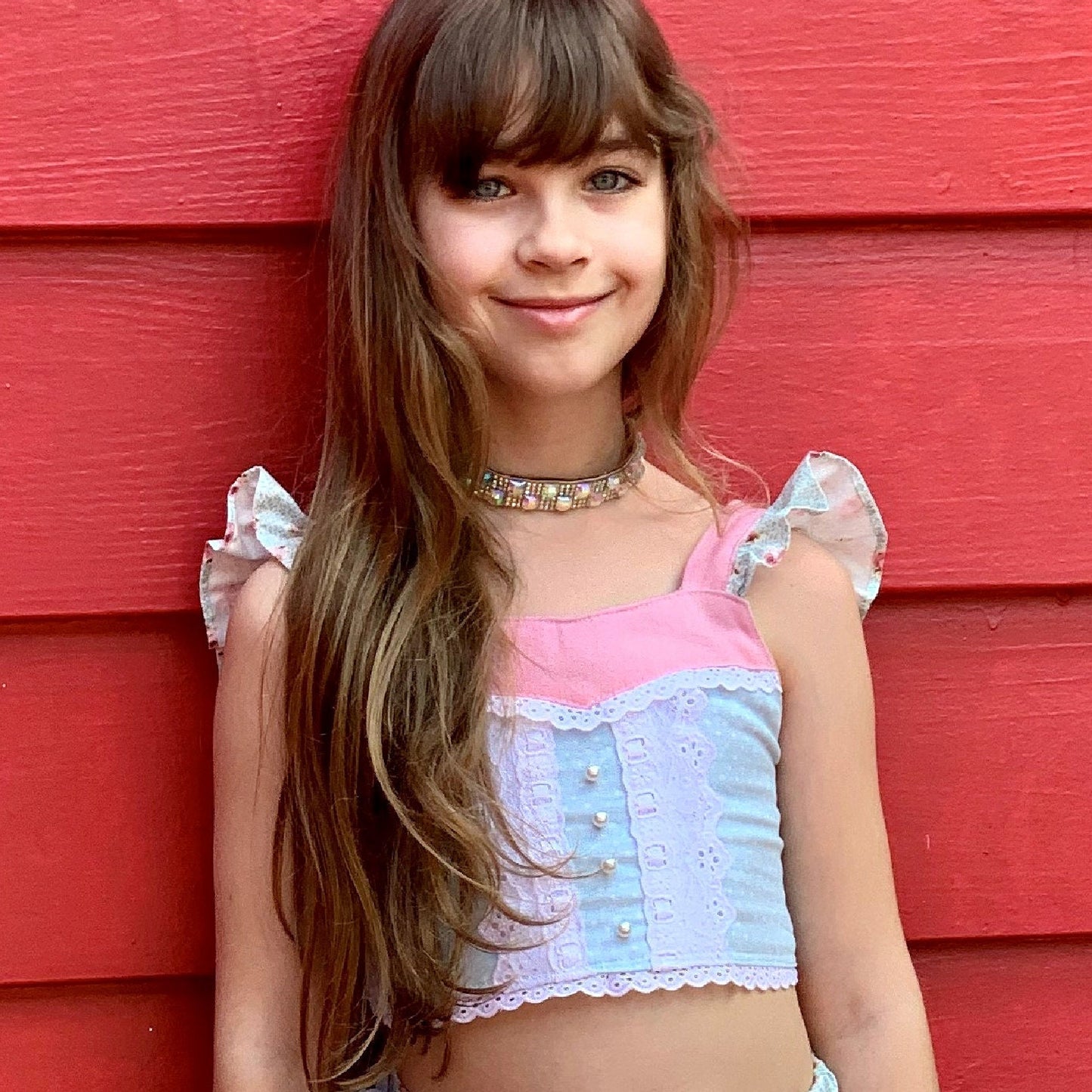
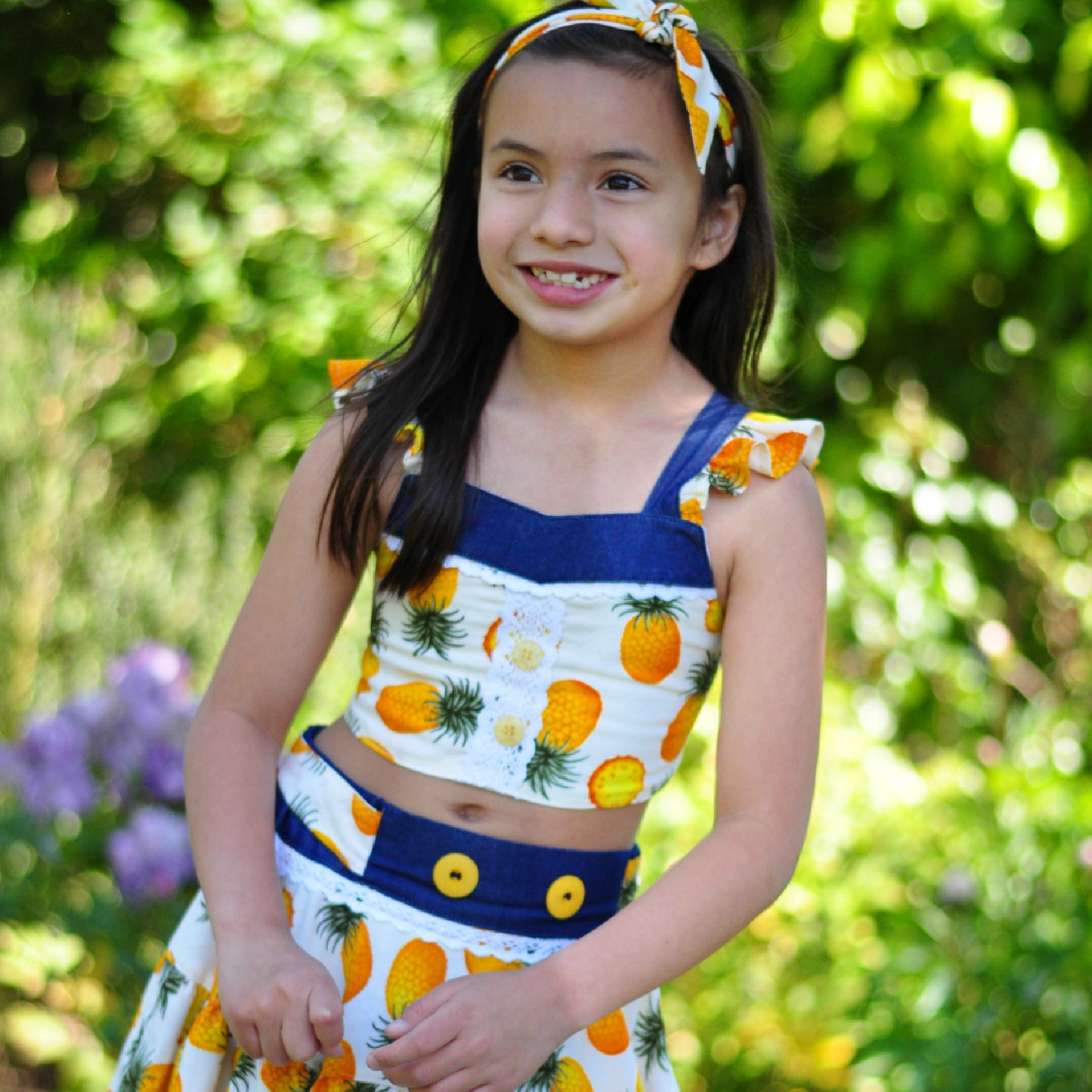
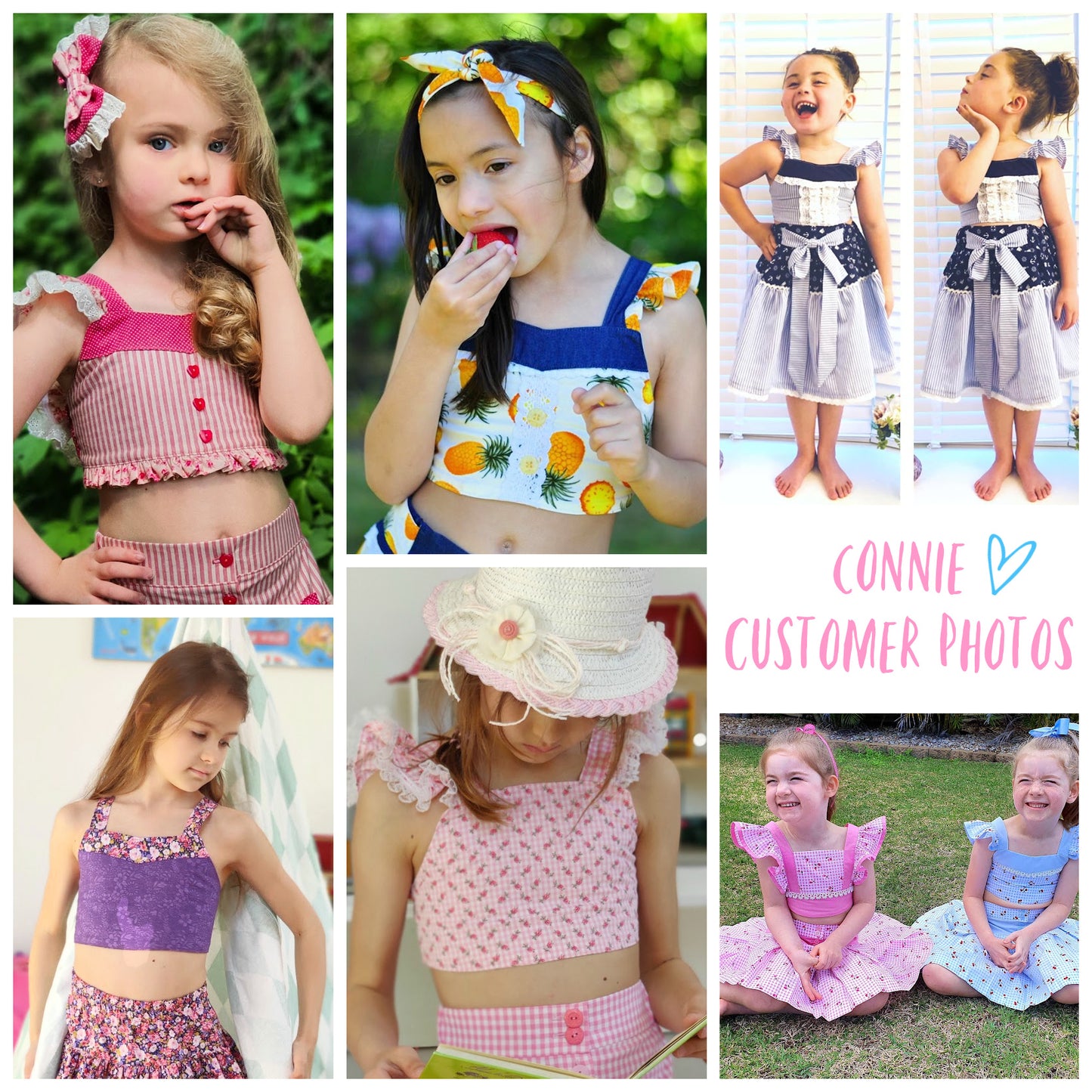
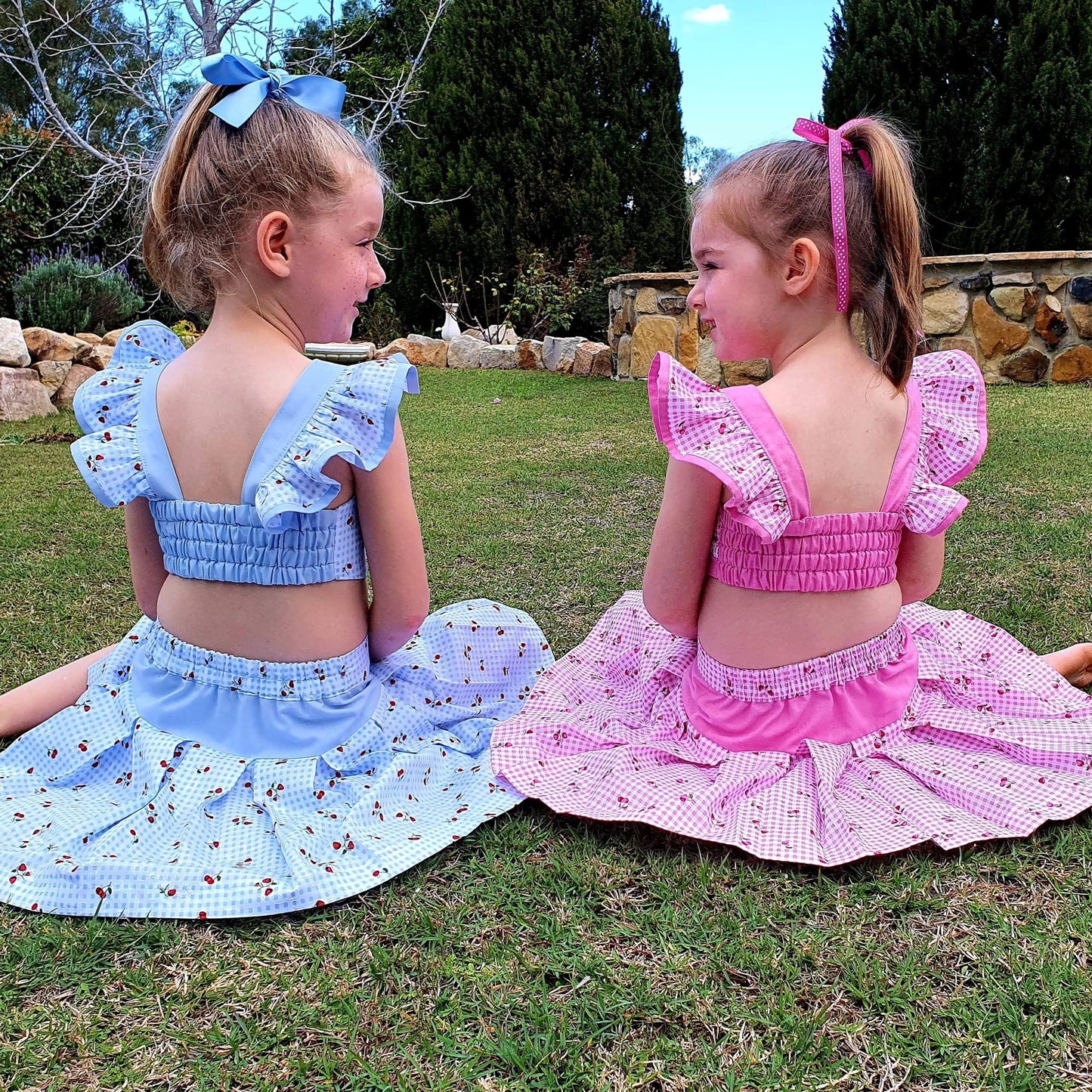
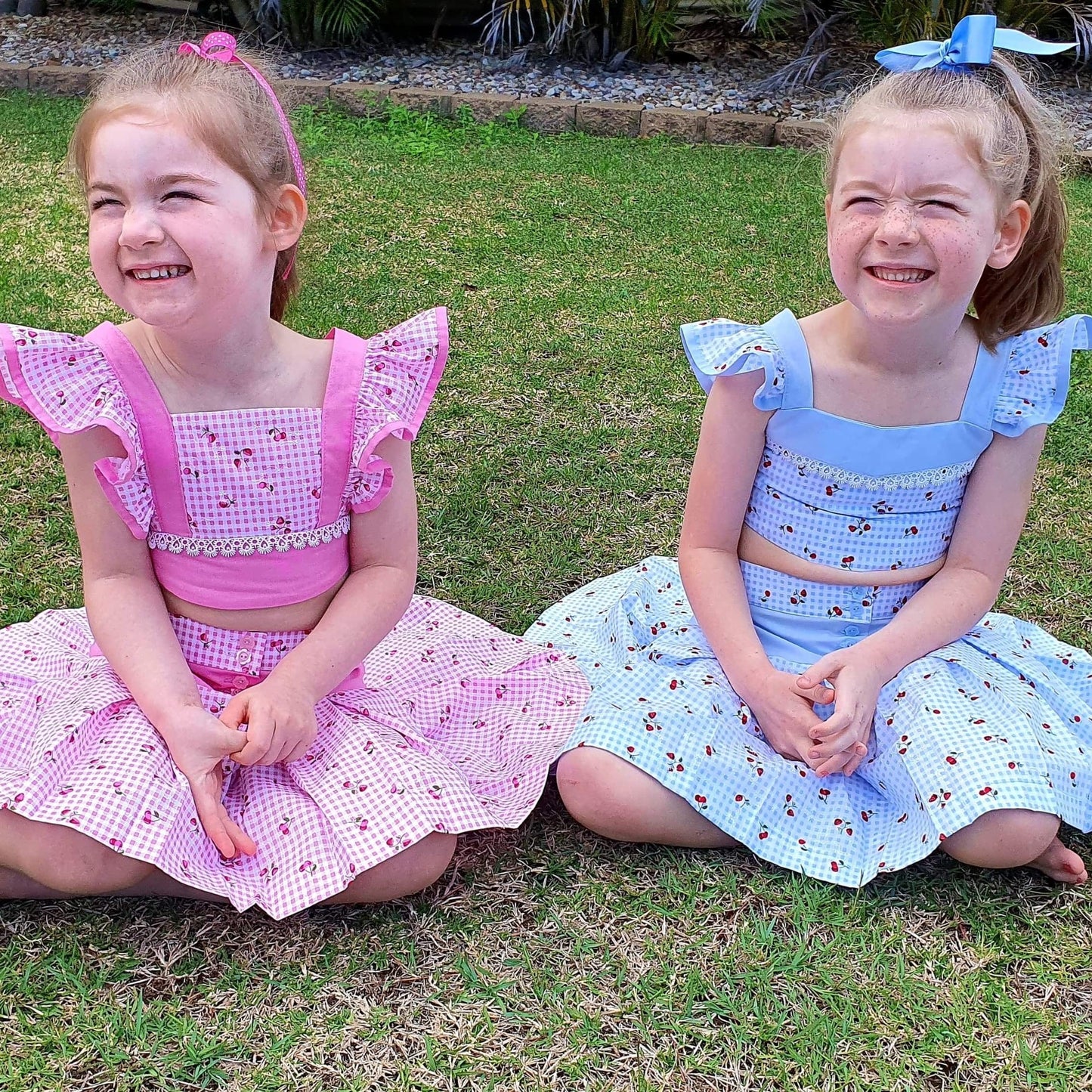
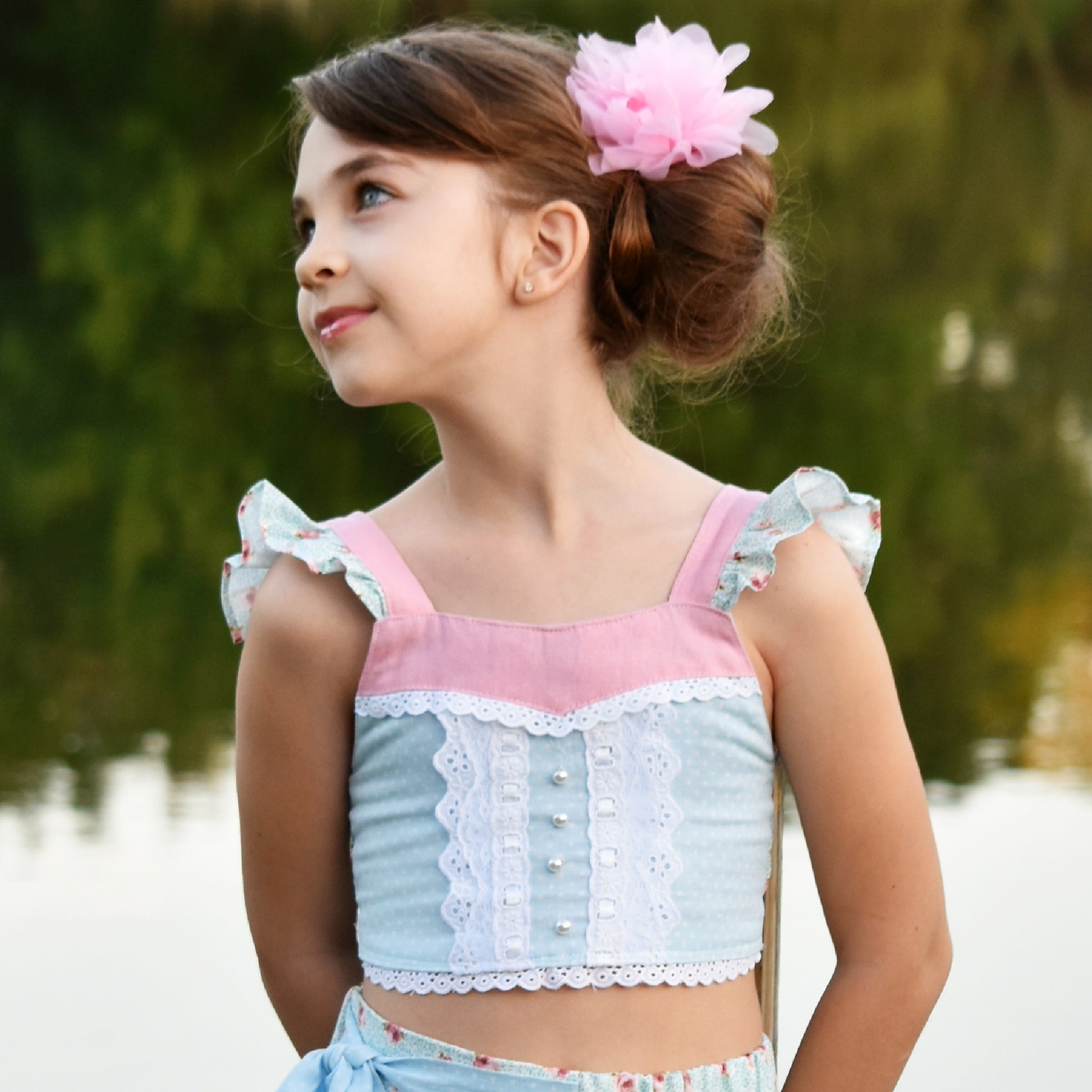
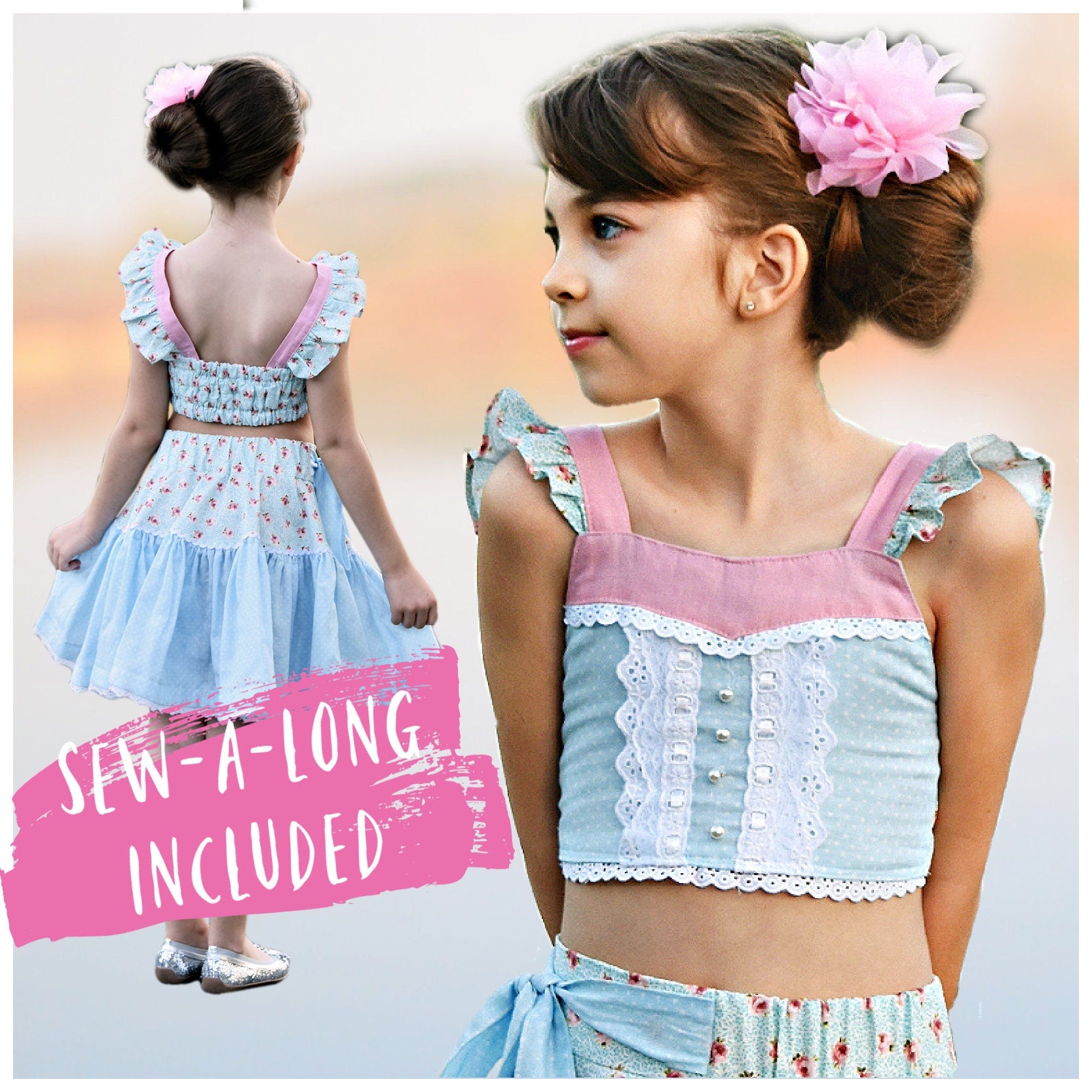
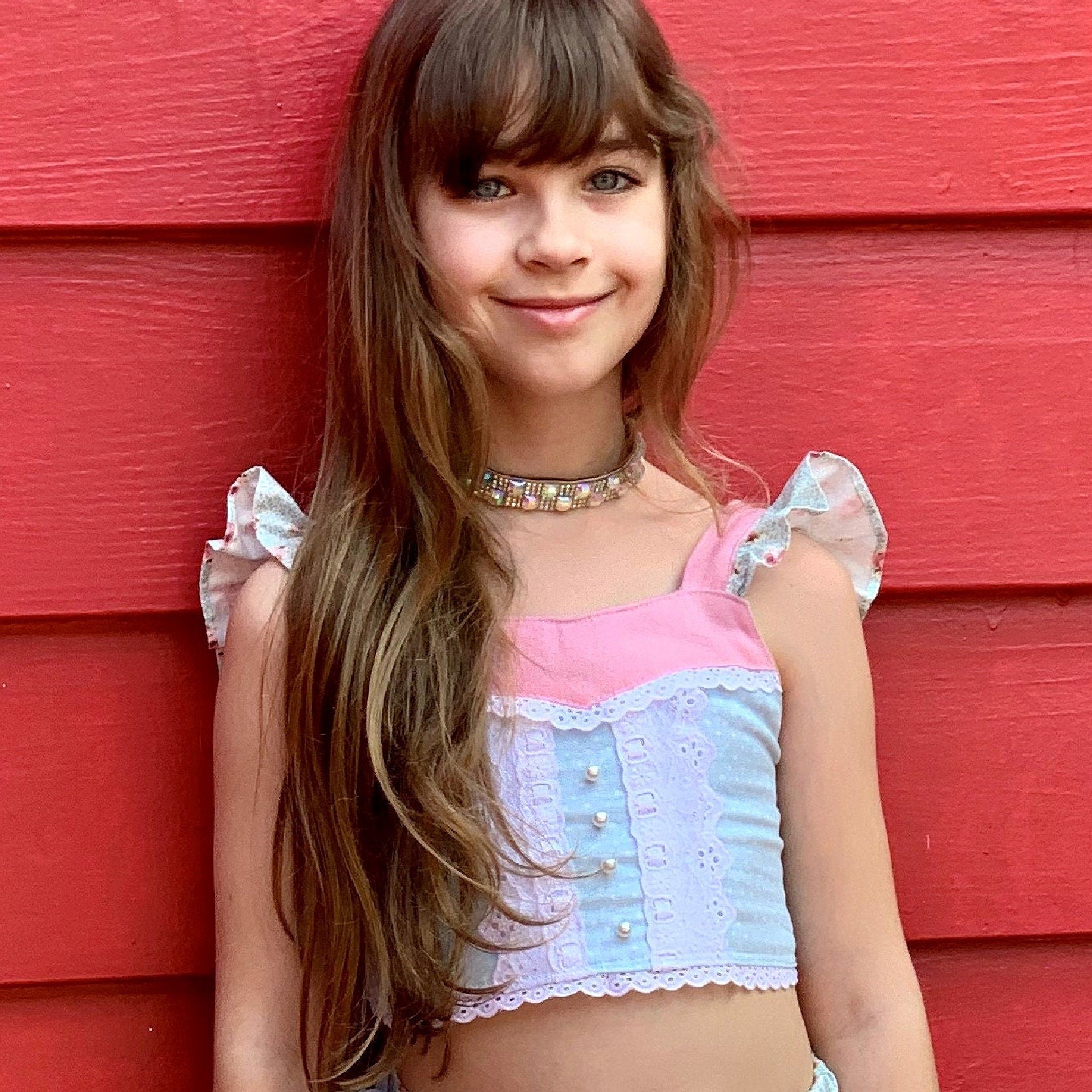
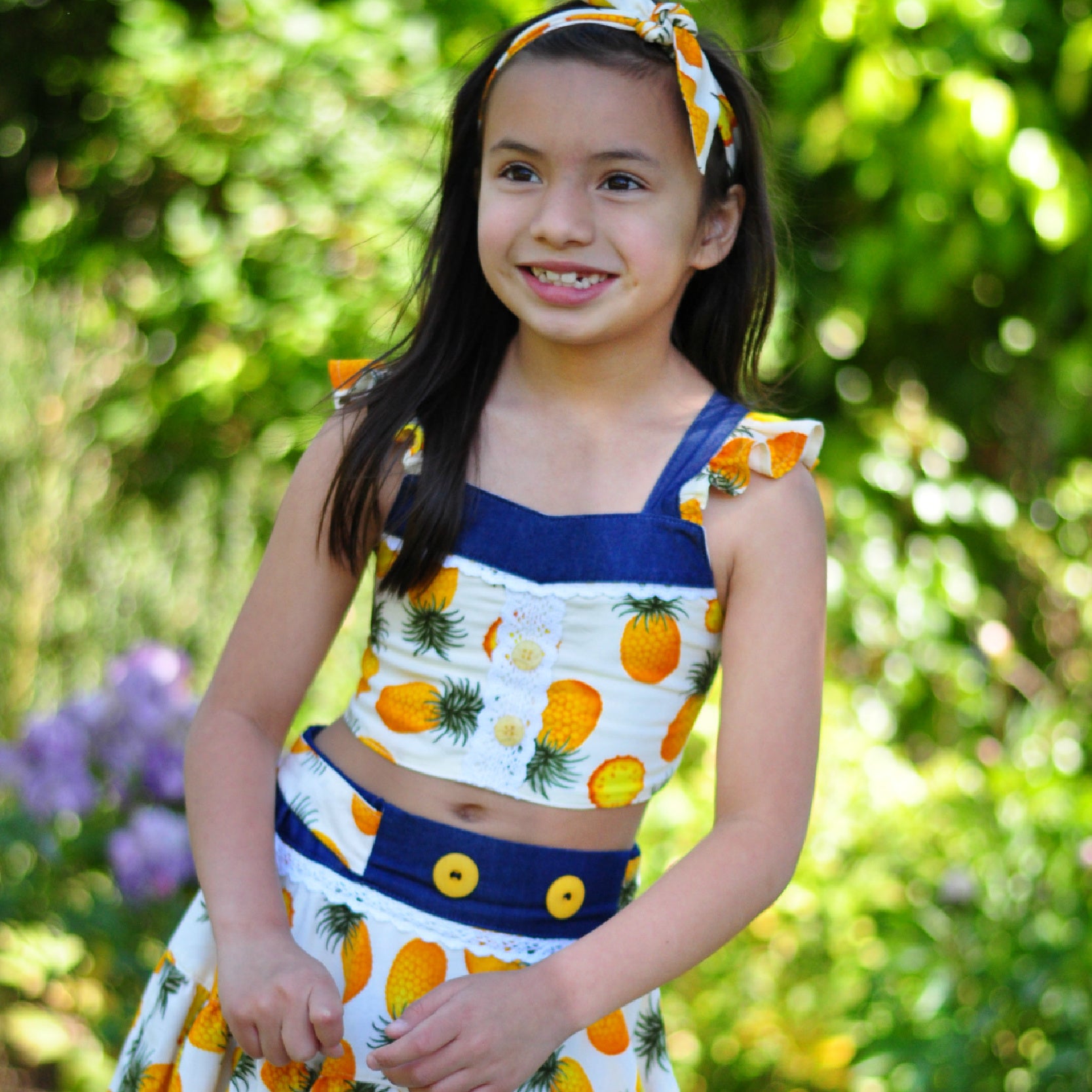
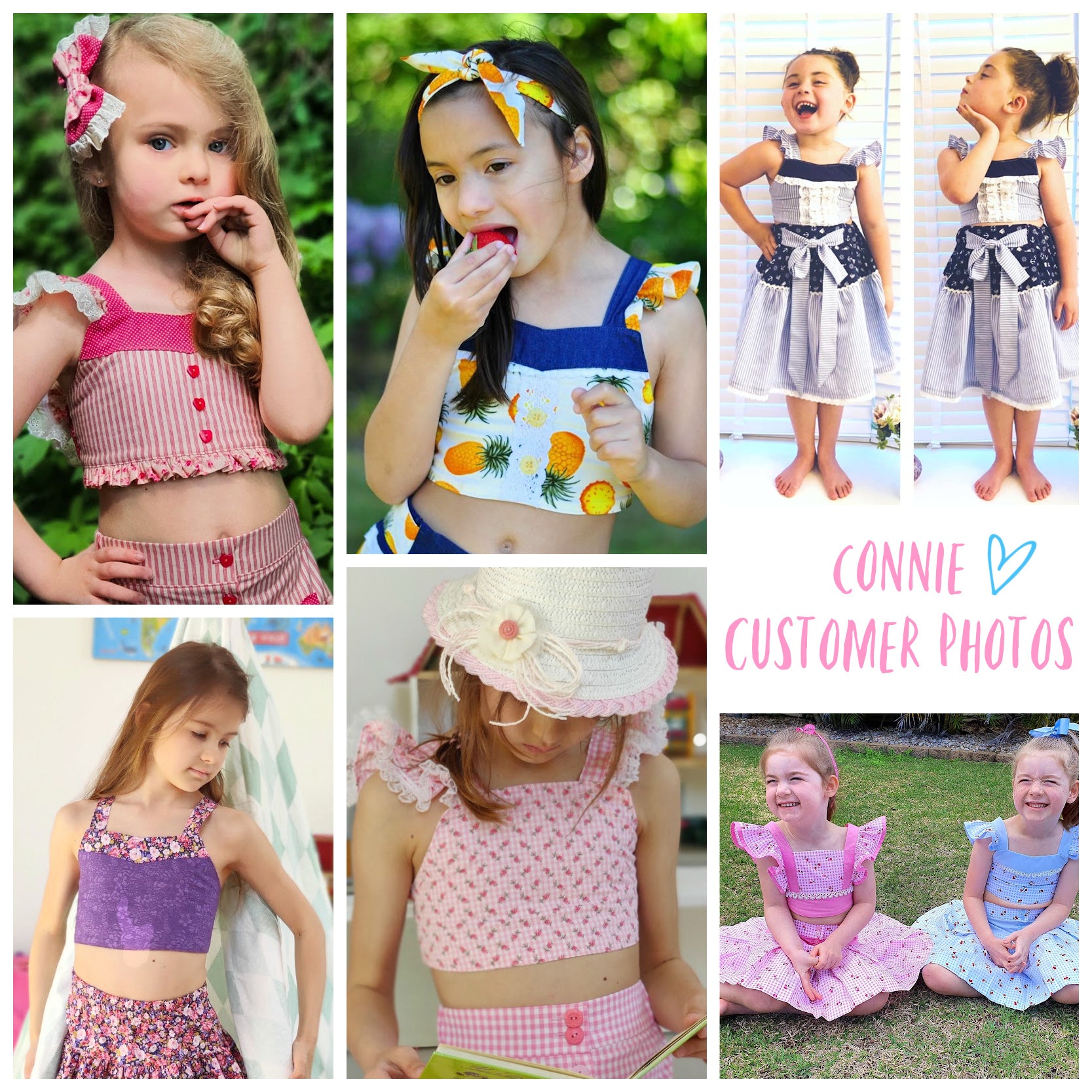
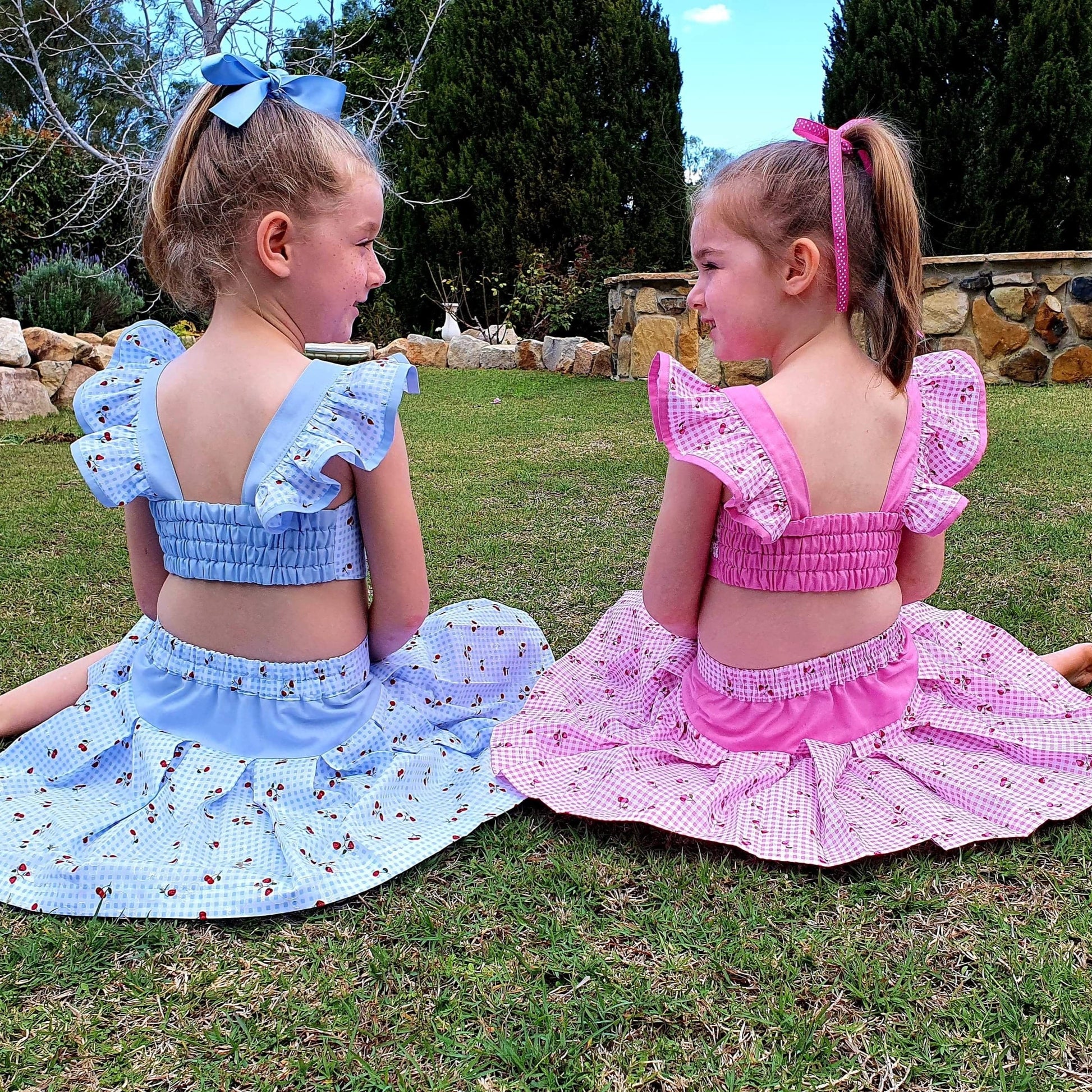
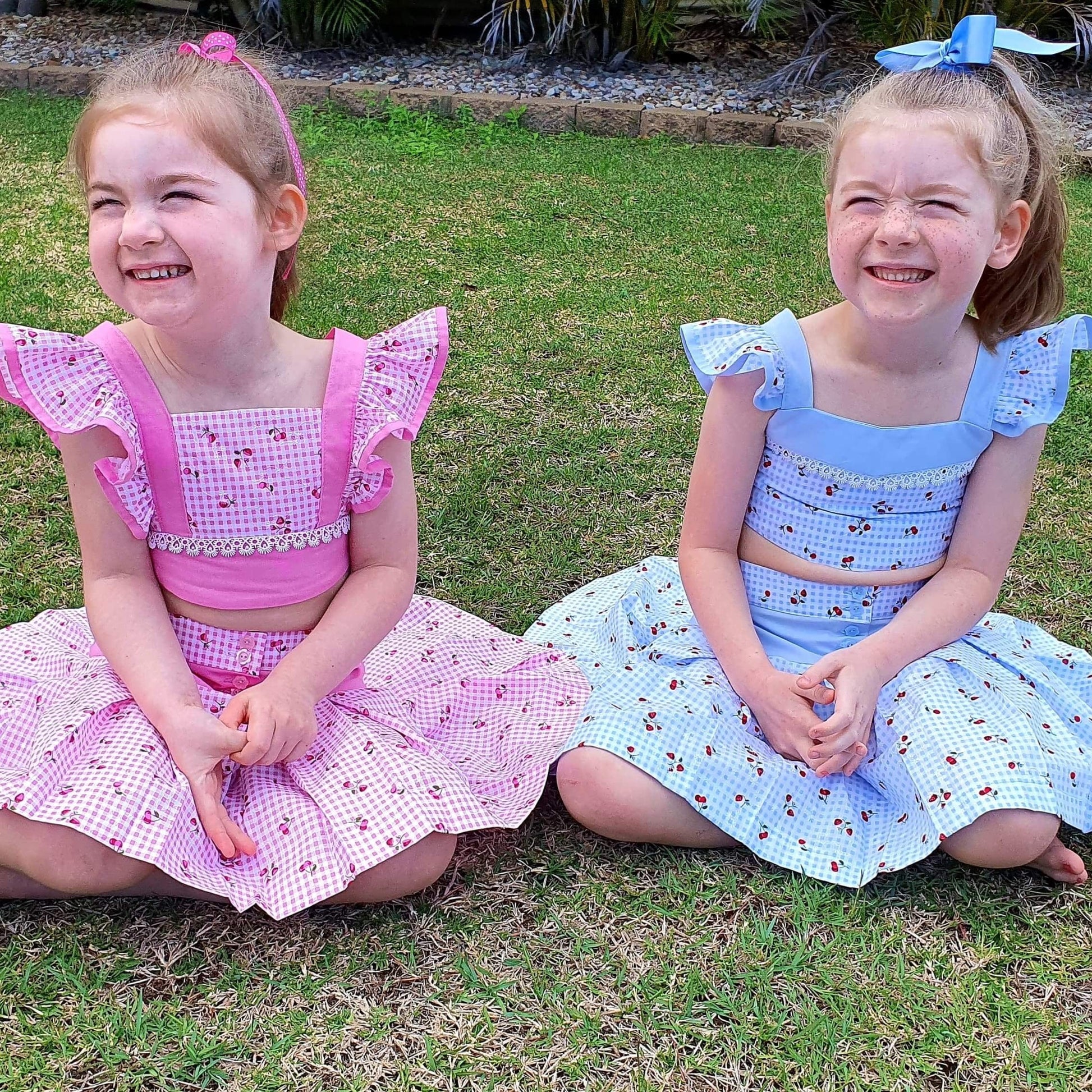
Connie is a sweet and simple blouse pattern that’s perfect for warm days and play. Complete with flutter sleeves and square neckline this really is the prettiest top. The elastic back panel is super easy to sew perfect for beginners.

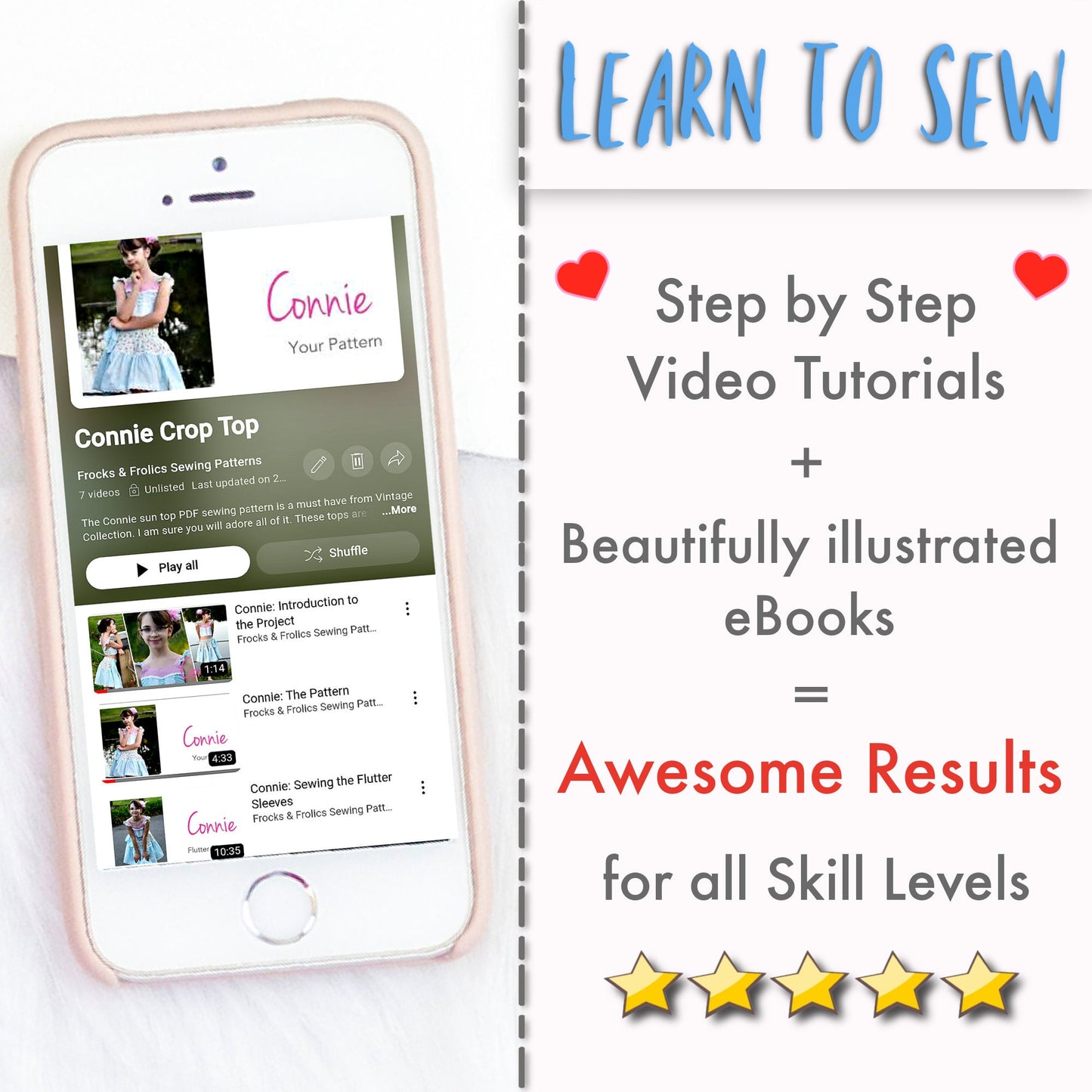
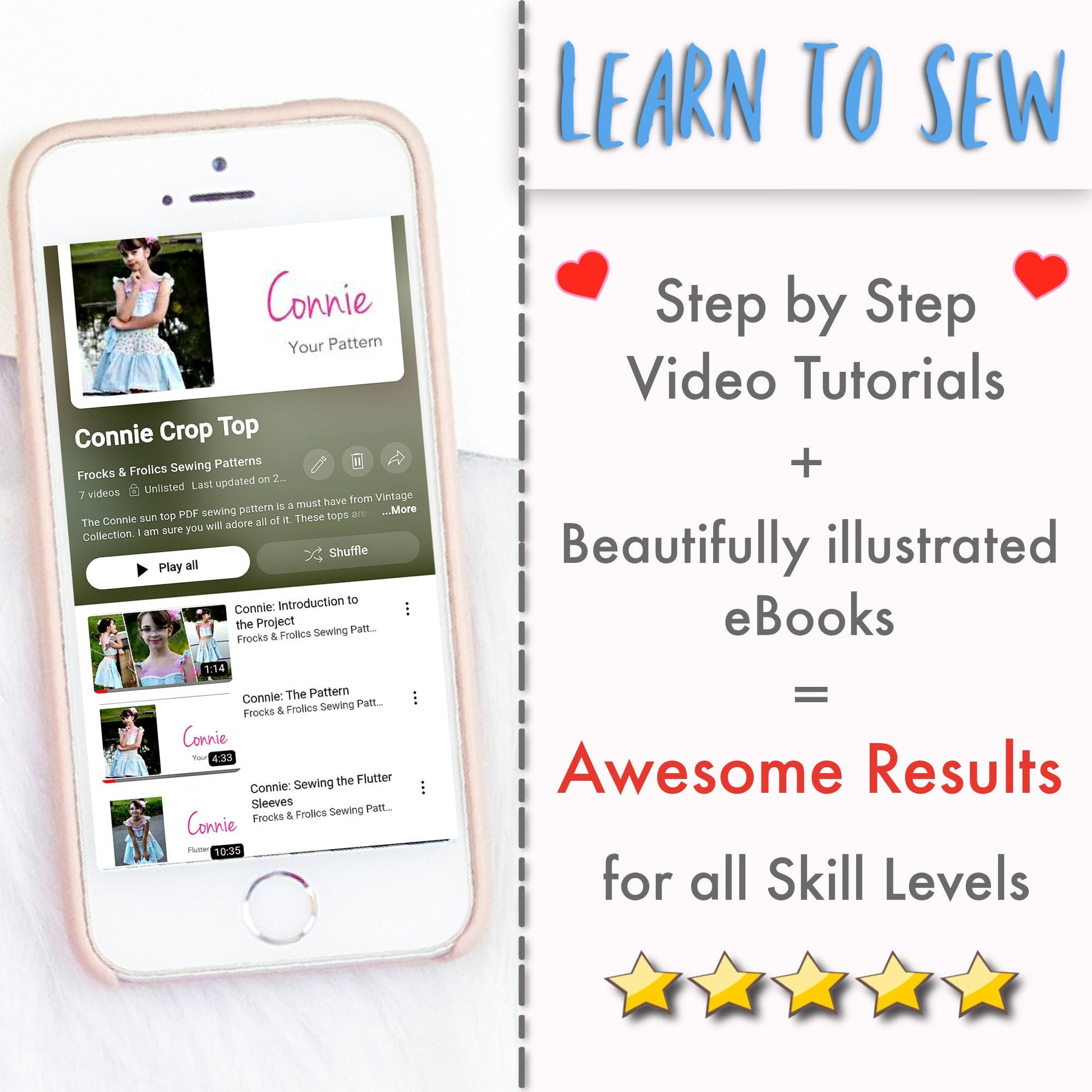
If you like a bit of company while you sew, Marina has prepared a video sewing course for this cute baby girl top and gentle vintage charm. She will walk you through every step, just like a friend sitting beside you at the machine.


Pattern Download Includes

  • Instant Download
  • DIN A4 & US Letter Size
  • Individual PDF Files for every Size
  • All Sizes included
  • Detailed eBook
  • Video Tutorials

Design Options

•  Flutter sleeves with bias binding or hemmed
•  Lined front, perfect for adding embellishments
•  Square neckline
•  Fully lined
•  Elasticated back

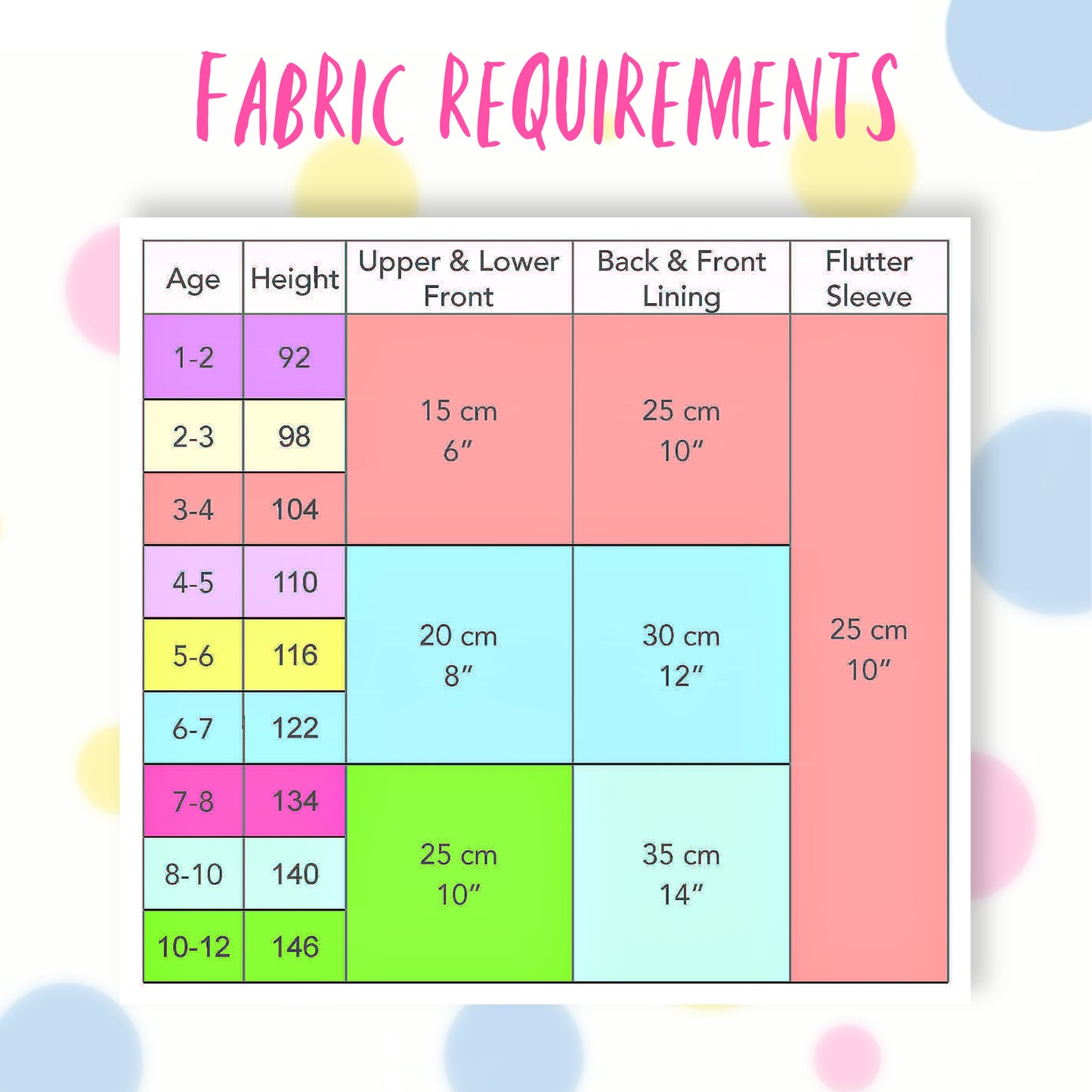
Fabric Requirements

BEST MATERIAL CHOICE
Lightweight cotton fabrics: Linen, Cotton lawn  

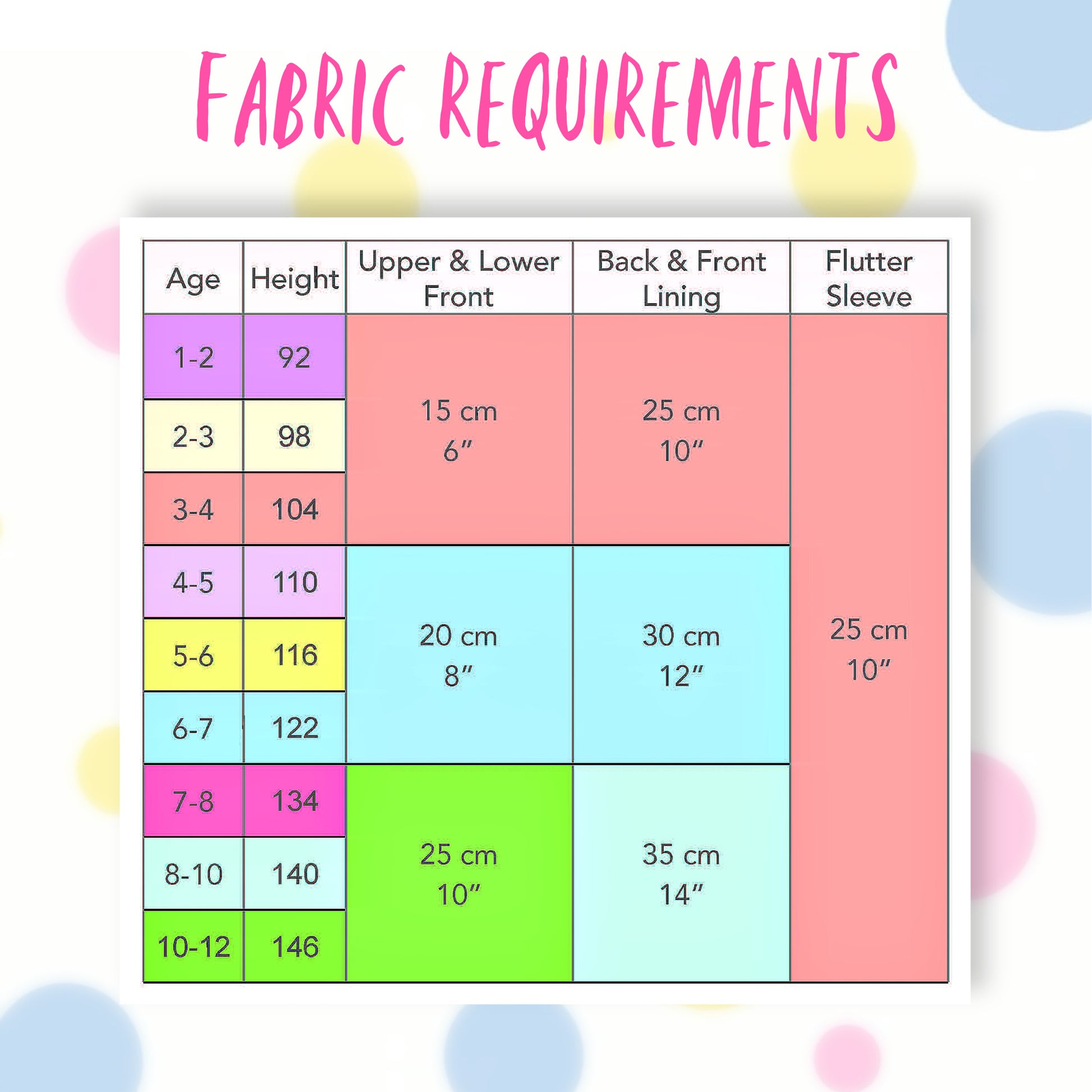
FABRIC REQUIREMENTS
•  Back and lining: 16-28 inches (40-70 cm)
•  Contrast front: 6-10 inches (15-25 cm)
•  Flutter sleeves (optional alternative fabric): 10 inches (25cm)

NOTIONS
•  Elastic 0.6 inches (1.5cm) wide: 2.1 yards (2m)
•  Optional decorative buttons: 2 x

Available Sizes

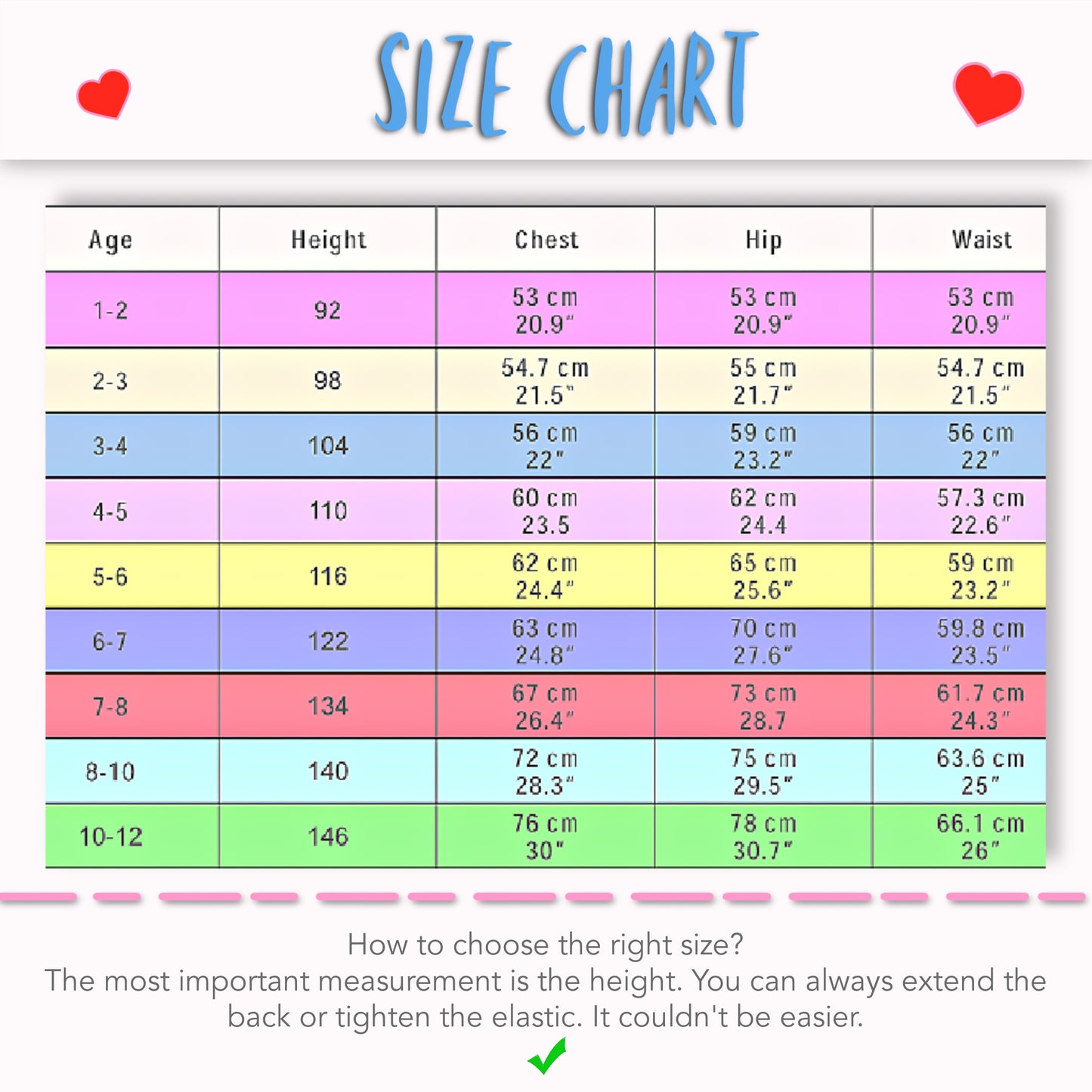
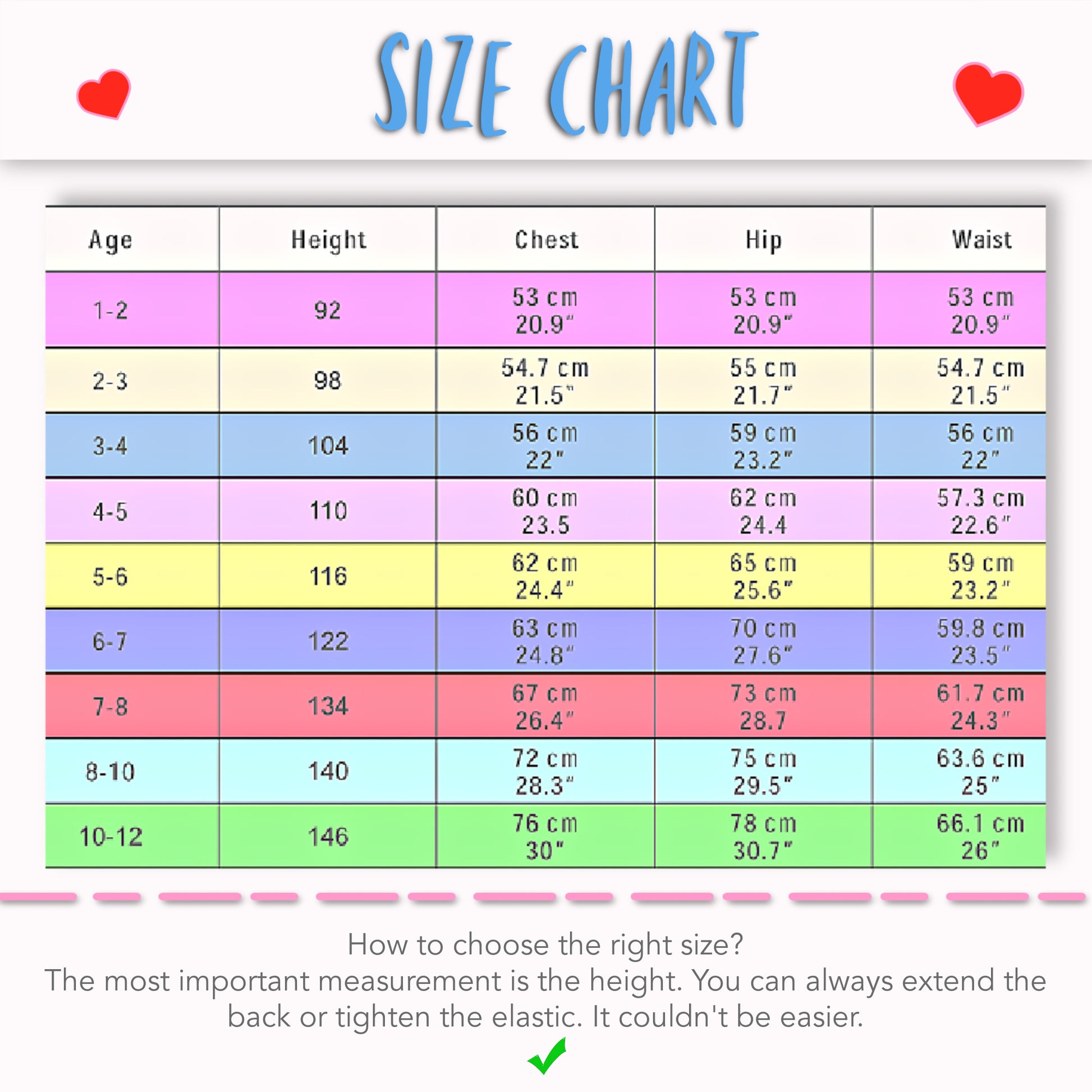
Sizes: 1-12 Years

Please Read

  1. This is a digital pattern or PDF file, not a physical product. It will be delivered electronically via a download link delivered to the email used for the purchase.
  2. To ensure the pattern prints at its actual size, it's recommended that you use Adobe Acrobat Reader.
  3. The pattern creator, Frocks & Frolics, welcomes small-scale production using their patterns. 

Customers are encouraged to tag Frocks & Frolics when sharing projects made using their patterns on social media.

@frocksandfrolics #frocksandfrolics

View full details

STEP-BY-STEP VIDEO TUTORIALS
Thumbnail
INTRODUCTION TO THE PROJECT
Thumbnail
THE PATTERN
Thumbnail
CUTTING OUT
Thumbnail
THE FLUTTER SLEEVES
Thumbnail
THE FRONT
Thumbnail
THE BACK
Thumbnail
THE BUTTONHOLES

VIDEO TEXT

Connie Top Introduction

Transcript for the video: Connie Blouse - Introduction

I want to introduce you to the Connie top. It is really super simple to sew, even for beginners.

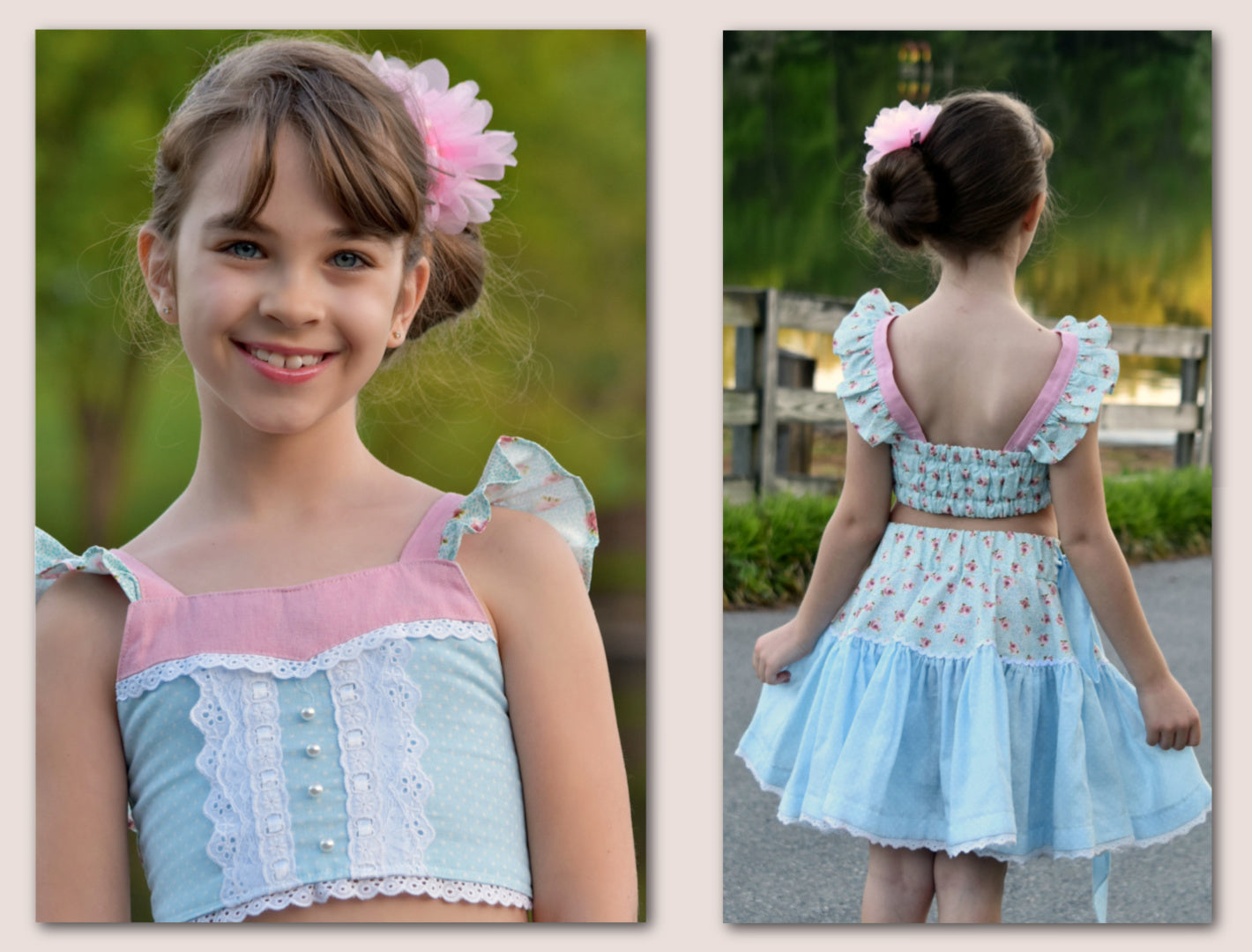
We have some lace sewn into the front, and I have added some pearly buttons. There is also a lace insert here, again finished with a lace trim. Of course, we have the all-important flutter sleeves that everyone loves for summer, plus a little lace trim at the hem as well.

The back is elasticated, which makes it very easy to fit. We also have buttonholes inserted for the length of the straps. If you have your child at home, all you need to do is try it on and then attach the flutter sleeves at the correct length.

That is it.

We have a whole collection called the Vintage Collection, and this is the Bonnie skirt that I am teaming it with. It is just one of many combinations you can make with this wonderful pattern.

I hope to see you in the course soon and that you enjoy sewing our Vintage Collection this summer.

Bye for now.

Connie Top Pattern Overview

Transcript for the video: Connie Blouse - Introduction

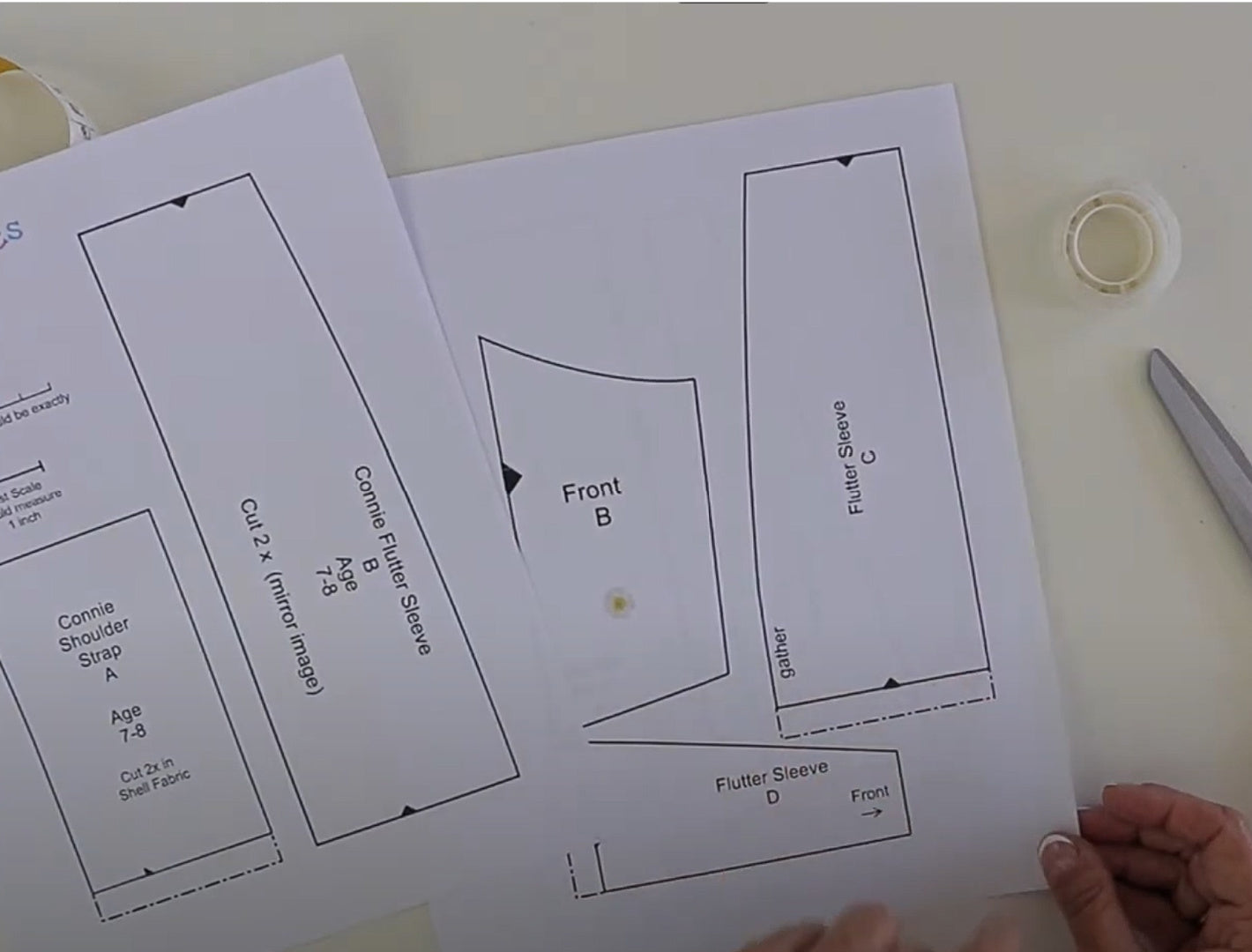
Let’s have a look at your pattern. You will need some sellotape, scissors, and of course your trusty tape measure to check the scale. The scale must be exactly five centimeters or one inch for everyone in the US or using the imperial system.

If that is correct, grab the last page, which always shows the assembly plan. The assembly plan tells you exactly how to put the pattern together. Everything is arranged in alphabetical order, so if you need two pieces to form a complete pattern piece, they are labelled A and B.

Because not all pieces fit on one sheet of paper, there are attachment lines. Make sure you tape the pattern together properly and do not cut out small sections individually.

Pattern Assembly

Let’s put together the front as an example. It consists of pieces A and B. All I do is place B over the attachment line and tape it together.

The front has a white flower on it and is cut on the fold. We need it in both the lining and the outer fabric. The back also has a pink flower and is cut on the fold, but only once.

Pattern Pieces and Construction Overview

Now let’s look at the rest of the pieces.

The front insert is placed over the front and comes as one piece. It only needs to be cut once. There are two neckline options: a solid line and a dashed line. The solid line is for the sweetheart neckline, which you can use with or without the insert. The dashed line gives you a straight neckline option, as seen in some of my samples.

Next is the shoulder strap, which is inserted between the front and front lining. It is used together with a flutter sleeve.

The flutter sleeve has a front and a back section because the shoulder point sits slightly more towards the front than the back. This is due to the shorter distance at the front shoulder area. Make sure you mark the front clearly.

The front section of the flutter sleeve is also slightly wider. A small portion of lace or trim will be visible and inserted into the front piece. If you want to bind this edge, reduce this area slightly to avoid too much bulk when sewing.

A good guide is to overlap your seam allowance and check the width. It should not be wider than this. If your sleeve is wider, you can add small pleats to reduce it before attaching.

The front shoulder strap also has a slight slant. This adjustment is not shown on the original pattern piece, but it improves the fit. This makes it very easy to distinguish the front from the back.

The back is cut on the fold and then folded lengthwise. It is inserted between the front lining and the outer fabric. Because of this construction, it is one centimeter shorter than the front and is only cut once.

The front is cut on the fold once in lining and once in outer fabric.

Now we are ready to cut out our fabric.

Pattern Preparation and Assembly

Transcript for the video: Connie Blouse - Cutting Out

Now we are ready to look at your pattern. You will need Sellotape, scissors, and a trusty tape measure to check your scale, which must be exactly 5 cm or 1 inch for anyone using the imperial system.

If that is correct, take the last page of your pattern pack, which always shows the assembly plan. This tells you exactly how to put everything together. The pieces are arranged in alphabetical order, so if a pattern piece is made from two parts, it will be labelled A and B.

Because not all pieces fit on one sheet of paper, there are attachment lines. Make sure you align these properly and tape them together. Do not cut out small fragments separately.

The front piece usually has a white flower, and the back has a pink flower for identification. For example, to assemble the front, place piece B over the attachment line of piece A and tape it together. The front is cut on the fold and needs to be cut in both outer fabric and lining. The back is also cut on the fold but only once.

Understanding the Pattern Pieces

The front insert sits over the front as one complete piece. You will see two cutting lines: a solid line and a dashed line.

The solid line is for a sweetheart neckline option with the insert. The dashed line is for a straight neckline variation, as shown in some samples. Both options are possible.

The shoulder strap is inserted between the front and front lining and works together with the flutter sleeve design.

Flutter Sleeves

The flutter sleeve has a front and back because the shoulder point is slightly forward, meaning the front has more width than the back.

Make sure you mark the front clearly. The front section is also slightly wider so that lace or trim is visible when inserted. If you plan to bind the edge, reduce this width slightly to avoid excess bulk.

As a guide, overlap seam allowances to check the correct width. It should not be wider than this overlap. If it is, gently pleat the sleeve when attaching it.

Cutting Out the Fabric for the Connie Blouse

Now we are ready to cut out the fabric for the Connie blouse from Frocks and Frolics.

I am using a pink linen for the shoulder straps, a Michael Miller fabric from the Rosalinda collection for the flutter sleeves, and a polka dot fabric for the main body. I am also using lace for the hem, front insert, and decorative details.

For the back, I am using fold-over elastic. It is thin, flexible, and budget-friendly. I bought mine from Amazon, and it works very well for this design.

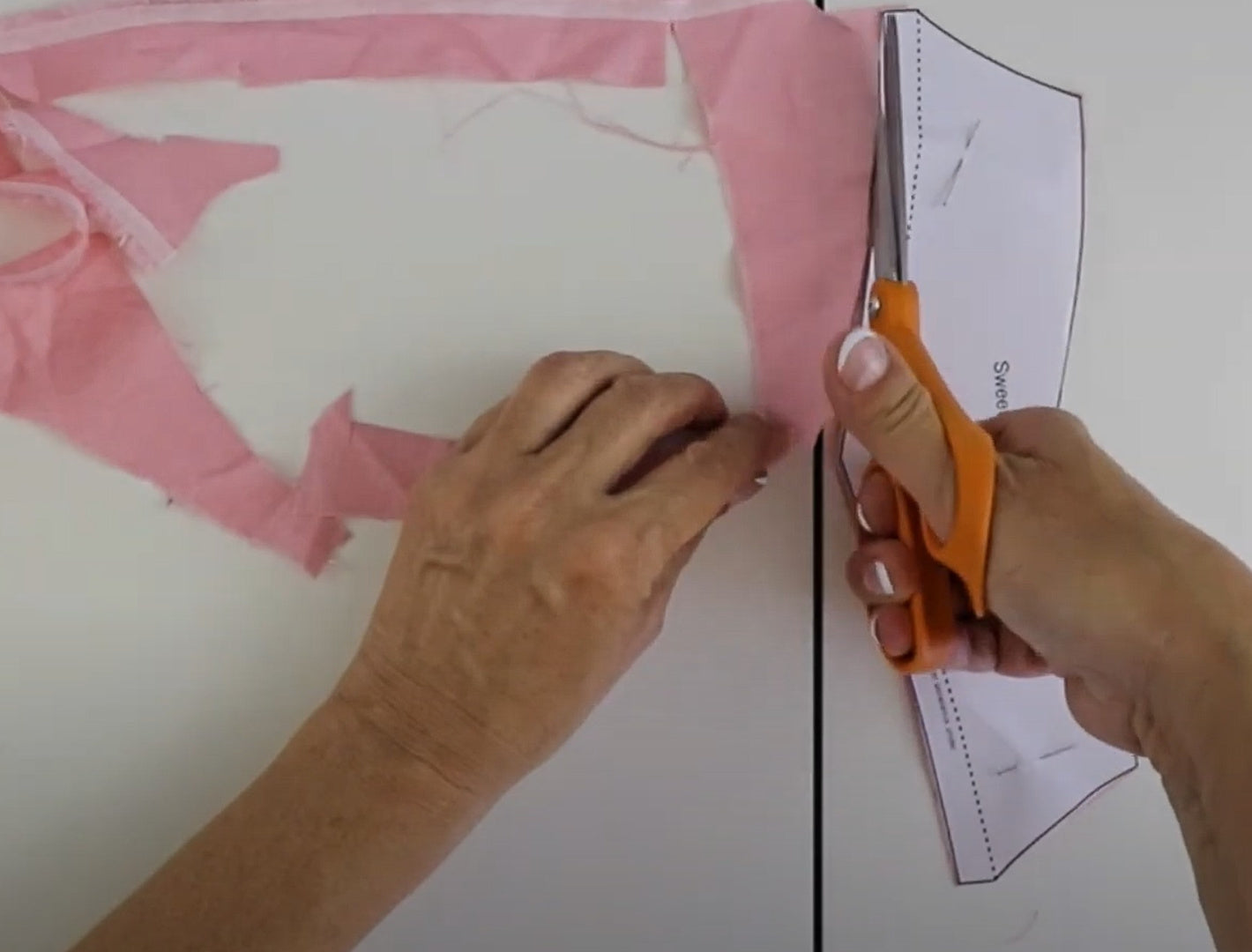
Start by cutting the insert once from a lightweight linen. Always cut with your scissors on the left side of the pattern if you are right-handed for better control and cleaner edges.

Cutting the Straps

Cut the shoulder straps twice. The pattern includes a slight taper towards the front, which helps distinguish front from back. The back edge is straight.

Cut along the fold line first to save fabric, then continue cutting around the rest of the shape. Keep your scissors on the left side of the pattern for accuracy.

Cutting the Flutter Sleeves

Cut two flutter sleeves.

You can adjust the width at the shoulder if making the blouse for older children. You may increase the width by about 1 cm if you prefer a fuller look, but do not adjust the very start or end points.

Mark the front clearly because the front is wider than the back.

Cutting the Main Fabric and Lining

Cut the back piece on the fold once using the main fabric. Then cut the front piece twice, once in the outer fabric and once in the lining.

The fabric used here is a double-layer gauze from the Michael Miller Baby Basics collection. It is two layers woven together with a connecting thread, making it soft and warm.

You can carefully separate the layers to create a lightweight lining. The fabric holds its shape well and does not distort easily when separated.

Lace Application

You can now add lace for decoration. Pin it in place before sewing to ensure it is evenly positioned on both sides.

Measure from the side seams so both sides are symmetrical. Once aligned, sew it directly onto the fabric.

In this version, I initially added lace down the center but later removed it after feedback from testers. In the final design, the lace was removed and replaced with buttons, with lace kept only as a subtle accent.

Cutting the Elastic

Finally, cut the elastic according to your size chart. In this example, each piece is 29 cm long.

Cut four pieces in total, depending on your size requirements. Each elastic tunnel will be approximately 1 inch wide, as specified in the instructions.

Now everything is cut and ready for construction.

Preparing the Flutter Sleeve Hem

Transcript for the video: Connie Blouse - Flutter Sleeves

Now I am going to show you how to put together the flutter sleeves.

We are going to create a narrow rolled hem on the straight edge of the flutter sleeve. To do this, turn the edge in once, then turn it in again, and then topstitch it down. This is very simple.

You can also serge the edge first, then turn it in and topstitch it, or you can finish it with lace if you prefer. There are many options depending on the look you want.

For the narrow rolled hem, turn the fabric in twice and secure the end. The key is to hold the fabric taut with your right hand while guiding the seam allowance with your left hand using your fingertip or fingernail. Then stitch as close to the edge as possible.

You can use a narrow rolled hem foot if you prefer, but for a short section it often takes longer to set up the foot than to simply sew it by hand. A stitch length of 3 to 3.5 works well here.

Keep feeding the seam allowance in evenly as you sew. Do not pull too hard, just keep it controlled and steady. Lock your stitches at the end.

Adding Gather Stitches

Now we are ready to add gather stitches.

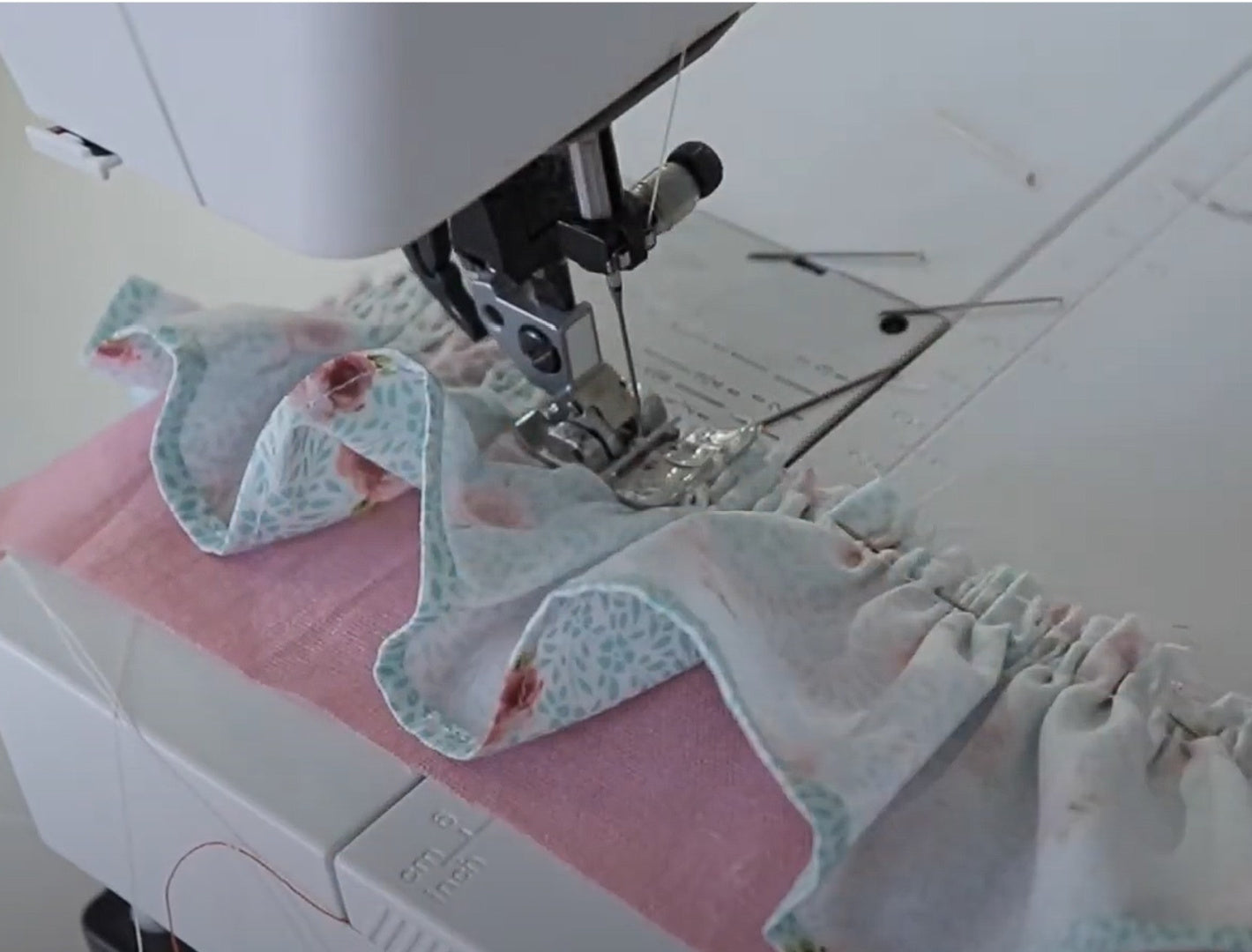
We need two rows of stitching. One close to the edge and one about a presser foot width away. Use the longest stitch length available on your machine, usually 5.5 or 6.

Sew the first line close to the edge, then sew the second line parallel to it. Leave long thread tails at both ends.

These two rows will allow a 1 cm seam allowance to sit neatly between the stitching lines when attached to the strap.

Gathering the Flutter Sleeve

Marking the center is optional, as it is not strictly necessary.

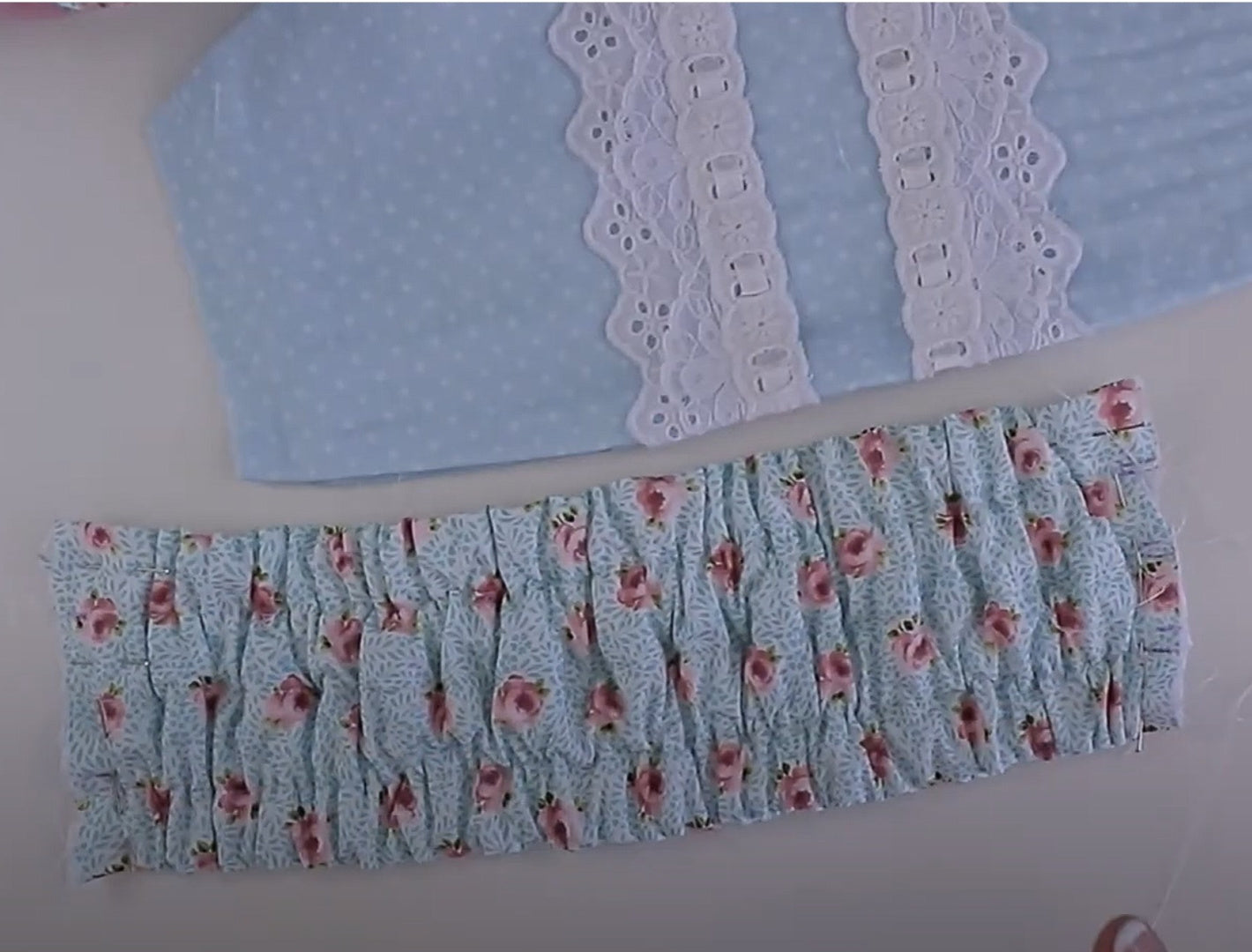
Pull the bobbin threads gently to gather the fabric until it matches the strap length. Insert a vertical pin to secure the gathers, then wrap the threads in a figure of eight to prevent them from slipping.

Distribute the gathers evenly. You can refine the spacing more carefully on the sewing machine later.

Repeat this process for the other sleeve.

Attaching the Flutter Sleeve to the Strap

Once the gathers fit, move to the sewing machine.

Before stitching, secure the threads again with a pin and a figure of eight wrap so they do not shift.

Arrange the gathers evenly along the strap. Make sure everything is lying flat and controlled.

When sewing, ensure the back edge is finished neatly so it can be turned in by 1 cm later. You do not want raw edges visible on the flutter sleeve once completed.

Take your time distributing the gathers as you sew for a smooth finish.

Pressing the Flutter Sleeves

Once sewn, go to the ironing board.

Press the seam evenly. It is more important that the seam is consistent than exactly 1 cm.

You will notice a slight tip at the front, which was adjusted in the updated pattern. The back section should be pressed inward neatly, as this will be folded and finished later.

Lightly steam the flutter sleeves and smooth them with your hand rather than fully flattening them. This keeps their shape soft and natural.

Finishing the Edges

Now fold in the back edge. This does not need to be exactly 1 cm, it can be around 0.5 cm if needed, as long as both sleeves match.

Fold the edge so it sits directly on the stitching line and press it flat.

Pin in place if needed. Check both sleeves to ensure they are even and symmetrical.

Give everything another press with steam to set the shape.

Topstitching the Flutter Sleeves

Now sew along the edge to secure everything.

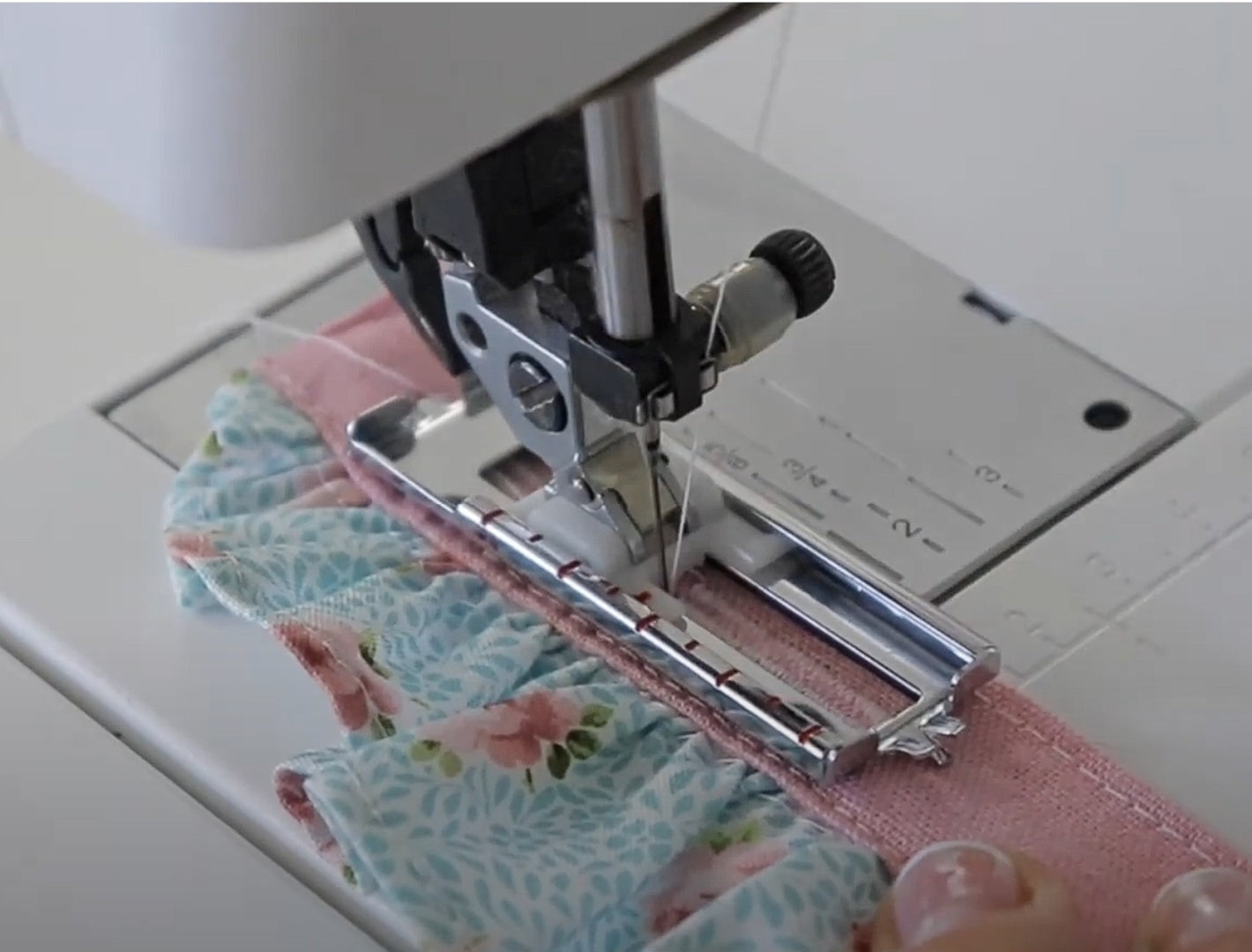
Use a fixed guide on your presser foot, such as a red line, and follow it along the edge of the fabric.

When you reach a corner or end, leave the needle down, lift the presser foot, turn the fabric, and continue sewing.

Sew slowly for the cleanest result. Accuracy is more important than speed here.

Once complete, the flutter sleeves are finished and ready to be attached to the front.

Connie Blouse: Front Construction

Transcript for the video: Connie Blouse - Sewing the Front

Adding Lace and Decorative Details

Now we are going to work on the front.

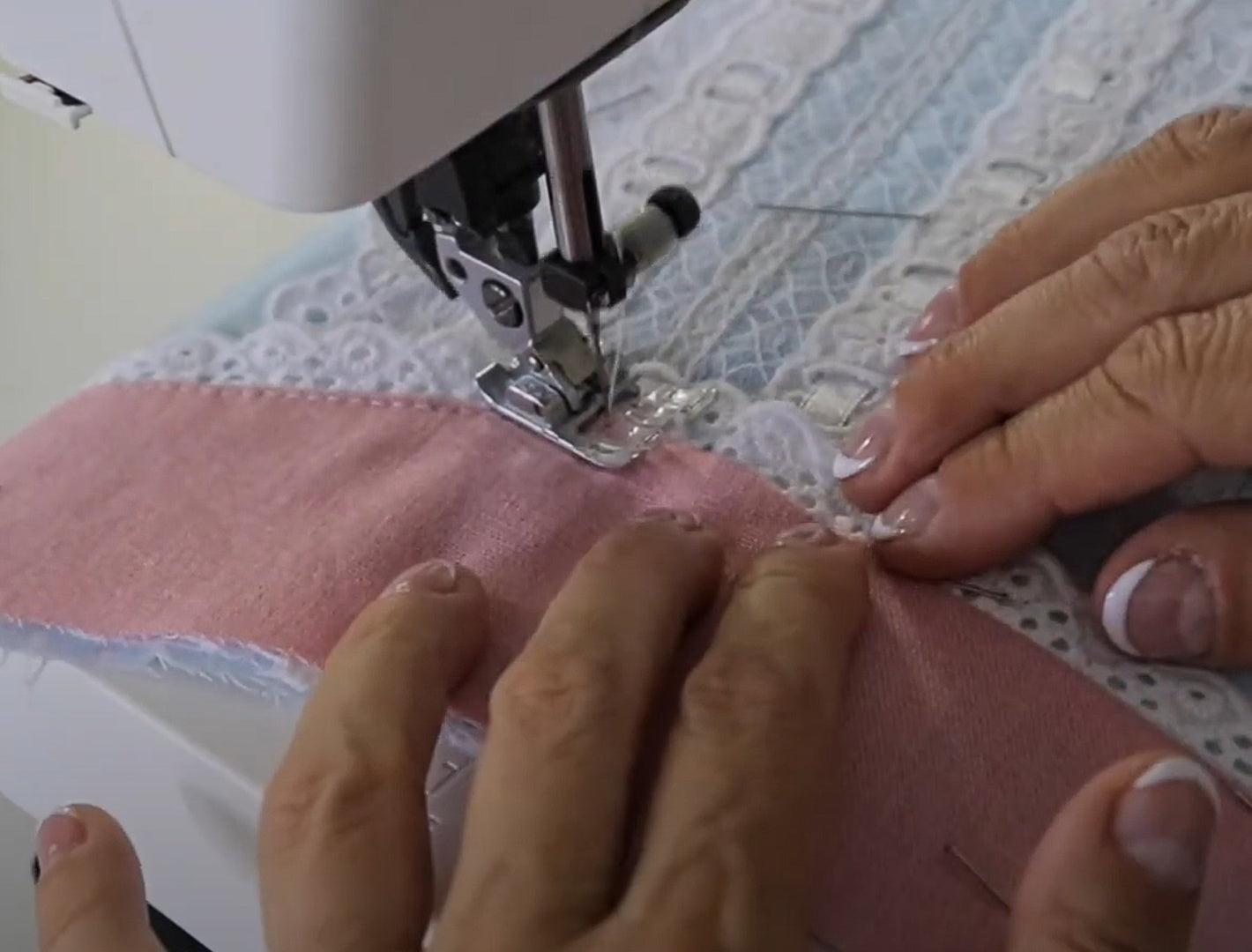
You will see that we have this lovely lace insert. In my case, I am simply topstitching it on. I actually had two layers of lace, which made it very easy because I could fold one layer over and sew it straight down.

I absolutely love this lace. I am not even sure where I bought it, but I have become a real fan of lace and flutter sleeves while making this collection. I think I have been missing out on them before.

Attaching the Front Insert

Now we are going to put the insert onto the front.

First, iron over the edge by 1 cm. Then place the insert onto the front piece. It is very simple, just secure it with two pins at the top.

If you are using lace underneath, place it first so you can see exactly where everything needs to sit. If not, you can just topstitch directly.

At the tip, I had a bit of tension, so I adjusted it slightly by adding a small pleat and easing it into place until it sat perfectly. This is a useful trick for beginners because it helps you control the fabric and achieve a clean point.

Once you are happy with the placement, pin it securely.

Topstitching the Insert

Now trim any excess if needed and take it to the sewing machine.

Topstitch the insert in place. On my machine I use a presser foot with a red guide line, which helps me keep a consistent edge distance.

If your presser foot is metal and difficult to see through, I highly recommend switching to a clear or plastic presser foot. It makes accuracy much easier.

Preparing the Lining

Now we move on to the lining.

There were some loose threads from separating the fabric layers, but you do not need to spend too much time cleaning them up because they will not be visible later.

Pin only the armholes at this stage, using vertical pins along the seam.

If your fabric has stretch or bias areas, do not pull it. Instead, gently push the fabric together as you sew to prevent distortion.

Repeat this on the other side.

Trim back the seam allowance if needed. You can also understitch here for extra stability, although it is optional. If you are a beginner and worried about stretching, you may skip understitching.

Attaching the Flutter Sleeves

Now we insert the flutter sleeves.

Place them into the neckline area. If they feel slightly wide, gently ease them in, but they should not extend more than a few millimetres beyond the edge.

Push the flutter sleeve into the corner and secure it with a pin placed vertically.

Make sure the strap aligns properly at the top. The strap should sit centrally, not drift towards the front, otherwise you will get an uneven excess of fabric.

Sew across carefully. When you reach corners, leave the needle down, turn your fabric, and continue sewing.

Once done, carefully trim the tip if needed, then turn the sleeve out. The flutter effect will now sit beautifully.

Joining the Front and Lining

Now we close the side seams and finish the structure.

If you want, you can understitch the seam allowance to help it lie flat, but it is optional.

At this point, remove or adjust any lace that is no longer needed based on your final design choice.

Closing the Garment (Bagging Out Method)

Now we bag out the garment.

Before closing, remember that any lace trim should ideally be attached to the outer fabric first before joining the lining. This step is important and easy to overlook.

Leave a turning gap on the side seam large enough for your hand to pass through. Secure both ends of the gap with backstitching.

Now turn the front through. Do not pull everything through at once. Instead, start from the furthest point and gradually work the fabric through the opening to avoid strain on the seams.

Pressing and Finishing

Once turned out, smooth and press the armholes and side seams.

Tuck the lining neatly inside so it does not show. The fabric used here is light, so it holds its shape well without heavy understitching.

Make sure everything sits evenly on both sides.

When pressing the hem area, always orient the piece toward you rather than away. This helps maintain control and avoids distortion.

Be careful not to press a straight line across the turning gap. Instead, keep it slightly rounded so it blends naturally into the seam.

Next Step

Now the front is complete and we are ready to move on to the back section in the next chapter.

Back Construction

Transcript for the video: Connie Blouse - Sewing the Back

Sewing the Back Seam

Now we are going to work on the back, and this part is really simple and quick.

Take your back piece and place right sides together. Sew it together lengthwise with a 1 cm seam allowance all the way down. Remember to lock your stitches at the end.

Now give the seam a light press, then iron the seam allowance open. You only need to focus on the seam area, not the rest of the fabric.

Turning and Pressing the Back Piece

Next, turn the back piece through. Use your fingers to push the fabric through gently until it is fully turned out. The opening is wide enough that you do not need safety pins or a fabric turner.

Once turned, position the seam in the centre. You do not want it sitting at the top edge. Keeping it centred gives a neater finish and also makes inserting the elastic easier.

Press the back piece again.

Preparing the Elastic Channels

Now we prepare the elastic channels.

I have already cut four pieces of elastic ready to go.

Mark your channels at 2.5 cm (1 inch) intervals. Your sewing machine likely has guides on the needle plate, so you can use those instead of marking everything manually.

A 2.5 cm channel works well because it gives the elastic enough space to move. Since we are using fold-over elastic, this movement space prevents it from folding over incorrectly.

If the channel is too narrow, the elastic will twist and not sit properly. In that case, you would need thicker standard elastic, which is more expensive and bulkier.

Stitching the Elastic Channels

Go to the sewing machine and stitch the channels using a stitch length of 2.5 to 3.

Line up your fabric using the markings on your needle plate or guide lines on your machine. You do not need to be perfectly on a drawn line, as long as the spacing is consistent.

Sew all channels evenly across the back piece.

Inserting the Elastic

Now insert the elastic.

Attach a safety pin to one end and thread it through the channel. Make sure the shiny side of the elastic stays facing the same direction as it goes in and comes out.

Do not let the elastic twist inside the channel. If it slips, use a pin to secure it and pull it back into position.

Repeat this process for all elastic channels.

Securing the Elastic

Once all elastic pieces are inserted, pin both ends securely.

Check the fit at this stage. You can still adjust by tightening the elastic slightly if needed before final stitching.

Stitch across both ends of each channel to secure the elastic in place. Trim any excess if necessary.

Joining the Back to the Lining

Now pin the back piece to the shell fabric only. The lining should remain loose for now and will be folded into place later.

Use vertical pins and make sure the fabric sits neatly into the corners on both sides.

Go through the turning gap and gently pull the structure through until the seams are visible and sitting correctly.

Now attach the lining, folding the seam allowance inward if needed. Sew straight across using a 2.5 stitch length.

Turning and Closing the Back

Turn everything through the turning gap. Check that both sides are neat and even.

If your turning gap is near a seam, be extra careful when pulling through so you do not distort the stitching.

Fold the seam allowance neatly into place and pin if necessary.

Topstitching and Finishing

Now topstitch around the edge to close the turning gap and reinforce the structure.

Increase your stitch length to 3.5 for a cleaner finish. Do not pull the fabric while sewing. Instead, gently guide it so it stays stable and does not stretch.

When you reach corners, leave the needle down, lift the presser foot, and turn the fabric before continuing.

Follow a consistent guide line on your machine for even stitching.

Sew a second line if needed to fully secure the elastic channels.

Final Check

At this point, check the fit carefully. The chest circumference should be slightly smaller than the body measurement so the elastic creates gentle tension.

Make sure all edges meet neatly in the turning gap area and stitch over it securely.

Press everything well to finish.

Now the back is complete, and we are ready to attach the straps in the next chapter.

Connie Top:  Back Construction

Transcript for video: Connie Blouse - The Buttonholes

Now we’re going to work the back, and this is really simple and quick. You’re going to love this.

Sewing the Back Pieces Together

Take your back pieces and place the right sides together. Sew them together lengthwise with a 1 cm seam allowance all the way down. Don’t forget to lock in your stitches at the end.

Pressing the Seam

Using just the tip of your iron, press the seam open. You don’t want to crease the rest of the fabric, only the seam itself.

Turning the Back Through

Turn it through by using your fingers to push the fabric through. The opening is wide enough that you don’t need safety pins or fabric turners, just your hands. It’s really straightforward.

Positioning the Seam Correctly

Make sure the seam sits in the center and not at the top. This gives a nicer finish and makes it easier to thread the elastic through. Give it another press from this side.

Preparing the Elastic

Here you can see I’ve cut my four pieces of elastic and they are ready.

Marking the Elastic Channels

Now I’m going to mark my channels. They are exactly 1 inch, or 2.5 cm. Your sewing machine will usually have these markings, and I mostly used the machine guides instead of relying on them fully.

A channel that is 2.5 cm wide for 1.5 cm elastic gives enough movement space. This is fold over elastic, and the extra space prevents twisting. If the channel is too small, it will fold and not work properly, and you would need regular thicker elastic instead.

Stitching the Channels

Over to the sewing machine. Stitch using a stitch length of 3 or 2.5. Nobody will see these stitches. Line everything up with your needle plate markings and machine guides. It’s fine if you are slightly off the line.

Repeat for all channels, keeping them evenly spaced at 2.5 cm.

Inserting the Elastic

Attach a safety pin to the elastic and feed it through with the shiny side facing up. Make sure it comes out the other end the same way and does not twist inside.

If it slips, secure it with a pin and guide it through. Once it comes out, pin it in place.

Repeat for all elastic pieces, keeping orientation correct each time.

Securing the Elastic Ends

Once all pieces are threaded, pin both ends. Sew across the ends to secure them, then remove the pins.

Checking the Fit

Check the fit carefully. You can always adjust the back now by making it slightly smaller and trimming excess elastic and fabric if needed.

Attaching the Back to the Shell

Pin the back piece to the shell fabric only, letting the lining hang loose. The lining should sit neatly into the corners on both sides. Use three vertical pins.

Closing the Sections

Go through the turning gap and pull the fabric through enough to access the seams. Pin the lining in place and optionally fold over the seam allowance.

Sew straight across using a 2.5 stitch length. Keep stitches small and secure in this area.

Repeat on the other side, aligning everything neatly into the corner and turning it through the gap again.

Top Stitching the Back

Now we do the top stitching. This closes the turning gap and adds support. Change stitch length back to 3.5.

Do not pull the fabric. Gently guide it to prevent stretching. At corners, leave the needle down, turn, and continue sewing.

Always use a fixed point on your presser foot as a guide for a consistent edge.

Final Securing and Fit Check

Go all the way around and add a second line of stitching to secure the elastic.

Check the fit again before attaching the back to the front. The chest should have slight tension but not be too tight.

Make sure all edges line up in the gap area, stitch across, and press well.

All that’s left now is to attach the straps to the back in the next chapter.

YOU MAY ALSO LIKE

Isabella

SHOP NOW

Audrey

SHOP NOW

Scarlett

SHOP NOW

Frances

SHOP NOW