Skip to product information
1 of 11

BETSY SKIRT

BETSY SKIRT

Filled Circle
Filled Circle
Filled Circle
Empty Circle
Empty Circle
Regular price €4,95 EUR
Regular price Sale price €4,95 EUR
Sale Sold out

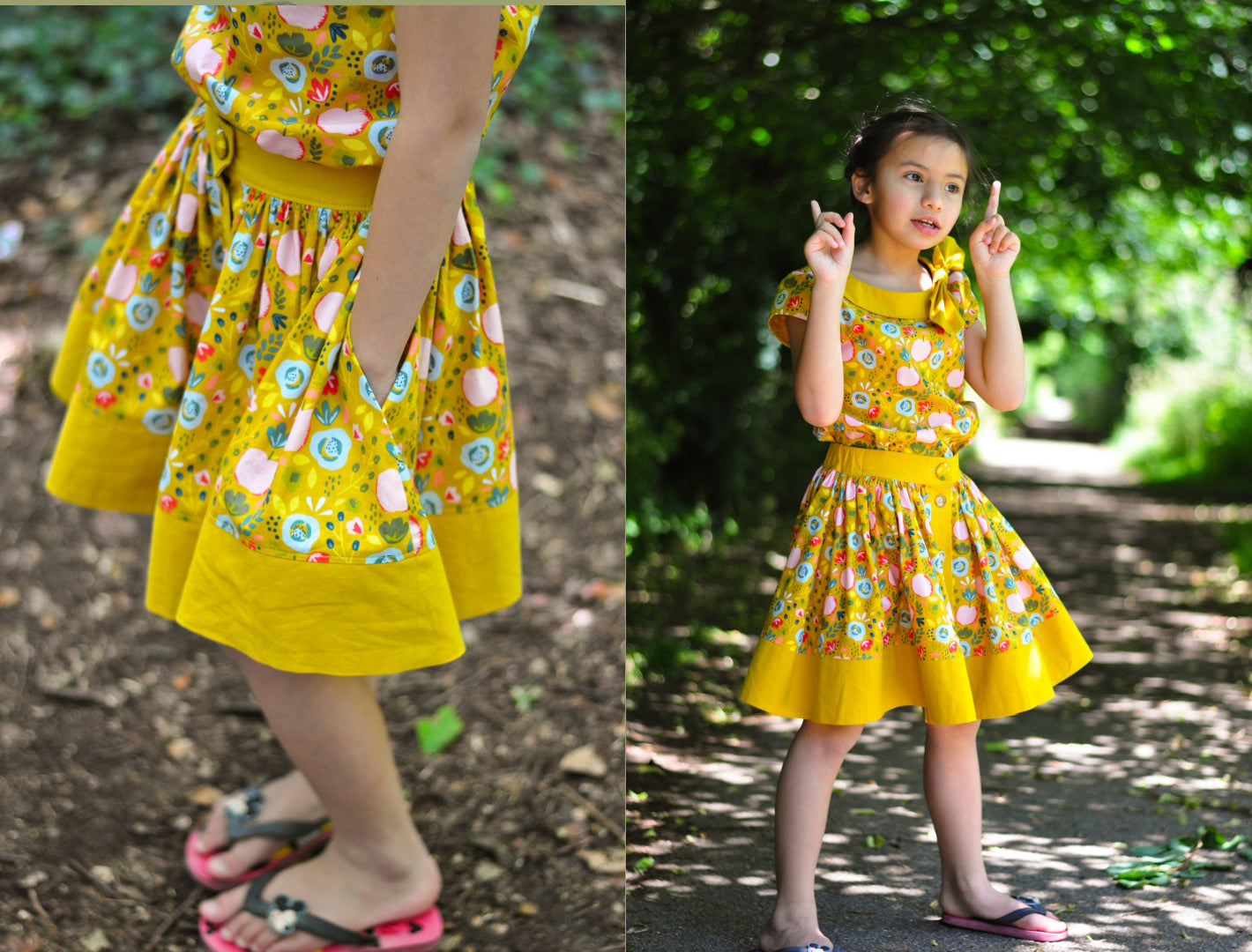
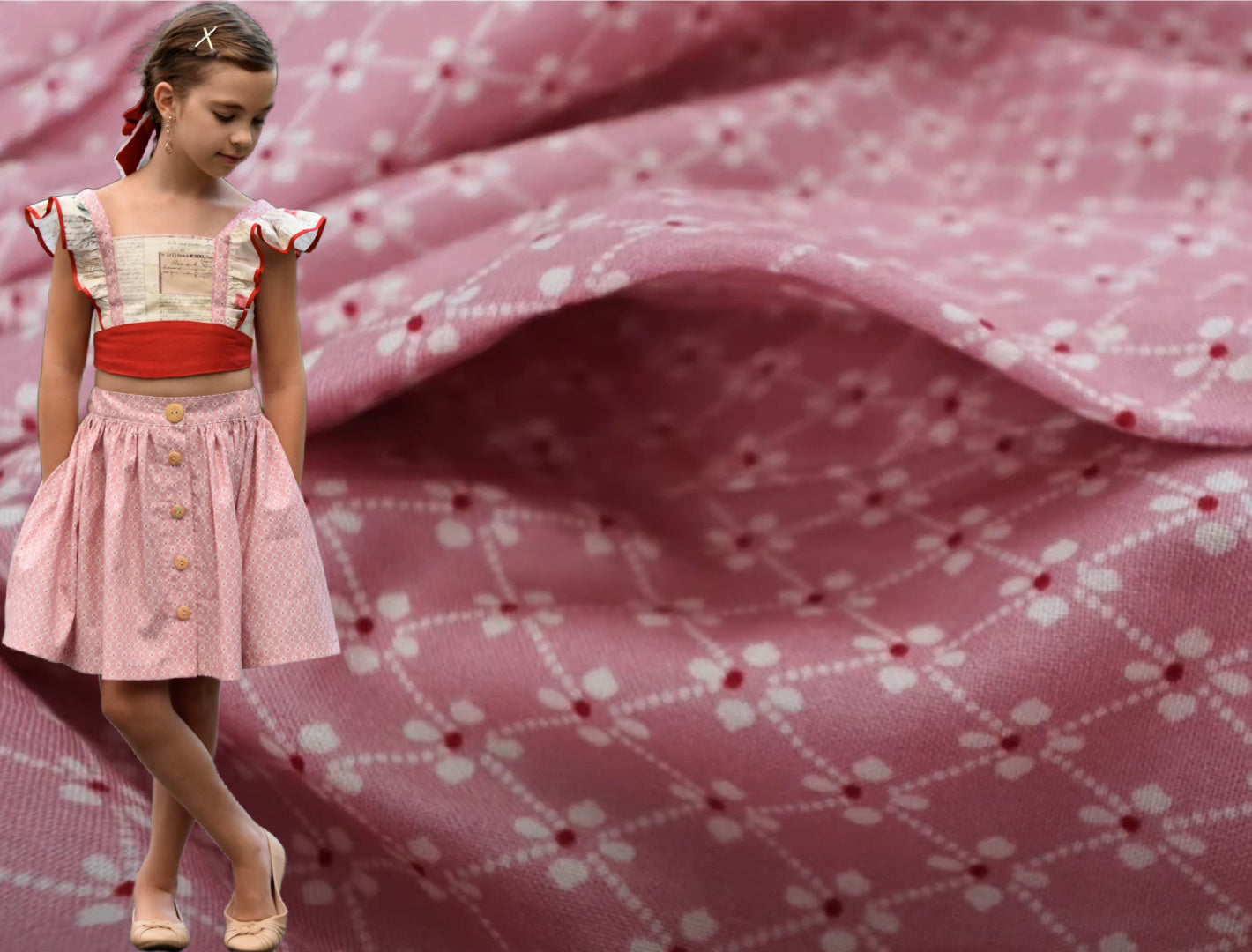
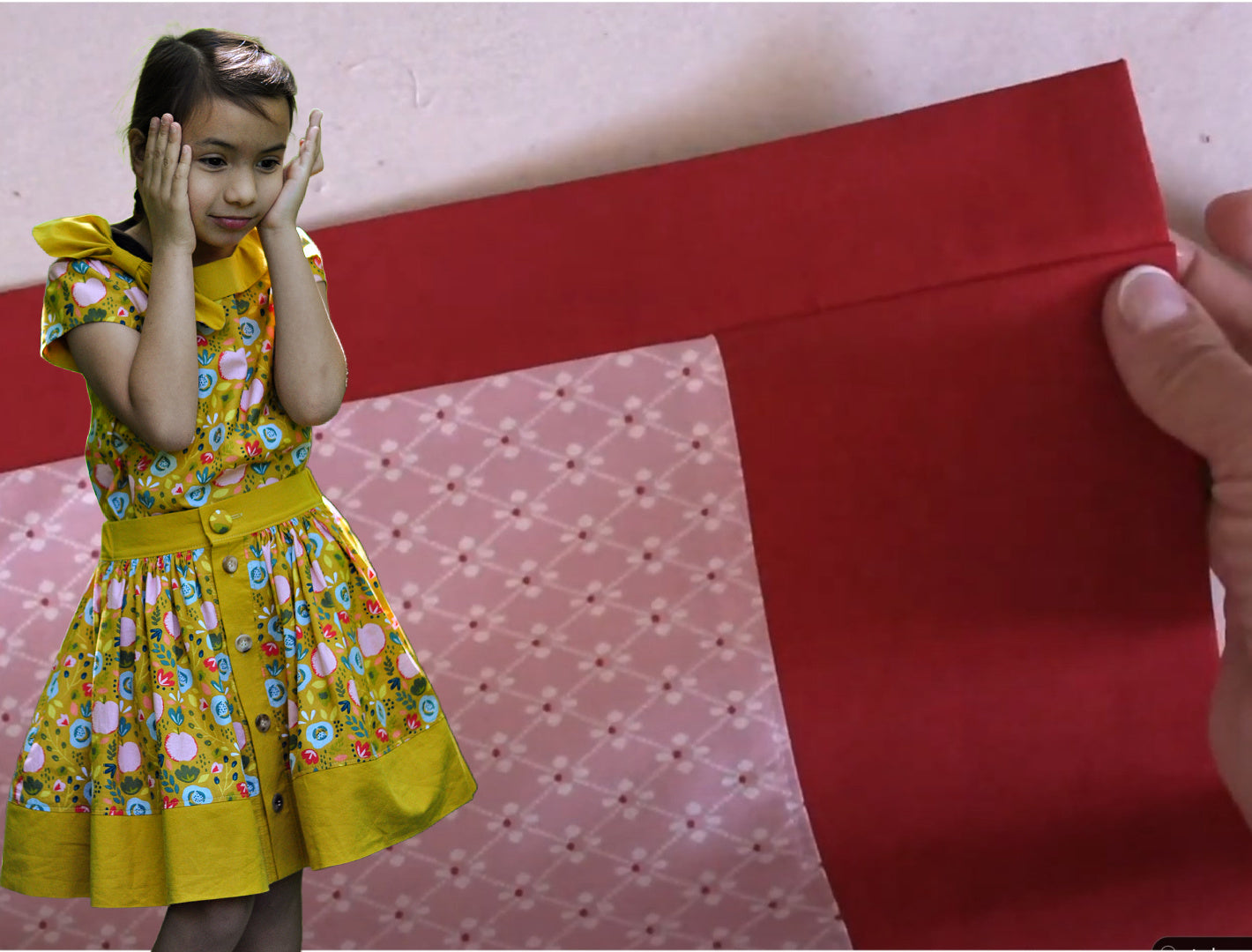
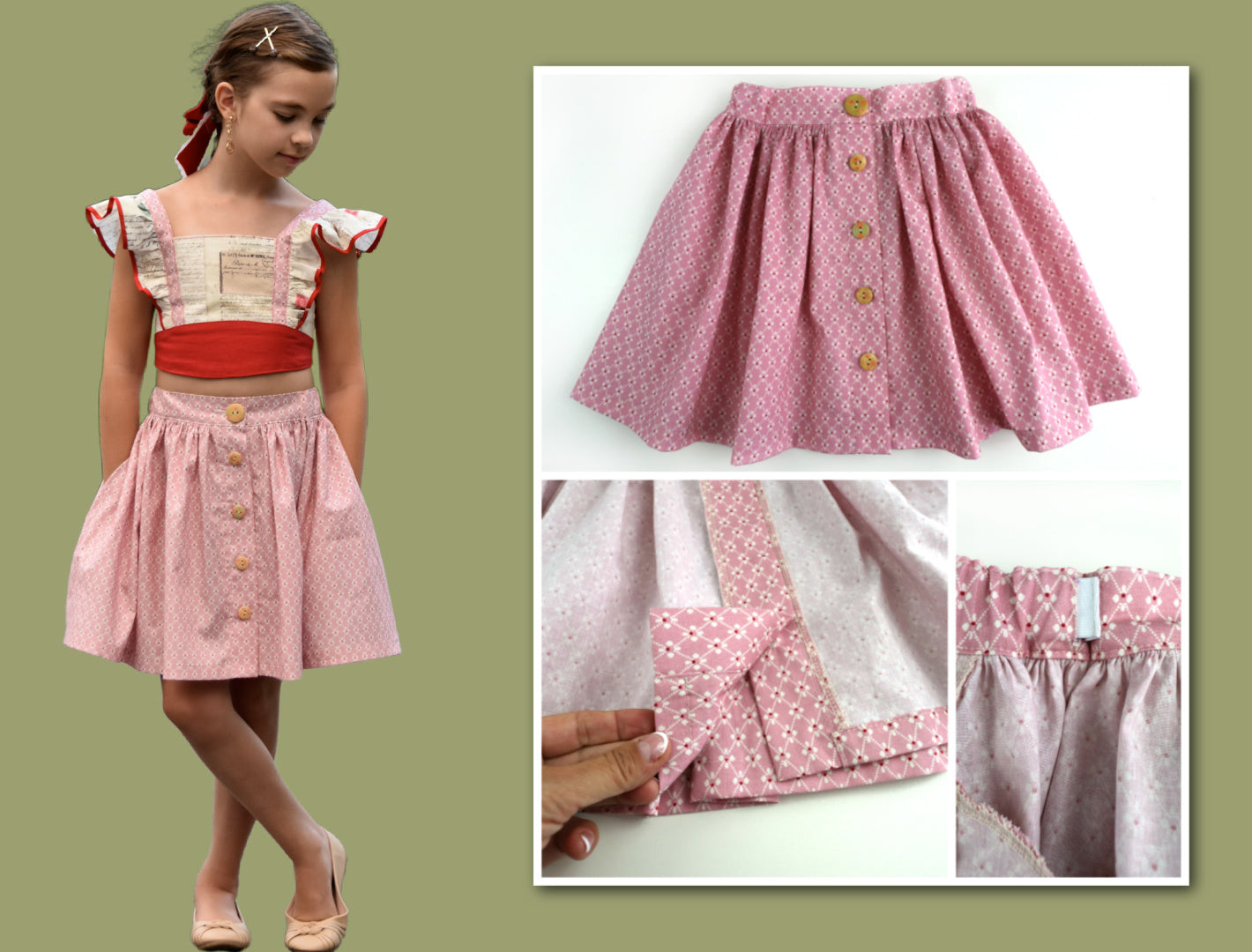
Betsy is a sweet, simple girls’ skirt pattern with a classic button‑down front. The waistband features a flat front with an easy elastic back, and the deep hem trim adds a touch of vintage charm.

It’s perfect for everyday wearschool, play, and everything in between — and it also makes an adorable baby girl skirt if you’re sewing for little ones.

Marina’s step‑by‑step video tutorials are ready when you are. Just scroll down and start sewing.

Pattern Download Includes

  • Instant Download
  • DIN A4 & US Letter Size
  • Individual PDF files for every Size
  • All Sizes included
  • Detailed eBook
  • Video Tutorials

Design Options

  • Gorgeous wide hem trim
  • Button down front placket 
  • Elasticated waist
  • Easy seam pockets

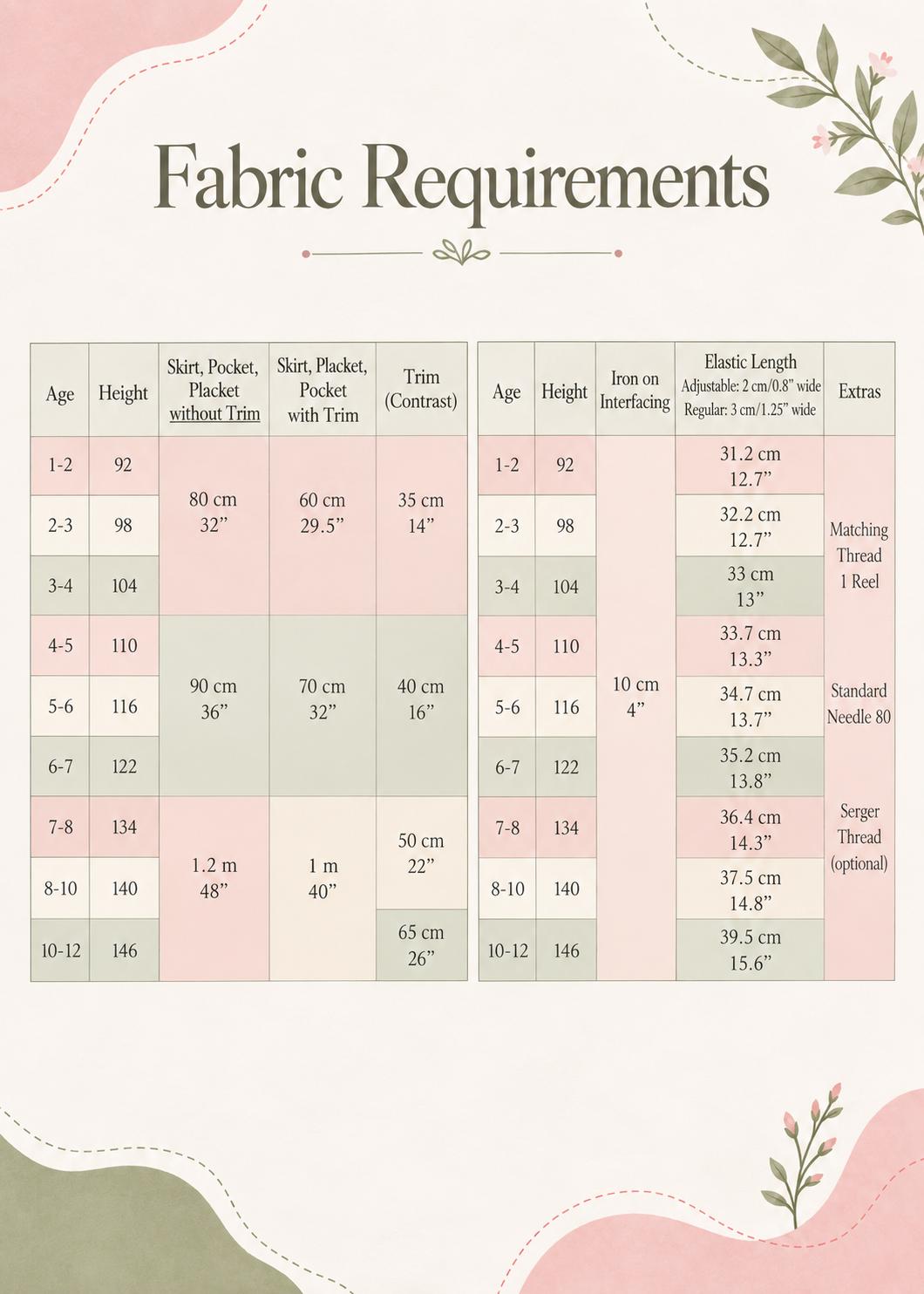
Fabric Requirements

BEST FABRIC CHOICE
For best results, use medium weight fabrics such as quilting cottons

FABRIC REQUIREMENTS
• Shell : 27-42 inches (70-1.2 m)
• Elastic: 1.5 inches (4cm) wide: 19-25 inches (39 cm-52 cm)

Available Sizes

Sizes: 1-12 Years

Please Read

  1. This is a digital pattern or PDF file, not a physical product. It will be delivered electronically via a download link delivered to the email used for the purchase.
  2. To ensure the pattern prints at its actual size, it's recommended that you use Adobe Acrobat Reader.
  3. The pattern creator, Frocks & Frolics, welcomes small-scale production using their patterns. 

Customers are encouraged to tag Frocks & Frolics when sharing projects made using their patterns on social media.

@frocksandfrolics #frocksandfrolics

View full details

STEP-BY-STEP VIDEO TUTORIALS

Thumbnail
BETSY: INTRODUCTION TO THE PROJECT
Thumbnail
THE PATTERN & CUTTING OUT
Thumbnail
SIDE POCKETS
Thumbnail
PLACKET & HEM TRIM
Thumbnail
SEWING THE SKIRT TO THE WAISTBAND
Thumbnail
SEWING AN ADJUSTBALE WAISTBAND
Thumbnail
SEWING A REGULAR WAISTBAND WITH ELASTIC
Thumbnail
INSERTING KAMSNAPS INTO THE PLACKET
Thumbnail
INSERTING A BUTTONHOLE INTO THE WAISTBAND
Thumbnail
BONUS: PLACKET & HEM WITHOUT HEM TRIM

VIDEO TEXT

Introduction to the Project

Transcript for the video: Betsy Skirt - Introduction to the Project

This is the Betsy skirt with a hem trim, and it’s a very simple detail to add with nothing complicated about it. The skirt also includes a small section of elastic for comfort, which holds in about two to three centimeters, although you can tighten it further if you prefer.

In this version, I’ve used a combination of one proper buttonhole and Kam snaps down the front. I also explain how to position them correctly, because it’s very easy to place buttons too far toward the edge. This ensures you understand all the options clearly.

Elastic Insertion and Front Closure Options

The elastic is inserted by sewing a channel, inserting the elastic, and then closing it off. This method is consistent with previous skirts, so there’s nothing new here, but once the elastic is in place it becomes difficult to adjust.

An alternative version of the skirt includes adjustable elastic, which is especially useful if you are making this for children or sending it to someone far away, because it allows later adjustment by simply pulling the elastic out and changing it.

In the sample shown, the correct elastic wasn’t available, but normally you would have a buttonhole and a button securing the adjustable system. Even when using the same fabric throughout, the placket still gives a structured and professional look.

Hem and General Construction

The hem is a standard folded hem, turned in and then turned up, which makes it easy to sew even without an overlocker or serger.

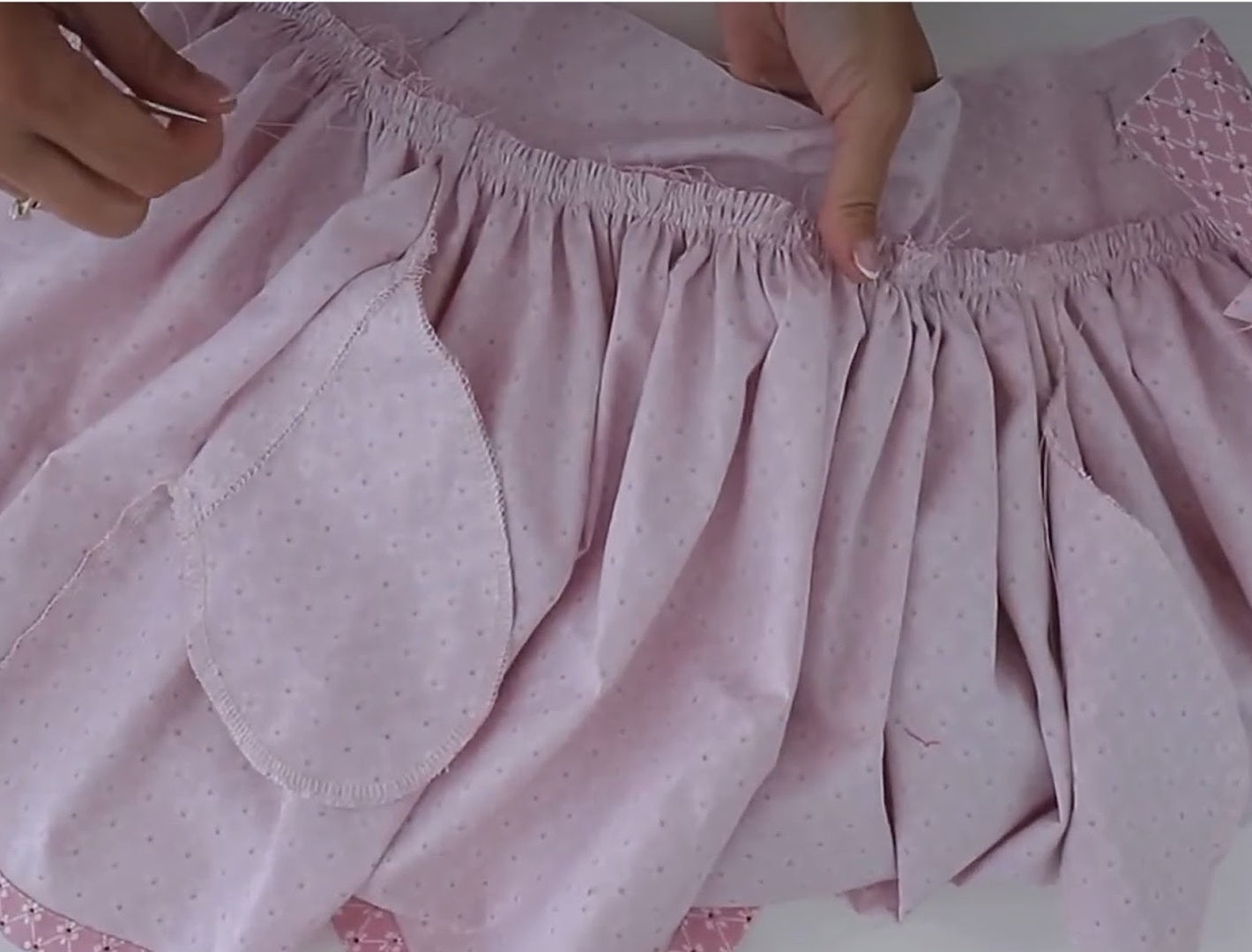
The skirt also includes practical side pockets, which are simple to construct and sit neatly within the side seams. From the inside, the pocket finish is clean and tidy.

Adjustable Elastic Method Explanation

The adjustable elastic method is slightly more advanced and requires more care, especially before attaching it to the back. While it is completely possible to sew this way, elastic construction can become fiddly once assembled.

If you don’t mind a visible stitch line, you can simplify the process. For example, you can stitch the tunnel top and bottom first, thread the elastic through afterward, and then secure it. This turns an intermediate method into a beginner-friendly one.

You could also cover any visible stitching with a small bow or decorative detail if preferred.

Final Thoughts and Inspiration

I really enjoy making these skirts; they are simple, cute, and remind me of the 1980s style rather than true vintage. I love seeing how others adapt them, especially in the Frocks and Frolics community, where different fabric choices and styling ideas always make the results unique.

Please feel free to share your versions in the Facebook group, as it’s very inspiring to see your interpretations. You often create ideas I would never have thought of myself, while I tend to focus more on technique.

Now let’s get started on the Betsy skirt.

Betsy Skirt: Pattern Assembly and Cutting Out

Transcript for the video: Betsy Skirt - The Pattern & Cutting Out 

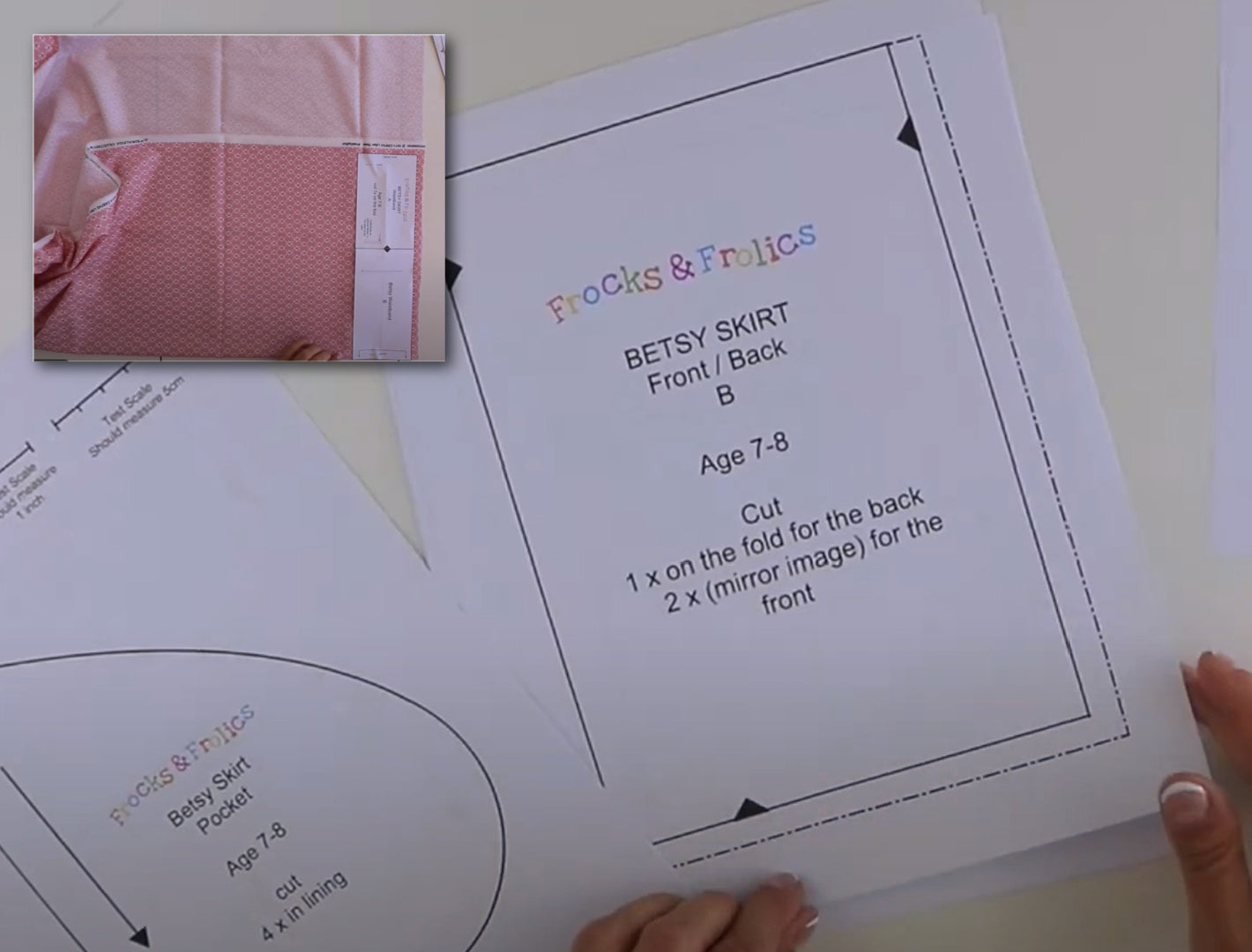
Let’s start by putting your pattern together. The first thing you always need to do is check the scale and make sure it measures one inch or five centimeters correctly. Then, the last page in your pattern pack shows you how to assemble everything so you can see how many pieces there are. It is always arranged in alphabetical order, and you assemble along the dashed lines until you get a complete pattern piece.

I’ve already cut everything out, and we’re just going to assemble a few pieces so you can see how it works. Some pieces don’t even have joining lines because they fit on a single sheet of paper. For example, you take piece A and B of the waistband, align the attachment line, and tape it together. It’s very simple, and I do this with all pattern pieces. The placket is assembled in exactly the same way.

Overview of Pattern Pieces

Now that everything is assembled, let’s look at the main pattern pieces. The waistband includes a separate interfacing piece that does not include seam allowance, so it doesn’t add unnecessary bulk. There is also a marking for where the elastic will be inserted or where the adjustable elastic system begins. This may be a buttonhole or a stitching line depending on the version.

The pocket is sewn along this protruding guide line, which makes insertion very easy and accurate.

Cutting the Skirt Pieces

The skirt is cut once on the fold for the back and twice for the front as mirror images. The placket attaches to the front piece, and you’ll notice it is slightly shorter because the hem wraps around it, creating a neat and clean finish.

If you want to add a hem trim instead, you cut along the dotted line and attach the hem trim, which is folded lengthwise in half. This eliminates the need for traditional hemming. The placket then fits neatly into the remaining space.

Fabric Cutting Tips

Now you’re ready to cut your fabric. Fold it so the selvedges meet, then place your pattern and cut the skirt pieces. If your pattern doesn’t fit perfectly due to fabric width, you can simply reduce the skirt width slightly. This only reduces gathers and is not a problem, especially with 110 cm wide quilting cotton.

Always cut with your pattern on the right and scissors in your left hand if possible. This makes it easier to control the fabric and achieve clean edges. When cutting corners, start from the lower edge to get a sharp point rather than trying to curve around from the tip.

If you are cutting single layers, unfold the fabric, reposition the pattern, and repeat the process so you end up with one back piece on the fold and two front pieces.

Waistband, Placket, and Pocket Cutting

The waistband can be cut either along the selvedge or across the grain depending on your fabric design. If you are working with stripes, you may prefer horizontal placement. The placket can also be cut either direction depending on your fabric layout or contrast design.

Cut the pockets twice to create two pairs.

Next, cut the interfacing and iron it onto the waistband in the areas that will not contain elastic, so the structure remains firm. The placket also needs interfacing, but only on half of it, not the full length.

Hem Trim Option

If you are using the hem trim option, cut along the dotted line and attach the additional hem piece. This can also be cut as one continuous strip if your fabric allows it, which removes the need for a back fold and two front pieces.

Elastic Preparation

Now cut the elastic according to your chosen method. There are two options: adjustable elastic and regular elastic. The standard width is approximately 1.25 inches (3 cm). The elastic for the adjustable version should always be narrower than the regular elastic.

Final Preparation Before Sewing

At this point, everything is ready. You have the placket prepared, elastic cut, waistband interfaced, pockets ready, and skirt pieces cut. The front pieces already have interfacing applied, which gives structure and stability.

Now we are ready to start sewing the Betsy skirt together.

Inserting the Pockets

Transcript for the video: Betsy Skirt - The Side Pockets 

We’re starting off by inserting the pockets. These are really easy to sew. If you don’t want pockets, you can simply cut off the protruding pocket edge instead. To attach them, place the pocket pieces right sides together onto the pocket opening edge and sew with a 1 cm seam allowance. Do this for both the front and back pieces, making sure to lock your stitches at the beginning and end. Repeat this process for every pocket.

After sewing, overlock the raw edge. Then take the piece back to the sewing machine and, with the seam allowance pressed into the pocket, topstitch along the edge. Use a slightly longer stitch length since this is topstitching and mainly decorative.

Joining the Side Seams

Now we’re going to join the side seams. Place the front and back pieces right sides together, aligning the edges neatly, and pin them in place.

When you reach the pocket area, the turning point can feel a bit tricky. To make this easier, measure exactly 1 cm down from both the pocket seam and the side seam and mark where they meet. That point is where you pivot on the sewing machine.

Sew straight down to that mark, stop with the needle down, lift the presser foot, turn the fabric, and continue around the pocket. Even if the curve does not look perfectly like a 1 cm seam, that is completely fine and will not be visible once finished. It is just good practice to develop accurate sewing habits.

Overlocking the Seam

Before overlocking, neaten the edges slightly and turn off the knife on your overlocker so you do not accidentally cut into the corner. This is especially important around the sharp pocket point. Go slowly and carefully around the curve, keeping the edge aligned for a clean finish.

Once done, you will see a neat sharp pocket corner. Turning the knife off reduces the risk of cutting into the fabric, which can easily happen if you go into autopilot mode while sewing.

Pressing and Shaping the Pocket

Now press the seam. The pocket area has a slight curve, so only press the lower part of the seam first. Then shift the fabric over the edge of the ironing board to press the curved pocket area properly. This prevents unwanted pleats from forming and helps the pocket lie flat.

Optional Topstitching

In the written instructions, this step is not included, but here I am choosing to topstitch the seam. You do not have to do this. The inside already looks clean, but it does give a nice professional finish.

If you choose to topstitch, increase your stitch length to about 3.5 and stitch along the pocket opening and seam edge, smoothing the fabric as you go.

Ready for the Next Step

Now the skirt is prepared and we can move on to assembling the rest of the garment.

Preparing the Hem Trim

Transcript for the video: Betsy Skirt - Placket & Hem Trim

In this video I’m going to show you how to work the hem trim. If you have your hem trim prepared, this is how it goes together. It is very simple, but I will show you step by step.

The first thing to do is join your hem trim with a 1 cm seam allowance. If you cut your hem trim as one continuous piece along the selvedge and placed all pattern pieces next to each other, you do not need this step. In that case, you can skip straight ahead.

We are sewing the pieces together here, and I personally think the joined hem trim looks nicer, but either method works. Please use a 1 cm seam allowance and make sure to change your thread colour to match your fabric. I did not think it would show, but in the end it did.

Press the seam open and then press it flat. We always do this on both sides. After that, iron the hem trim lengthwise in half so you get a clean folded edge that is easy to work with.

Attaching the Hem Trim to the Skirt

Now place the hem trim onto the skirt and pin it in place. Start by aligning one side seam, then match the other side seam. If your hem trim is slightly too long, which happened in my case, just let it overlap slightly at the ends. If you cut along the selvedge and have leftover fabric, also let it hang over slightly rather than forcing it to fit.

It is important that everything lies flat on top of each other. If it does not match perfectly, adjust it slightly rather than stretching or forcing it.

Once pinned, sew with a 1 cm seam allowance. It is very important to keep to this seam allowance, otherwise your placket will not fit correctly later.

After sewing, press the seam very well so you get a clean finish. Trim any excess fabric if needed.

Topstitching the Hem Trim

Now topstitch the seam with the seam allowance facing into the skirt. Make sure to increase your stitch length to about 3.5 so the stitching looks neat and professional.

You could also do this topstitching later when you attach the placket, but I prefer doing it now so everything stays in place.

Attaching the Placket

Next, sew the placket to the front. This step is slightly different from the version without a hem trim. In the other version, the hem wraps around the placket, but here you are sewing it directly to the edge.

Make sure the edges are aligned exactly on top of each other. This is very important for a clean finish. Again, change your thread colour if needed, as this stitching will be visible on the outside.

After sewing, overlock the edge. I also want to show you a useful trick for securing your overlocker thread tails. Pull the threads gently to flatten them, lift the presser foot, and continue sewing so the threads get locked in.

On the other side, do the same in reverse. Overlock to the end, take a few extra stitches, lift the presser foot, turn the fabric, and sew back over the stitches to secure them.

If you want a cleaner look, you can go around the corner in one continuous pass, but I avoided stitching over the visible red thread here.

Use a 3.5 stitch length and sew all the way down, locking your stitches at the end for a clean finish.

Finishing the Skirt Section

Check that everything is aligned and the edges match in height. If needed, you can also secure the overlocking line with a few hand stitches so it does not show on the outside.

That completes the skirt section. Now we will move on to the waistband.

Sewing the Waistband to the Skirt

Transcript for the Video: Betsy Skirt - Sewing the Waistband to the Skirt

Now we're going to sew the waistband to the skirt, and you’ve got two options:

  1. Use a buttonhole with adjustable elastic, or
  2. Use regular elastic.

If you’re using regular elastic but still want to pull it through a buttonhole, make sure the elastic is narrow enough. A wide elastic becomes very difficult to pull through, especially because we’re going to topstitch the waistband. Wide elastic simply doesn’t glide through as easily.

Mine is a little wider than ideal because I couldn’t get anything else in the shop, so I’m just demonstrating the method here — it’s not truly adjustable elastic.

Adding the Buttonhole

If you’re using regular elastic, all you need to do is mark where the elastic will start.
I’m putting in a buttonhole, so I’m marking the correct length.

I’m using my mechanical machine here so I can see exactly how far I’m stitching.
First, I sew a short row of tiny zigzag stitches to form the bottom bar, then I stitch across, and then back up the other side. It’s really simple.

You don’t need to be afraid of buttonholes at all — just practice a few. After a couple of tries you’ll wonder why you ever worried.

And here is my finished buttonhole, ready for the elastic.

Attaching the Waistband

Next, we’re sewing the waistband to the skirt.

Make sure the buttonhole is on the lower edge of the waistband so it doesn’t show on the outside.

The waistband should extend 1 cm beyond the edge of the skirt.
I’ve already gathered one side of the skirt.

Match the center back of the waistband to the center back of the skirt.
On the other side, again leave that 1 cm seam allowance sticking out.

Now place a vertical pin into the seam.
Once you know how much you need to pull the gathers, wrap the thread around the pin in a figure‑8. That keeps the gathers from slipping while you distribute them evenly.

I also match the side seam to the marking on my waistband.
Make sure you quarter your waistband before you start.

I pin everything roughly on the table first. At the sewing machine I adjust the gathers more precisely.

Adjusting the Gathers

To get it looking like this, pull the bobbin threads — they’re easier to pull than the top threads.
That’s why you should always sew your gathering stitches with the right side of the fabric facing up.

Once the skirt fits the waistband, put your vertical pin back in and distribute the gathers neatly.

Do the same on the other side: secure the threads, then spread the gathers evenly.

Now we’re ready to sew the waistband on with a 1 cm seam allowance.

While sewing, you can still adjust the gathers a little.
Just make sure the raw edges stay aligned.

Sew all the way across.

Cleaning Up the Gathers

Next, check that everything looks smooth and even.
You can now remove the lower gathering thread.
You can leave the top one in — often you can pull it out in one go.

Always keep your work tidy. A messy workpiece makes everything harder.

Pressing the Waistband

Press the seam so the edge of the waistband falls just over the edge of your ironing board — that makes it much easier.

Closing the Waistband Ends

Now we’re going to secure the waistband ends.

Fold the waistband right sides together, with a 1 cm seam allowance, and sew straight across.
Do the same on the other side.

Make sure both sides are the same height.
(Confession: mine weren’t — I cut that part out! I had to unpick it. So double‑check yours.)

Turn the corners out.
Don’t trim the corner — leaving it in actually helps you get a crisp 90‑degree angle.

Push the corner out with a pin.
Repeat on the other side.

Check that everything looks good.

Inserting the Elastic

Now we’re ready to insert the elastic.

You can choose either:

  • the adjustable waistband option, or
  • the regular elastic option.

See you in the next chapter!

Sewing an Adjustable Waistband

Transcript for the video: Betsy Skirt - Sewing an Adjustable Waistband 

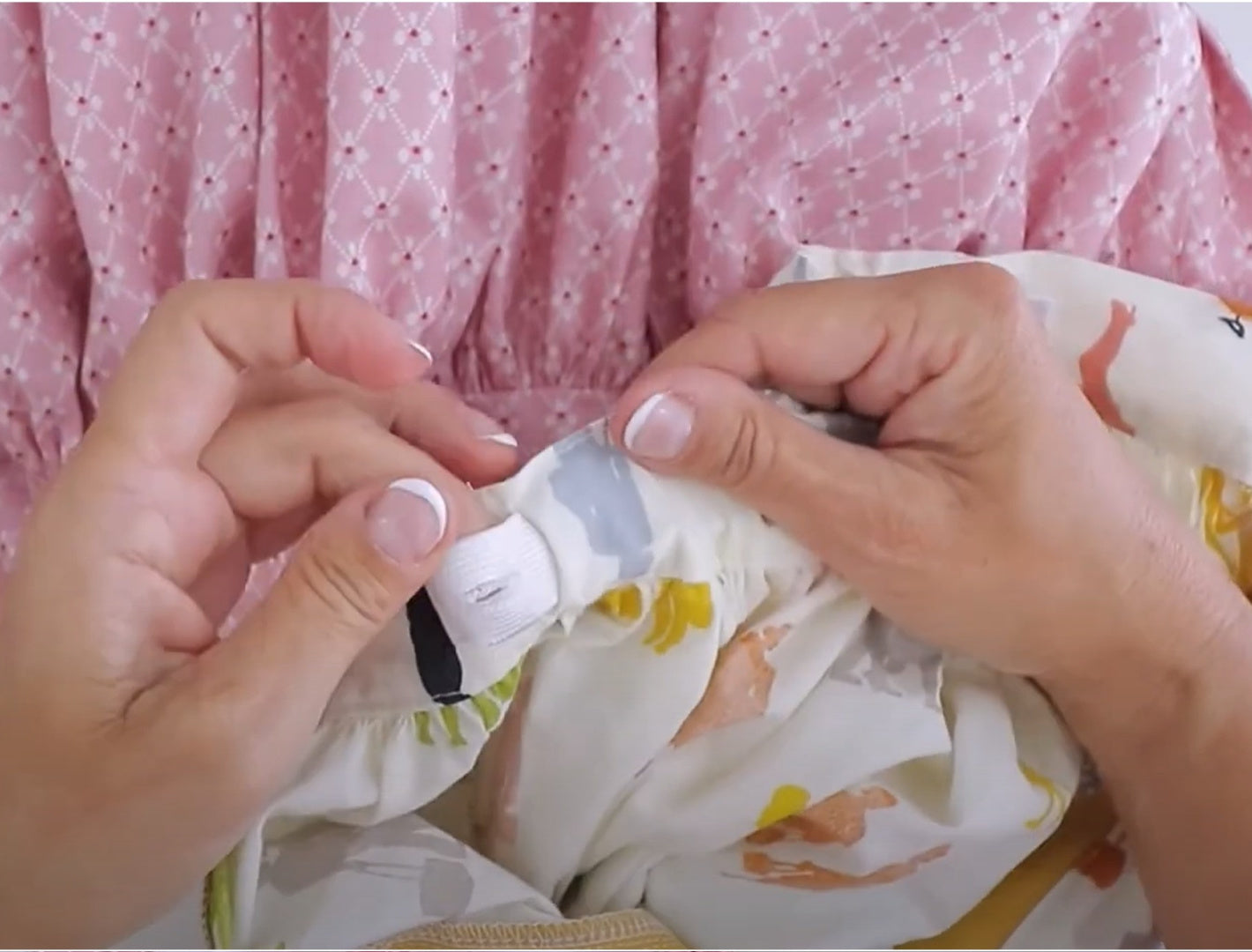
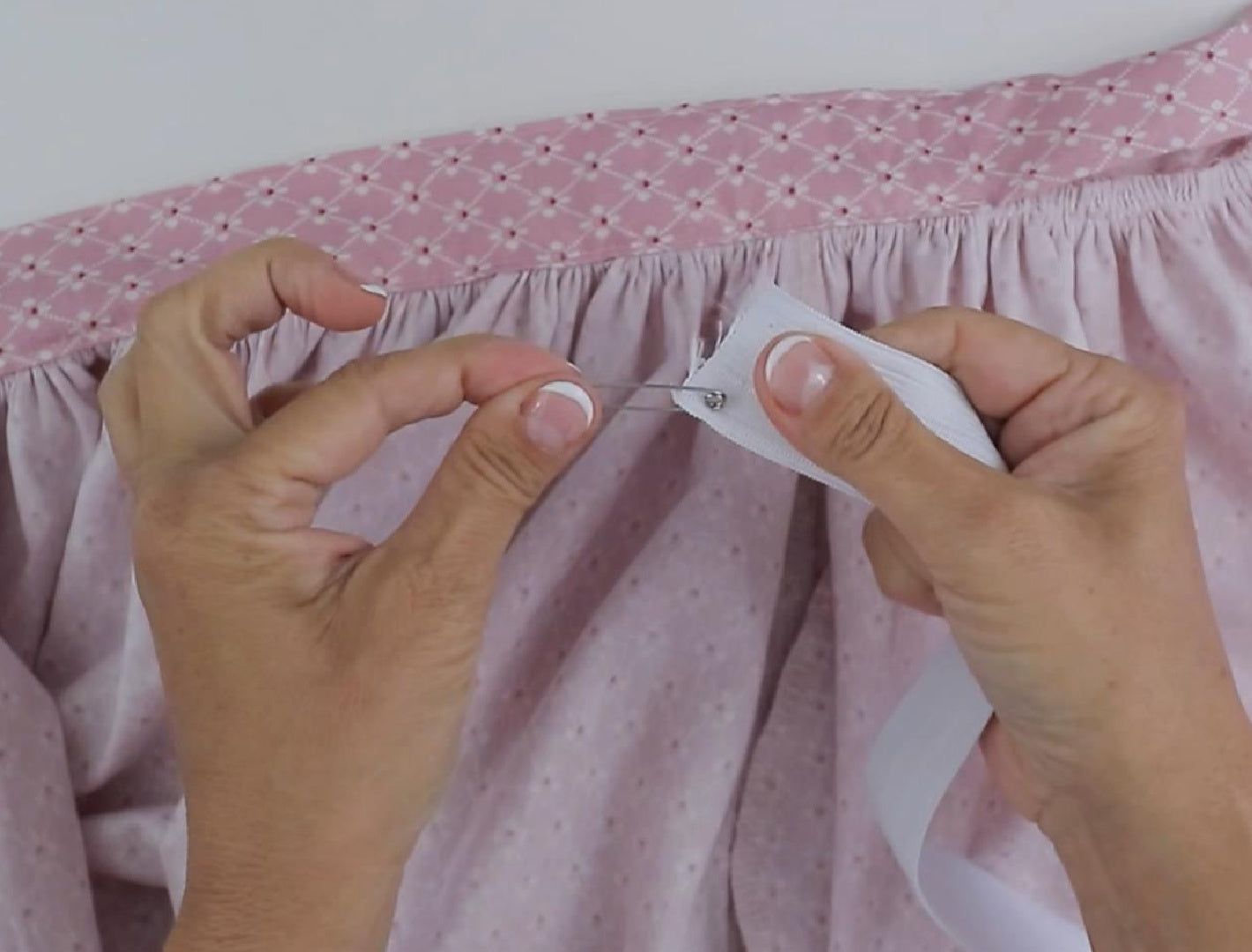
Let’s put in our adjustable elastic first. I’m just demonstrating here with non-adjustable elastic because I couldn’t get the correct one, and it is a little bit too wide. You really need a very slim elastic, just under one inch wide. The ideal version can be folded in and stitched down once it is threaded through your buttonhole, or you can stitch it flat to make it smoother. You could also stitch it down to make it more secure, which I will show on the sewing machine in a minute.

Go over to the other side and do the same. Again, you could stitch this down as well. I’m now securing my elastic. It is not holding the back very much, this is mainly a comfort elastic. You can then pull it as tight or as loose as you want. You can see here that the elastic is slightly slimmer than what I am using.

That is what it will look like when it is done.

Sewing the Elastic in Place

Now we are going to the sewing machine and sewing this in, just along the edge, locking in your stitches. I do the same on the other side. It is very important that the elastic does not reach all the way into the waistband. On mine, it almost did because my buttonhole was longer than needed for adjustable elastic, simply because I could not get the correct width.

This made it difficult to top stitch the top edge without catching the elastic, which is why I want to make this very clear. You absolutely need the correct slim adjustable elastic for this method.

Then you wrap your seam allowance over, turn it in, and pin it all the way along. We are going to stitch all the way around the waistband, which is why it is important that the elastic does not sit right at the top edge. If it is too high, it will get caught in the stitching.

Of course, you can omit the top stitching, but I think it looks really nice and gives a more structured finish. Pin everything in place neatly.

Stitching the Waistband

As you sew, you can move the elastic along. You will need to stretch it slightly while stitching along the straight edge. Keep your seam allowance turned in neatly and pinned.

Make sure the folded edge sits exactly on the stitching line where the skirt was attached to the waistband, not above it. When you top stitch, it will sit slightly higher, so alignment is important to avoid a homemade look on the inside.

You can shift the elastic as you sew, which makes this method easier than it looks. If your elastic does not reach the top edge, it actually becomes easier to handle.

You can also use the regular elastic method, which I will show in the next clip, so you can decide which version you prefer.

Start sewing anywhere except the front. You do not want your stitch start and backstitch to be visible, so begin at the back instead. Move your gathers out of the way and stretch the fabric slightly as you sew. You can remove pins as you go, but not before you reach them, otherwise things will shift underneath.

This is actually a very nice method, even though I was a bit disappointed I could not get the correct elastic. We may do another version later using the proper elastic so I can show how smooth it can be when everything is correct.

Finishing

Once you reach the other end, things become a bit tricky if the elastic is too wide or sits too high. In my case, I had to keep adjusting it while sewing so I would not catch it in the top stitching.

You can see how close the elastic sits to the edge, which is actually what you want to avoid. It still works, but it is not ideal.

Continue sewing all the way down, then turn again. With an electronic machine this can feel a bit restrictive because it only sews in full stitch lengths, which I find frustrating for precise work. I personally prefer a mechanical machine for this type of detail.

Lock your stitches, cut off all threads, and you are done.

If you are sending this skirt to grandchildren who live far away, this is a great method because all that is left is to add a button and the elastic can still be adjusted if needed. If you found this method a bit tricky, move on to the regular waistband method instead.

Sewing the Regular Waistband

Transcript for the video: Betsy Skirt - Sewing the regular Waistband

Let’s have a look at how to sew the regular waistband.

I’ve pinned my waistband to the seam exactly the same way I would for the adjustable elastic, but the method here is a little different.

We’re going to topstitch the waistband from this point to this point — the marks we made earlier.
I originally marked it on the inside, but since we’re stitching on the outside, I had to move the marking over. So I placed a pin on the outside and transferred the mark. Now I know I’ll be stitching from this pin to the other pin.

We’ll stitch along that lower edge first, then we’ll also stitch the top edge, and after that we’ll insert the elastic.
This method still gives the elastic enough room to move, and you can use the same technique for the adjustable waistband — you’d just add the buttonhole on the opposite side.

Topstitching the Waistband

Pull the waistband nice and flat. It tends to push and shift, and you absolutely don’t want any pleats forming.

Use a 3.5 stitch length, and lock your stitches at the end.

Now topstitch the upper edge as well.
Use the same guide on your presser foot that you used for the lower edge so both rows of stitching match.

I love topstitching — it instantly makes any project look more professional.
But it must be a longer stitch length, otherwise it looks homemade.

Inserting the Elastic

Now I can pull the elastic through.
It’s ideal if you can get the elastic to sit on the outer side of the seam allowance. If you can’t, it’s not a big deal, but it does make everything lie a little flatter.

Pull the elastic through until it sticks out about 1 cm on the other side.
Once that’s right, put in a vertical pin to hold it.

Then go to the opposite side and pull the elastic through a bit more.
You don’t need much gathering in the back — depending on your girl’s waist, you might not need any at all. Always check the waistband circumference before finishing.

See? It’s not a huge amount of gathering — just enough for comfort.
We’ve got exactly the right measurement here.

Now I place my pins vertically to the seam I’m going to sew, and we’re ready to stitch down the side and all the way around.

Sewing the Waistband Closed

Most of you will probably use this technique.
The adjustable elastic is great, but honestly not ideal for beginners.

Sew all the way around.
When you reach the corner, keep the needle down. Sometimes the fabric doesn’t feed well — you can see it happening a little here. If it gets stuck, you can help yourself by threading a double thread through the corner so you have something to pull on while sewing.

Here, the fabric really stuck — I had to lift the presser foot and shift it, which I don’t love.
So on the other side I’ll show you the same step, but this time using the thread‑pulling trick.

Finish the seam, overlap a few stitches, and secure it.

Now do the same on the other side.
This locks the elastic in beautifully.

Needle down again.
Here I couldn’t adjust it very well because I had switched to my electronic machine — the mechanical one was looping underneath. With electronic machines you often have to lift the presser foot to reposition, which isn’t ideal.

So: put a thread through the corner, sew up to that point, pull gently from the back, and then sew down.
It keeps everything steady and feeds the fabric better.

Almost Finished

And now the skirt is almost done!

The next step is to add KamSnaps or buttonholes, and I’ll show you exactly how to do that in the next chapter.

See you there.

KamSnaps and Button Placement

Transcript for the video: Betsy Skirt - Inserting Kamsnaps into the Placket 

I'm going to show you here how to put KamSnaps in. For the top button, I used a large button because I think that looks nice, and I'm using KamSnaps for the placket. You need to place your KamSnaps where you think they look good, then measure the distance so you can repeat it evenly. Remove the KamSnaps again, make sure everything sits centered on the placket, and mark a small cross to indicate where each snap will go. In this case, that is about one and a half centimeters if your placket is three centimeters wide.

After marking, I put them back on and checked the placement again. I decided the last one was too high over the hem trim, so I lowered the spacing to 6.5 centimeters. I originally started at six, which matches the other buttonhole skirt method, but I think this slightly lower placement looks better.

Installing KamSnaps

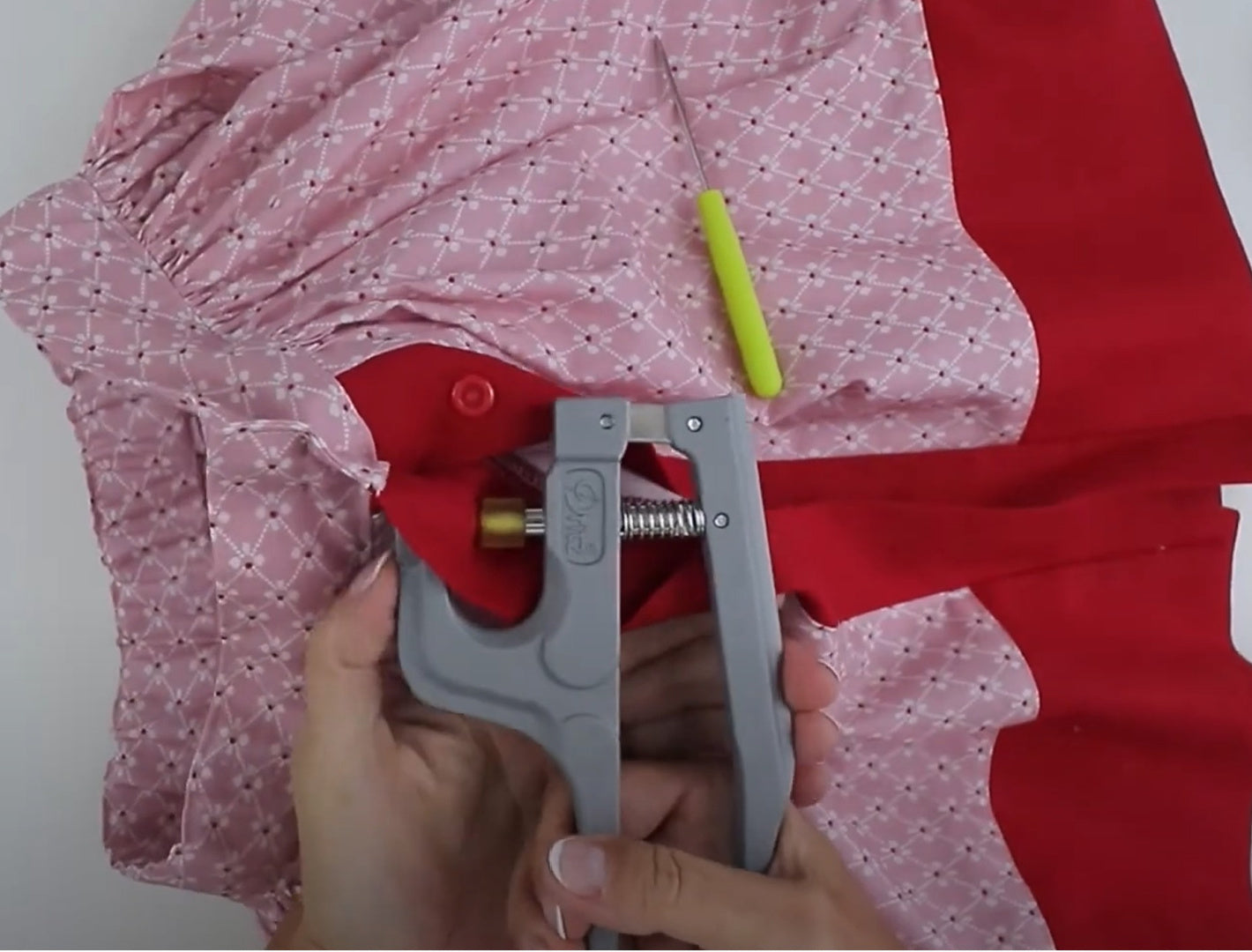
Now pin the waistband together and use an awl to push through all layers so the snaps line up and sit centrally on the placket. Remove the awl from the lower layer, place the cap snap underneath the placket, and push it through so the prong is exposed. Place the socket on top of the prong, making sure it is the correct matching piece. Position the snap between the top and bottom dies of your pliers, then press down firmly and release. You will see the prong flatten and secure the snap in place.

Next, attach the stud, which is the top part of the KamSnaps. Lift out the awl completely and push the cap snap with the prong through from the top. Place the stud on top, position it in the pliers, press down, and release. Close the snap to check it is secure, then move on to the next one. Repeat this process until all snaps are attached.

Buttonhole Placement

Once all KamSnaps are in place, you can insert the top buttonhole. Mark exactly from the center of your KamSnap where the buttonhole should start. It will usually be slightly higher than 1.5 centimeters. The small stem on the button must sit exactly in line with the center of the KamSnap, just slightly above it.

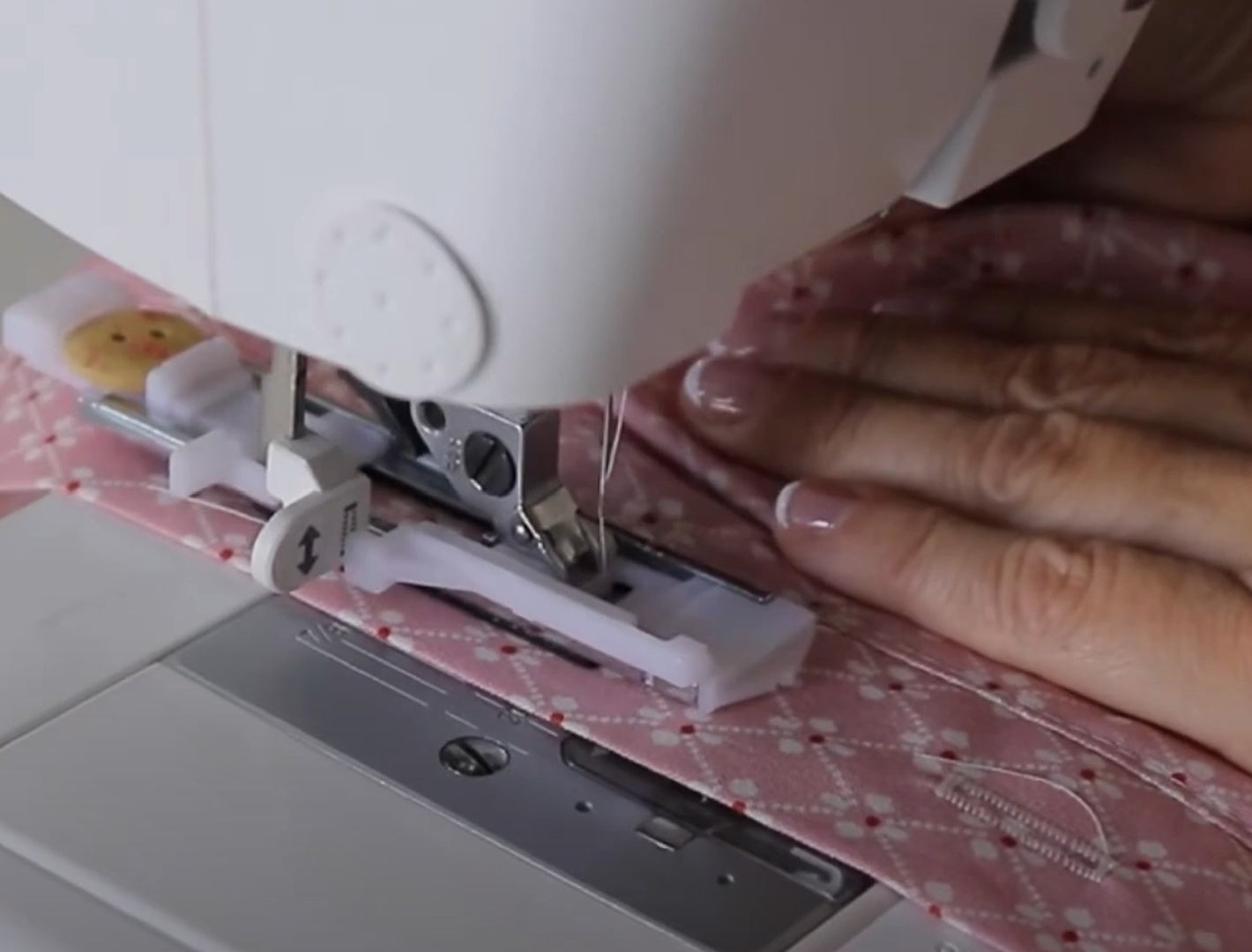
Place the fabric under the buttonhole foot. It may not sit perfectly flat due to thickness, but you already know the length needed from your markings. Sew the buttonhole as normal.

A reminder when using electronic sewing machines: if your machine has a sensor for the buttonhole, make sure the fabric or gathers do not touch it, because the machine will stop immediately and you will need to unpick and restart. Hold everything steady and keep the fabric clear of the sensor while sewing.

Final Steps

You can also use KamSnaps instead of the button if you prefer, but I think the button adds a nice finish. Sew your button in place so it aligns neatly with the front, and that is it. You have completed the Betsy skirt.

Buttonholes and Button Placement

Transcript for the video: Betsy Skirt - Inserting a Buttonhole into the Waistband 

Let’s put those buttons on. This is the part that scares people, but it is not really that hard. You just need to place them so they look good.

On the top, the first buttonhole is always going to be horizontal. We need to mark the center of the waistband so we know exactly where it will sit. You do not want this button to end up too far to the edge, it should sit exactly above the center of the placket. Measure across where that is, and it should be about 1.4 to 1.5 centimeters, or half an inch. Make sure it sits correctly so your button does not drift over the edge.

Now decide where your smaller buttons will sit. I used four smaller ones and one larger one, but you can also use all large buttons if you prefer, especially if you want a sailor style look. The key thing is placement. The top button should be about 3 centimeters down, or 4 centimeters if you are using a larger button. Mark the center of the placket and measure down from there.

Then find the next button position where it looks visually right and measure that distance. You will repeat that spacing for all the remaining buttons. One important rule is to leave at least 8 centimeters from the hem upwards. Do not place a button too close to the hem, it never looks balanced.

Sewing Buttonholes

If you are using an electronic sewing machine, you can place your button into the buttonhole foot to determine the size of the buttonhole. I made two test samples, one with a tighter zigzag and one with a looser one. I chose the looser one because it looks better.

Cut open the test buttonhole and check that it fits your button correctly. On many machines, especially some Janome models, buttonholes can come out too large or inconsistent, so always test first.

Now insert your first buttonhole. Lower the buttonhole sensor and use your standard buttonhole setting. In my case, that is number 33. Position it exactly on your marked cross so the needle aligns with it.

Make sure your fabric is oriented correctly. On my machine, the skirt needs to be on the left side of the buttonhole foot. Also make sure your gathers do not touch the sensor. If they do, the machine will stop mid stitch, which is very frustrating. This is one downside of electronic machines, but they are otherwise very convenient.

Once the first buttonhole is done, cut the threads and move on to the next one. Repeat the same process, making sure the needle is always aligned with your markings. You can also check that the buttonhole foot sits centered on the placket before starting each one.

Cutting Buttonholes

To open the buttonholes, fold them carefully and cut into one end with sharp scissors, then cut through to the other side. You can also use embroidery scissors if you prefer.

Attaching Buttons

To attach the buttons, go to the furthest point of the buttonhole and place the button slightly beyond it by about 2 millimeters. Make sure there is a little bit of looseness so the fabric has room when the skirt is fastened. I usually use my thumb underneath to gauge the spacing.

Hold the button in place and wrap the thread around in a downward motion to form a small stem, almost like a mushroom shape. This gives the button a bit of lift so the skirt layers sit comfortably underneath.

Pull the thread through, secure it with a knot, and make sure it sits between the fabric layers so it is hidden.

Now attach the remaining buttons in the same way. Use a fresh thread if needed, knot it by wrapping it around your finger, and pull it through to secure it.

Sew each button in place, checking alignment as you go. In my case, the placement even matched the placket pattern by coincidence, which was a nice surprise.

Finishing

Once all buttons are sewn on, your Betsy skirt is finished. If you prefer, you can also use KamSnaps instead of buttons, and there is a separate video showing that method.

Thank you for following along with this course.

Sewing the Skirt with a regular Hem

Transcript for the video: Betsy Skirt - Without the Hem Trim

Preparing and Attaching the Skirt

Now we are ready to put the skirt together. The first thing to do is open out one side of your placket and fold it over so the right sides are facing each other. Then we are going to close the lower edge of the placket. Sew across this with a 1 centimeter seam allowance all the way through. Feed it through steadily, then press the seam flat on both sides.

Next, turn up the hem. It does not need to be exactly 1 centimeter, it can be slightly less as long as it is even all the way across. Pin the placket to the front edge with pins placed vertically to the seam. Then roll the hem up tightly so everything sits neatly in place.

Repeat the same process on the other side. Insert your pins vertically again, keep the fold tight, and secure everything evenly.

Sewing the Front Edge and Hem

Now go to the sewing machine and stitch with a 1 centimeter seam allowance. Lock in your stitches at the beginning and set your stitch length back to 2.5. After sewing, overlock the edge to finish it neatly.

Once sewn, pull the placket out and you will see a very clean, professional edge. This is a common industrial sewing method, and it gives a very polished finish. I am a trained tailor and have also worked in industrial manufacturing, so I am showing you some of those techniques here.

If you are new to sewing, take your time and measure carefully. If you are more experienced, you will be able to do this without pinning or measuring every step. For beginners, pin everything carefully and follow the seam line.

Now sew the front edge so the placket seam allowance goes into the skirt. Remember to extend your stitch length to 3.5 for top stitching. Sew down the other side and lock in your stitches.

Then sew the hem. Start from the placket side rather than the front edge, as this gives a cleaner finish. You can leave the pins in if they are placed vertically, but remove them if you prefer to avoid any small loops forming underneath. My electronic machine handles pins well, but removing them is always the safer option if you are unsure.

Pressing and Finishing the Skirt Body

Give everything a very good press. Ironing throughout the process is important because it creates a much more professional final result. Once pressed, check that both front edges are exactly the same length. If there is a small difference, trim it so both sides match.

Adding Gathering Stitches

Now add your gathering threads. Using a longer stitch length, sew one line slightly less than presser foot width from the edge, then sew a second line right next to it at presser foot width. These will be used to gather the skirt evenly when attaching the waistband, ensuring everything sits on a clean 1 centimeter seam allowance.

Now we can move on to the waistband.

Betsy Doll Skirt

Transcript for the video: Betsy Doll Skirt - All-in-One-Video

Hi everyone, this is Marina from Frocks and Frolics, and we are back for the Tilly and Betsy combo. This time we’re going to sew the Betsy skirt.

The Betsy skirt is also available in girl sizes from age 1 to 12. I’ve made this very similar to the girl’s skirt, so there isn’t much difference between the two. I’ve even added the pockets, but I just want to point out that you can leave the pockets off if you prefer. There’s no need to add them, but if you would like to practise sewing pockets, then go right ahead. As you can see here, I’ve put proper pockets into the skirt.

You also have all the same options as with the girl’s skirt. You can add the extra trim here or leave it off. I think it’s super sweet. The skirt has a very flat front, similar to the Bonnie skirt, and I really like that because it makes it look more stylish instead of simply being elasticated. We’ve also got a proper placket on the front. It’s not difficult, and I’m showing you exactly how to make it, so I hope you’ll learn a lot while sewing this.

I’ve already cut everything out and prepared it, so let’s have a look at the pieces we need to make this beautiful Betsy skirt.

Pattern Pieces and Preparation

To make the front closure, we have a placket piece which is cut twice. It will be folded lengthwise in half, and if you like, you can add a little interfacing to one side. It isn’t really necessary for doll clothes, but it makes everything a bit firmer and is good practice as well.

Next, we have the pockets. You can leave the pockets off if you want to, but if you’d like to practise sewing them, it’s a good idea to include them. We need two pairs of pockets. If you don’t want pockets, you simply cut that section away.

For the back skirt piece, we have a piece cut on the fold or as one full piece. I’m also adding trim, so along this line I’m folding up the pattern slightly to use the red trim. You can also cut this piece as one complete piece if you prefer. If you don’t have much fabric, cutting it on the fold is easier. If you cut it as one piece, make sure to mark the centre back before sewing.

The front piece is cut in two mirrored pieces. Again, we fold along the dashed line to prepare for adding the trim.

The trim itself comes in three pieces: two front pieces and one back piece. It is folded lengthwise in half to create this beautiful finish. If you have enough fabric and aren’t working with a fat quarter, you can cut the trim as one long continuous strip instead.

Finally, we have the buttons. One button goes on the waistband and additional buttons go on the skirt itself. The waistband has dashed lines showing where the elastic will be attached. You could also use cam snaps if you prefer.

Attaching the Pockets and Trim

If you are adding pockets, place the pockets right sides together onto the skirt pieces and pin them with a single pin. That’s enough to hold them in place.

Sew them on using roughly a foot-width seam allowance. It doesn’t need to be a full centimetre. Once sewn, serge or overlock the edge, press the seam toward the pockets, and prepare the pieces for assembly.

Place the front piece right sides together onto the back piece. Pin along the pocket area and sew it together.

At the same time, sew the trim pieces together by attaching the front trim pieces to the back trim piece on both sides.

Use a 1 cm seam allowance and sew down to the point where the pocket turns. Leave the needle down, pivot carefully around the curve, and continue sewing down the side seam. Sometimes it feels like you’ve already reached the seam edge, but you may still need another stitch or two before turning fully.

Repeat this process for the other side.

Afterward, overlock the seams. It’s a good idea to switch off the knife on your overlocker so you don’t accidentally cut into the fabric.

The trim sections are also sewn together at this stage.

Preparing and Attaching the Trim

Press the trim seams open, then fold the trim lengthwise in half and press again to create a clean folded edge.

Place the trim onto the skirt with all raw edges aligned. Match the side seams carefully, pin everything in place, and sew the trim to the skirt using a 1 cm seam allowance.

Once sewn, serge the seam, press it upward into the skirt, make sure the pockets are lying flat and not caught in the seam, and topstitch along the edge using a stitch length of 3 or 3.5.

If you like, you can also embellish the trim with decorative stitching for an extra accent.

Constructing the Placket

Next, we attach the placket to both front edges. The interfaced side should face outward toward you.

Leave 1 cm standing at the hem edge because this section will later be turned up. If you begin pinning from the top edge, the hem allowance will automatically align correctly.

Sew the placket on using a 1 cm seam allowance.

The opposite raw edge should ideally be serged before folding, although in this example it’s done afterward. Fold the placket so the top seam allowance sits inside the placket while the back edge remains loose. Serge that loose edge as well.

Close the small seam at the bottom to create a neat finish, turn the placket right side out, shape the corner carefully, and topstitch it down neatly.

Adding Gather Stitches

Now we add gather stitches along the top edge of the skirt.

Sew one line of gathering stitches about 2 to 3 mm from the edge, then sew a second line one presser-foot width away from the first. Leave long thread tails so the gathers can be pulled later without slipping.

Only sew the gathering stitches from placket to placket.

Attaching the Waistband

Mark the center back of the waistband if you haven’t already done so. A small snip works perfectly.

Match the waistband center back with the skirt center back and begin pulling the bobbin threads to gather the skirt evenly. The bobbin threads are easier to pull, which is why the right side of the fabric should face upward when sewing gather stitches.

Once the skirt is slightly smaller than the waistband, place the waistband onto the skirt, leaving 1 cm extending beyond each edge. Pull the gathers to fit and secure the threads with pins and figure-eight wraps.

Distribute the gathers evenly. They do not need to be perfect at this stage because final adjustments can be made at the sewing machine.

Sew the waistband to the skirt between the two gather lines using a normal stitch length of 2.5. Hold the fabric taut with your left hand while adjusting the gathers with a pin in your right hand as you sew.

Repeat on the other side and continue adjusting the gathers as needed while sewing.

Finishing the Waistband

Fold the waistband over with the seam allowances pressed upward into the waistband. Check that both plackets overlap neatly and that the waistband length looks correct.

If everything looks good, remove the lower gather thread while leaving the upper gather thread in place since it will never be visible.

Press the seam into the waistband carefully and press the front neatly as well.

Serge the top edge of the waistband. It is intentionally not folded inward because that would create too much bulk.

Fold the waistband over and sew the ends closed just as before, making sure both sides are even so the overlap sits neatly.

Turn the corners out carefully and press the top edge.

Creating the Elastic Channel

Use a textile marker to mark where the elastic channel begins and ends.

Topstitch close to the edge using a stitch length of 3 or 3.5 to create the elastic casing. This casing is designed for 2 cm wide elastic.

As a general rule, the waistband should be about 5 to 6 mm wider than the elastic so the elastic can move freely inside the casing.

Thread the elastic through the casing using a safety pin attached to one end. Pull it through until approximately 1 cm of elastic remains visible at the edge. Secure it temporarily with a pin.

Repeat on the other side and make sure the elastic lies flat before sewing it down securely.

Topstitching the Waistband

Sew directly on the marked lines to secure the elastic. With the needle down, pivot the fabric and sew along the waistband edge all the way to the end.

Repeat on both sides.

For additional structure, topstitch along the side of the placket, across the waistband, and down the opposite side. You can also sew through the centre of the elastic if you want extra detail, stretching the waistband slightly while sewing to keep the stitching even.

Making the Buttonholes

For this skirt, I would personally recommend using cam snaps next time because the buttonholes are very small and slightly fiddly.

The waistband receives a horizontal buttonhole, while the skirt placket gets vertical buttonholes.

Mark the buttonhole placement carefully, allowing an extra couple of millimetres for the bar tack at the end of the buttonhole.

Electronic sewing machines can struggle with buttonholes over thick layers, especially if anything touches the buttonhole sensor. Mechanical sewing machines tend to perform much better in this situation.

In the example shown, the first buttonhole failed because the sensor touched the thicker area, causing the machine to repeatedly stitch in one spot. After redoing it, the second attempt worked perfectly.

Cutting Open the Buttonholes and Sewing on Buttons

To open the buttonholes, fold the fabric slightly and carefully snip into the centre with scissors. Then cut toward each end.

If using a seam ripper instead, place a pin across the end of the buttonhole to prevent accidentally cutting too far.

To sew on the buttons, line up the plackets and position the buttons carefully. The top waistband button often does not sit exactly in the centre of the placket, which is perfectly normal and common in shirtmaking as well.

Sew the buttons on with a little bit of space underneath the button head so the fabric can sit comfortably beneath the button once fastened.

Final Thoughts

These instructions are very similar to the girl’s skirt version, and I think it would be wonderful to make a matching outfit for a child and her doll.

I absolutely love this skirt, and I hope you will too. It looks adorable on the doll.

And there we are, the Betsy skirt is finished. If you’d like to make either the matching girl’s version or the doll version, you can find them at Frocks and Frolics as part of the vintage collection or the doll collection.

I hope to see you again soon for the next project in our doll collection. Bye for now.

YOU MAY ALSO LIKE

Isabella

SHOP NOW

Beatrice

SHOP NOW

Connie

SHOP NOW

Audrey

SHOP NOW