
Skip to product information
1 of 13

AUDREY CAPRIS

AUDREY CAPRIS

Filled Circle
Filled Circle
Filled Circle
Empty Circle
Empty Circle
Regular price €7,95 EUR
Regular price Sale price €7,95 EUR
Sale Sold out

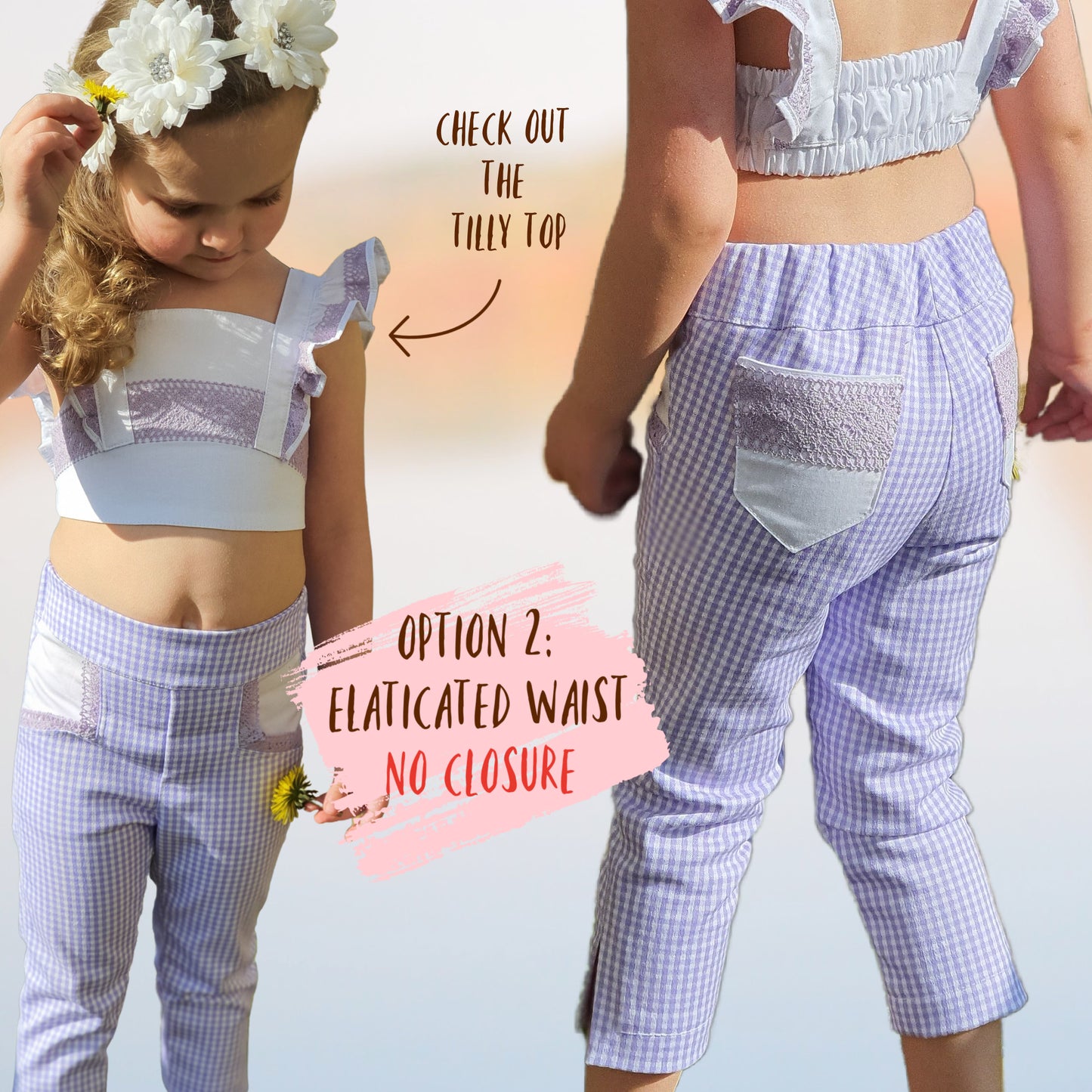
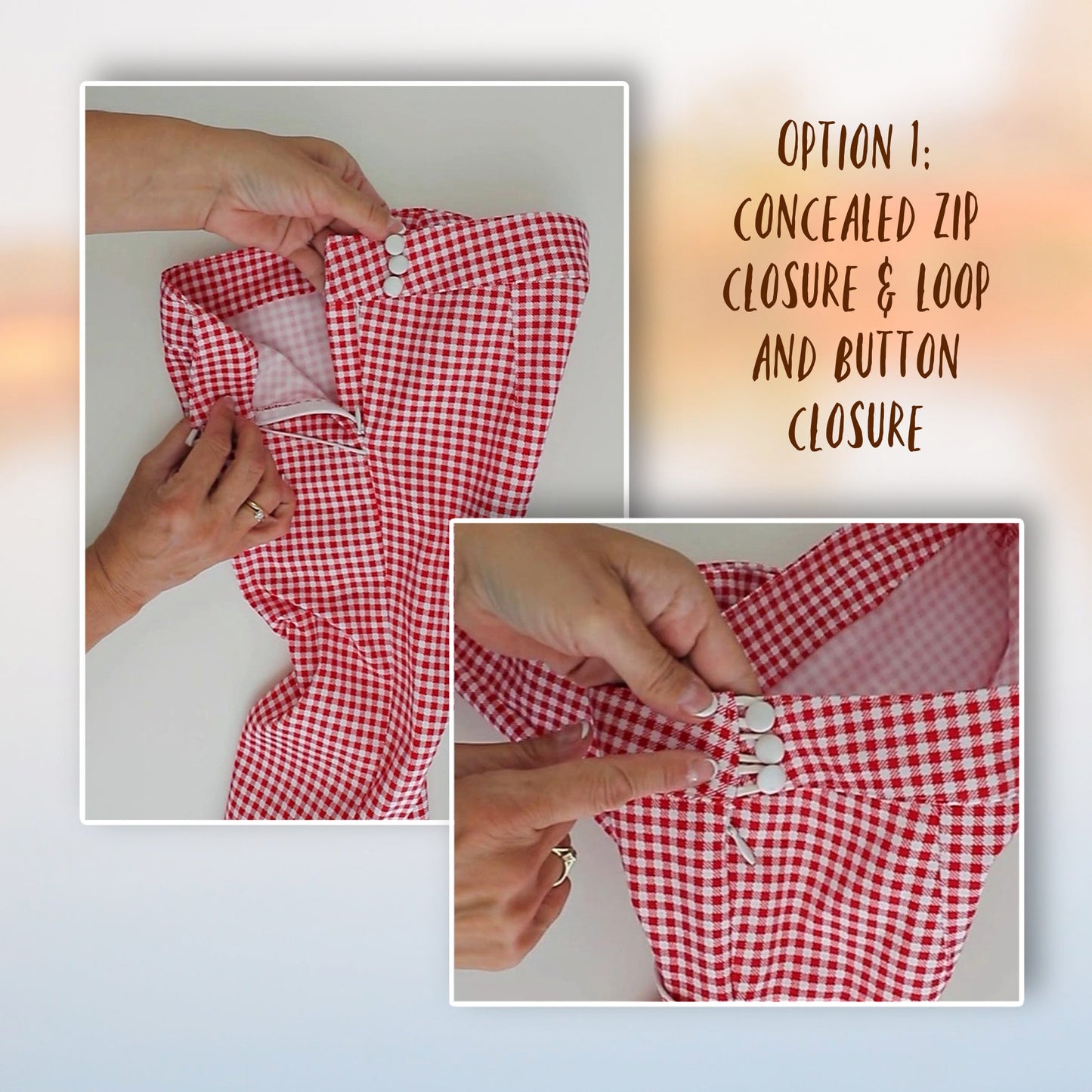
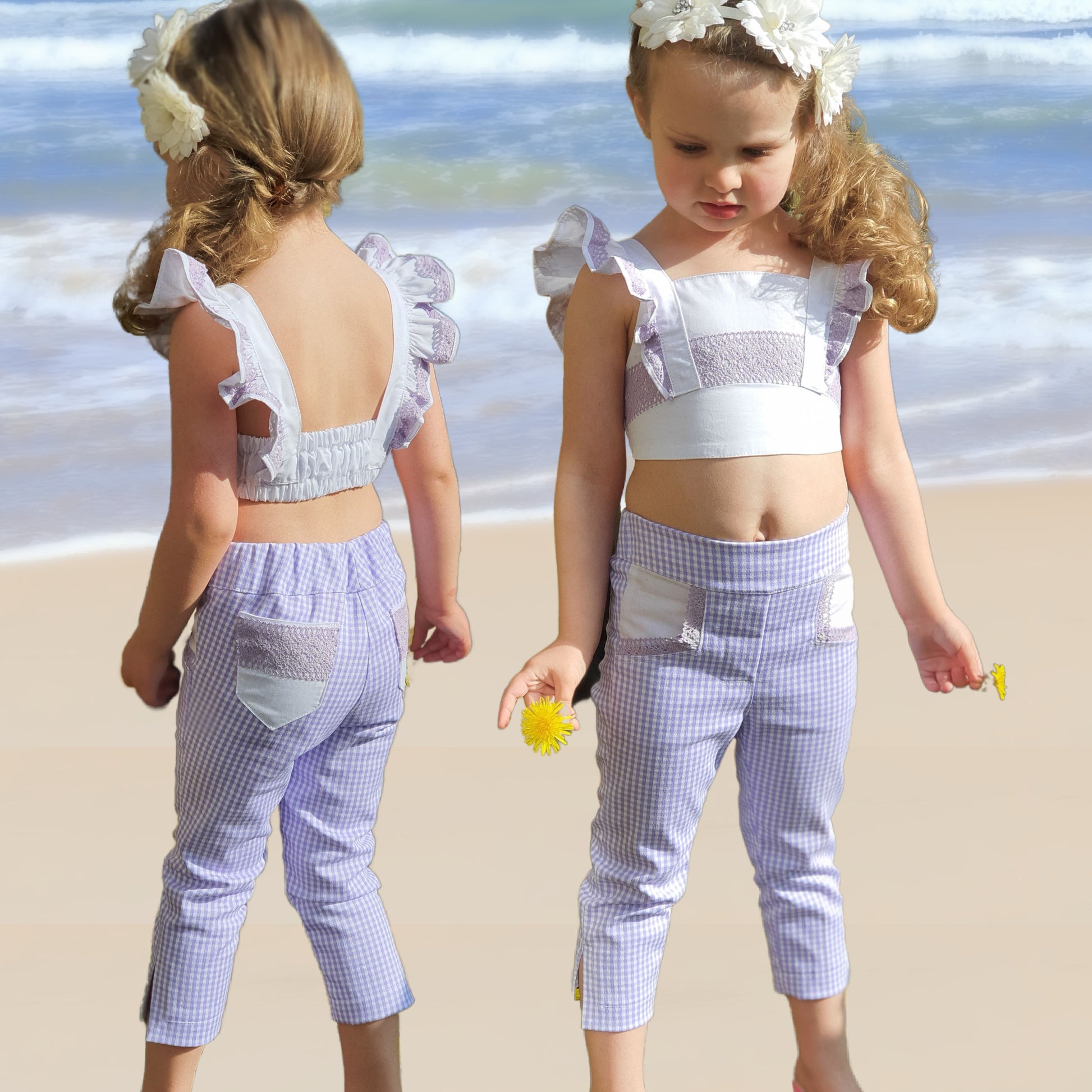
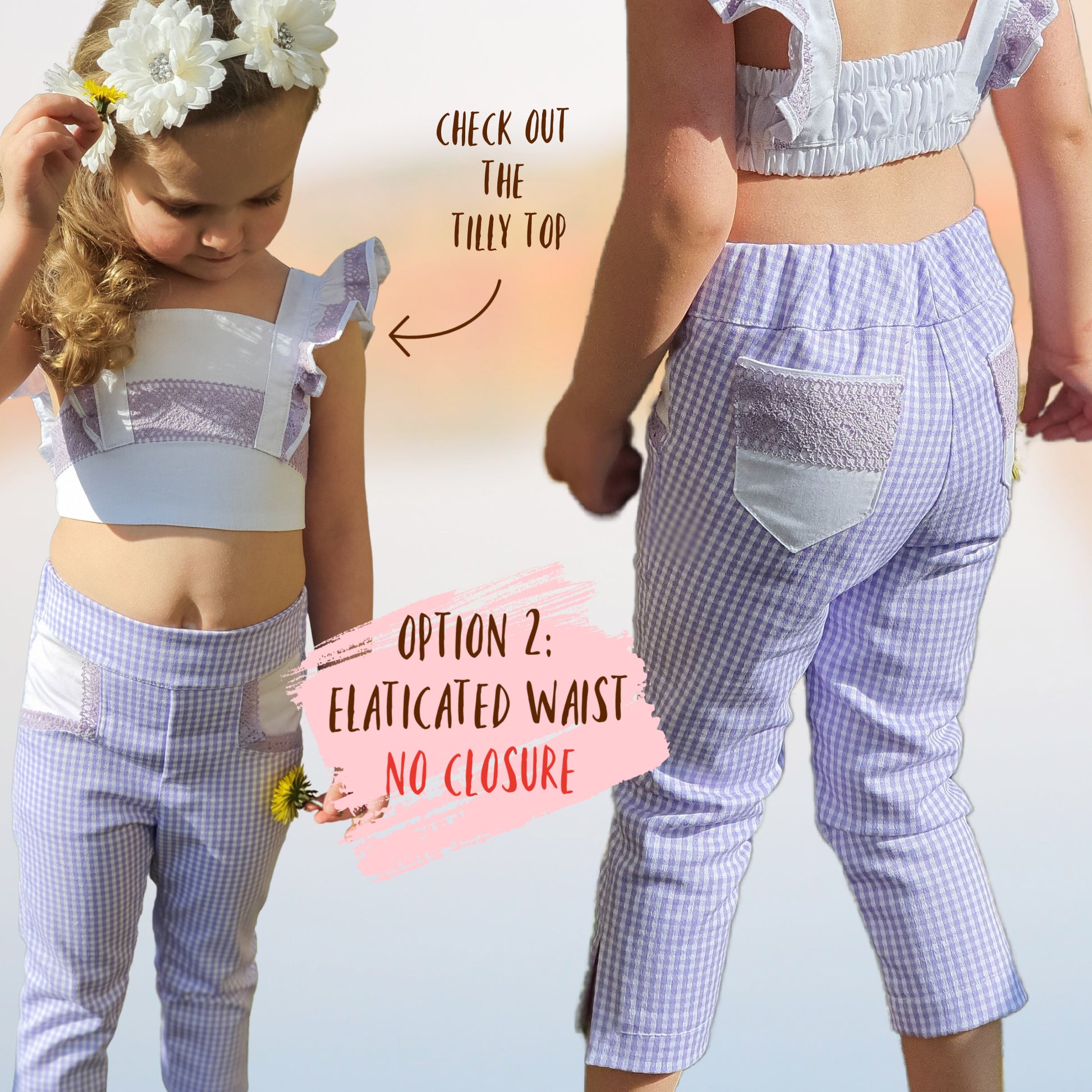
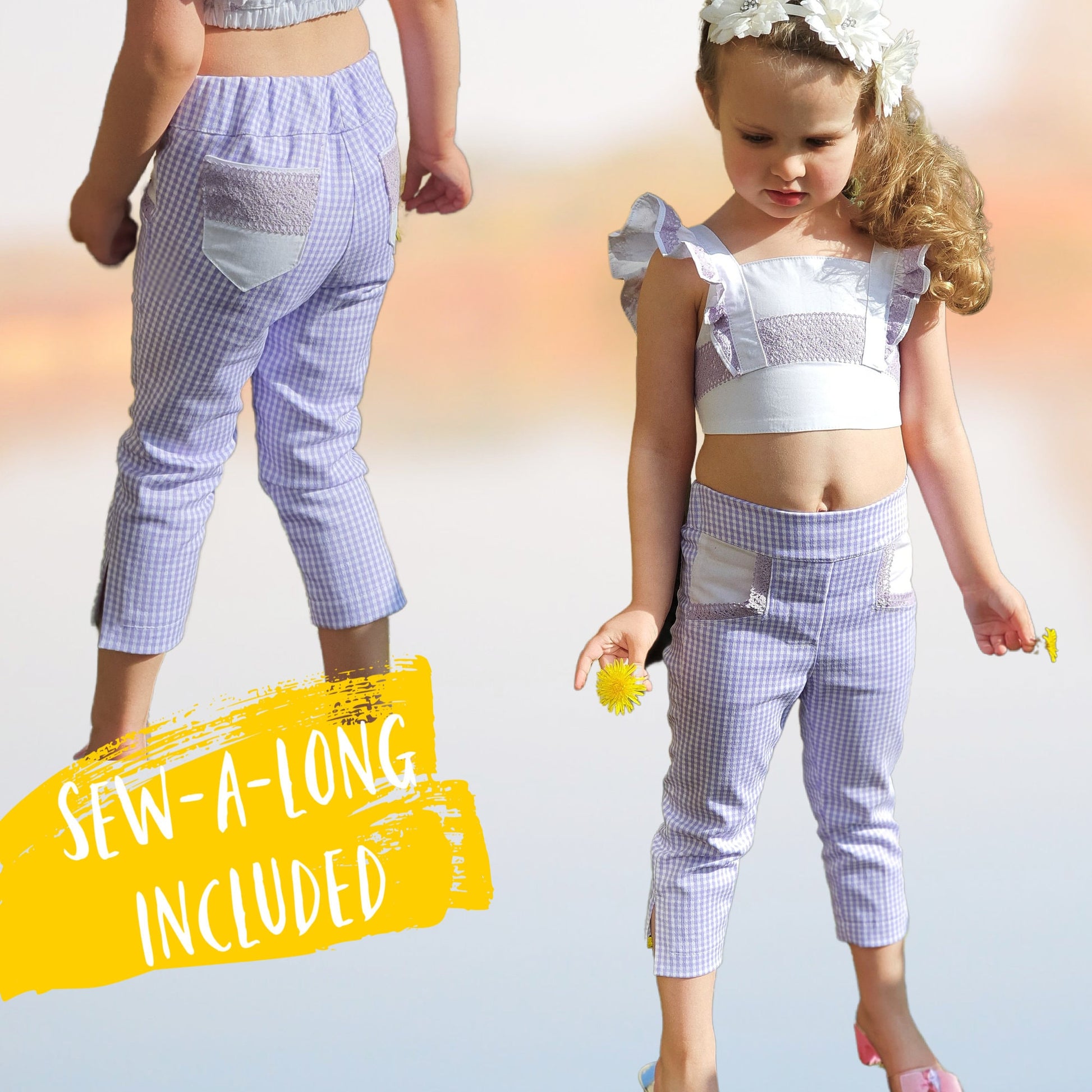
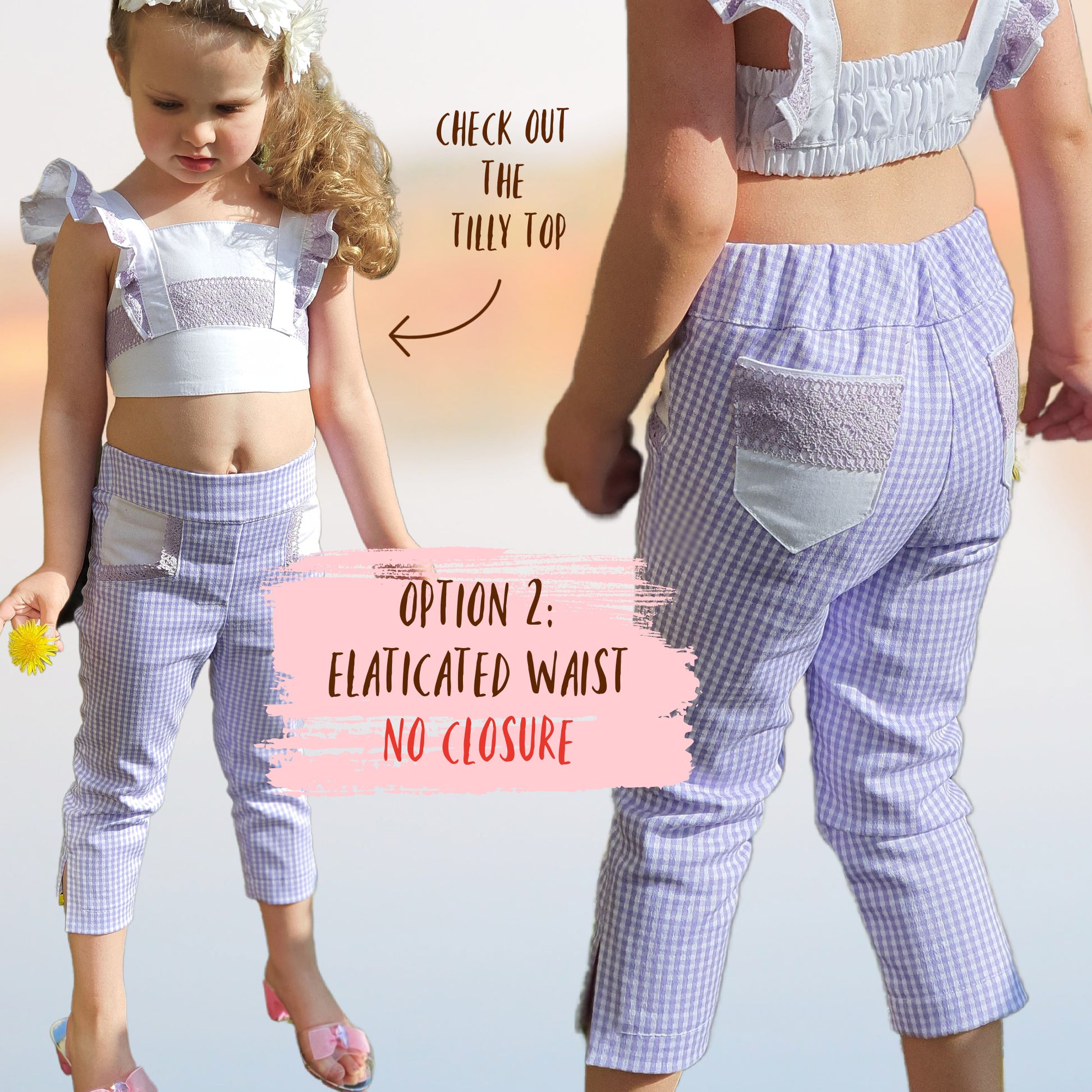
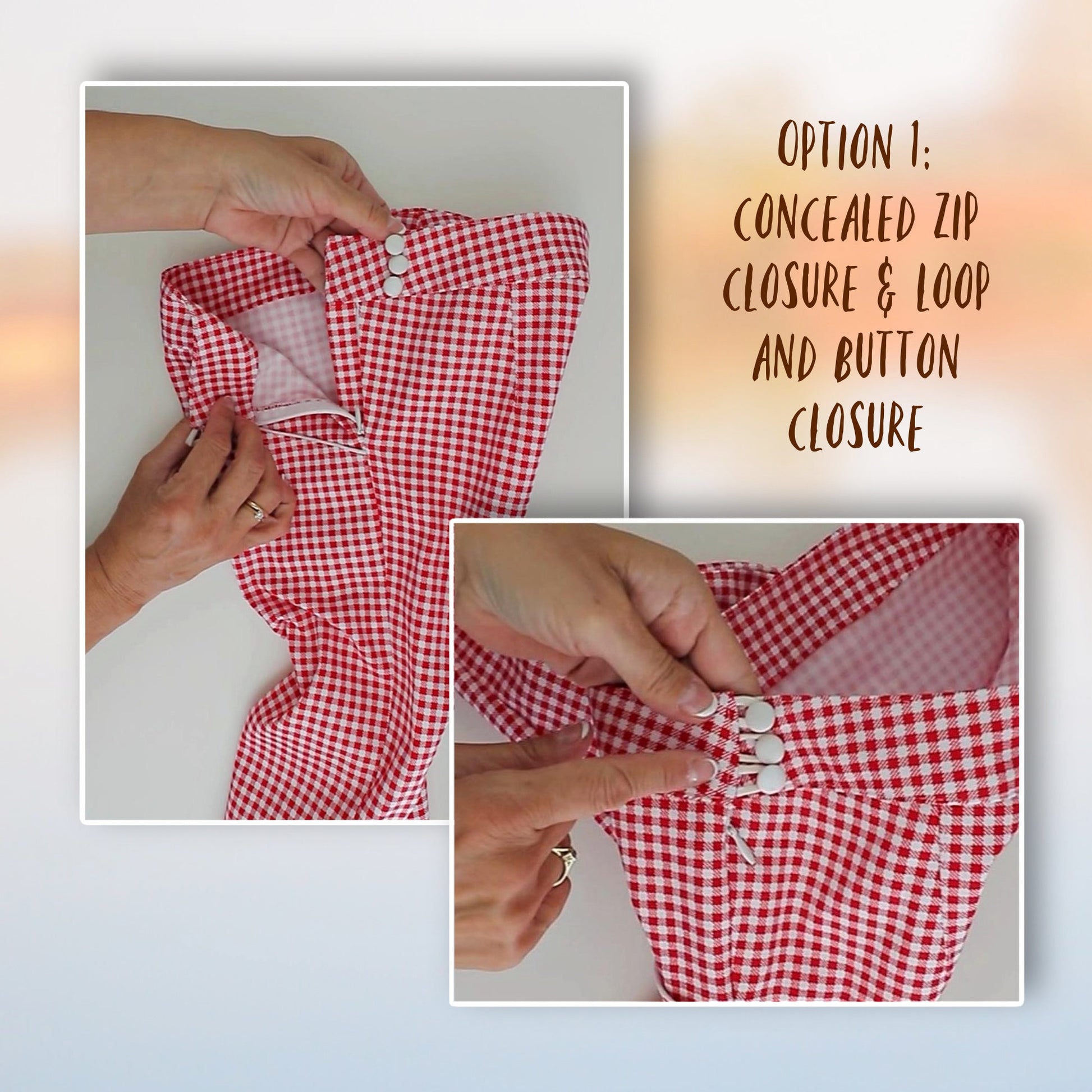
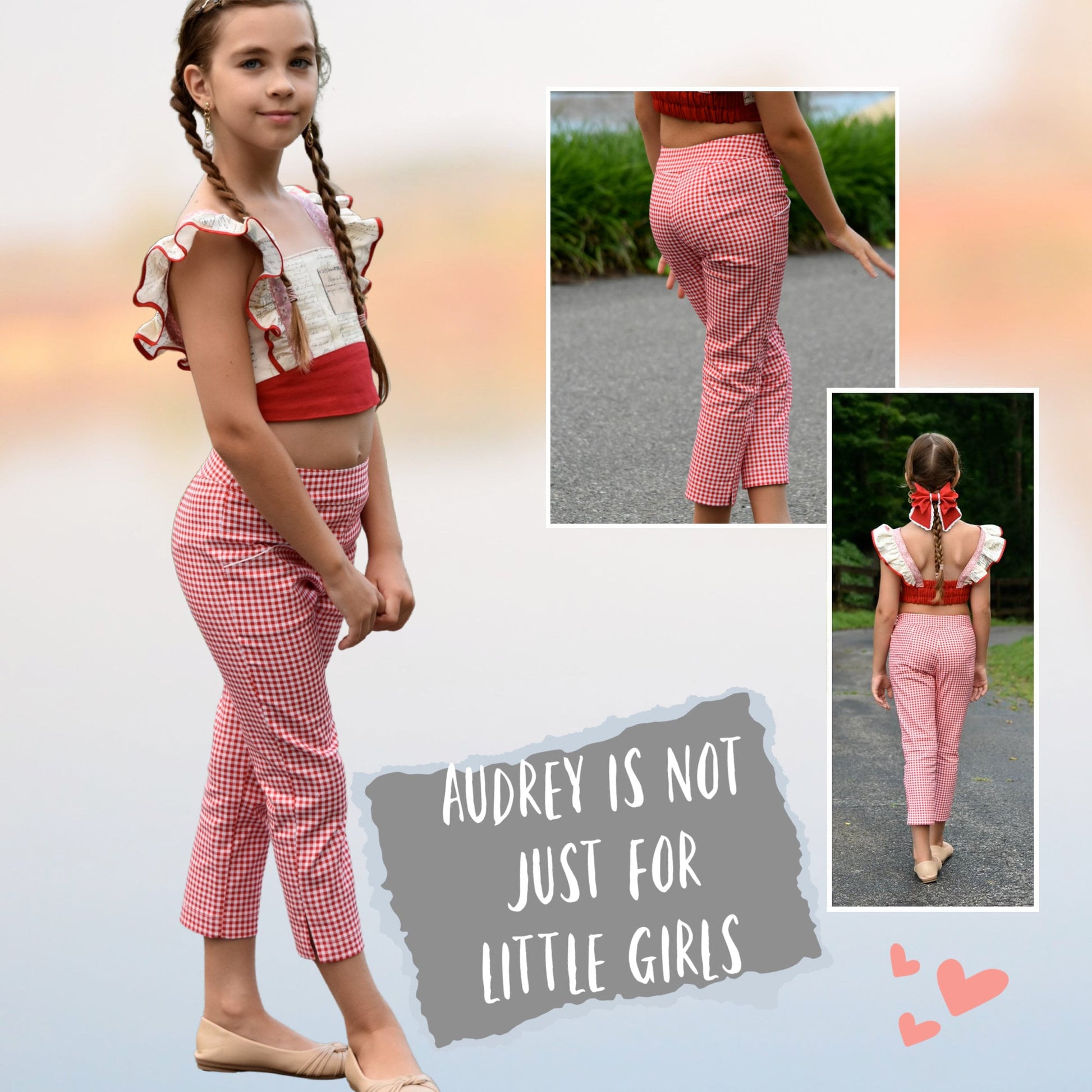
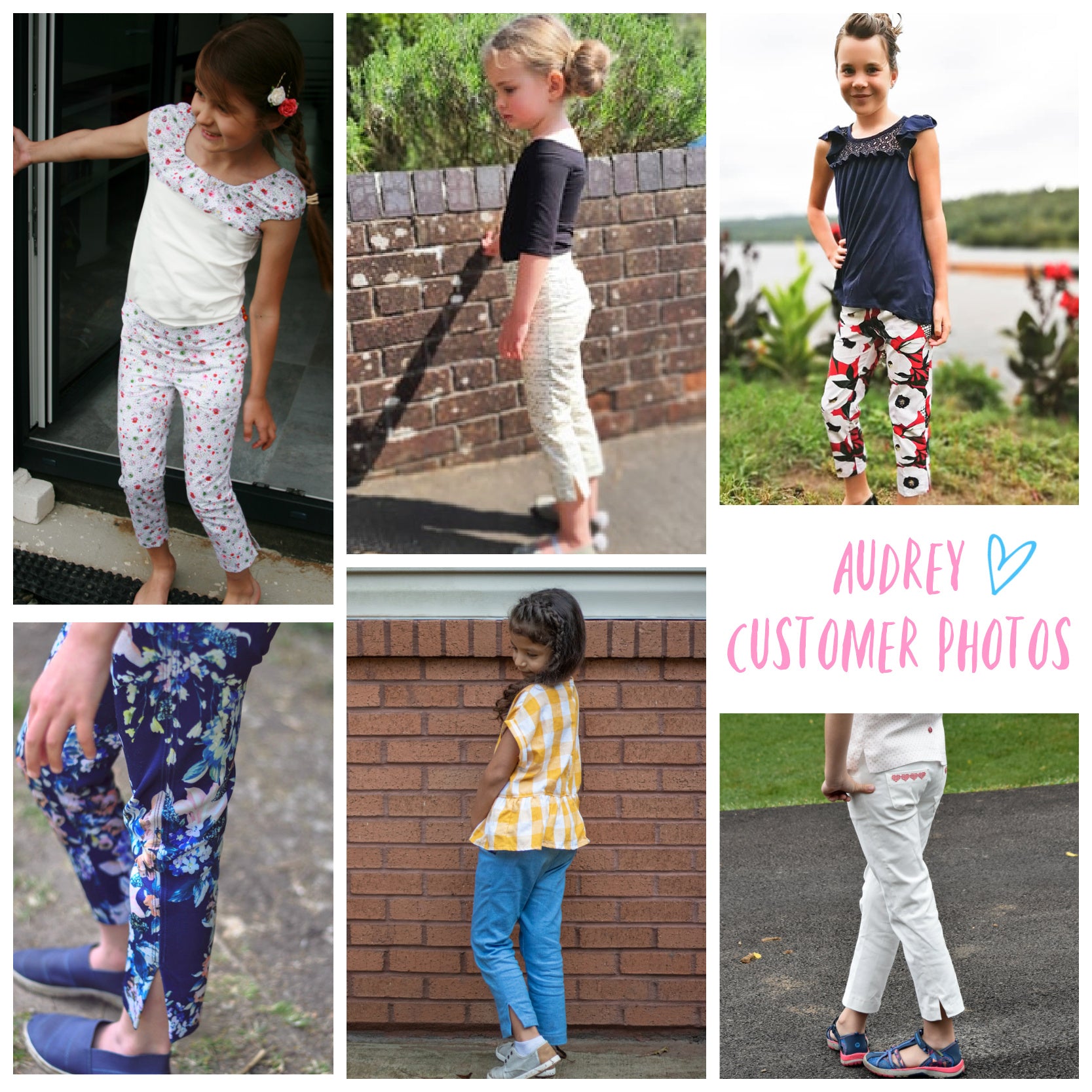
Say hello to Audrey — a sweet and versatile vintage Capri pants sewing pattern designed with two lovely finishing options. You can create a fitted waistline with a concealed zip and dainty loop closure, or keep things simple with a flat front and elastic back waist for easy everyday wear.

Made for beginners and confident sewists alike, this girl's slim‑fit pattern comes with beautifully filmed video tutorials. Just scroll down and start watching Marina sew up some magic.

Pattern Download Includes

  • Instant Download
  • DIN A4 & US Letter Size
  • Individual PDF files for every Size
  • All Sizes included
  • Detailed eBook
  • Video Tutorials

Design Options

TWO SKILL-LEVELS AVAILABLE

  • BEGINNER: Elasticated waist
  • ADVANCED: Concealed zipper and loop closure

AWESOME FEATURES

  • Fitted curved waistband for perfect fit
  • Patch pockets (back)
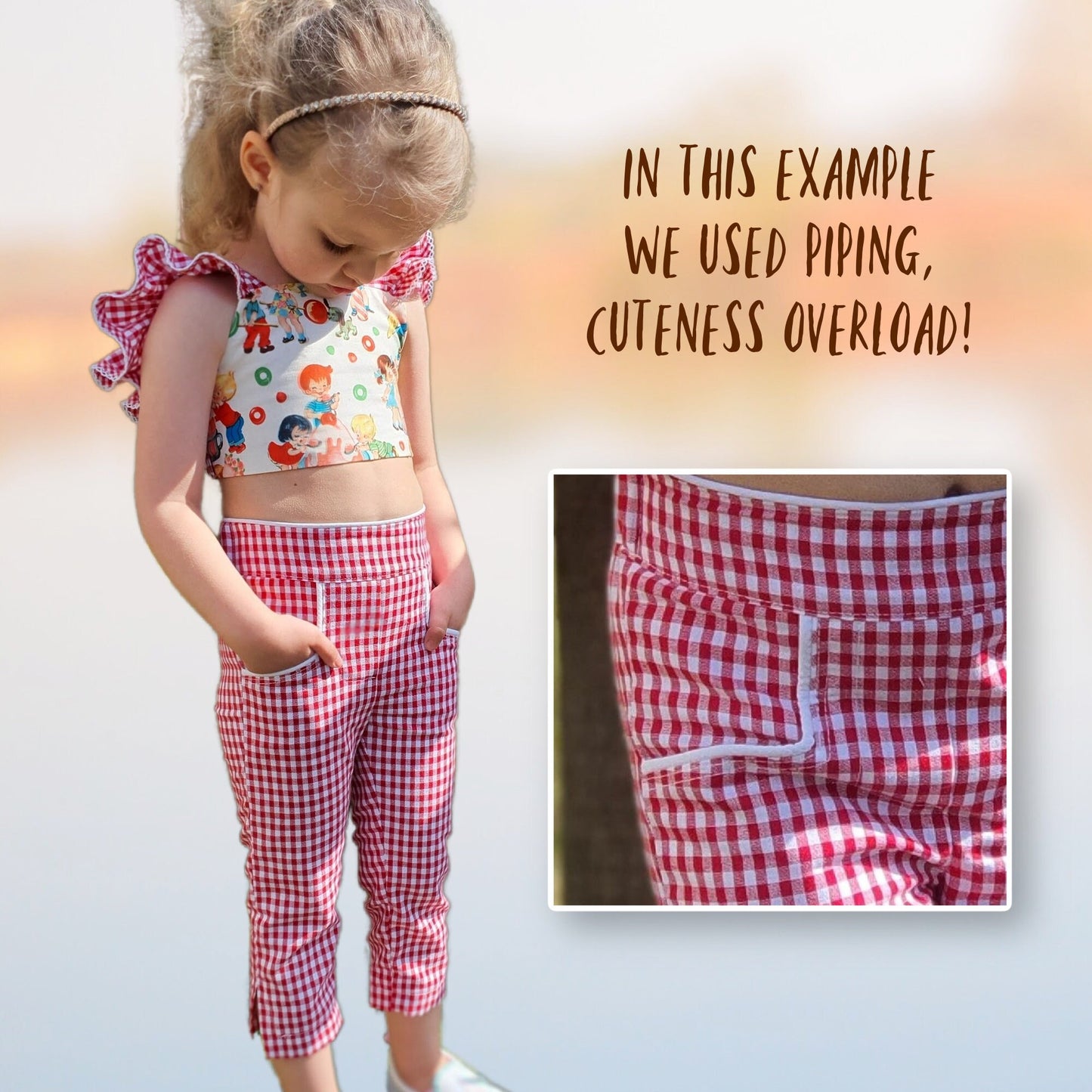
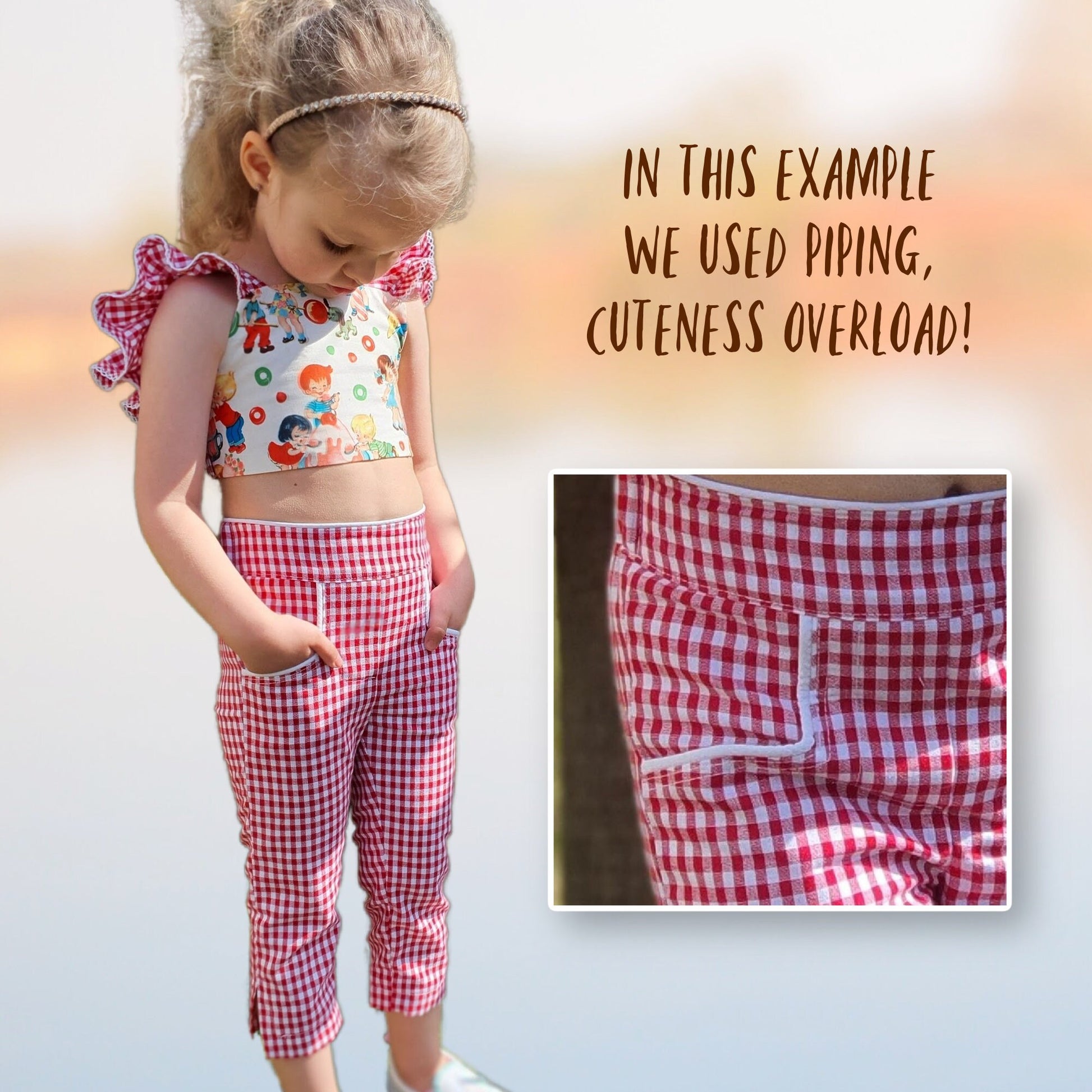
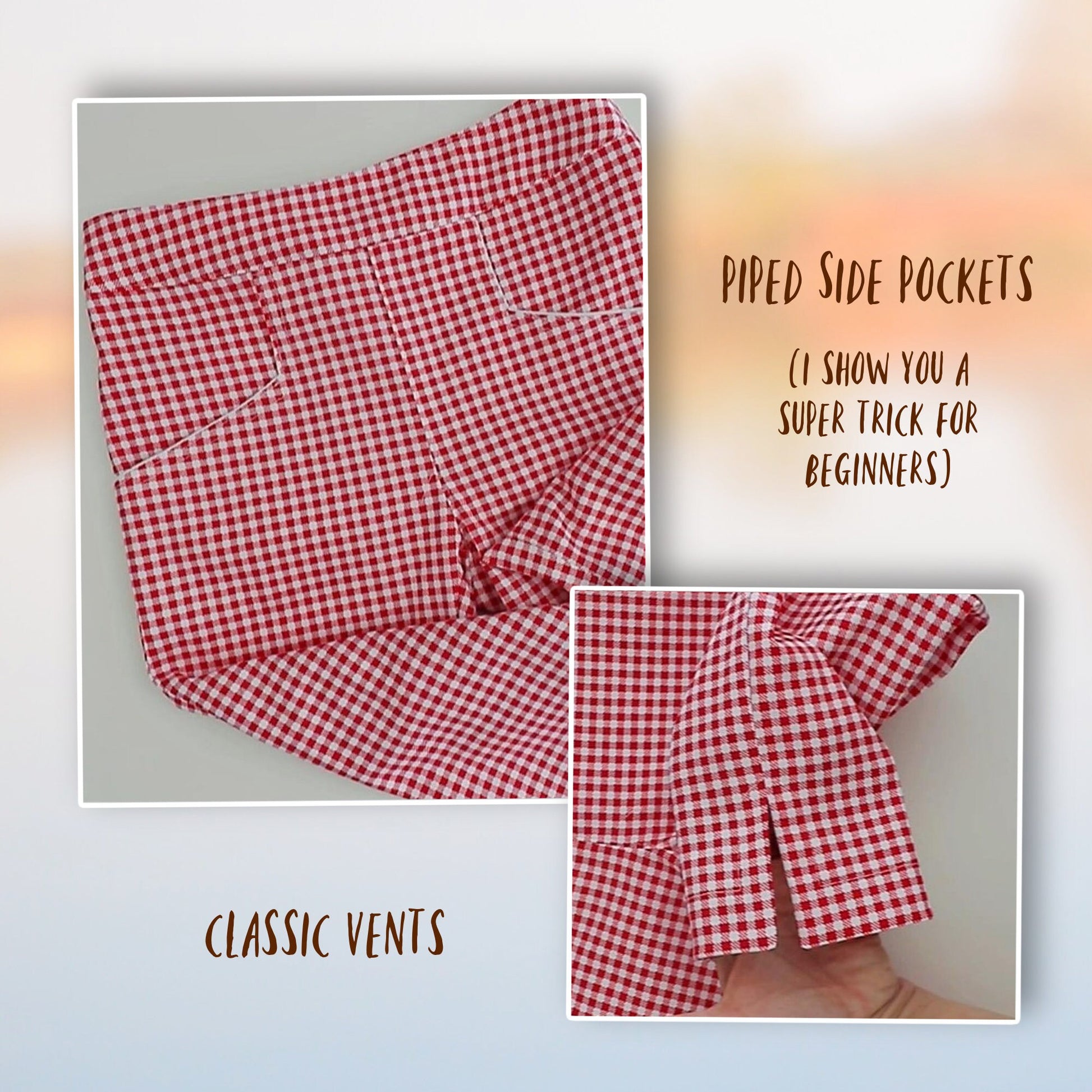
  • Side pockets (front) with faux piping trim
  • Classic vintage Capris pant vents
  • Beginner version: Elasticated back with flat front
  • Advanced version: Concealed zip, dainty loops, back darts (perfect for ages 8+)

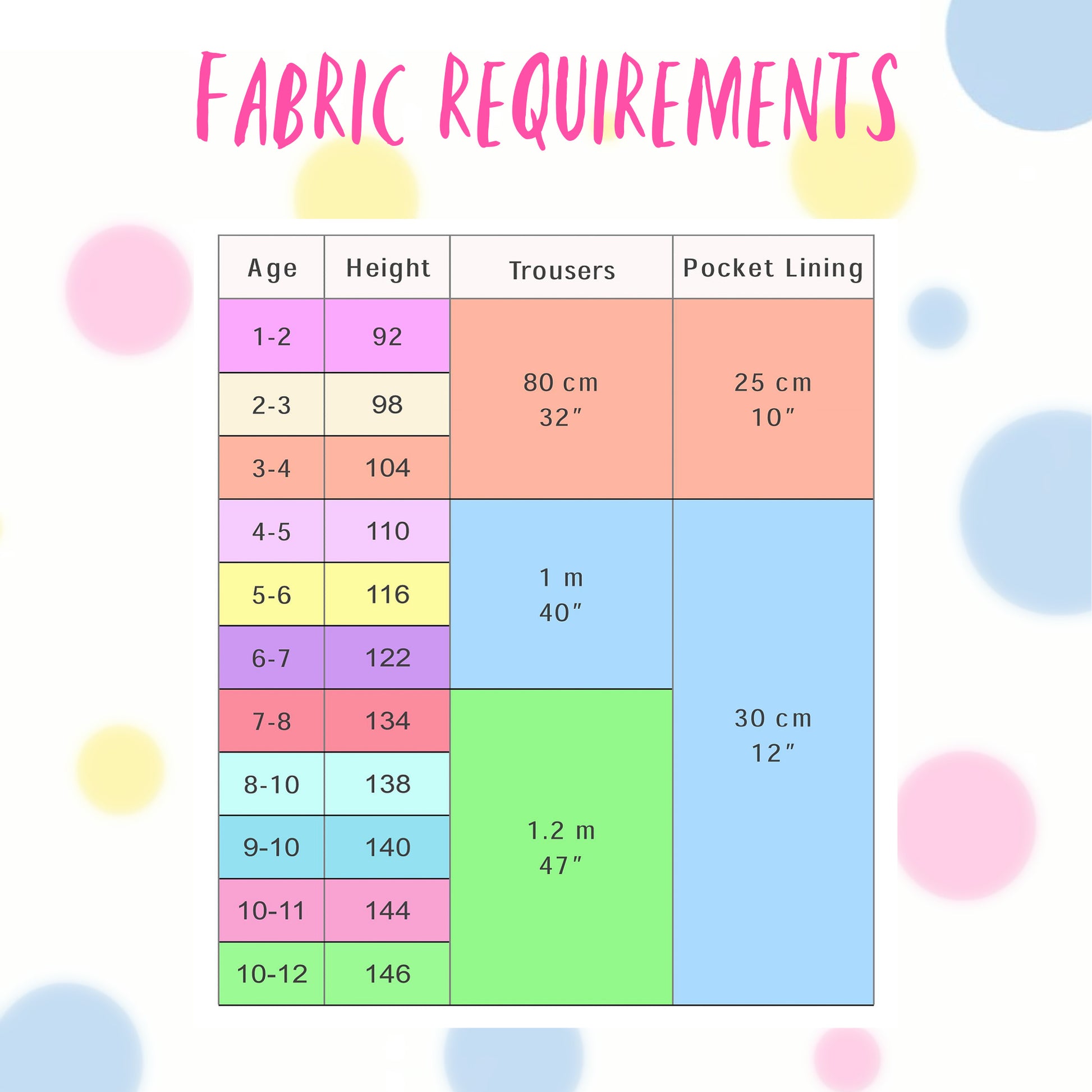
Fabric Requirements

FABRIC REQUIREMENTS
Light to medium weight fabrics are best, choose from:
Plain weave cotton, cotton sateen, cord, chambray, or denim. Best with 3-5% Lycra or Elastane stretch.

FABRIC REQUIREMENTS

  • Amount needed: Up to 1.2 yards (1 m)

NOTIONS

  • Buttons: 3 x
  • Concealed zip (advanced version)
  • Iron-on interfacing
  • Elastic 1.2 inches (3 cm) wide: 13.4 inches (34cm)

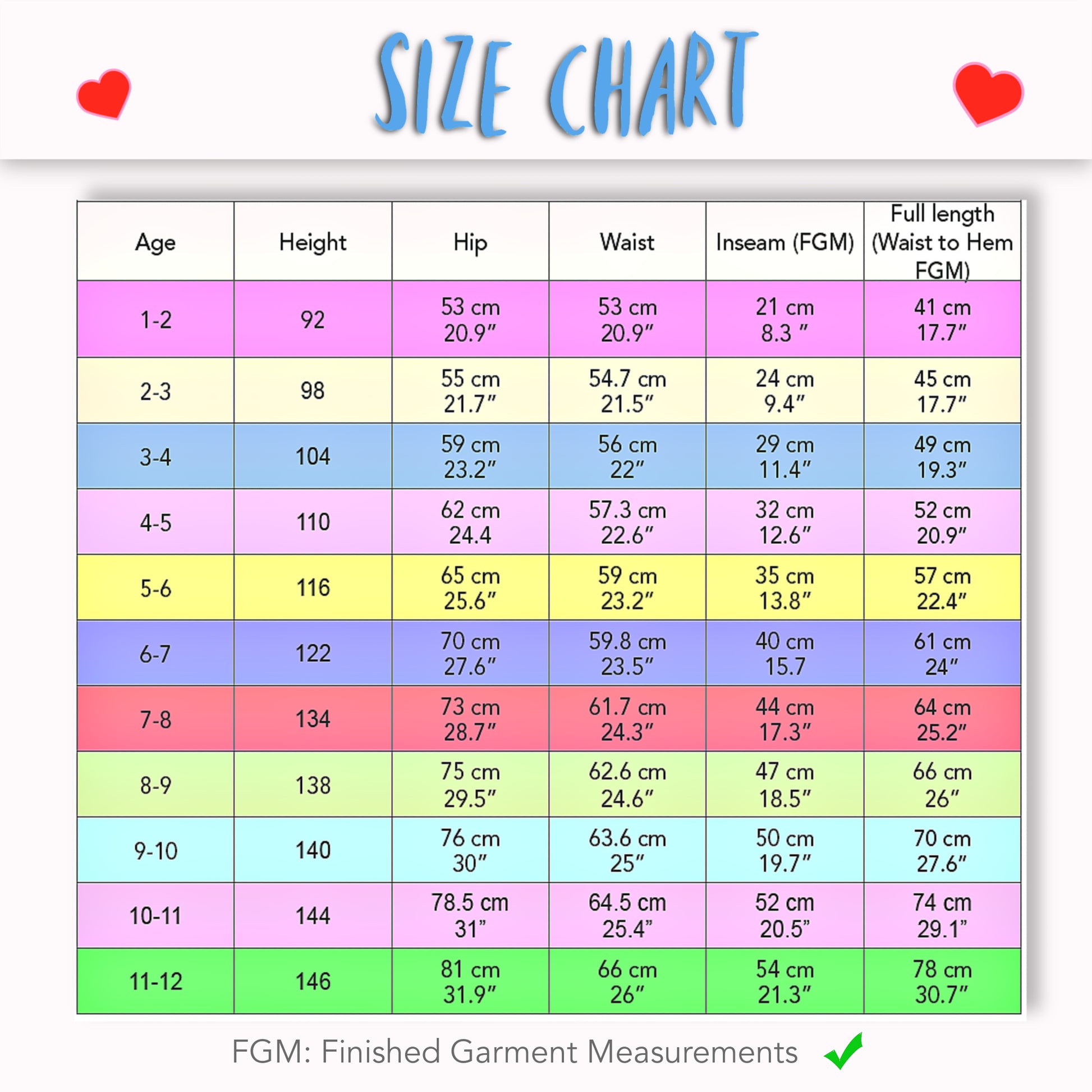
Available Sizes

Sizes: 1-12 Years

Please Read

  1. This is a digital pattern or PDF file, not a physical product. It will be delivered electronically via a download link delivered to the email used for the purchase.
  2. To ensure the pattern prints at its actual size, it's recommended that you use Adobe Acrobat Reader.
  3. The pattern creator, Frocks & Frolics, welcomes small-scale production using their patterns. 

Customers are encouraged to tag Frocks & Frolics when sharing projects made using their patterns on social media.

@frocksandfrolics #frocksandfrolics

View full details

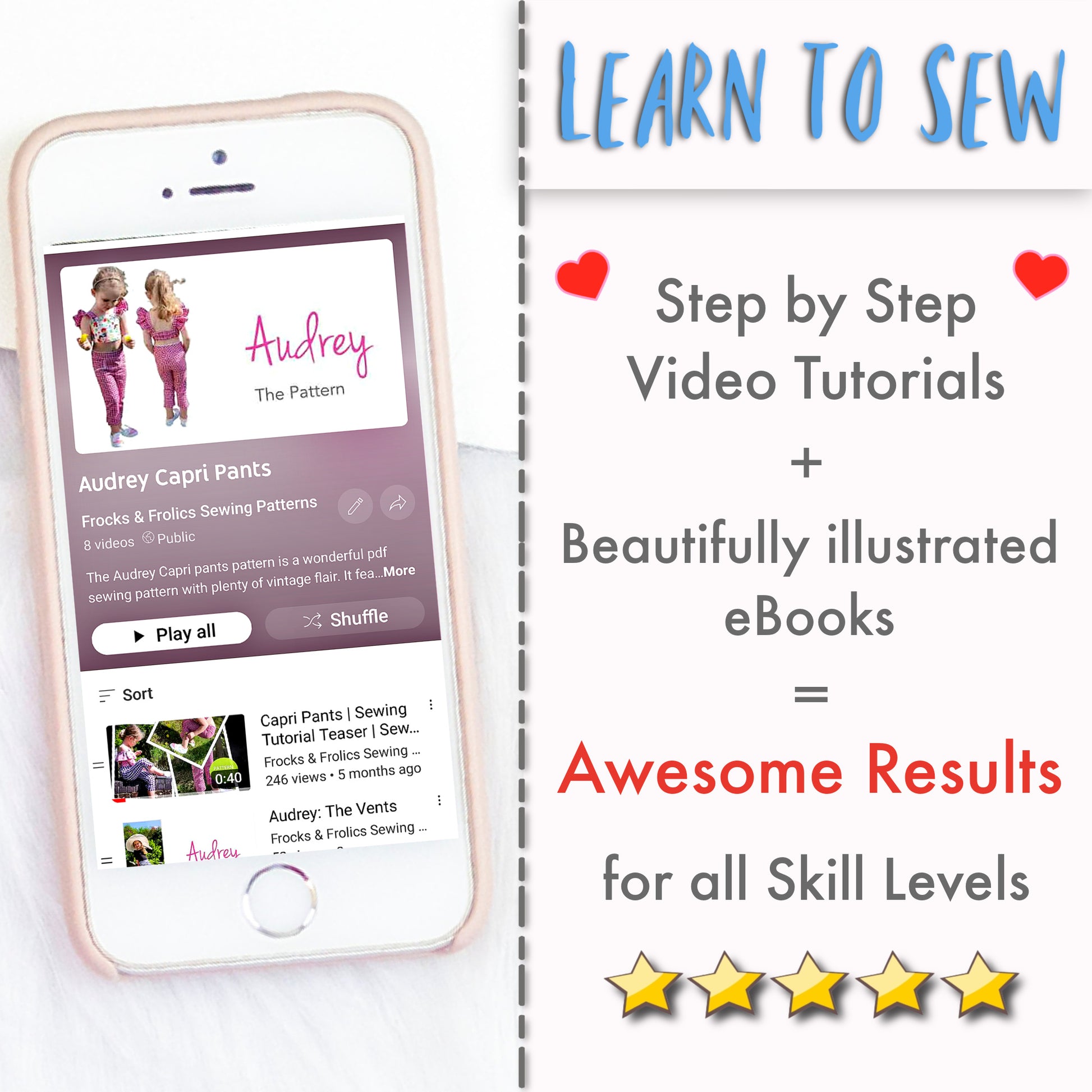
STEP-BY-STEP VIDEO TUTORIALS

Thumbnail
THE PATTERN
Thumbnail
CUTTING OUT
Thumbnail
THE FRONT
Thumbnail
THE BACK
Thumbnail
CONCEALED ZIP
Thumbnail
THE VENTS
Thumbnail
THE WAISTBAND

VIDEO TEXT

How to assemble the Pattern

Transcript for the video: Audrey Capris - The Pattern

Now you’ve printed off your pattern and you’re ready to go. The first thing to do is check your test square. Is it 2.5 inches in both directions? If yes, then it printed correctly and you can start cutting your pattern pieces.

Some pieces fit onto a page, like the Audrey pocket, but some pieces don’t. That’s why there is an attachment line which connects to the other piece. It’s a very simple system. The front always has a white flower on it, so you know that’s your front and you can’t get confused. Then the back has a pink flower. The same applies where pieces don’t fit on the paper — another section is printed on a separate page with attachment lines. Cover the attachment lines when taping pieces together and you’ll get a complete piece.

For the back in this size, there are three pieces: A, B, and C. That differs depending on the size, because as the sizes increase there will be more sections. There is always a layout plan at the back of your pattern showing how to assemble everything.

You’ll also have waistband pieces, and there are quite a few because there are three waistband options. Make sure you put the correct ones together.

Assembling the Waistbands

To assemble the waistband pieces, place them in a row and match the correct options. It’s easy to confuse them, so sort them first.

Waistband B option 1 goes with option 1. Option 2 goes with option 2. The front waistband only has one front piece, so that part is simple.

Once matched, cover the attachment lines and tape them together.

There are two different back waistbands because one is for the option with a zip, and the other is for the version with elastic in the back.

Marina recommends using the elastic-back version for very small children, since a zip can be unnecessary and uncomfortable for toddlers. For older children, around ages five to twelve, the zip version gives a more fitted and grown-up look.

This tutorial demonstrates the zip version because the elastic version is much simpler.

Assembling the Back and Front Pattern Pieces

For the back piece, join A and B first, then attach the lower piece C. Tape them securely together.

For the front piece, it’s even simpler. In the smaller size, it usually consists of just two pieces. Tape along the attachment line and the front is complete.

Front Piece Details

The front includes the pocket lining, pocket bag, and front trouser section.

The pocket lining is sewn to the front and turned to the back. The pocket bag sits underneath.

If you don’t want pockets, you still need to tape that section together so the front pattern retains its shape.

This piece is cut on the fold, which makes it stable. If you use stretchy fabric for the trousers, use the same fabric for the pocket so it stretches consistently. The pocket lining itself can be cut in a different fabric.

Side Slits / Vents

The trouser hem includes optional side vents, which may look intimidating but are actually simple.

If you don’t want to do the vents, simply cut off the vent extension and finish the hem normally by folding it up.

If you are making the vents, cut off the little marked corner. Fold the vent section according to the dashed seam allowance line. Match the edges exactly, sew the folded corner together, and turn it right side out to create a neat mitered corner.

The pattern already includes the correct angles and measurements, so you just follow the lines.

Back Piece Details

The back also has vent markings, so the same process applies.

There is also a dart. The dart is mainly needed for the zip version because it gives a nicer fitted shape. For small children using the elastic-back option, you can leave the dart out.

To transfer the dart, cut along the dart marking on the paper pattern and mark through onto the fabric.

Waistband Fit

For the zip version, the waistband aligns to the back after sewing the dart. It extends slightly at the side for the zip placket. This extra section covers the zip neatly.

For the elastic version, the alternate waistband fits directly across the back without the zip extension.

Once all pieces are assembled, you’re ready to cut your fabric.

Sewing the Front

Transcript for the video: Audrey Capris - The Front.

Let’s sew the front. Same as on the back, we’re going to put the front pieces together and sew them with a 1 cm seam allowance all the way up. Move the fabric around so that you feed it straight into your sewing machine. Don’t forget to lock in your stitches at the end.

Overlock the seam and trim some of the excess seam allowance away, because you don’t want too much bulk left standing there. This time, iron the seams towards the left.

Then do exactly what you did on the back: topstitch it with a stitch length of 3.5 all the way down. If you’ve pressed the seam correctly, it will naturally lie in the right direction. Use the little mark on your presser foot to line up with the seam line where the front is sewn together. Sew all the way to the end and lock in your stitches.

Sewing the Pockets

Now we’re going to do the pockets. Place the pocket lining on top of the front piece on both sides and sew them on with a 1 cm seam allowance. Foot-width seam allowance works too — it doesn’t really matter here.

The only tricky part is the little corner, so if you’re unsure, mark that point before sewing. Push the fabric into the machine rather than pulling on it so that the area doesn’t stretch.

Next, cut right into the corner so there’s no tension when you turn the pocket lining. Turn it, and it will give you a beautiful clean edge.

First, iron the pocket lining into one direction. Then there’s a little trick: you can leave a tiny bit of the pocket lining peeking out so it looks like piping. Marina demonstrates this and leaves a small bit of the white fabric showing. It creates a very neat faux piping effect and looks really lovely.

Once pressed, topstitch with a foot-width seam allowance and a stitch length of 3.5 all along the pocket edge. Then sew another close line of stitching just along the opening where little hands will go in. Leave the vertical edge open for now.

Repeat the same on the other side.

Attaching the Pocket Bag

Now place the pocket over the top and pin the left and right sides. Turn it over to check how it looks. If a little bit of fabric sticks out over the edge, just trim it off. The important thing is that the pocket edges line up properly.

Pin the pocket securely, but you don’t need to pin all the way up into the pocket opening because that upper section will be secured later from the outside.

Sew the pocket bag in place from the bottom up to the marked point, then across. Use either a foot-width or 1 cm seam allowance. Make sure your stitch length is back to 2.5.

Repeat on both sides.

Securing the Front Pocket Opening

Next, secure the front down by stitching close to the edge. This makes it look as though the topstitching runs continuously down the front.

Earlier, the topstitching stopped at the pocket corner. Now you continue the vertical stitching line all the way down. This secures the pocket opening and gives a professional finish.

Repeat on the other side.

Finishing the Sides

The last step is to overlock the side edges.

To stop the pocket layers from shifting, place a few pins through the pocket area, but keep them well away from the edge so they don’t get caught in the serger.

Then overlock all the way down. If you’re worried about accidentally cutting into the fabric near the pocket edge, you can disengage the knife on your overlocker.

Feed the fabric straight down and keep everything aligned. The finished pockets are really neat and very cute.

Cutting out the Pattern

Transcript for the video: Audrey Capris - Cutting out

Once you have printed your pattern, first check the test square. It should measure 2.5 cm in both directions. If this is correct, your print is accurate and you can start cutting.

You will have several pattern pieces that need to be assembled. If a piece does not fit on one sheet, there will be a matching line indicating where the next piece should be attached. These lines are aligned and overlapped when taping the sheets together to form one complete pattern piece.

On the front piece, you can identify sections by the white flower symbol, and on the back piece by the pink flower. This helps you avoid mixing them up.

At the end of the pattern, there is also an overall layout plan showing exactly how many pieces belong together. If you are ever unsure, this plan will guide you immediately.

Assembling the Waistband Pieces

The waistband comes in several variations, so pay close attention.

Lay out all waistband pieces in order and check:

  • Front waistband
  • Back waistband option 1
  • Back waistband option 2

Then tape the correct pieces together along the matching alignment lines.

I recommend assembling all sizes completely once. This helps you immediately spot missing lines or mistakes and saves a lot of trouble later.

Important: There are two waistband options for the back:

  • Option 1 = zipper
  • Option 2 = elastic

For small children (about 1–5 years), elastic is strongly recommended. For older children, a zipper gives a more fitted and polished look.

Assembling the Back Piece

The back piece consists of multiple sections (usually 2–3 depending on size).

First join pieces A and B, then attach piece C below. Align everything precisely along the matching lines and tape it together neatly.

Front Piece and Pockets

The front piece is simpler.

You have:

  • Front trouser leg
  • Pocket bag / pocket lining

The pocket lining is sewn on and then folded inward. The pocket bag sits underneath.

If you do not want pockets, you still need to assemble this area so the shape remains correct.

The front piece is cut on the fold to keep it stable.

Pocket and Fabric Notes

If you are using stretch fabric, the pocket fabric should also have stretch, otherwise the garment may distort.

The pocket lining can be a different fabric, as long as it remains stable.

The pocket is later turned to the inside, creating a clean finish with no visible edges.

Side Slits (Vents)

At the hem, you have optional slits.

If you do not want them:

  • simply cut away the marking
  • finish the hem normally

If you do sew them:

  • cut a small notch at the corner
  • fold along the marking
  • align edges precisely
  • sew and turn

This creates a clean, professional corner finish.

Back Piece Details & Darts

The back piece may also include slits.

In addition, there is a dart. This is mainly used for the zipper version to create a better fit.

For the elastic version, the dart is often not needed.

To transfer markings:

  • snip into the pattern
  • transfer markings onto fabric

Waistband Adjustments

For the zipper waistband, there is an extension on one side that later covers the zipper.

For the elastic waistband, the shape is straight and easier to sew.

The curved shape in the elastic version is intentional: it prevents the elastic from bunching uncomfortably when worn.

Conclusion

Once all pieces are correctly assembled, you are ready to begin cutting your fabric.

Neatening the Back & Sewing the Darts

This is the transcript for the video: Audrey Capris - The Back Darts.

Now we’re going to work on the back.
The first step is to mark your dart, and I’m using a textile marker for that. Then fold the dart together all the way down and pin it neatly. If I place a pin here just to demonstrate: when a dart is sewn really well, it will literally disappear into the fabric.

Make sure both darts are the same length once pinned.

Now we head over to the sewing machine to sew the perfect dart. You want to sew with a very slight curve, which helps the dart lie beautifully flat on the body. It’s subtle, but it makes a big difference.

At the end of the dart, you can either tie off your threads or reverse stitch. I’m going to reverse stitch here. You can see the gentle curve — that’s exactly what we want.

Next, press the dart toward the center — in this case, toward the center back. When pressed properly, the dart should disappear completely. If you see a little “nose” or bump at the tip, the dart isn’t good enough and needs adjusting.

Now we’re going to topstitch the dart with a stitch length of 3.5. You can’t see it very well on this fabric, but on a plain fabric it looks really lovely.

Next, we close the center back seam with a 1 cm seam allowance. If your fabric is firm, you don’t need to over‑pin — just make sure the edges stay aligned.

Then overlock the seam, trimming a little off as you go. The wider the seam allowance here, the more tension you’ll get, so trimming helps.

Press the seam toward the right, and give it a good press from the outside as well. Always press thoroughly — it makes such a difference.

Now we topstitch again. I have a little guide on my sewing machine that helps me find the right distance. I’m stitching straight down with a 3.5 stitch length. Don’t sew too close to the seam — that doesn’t look as nice. Secure your stitches at the end.

And that’s it — the back is finished

Inserting the Zipper

Transcript for the video: Audrey Capris - Concealed Zip

Now we’re ready for the zipper — I hope you’re all excited about this part.
The first thing we need to do is prepare the little placket. We’re going to sew it around the lower edge here.

I’m also shortening my zipper a little because they’re usually far too long at the top, and since we have a 1 cm seam allowance, they always end up too long. I want to make sure it fits properly.

Important note:
I actually don’t recommend cutting the zipper at this stage. I don’t know why I did it in this video — I’ve never done it before and I’ll never do it again. It made inserting the zipper harder.
Ideally, you shorten it later, so it ends up just slightly shorter than your placket.

I’ll show you what happens when you do it early, but I recommend waiting.

Once that’s done, overlock the edge of the placket.

Now place the pieces next to each other so you can see how everything lines up.
Fold your zipper tape over so the teeth are visible, and pin it to the edge. You want to leave a tiny bit of the overlocking visible — this gives you exactly the right distance for the 1 cm seam allowance.

Next, we sew a holding stitch along the edge. This keeps the zipper from shifting when we sew it in with the proper zipper foot. If you look at commercially made garments, you’ll see this line of stitching.

You don’t need a special foot for this step — just move your needle all the way to the left and sew down to the end.

If your zipper were still long, you wouldn’t need to move it up and down while sewing, because you could keep it fully open. That’s why I wouldn’t cut it early again — but it still works.

Now we attach the other side.
Make absolutely sure it’s positioned correctly — especially on a dress or anything longer, this step is crucial.

Flip your zipper over, bring the seam allowance up onto it, and secure it with a pin (or just hold it with your fingers). Then pin the zipper in place again, leaving a tiny bit of the overlocking visible.

Check that both sides are level.
Shorter zippers are easier — with long zippers you need to be extra careful.

Sew the second holding stitch the same way, making sure the zipper doesn’t push out or distort. This is exactly why you shouldn’t start with the zipper foot — the holding stitch is essential.

Now for the concealed zipper foot.
It has a groove in the middle where the zipper teeth sit, and the little raised guide fits right into that groove. This ensures your stitching is in the perfect position so almost none of the zipper shows — just a tiny bit.

You’ll notice I can’t sew all the way down — again, this is because I cut the zipper too early. It ends about 1.5 cm higher than I wanted. It’s still fine, but it would have been nicer the other way.

Now I sew the other side. You can see how the little guide on the foot sits exactly in the groove of the zipper teeth — it makes the whole process so easy and precise.

Check that your zipper is inserted correctly.
You’ll see mine ends about 1.5 cm above the pocket, and ideally I wanted it slightly lower.

Next, we close the seam below the zipper.
Overlap the stitching where the zipper ends, pin it, and then pin all the way down.

It’s a lovely zipper to insert, but I will say this:
You need a good-quality zipper.
Invisible zippers break more easily than standard ones. They’re nicer, they’re easier — but they’re fragile. Don’t buy the “10 for a dollar” packs. They won’t last. I’ve done it, and I regret it every time.

Now I sew the seam with a standard presser foot, but I keep my zipper foot ready. You can insert the zipper with the standard foot too — I’ve done that in several videos. We can include that as a bonus video so you can see different methods.

Sew as close as you can to the zipper stitching line. Hold the fabric firmly, remove the pin only when you’re right on top of it, and sew up next to the zipper. Secure your stitches.

And that’s it — the zipper is in.

Now open it up and check it.

The last step is to attach the placket.
Place it onto the seam allowance of the back piece and sew it down. This stitch doesn’t need to be pretty — nobody will ever see it. You’ll need to open the zipper to get around the area.

And remember: don’t leave the ironing until the end. Press after every step.
Now you have a beautifully inserted concealed zipper.

Next, we move on to the waistband.

Mitered Corners

Transcript for the video: Audrey Capris - The Vents

Now we’re going to work on the mitered corners, and there’s really no need to be afraid of them. All you have to do is place the raw edges on top of each other, measure correctly, and you’re done.

But how much should they overlap?

If you look here, the hem is 1 inch deep, and if you go straight up from that hem, it hits the corner.
In centimeters, that’s 2.5 cm.

However, where the two folded edges actually overlap, the measurement is 3 cm (or 1.2 inches).

So when you place the two edges on top of each other, make sure the overlap is exactly 3 cm / 1.2 inches.
If you do that, the corner will come out perfectly every time.

Place the edges together, measure, and pin.

Pick up the next corner, place the raw edges on top of each other, measure again, and pin.
It’s very simple once you know how.
If you measure correctly, it will always come out perfect.

Do the same for the next one: raw edges together, measure 3 cm / 1.2 inches, pin, done.

Finally, check that both corners match — the two opposite corners should be exactly the same height.
If you measured correctly, they will be.

Now all we have to do is sew them together.

Sewing the Corners

I’m using foot‑width here, not a full centimeter.
Sew one corner, then the next, and repeat.
I’ll spare you watching all of them — just sew each corner the same way.

Now use your thumb to push the seam allowance toward the hem, so it sits nicely and looks clean.
If the fabric is a bit thick, trim the corner.
You don’t have to trim if your fabric is light, but in my case it was bulky, so trimming helped.

Push the seam allowance toward the hem again, and that’s it.
I’m putting a pin in to keep everything from shifting.

Both sides are done, and when they’re opposite each other, they should be exactly the same height.

Give everything a good press now, because it’s much easier to do it at this stage.

It’s also easy to see where to press because I’m working with a check/gingham fabric — perfect for lining things up.

Closing the Inner Leg Seam

Next, we close the inner seam.
Start at the hem and sew all the way up and across to the other side.
It’s very simple — we’re nearly at the end now.

Use a 1 cm seam allowance again.

The only thing you must not get wrong is the little tip at the crotch.
Many beginners sew straight across here, but that creates tension.
You must sew into the tip, because it’s meant to be there.

Sew up to the tip, keep the seam allowance steady, leave the needle in the fabric, lift the presser foot, turn the fabric, and sew down the other side.
Very simple.

Perfect.

Overlocking and Pressing

Now I’m going to the overlocker to finish the seam and trim a little off the seam allowance.
Then I’ll press it and snip into the seam allowance so it can lie in different directions.

Now I pin the hem all the way around — it’s easy because I’ve already pressed it.

Sewing the Hem

Do the same on the other side.
Go to your sewing machine and start somewhere toward the back.

Your hem should line up with the 2.5 cm mark on your needle plate — this will make you sew exactly underneath your overlocking line.

As you come up the side, you’ll be sitting exactly on the 1.5 cm mark, if you guide it so that you sew right next to the overlocking.
It’s worked out perfectly, so you’ll get a beautiful result.

The only tricky part is sewing into the corner, but it’s worth it — it looks so cute.

Sew down the other side, turn the fabric, and again you should line up with the 1.5 cm mark.
Sew to the end of the overlocking line, turn again, and voilà — you’re perfectly back on the 2.5 cm mark.

Final Thoughts

These vents are absolutely stunning, and the little pockets are to die for.
I love the faux piping — it looks so lovely.

And if you’ve done the beautiful zip closure, give yourself a pat on the back.

If you’re watching this to decide whether you can manage it and you’re unsure, I’d recommend starting with the elasticated version first, and then trying the zip version afterward.

I hope to see you again soon for another project.

Sewing the Waistband to the Trousers

Transcript from Audrey Capris - The Waistband

Now we’re going to sew the waistband to the trousers. I’m marking my center back here, because the two sides aren’t identical — one side has the little placket for the nahtfeinen Reißverschluss.

Make sure the waistband piece with the iron‑on interfacing is facing outward.
I’m starting at the center back, but you could also start at one side — it really doesn’t matter, it will fit either way.

In my case, the waistband was a little tight because I made adjustments to fit little Magdalena. She’s a size 7–8 in height but has a size 6–7 waist, so I blended the sizes. I show this in the bonus features.

Preparing the Front

Mark the center front — always a good idea.
Again, make sure the waistband with the interfacing is facing the front piece.
It fits perfectly to the side seam.

It’s always easier when there are no darts — there’s really no way to go wrong.

Pin from side to side, and then sew the waistband on with a 1 cm seam allowance.

We’re getting close now — all the hard parts are done.

Line it up with 1 cm again.
You can also sew foot‑width if you prefer a slightly wider waistband and used foot‑width for your earlier measurements. It won’t affect the fit — it will just make the waistband a bit wider, which some people like.

On the zipper side, you’ll naturally have a bit of seam allowance sticking out — that’s where the nahtfeine Reißverschluss is inserted.

Sewing the Back Waistband

Now we sew the back waistband to the trousers.
This is where I had a tiny bit of trouble because I had sewn a little too tightly — I was rushing.
It was only 3–4 mm off, which is fine.

Now I can press the seam into the waistband, front and back, so everything lies smooth.

This is a very fitted pair of trousers — lovely for older girls.
For younger ones, I would always choose the elastic version; it looks just as nice.

Press from the outside as well.
It’s important to iron after every step — leaving it to the end simply doesn’t work.

Adding the Belt Loops

Now I’m adding the belt loops.
How to make them is shown in the bonus features — it’s very simple.

You can also use KamSnaps instead; there’s a bonus video for that too.

Use the pattern piece to help position the loops.
I’m placing mine slightly away from the edge because these loops were leftovers from my flower girl dresses — they ended up a bit long.
Yours should go right to the edge of the waistband.

Pin all loops in place.

Now we secure them with a row of stitching so they can’t rip out under tension.
This first stitching line is important — later we fold down the waistband and sew over them again, and then once more when we topstitch.

Do the same on the zipper side.

Closing the Waistband

Fold down the waistband and sew it in place.
Sew from the side where you can see what you’re doing — it’s always easier.

First secure the belt loops (I sew over them twice).
Then fold down the waistband and sew the inner edge closed.

Repeat on the other side.

Turn the waistband right‑side out.
You can trim the seam allowance if it’s bulky — I trimmed a little here.

Pull out the loops — they look gorgeous, even if they’re a bit long.

Lift out the corner with a pin so it’s nice and sharp.

This is what you should see: a perfect waistband.

Closing the Side Seam

Now we close the side seam.

If you didn’t insert a zipper, both sides would be the same:
Attach the waistband to front and back, then sew the side seams from the top of the waistband down to the hem.

If you added Schlitze, stop at the slit marking.
I’m adding a pin there to remind myself.

Sew down with a 1 cm seam allowance.

It comes together very quickly now — that’s what I love about these trousers.

You can also make them without pockets, without zipper, and without slits for a super‑fast version.
I’ll show you some hacks over the summer — shorts, simplified versions, lots of fun ideas.

Pressing and Finishing the Waistband

Press the seam flat, then open it.
A good iron is essential — lots of steam.

Now turn in the waistband.
If it feels too thick, you could overlock the edge and leave it hanging, then stitch in the ditch.
But here I’m turning it in fully because it gives more structure and support.

Turn it in all the way around, covering the stitching line.
Trim seam allowances where needed — flatter is always better.

I find it easier to turn the waistband in when I can put my hand inside, like I’m doing here.

Topstitching the Waistband

Now I topstitch all the way around the waistband.

My camera focus slipped a bit here — it focused in front of the presser foot instead of on it.
But you get the idea: sew all the way around.

If the presser foot struggles to feed the fabric, you can lift it slightly and nudge the fabric forward a tiny bit — but only a tiny bit.
Better yet, pull gently on a thread tail to guide the fabric.

Sew around the entire waistband and come back to where you started.

Final Press and Button

Back to the ironing board — give the waistband a good press.
Look how beautifully it curves into the back.
Children often have a curved lower back, and this waistband sits perfectly against it.

Now sew on the button.
Place it where there is slight tension — not inside the loop, but just beyond it, so the waistband doesn’t pull open.

Sew the button on securely:
Go through 4 times, wrap the thread around the shank, secure the thread through a loop, pull tight — done.

Sew on the remaining buttons.

And now we’re ready for the mitered corners

YOU MAY ALSO LIKE

Beatrice

SHOP NOW

Audrey

SHOP NOW

Bonnie

SHOP NOW

Connie

SHOP NOW

Isabella

SHOP NOW