

VIVIENNE TEEN DRESS
VIVIENNE TEEN DRESS
Couldn't load pickup availability
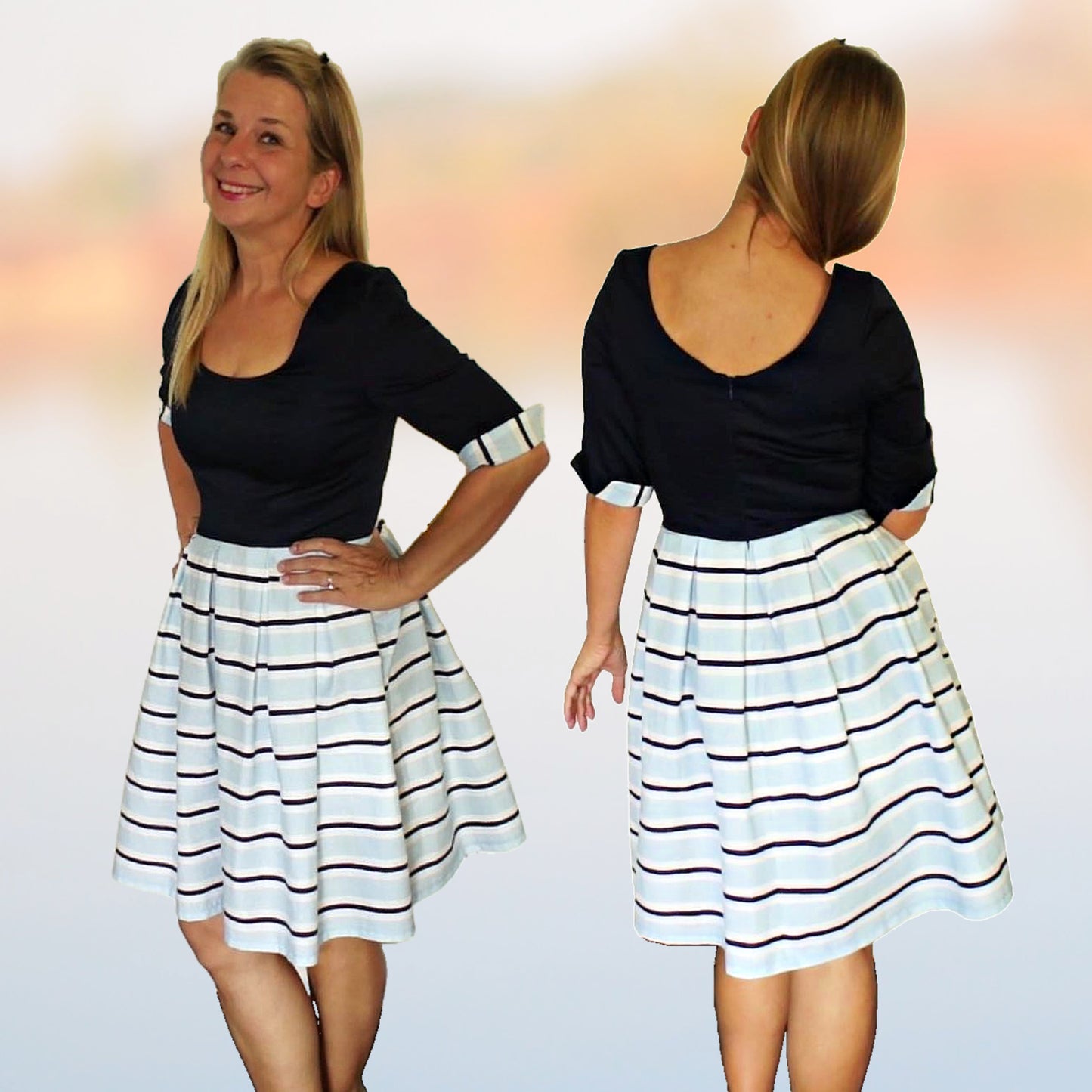
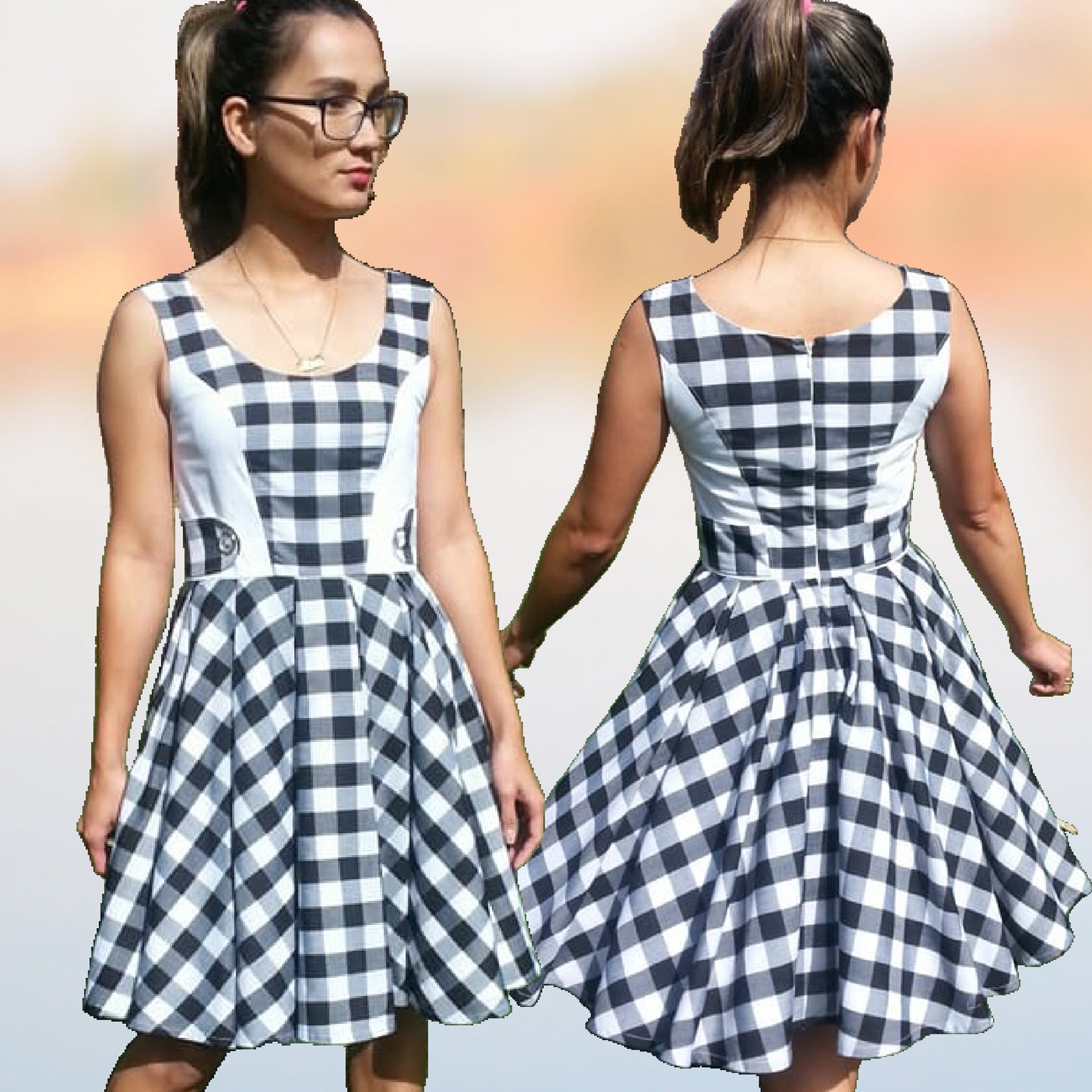
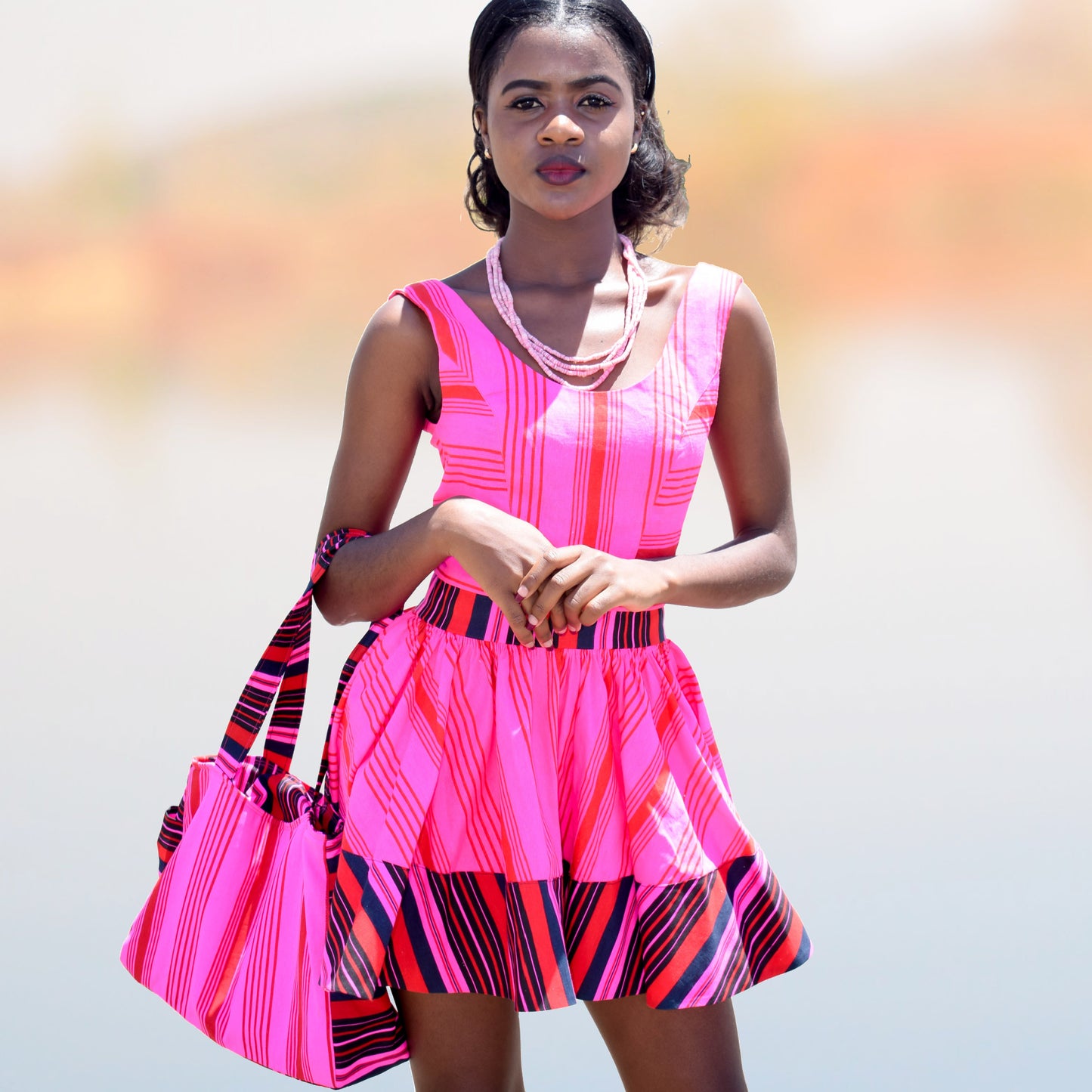
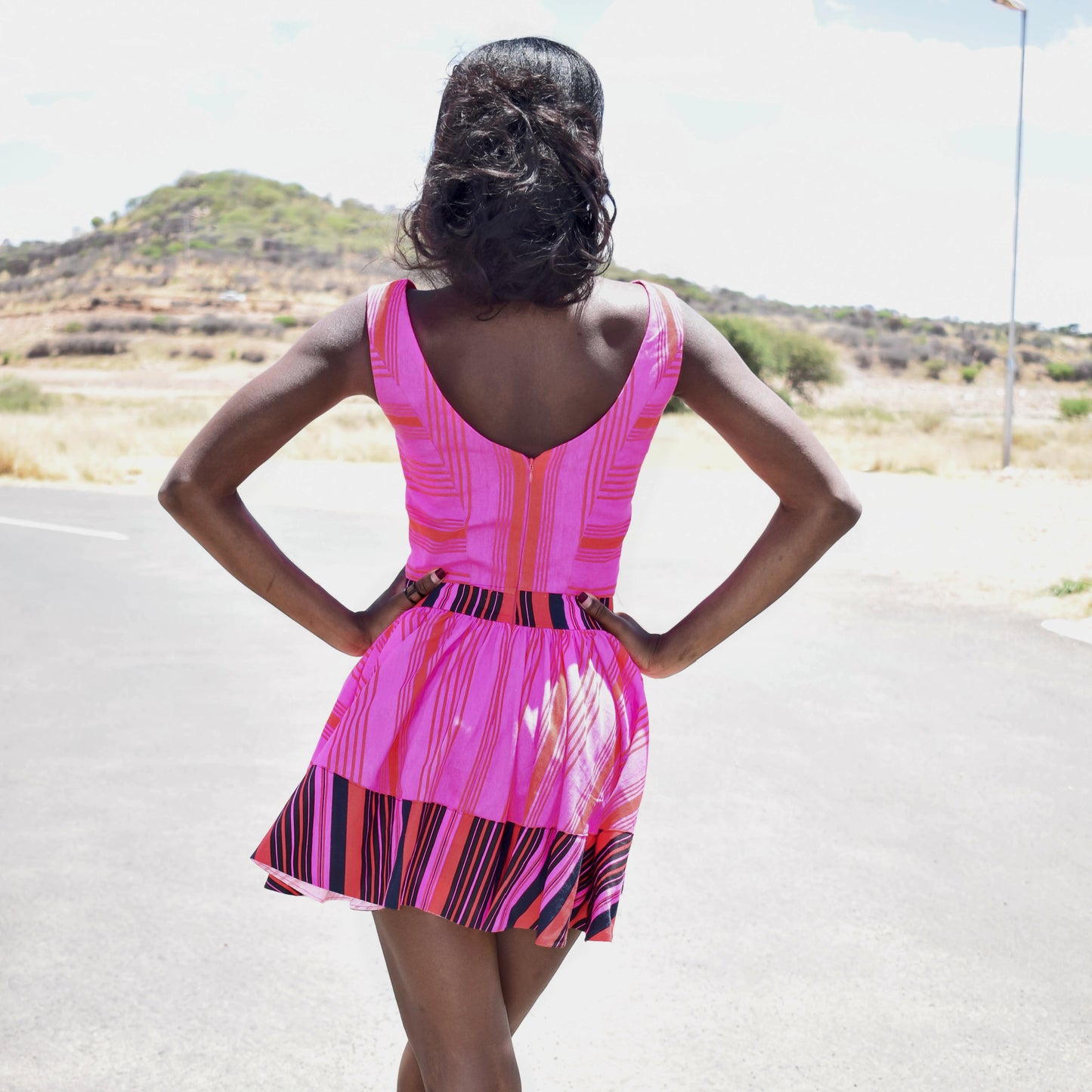
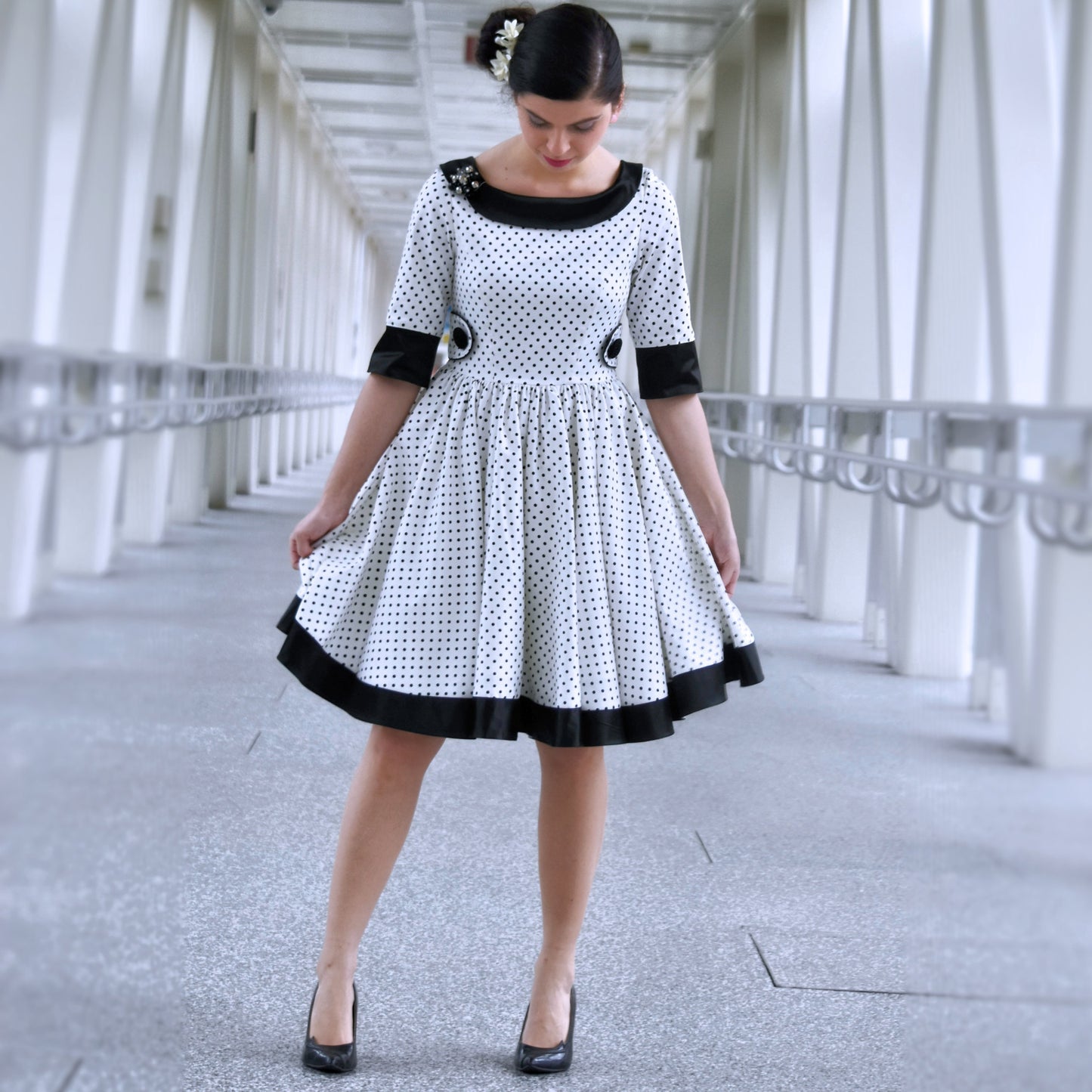
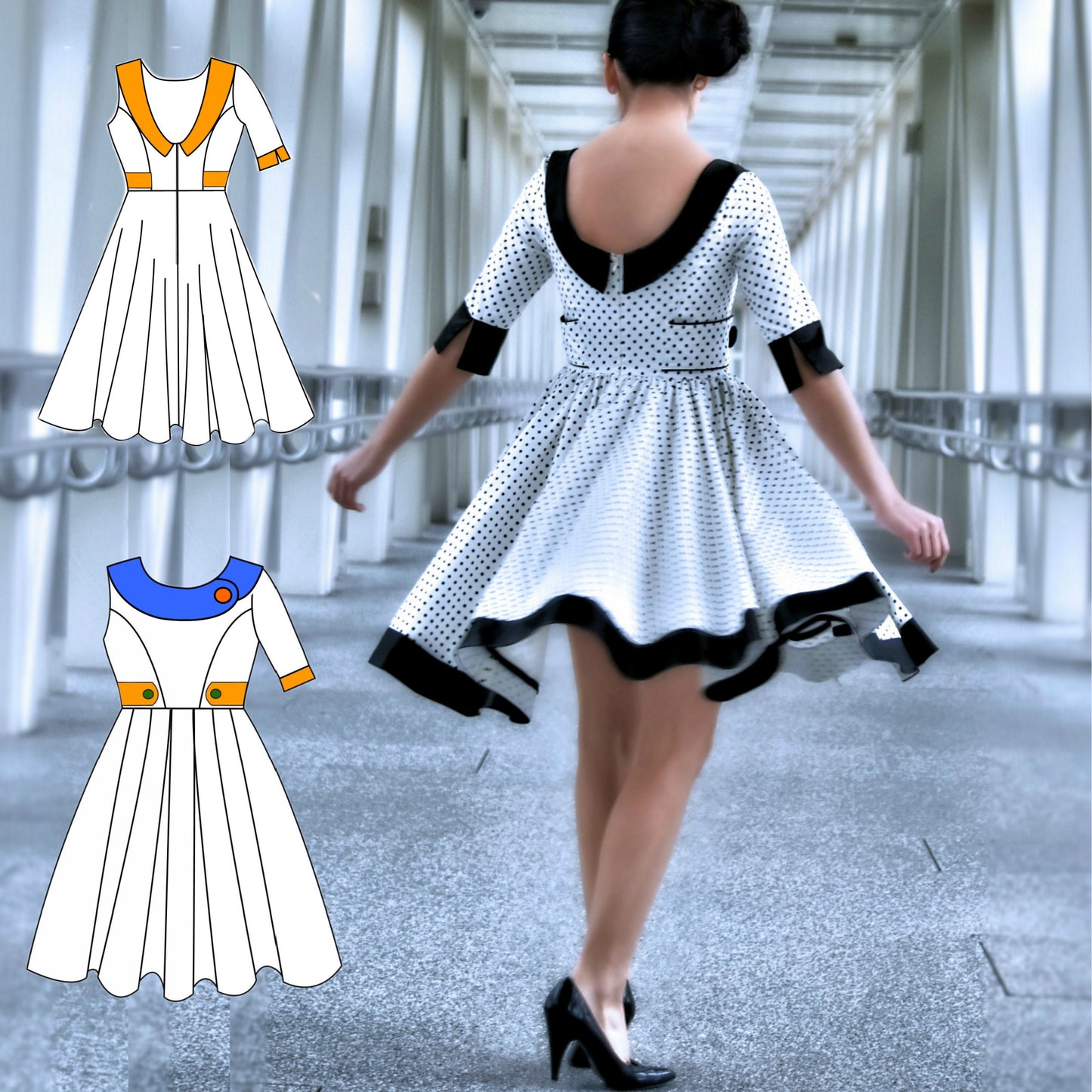
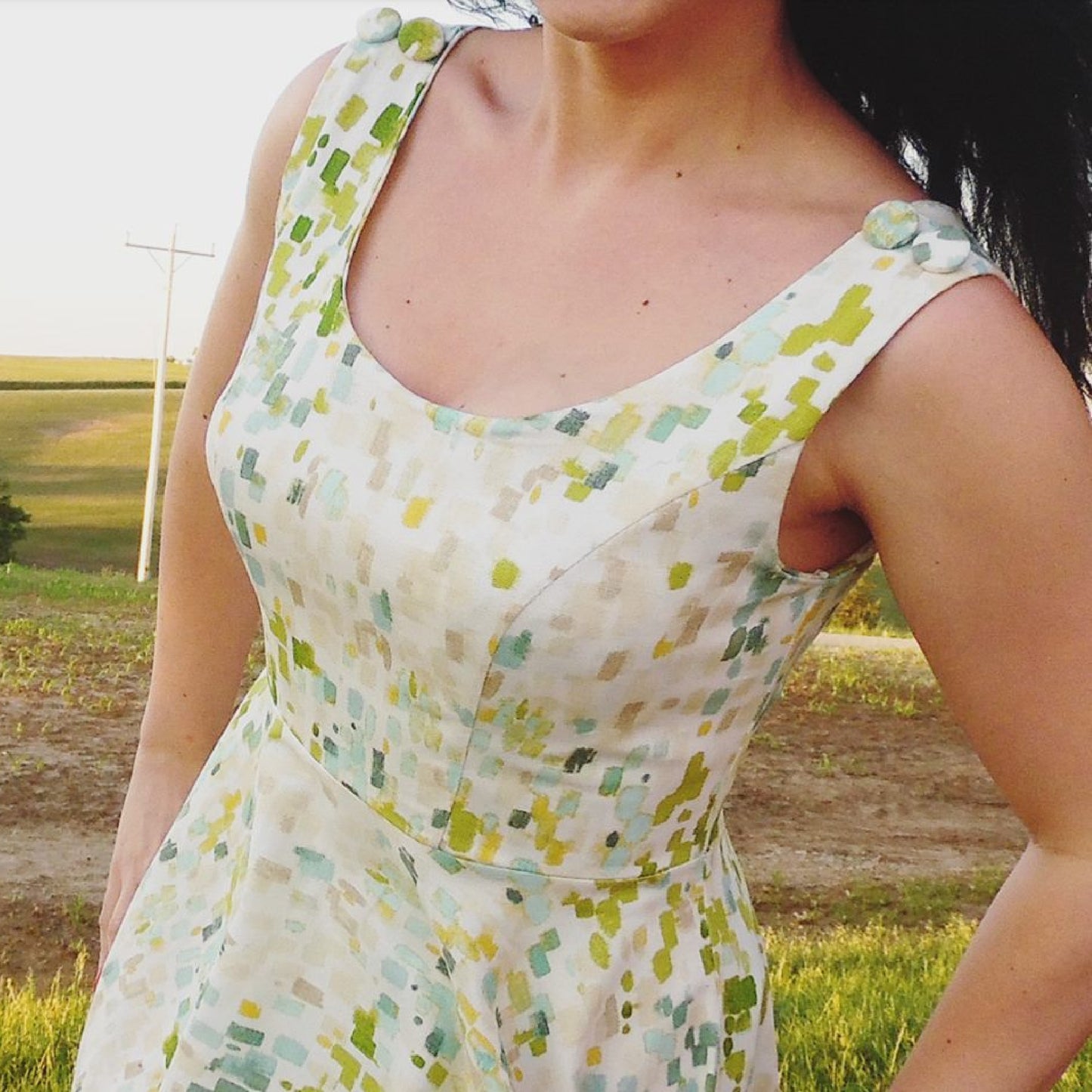
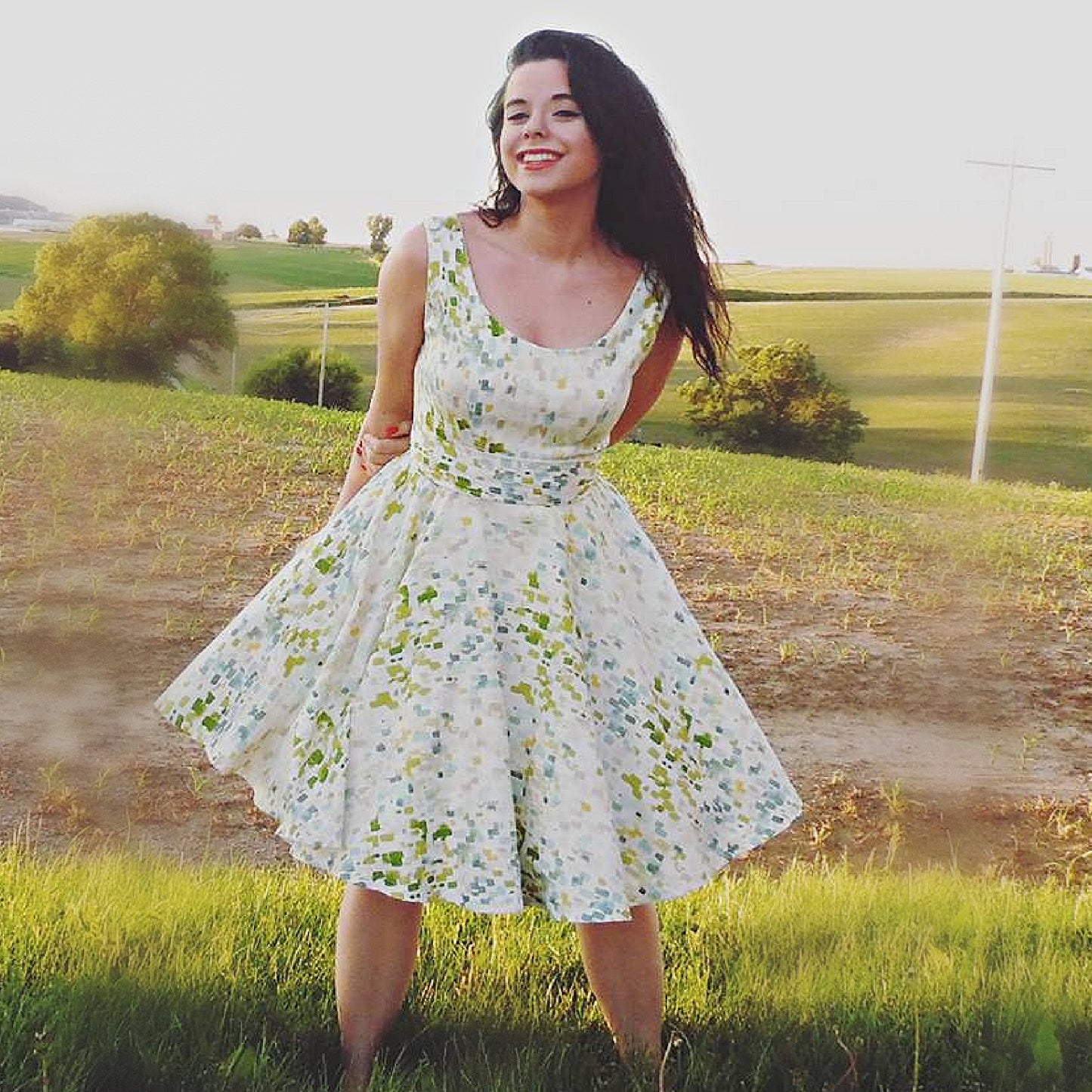
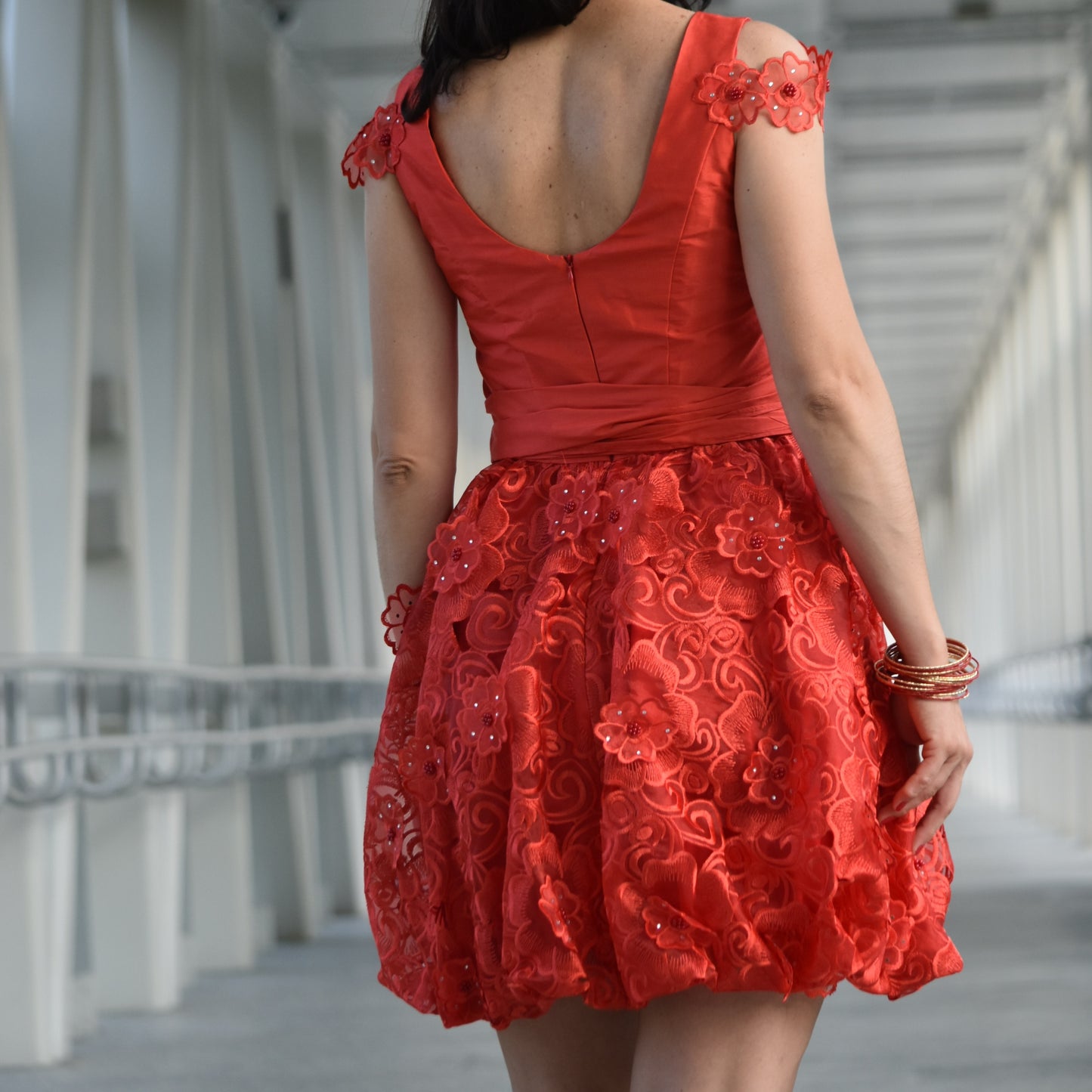
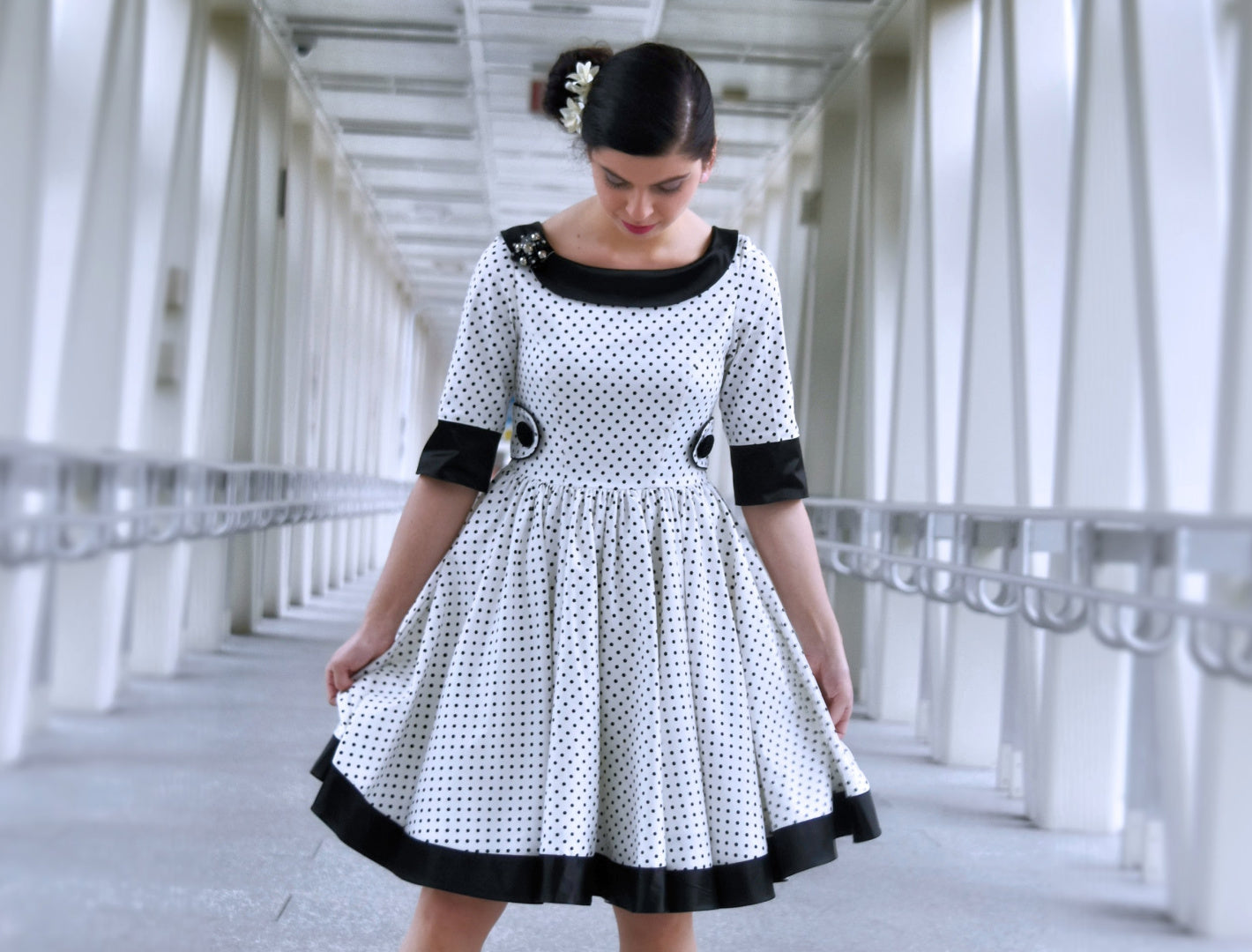
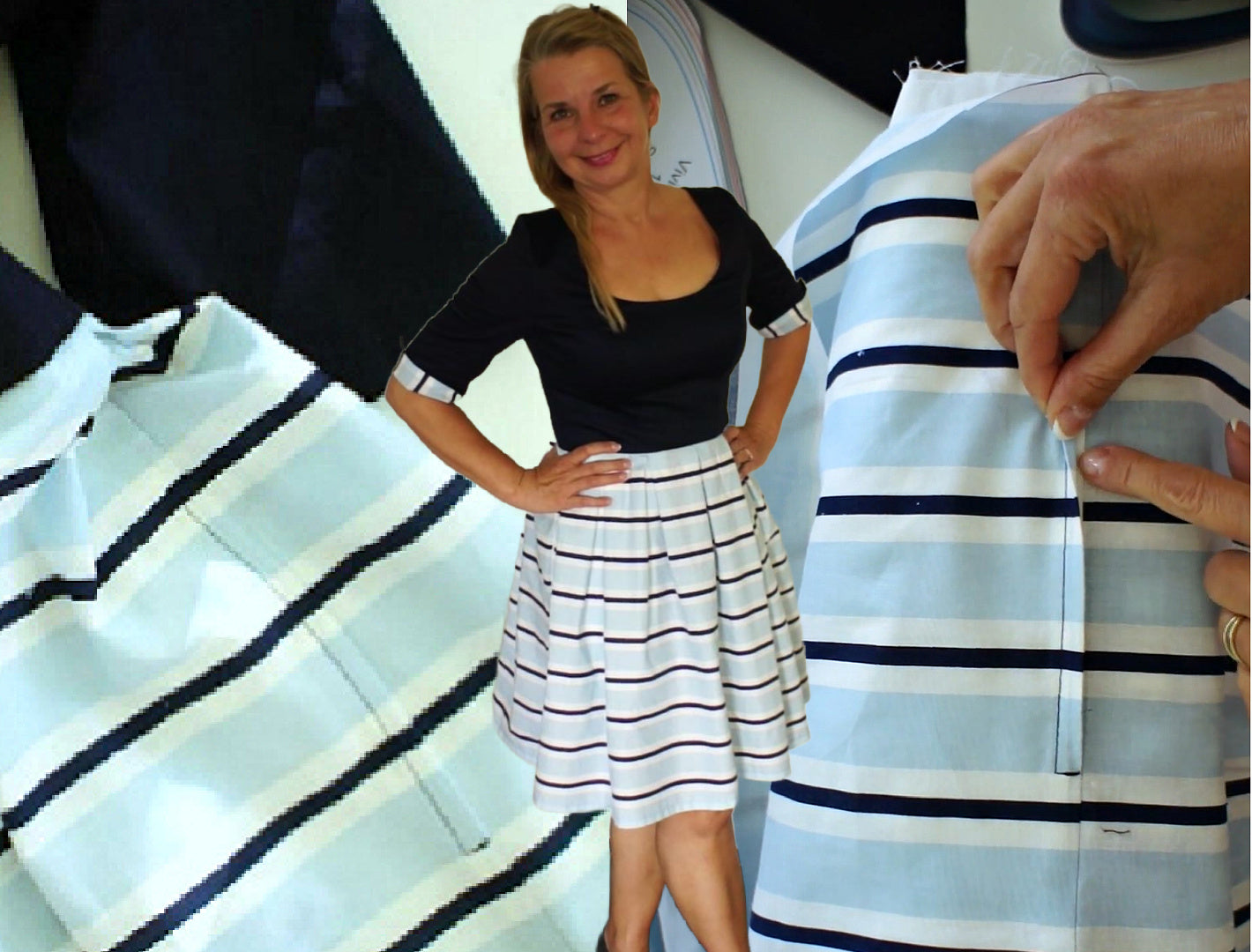
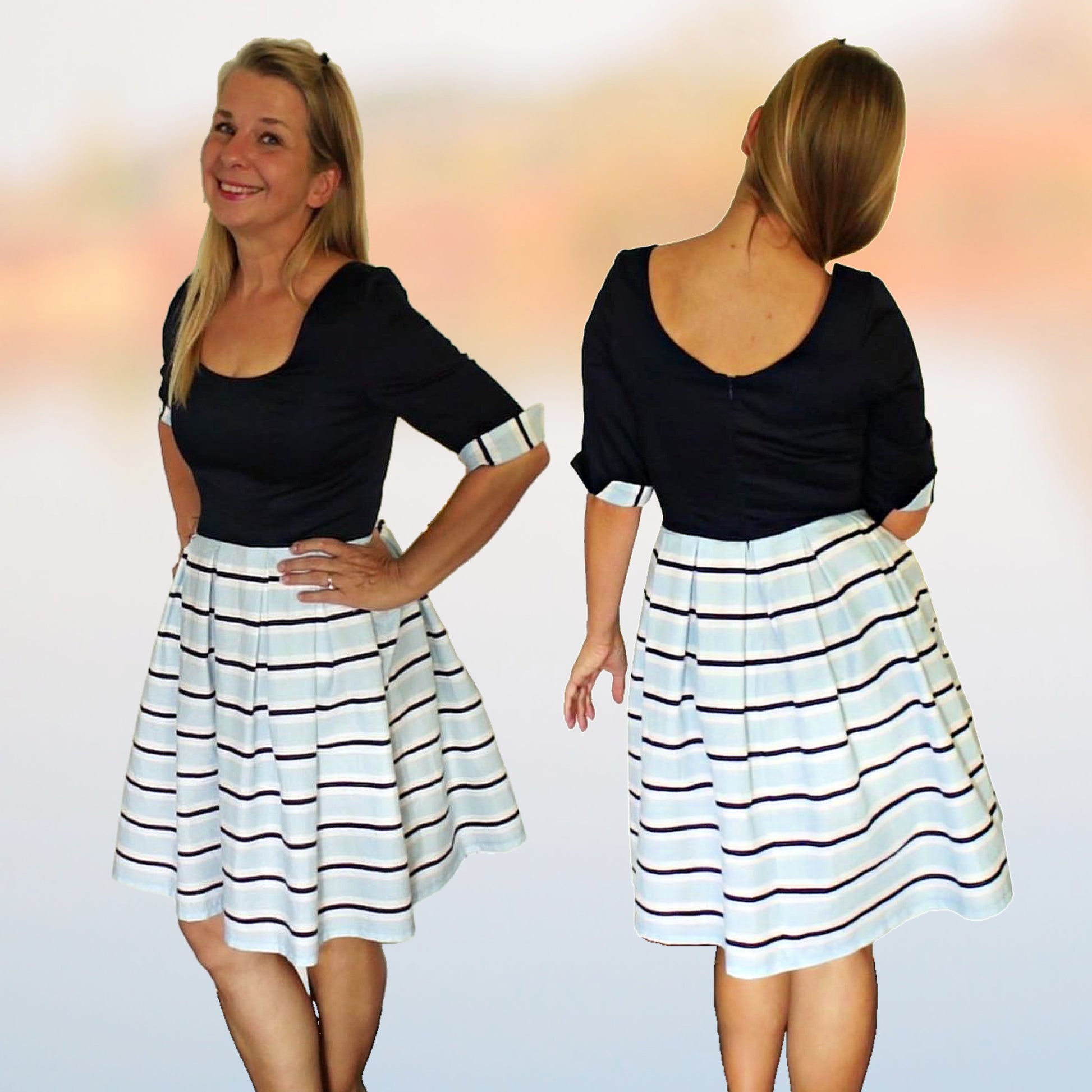
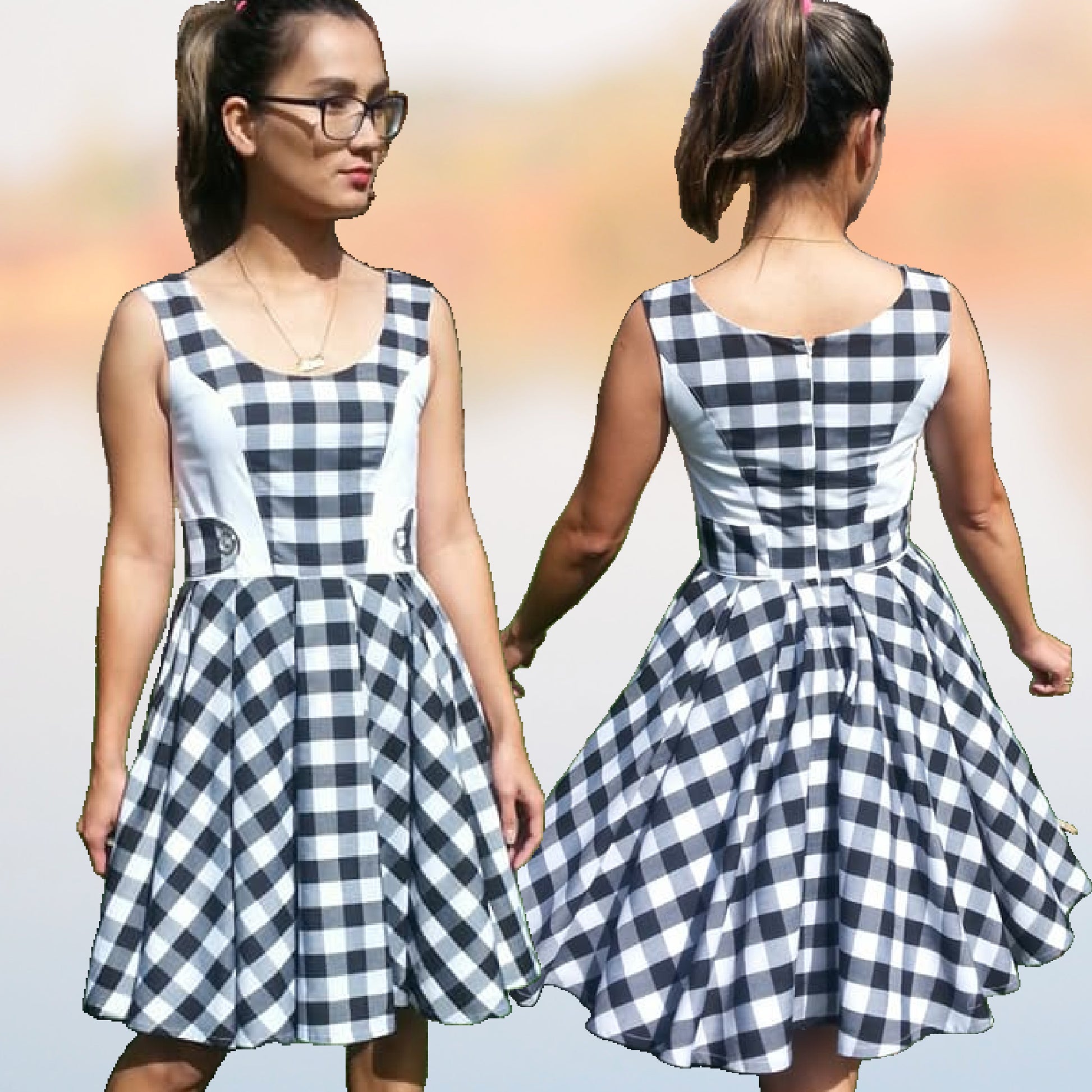
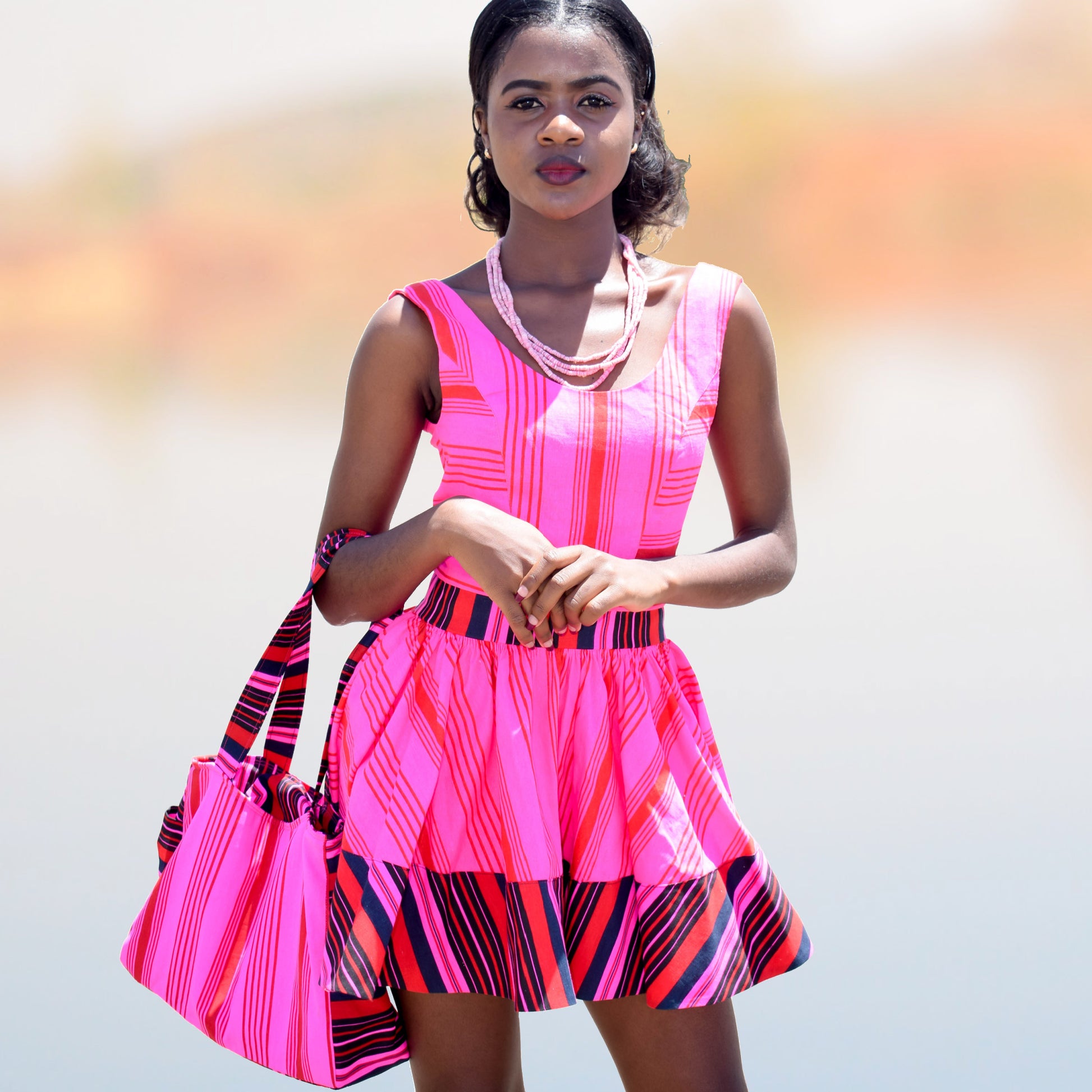
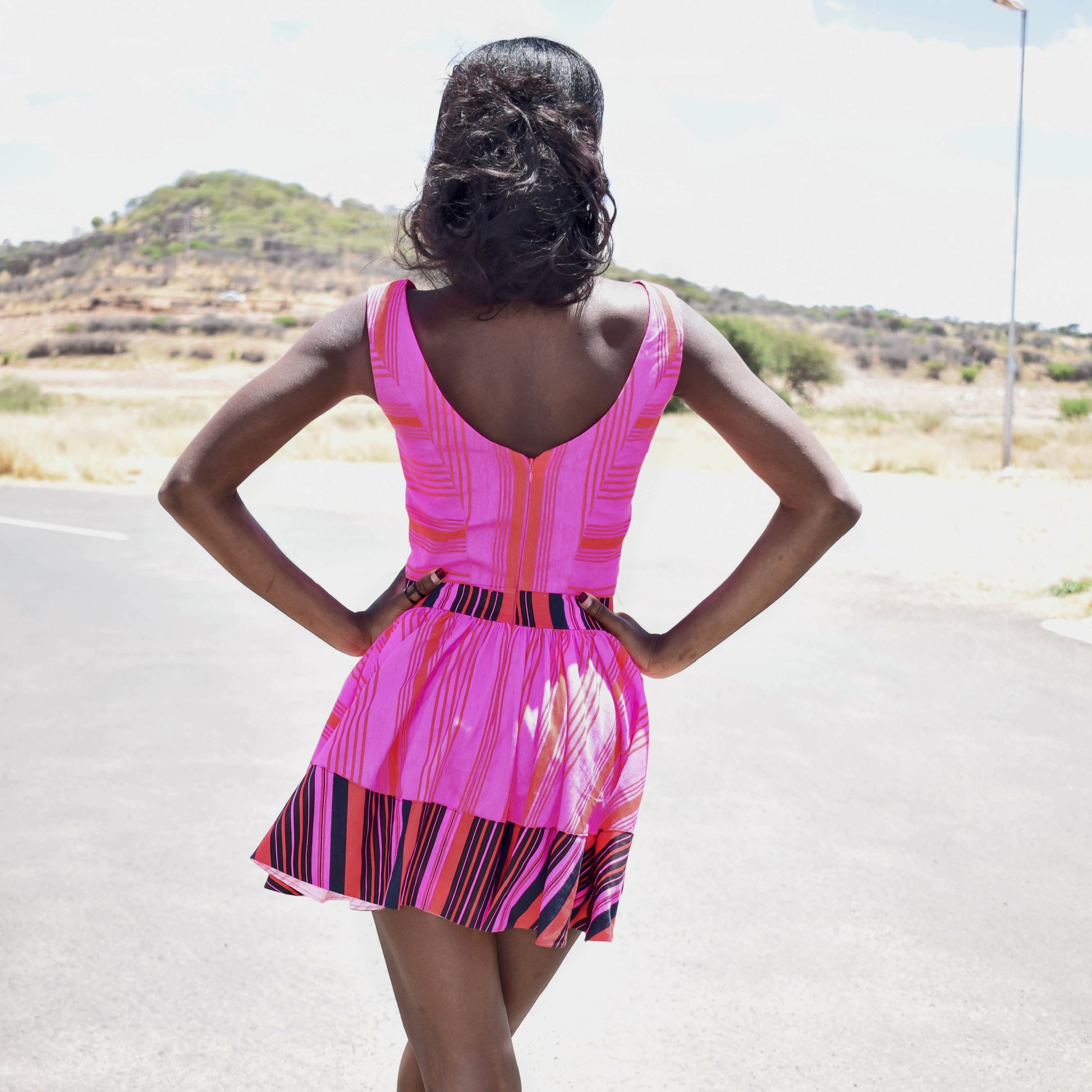
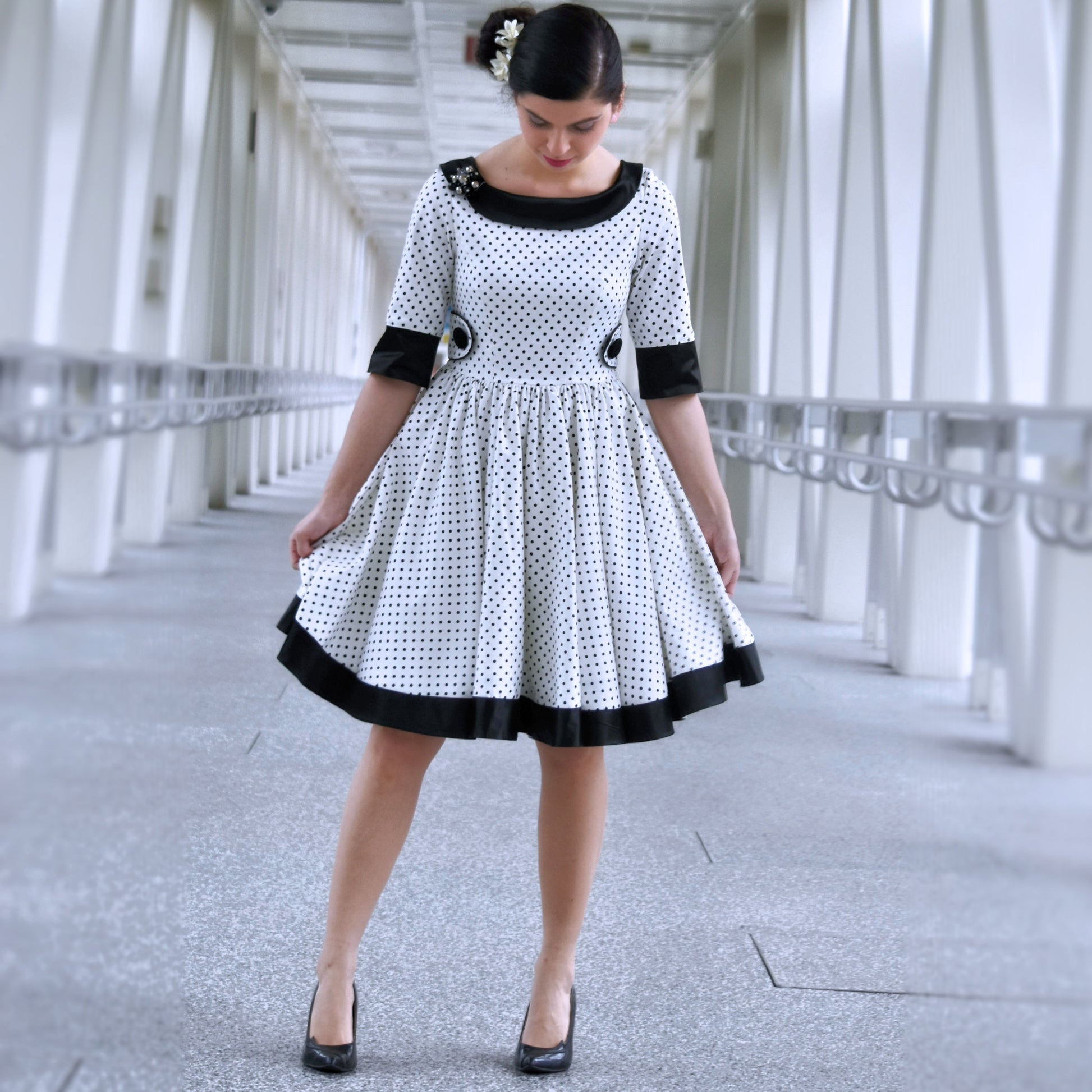
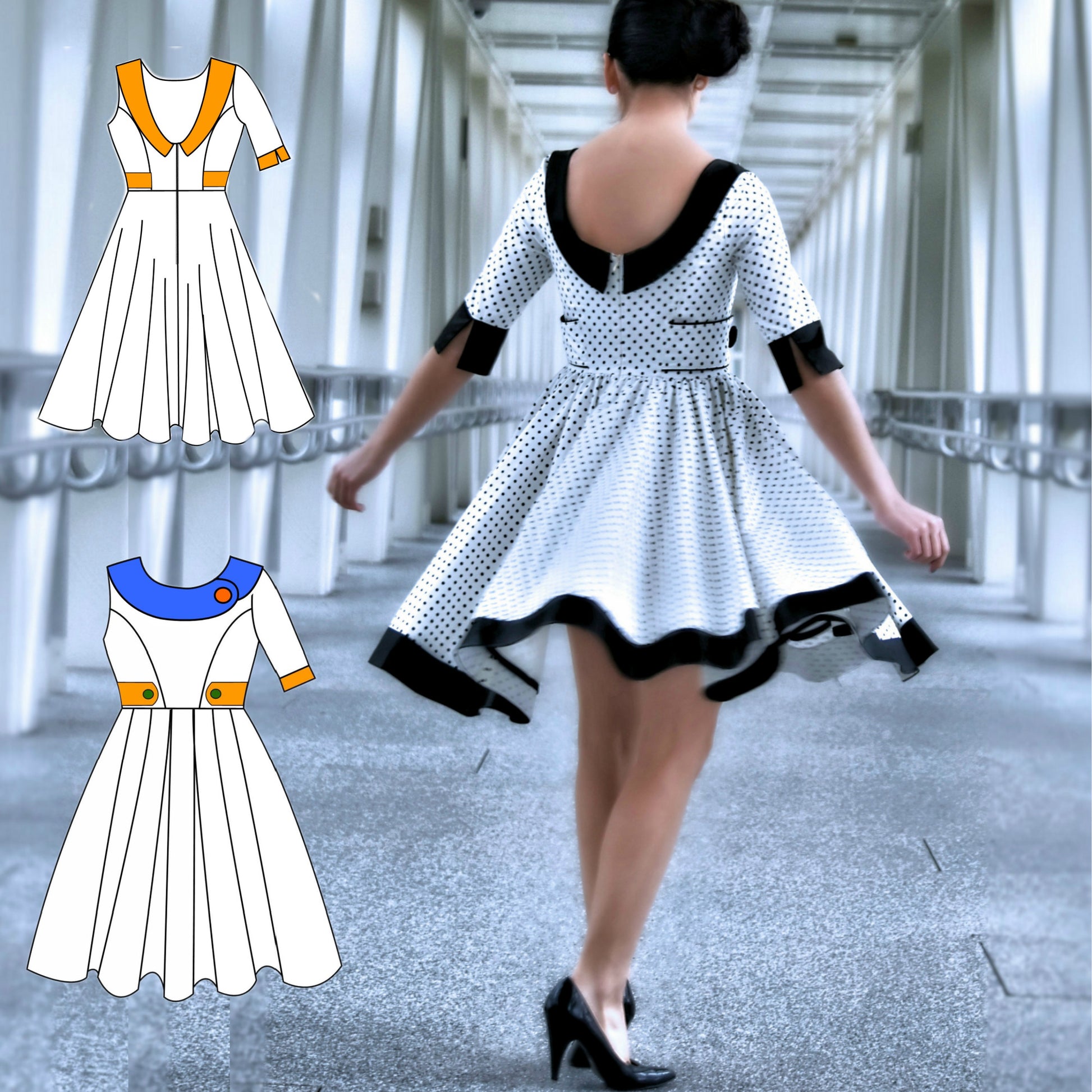
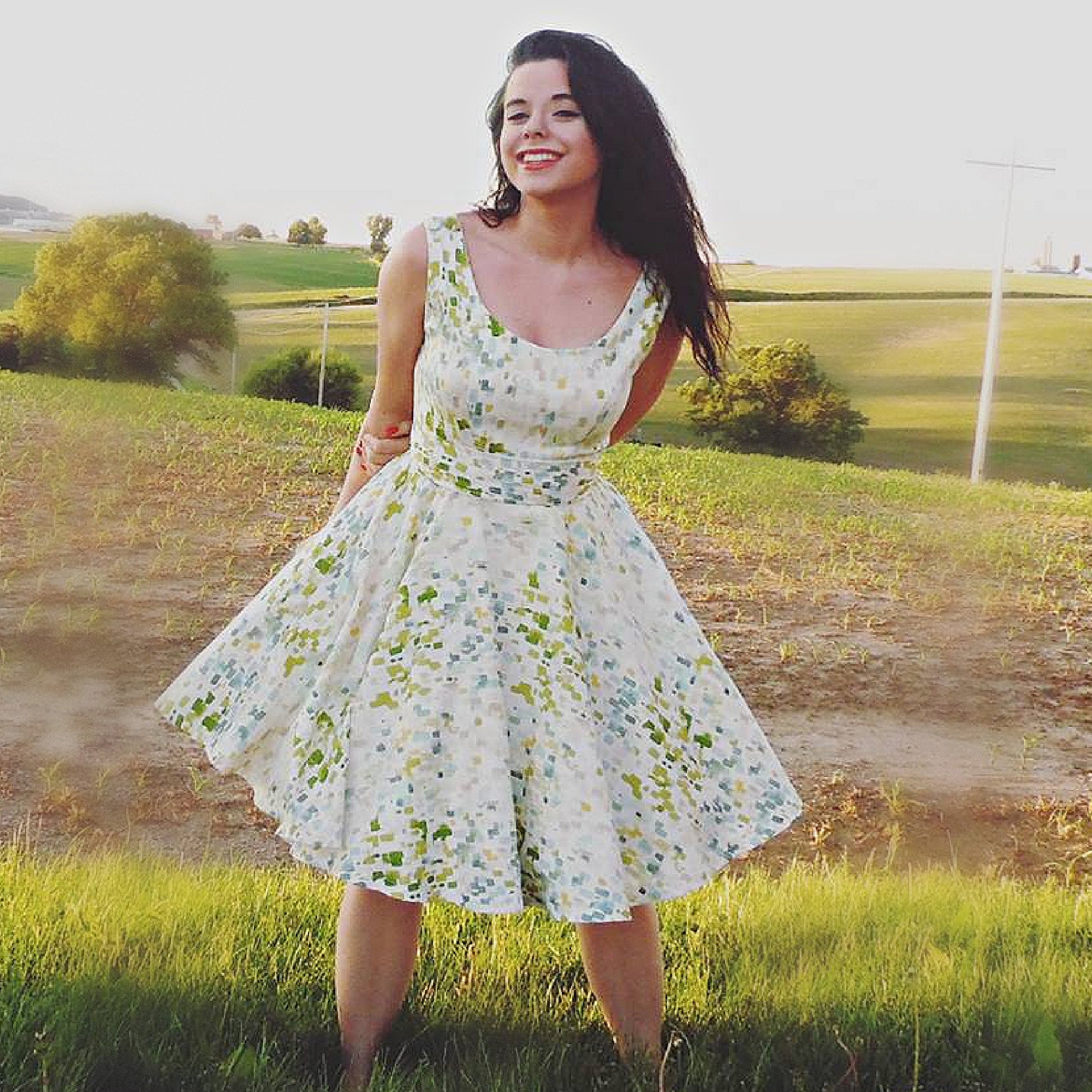
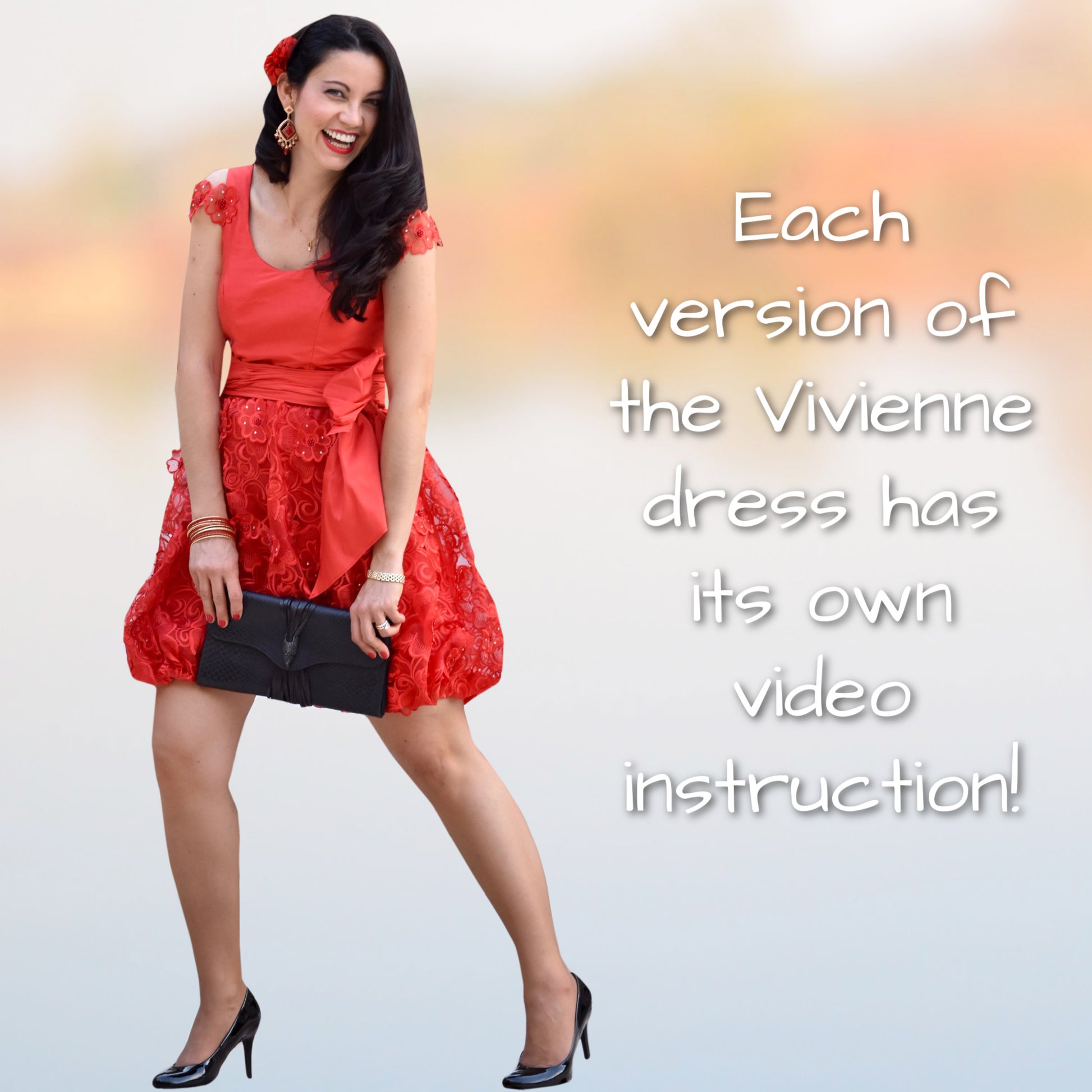
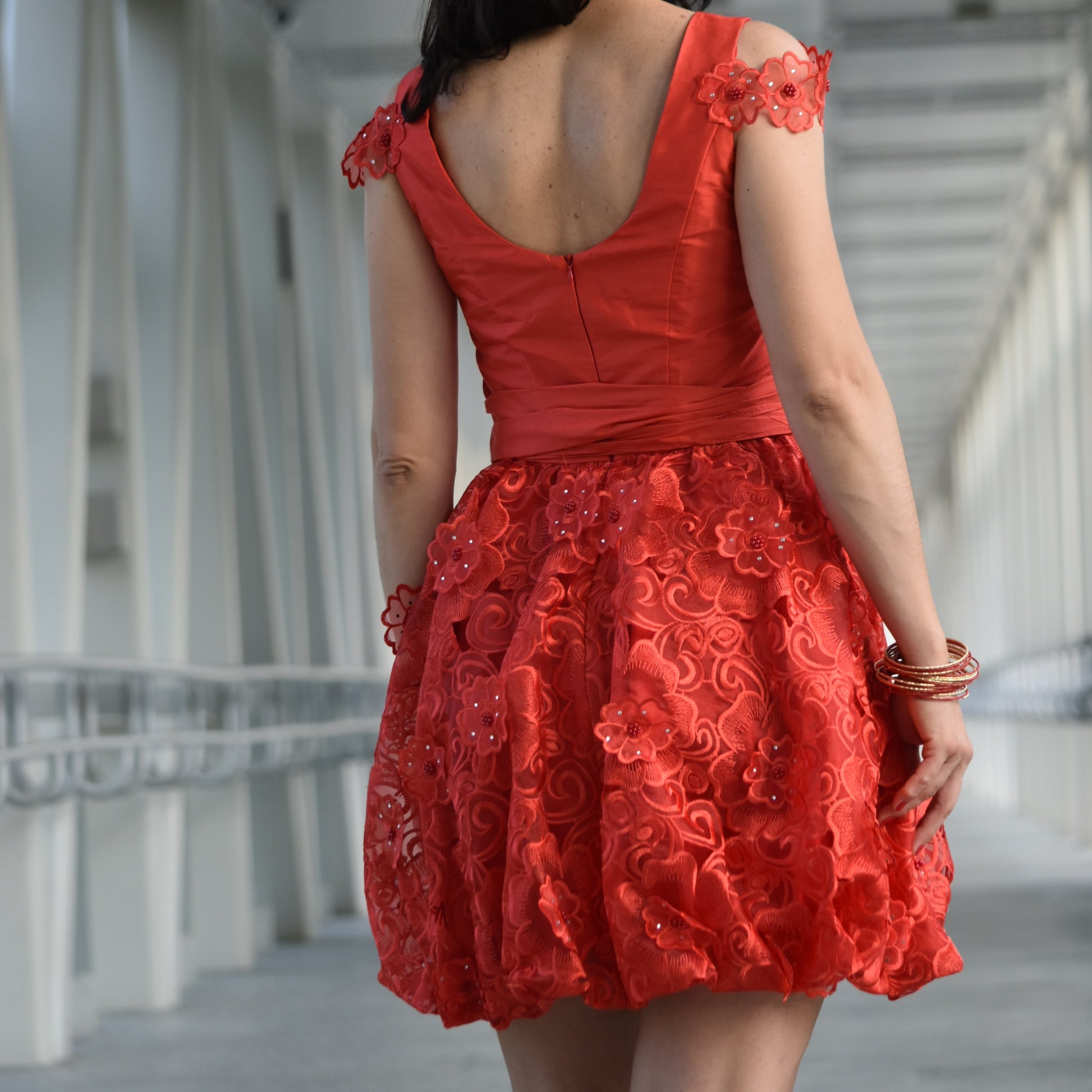
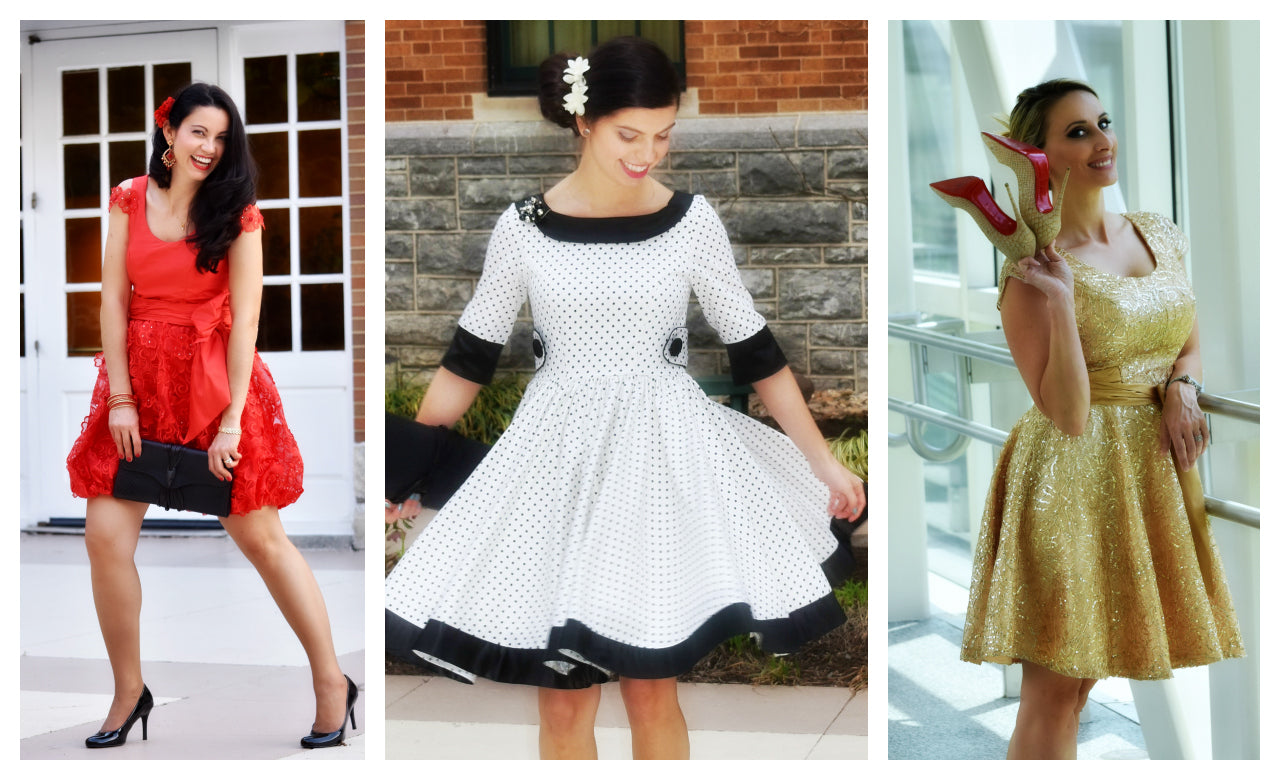
Vivienne is a romantic vintage‑inspired midi dress sewing pattern featuring a beautifully fitted bodice and a full, voluminous circle skirt. The neckline is truly special, offering both higher and lower front options plus a gracefully shaped V‑back that defines the silhouette.
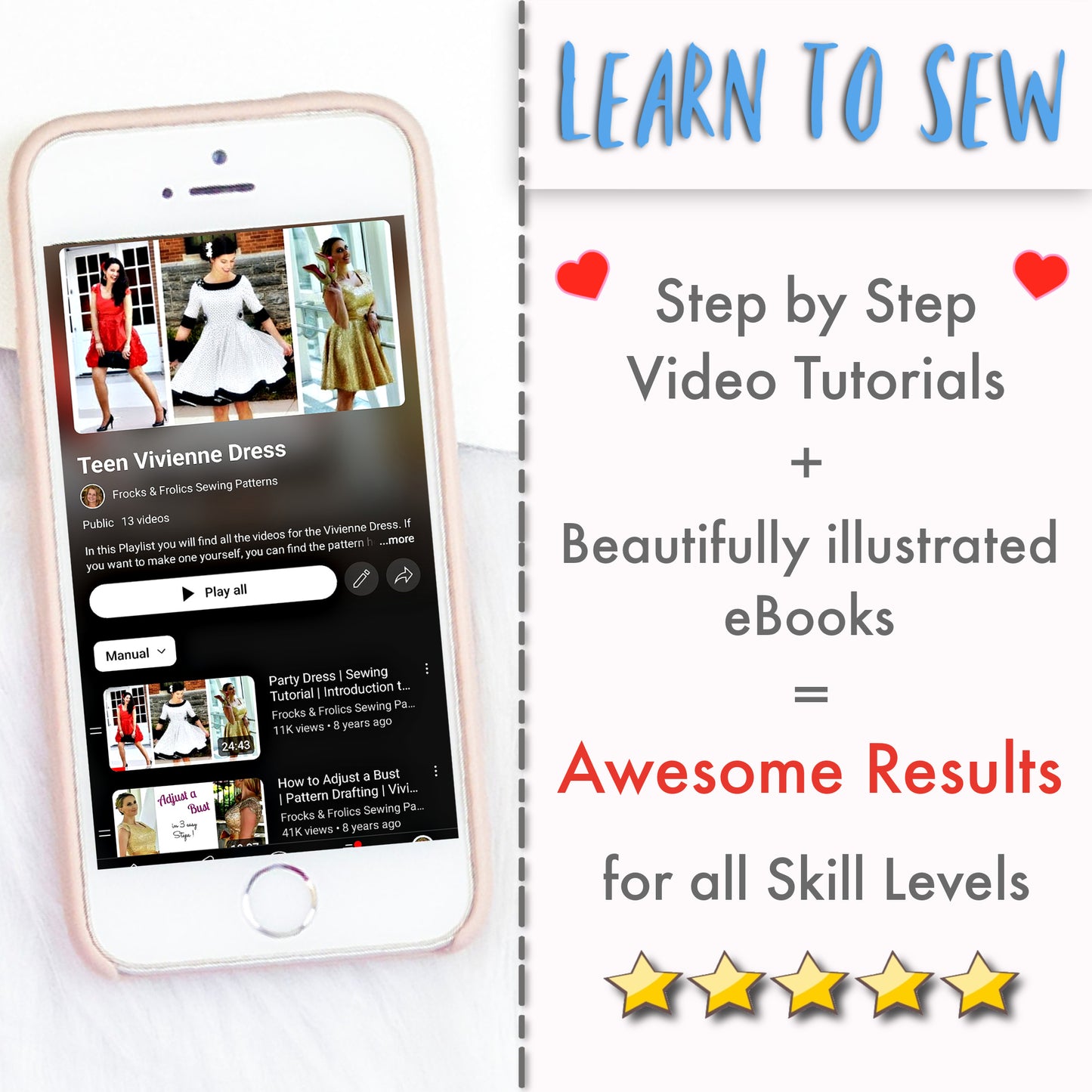
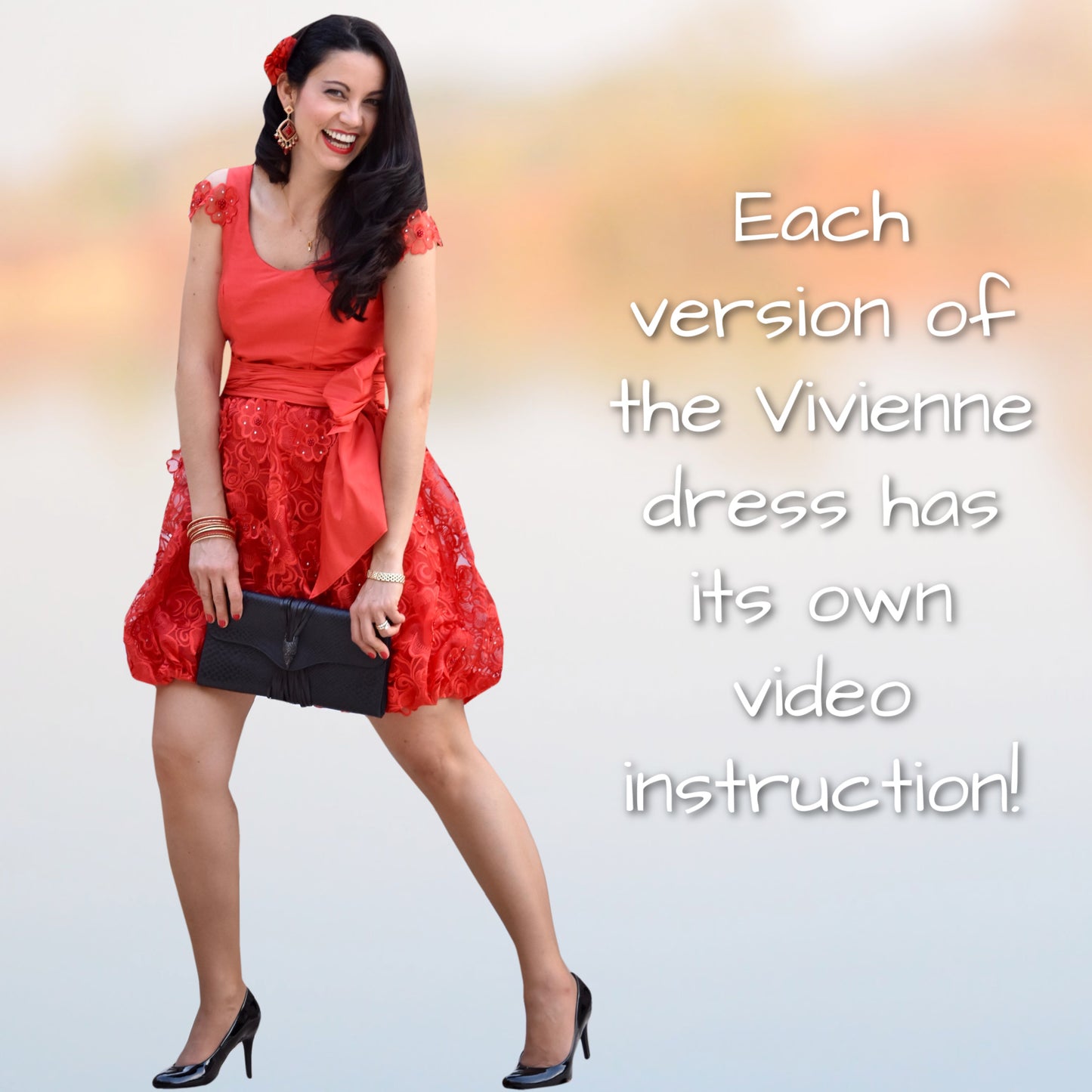
Marina has created individual video tutorials for each variation, so you can follow along at your own pace. The dress also comes in girl sizes, complete with even more inspiring videos to explore.
Pattern Download Includes
- Instant Download
- DIN A4 & US Letter Size
- Individual PDF files for every Size
- All Sizes included
- Detailed eBook
- Video Tutorials
Design Options
Design Options
TEEN:
- Low cut round-neck
- Low scooped back
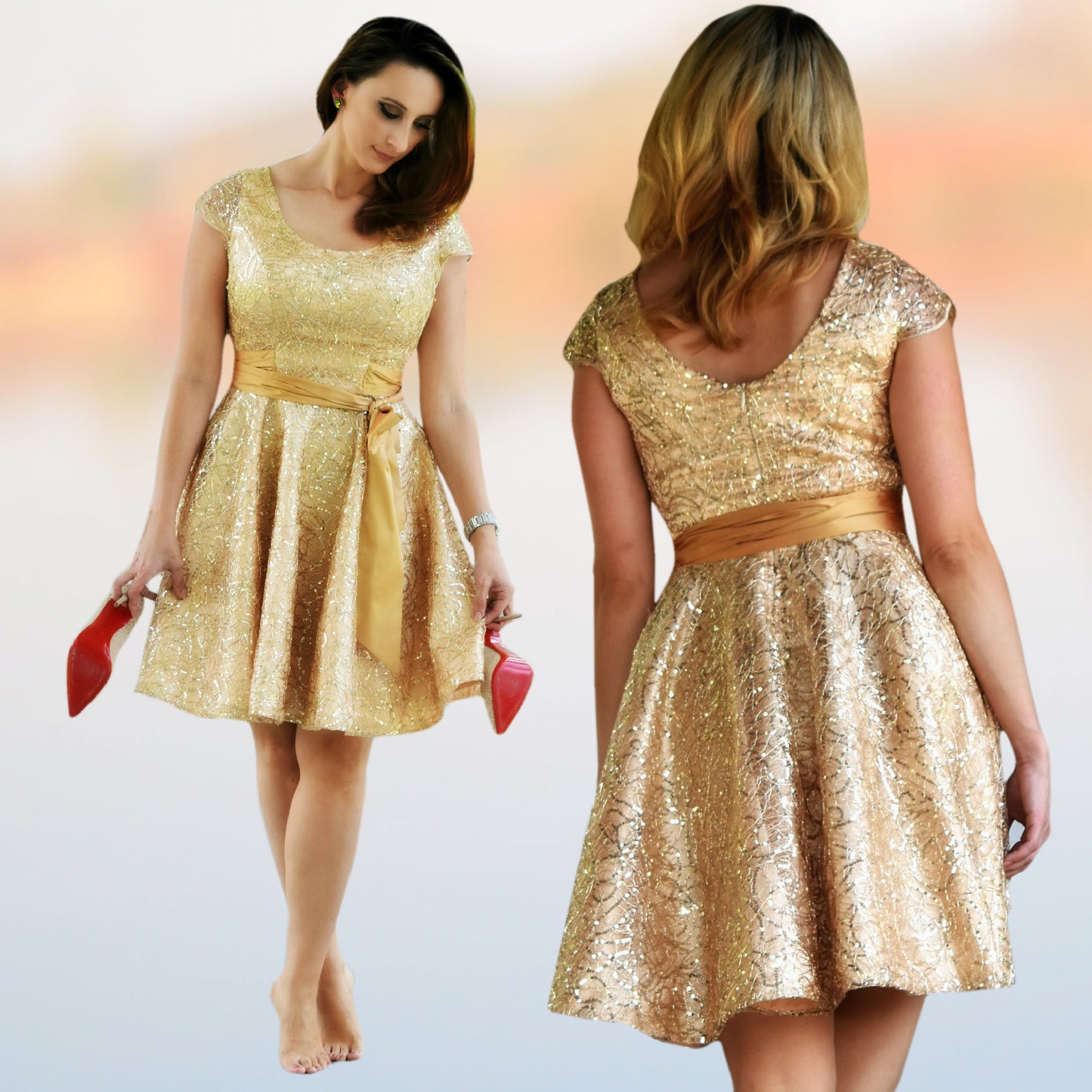
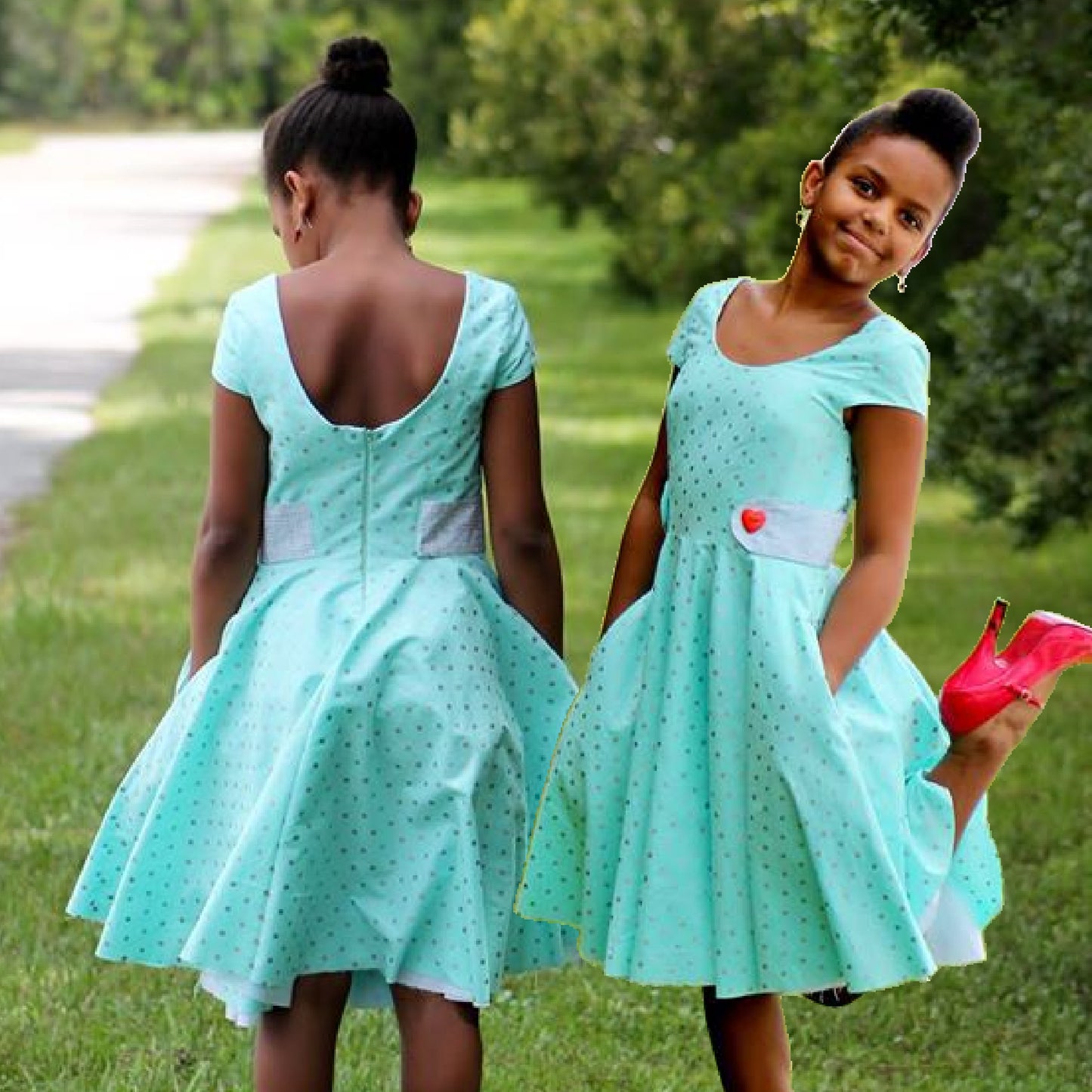
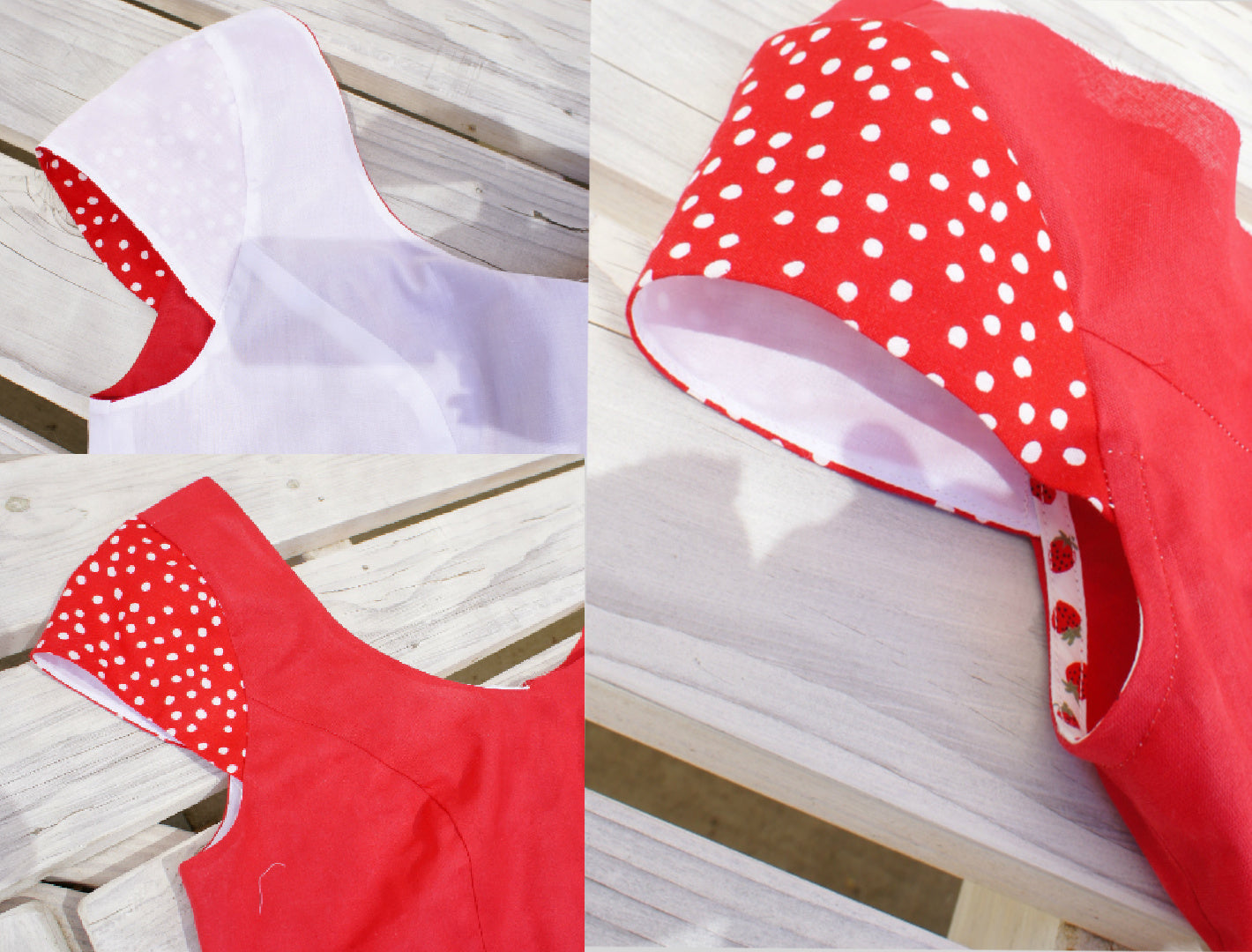
- Sleeves: 3/4 length long sleeves, cap sleeve, puff sleeves
- Skirt Options: Gathered straight skirt, pleated skirt, circle skirt, gathered circle skirt
- Length Options: Peplum blouse length, mini skirt, knee length and below the knee
- Fully lined
- Princess seams
- Peter Pan collar
- Asymmetrical 50's design collar
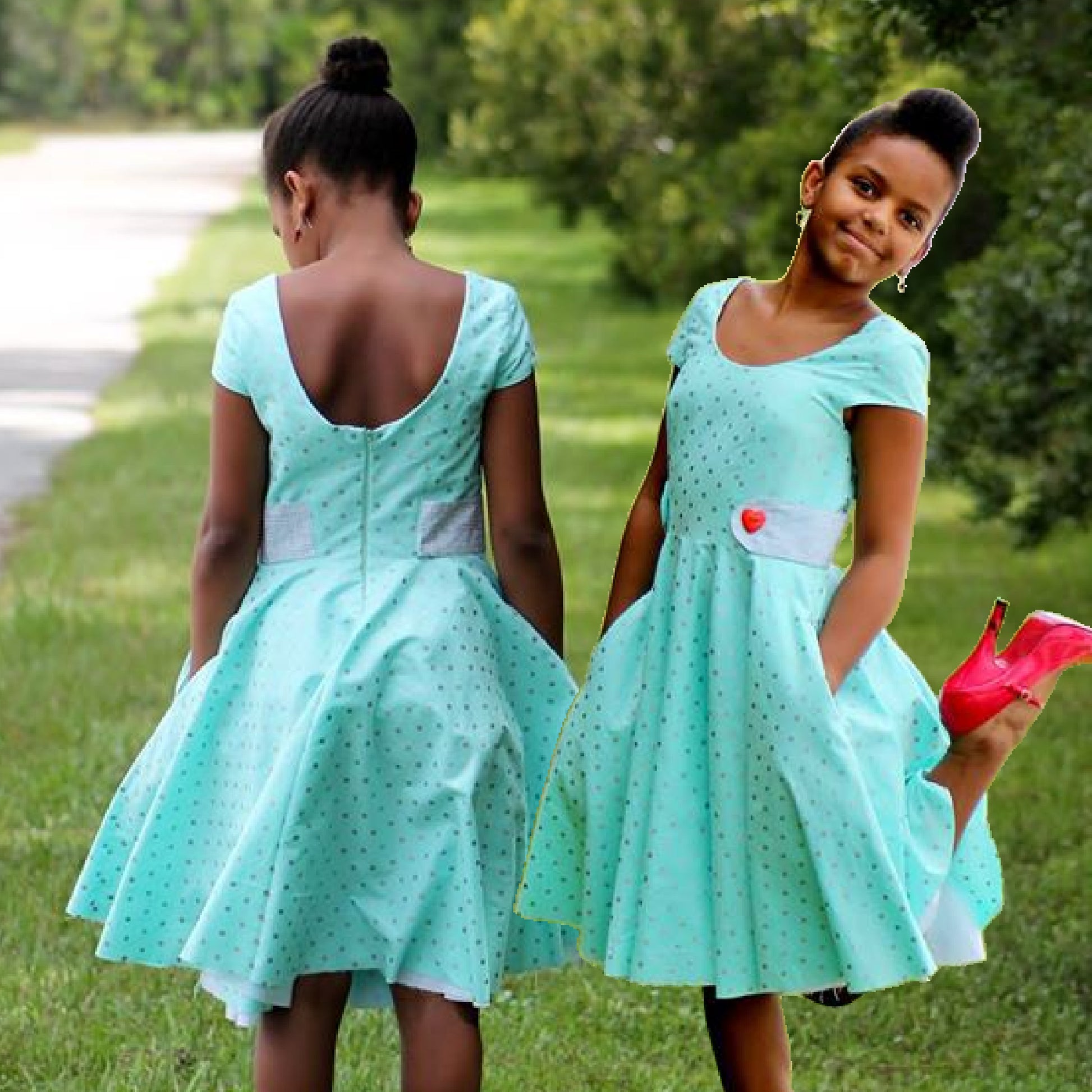
GIRLS:
- Sleeveless dress
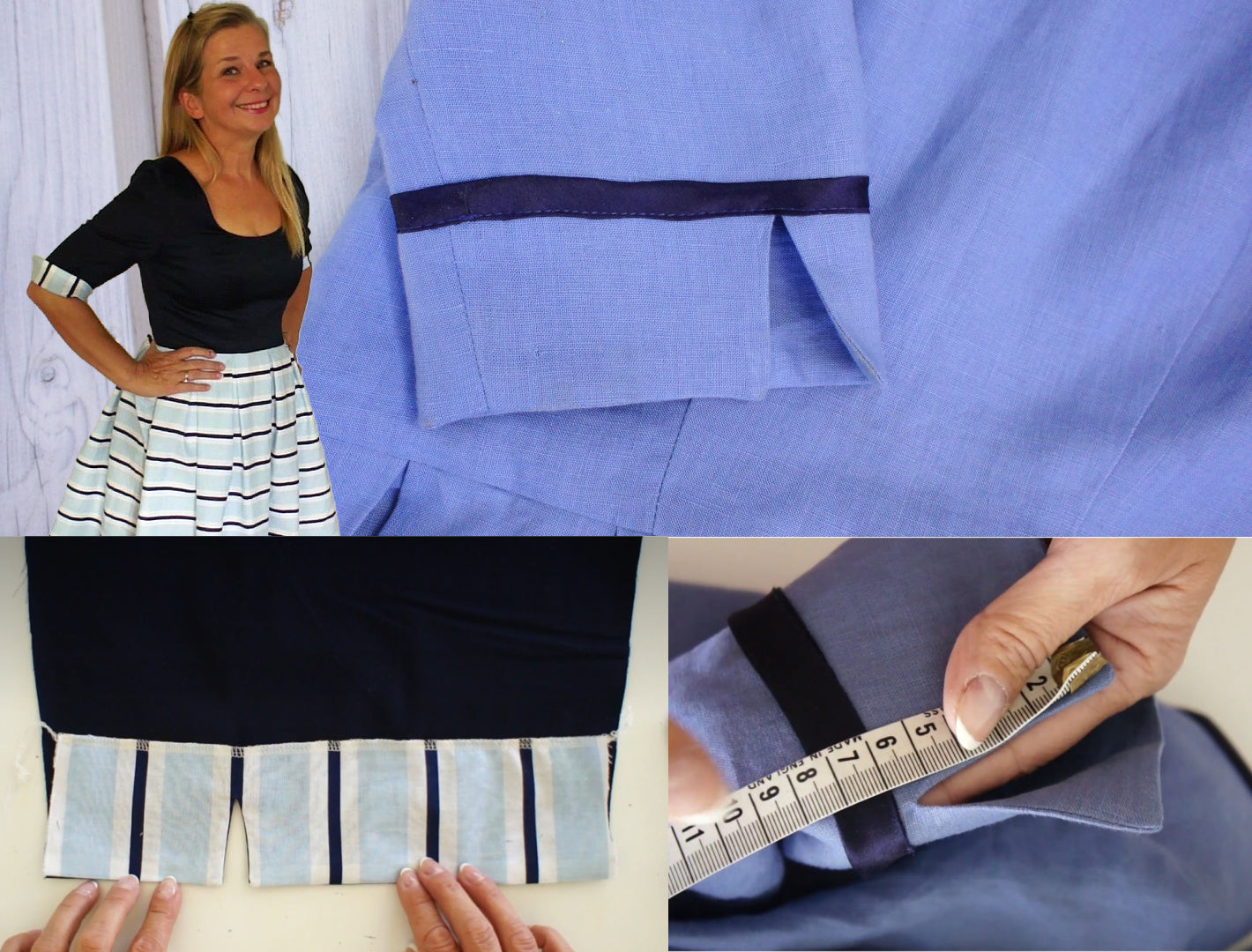
- ¾ length sleeves with cuffs
- Back scoop neckline
- Peter Pan collar
- Neckline without collar
- Princess seams
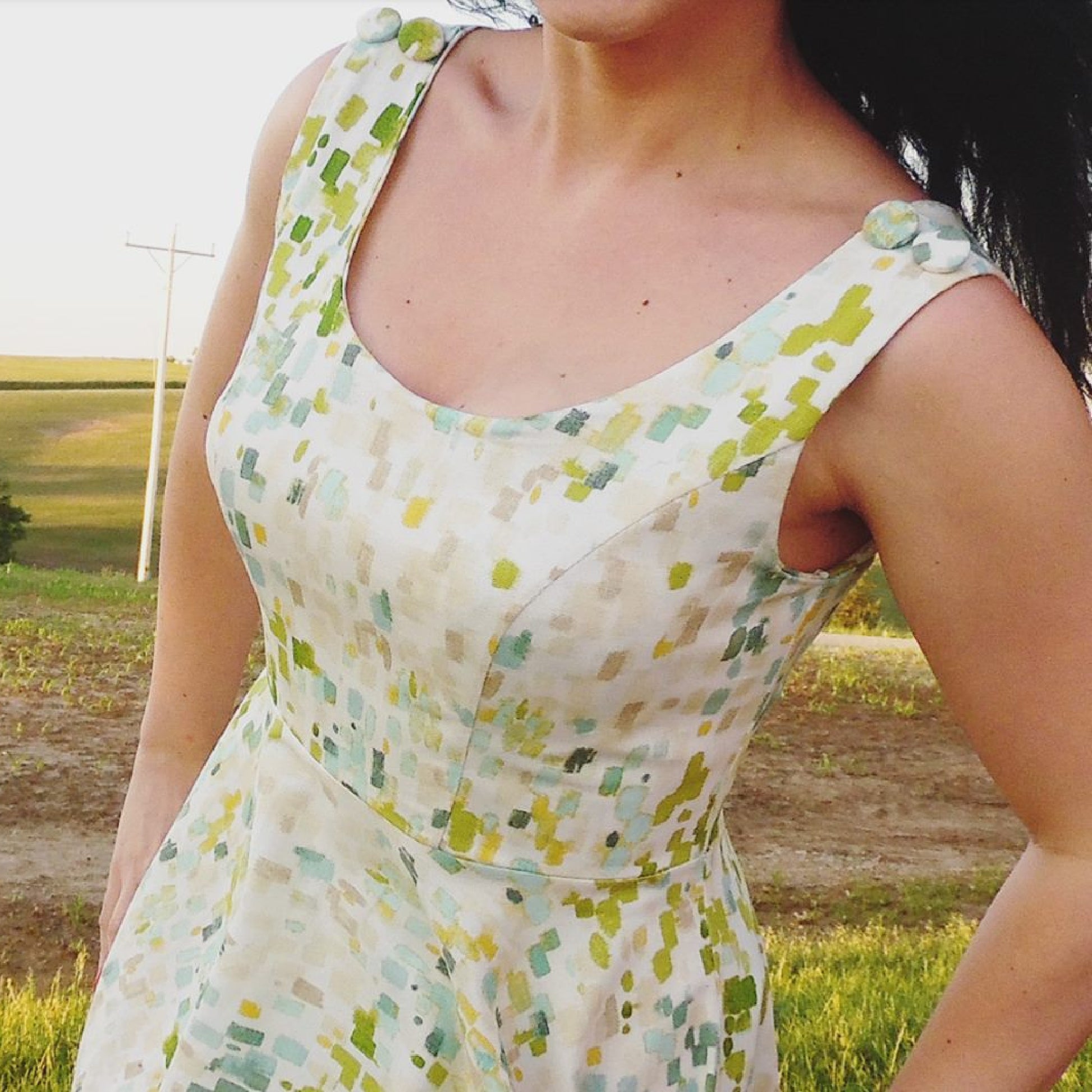
- Oversized tabs with large decorative buttons
- fully lined bodice
SKIRT OPTIONS
All skirts available in peplum or knee skirt length and can be made with or without a hem trim.
- Circle skirt pleated (box pleats)
- Circle skirt plain
- Circle skirt gathered
- Straight skirt pleated (box pleats)
- Straight skirt gathered
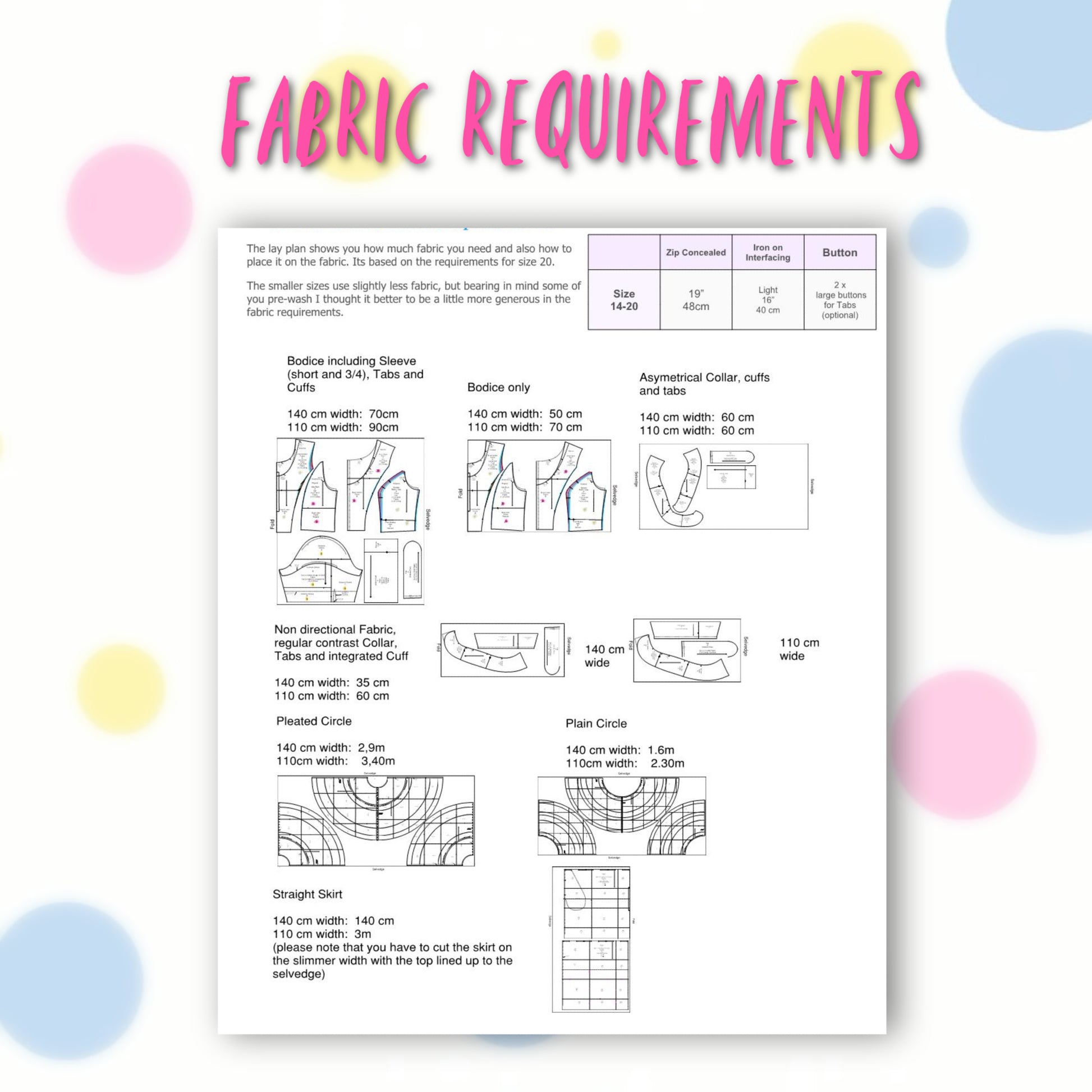
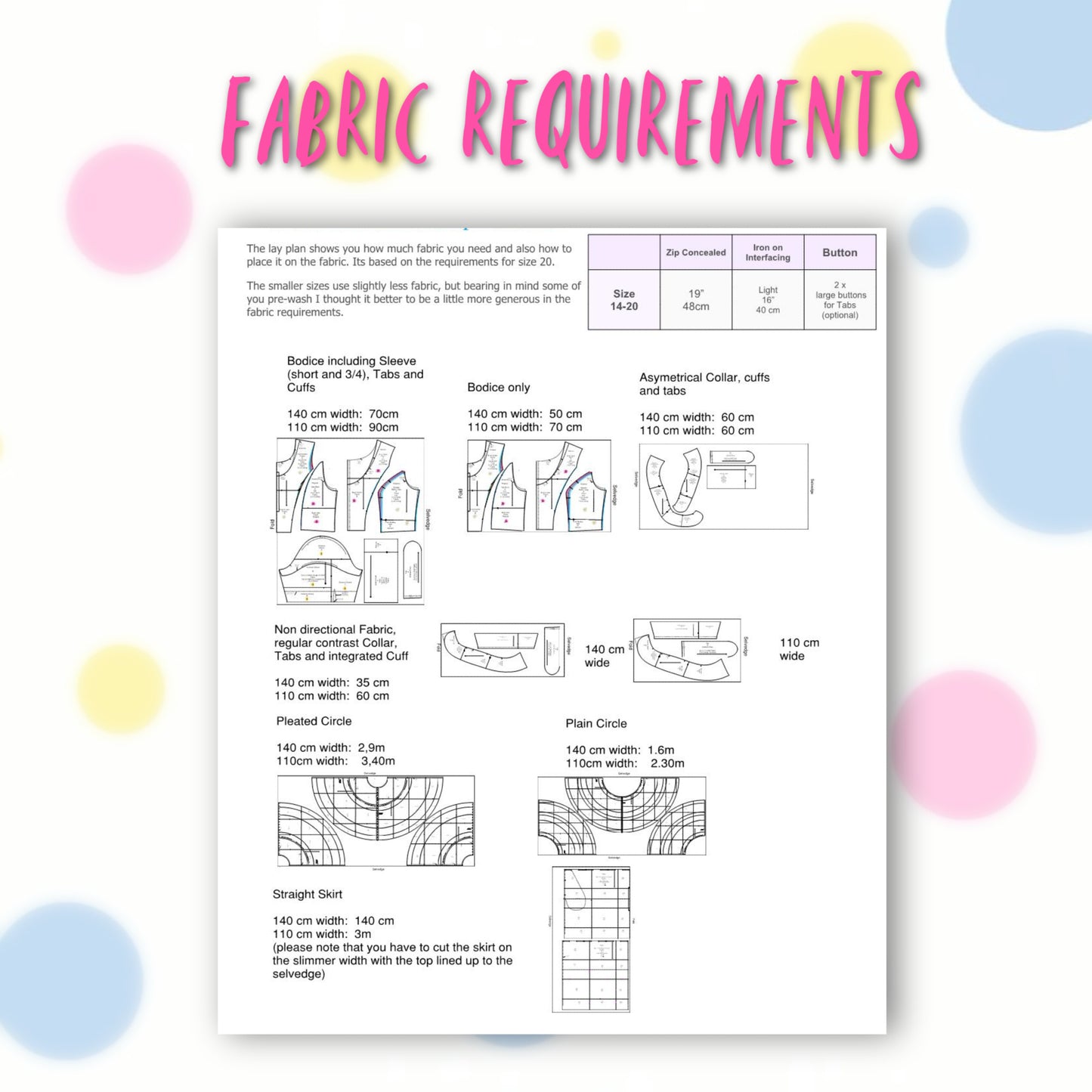
Fabric Requirements
Fabric Requirements
BEST FABRIC CHOICE
If you are making this dress for a special occasion, choose a gorgeous silk dupioni. For a summer dress, choose a woven fabric in cotton or linen. My favorite is a cotton sateen with Lycra. Its comfortable and easy to work with.
FABRIC REQUIREMENT TEEN
- Shell & lining: 2.50-4 yards (2,3-3,7 m)
NOTIONS
- Concealed zip: 19 inches (48cm)
- Iron on interfacing (H180): 16 inches (40cm)
- Large buttons for tabs: 2 x (optional)
- Matching thread: 2 reels
FABRIC REQUIREMENTS GIRLS:
• Circle skirt version: 1.3-2.6 yards (1.20-2.40m)
• Straight skirt version: 1.2-1.9 yards (1- 1.70m)
• Contrast fabric (collar & cuffs): 20 inches (0.50m)
NOTIONS
- Tab Buttons ø 1.2 inches (3cm): 2 x
- Concealed zipper: 12-16 inches (30-40cm)
- Interfacing (H180): 50cm (20 inches)
- Matching thread: 2 reels
Available Sizes
Available Sizes
TEEN:
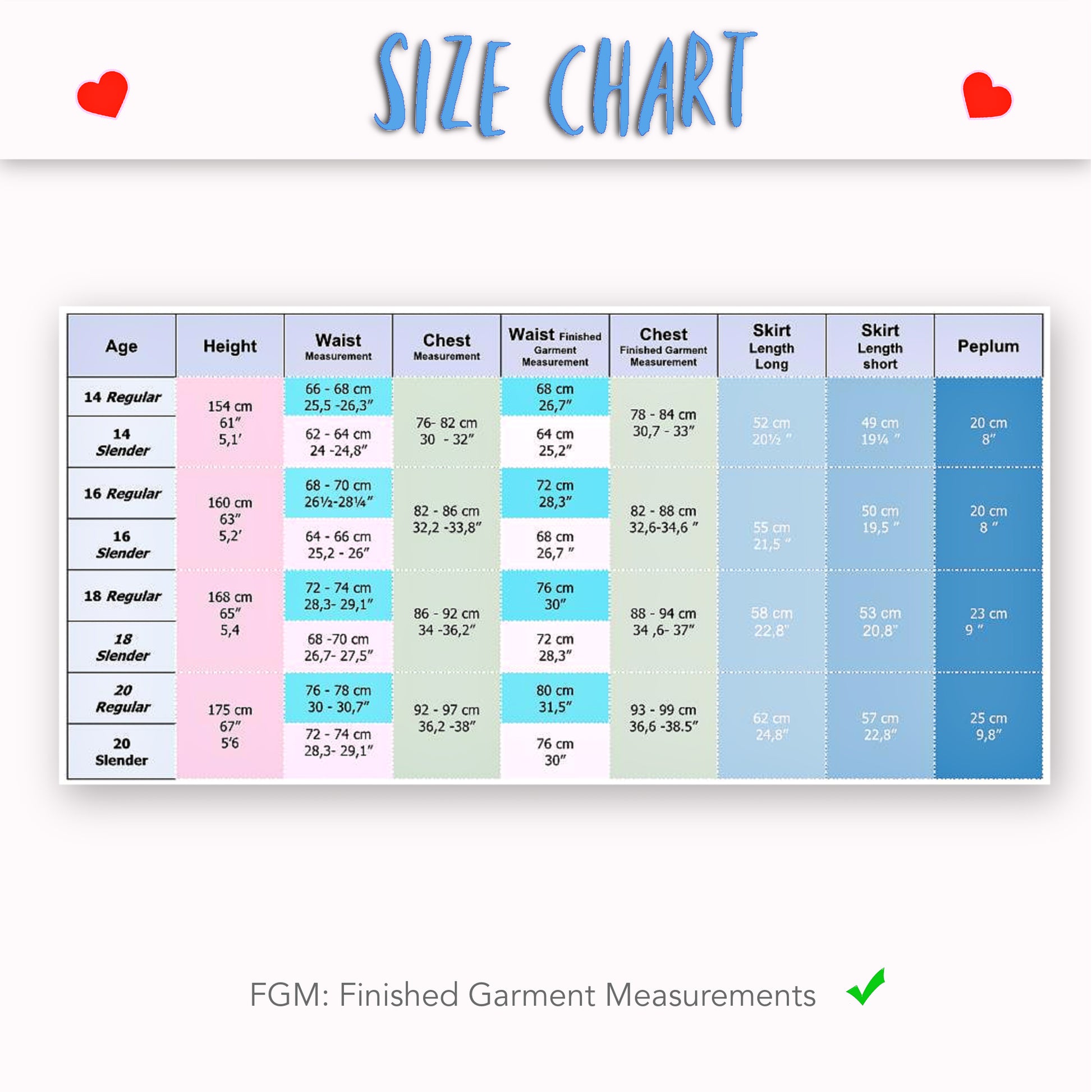
This pattern is for teens age 14 - 18 /XS,S,M,L
To make sure it's the perfect fit, this fitted bodice pattern lets you choose the bust size in every size. So effectively you choose the waist size and then have 8 bust size options.
GIRLS:
- Waist measurement: 25 - 29 inches,
- Bust measurement: 30 - 38 inches
Please Read
Please Read
- This is a digital pattern or PDF file, not a physical product. It will be delivered electronically via a download link delivered to the email used for the purchase.
- To ensure the pattern prints at its actual size, it's recommended that you use Adobe Acrobat Reader.
- The pattern creator, Frocks & Frolics, welcomes small-scale production using their patterns.
Customers are encouraged to tag Frocks & Frolics when sharing projects made using their patterns on social media.
@frocksandfrolics #frocksandfrolics
Share

STEP-BY-STEP VIDEO TUTORIALS
VIDEO TEXT
Introduction: Team Vivienne Teen-to-Adult Dress
Transcript for the video: Vivienne Teen Dress - Introduction to the Project
Hi everyone and welcome to the Teen Vivienne. I've been asked so many times if I could make this little kitty dress into a grown-up dress, and I thought, well, I'm not really doing grown-up clothing, but the way around it is to do a teen version that will fit most of you as well as myself.
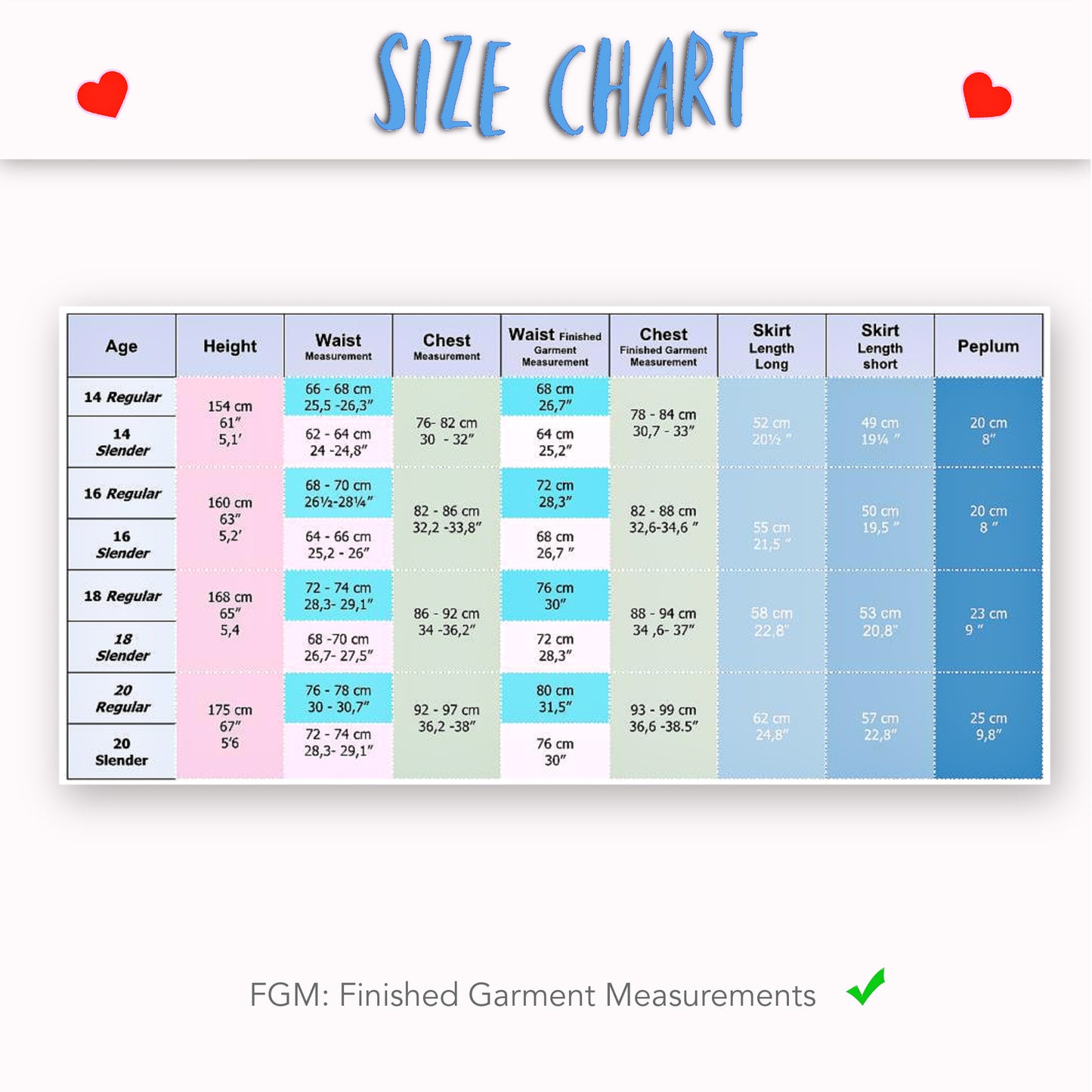
So the teen version has sizes 14 to 20. It starts with height selection, similar to children's patterns, which also works well for smaller adults because most garments are too long in the waist for petite proportions.
You can choose your size by height and bust from the sizing chart, and then adjust waist sizing as well.
Every size comes as a separate file. Normally with patterns you get multi-size layers, but here each size is its own file so different bust sizes can be included properly. This allows a “cut out and go” workflow with more precise fit outcomes.
Pattern Philosophy and Fit Approach
All dresses shown in the examples were not pre-fitted. Measurements were taken, the dress was made, and then tested directly on the wearer. This is why the bust variation system works well.
This project involved strong collaboration, including photography by Ella Burbeck Brown and models Naida and Ivana.
Fabric Recommendation and Stretch Considerations
This dress is best suited for cotton stretch satin with about 3–5% elastane or lycra blended into cotton. It produces a comfortable, structured but flexible fit.
Early versions were made in stretch satin after initial uncertainty, but the stretch made it work effectively.
Choosing Your Size (Critical Fit Logic)
To determine size, take a woven dress you already own and measure it flat across the bust and waist.
You will often find that your actual garment measurement is close to or slightly smaller than your body measurement.
For workwear, some ease is acceptable. For a fitted party dress, minimal or no ease is preferred for a more sculpted silhouette.
For non-stretch fabrics (e.g., silk), extra allowance must be added.
Printing and Assembling the Pattern
The pattern must be printed at 100% scale or actual size.
A test square (5 cm or 1 inch) must be verified before assembly.
Cut around all pieces, including dashed attachment lines.
Each size is separate, so accuracy depends on keeping sheets organized and in order.
Sleeves: Structure and Variants
Integrated (Standard) Cuff Sleeve
Pieces A and B join together and form a simple cuff construction.
Integral Cuff (Slit Sleeve)
A slit is constructed in the sleeve, allowing it to be turned and finished. This creates a more refined, tailored look.
The sleeve must be reinforced at the slit area before finishing.
Sleeve Shape and Fit Engineering
The sleeve has a defined front and back shape.
- Front is more cut away
- Back carries extra ease for shoulder mobility
Sleeve head easing is required for proper fit.
The sleeve cap must align precisely with the shoulder seam.
A gathered short sleeve option reduces bulk and controls volume around the upper arm (target finish width ~4 inches / 12 cm).
Elastic can be added depending on styling preference.
Cap Sleeve Option
The cap sleeve is a simplified variant.
- More fitted along the side
- No elastic or optional elastic finishing
- Designed for adaptability depending on arm size
Fit should be tested before final construction, especially for different arm circumferences.
Collar System: Two Design Paths
There are two collar types:
- Standard collar
- Asymmetrical collar
Standard Collar
- Multiple shape options (rounded or straight edge)
- Notch markings for alignment
- Designed for a clean neckline finish
Asymmetrical Collar
- Left and right pieces assembled separately
- Designed to overlap and create structural depth
- Prevents collar from flipping by controlling roll direction through shape geometry
Front Panel and Neckline Options
Front panels include multiple neckline variations:
- High neckline (structured)
- Wide scoop (more open, fashion-forward)
Seam allowance alignment is critical to ensure collar sits flush on the edge.
Notches must be matched precisely to shoulder and collar reference points.
Side Panels and Bust Sizing System
Two side panel versions exist:
- Regular
- Slender (approximately 1 cm reduction per panel)
The difference is subtle but critical for fit accuracy.
Bust lines are built into the pattern:
- Each line corresponds to a measurement range
- Adjustments are done by selecting the correct bust line rather than reshaping manually
For example:
- Bust 94 cm → upper line selection
- Bust 88 cm → lower line selection
This eliminates traditional bust adjustment complexity.
Back Panel Structure and Fit Logic
Back panels also include:
- Slender and regular variants
- Approximately 4 cm total grading difference
Sleeve attachment points are marked for alignment.
Two neckline options are included:
- Solid line = deeper scoop
- Dotted line = higher neckline / sleeveless adaptation
Instead of cutting permanently, edges can be folded depending on design choice.
Center Back and Closure Planning
Center back includes:
- Seam allowance for zipper insertion
- Multiple neckline shaping guides
- Cut-on-fold and double-cut options depending on design variation
Skirt Systems and Silhouette Options
The skirt system is modular:
Circle Skirt Options
- Full circle with pleats (high volume)
- Flat circle (reduced volume, no pleats)
Additional Variants
- Peplum length
- Short skirt option
- Bubble hem compatibility
Pleat system includes:
- Slender version (dashed line)
- Regular version (solid line)
Straight Skirt and Pocket Placement
Straight skirt includes:
- Front and back differentiation (dot coding system)
- Pocket placement markings
- Peplum variation option
Final Concept Summary
This system takes the Vivienne design from a child-style structure into a fully adaptable teen-to-adult garment system.
Multiple layers of control exist:
- Height
- Bust line
- Waist alignment
- Sleeve style
- Collar geometry
- Skirt volume
The core idea is not complexity—it is controlled modular fitting.
The final result depends on which combination you choose.
The question is no longer whether it fits.
It is which version of Vivienne you are making.
Bust Adjustment Tutorial (Vivienne Pattern)
Transcript for the video: Vivienne Teen Dress: Adjusting the Bust Size
Hi everyone and welcome to the Vivienne teen. In this tutorial, we’re going to talk about a bust adjustment and what to do if you don’t quite fit the standard sizing.
The example we’re using is for a person with a waist of 74 cm and a bust of 102 cm. According to the chart, the height is 165 cm (size 18 range), but the bust measurement falls slightly outside the standard range.
The key idea is that you don’t need a traditional full bust adjustment because the Vivienne pattern already includes bust lines, which makes fitting much easier.
Step 1: Take Your Measurements and Compare to the Chart
We start by identifying:
- Waist: 74 cm
- Bust: 102 cm
- Height: 165 cm (size 18 reference)
The waist sits between sizes, but the bust is slightly larger than the highest standard range. However, because stretch fabric is being used (such as stretch satin), the adjustment does not need to be excessive.
A small amount of additional ease or support is often enough for a comfortable, fitted result.
Step 2: Combine Sizes Instead of Doing a Full Bust Adjustment
Instead of drafting a full bust adjustment, the method uses overlapping pattern sizes.
The process:
- Place the size 18 and size 20 front pieces on top of each other
- Align them along the side seam and bust line reference points
- Tape them together securely
- Trim excess from the larger size where needed
This keeps the original shaping intact while allowing extra room where needed.
Step 3: Adjust the Side Seam for Extra Width
To add subtle extra room:
- Add approximately 5 mm on each side seam
- This results in about 1 cm total per seam
- Repeat adjustments on both front and back panels if needed
This method distributes the extra width evenly without distorting the design.
Step 4: Refine the Armhole and Shape
It’s important not to enlarge the armhole too much.
If you have added width in the bust area:
- Slightly adjust the armhole upward or maintain the original curve
- Ensure the shoulder line remains unchanged
- Avoid making the shoulder wider, even if the bust is larger
This keeps the garment structured and flattering.
Step 5: Check the Fit Logically Before Cutting
Before finalizing:
- Measure across the adjusted pattern
- Compare front and back seams for consistency
- Ensure total added width matches the target measurement (in this example, approximately 102 cm bust)
A helpful method is to measure across key points and confirm everything aligns mathematically before cutting fabric.
Step 6: Adjusting for Smaller Bust Sizes
If the bust is smaller than the standard:
- Move down the bust line increments on the pattern (for example, 1–4 lines depending on difference)
- Keep the waist and hip unchanged where possible
- Redraw the side seam to connect smoothly back into the original shape
This allows reduction without losing the design proportions.
Key Principle of This Method
The Vivienne pattern is designed so that:
- Bust adjustments are made using built-in graded lines
- Sizes can be blended instead of fully redrafted
- Small seam adjustments replace complex dart manipulation
- Fit can be customized without altering the overall design structure
Final Note
Once all adjustments are complete, the pattern should:
- Match the bust measurement closely (especially for stretch fabrics)
- Maintain clean shoulder and armhole lines
- Preserve the original silhouette
If you want to see the full garment construction or more fitted dress variations, check the Vivienne playlist for the complete series.
Transcript for the video: Vivienne Teen Dress - 50s Dress & Peter Pan Collar
Hi everyone, and today I want to welcome you to the teen version of the Vivienne dress. Don’t forget there are loads of other videos in the kids section where you can learn variations like a bubble hem, flower girl version, jersey versions, and more. There are many options with this dress, so I hope you enjoy making it as much as I have.
Key Design Features
Let’s take a closer look at the dress:
We’ve got beautiful cuffs—there’s also an option for integrated cuffs, but I prefer these separate ones. There’s an asymmetrical collar with a brooch detail, piping around the tabs, and crochet-covered buttons from Mood.
The hem has a hem trim for a clean finish. I’ll show how to achieve that neatly. The lining uses bias binding all around because it’s the simplest method.
At the back, we have the signature Vivienne collar.
I’ll also show:
- How to attach lining to a zip using a sewing machine
- How to pin and fit sleeves properly
- How to get a clean sleeve finish
Fabric and Material Breakdown
For the construction:
- Front: outer layer + lining
- Side panels: outer + lining
- Lining fabric: stretch charmeuse
- Tabs: cotton layer underneath to prevent show-through
- Binding: 3 cm wide
- Piping: medium to thick cord (preferred look)
Sleeves are cut as mirror images—front must be clearly marked.
Cuffs are simple fold-over pieces sewn on both sides.
Collar Options and Preparation
You can use:
- Asymmetrical collar (featured here)
- Standard collar (also valid alternative)
Cut:
- Interfacing (iron-on)
- Lining
- Outer fabric
Always ensure you have a left and right side correctly matched.
The asymmetrical collar still works either direction as long as symmetry is maintained as a pair.
Skirt Construction and Fabric Behavior
The skirt uses the same charmeuse fabric.
Back:
- Two pieces
- Smaller circle cut to reduce waist bulk
Front:
- Cut on fold
- Flat waist edge
The skirt is based on a pleated template but is gathered instead.
Important construction step:
- Leave opening for zipper insertion at back seam
For lining:
- Side seam is sewn in one go
- Back remains open for zip
Hem Stabilization Technique
Skirts in this fabric will naturally hang unevenly.
Method:
- Pin lining and outer hem together
- Hang for several hours
- Let gravity expose uneven areas
- Trim after settling
Then trim lining slightly shorter (2–3 cm) to ensure it never peeks out.
Hem Finishing
- Add binding for hem edge
- Adjust skirt pattern accordingly
- Sew binding into a full circular strip
- Attach to skirt right sides together
- Understitch to keep seam stable and prevent rolling
- Press thoroughly (critical step)
- Topstitch close to edge
Skirt Gathering and Preparation
- Add gathering threads at waist
- Pre-gather before attaching bodice
- Prepare separately while working on bodice
Collar Assembly and Shaping
- Sew collar right sides together with interfacing attached
- Leave neckline open
- Trim seam allowances after sewing
- Turn and shape using rolling motion + steam
- Optional understitching improves structure
Key adjustment:
- Collar is slightly shifted (2–3 mm) toward upper collar to encourage proper roll
Tabs and Piping Construction
- Use medium or wide piping (thin piping looks less stable visually)
- Attach piping to tab base
- Add lining layer over top
- Stitch around edges
- Turn and press carefully
Tabs must sit slightly above seam allowance so they are not caught in skirt attachment.
Bodice Assembly
- Attach back tabs before closing back seam
- Topstitch for structure
- Press at every stage
Front:
- Align notches carefully
- Press seam allowance toward center
All seams are heavily pressed throughout construction.
Shoulder Seams and Collar Attachment
- Sew shoulder seams on outer fabric and lining separately
- Press seams open
- Attach collar according to notches
Collar alignment:
- Ends 1 cm before edge
- Must not be stretched during attachment
Lining and Understitching
- Leave 3–4 cm opening for zipper
- Trim seam allowances for clean turn
- Understitch lining to prevent rolling
- Press repeatedly throughout process
Result:
- Clean internal finish
- Stable neckline structure
Side Seams and Final Bodice Structure
- Sew side seams on outer and lining
- Press seams open (critical for flat finish)
Sleeve Construction and Fit Method
Sleeves require controlled easing:
- Add gathering thread at sleeve head
- Shape curve using steam and pressing
- Align front notch to front armhole
- Insert sleeve inside armhole carefully
- Secure underarm seam first
Key principle:
- Back sleeve holds most ease
- Front remains flatter for movement
Incorrect insertion results in pleats—steaming prevents this.
Press sleeve correctly:
- Do not press from outside
- Press seam together to “melt” structure inward
Zipper Insertion
- Use quality zipper (avoid weak zips)
- Attach lining and shell together carefully
- Roll back lining for clean zip insertion
- Sew by machine where possible
- Finish remaining section by hand
Check:
- No puckering
- Smooth alignment
Final Assembly and Finishing
- Attach lining to seam allowances at key points (princess seams, side seams, back seams)
- Secure internal structure with hand stitches
- Attach decorative elements (brooch, buttons) after final fitting
These details significantly affect final appearance.
Final Notes
This is not a beginner-level garment. It requires patience, pressing, and structured sequencing.
However, once completed, the result is a highly tailored, couture-style dress with multiple customization paths.
You now have a full system—not just a pattern.
The only question left is which version of Vivienne you choose to build.
Transcript for the video: Vivienne Teen Dress: Cap Sleeves & Embroidery Overlay
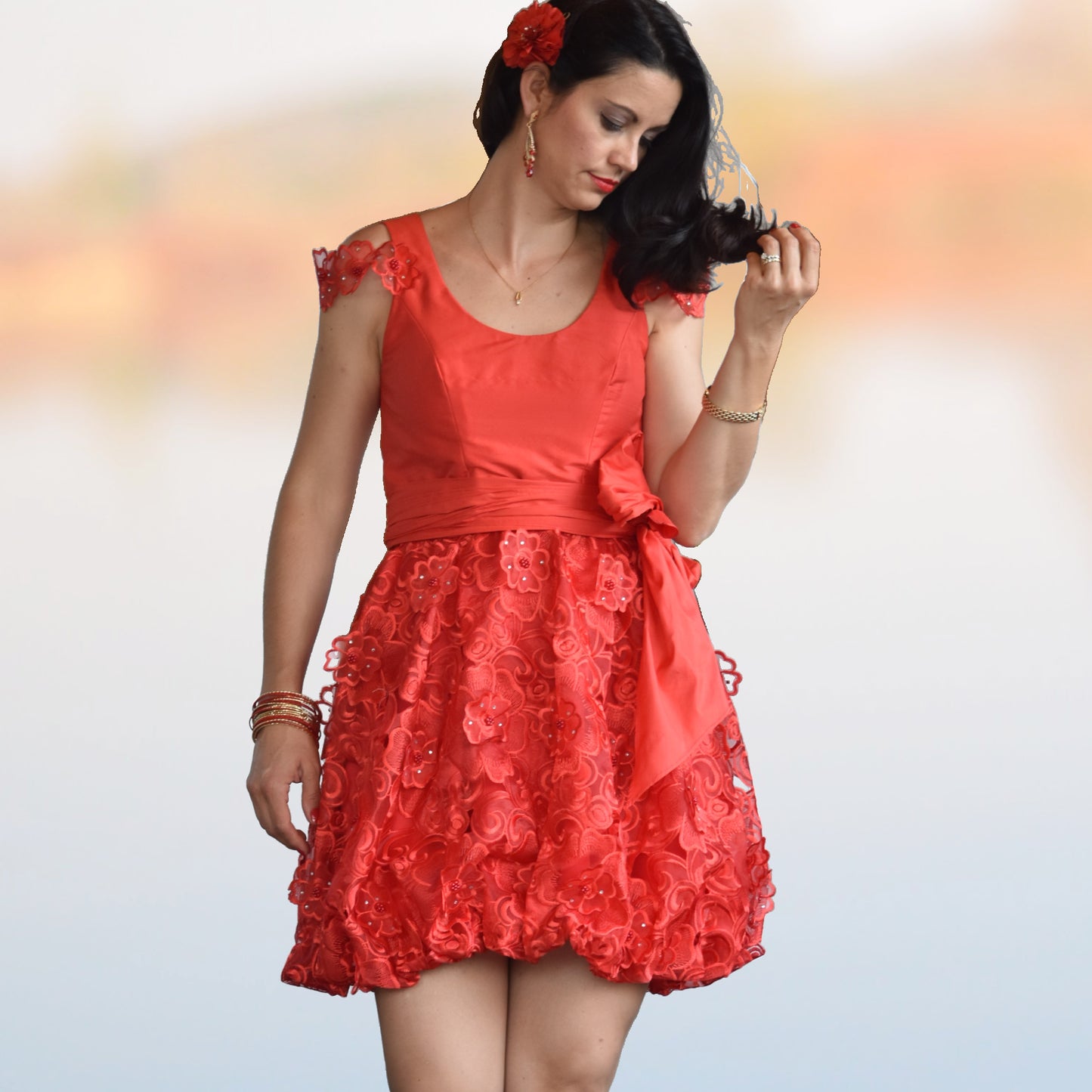
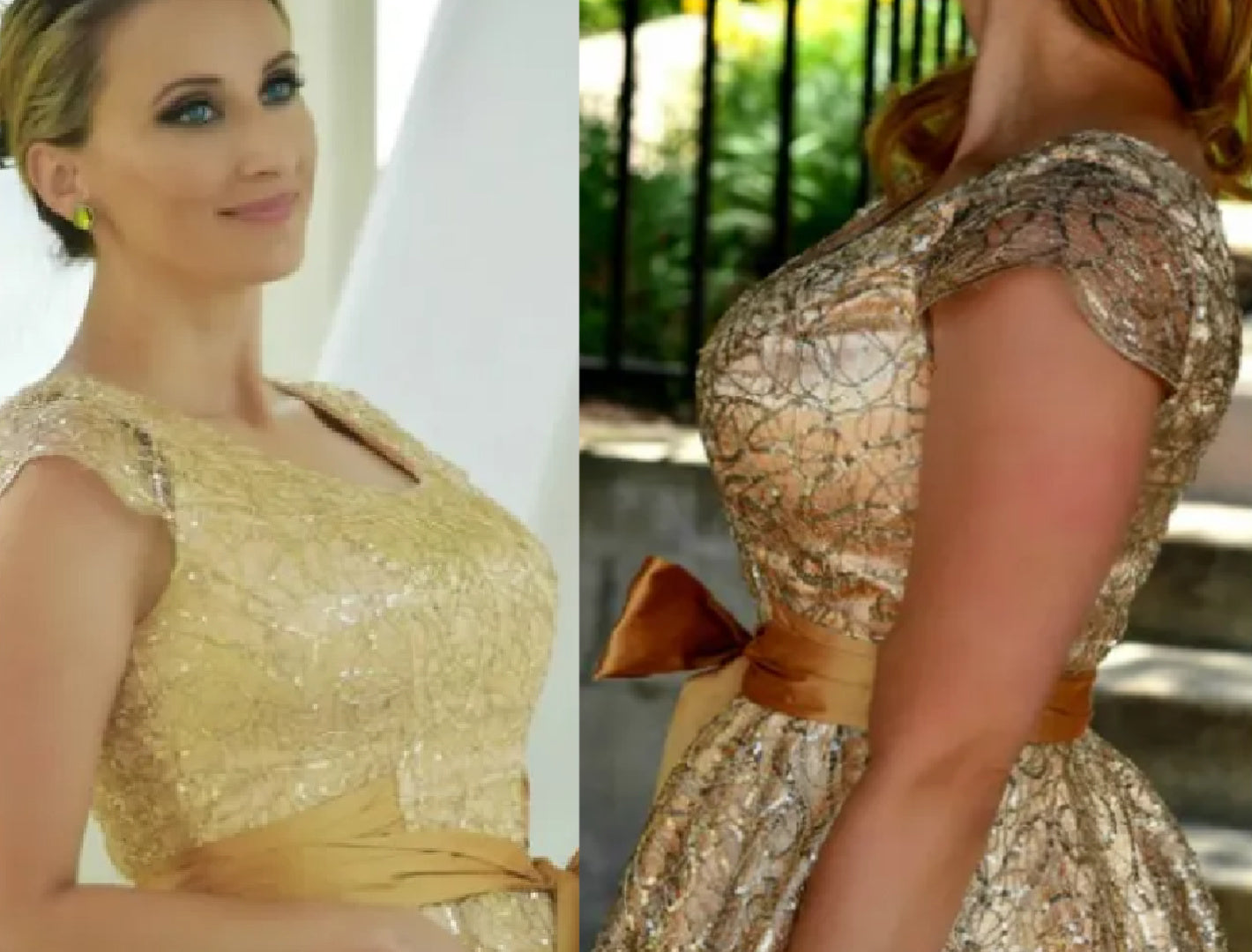
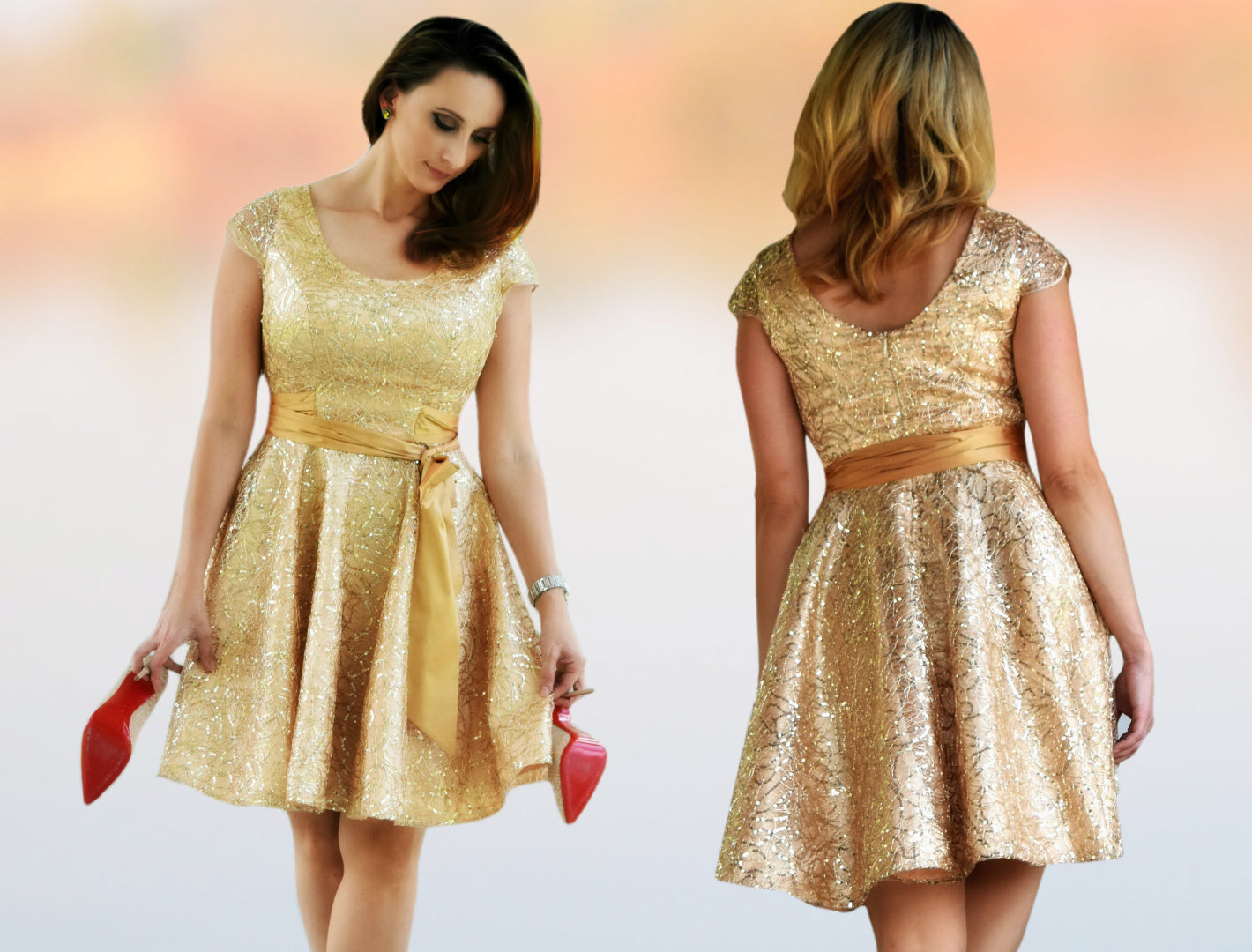
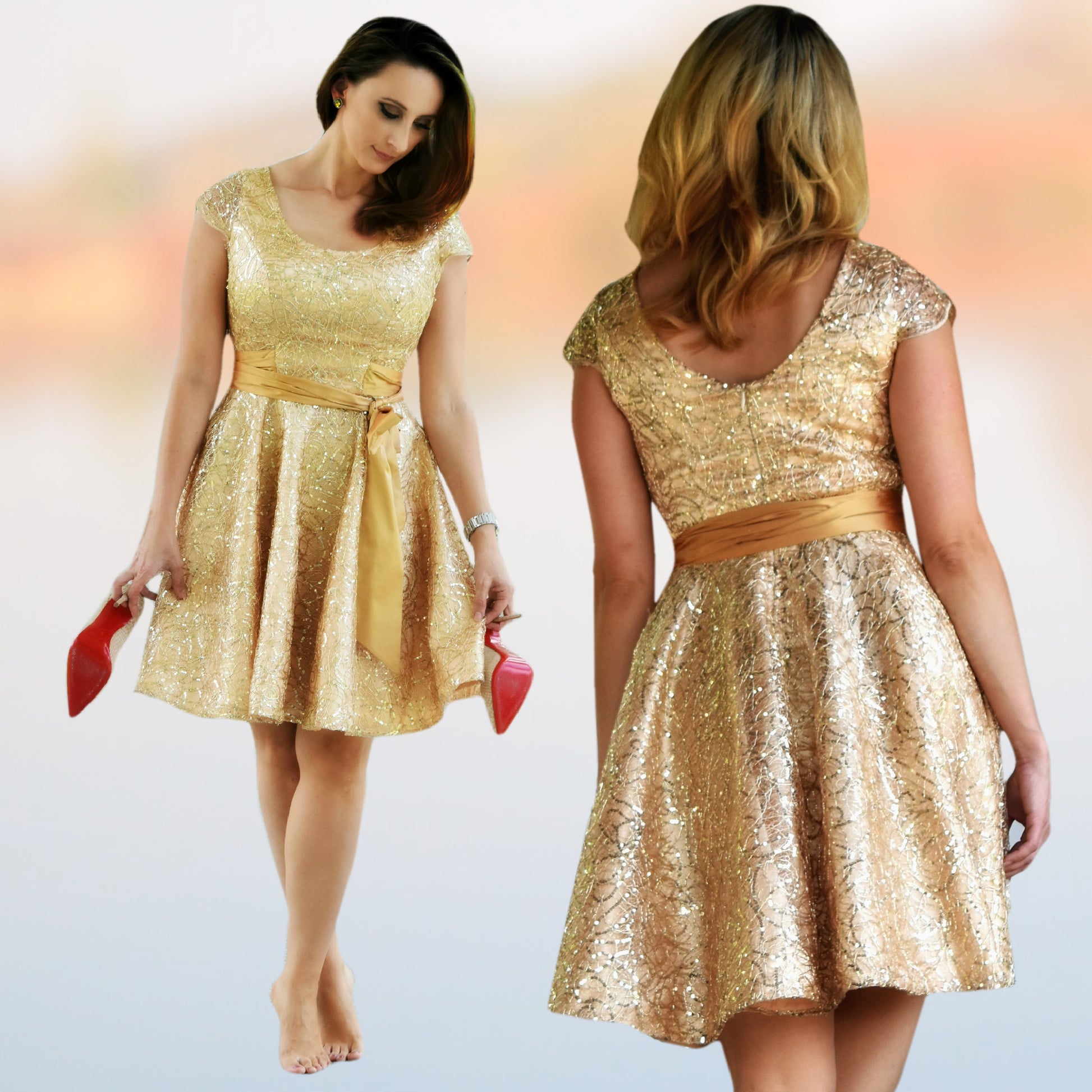
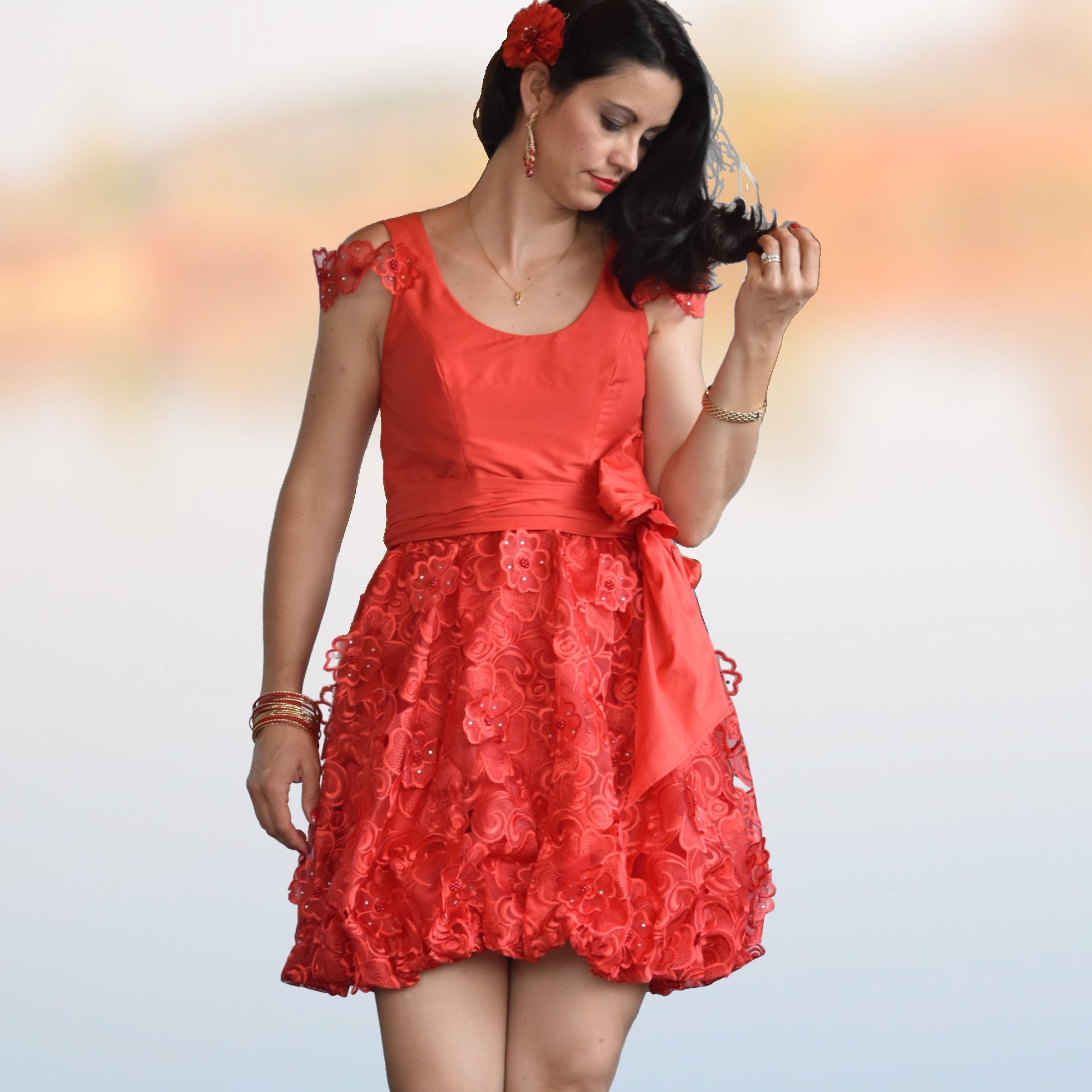
Welcome everyone to the Teen Vivienne dress—not just for teens, but also for us ladies who love a good dress. This has become a glamorous cocktail party dress suitable for many occasions.
It introduces several couture techniques, though it can also be made in cotton if you want to skip some of the more advanced steps.
Key features:
- Front tie in pure silk
- Cap sleeves inserted into the shoulder
- Concealed back zipper
- Structured skirt and lining system
Pattern Pieces and Preparation
First, collect all pattern pieces:
- Front piece (cut back to bigger scoop)
- Side pieces (adjusted for sleeveless version using dotted lines)
- Cap sleeve
- Bust sizing lines (select corresponding line; size 18 shown example)
If bust adjustment is needed, there is a separate method video for altering the bust line.
For the skirt, use the flat-waisted circle skirt and cut off the regular length marking to prepare the template.
Skirt Cutting Method (Circle Layout)
Fold fabric fully lengthwise so selvedges align, then fold again to allow cutting a full circle in one pass.
- No seam allowance needed for most edges
- Seam allowance only required at center back
Cut pattern as a quarter circle layout.
Lining and Mesh Overlay Construction
Cut the covering fabric (mesh/lame) separately:
- Omit seam allowance at center front
- Include seam allowance at center back
For assembly:
- Place lining circle flat (shiny side down)
- Place mesh layer on top (right side facing matte lining side)
- Pin all around
- Cut center back opening along straight grain
Sewing the Skirt Layers Together
Sew all around the circle with 1 cm seam allowance.
Important:
- Remove pins carefully (mesh hides them easily)
- Expect a long sewing pass due to full circle length
After sewing:
- Cut back seam allowances around entire circle
- Secure seam allowance to lining by stitching a few mm next to seam
- This prevents rolling and distortion
Pressing and Stabilizing the Fabric
Press using a cloth barrier due to synthetic fibers.
Key principle:
- High heat + protection cloth is required even for polyester
- Avoid direct iron contact
Grain Control and Shape Stabilization
Because lame has no stable grain:
- Adjust satin lining underneath
- Pull and redistribute tension where fabric naturally sags
- Pin adjusted sections before final stitching
This prevents uneven drooping in finished skirt.
Center Back and Front Construction
- Overlock center back
- Cut center front pieces twice (mount + lining system)
- Assemble all garment layers progressively
Cap Sleeve Cutting and Preparation
Cap sleeves are cut using scalloped edge alignment:
- Cut first sleeve
- Flip and mirror to create pair
- Mark front orientation
Sleeves are stored aside before assembly.
Tie Construction
Tie is cut:
- 7 inches wide
- Full fabric width
Steps:
- Shape one end
- Transfer shape to second tie
- Sew right sides together
- Turn through
- Press and refine tip using pin to sharpen corners
Assembly: Front, Side Panels, and Tie Insertion
Order of assembly:
- Attach side panels
- Insert ties at lower section
- Stitch front panels using controlled easing
Key technique:
- Use pin-assisted easing to prevent fabric shift
- Work stitch-by-stitch around curves
- Maintain alignment at notches
Pressing and Shaping Seams
- Press seams open where bulk occurs (not to one side)
- Use cloth barrier for synthetic layers
- Snip curves at bust area for smoother shaping (larger bust requires more relief cuts)
Result should be flat, smooth, and controlled.
Shoulder and Lining Assembly
- Stitch shoulder seams (1 cm allowance)
- Repeat for lining
- Match notches instead of pinning heavily
Front requires careful easing due to curvature:
- Feed fabric gradually into machine
- Match notches precisely
Press seams after assembly for structure.
Sleeve Insertion
Sleeves must be aligned carefully:
- Front marking must match correctly
- Insert evenly on both sides
Critical correction note:
- Always verify symmetry before final stitching (errors in sleeve height are common and require full unpicking if missed)
Neckline and Armhole Finishing
Options:
- Apply stay tape (or substitute reinforcement if unavailable)
- Understitch neckline and armhole to prevent rolling
Recommendation:
- Finish neckline fully before armhole for cleaner structure
Press thoroughly after stitching.
Side Seam Closure and Fit Adjustment
- Join side seams (1 cm allowance)
- Align underarm seams precisely
- Fit check recommended at this stage
Adjustments can still be made before final closure.
Skirt Attachment to Bodice
- Attach skirt starting from center front
- Pin from bodice side for better control
- Stitch carefully around full waistline
After sewing:
- Press seam upward toward waist band
- Snip seam allowance where zip will be inserted
Invisible Zip Installation
- Use concealed zipper foot
- Align zipper teeth downward
- Mark stopping points using fabric marker
- Ensure symmetry before stitching
Technique:
- Stitch close to teeth but not too tight
- Avoid catching delicate mesh fabric
Hand stitching reinforcement:
- Secure upper and lower sections to prevent movement
- Improves long-term durability and smooth closure
Final Assembly and Lining Closure
- Attach lining over zipper edge
- Stitch top closure
- Close remaining seams
- Adjust tension to avoid puckering
Hand slip-stitch lining into waistline for clean interior finish.
Hem and Final Finishing
- Turn hem inward and secure neatly
- Use hand stitching for invisible finish
- Reinforce stress points (zip and skirt junctions)
Final step:
- Secure zipper top
- Trim excess zipper length
- Bind zipper end using satin or binding tape
- Hand stitch binding for durability
Final Outcome
The dress should:
- Fit closely without distortion
- Maintain structured couture silhouette
- Sit smoothly at bust and waist
- Flow cleanly at skirt hem
The pattern is designed to work accurately without fitting adjustments when measurements are followed correctly.
From concept to execution, this completes the transformation from a simple idea into a structured couture cocktail dress system.
Transcript for the video: Vivienne Teen Dress - Short Sleeve Lined & Unlined
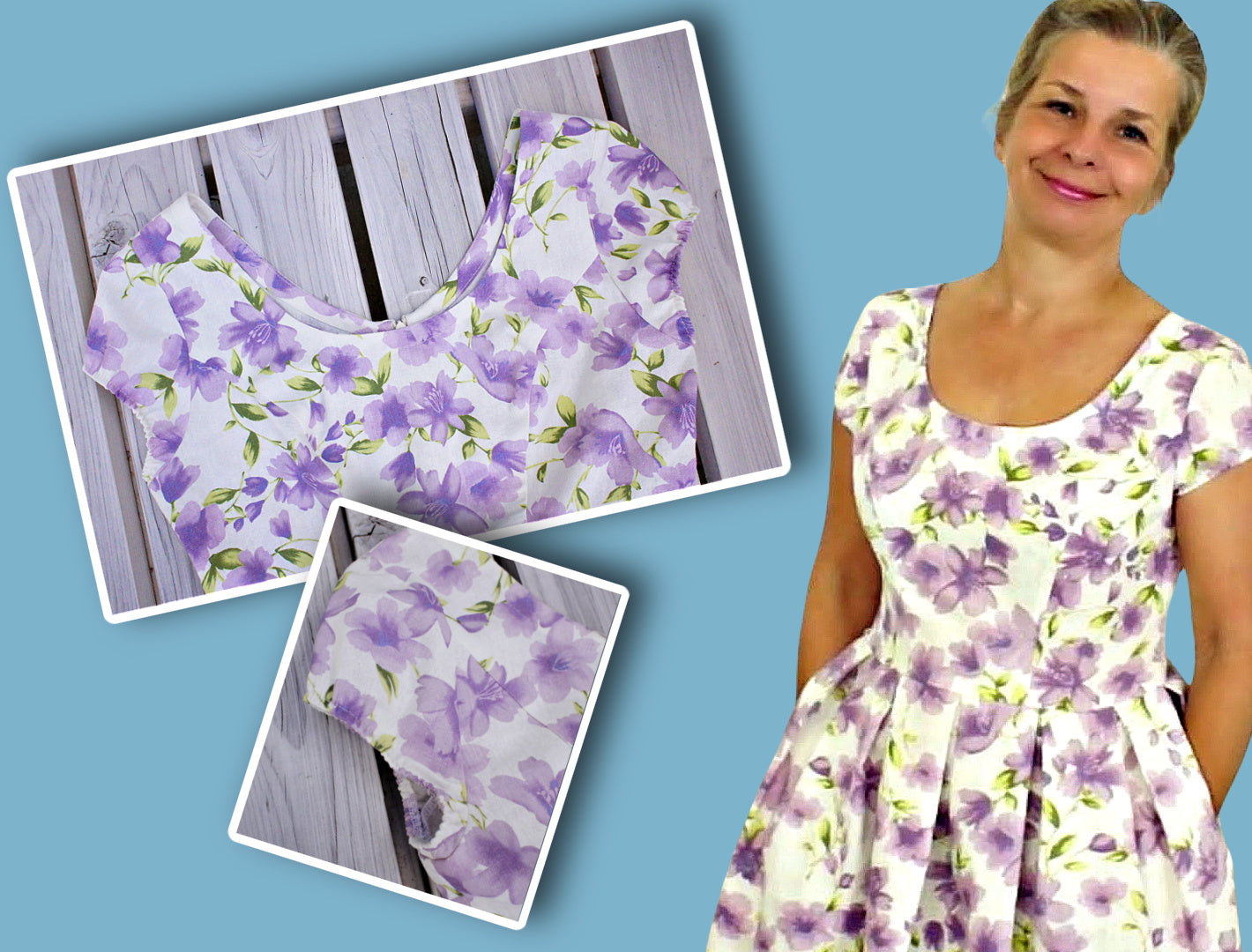
Hi everyone and welcome to another tutorial for the Vivienne dress (or any other dress). Here I’ll show you how to make a short sleeve with a small elasticated edge.
There are two versions:
- Unlined sleeve (simpler)
- Lined sleeve (slightly more structured and my preferred method)
Pattern Preparation and Marking
Start by cutting out your sleeve pattern.
Key points:
- There is a large front scoop; this affects orientation
- Always mark the front clearly
- The front is cut away more than the back, so incorrect placement will distort the fit
- Mark the elastication zone using small snips or a fabric-safe marker
There is a section where light gathering is optional, but slight tacking is preferred for shape control.
Lined Sleeve Construction (Step-by-Step)
Attaching Lining
Place lining and outer fabric right sides together.
Sew along the hem edge, then trim back seam allowance.
Note: Lighting/footage issues were present in the original recording, but the construction method remains standard.
Understitching and Pressing
Mark the elastication start and end points using a disappearing fabric pen (air-erasable marker only).
Then:
- Understitch close to the edge
- Press flat to stabilize the edge
At this stage, the sleeve can already hold shape without elastic depending on arm size.
Creating the Elastic Channel
Form a tunnel:
- Stitch a channel approximately 1 cm from the edge
- Only sew between marked points
Insert elastic:
- Use a safety pin to guide elastic through the tunnel
- Pull through and leave excess hanging temporarily
Then:
- Secure one end with stitching
- Test fit around the arm before finalizing length. Adjust elasticity based on wearer (teen vs adult sizing varies significantly)
Finally:
- Stitch the second end to secure elastic in place
Closing the Sleeve
- Sew the underarm seam in one continuous pass
- Snip seam allowance slightly at tension points
- Press seam open on ironing board
Then:
- Fold lining over outer fabric
- Press again for a clean finish
Edge Finishing and Shaping
- Sew a narrow edge stitch around the sleeve opening
- This acts as a stabilizing holding stitch
Even though this is not a gathered sleeve, slight easing is required:
- Pull thread slightly to round the sleeve head
- Steam into shape using an iron
This improves sleeve insertion into the armhole and creates a professional curve.
Unlined Sleeve Version
For the unlined version:
- Overlock lower edge first
- Mark elastic placement points again (front accuracy is critical)
- Decide elasticity based on arm measurement (test on body, not just pattern)
Then:
- Insert elastic using triple zigzag stitch
- Stretch elastic evenly while stitching
After securing elastic:
- Trim excess
- Close underarm seam
- Finish with tight edge stitching
Fit Logic and Practical Adjustment
Important considerations:
- Teen sizing will generally require more elastic than adult sizing
- Always test wrap around the arm before finalizing length
- Uneven elastic lengths between sleeves can ruin symmetry—both sleeves must be identical
Final Result
You now have two sleeve options:
- Clean lined elastic sleeve (structured, polished finish)
- Quick unlined elastic sleeve (faster, slightly more casual)
Both prevent the sleeve from flopping while maintaining comfort and mobility.
The method is flexible—elastic tension can be adjusted based on body type, fabric behavior, and desired silhouette.
Introduction: Cap Sleeve Construction Methods
Transcript for the video: Vivienne Teen Dress - Cap Sleeve Methods
Hello and welcome to another sleeve tutorial. Here I’ll show you how to construct a cap sleeve using two different finishes:
On the right side: a fully inserted sleeve with a clean internal finish
On the left side: an overlocked sleeve with seam allowance enclosed using binding
Both methods are demonstrated on a prepared bodice:
- One side lined with neckline finished
- One side left unlined for comparison
Pattern Preparation and Marking
Cut out the cap sleeves and clearly mark:
- Sleeve head
- Front orientation
Correct orientation is critical because:
- The front is cut away more than the back
- Reversing the sleeve will distort the fit
Method 1: Lined Cap Sleeve (Inserted Finish)
Attaching Sleeve to Bodice
- Place right sides together
- Sew along the lower sleeve edge
- Trim seam allowance
Understitching
- Move lining over seam allowance
- Understitch close to seam line
- This prevents lining from rolling outward
Press thoroughly after stitching.
Sleeve Head Shaping (Gathering Technique)
Instead of full gathering:
- Use a single gather stitch along sleeve head
- Gently pull threads to create slight curvature
This creates controlled easing, not heavy gathering.
Steam the sleeve head into shape before insertion.
Inserting the Sleeve
Pinning process:
- Start with flat anchor pin
- Gradually ease sleeve into armhole
- Maintain smooth fabric distribution (no pleats underneath)
Key control points:
- Sleeve must remain evenly distributed
- Adjust sleeve head slightly if required (minor corrections are normal)
Sew slowly:
- Feed fabric stitch-by-stitch
- Keep seam allowances aligned
After sewing:
- Inspect both sides for missed catches
- Press thoroughly with steam
Completing the Lined Sleeve Method
- Turn bodice and sleeve through
- Sandwich sleeve between lining and outer layer
- Stitch close to previous seam line (one stitch beside original seam)
Critical warning:
- Do not sew too far from original seam or pleats may form
Finish by:
- Securing stitches
- Trimming excess seam allowance
- Pulling through using a safety pin method
Result:
- Very clean internal finish
- Slight reduction in smoothness at sleeve cap compared to other method
Method 2: Overlocked Sleeve with Binding Finish
Preparing Sleeve
- Overlock lower edge
- Mark elastication or finish points if needed
Binding Preparation
- Cut binding 3 cm (1¼ inch) wide
- Fold lengthwise and press
Homemade binding is preferred due to:
- Better control
- Slight natural stretch
Attaching Binding to Sleeve
- Start slightly above sleeve end
- Pin binding with slight controlled tension. Not loose (prevents stretching distortion)Not overly tight (prevents puckering)
Wrap binding:
- Over edge of sleeve
- Fold inward toward inside of garment
Maintain consistent tension throughout application.
Stitching Binding
- Sew along guided edge using presser foot alignment
- Maintain even distance using left edge of foot as reference
Key technique:
- Rotate fabric gradually at curves
- Avoid fabric folding or pleating under pressure
Once sewn:
- Understitch binding to stabilize edge
- Press flat
Final Binding Finish
- Fold binding inward
- Topstitch close to edge
- Ensure smooth continuous line around sleeve opening
At corners:
- Snip and fold carefully for clean turn
Press again for final shape setting.
Comparison of Both Methods
Inserted sleeve (right side):
- Clean internal structure
- Better for delicate or lace fabrics
- Slightly less smooth sleeve cap appearance
Bound sleeve (left side):
- More structured finish
- Strong edge control
- Preferred for durability and crisp shaping
Final Conclusion
Both sleeve methods are valid construction techniques.
Choice depends on:
- Fabric type
- Desired finish (soft vs structured)
- Level of durability required
In most cases:
- Binding method offers better long-term control
- Inserted method offers cleaner internal aesthetics
Transcript for the video: Vivienne Teen Dress - Neckline with Piping
Introduction to Piped Necklines
Hello and welcome to The Sewing Workshop. This week we are going to look at how to construct piping for a neckline. Last week we worked on a bound neckline, and now we are moving on to a piped neckline.
I am using curtain cord for the piping instead of traditional piping cord. This is the type used in Roman blinds. It is very slim and produces a much cleaner finish compared to thicker piping.
The key is to use a zipper foot. If you have a piping foot, that also works, but many do not accommodate very fine piping well.
Preparing the Piping Cord
First, sew the fabric strip together to create a continuous length. Use a shorter stitch length for accuracy, then trim the excess.
Next, switch to the zipper foot. Set the needle all the way to the left, then move it back two or three positions. This prevents stitching too close to the cord while ensuring the final line of stitching sits correctly.
Inserting the Cord into Fabric
Place the piping cord in the center of the fabric strip. Use your fingers or nail to keep it aligned while sewing.
Stitch close to the cord, ensuring the final seam encloses the initial stitching line completely. Maintain steady tension and avoid catching the cord.
If working with a 1 cm seam allowance, a 2.5 mm needle position adjustment is usually ideal.
Preparing the Neckline
Before attaching piping, ensure the neckline is not stretched.
Mark the center of the neckline with a small notch. Match this with your pattern piece to confirm alignment.
Place right sides together and begin pinning carefully. Light tension on the fabric is acceptable, but avoid over-stretching.
Continue checking alignment with both front and back pieces. Adjust as necessary before committing to stitching.
Stitching the Piping to the Neckline
Once pinned, stitch along the seam line using the piping as your guide.
Maintain slow, controlled stitching. Follow the edge of the piping cord closely while keeping seam allowance consistent.
Leave an opening at the back if a zipper will be inserted later.
Take your time here—accuracy directly affects the final neckline shape.
Adjustments and Seam Trimming
After stitching, carefully trim seam allowances where necessary, but avoid cutting too close to the cord. Leave enough allowance to support structure and prevent distortion.
If needed, reduce bulk around curves to improve the final turn.
Turning and Pressing
Use a safety pin to pull the fabric through to the right side.
Gently work the fabric through to avoid distorting the piping.
Once turned, press carefully on both sides. The piping should now sit cleanly and define the neckline.
Attaching the Lining
Place the lining right sides together with the outer fabric.
Pin carefully around the neckline and armhole, ensuring smooth alignment.
The neckline may appear smaller at this stage, but this is expected due to curvature and structure.
Stitch slightly inside the original seam line to avoid visible topstitching on the outside.
Stop short of the zipper area as needed.
Final Trimming and Finishing
Trim seam allowances carefully after stitching, reducing bulk while maintaining structure.
Avoid over-trimming at corners or curves where stability is required.
Turn the garment right side out again using a safety pin if needed.
Final Pressing and Evaluation
Press the neckline thoroughly, shaping the piping evenly as you work.
A well-constructed piped neckline will hold its shape, resist stretching, and maintain a clean edge.
At this stage, some may choose to hand stitch the lining for a cleaner interior finish, especially in formal or bridal garments.
Closing Notes
This method produces a structured and professional neckline finish. Fabric choice, piping thickness, and precision all significantly affect the final result.
With practice, this technique can be adapted for dresses, formalwear, and even bridal garments using the same base construction principles.
Thank you for watching The Sewing Workshop, and I will see you next time.
Transcript for the video: Vivienne Teen Dress - Neckline with Bias Binding
Welcome to another tutorial from The Sewing Workshop. In this lesson, we are going to cover how to apply bias binding to a neckline while ensuring the neckline does not stretch and instead rolls neatly into itself for a clean finish.
In this example, the bias binding rolls to the outside, creating a very neat and decorative edge. This type of neckline is often finished with a hook and eye closure.
A neckline like this—especially a deep scoop—is not beginner-friendly when working with delicate fabrics such as silk satin. It is better to start with something more stable, such as quilting cotton, before attempting this technique.
Comparing Binding Methods
Before starting, there is another dress under development where a wider bias strip (about 6 cm wide, folded in half) is used. That method is sewn to the outside first and then rolled inward before finishing.
That is a different technique, but even when rolling to the outside, a wider bias strip is strongly recommended. Narrow strips are more difficult to control, especially on slippery fabrics.
Pre-pressed bias binding can also be used. However, handmade bias binding is often superior because it retains more stretch and adapts better to curves.
Stay Stitching the Neckline and Armholes
Before attaching bias binding, a stay stitch is applied around the neckline and armholes using a long stitch length.
This prevents the fabric from stretching out, especially on bias-cut areas which are naturally unstable.
After stitching, gently pull one thread to slightly ease the neckline in. This helps control excessive stretching.
Be careful: if the fabric puckers, it has been over-tightened.
Checking Neckline Balance
Compare both sides of the neckline using the pattern piece. This ensures symmetry and prevents distortion.
Steam the fabric lightly to help it settle.
If there is slight variation (around 8 mm), it is generally acceptable because the neckline will continue to relax during construction.
Repeat the same process for the armholes.
Final Pre-Construction Checks
Before attaching binding, place the front and back pieces together at the seams to confirm alignment.
Minor adjustments can still be made at this stage.
Once everything aligns correctly, proceed to binding application.
Preparing and Attaching Bias Binding
In this example, silk satin bias binding is used as a decorative trim.
The binding is first attached to the inside of the garment. It is stretched slightly while sewing to prevent future loosening.
This is important: bias binding must be eased and gently stretched during application so it conforms properly once the garment is worn.
A narrow 3 cm strip is used here, but this is not recommended for beginners. A wider 4 cm strip is easier to control.
Trimming and Rolling the Binding
After stitching, trim the seam allowance around the neckline.
Next, roll the seam allowance downward and stitch close to the edge. This helps the binding turn cleanly to the outside.
Work slowly and carefully, especially around curves where the fabric is most unstable.
Securing the Final Edge
Fold the binding fully to the outside and stitch it down evenly.
Start carefully at the beginning, as this is the most difficult section to control.
A useful technique is to leave thread tails when starting, which allows better control and adjustment.
In difficult areas, hand stitching can be used for more precision and cleaner results.
Final Notes and Recommendations
Silk satin is extremely challenging for this technique and is not recommended for beginners.
A stable cotton fabric and wider bias strips will produce much more consistent results.
Bias binding relies heavily on controlled tension, accurate trimming, and careful pressing. When done correctly, it creates a clean, structured neckline that holds its shape beautifully.
Thank you for watching The Sewing Workshop, and see you in the next tutorial.
Transcript for the video: Vivienne Teen Dress - Sleeve Cuff with Slit
Welcome to another edition of The Sewing Workshop. Today we are tackling a turned-up cuff, which is a simple technique that can be adapted to most sleeve patterns.
The key requirement is that the cuff extends just past the elbow. We will also be working with a separate fabric piece cut to match the sleeve dimensions.
Preparing the Sleeve and Cuff Piece
Cut an additional piece of fabric to match the sleeve exactly. In this example, cotton satin is used, which works well for structure and finish.
On the front of the sleeve, mark and create a slit. This can be cut immediately or marked and cut later depending on preference.
The added cuff piece should have a depth of approximately 8–10 cm.
Place the cuff piece directly on top of the sleeve, aligning edges carefully.
Constructing the Slit and Stitching
If you are not using an overlocker, simply turn in the raw edge. Otherwise, overlock the edges first.
Stitch along the marked line, allowing the seam to open slightly at the slit for a clean split detail.
Reduce stitch length to around 1 mm near the slit point to prevent fraying.
Approach the top of the slit carefully, then increase stitch length again once past the stress point.
Continue stitching down and across the shape to secure the structure.
Trimming and Turning
Cut carefully up to the point of the slit—precision is essential here.
Trim the corner to reduce bulk.
Turn the cuff right side out and press thoroughly.
The result should show a clean split opening on the outside and a neat internal finish.
Securing the Cuff
At this stage, the top edge can be topstitched to prevent movement.
Overlock remaining raw edges if needed.
Bring the cuff pieces together, aligning seam edges precisely.
This can be done without pins if handled carefully, using fingers to maintain alignment.
Pressing and Stabilising
Lightly finger-press the cuff into position, then reinforce with an iron and steam.
Ensure the seam allowances sit flat against each other.
A small hand stitch can be added to secure alignment if needed, ensuring the structure does not shift during sewing.
Attaching and Final Stitching
Once aligned, stitch the cuff sections together securely.
This final seam locks the structure in place and ensures durability.
The finished cuff should sit cleanly and hold its shape without twisting or shifting.
Decorative Hem Extension (Alternative Design)
A second example uses a linen dress with a decorative hem trim added as an afterthought.
First, measure around the garment where the trim will sit. Accuracy here is essential for symmetry.
Bias binding is sewn on with the raw edge facing upward.
The first pass is stitched slightly above the final placement line.
Then the binding is folded downward and stitched again to secure it.
Fitting and Alignment
Careful measurement determines placement height. In this example, alignment is set around a 7-unit reference point.
Pins are placed evenly around the garment to maintain consistent spacing.
This step is significantly easier with stable fabrics such as quilting cotton.
Silk satin is more challenging due to its softness and movement.
Final Assembly and Finishing
Stitch the binding in place approximately 3 mm from the edge.
Then fold down and secure with a second line of stitching.
Press thoroughly with steam to set the shape.
Ironing is especially important when working with delicate fabrics to prevent distortion.
Closing Notes
Turned cuffs and applied trims rely heavily on precision cutting, controlled stitching, and proper pressing.
Fabric choice dramatically affects difficulty level—structured fabrics are recommended for learning.
With practice, these techniques can be adapted into more advanced sleeve and hem designs.
Thank you for watching The Sewing Workshop, and see you next time.
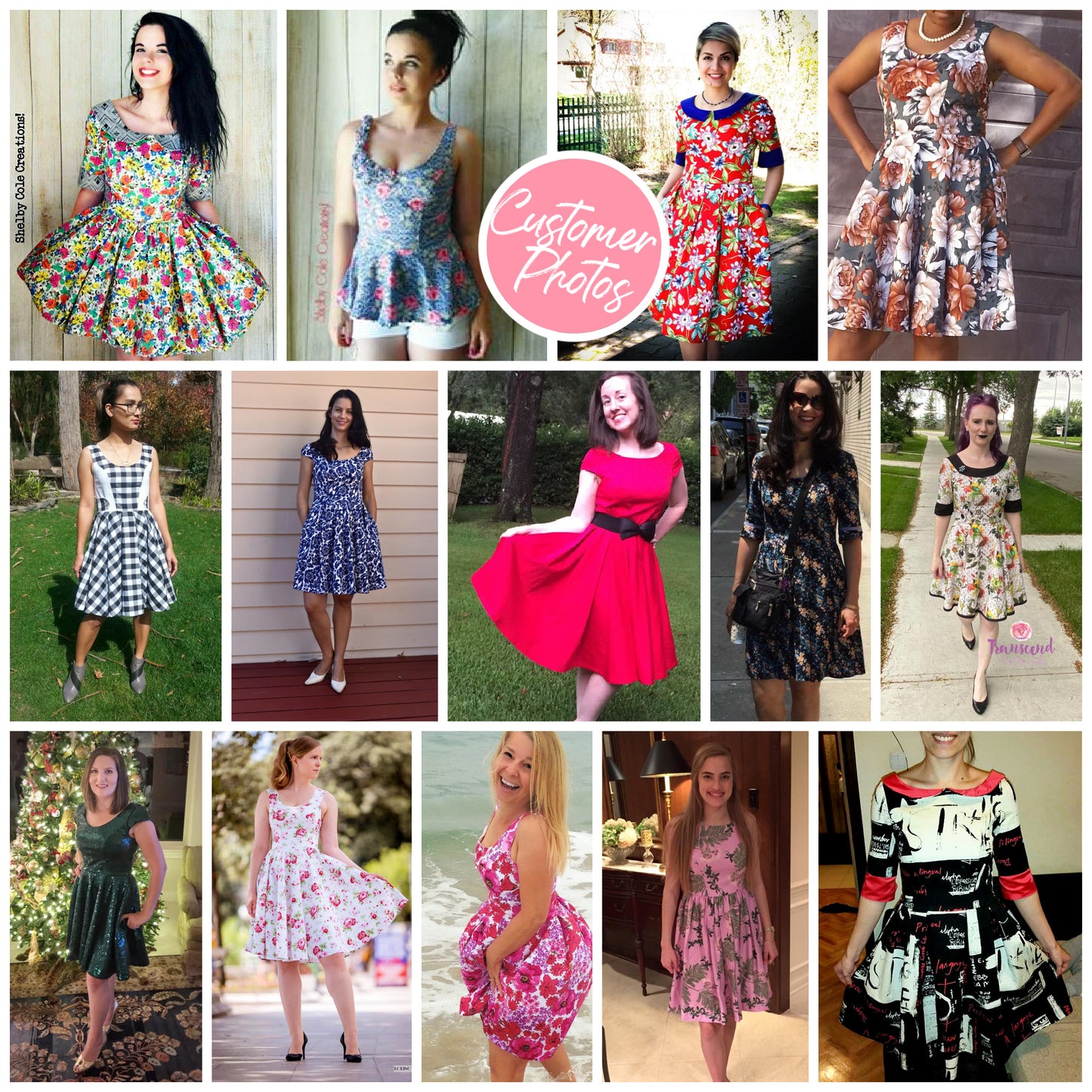
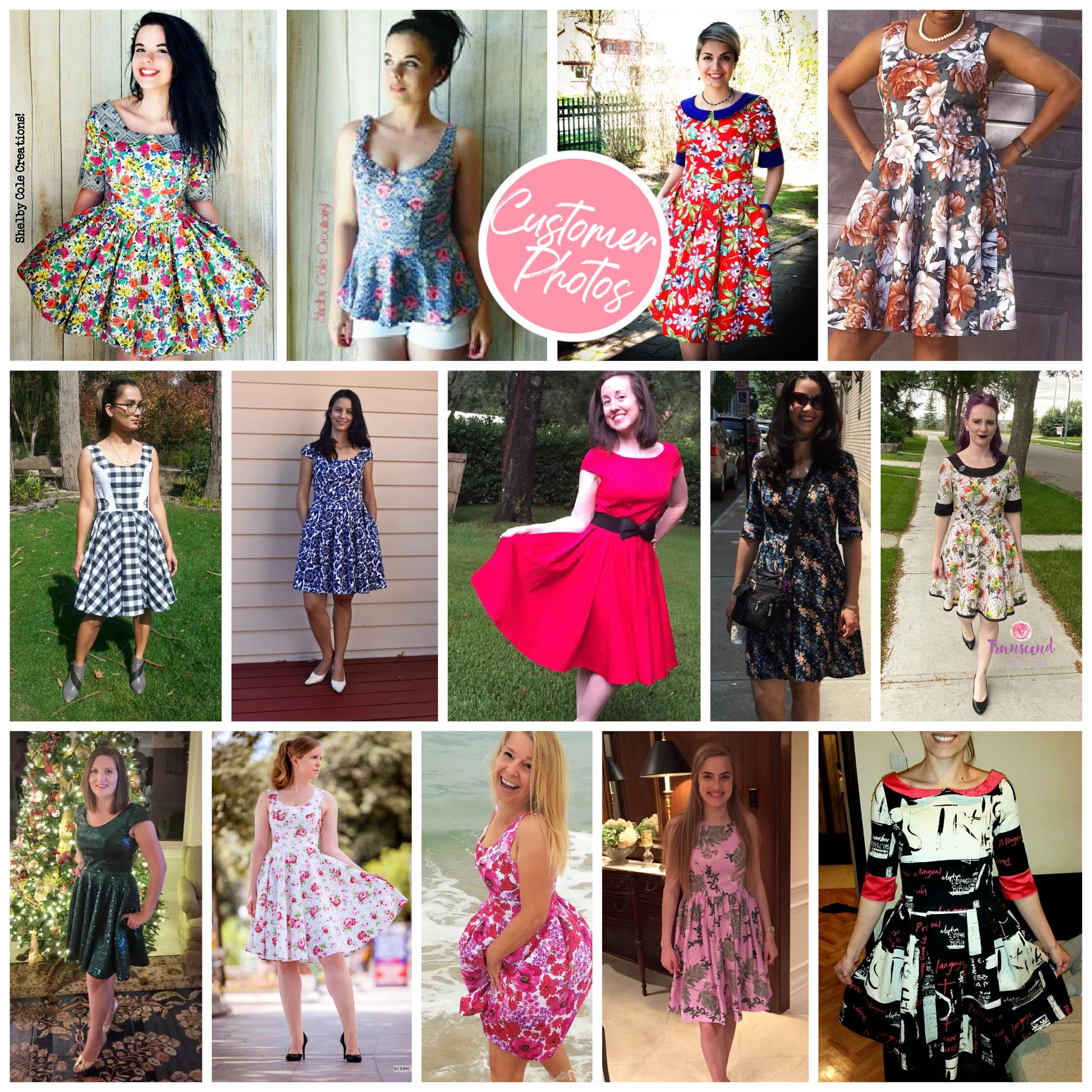
I am living proof that the teen dress isn't for teens only. This Mother of the Bride dress was made from the Vivienne for teens with an overskirt added. My granddaughter's flower girl dress was also the Vivienne dress.
i new to sewing dresses, but loved this pattern, made a few mistakes, but i'm pleased with the result. The video tutorials where really helpful and i've had many compliments on how nice it is and they love the style, we be looking to buy more patterns in future to try.
Haven't made this as yet, the info looks amazing.