Skip to product information
1 of 10

HALLOWEEN TREAT BASKET

HALLOWEEN TREAT BASKET

Filled Circle
Filled Circle
Empty Circle
Empty Circle
Empty Circle
Regular price €4,95 EUR
Regular price Sale price €4,95 EUR
Sale Sold out

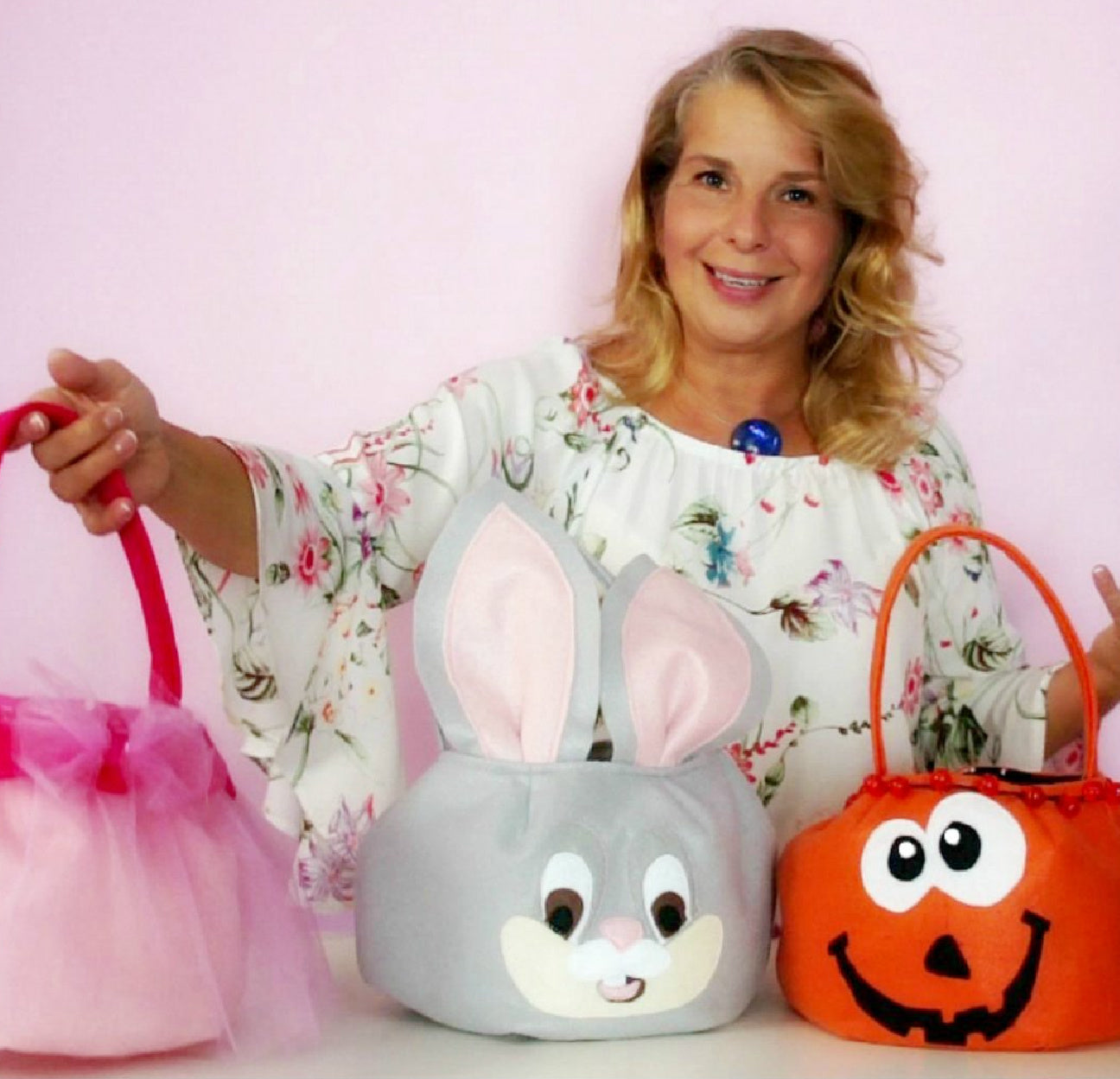
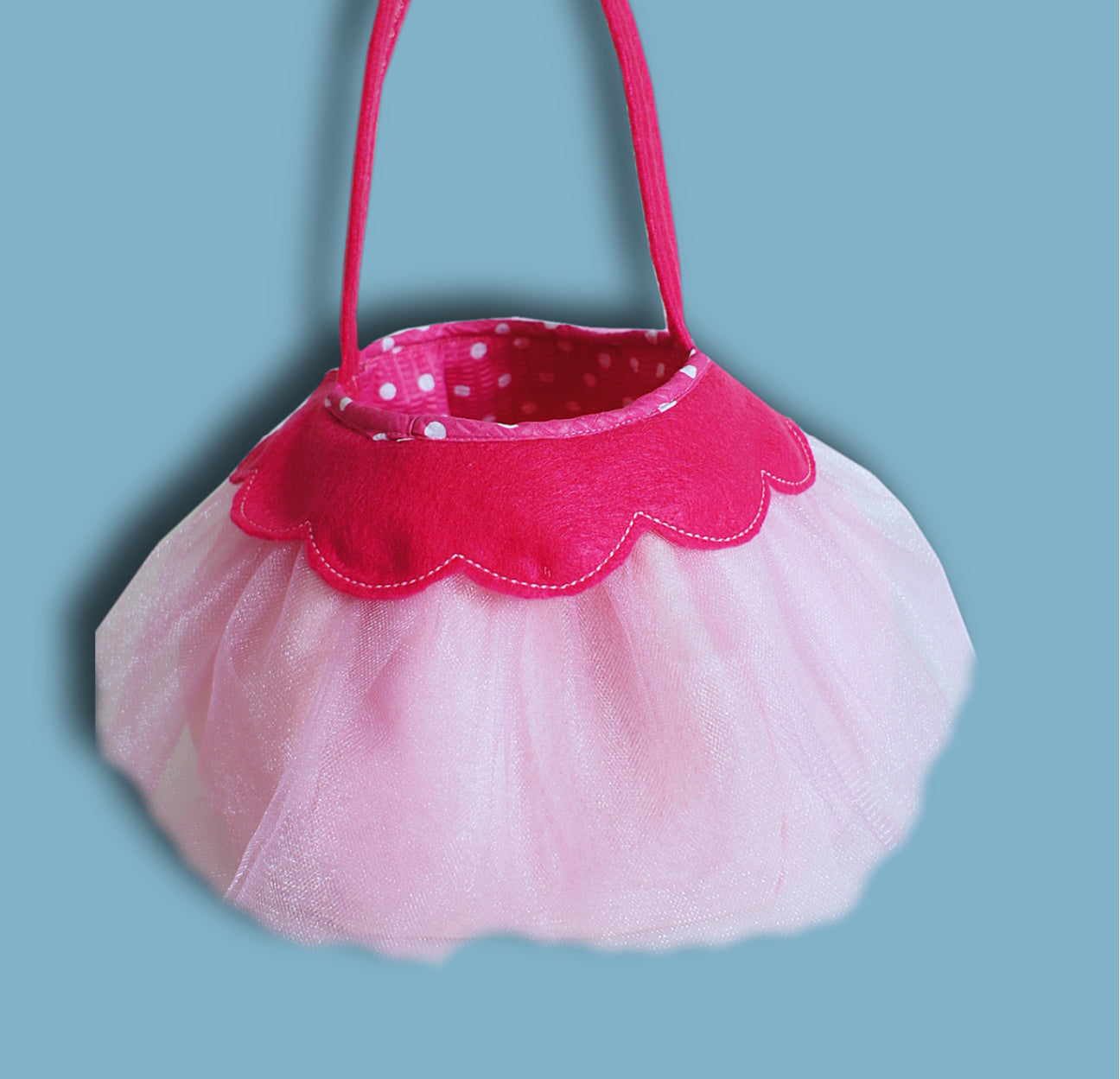
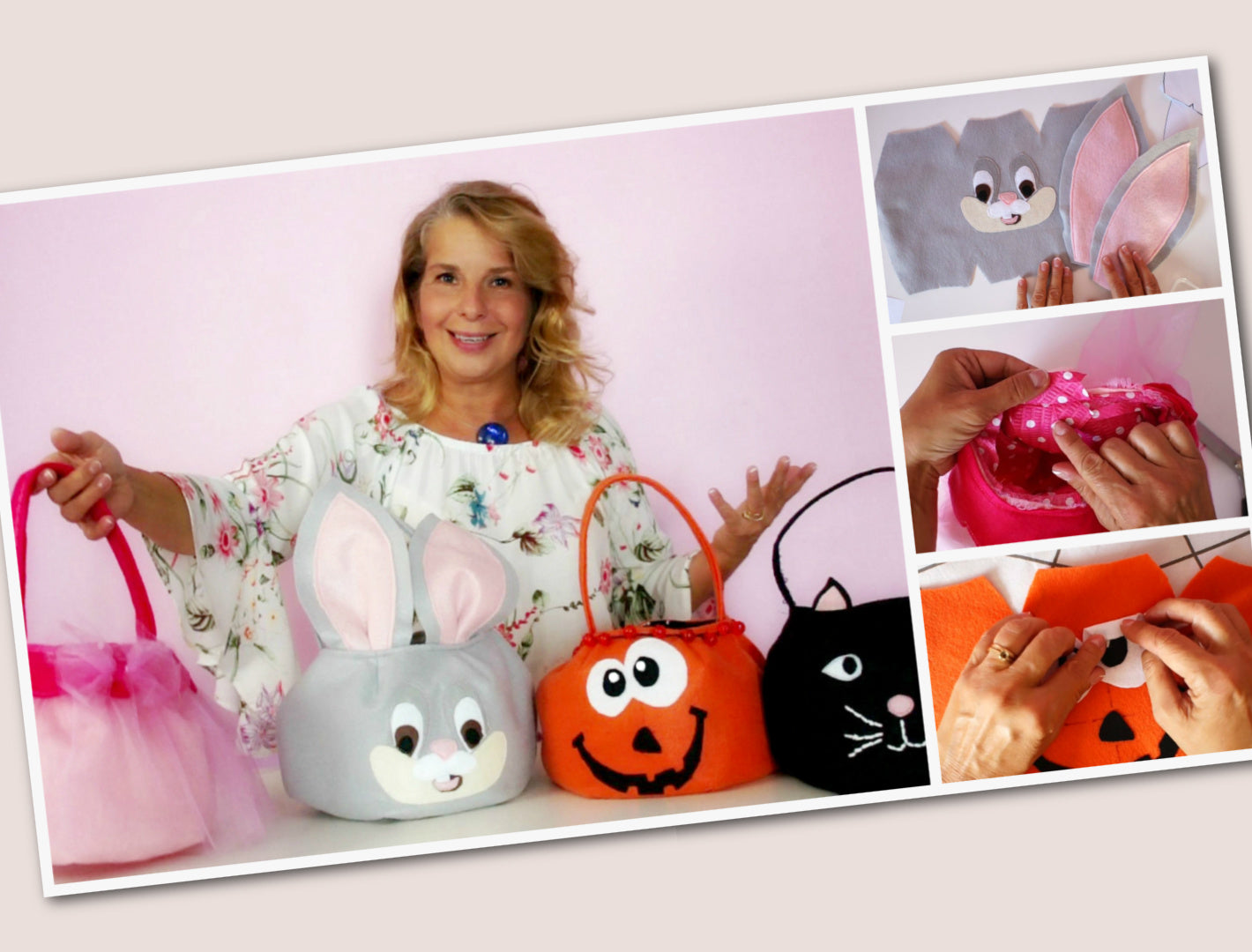
Our magical multi-season treat basket pattern is perfect for Halloween, Easter, and every celebration in between, you can choose from a floppy‑eared bunny, a charming cat, a sweet princess basket with scalloped edges, or a classic pumpkin style.

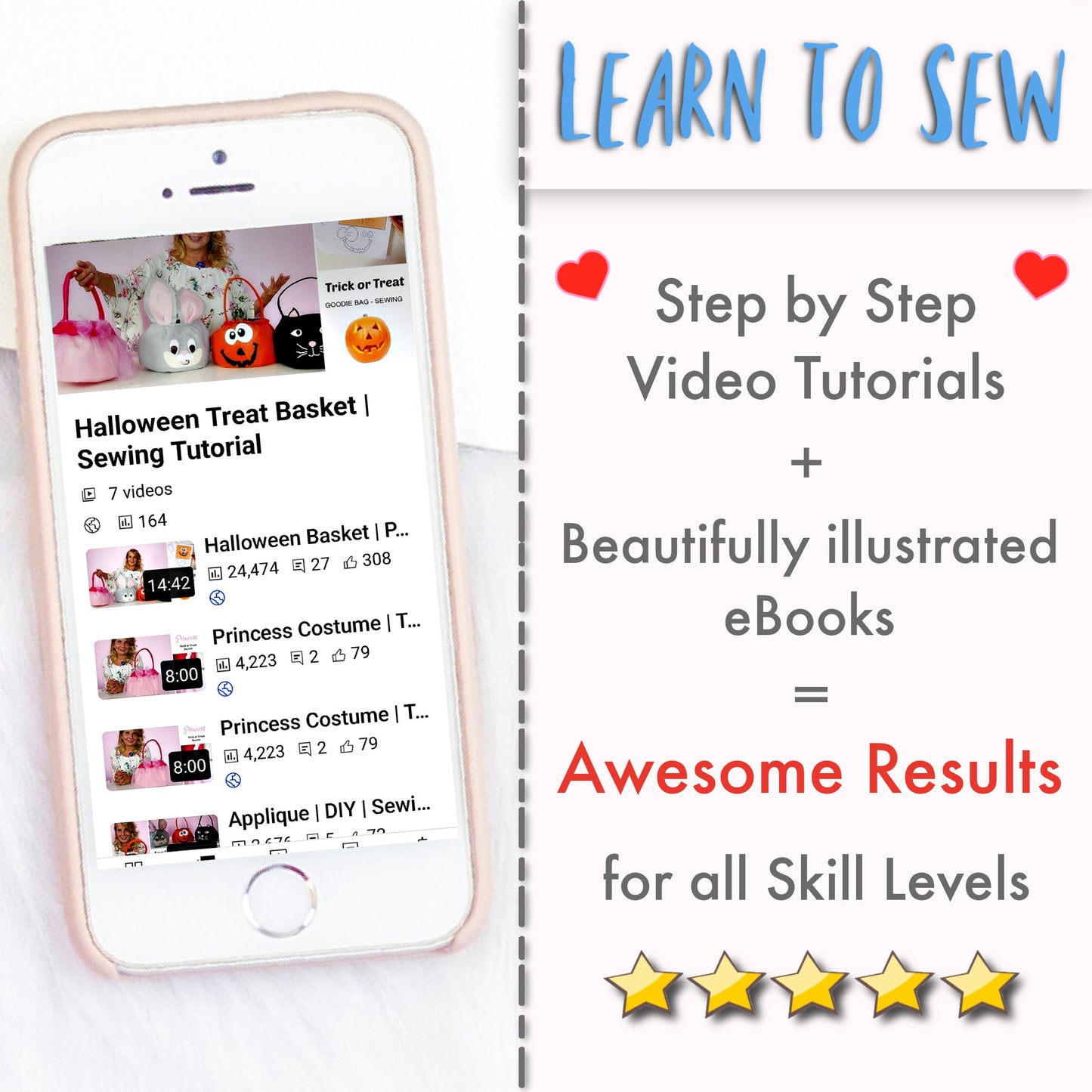
Beginner‑friendly with cheerful video tutorials, it’s a fun, quick project your little ones will treasure — at home or in the classroom.

Pattern Download Includes

  • Instant Download
  • DIN A4 & US Letter Size
  • Detailed eBook
  • Video Tutorials

Design Options

  • Round shape
  • Handle
  • Cat themed applique
  • Bunny themed applique
  • Princess theme styling
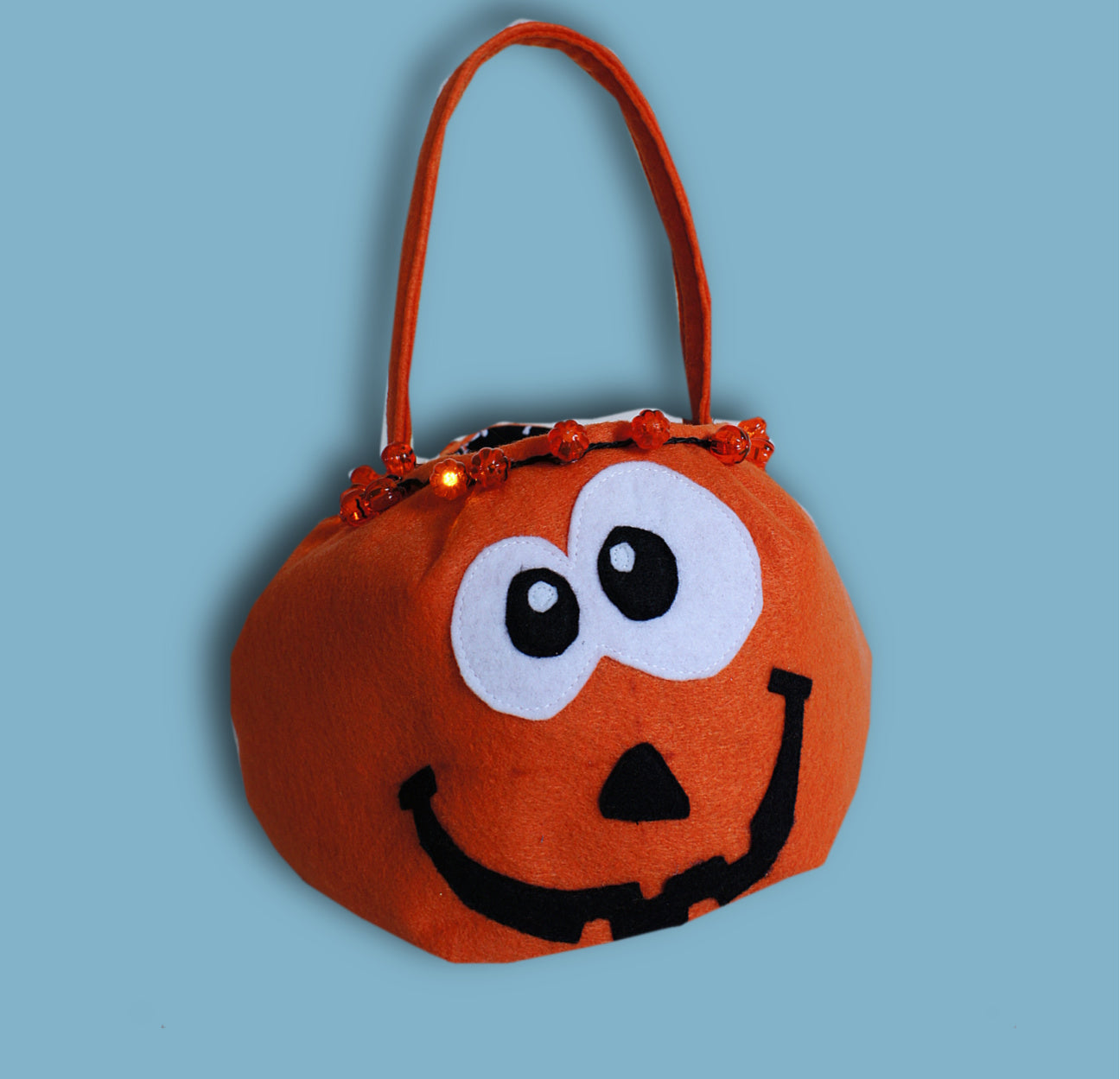
  • Pumpkin themed applique
  • Fully lined

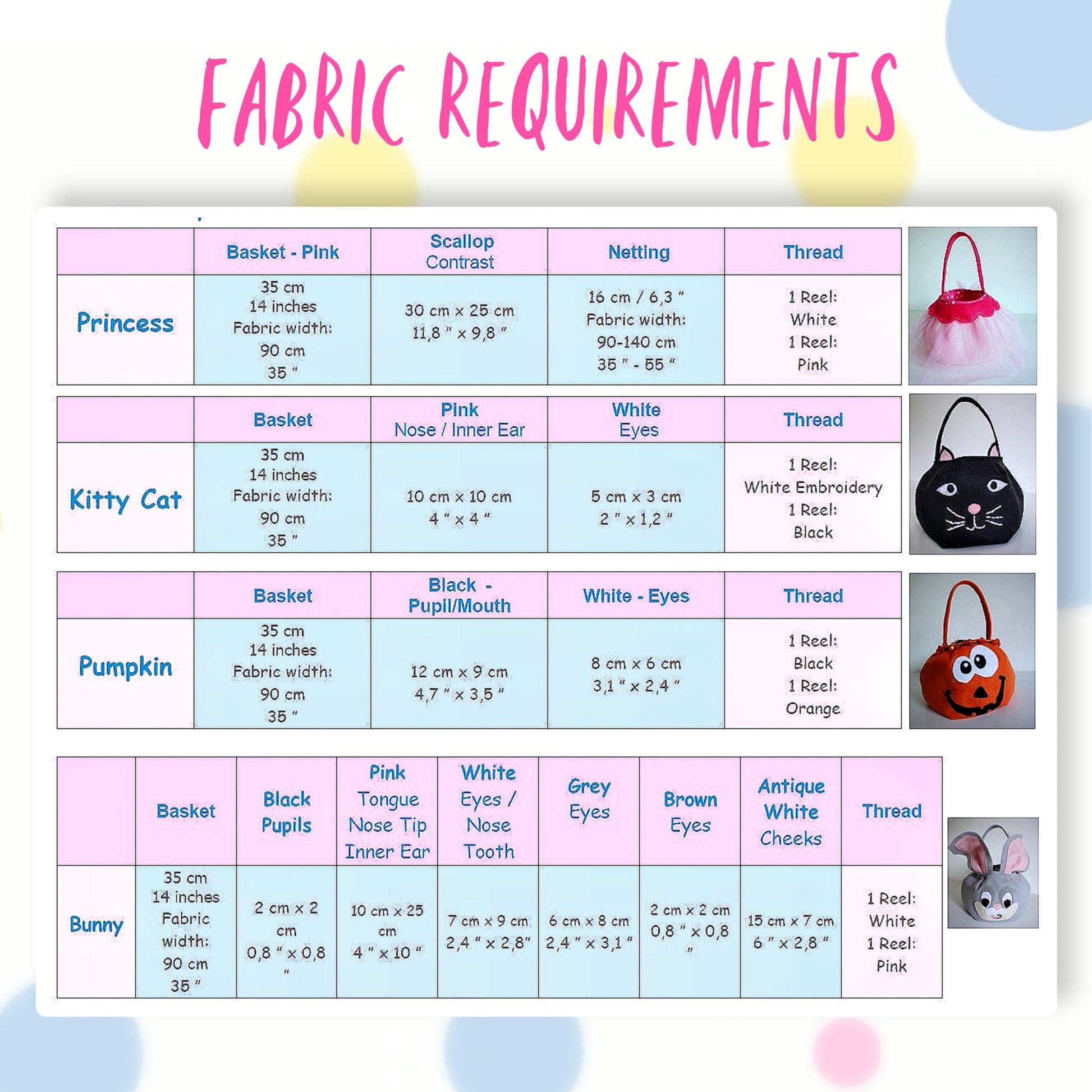
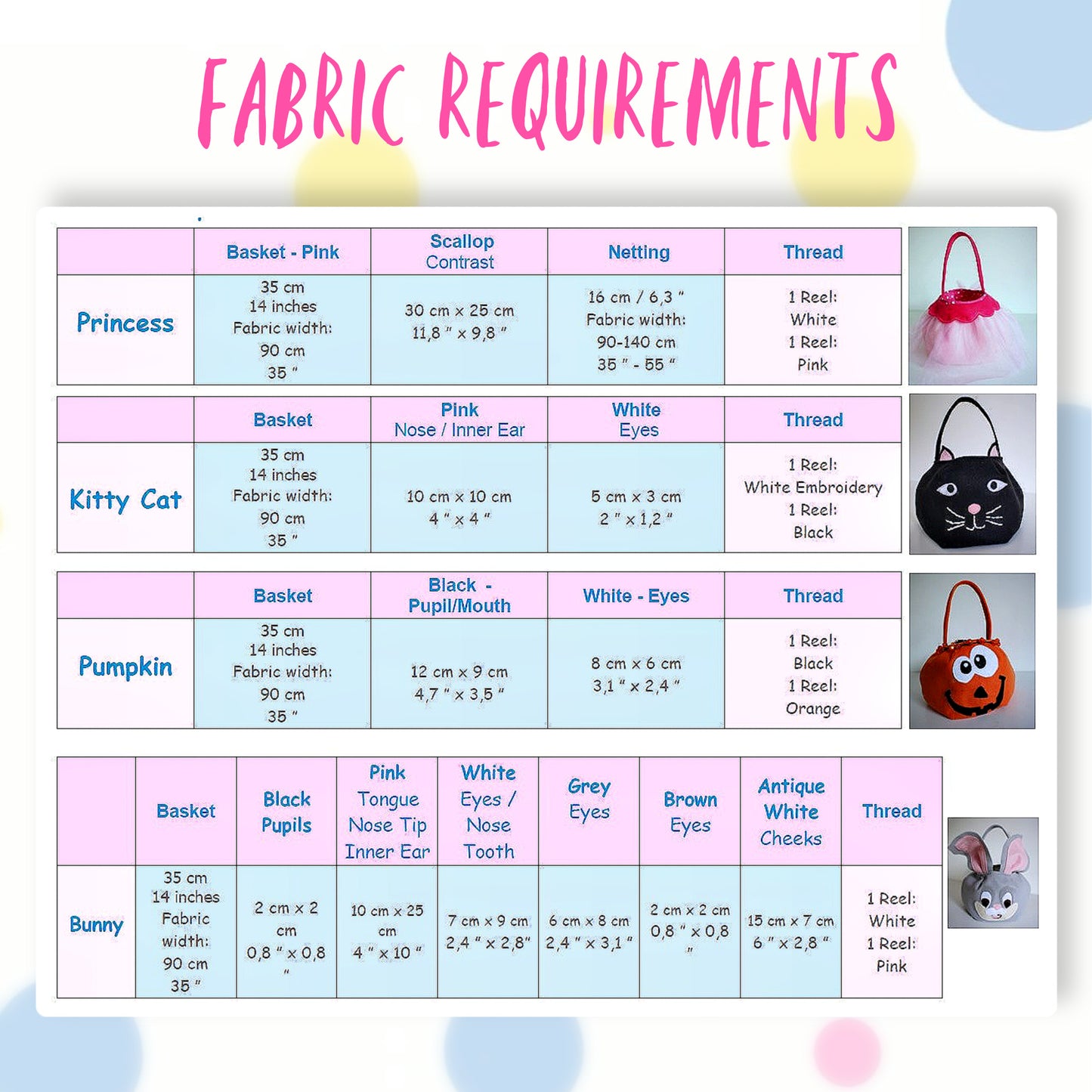
Fabric Requirements

BEST MATERIAL CHOICE
Firm felt or heavyweight Home Decor fabrics for the Exterior. Oilcloth is also a great option as it often already provides the firmness needed.
Alternatively the basket can be lined for extra support.
The lining can be made in lighter weight fabrics such as quilting cotton.

FABRIC REQUIREMENTS
• Shell:  1/2 yard (40cm)
• Lining: 1/2 yard (40cm)
•  1 spool of coordinating all-purpose thread
•  A heavy weight sewing machine needle (90)
•  Pellon -Under 805: 7 inches (19cm)

Available Sizes

DIMENSIONS
•  Diameter base: 11 inches (28 cm)     
•  Diameter rim: 6 inches (14 cm)    
•  Height: 7 inches (18 cm)      
•  Width: 4.7 inches (12 cm)

Please Read

  1. This is a digital pattern or PDF file, not a physical product. It will be delivered electronically via a download link delivered to the email used for the purchase.
  2. To ensure the pattern prints at its actual size, it's recommended that you use Adobe Acrobat Reader.
  3. The pattern creator, Frocks & Frolics, welcomes small-scale production using their patterns. 

Customers are encouraged to tag Frocks & Frolics when sharing projects made using their patterns on social media.

@frocksandfrolics #frocksandfrolics

View full details

STEP-BY-STEP VIDEO TUTORIALS

Thumbnail
THE PATTERN
Thumbnail
ALL-IN-ONE TUTORIAL
Thumbnail
ALL THE APPLIQUE OPTIONS
Thumbnail
BONUS: PRINCESS BASKET

VIDEO TEXT

Transcript for the video: Halloween Treat Basket: The Pattern

Printing and Preparing the Pattern

The first thing to do is print your pattern and check the scale. Make sure it measures 5 cm or 1 inch as indicated.

This pattern only requires a few pieces to assemble. Unlike many patterns with numerous sections, this one is quite simple. You only need to assemble the front piece and the handle. The pieces are labeled A, B, and C and should be joined in order.

The pattern consists of four main pieces:

  • Front
  • Back
  • Base
  • Handle

Each applique design has its own separate page, allowing you to print only the designs you need.

Choosing an Applique Design

There are three applique options included:

  • Kitty Cat
  • Pumpkin
  • Bunny

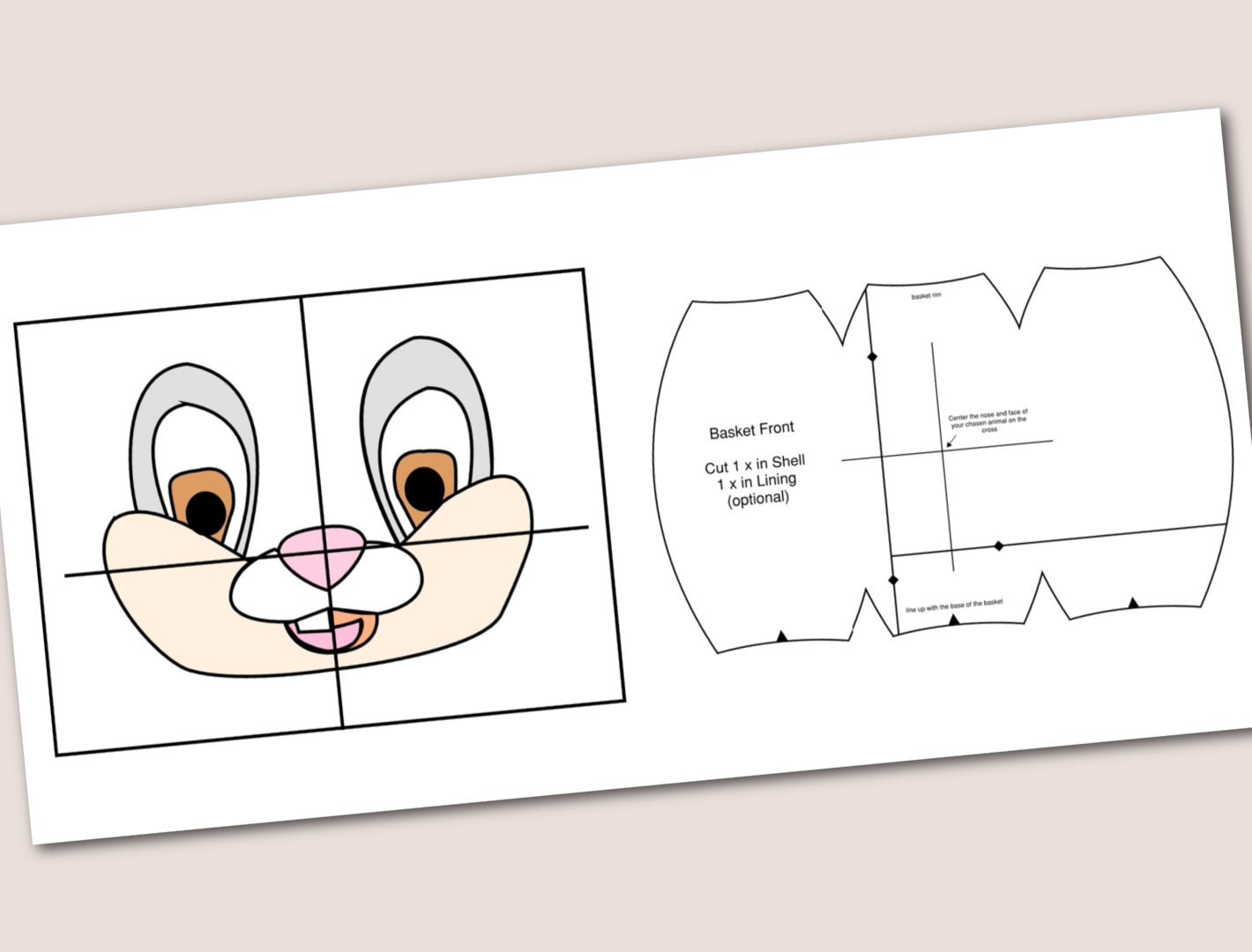
Each design contains a cross marking through the center. This cross aligns with the matching cross printed on the front pattern piece. Because the cross is positioned slightly above center, it helps ensure the applique is placed correctly rather than directly in the middle.

Materials

Felt is recommended because it does not fray and is easy to work with.

For a more durable version, you may choose wool felt. For a more economical option, polyester or acrylic felt works well.

You will also need Pellon Wonder-Under 805, which is a paper-backed fusible transfer web. It converts regular fabric into fusible fabric and is available either by the roll or in packaged sheets.

Cutting the Pieces

Cut the main bag pieces from your felt. Approximately 30 cm (12 inches) of felt is sufficient, though a half yard will leave extra material for additional projects.

Cut:

  • Front piece
  • Back piece
  • Base piece
  • Handle piece

The handle can be cut slightly wider if your felt is soft or flexible. This allows you to fold under one edge for added stability.

Marking the Pieces

Place the pattern over the front piece and transfer the markings for the base attachment. Use the small triangle notches shown on the pattern. Snipping these notches is more effective than using temporary marks.

Repeat this process for the back piece.

Since there are multiple layers, you can keep them stacked while marking to save time.

Preparing the Base

The base is circular and requires notches all the way around its edge.

These notches are important because the circumference of the base must fit smoothly into the slightly narrower bag opening.

If your felt feels too soft or flimsy, consider cutting a second base layer for additional structure. You can also add an extra reinforcement layer later if needed.

Cutting the Lining

Cut the same pieces from your lining fabric.

Don't forget to transfer the base markings onto the lining as well.

In this example, the base has been reinforced by adding a second layer of felt to improve stability and help the bag maintain its shape.

Sewing Tip

When attaching the base, sew from the felt side whenever possible. The felt provides more stability and makes it easier to guide the fabric accurately through the machine.

Now you're ready to begin construction.

All-in-One Tutorial!

Transcript for the video: Halloween Treat Basket All-In-One Tutorial

Hi, this is Marina from Frocks and Frolics, and today I'm going to show you how to make these beautiful trick-or-treat bags.

There are four variations, but they're all made from the same basic bag pattern, so don't worry—it's actually very easy.

You can make:

  • A cat bag
  • A pumpkin bag
  • A bunny bag
  • A princess basket

For all of these, you have the option of adding a lining or leaving them unlined.

Lined vs. Unlined Bags

In this example, I've added a lining, which gives the bag more structure and body.

If you decide not to line your bag, I would recommend adding an extra base layer to provide additional stability.

For this version, I've even added twinkling lights. They have different flashing settings and create a wonderful effect. As a bonus, you can easily see what has been collected inside the bag.

Materials

You'll need:

  • Felt
  • Lining fabric (optional)
  • Pellon Wonder-Under 805 fusible web
  • Sewing supplies
  • Optional decorative lights

The Pellon Wonder-Under acts as an adhesive film for the appliqué pieces.

Printing and Assembling the Pattern

Print your pattern and check the scale. It should measure 5 cm or 1 inch as indicated.

Only a few pieces need to be assembled:

  • Front
  • Back
  • Base
  • Handle

The front piece is assembled from sections A, B, and C. The handle also needs to be assembled.

Each appliqué design has its own page, so you only need to print the design you're planning to use.

Cutting the Felt

You can cut all of the bag pieces from approximately 30 cm (12 inches) of felt. I'm using a half yard, which leaves enough material for additional bags.

Cut:

  • Three main body pieces
  • One handle
  • Base pieces
  • Lining pieces if desired

I cut my handle slightly wider because my felt was fairly soft. This allows me to fold under one edge for extra strength.

Marking the Pieces

Place the pattern over the front piece and mark the base position using the small triangle notches.

Repeat the process for the back piece.

The circular base should also be clipped all the way around the edge. These clips help ease the circle into the bag body later.

If your felt feels flimsy, consider cutting a second base layer for reinforcement.

Don't forget to transfer all markings to the lining pieces as well.

Creating the Appliqué

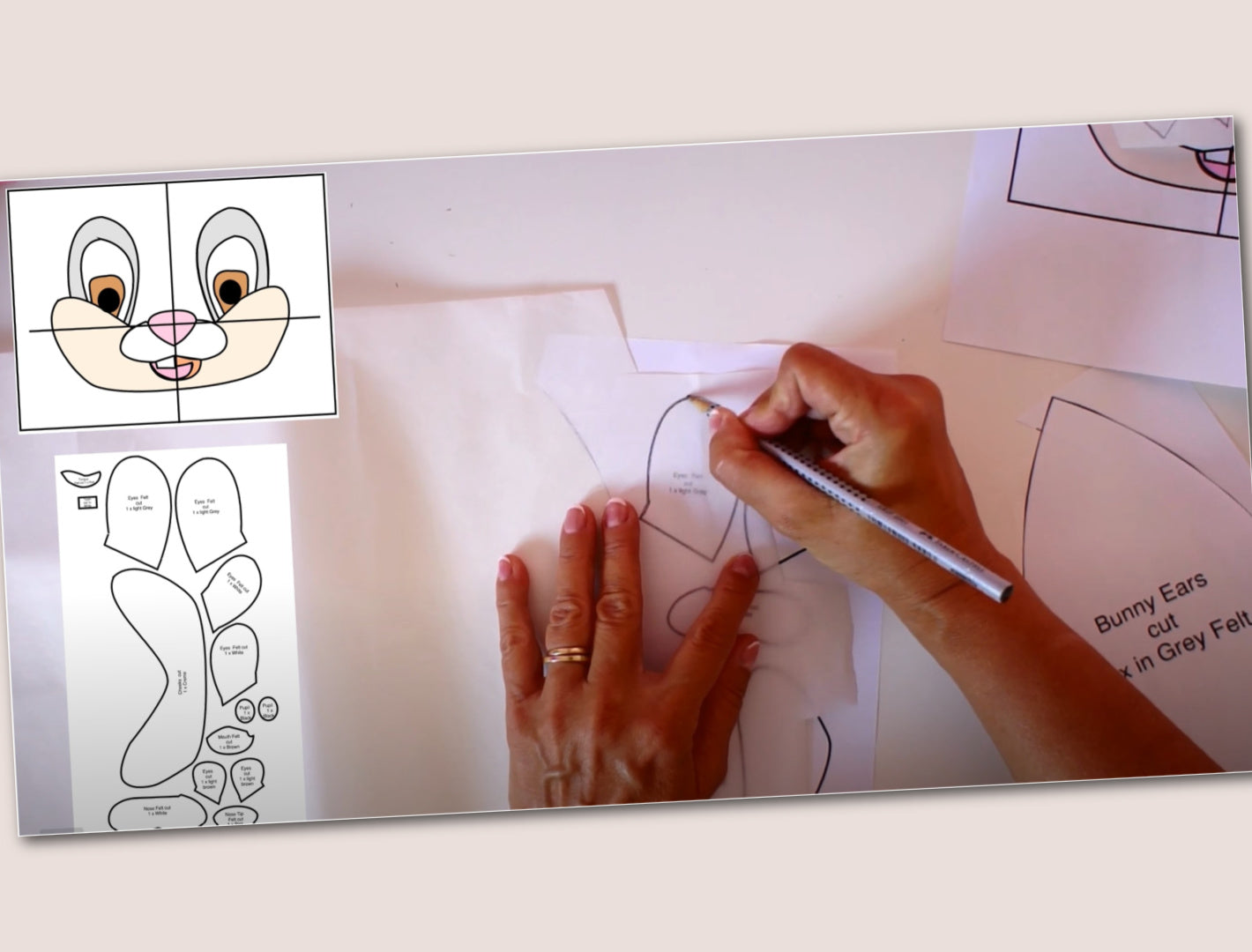
Place the Pellon Wonder-Under over the appliqué design and trace the shapes onto the smooth paper side.

Cut the traced pieces roughly apart and fuse them to the wrong side of your felt. Felt doesn't have a true right or wrong side, so placement is easy.

Press each piece for approximately eight seconds.

Mark the center nose position on the front of the bag. The nose serves as your placement guide for the rest of the appliqué.

Peel away the paper backing, position the pieces using the reference image, and fuse them into place.

Once secured, stitch around the appliqué pieces on your sewing machine.

Sewing the Darts

Next, sew all of the darts.

The important thing is not to sew them into a sharp point. Instead, gradually curve the stitching into the seam so the dart blends smoothly into the fabric.

You can use the pattern piece as a guide if needed.

This creates a much nicer rounded shape.

Sewing the Bag Body

Sew the darts in both the front and back pieces.

Then sew the side seams using a 1 cm seam allowance.

If you're making the pumpkin version, you could topstitch the seams before closing the side seams. This creates more defined pumpkin sections.

You could even add batting behind the sections for additional dimension.

Pressing the Seams

Press the seams if desired.

For a quick project, you can simply press them all to one side rather than pressing them open.

The same process is repeated for the lining bag.

The only difference is that you must leave a turning gap in one of the lining side seams.

Attaching the Base

Match the clips on the circular base to the clips on the bag body.

Pin generously around the circle.

If the base seems slightly large because you didn't follow the seam allowance perfectly, don't worry. You can ease it in or even sew a tiny pleat. Since it's a basket, small adjustments won't be noticeable.

Sew the base in place.

I like to use a pin to help guide the fabric under the needle and prevent unwanted folds.

Repeat the process for the lining.

Constructing the Handle

Prepare the handle by folding the edges under and topstitching both sides.

Use a longer stitch length, around 3.5 to 4.

Attach one end first, then carefully position and attach the other end, making sure the handle isn't twisted.

If your sewing machine struggles with bulky layers, you may prefer to attach the handle later.

Joining the Lining and Outer Bag

Place the outer bag inside the lining with right sides together.

Match seams if desired and pin around the top edge.

Any slight excess can be eased in.

Sew around the entire top edge using a 1 cm seam allowance.

After sewing, clip around the edge to release tension and help the bag turn smoothly.

Turning the Bag

Turn the bag through the opening left in the lining.

Start from the point furthest away from the opening for easier turning.

Push the lining inside the bag and smooth the top edge.

You can press the edge or simply pin it into position.

Topstitching the Top Edge

Place the bag over the free arm of your sewing machine.

Topstitch around the entire upper edge using a long stitch length, approximately 3.5 to 4.

This secures the lining and creates a clean finished edge.

At this point, the bag is essentially complete.

Adding Decorative Lights

For extra Halloween fun, I added battery-powered lights around the top edge.

Simply secure the wire between the lights with a few hand stitches through the lining and outer layer.

Work your way around the bag until the lights are evenly distributed.

The finished effect is especially beautiful in the dark and gives the bag a magical trick-or-treat glow.

Finished Bag

And that's it—the trick-or-treat bag is finished.

I hope you enjoyed this project. Don't forget to watch the separate appliqué tutorials and the princess basket tutorial if you'd like additional details on those variations.

Thank you very much for watching, and bye for now.

Transcript for the video: Halloween Treat Basket - All the Applique Options

Hi everyone, welcome back to making trick-or-treat bags. In this video, we're going to concentrate on how to finish them off and how to do the appliqué. If you need to know how the actual bag goes together, then you want to go to the pumpkin video where I show you everything.

Understanding the Appliqué Templates

For all the designs, you've got three different pictures: the kitty cat, the pumpkin, and the bunny. We've got a cross through the middle, and this cross is always right on the nose. On the front piece of the pattern, you've got that very same cross so that you can match them up and know exactly where everything needs to be placed. The cross is slightly above the center of the front piece, so it's not directly in the middle.

Materials You'll Need

I would suggest using felt for this because it doesn't fray. For something more durable, you might want to use wool, but for a more affordable option, use polyester or acrylic felt.

You'll also need Pellon Wonder-Under 805. It comes either on a roll or in a packet. It's a paper-backed fusible transfer web that turns any fabric into a fusible fabric.

How Appliqué Works

Before we start, here's a quick run-through of how appliqué works. Every fabric has a right side and a wrong side. Trace your object onto the paper backing, then iron it onto the wrong side of the fabric you'll be using. Once it's ironed on, cut out the shapes and peel off the paper backing.

Since the pieces are turned over, they'll end up as a mirror image of what you traced. If you're creating your own design, make sure you trace it in reverse. For my bunny, pumpkin, and cat designs, I've already mirrored the pieces for you, so you can simply trace them as they are.

Preparing the Appliqué Pieces

Once all the pieces are traced, cut them out. Cut them fairly close together so you don't waste any of the Pellon Wonder-Under, since it's quite expensive. Save any leftover pieces for future projects.

Now place the fusible side of each piece onto the wrong side of the fabric and iron it on. For my example, I need the eyes, nose, and mouth. Place an ironing cloth over the top and press for about eight seconds. Once everything is fused properly, cut out the pieces.

Marking the Placement

Next, prepare the front pattern piece. We only need the center of the cross, so mark that point with a fabric marker or tailor's chalk. This marks the position of the nose.

Start by placing the nose. Check the orientation, peel off the paper backing, and position it directly over the center mark. Then add the mouth and the remaining pieces according to the reference picture.

If the paper backing is difficult to remove, it's usually a sign that the fusible web hasn't been ironed long enough. Re-press it if necessary.

Ironing the Appliqué in Place

Once everything is positioned correctly, cover it with a pressing cloth and iron thoroughly. I like to use plenty of steam, even though the instructions often suggest otherwise. As long as you're using a pressing cloth, it's usually fine.

Stitching Around the Appliqué

Now it's time to stitch around the appliqué pieces. Lower the needle before lifting the presser foot and turning corners. This keeps everything neat and prevents crooked stitching.

When sewing around curves, try guiding the fabric with your left hand rather than pulling with your right. It's a useful skill that gives you better control. For very small pieces, shorten your stitch length to around 2 mm so you can navigate tight curves more easily.

Finishing the Pumpkin Basket

The pumpkin basket is now finished. I added twinkling lights around the top edge, which look absolutely gorgeous in the dark and give the basket a fun Halloween effect.

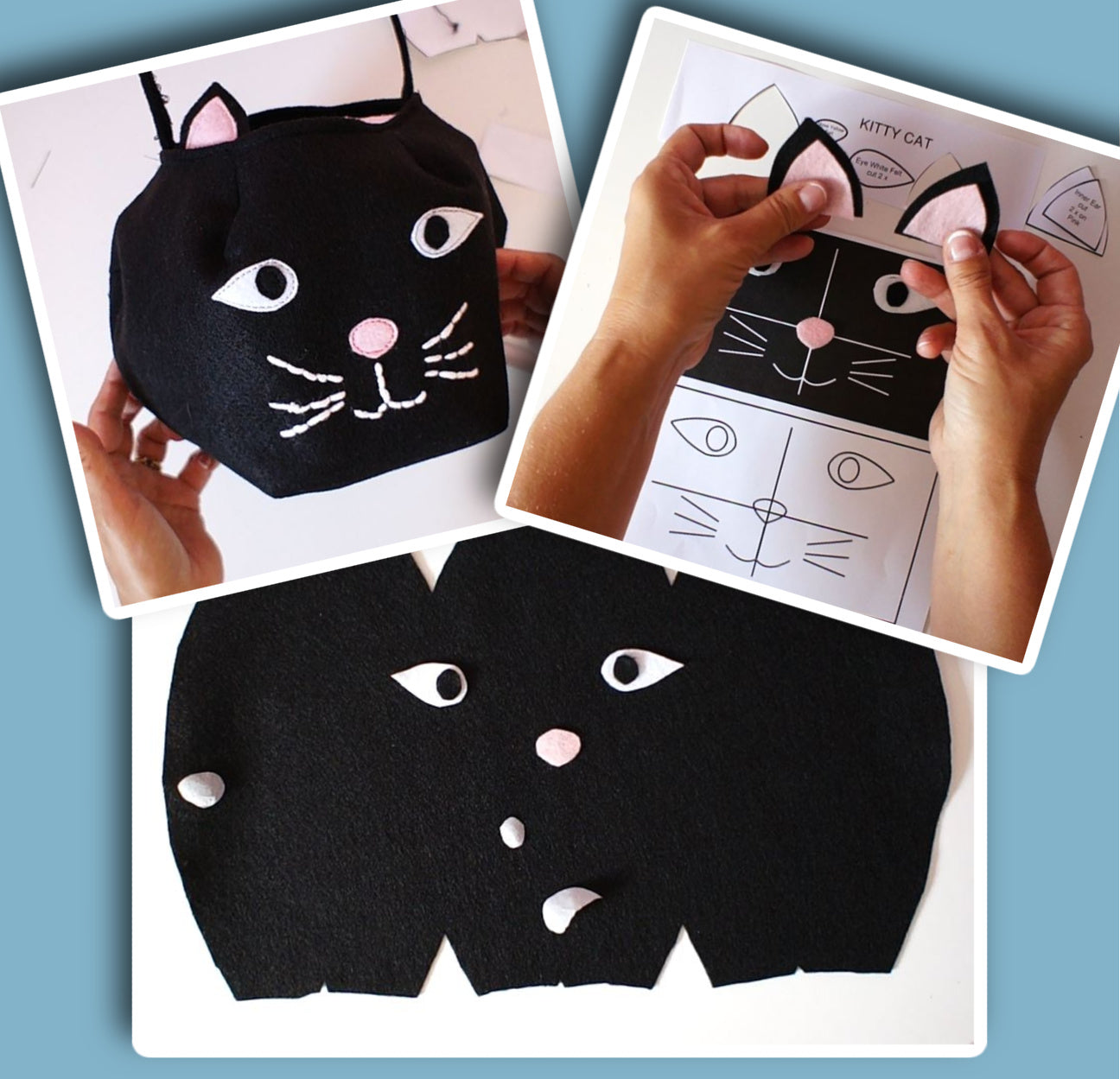
Creating the Cat Basket

The cat basket is much quicker because it only has the eyes, nose, and ears. The inner ear is stitched onto the outer ear before being attached to the basket.

For the whiskers, fold the template in half and draw only one side. Then transfer the markings to the other side by folding and tapping the chalk. This ensures both sides are perfectly symmetrical.

To embroider the whiskers, begin with a simple running stitch. Use three stitches for the inner section, then work outward, overlapping stitches slightly to create a neat whisker effect. Once the whiskers are complete, stitch around the eyes and ears and finish assembling the basket.

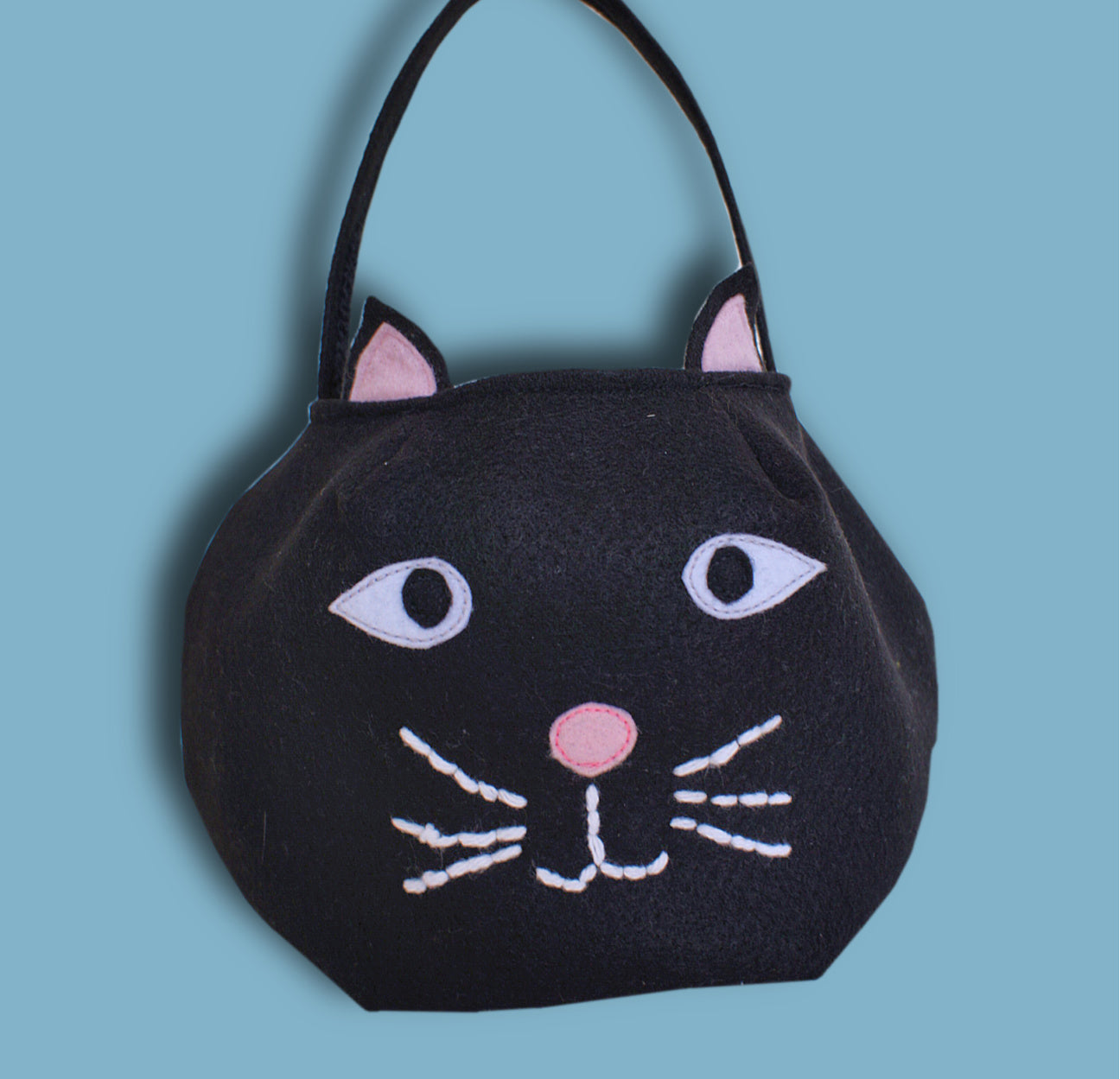
Finishing the Cat Basket

Since this version isn't lined, simply turn the top edge under and stitch around it. Attach the handle into the side seams and stitch it down from the outside.

Then place the cat ears on either side of the dart. The basket is finished and looks fantastic.

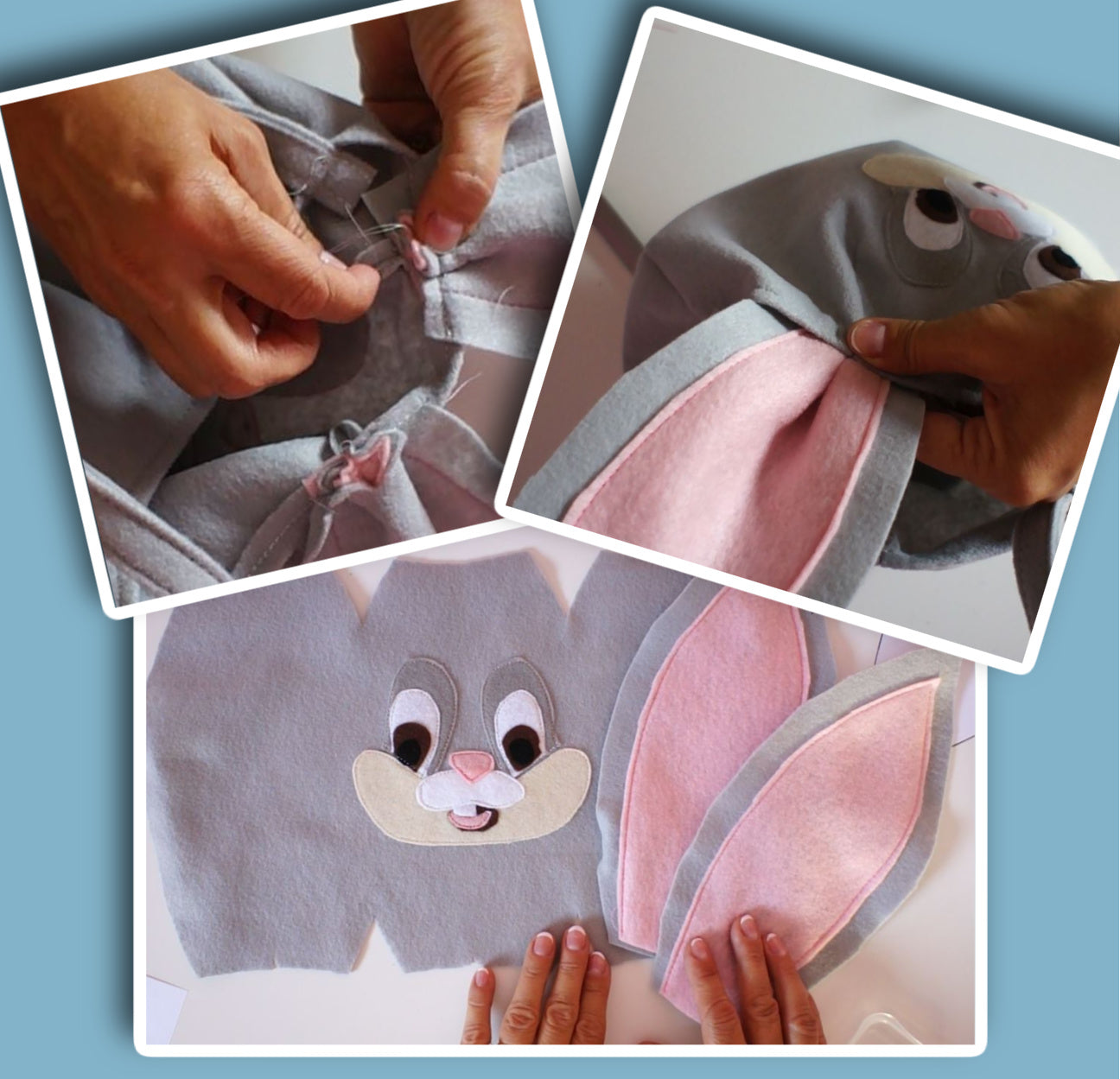
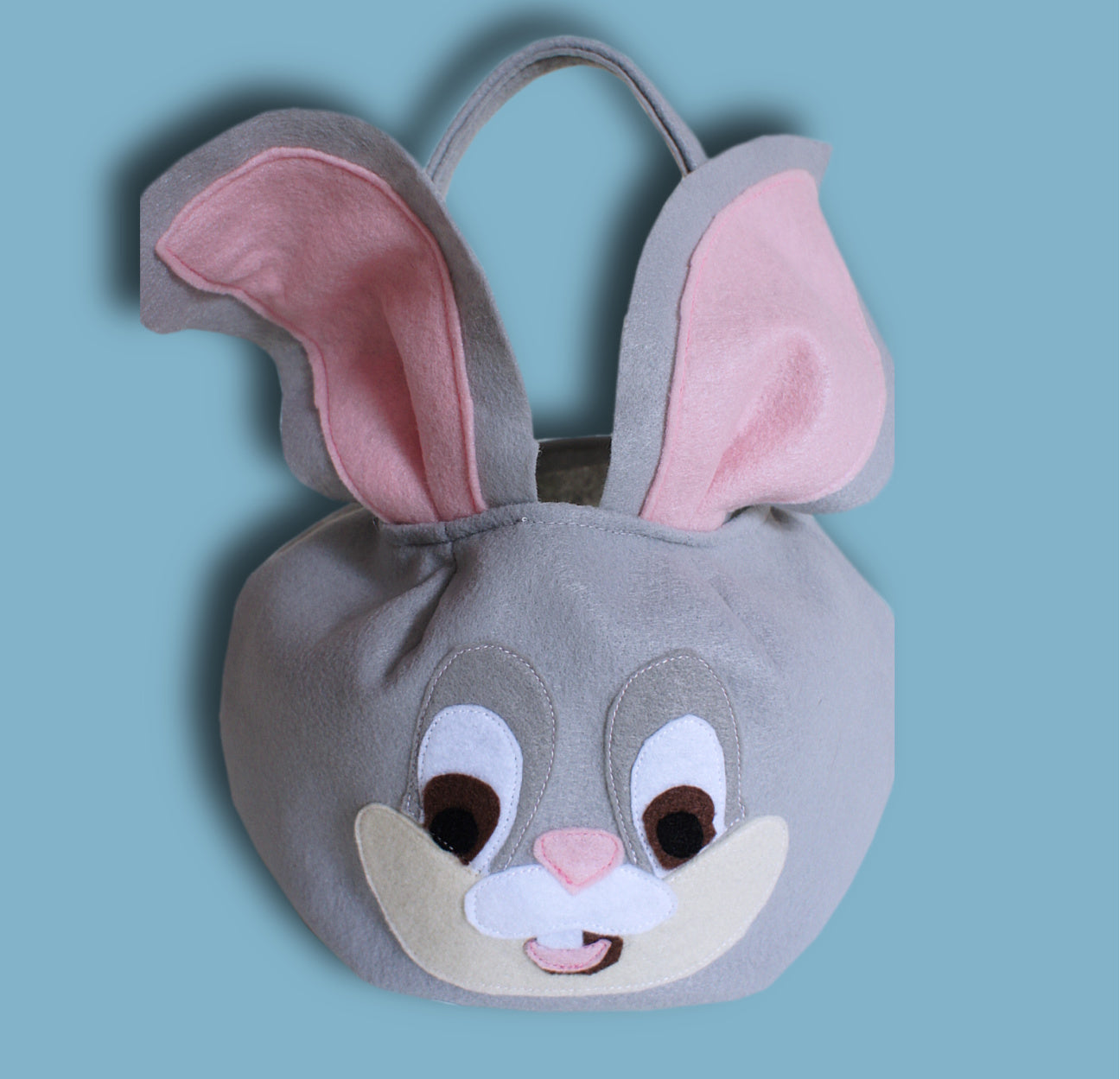
Creating the Bunny Basket

The bunny basket has the most pieces, but the process is exactly the same. Cut out all the appliqué pieces, position them using the guide, and iron them into place.

Because there are several layers of felt around the nose area, I added a small scrap piece underneath to level things out.

The ears are made from an inner ear and an outer ear. Stitch them together before attaching them to the basket. Once the appliqué is complete, assemble the basket.

Finishing the Bunny Basket

When turning under the top edge, make a few small clips into the seam allowance. This helps the curved edge fold more smoothly. Stitch around the top edge and attach the handle.

I also added an extra felt base because the basket felt a little flimsy. I stitched two circular pieces of felt together and attached them inside the basket for extra stability. This helps the basket hold its shape, especially when it's full of treats.

To attach the ears, make a small box pleat at the bottom of each ear. Stitch it in place, then position the ears so the center of the pleat aligns with the dart. To help them stand upright, attach the seam allowance to the dart. You can also secure one ear to the handle and leave the other free so it flops slightly, which creates a cute effect.

Final Thoughts

And that's it—all three baskets are complete. If you'd like to see how the actual basket construction works, be sure to watch the main pumpkin basket tutorial. There's also a princess-themed version available.

Thank you very much for watching, and I'll see you next time. Bye for now.

Transcript for the video: Halloween Treat Basket - Bonus Princess Basket

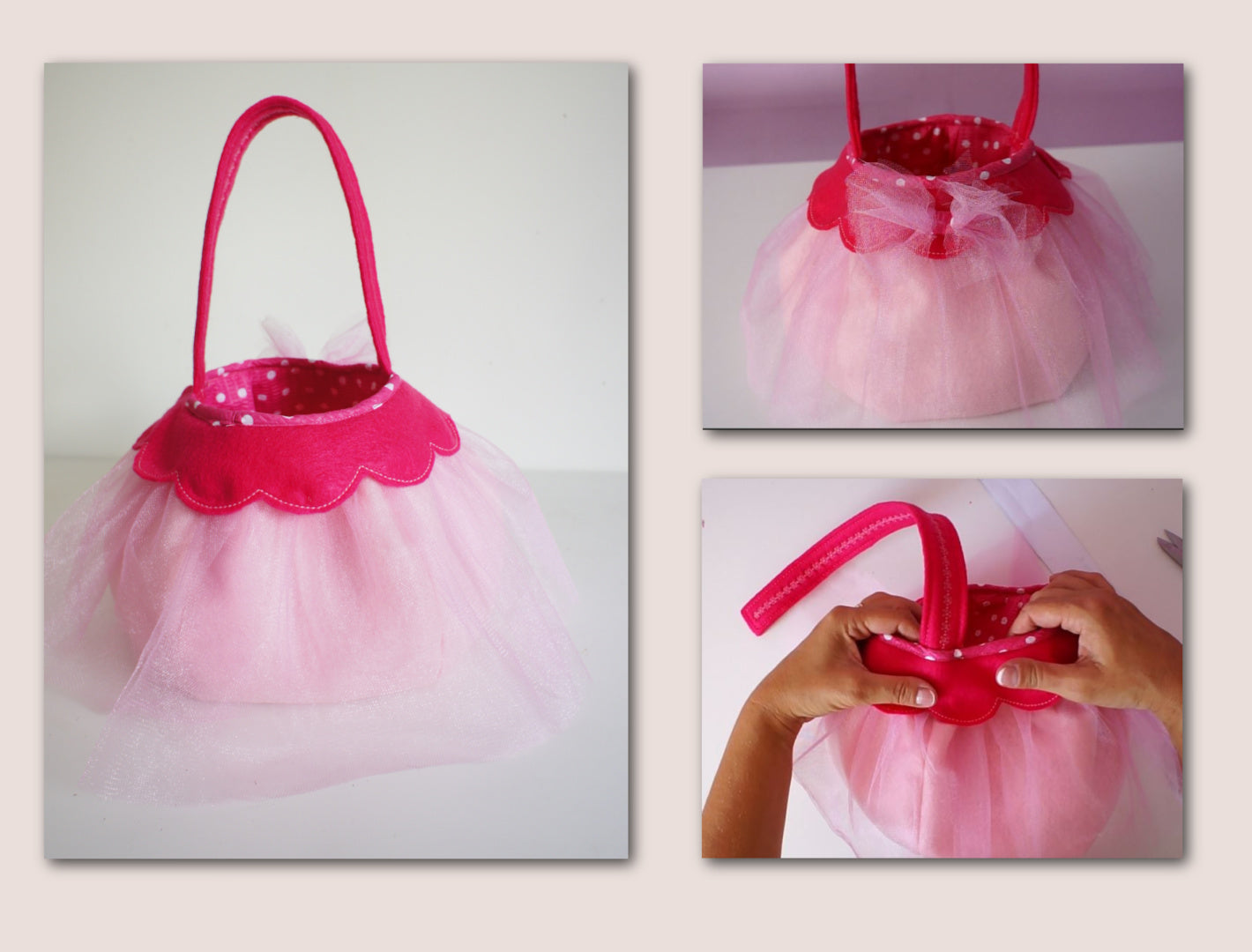
Hi, this is Marina from Frocks & Frolics, and I specialize in PDF sewing patterns. That means they are digital, so you can download them and start sewing straight away. In this tutorial, I'll show you how to attach the frill, scallop, and binding to this beautiful princess trick-or-treat basket.

If you need instructions on how to construct the basket itself, head over to the pumpkin basket video, where I show the entire process from start to finish.

Cutting Out the Scallop

The first thing to do is cut out the scallop piece. It is cut on the fold, so place the pattern carefully on your felt or chosen fabric. I recommend pinning the pattern securely, as scallops can be tricky to cut accurately.

Once pinned, cut out the scallop shape carefully. Taking your time at this stage will give you a much cleaner finished result.

Preparing the Scallop and Frill

I've sewn all the way around the scallop because it gives it more structure and durability. It also helps prevent the edges from catching or becoming damaged during use.

Next, prepare the netting for the frill. The pattern calls for a length of 16 centimeters. Gather the top edge of the netting by pulling the bobbin threads until the gathered section fits the length of the scallop.

Place the scallop on top occasionally to check the fit and continue adjusting the gathers until the lengths match.

Preparing the Basket

The basket itself should already be assembled. If you need help with this stage, refer to the pumpkin basket tutorial.

I've lined my basket and attached the lining at the top edge. Because this version uses binding around the rim, turning the edge under would create too much bulk. Instead, we'll bind the top edge for a cleaner finish.

Attaching the Frill

Once the basket is ready, attach the gathered netting around the top edge.

Start by pinning one side and then work your way around the basket, distributing the gathers evenly. If your netting seems longer than expected, don't worry—you can trim any excess later.

Take your time to ensure the gathers are spread evenly around the entire circumference of the basket.

Adding the Scallop Trim

Place the scallop trim directly over the gathered netting and pin it into position.

Begin at one end and work your way around the basket. Allow the ends of the scallop to overlap slightly—just enough to meet neatly. You can hand sew this overlap later or stitch it together on the machine before attaching it to the basket.

Check that the netting remains evenly distributed underneath as you pin everything into place.

Making Custom Bias Binding

You can use ready-made bias binding if you prefer. However, I cut my own binding for this project.

For beginners, I recommend cutting the binding strips 3 centimeters wide. This width is easier to handle and gives better results than narrower strips.

Join the binding strips together by placing the ends right sides together at an angle and stitching across the diagonal seam. Trim the seam allowance and press the seams open.

Next, fold and press one edge of the binding inward by just under one centimeter.

Attaching the Binding

Place the binding along the inside edge of the basket and stitch it in place using a presser-foot-width seam allowance.

Once attached, trim the seam allowance around the basket edge as closely as possible. This reduces bulk and helps the binding roll smoothly to the outside.

Fold the binding over the edge, pin it into place, and stitch it down from the outside of the basket.

Trimming and Finishing the Frill

After the binding is complete, trim the netting to your preferred length.

I found that my netting was too long, so I cut it back. The 16-centimeter measurement included in the pattern creates the ideal amount of fullness and length.

At this stage, you can also add decorative details such as embroidery to the handle for an extra special touch.

Attaching the Handle

Attach the handle using the same method shown in the other basket tutorials.

If your sewing machine struggles with multiple thick layers, attaching the handle afterward can make sewing much easier.

Secure the handle firmly on both sides of the basket.

Making and Adding a Decorative Bow

To finish the basket, create a simple decorative bow.

Gather the center of the bow and wrap a narrow strip of fabric around the middle to secure it. Fold the ends neatly underneath and stitch or glue the bow onto the front of the basket.

Trim the tails of the bow to your desired length and shape.

Final Touches

Fluff the netting, adjust the scallops, and make any final trims needed to achieve the look you want.

The princess basket is now complete. You can customize it with any color scheme or princess theme to suit your project.

Conclusion

And that's it—your princess trick-or-treat basket is finished. If you'd like to learn how to construct the basket itself, be sure to watch the main trick-or-treat basket tutorial. There's also a separate appliqué tutorial if you'd like to add decorative designs.

Thank you very much for watching, and I'll see you next time. Bye for now.

YOU MAY ALSO LIKE

Isabella

SHOP NOW

Beatrice

SHOP NOW

Connie

SHOP NOW

Audrey

SHOP NOW