
Skip to product information
1 of 15

CHARLOTTE COAT

CHARLOTTE COAT

Regular price $5.50 USD
Regular price Sale price $5.50 USD
Sale Sold out

Meet Charlotte, my adorable vintage coat PDF sewing pattern!

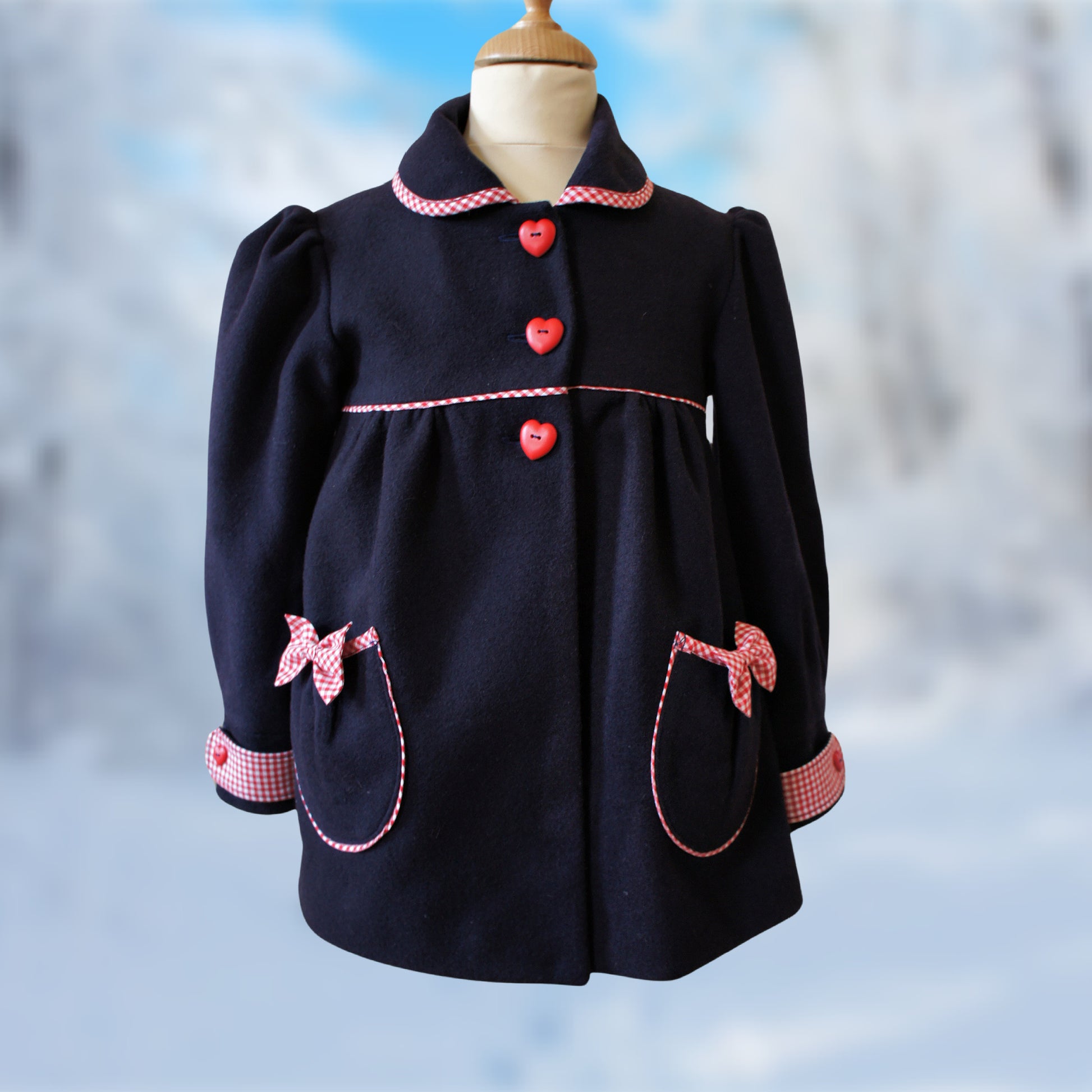
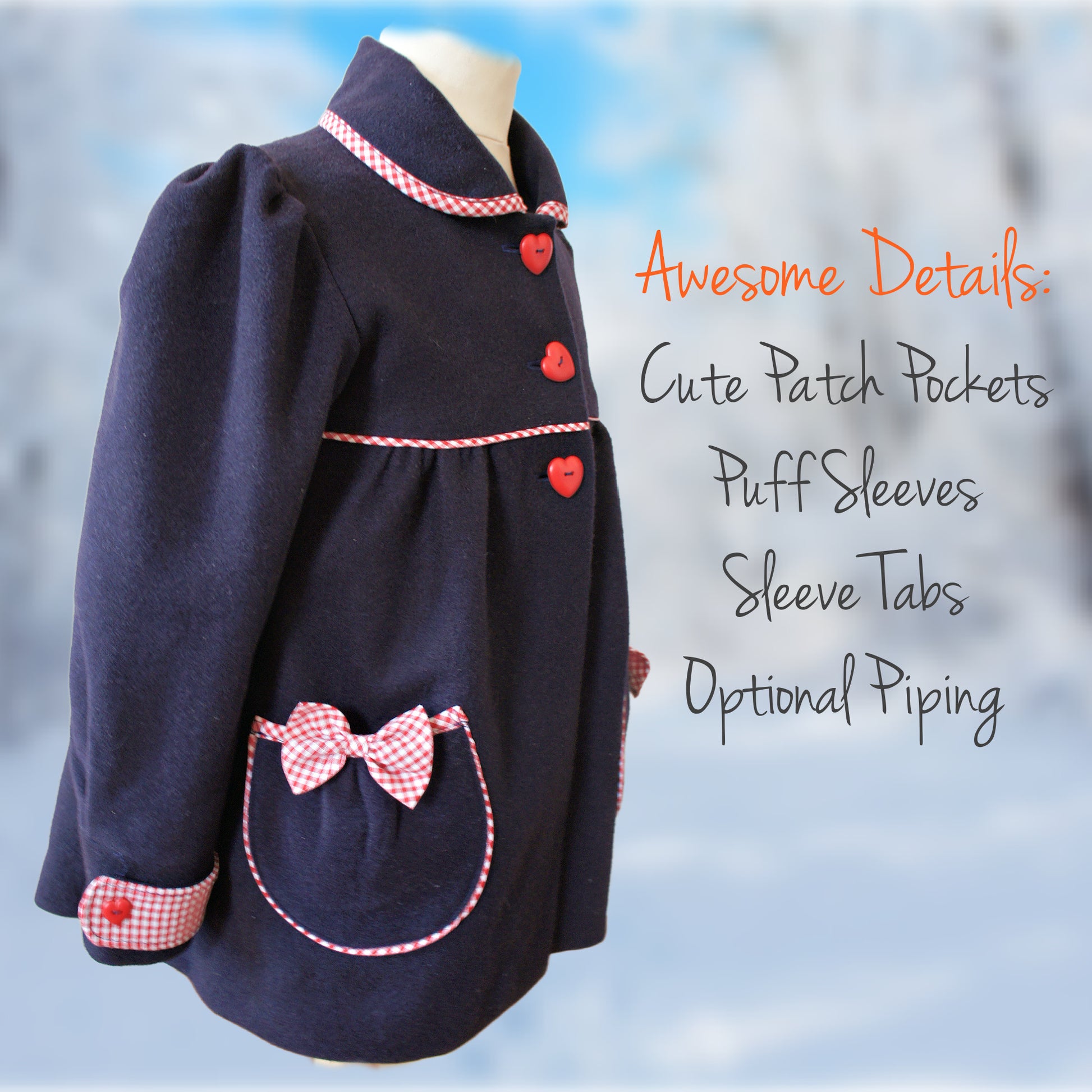
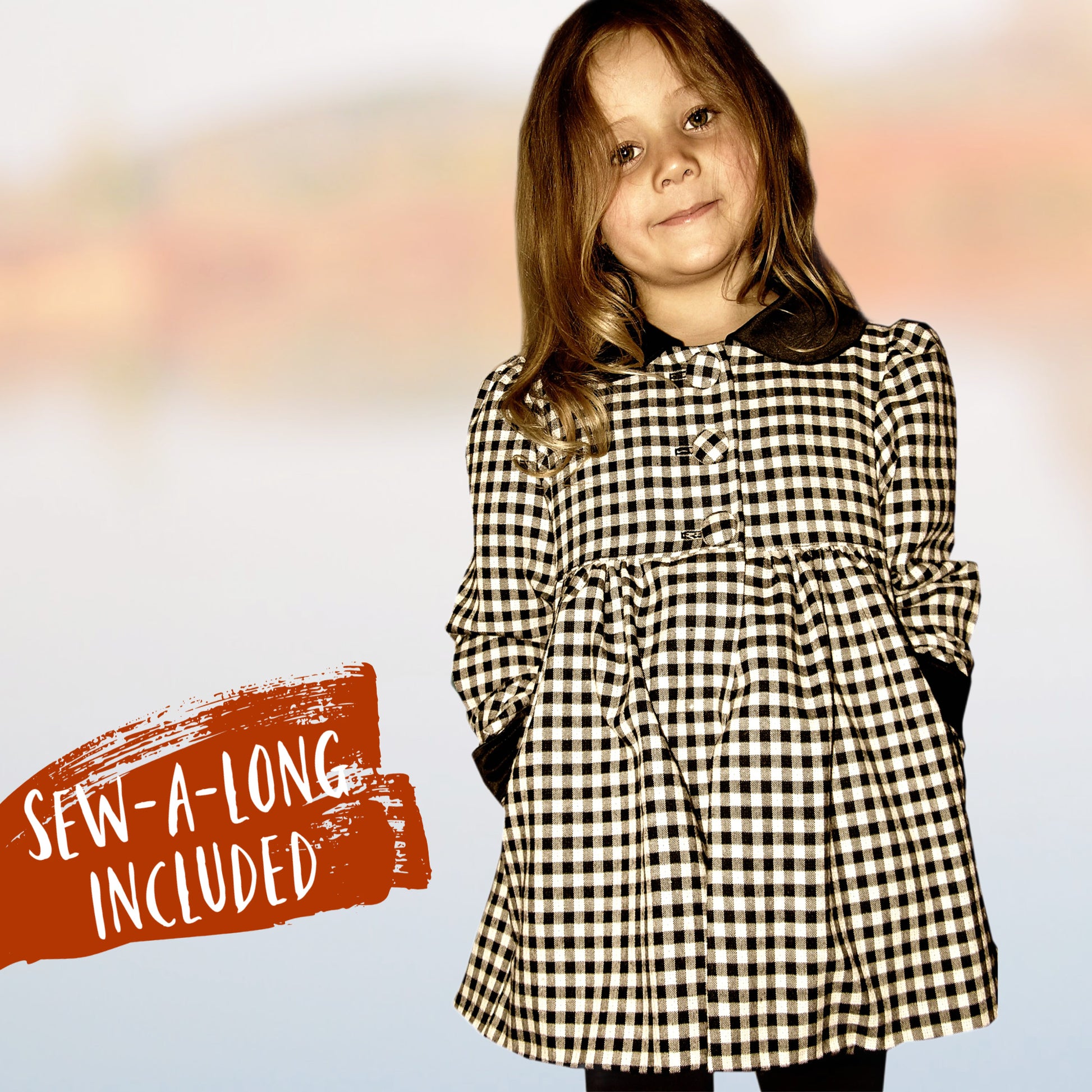
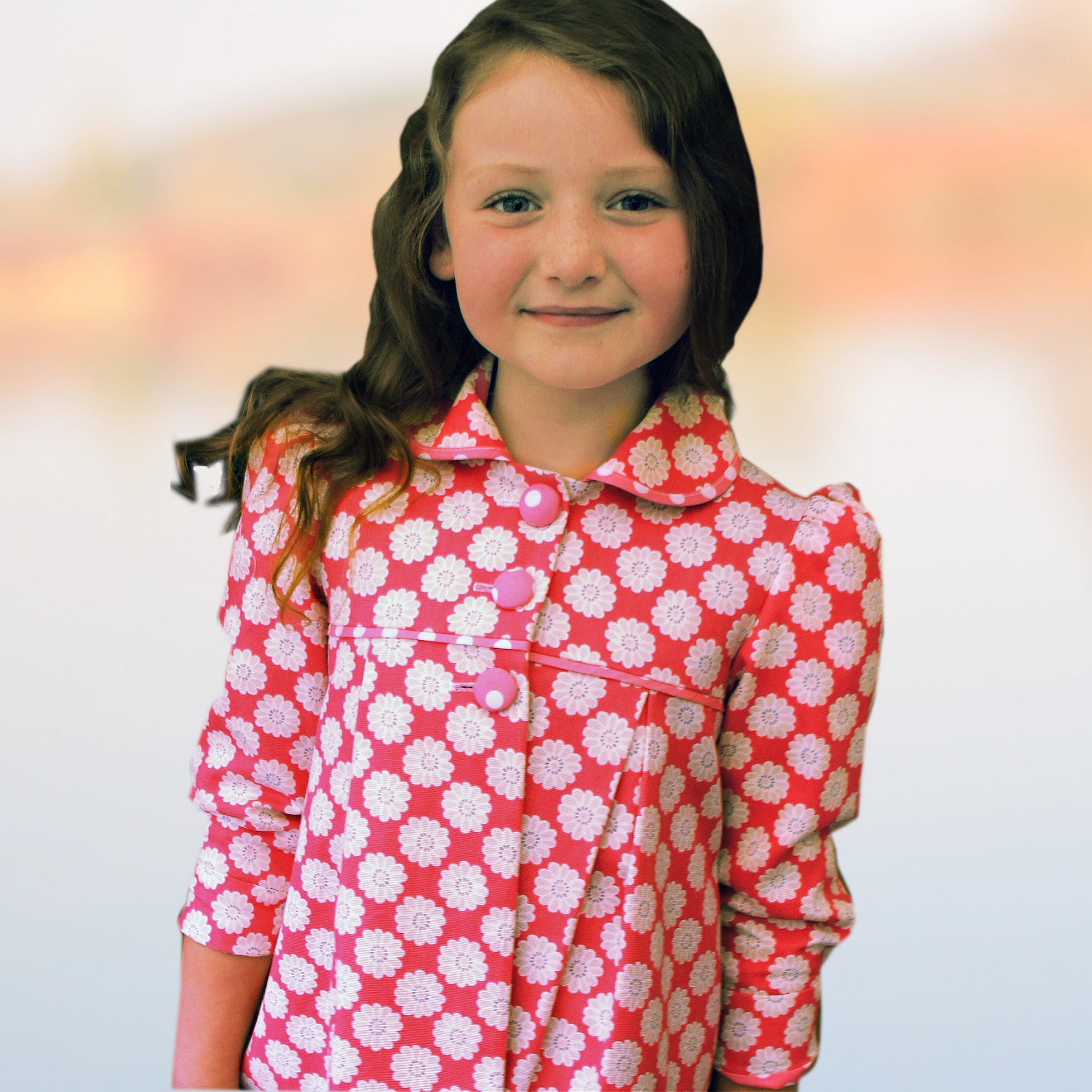
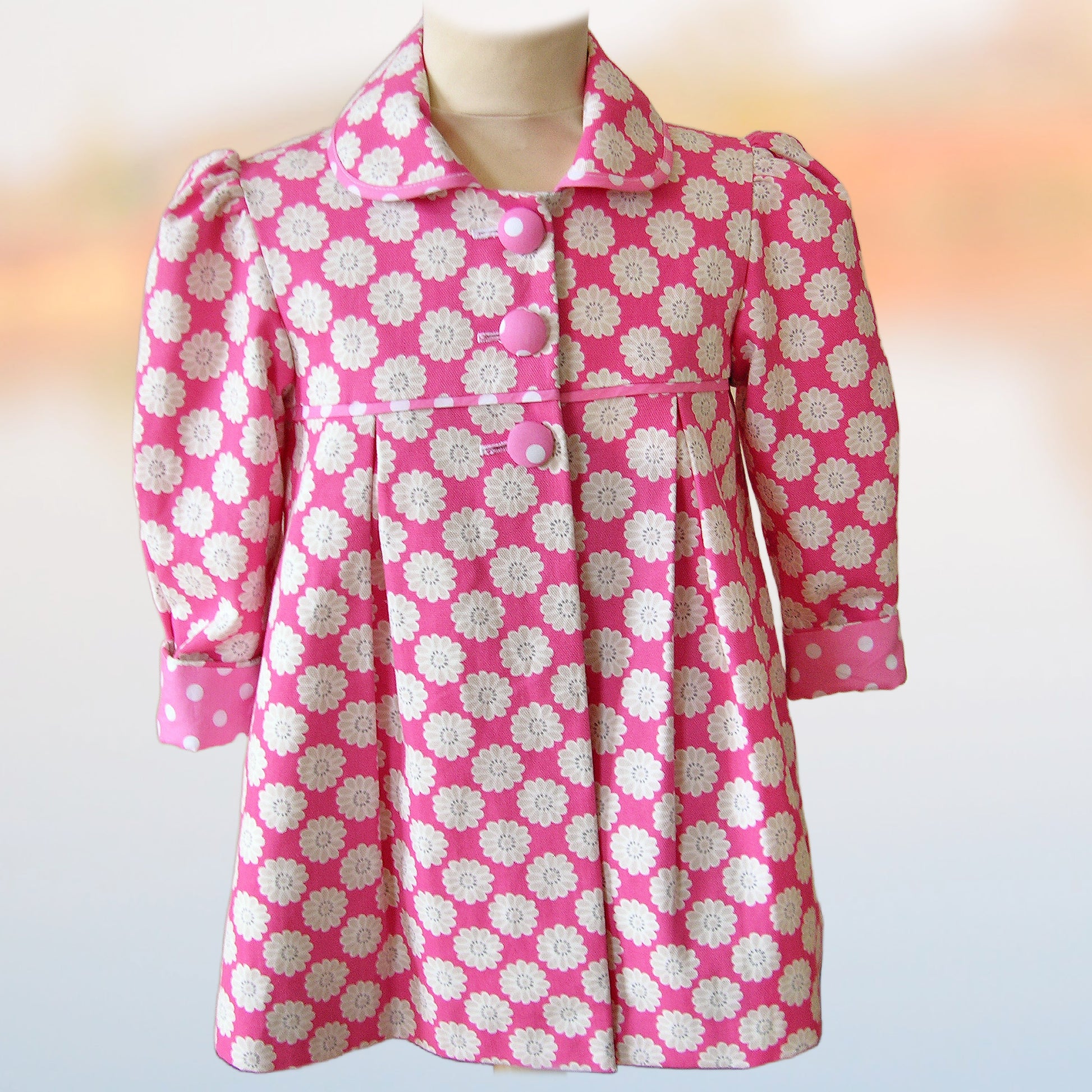
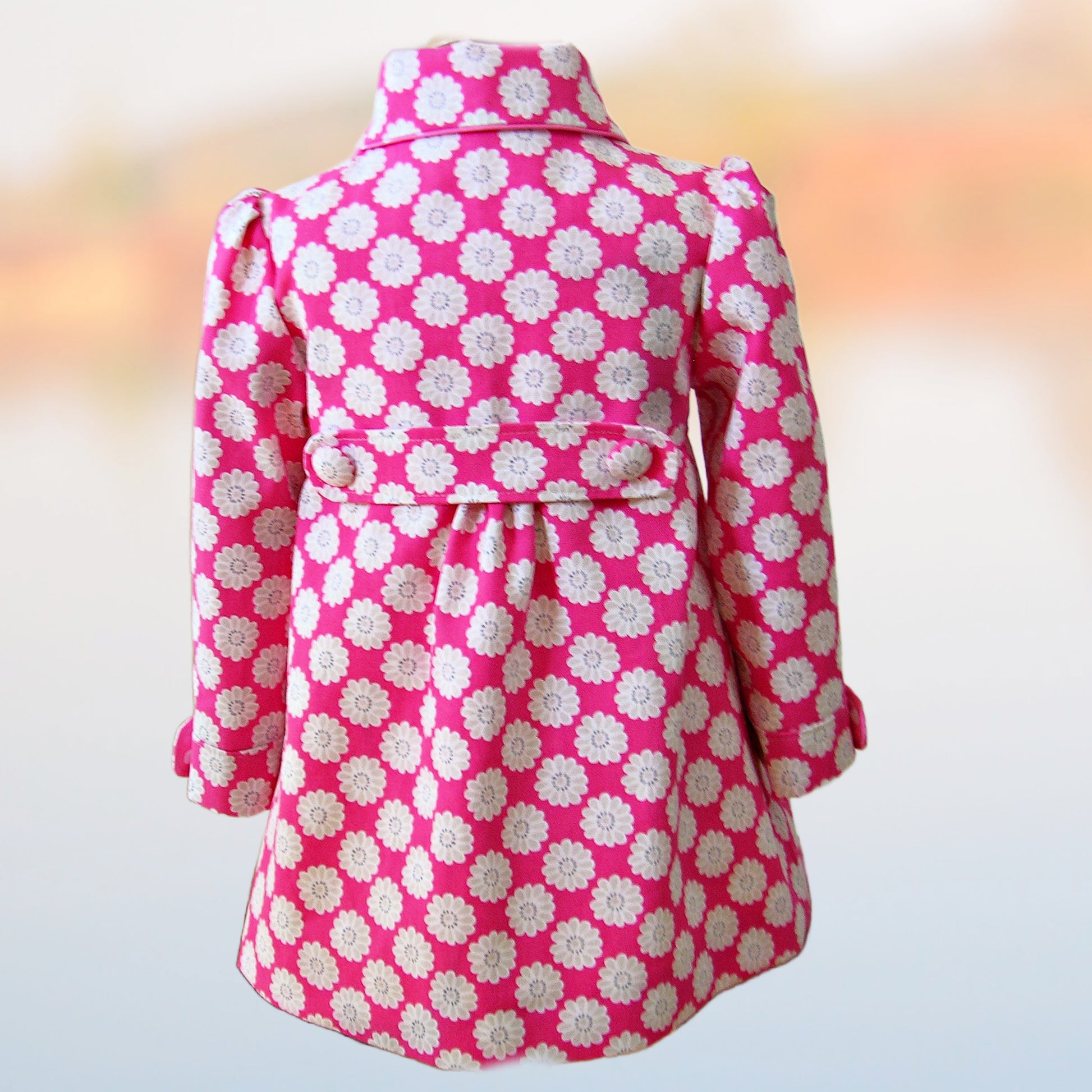
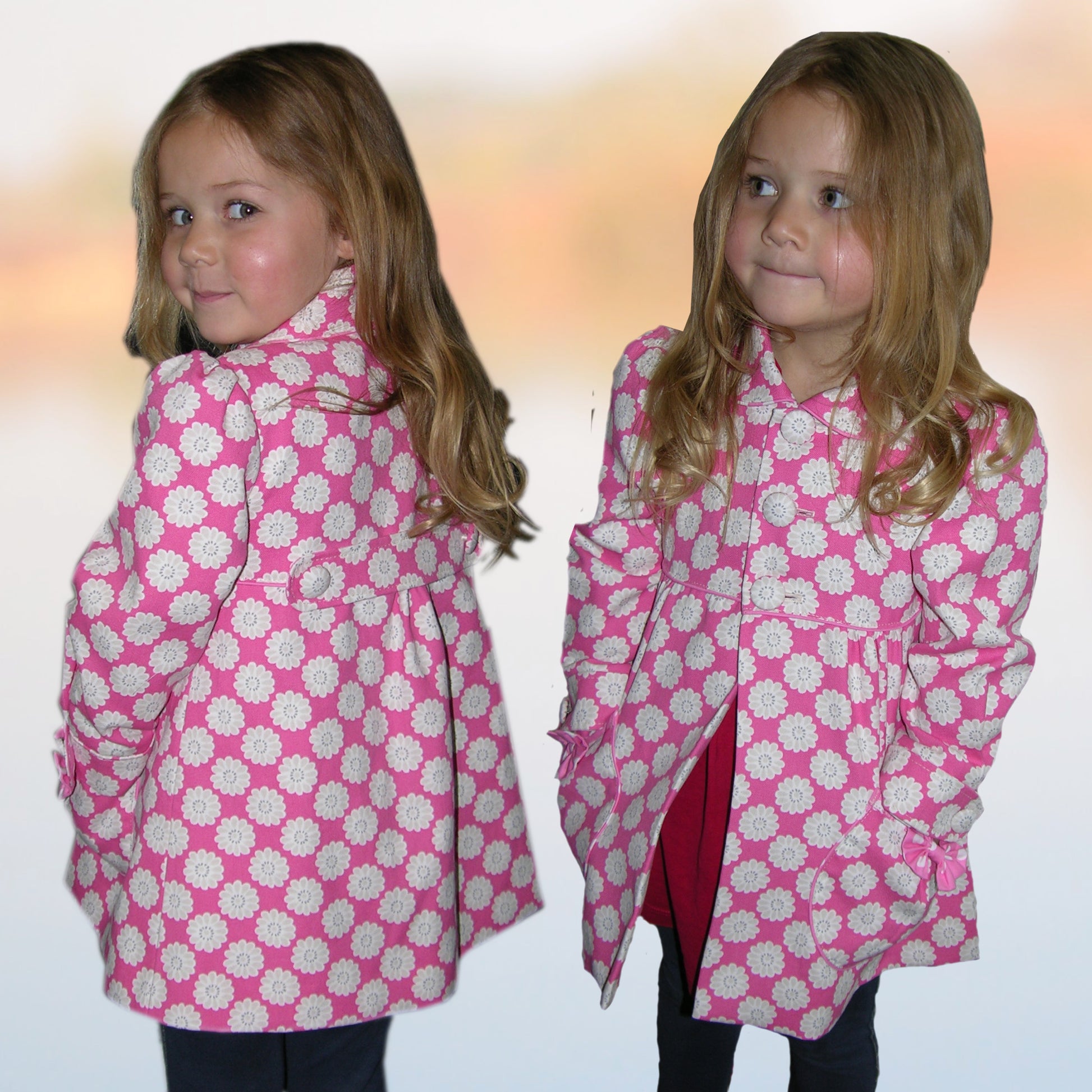
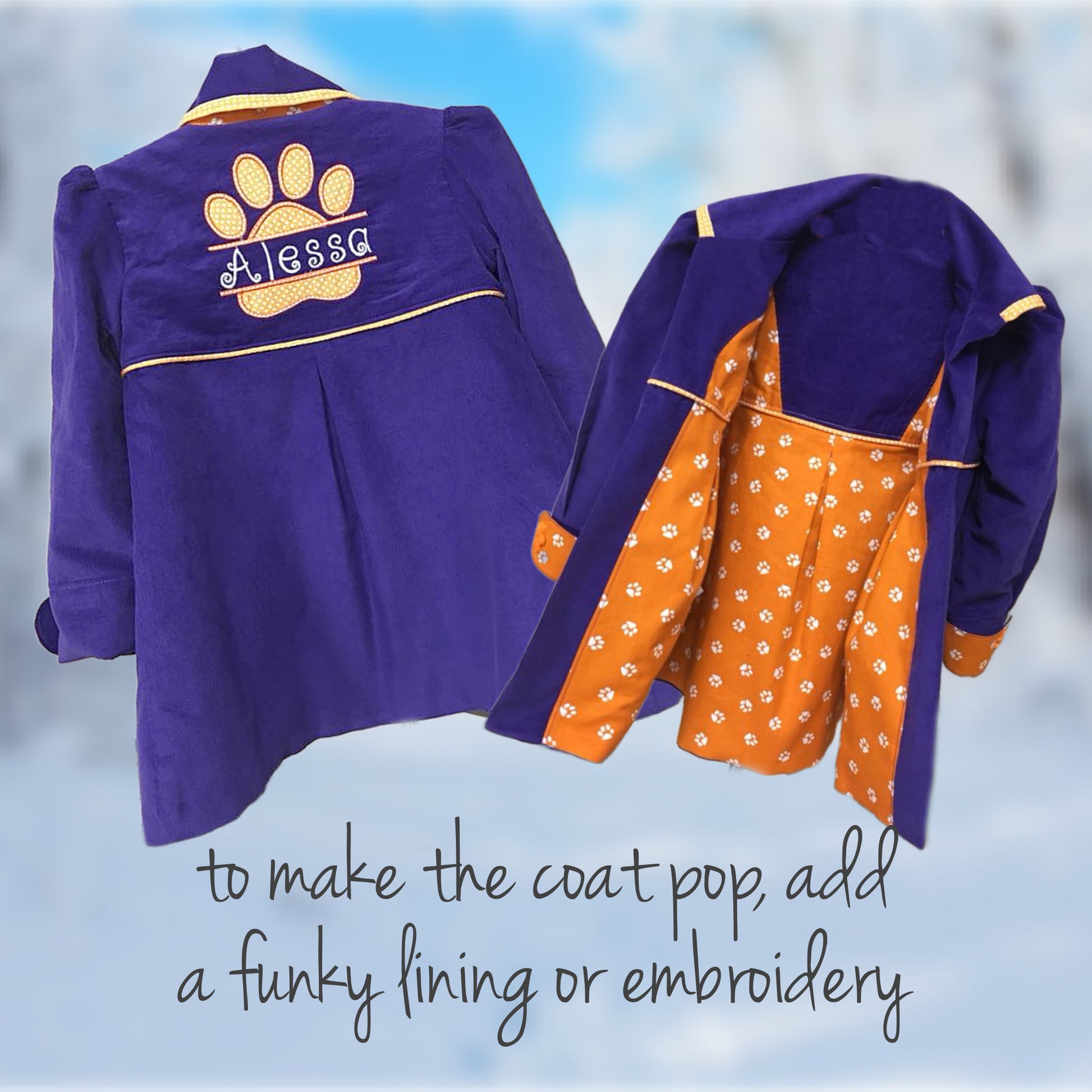
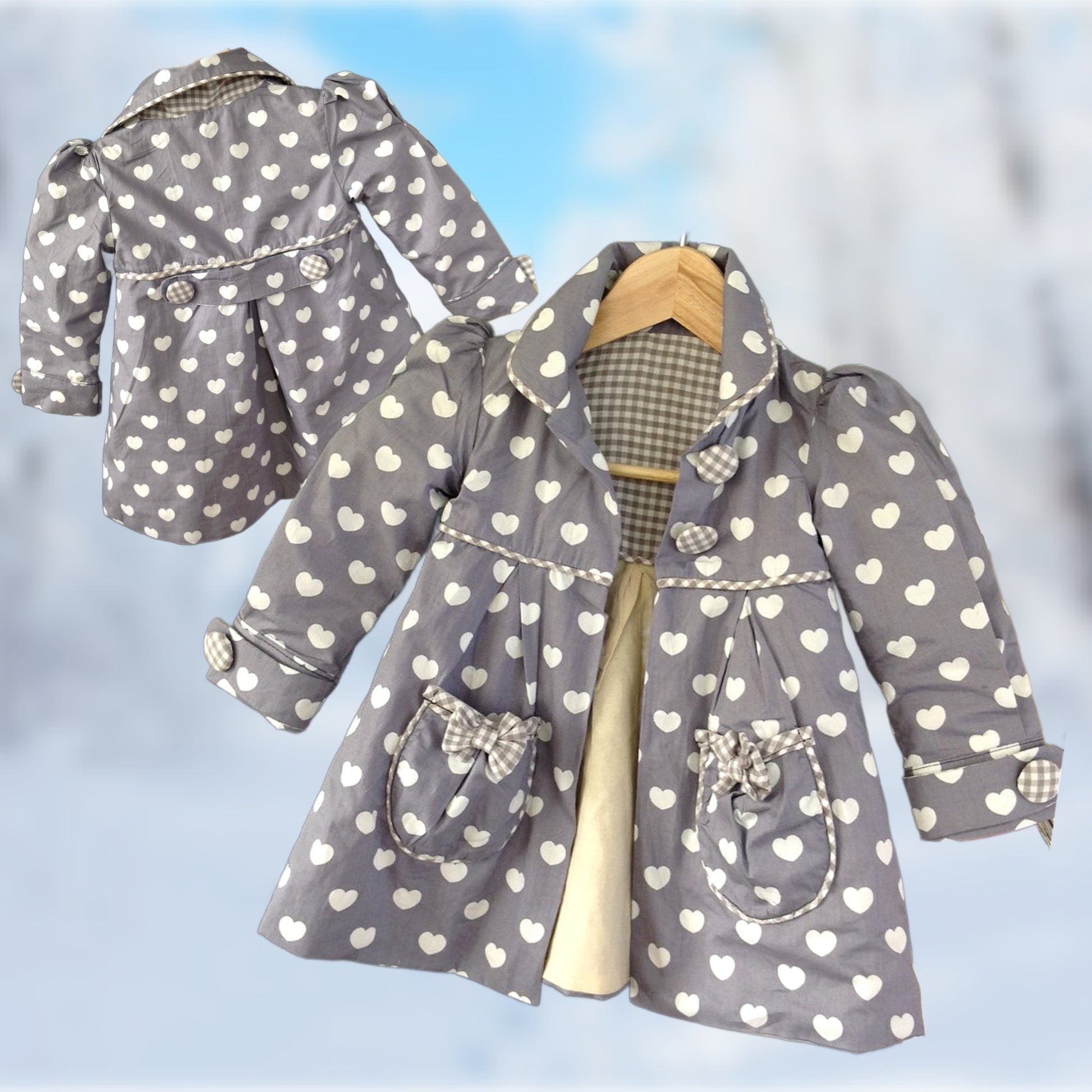
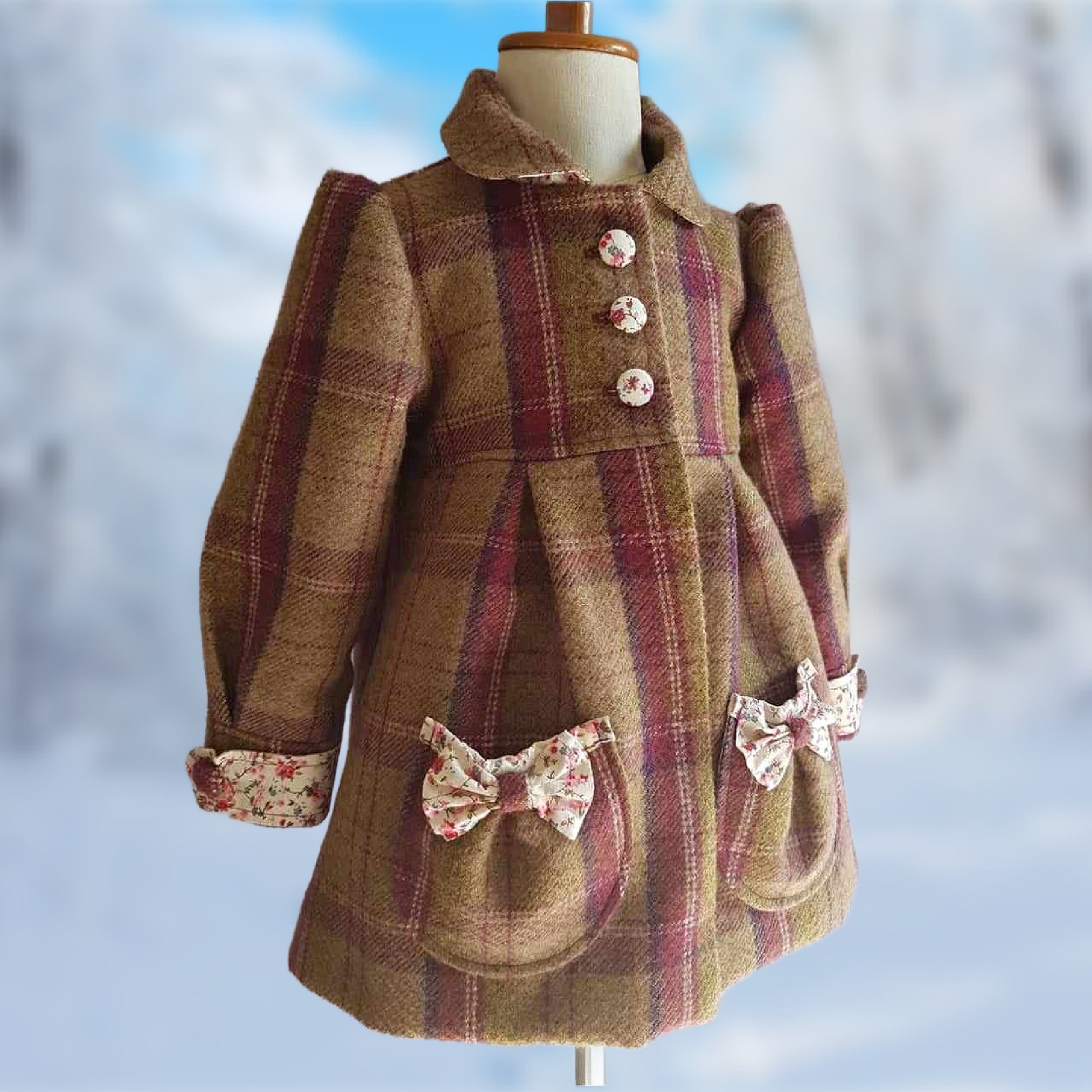
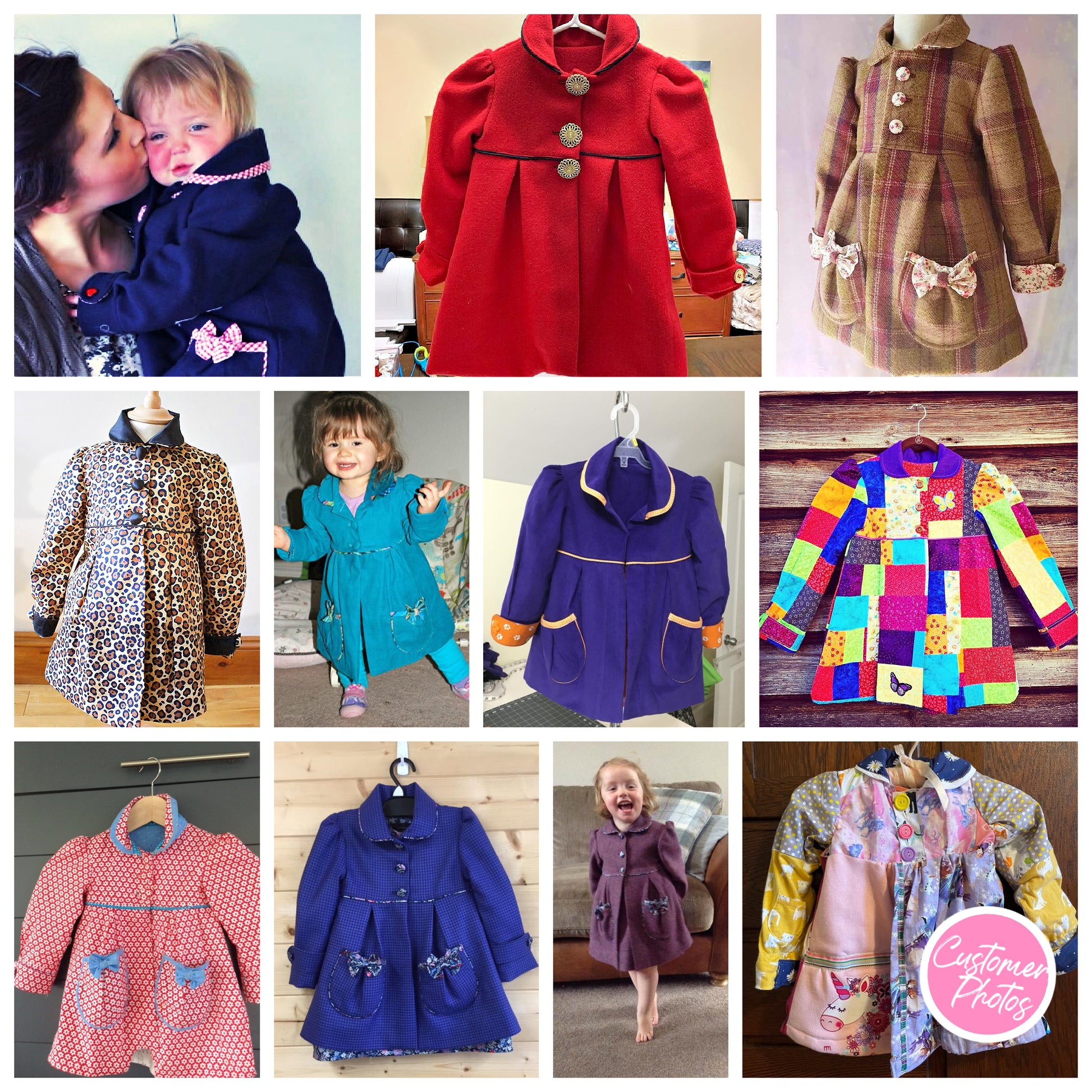
Sew a charming vintage-inspired girls’ pea coat! Beginner-friendly PDF sewing pattern with step-by-step video tutorial for a timeless keepsake. The Charlotte is our beloved vintage girls coat sewing pattern. She is fully lined and features a classic Peter Pan collar, high waisted bodice with gathered skirt, beautiful tabs on both the back waistline and sleeves and adorable patch pockets with delicate piping. 

And just below, Marina’s free video tutorial  is ready to guide you through sewing a beautiful winter or spring coat with confidence.

Pattern Download Includes

  • Instant Download
  • DIN A4 & US Letter Size
  • Individual PDF Files for every Size
  • All Sizes included
  • Detailed eBook
  • Video Tutorials

Design Options

  • Fully lined
  • Peter Pan collar
  • Bodice with gathered lower coat
  • Integrated facing 
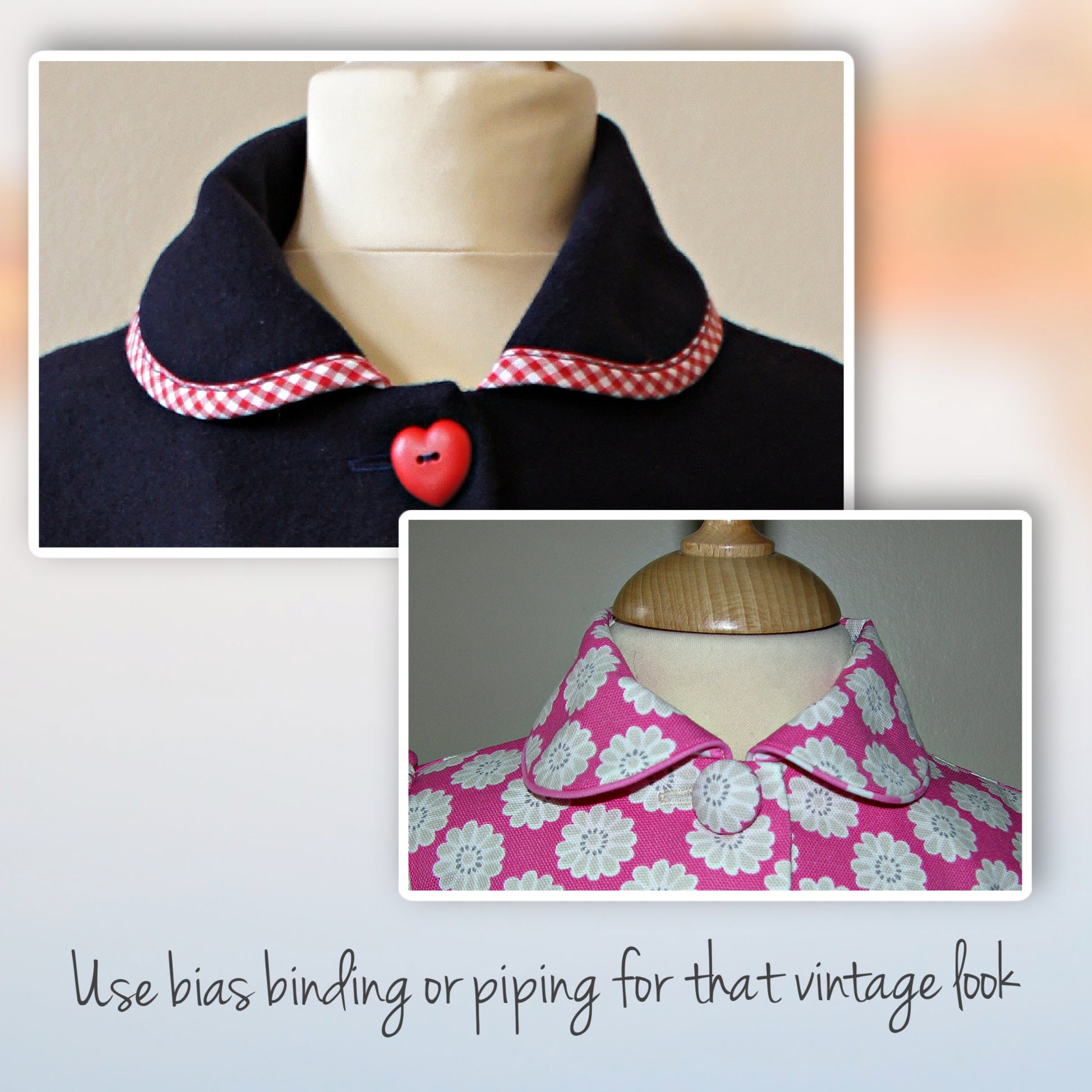
  • Optional piping or bias binding for the collar
  • Optional piped Empire line
  • Puff sleeves
  • Cuffs and tabs
  • Patch pockets with decorative bow
  • Alternative: Easy side pockets

Fabric Requirements

BEST FABRIC CHOICE

  • Shell fabric: Medium to heavy weight fabrics 
  • Lining fabric: Smooth cotton for comfort

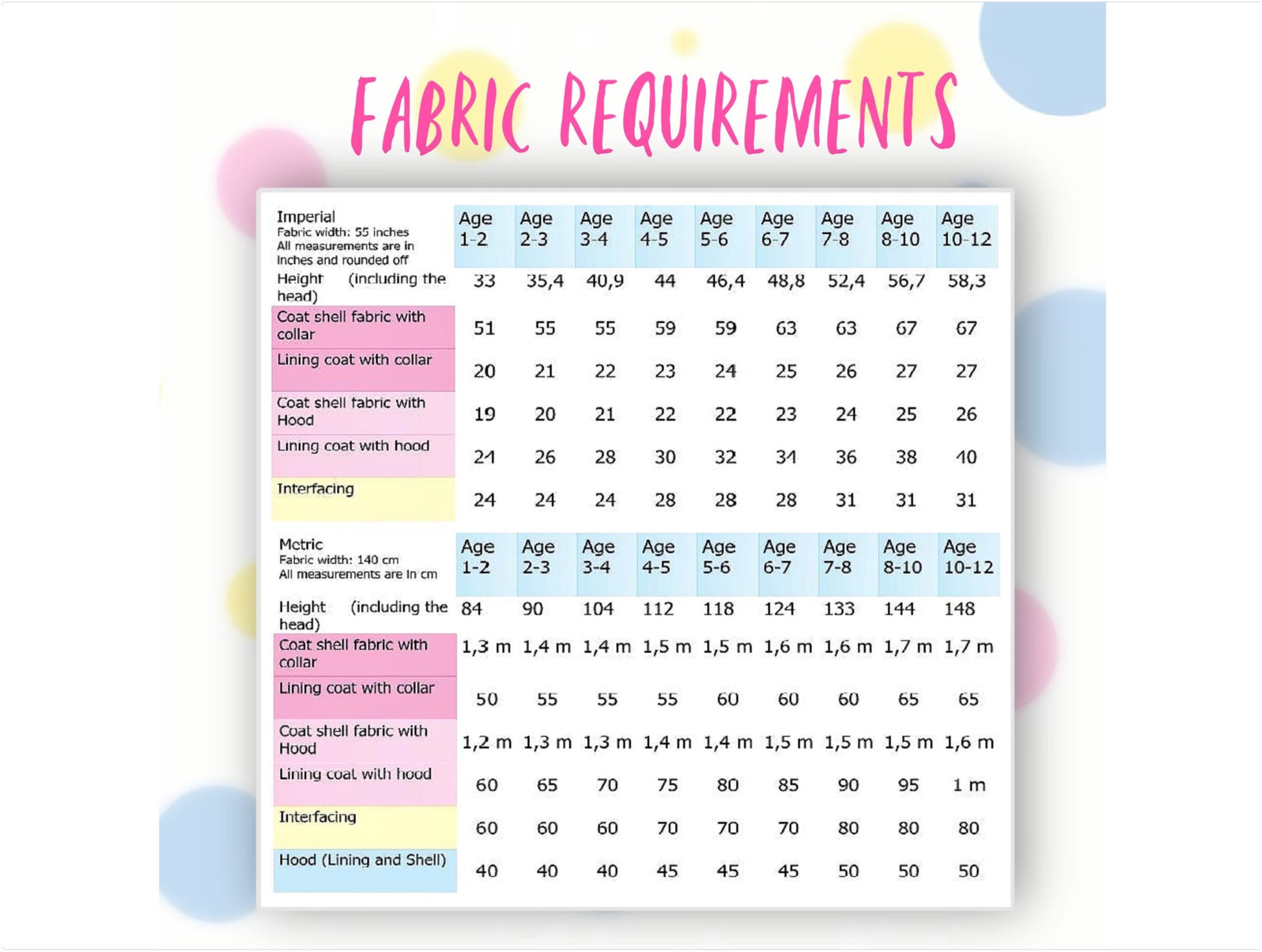
FABRIC REQUIREMENTS
• Shell: 1.5–2 yards (1.2m–1.6 m)
• Lining Fabric: Maximum 1.2 yards (1m)
• Additional Materials: Buttons, iron-on interfacing

Available Sizes

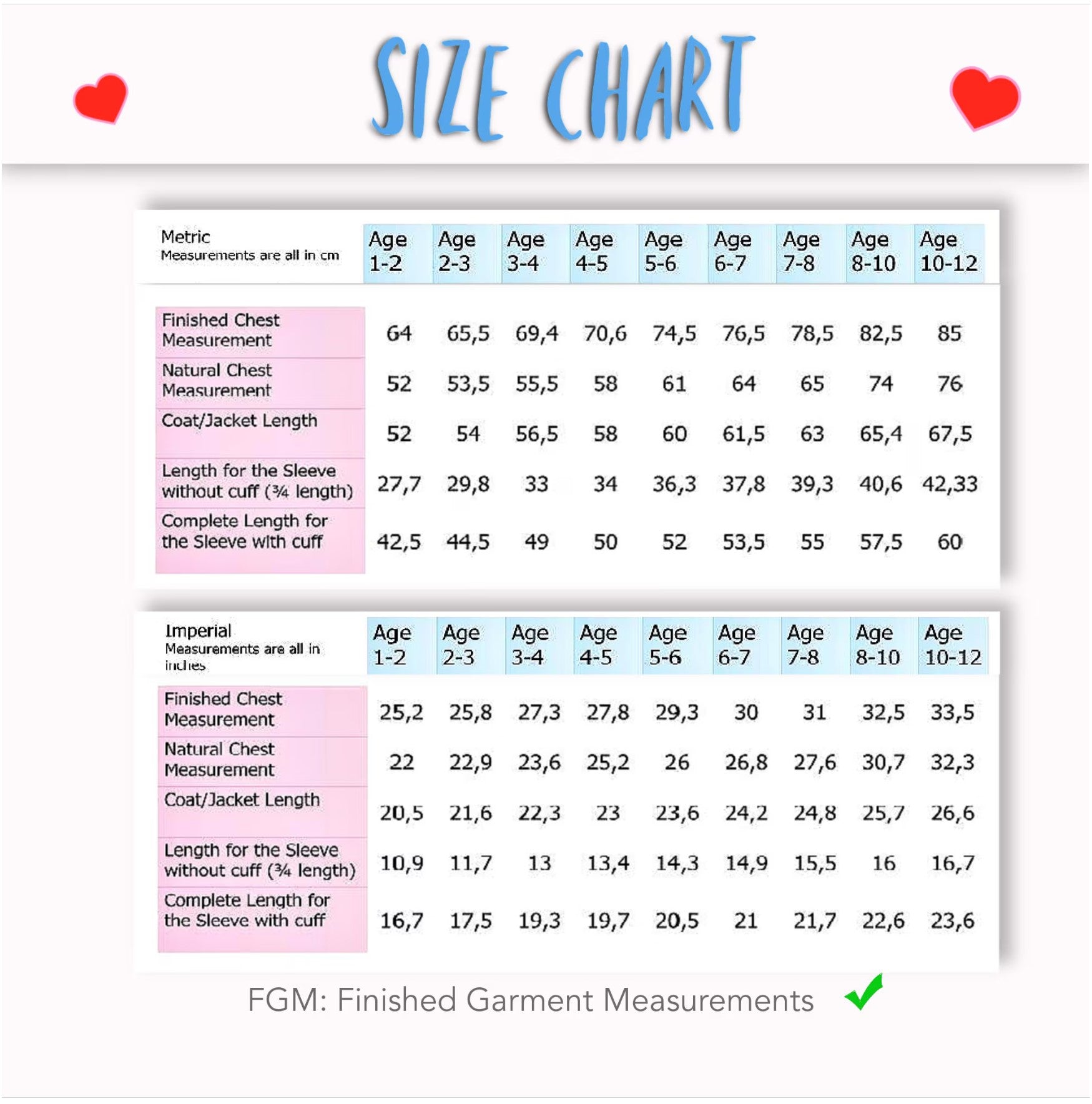
Sizes: 1-12 Years

Please Read

  1. This is a digital pattern or PDF file, not a physical product. It will be delivered electronically via a download link delivered to the email used for the purchase.
  2. To ensure the pattern prints at its actual size, it's recommended that you use Adobe Acrobat Reader.
  3. The pattern creator, Frocks & Frolics, welcomes small-scale production using their patterns. 

Customers are encouraged to tag Frocks & Frolics when sharing projects made using their patterns on social media.

@frocksandfrolics #frocksandfrolics

View full details

STEP-BY-STEP VIDEO TUTORIALS

Thumbnail
THE PATTERN
Thumbnail
CUTTING OUT
Thumbnail
PREPARATION: PINNING
Thumbnail
PREPARATION: IRONING
Thumbnail
SEWING THE COAT
Thumbnail
TOPSTITCHING
Thumbnail
THE PATCH POCKET
Thumbnail
SEWING THE UPPER COAT
Thumbnail
SEWING THE LOWER COAT
Thumbnail
JOINING THE UPPER AND LOWER COAT
Thumbnail
PIPING THE COLLAR
Thumbnail
BINDING THE COLLAR
Thumbnail
JOINING THE SHELL AND THE COLLAR
Thumbnail
SEWING THE LINING TO THE SHELL
Thumbnail
SEWING THE SLEEVES
Thumbnail
HOW TO INSERT THE SLEEVES
Thumbnail
ADDING A CUFF TO THE SLEEVES
Thumbnail
HEMMING THE COAT
Thumbnail
INSERTING THE BUTTONHOLES

VIDEO TEXT

The Pattern  

Transcript for the Video: Classic Coat - Pattern Assembly

Welcome to The classic Coat. In this section, we focus on assembling and preparing the pattern pieces before cutting any fabric.

Pattern Assembly

Begin by joining all pattern pieces together using the designated connection or alignment lines. Each piece is labeled with a different flower symbol to help prevent confusion during assembly.

It is recommended to print and check the scale reference sheet first to ensure all pattern pieces are accurate and correctly sized.

Organizing Pattern Pieces

Once all pieces are printed and cut, group them according to their matching symbols. This helps keep the construction process organized and reduces errors during assembly.

Although there are many pieces, organizing them properly at this stage ensures smoother construction later on.

Lining Construction

Start with the lining pieces.

The front lining consists of two parts (A and B), which are joined together first.

The back lining is made up of three pieces (A, B, and C), which are assembled in sequence.

Front Bodice Construction

The upper front section consists of pieces A and B, which are joined together first.

The lower front section consists of four pieces (A, B, C, and D). These are assembled in stages—first A and B, then C and D—before joining the upper and lower sections together.

The lower front is intentionally wider than the upper front to allow for shaping techniques such as gathers or pleats.

Pocket and Design Variations

A pocket option is included in the design. If using the bow pocket variation, the relevant section is folded according to the pattern instructions.

Sleeve and Back Construction

The sleeve consists of three pieces (A, B, and C), which are joined together in sequence.

The back panel is also constructed from three pieces (A, B, and C), assembled in the same manner.

Interfacing and Structural Components

The front coat includes iron-on interfacing divided into three sections (A, B, and C). These pieces help stabilize the structure and shape of the garment.

Tabs are also included, each with two versions: one for interfacing and one for outer fabric. The interfacing pattern does not include seam allowance, allowing for more precise shaping during construction.

Additional Pattern Elements

Bias binding strips are included for finishing edges and adding structure.

A wide strip is provided for design detailing, while a narrower strip is used for piping applications.

Conclusion

This stage focuses entirely on accurate pattern preparation. Proper assembly and organization at this step ensures a smoother and more precise construction process in the following stages.

Cutting Out

Transcript for Video: The Closer Coat – Fabric Cutting and Interfacing

This section covers cutting out all fabric pieces, preparing interfacing, and marking key construction points before assembly.

Interfacing Preparation

Start by cutting the interfacing pieces for the front facing.

You will need:

  • Front interfacing
  • Cuffs (twice)
  • Tabs (twice)
  • Collar reinforcement

The interfacing helps stabilize key structural areas such as the collar, cuffs, and front opening.

Cutting Contrast Fabric

Next, cut the contrast fabric pieces. These include:

  • Collar
  • Centre back facing
  • Tabs
  • Pocket pieces
  • Bias strips
  • Bow components

Fold the fabric where needed to maximize efficiency and ensure symmetrical cutting.

Bias strips should be cut long enough to accommodate finishing details such as piping and decorative edges. It is often easier to cut extra length to avoid shortages later in construction.

Bias Strip Construction

Bias strips are joined together to form a continuous strip.

This is done by placing two strips at a right angle and stitching diagonally to create a 45-degree join. This ensures flexibility and smooth curves when applied to garments.

Some bias strips are also used for pocket finishing and trim details. These may be cut shorter depending on application.

Shell Fabric Cutting

Now cut the main (shell) fabric.

Fold the fabric to allow multiple pieces to be cut efficiently. Seam allowance is already included in the pattern (1 cm), so no additional allowance is needed during cutting.

Cut the following:

  • Collar (on fold)
  • Pockets
  • Center bow
  • Bow pieces
  • Tabs
  • Centre back facing

If using bow pockets, adjust the cutting layout accordingly and omit side pocket openings.

Marking Pattern Pieces

Carefully mark all essential construction points:

  • Pocket placement and pleat/gather positions
  • Centre of collar
  • Shoulder points
  • Centre back of facing
  • Sleeve head and sleeve orientation
  • Lower sleeve pleat for cuff attachment

Accurate marking at this stage is critical for alignment during sewing.

Sleeve Preparation

The sleeve consists of multiple markings:

  • Front sleeve indicator
  • Sleeve head alignment
  • Pleat marking at the cuff end

These markings ensure correct orientation and proper assembly during sewing.

Lining Fabric Cutting

Cut the lining pieces as follows:

  • Lower back (1x)
  • Lower front (2x)
  • Upper front (2x)
  • Back upper sections (2x)
  • Sleeves (2x)

Although there are multiple pieces, the structure is logical and mirrors the outer shell construction.

Final Preparation

Once all pieces are cut, transfer all markings carefully to the lining and shell fabrics.

Ensure all directional fabrics are aligned consistently if using patterned material.

Finally, apply interfacing to:

  • Collar
  • Cuffs
  • Front facings
  • Tabs

This stabilizes the structure and prepares all pieces for assembly.

Conclusion

After cutting, marking, and interfacing, all components are fully prepared. At this stage, the garment is ready for structured assembly with clearly defined reference points for accurate construction.

Preparation: Pinning

Transcript for Video: Coat Construction – Preparing Pattern Pieces

We begin by preparing all the pieces needed for the sewing process so everything is ready before construction starts.

Preparing the Sleeve

First, we start with the sleeve. The sleeve has two snips at the lower edge, which attach to the cuff, and one snip at the top, which indicates the front of the sleeve.

Align the lower snips together and pin them in place. Make sure you have a matching pair of sleeves prepared in the same way.

Preparing the Cuff

Next, prepare the cuff. The longer edge of the cuff attaches to the sleeve, while the shorter edge has two small snips that indicate where the lining will be attached.

Pin the cuff in place, ensuring all notches align correctly. This will be sewn later using a 1 cm seam allowance.

Preparing Front Panels

Now take the front piece and the front lining and place them right sides together. Carefully match the curved edges, making sure everything aligns smoothly around the shape.

Pin along the edges to hold the layers in place.

Preparing Back Panels

Repeat the same process for the back. Take the back piece and back facing or lining, place them together, and pin along the edges using a 1 cm seam allowance.

Preparing Front Lining Assembly

Next, prepare the lower front lining pieces by aligning and pinning them together. Ensure all curves and edges match correctly before sewing.

Preparing Tabs

Now prepare the tabs. Place the contrast fabric right sides together, align the edges, and pin through the center to secure them.

These will be sewn all the way around to complete the preparation stage.

Conclusion

All major components are now prepared and pinned, ready for sewing in the next stage of construction.

Preparation: Ironing

Transcript for the Video: Charlotte Coat - Pressing and Bias Binding Preparation

Now that the pieces are prepared, we move on to pressing and shaping the garment so everything sits correctly before final construction.

Pressing the Sleeve into the Cuff

Start by pressing the sleeve downwards into the cuff. Press from both sides so the seam lies flat and the transition between sleeve and cuff is smooth and even.

This helps the cuff sit cleanly and improves the overall structure of the sleeve.

Pressing Seams in Bias Binding and Linings

Next, press open the seam on the bias binding so it lies flat and stable.

For the lining and facing areas, press the seam allowance toward the body of the garment. This helps the inner structure sit neatly against the outer fabric.

Shaping the Front and Back Areas

At the front, guide the seam allowance toward the side instead of forcing it open or flat. The fabric naturally wants to fall in this direction because the front section is heavier.

Follow the natural movement of the fabric rather than forcing it into place, as this creates a cleaner and more stable shape.

Shaping Corners and Edges

Use your fingers to carefully push out corners and curved edges. This helps define the shape and ensures smooth, rounded transitions.

Once shaped properly, the tabs and edges should sit cleanly and evenly.

Preparing Bias Binding

Now prepare the bias binding for the collar and bow pocket.

Take the narrow center strip and press both long edges toward the middle. This creates a folded binding that is ready for attachment.

Conclusion

With all pressing and shaping complete, the garment pieces are now structured and ready for final assembly.

Sewing the Coat

Transcript for Video: Charlotte Coat - Sewing Components and Turning Tabs

Now you’re ready to start sewing. At this stage, it’s best to work continuously through all prepared pieces instead of stopping frequently to press each seam individually.

Efficient Sewing Workflow

Begin by sewing all pinned pieces in sequence. This keeps the workflow smooth and efficient.

As you finish one section, simply place the next piece under the presser foot and continue sewing without interruption.

Attach the bias binding together as part of this continuous process.

Then move on to the back lining and continue sewing through the prepared components in the same manner.

Sewing the Tabs

Now sew around the tabs. This step requires more care and precision.

Sew slowly, stitch by stitch, lifting the presser foot as needed and repositioning the fabric as you follow the curve.

Take your time around the rounded sections to maintain accuracy.

Be sure to leave a small gap on the long edge of the tab. This opening will be used later to turn the piece right side out.

Sewing Front Panels

Next, sew the front and front lining together using the same continuous workflow.

Keep moving from one prepared piece to the next to maintain efficiency and consistency in your sewing.

Trimming and Turning Tabs

Once sewn, trim back the seam allowances on the tabs to reduce bulk.

Then turn the tabs right side out carefully. Use a pin or similar tool to push out the corners and edges so they are fully shaped.

Make sure all edges are smooth and properly defined before pressing.

Preparation for Pressing

Now the pieces are ready for pressing. Once turned, ensure everything is neatly shaped and aligned so the iron can set the structure properly in the next step.

Topstitching

Transcript for Video: Charlotte Coat - Top Stitching Tabs and Cuffs

Now we’re going to do the top stitching. Top stitching is an important step in sewing because it creates a clean, professional finish and helps define the shape of the garment.

When top stitching, use a longer stitch length than normal. This helps create a smoother and more polished look.

Avoid stitching too close to the edge. Depending on the piece, a distance of up to 3 mm from the edge works well, especially for tabs and cuffs.

Choose a guide line on your presser foot that allows you to keep a consistent distance from the edge of the fabric as you sew.

Top Stitching the Tabs

Begin top stitching around the tabs.

Follow the edge carefully, keeping the spacing consistent as you sew. Lift the presser foot as needed to adjust direction, especially around curves.

Take your time to maintain a smooth, even edge all the way around.

Sewing Technique Notes

Although the process is shown at speed, actual sewing should be done slowly and carefully to maintain accuracy and control.

Consistent spacing is key to achieving a professional finish.

Conclusion

Continue sewing around each tab in the same manner until all top stitching is complete. This step significantly improves the overall look and structure of the garment.

The Patch Pocket

Transcript for Video: Charlotte Coat - Piped Pocket, Bias Binding, and Bow Placement

We begin by preparing the binding and constructing the piped pocket details.

Start by inserting the piping cord into the center of the bias binding. This creates the finished piping edge used for the pocket.

Move the needle position slightly to the left so the stitch line sits close to the piping cord. This ensures a tight, clean finish.

Attaching the Piping to the Pocket

Take the prepared piping and place it onto the right side of the pocket fabric.

Place the lining over the top, then flip the pocket over so you can work from the side where the previous stitching line is visible. This allows for more accurate sewing.

Pin everything in place carefully.

Turning and Finishing the Pocket Edge

After stitching, cut back the seam allowance to reduce bulk.

Turn the pocket right side out and shape the piping. The edge should now be clean and well-defined.

Press the pocket carefully on both sides to set the shape.

Creating the Box Pleat or Gathers

Depending on your pattern, you can either gather the top edge or form a mini box pleat.

If using the box pleat method, align the two snips and fold them together to create the pleat. Stitch about 1 cm to secure it, then open and shape it evenly.

Pin if needed to hold the structure in place.

Attaching the Bias Binding to the Pocket

Attach the wider bias strip as indicated in the pattern.

Sew it first to the wrong side (lining side) of the pocket using a 1 cm seam allowance.

Trim back seam allowance if necessary so it sits neatly.

Fold the ends inward and pin them so they cover the previous stitch line. This ensures a clean finish on both sides.

Top stitch close to the edge so the binding is secured neatly and the stitching is hidden on the reverse side.

Completing the Bow

Construct the bow separately according to the pattern instructions. This will be attached later with the pocket placement.

Positioning the Pocket on the Front Piece

Fold the front piece so the lining side is on top of the shell fabric.

Position the pocket where desired, along with the bow placement.

Flip the piece over to confirm correct positioning, then pin securely.

Adjust slightly so the pocket has a natural outward shape and is not sitting completely flat.

Final Attachment

Pin both sides of the pocket in place to secure positioning.

You can either stitch directly on the pocket or sew between the piping and the outer fabric for a more discreet finish.

Conclusion

The piped pocket and bow elements are now ready and securely positioned, completing this decorative construction stage before final assembly.

Sewing the Upper Coat

Transcript for the Video: Charlotte Coat - Assembling the Upper Coat

Now we’re going to assemble the upper coat. At this stage, we start bringing all the main sections together into a full circular structure that includes both the shell and the lining.

Closing the Side Seams

First, close all side seams on the lining.

Then repeat the same process on the outer shell fabric.

What you are effectively doing here is forming one continuous circle from both the lining and the outer fabric, which will later be joined together as a complete coat structure.

Sewing the Side Seams

Move to the sewing machine and sew all side seams using a 1 cm seam allowance.

Keep the workflow continuous by feeding each next section directly under the machine as you finish the previous one.

Attaching the Piping

Now attach the piping to the upper part of the coat.

Do not start directly at the edge. Instead, begin about 3 cm in from the joining point. This allows for a cleaner finish when the piping is completed around the coat.

Continue attaching the piping all the way around, stopping about 3–4 cm before the final join.

Keep the piping flat and evenly tensioned as you sew.

Trim excess piping as needed, then join the ends carefully. If the fit is tight, it may be necessary to unpick a small section and adjust for a smoother alignment.

Once correctly positioned, the join should sit cleanly and become visually neat when pressed flat.

Closing the Shoulder Seams

Next, close the shoulder seams on the shell fabric.

Repeat the same process on the lining fabric.

All seams are sewn using a 1 cm seam allowance.

Pressing Seams

Press all seams after sewing to set the structure.

For best results, press seams in different directions depending on the layer:

  • Shell fabric shoulder seams are pressed toward the back
  • Lining shoulder seams are pressed toward the front

This helps reduce bulk and improves the overall shape of the coat.

Workflow Efficiency Tip

To maintain efficiency, continue feeding the next piece under the machine immediately after finishing each seam. This reduces interruptions and keeps the construction process consistent.

Conclusion

The upper coat structure is now complete, with side seams, piping, and shoulder seams all assembled. The garment is ready to move on to the lower section construction.

YOU MAY ALSO LIKE