Skip to product information
1 of 27

FLOWER GIRL DRESS

FLOWER GIRL DRESS

Filled Circle
Filled Circle
Filled Circle
Empty Circle
Empty Circle
Regular price €7,95 EUR
Regular price Sale price €7,95 EUR
Sale Sold out

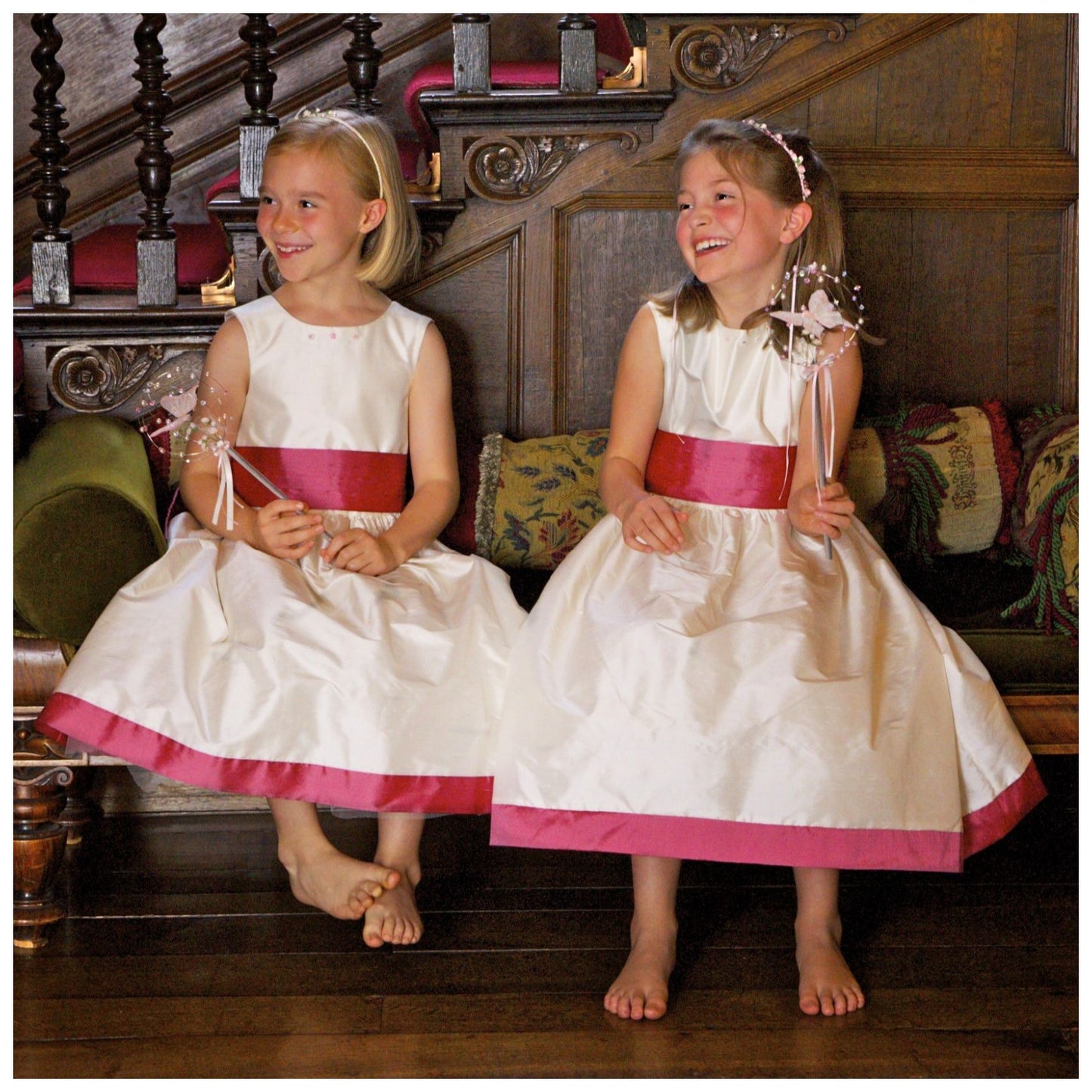
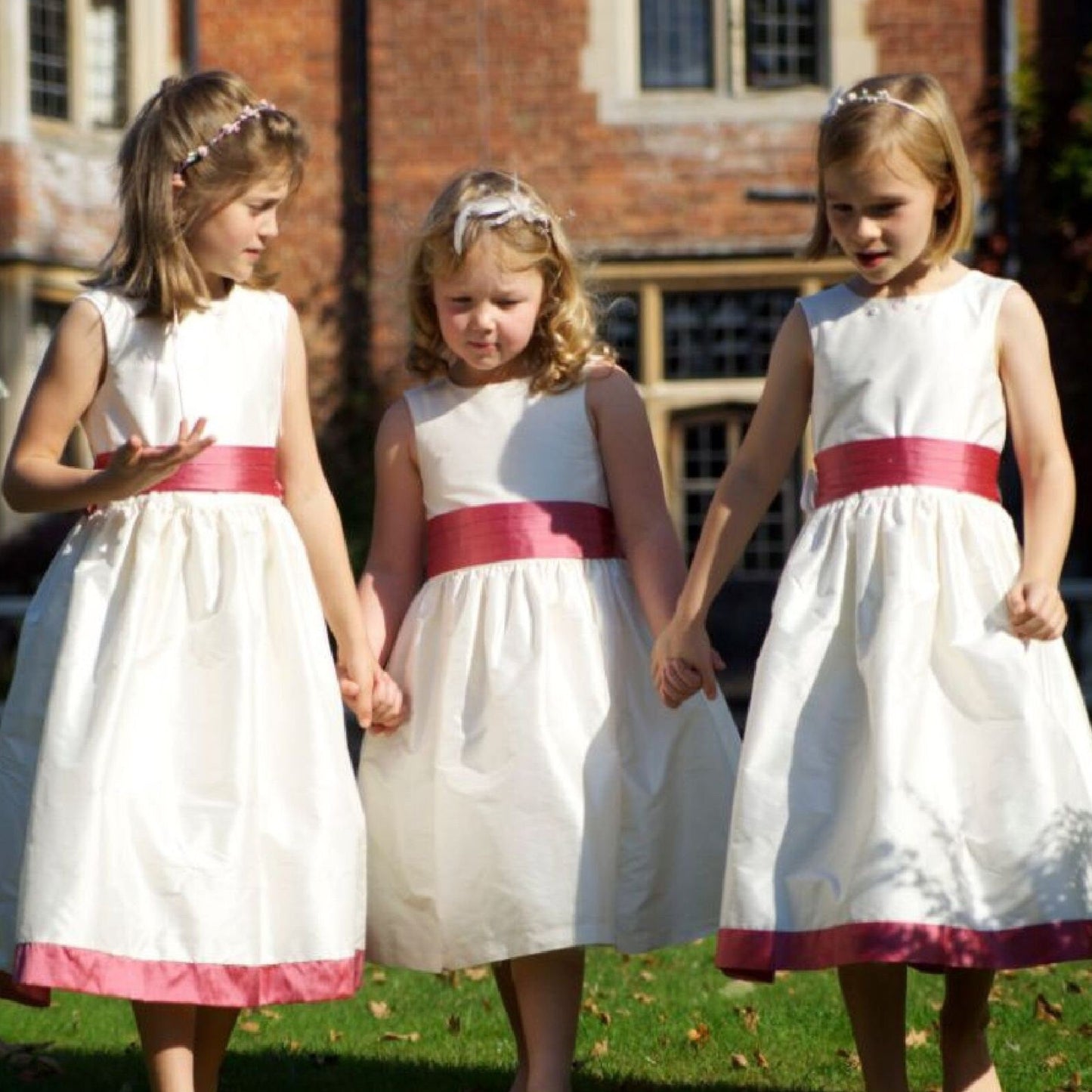
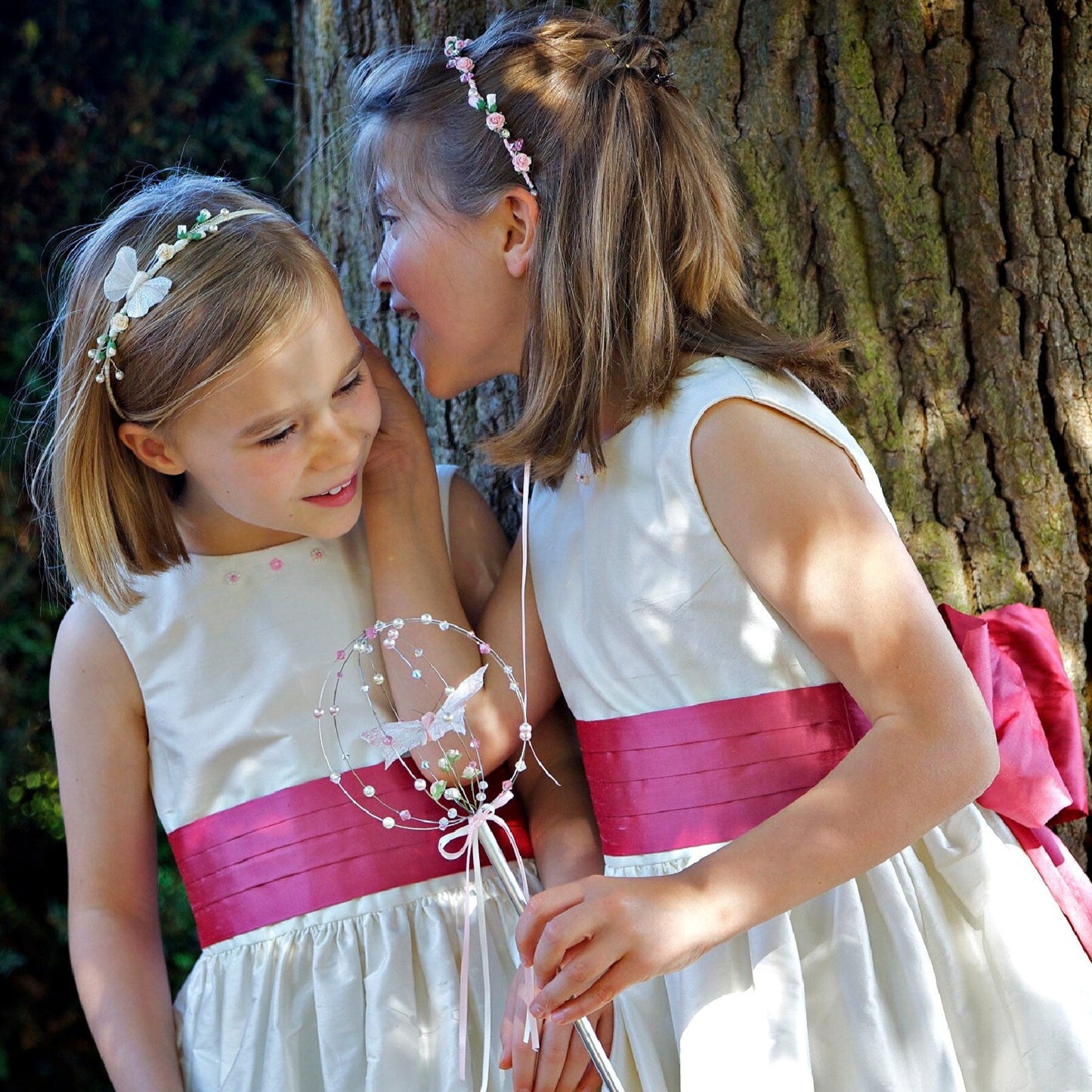
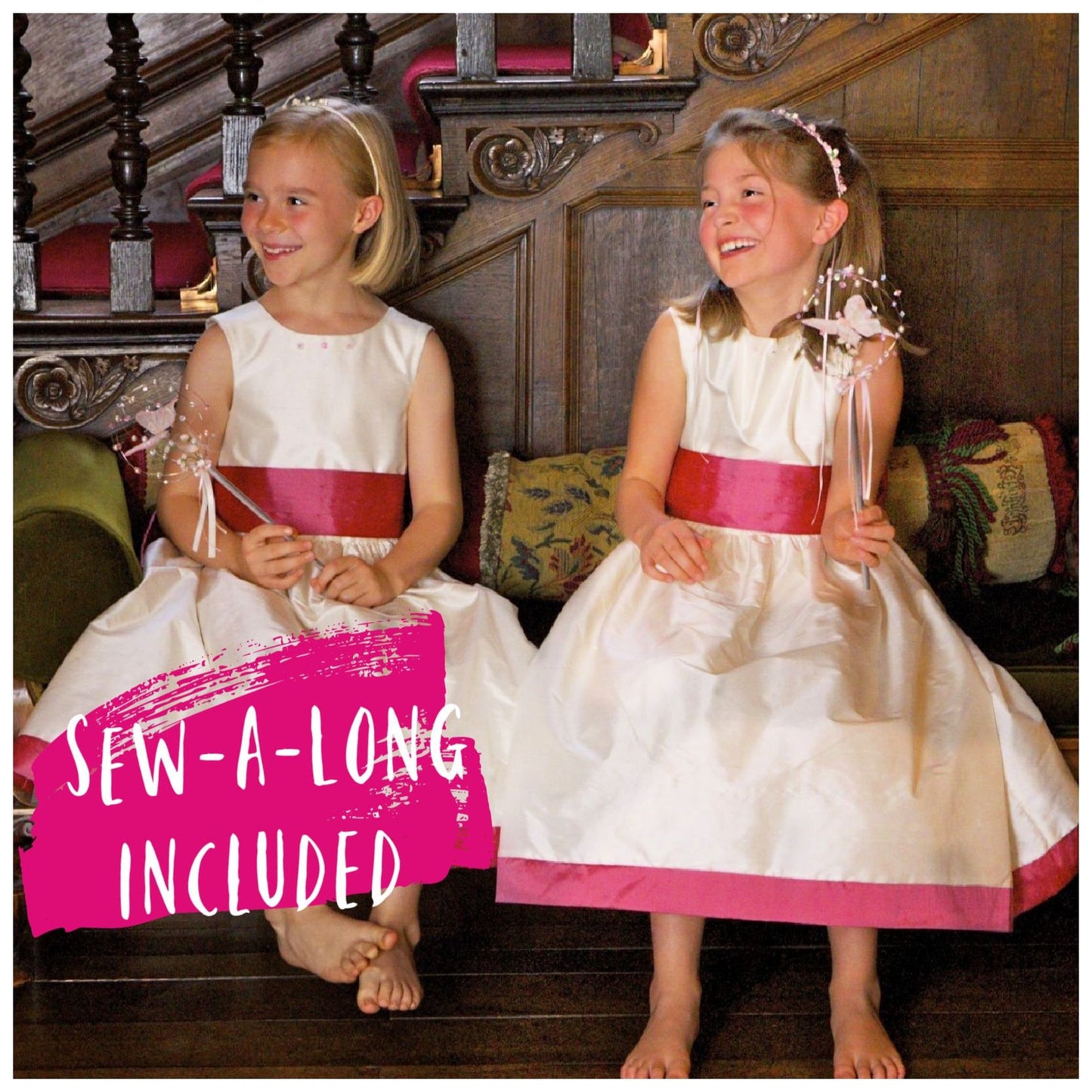
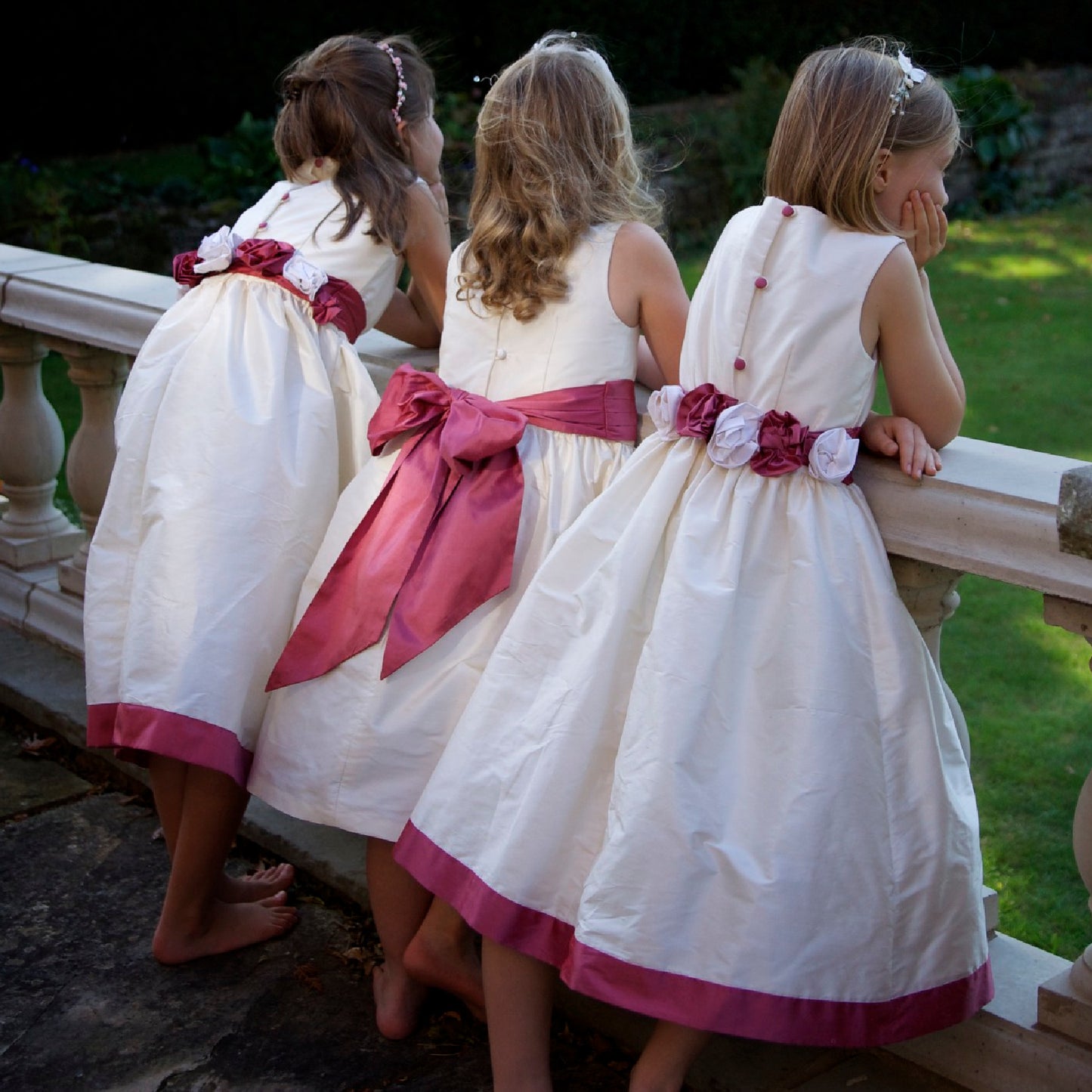
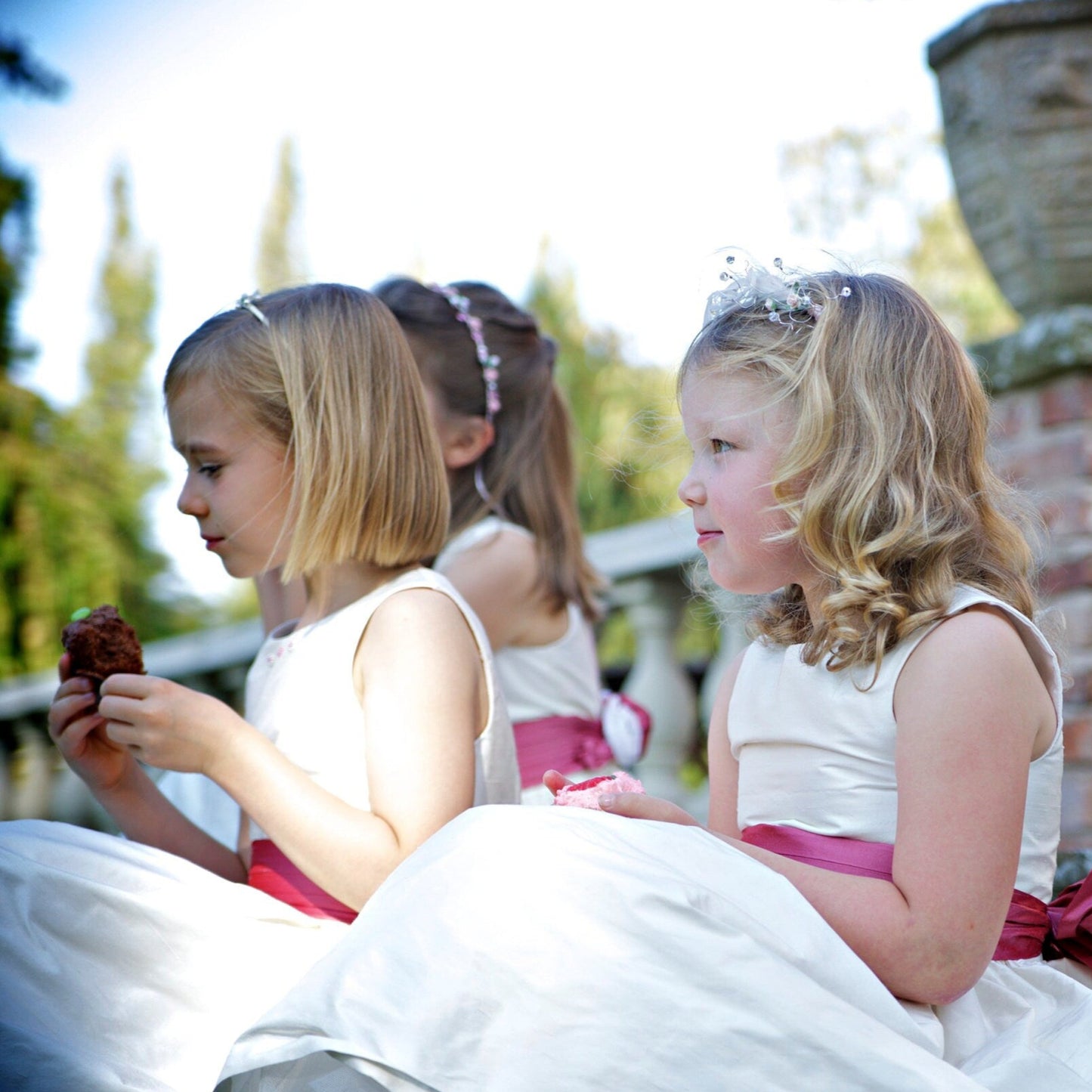
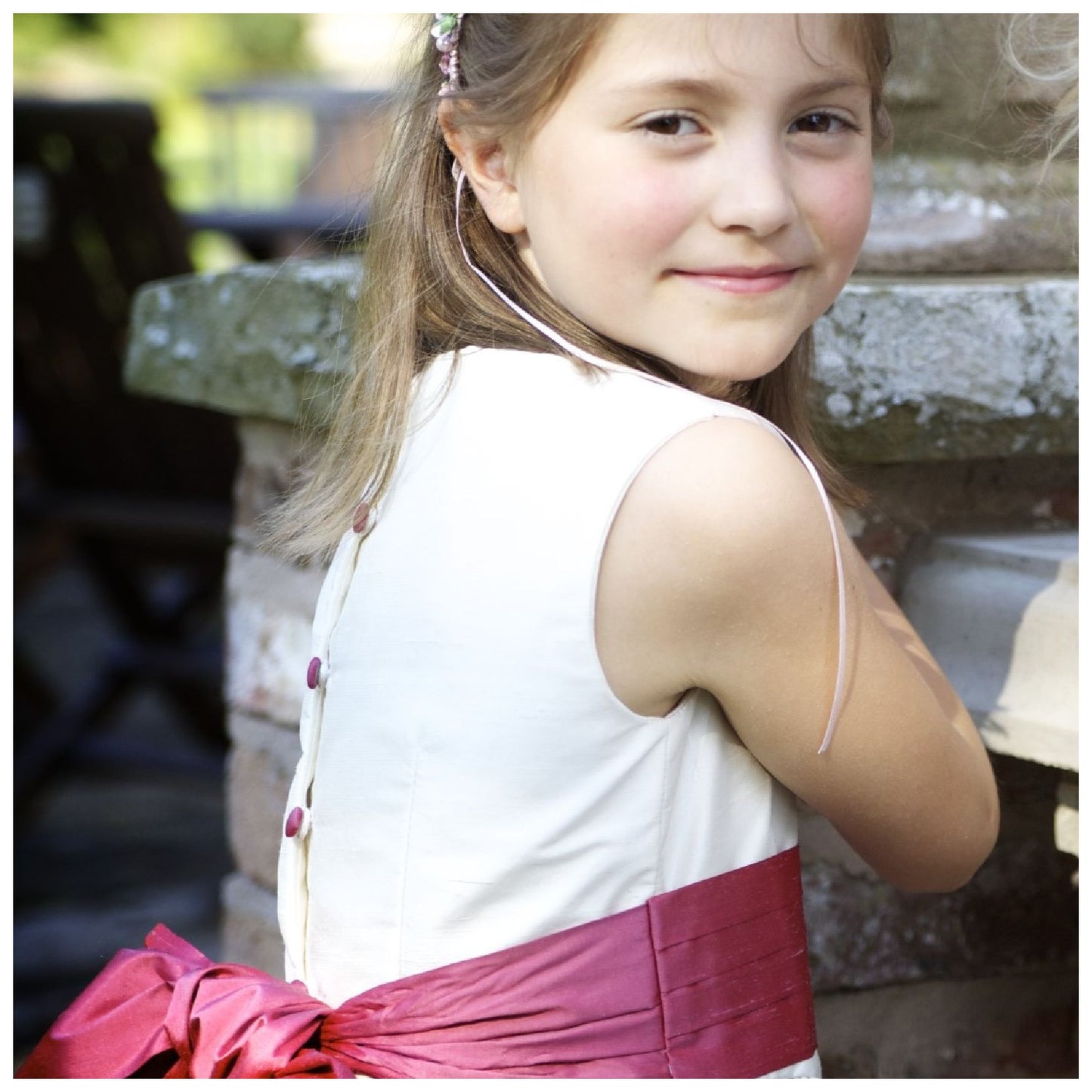
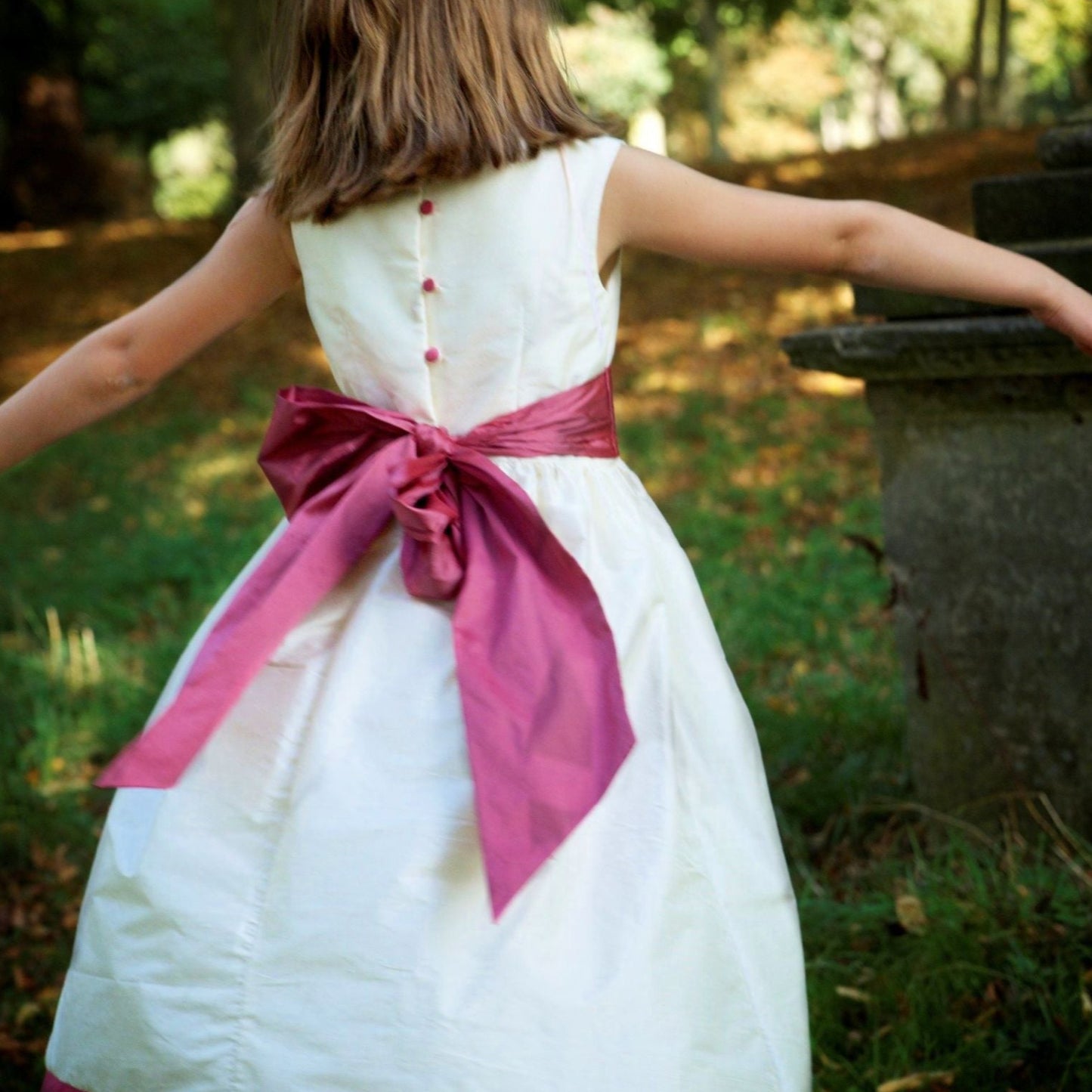
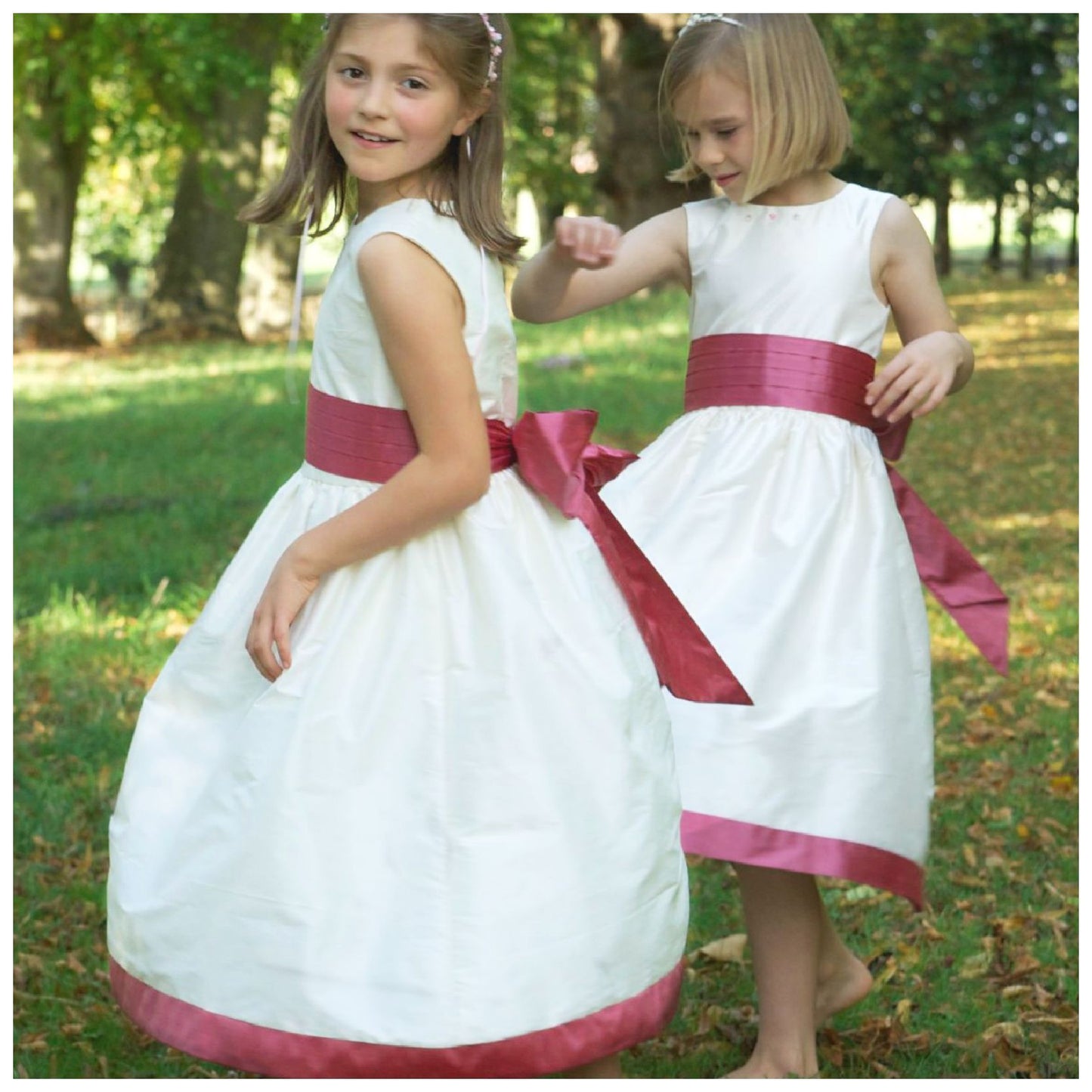
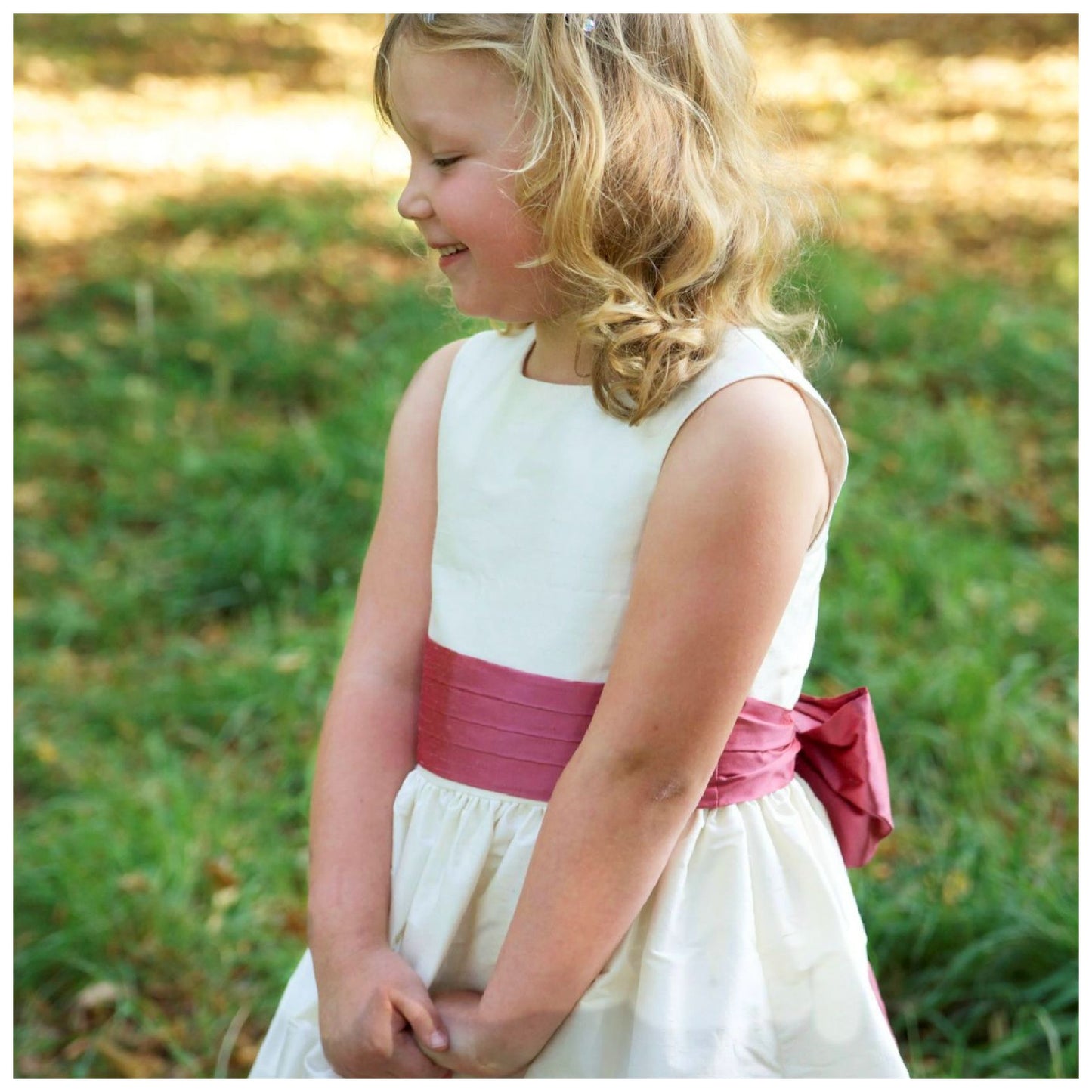
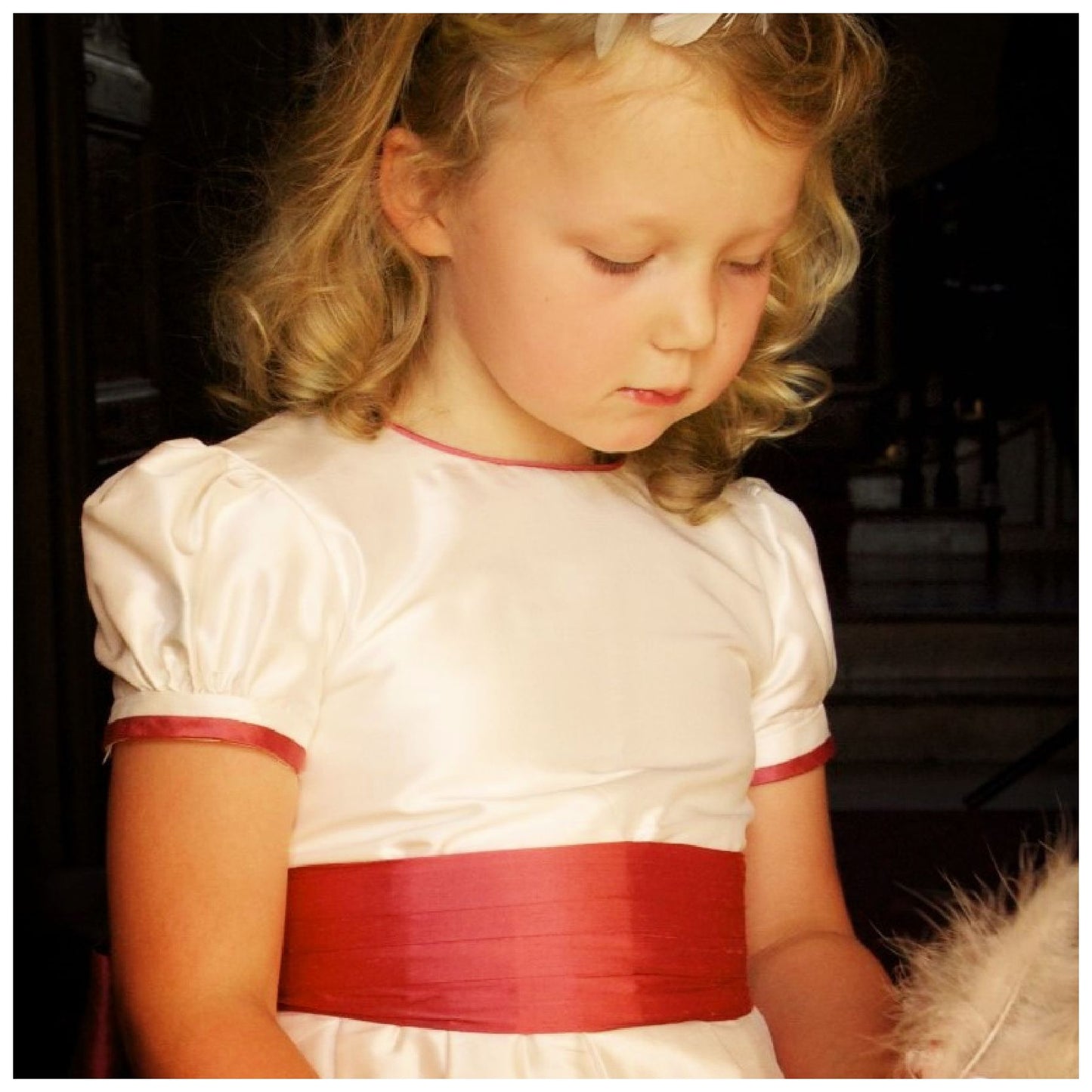
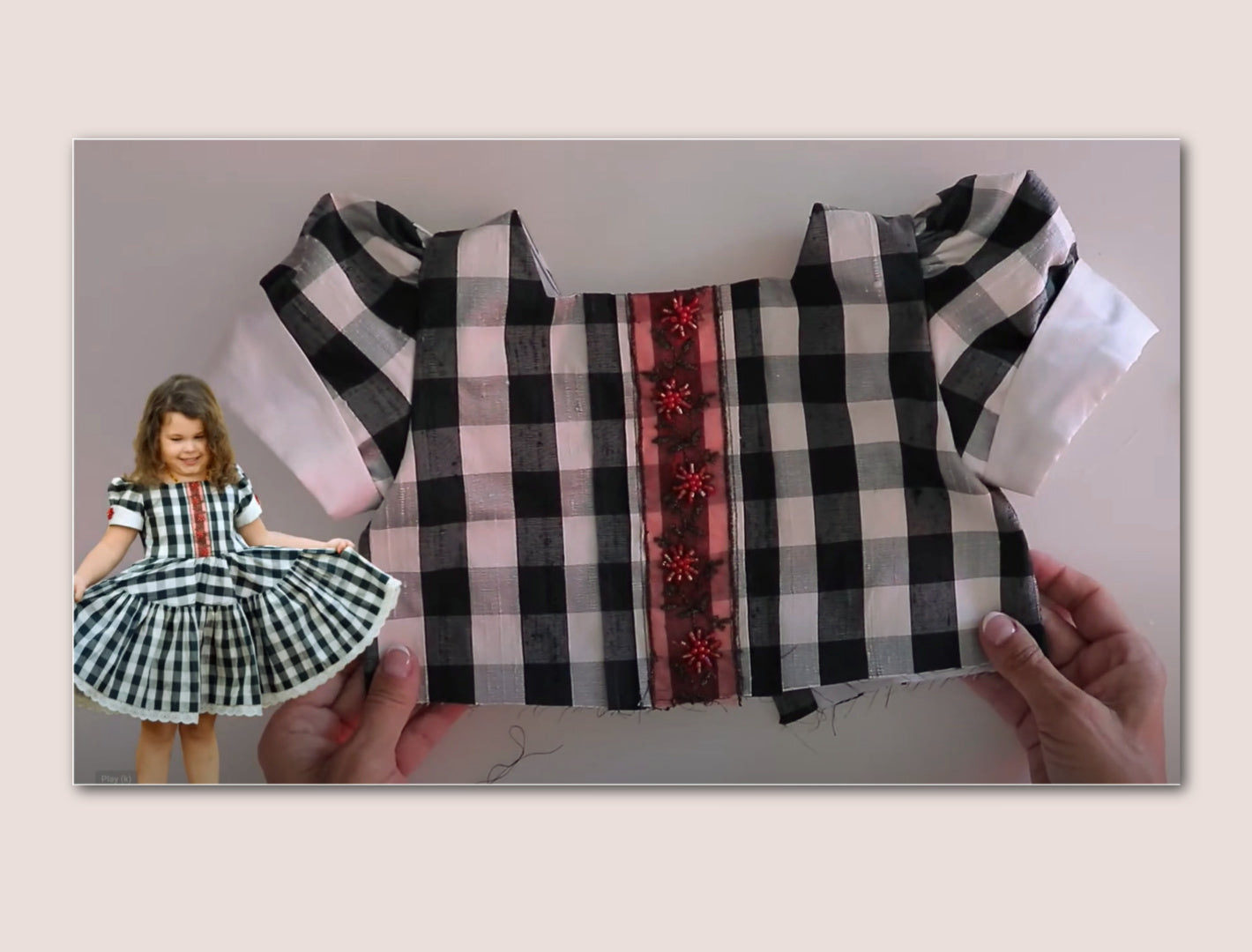
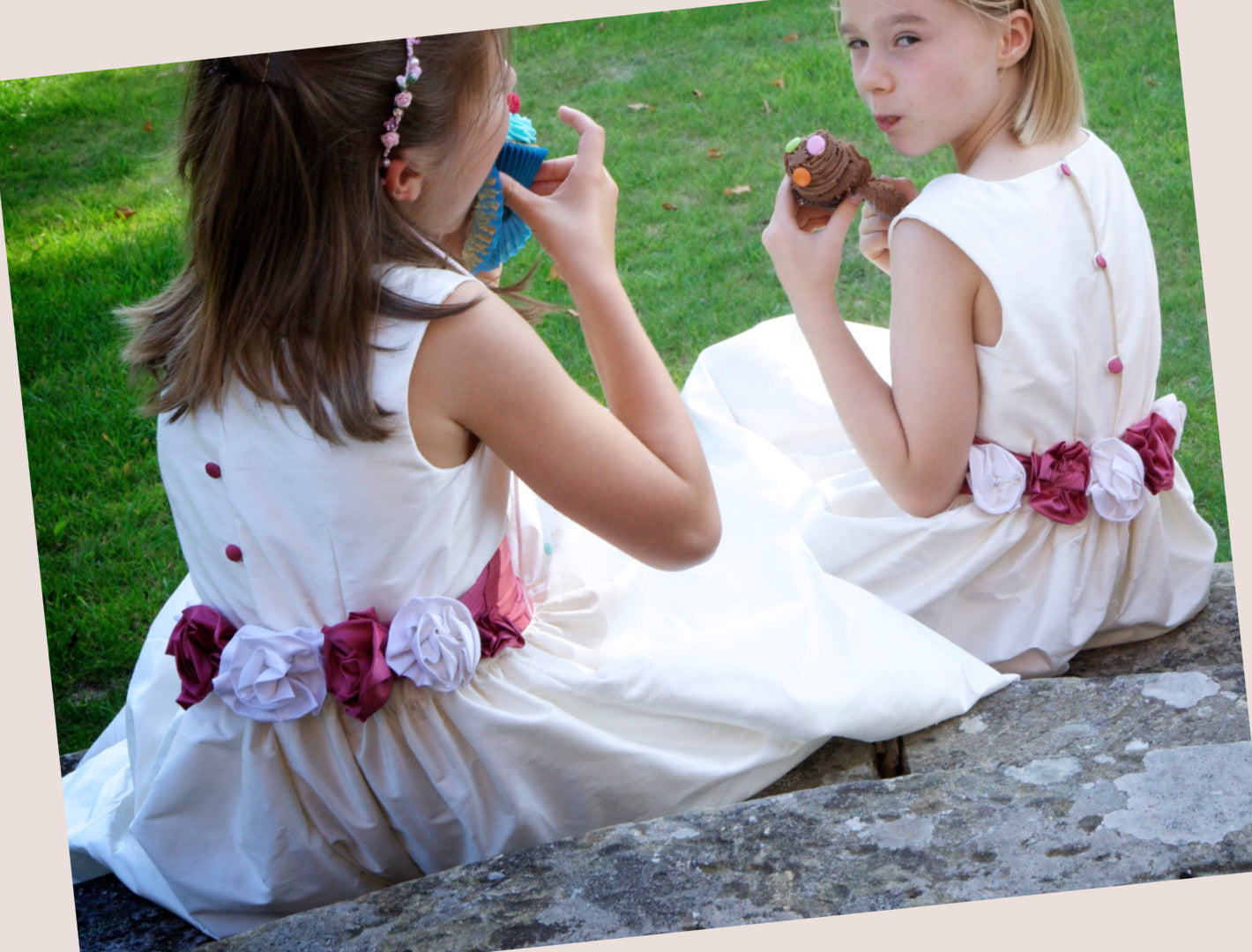
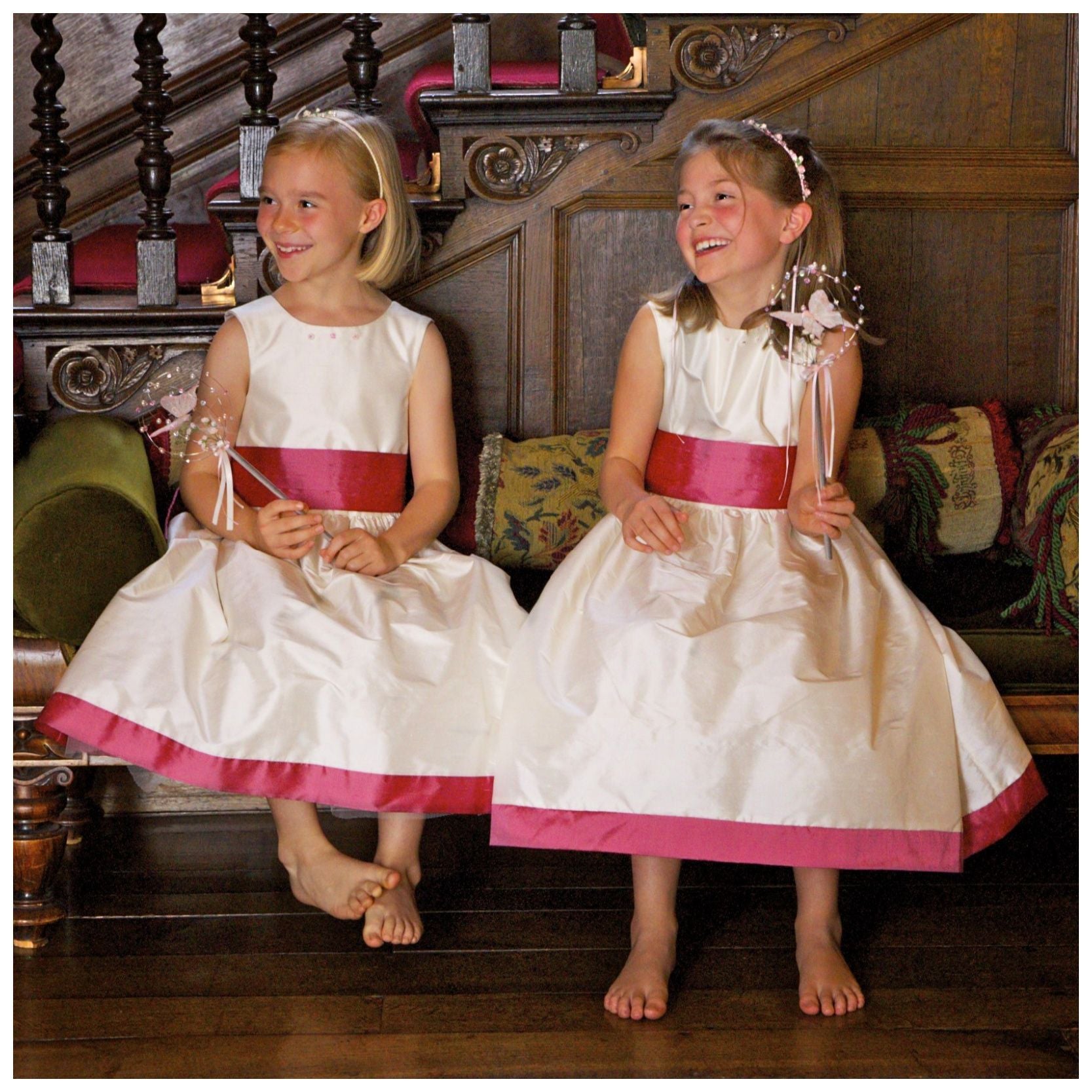
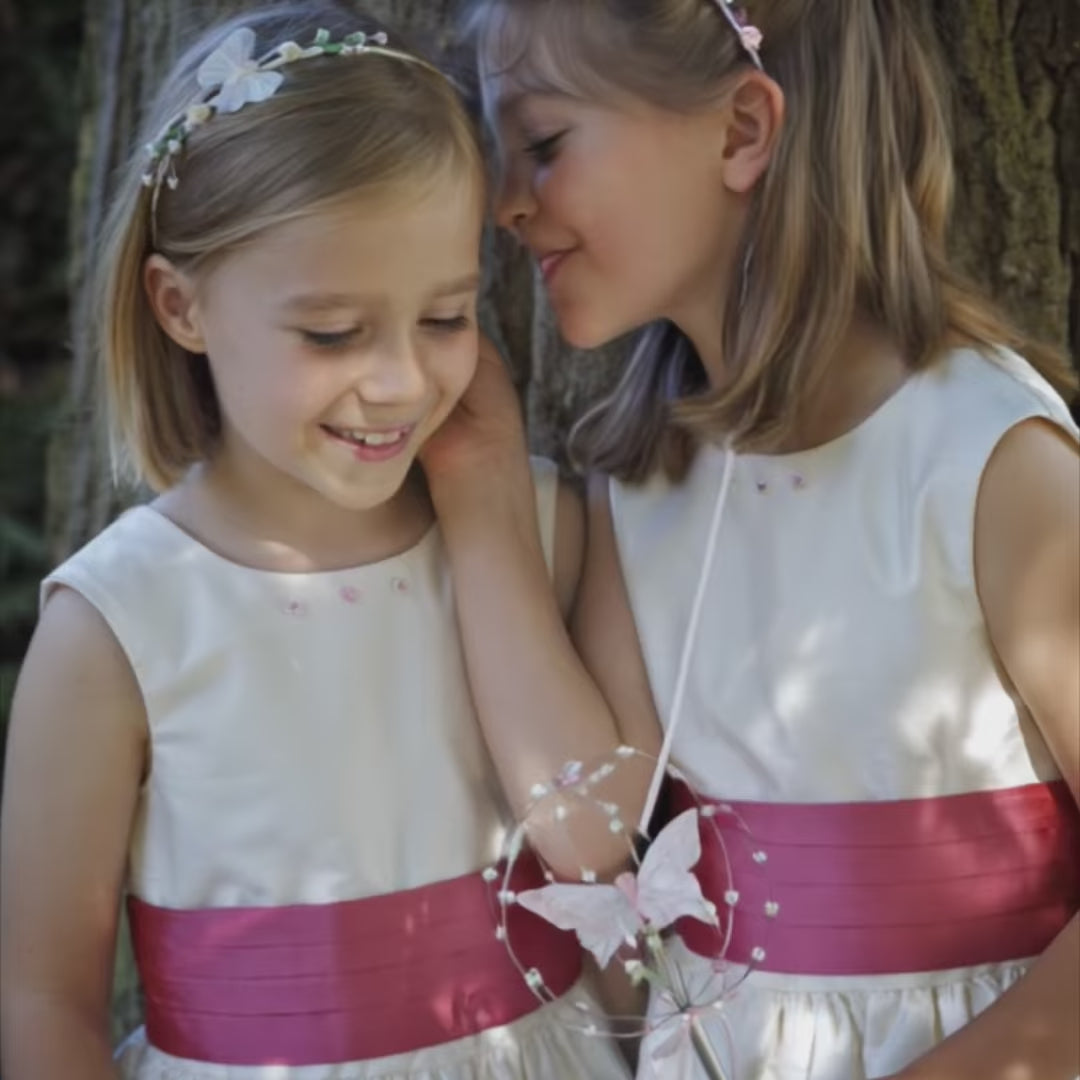
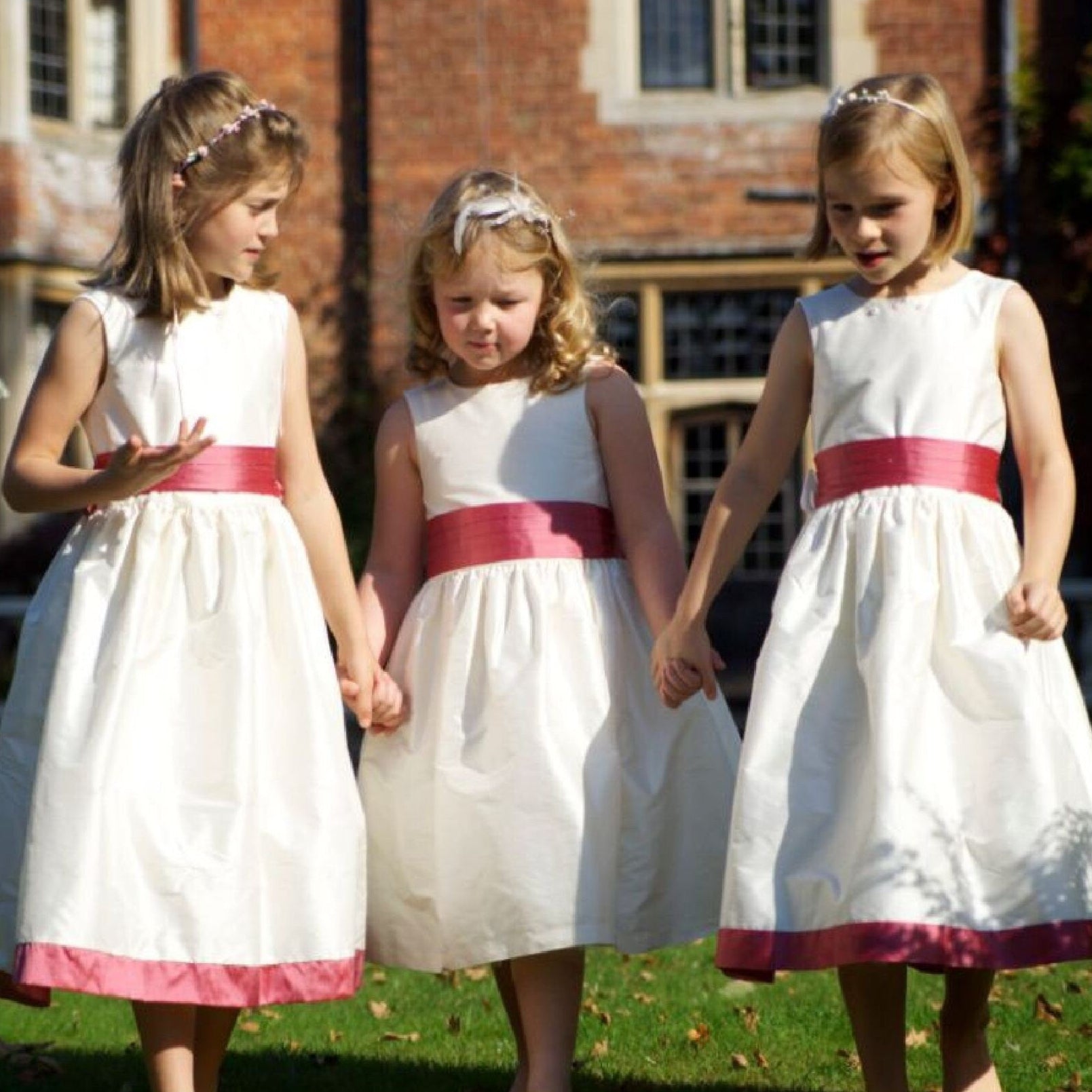
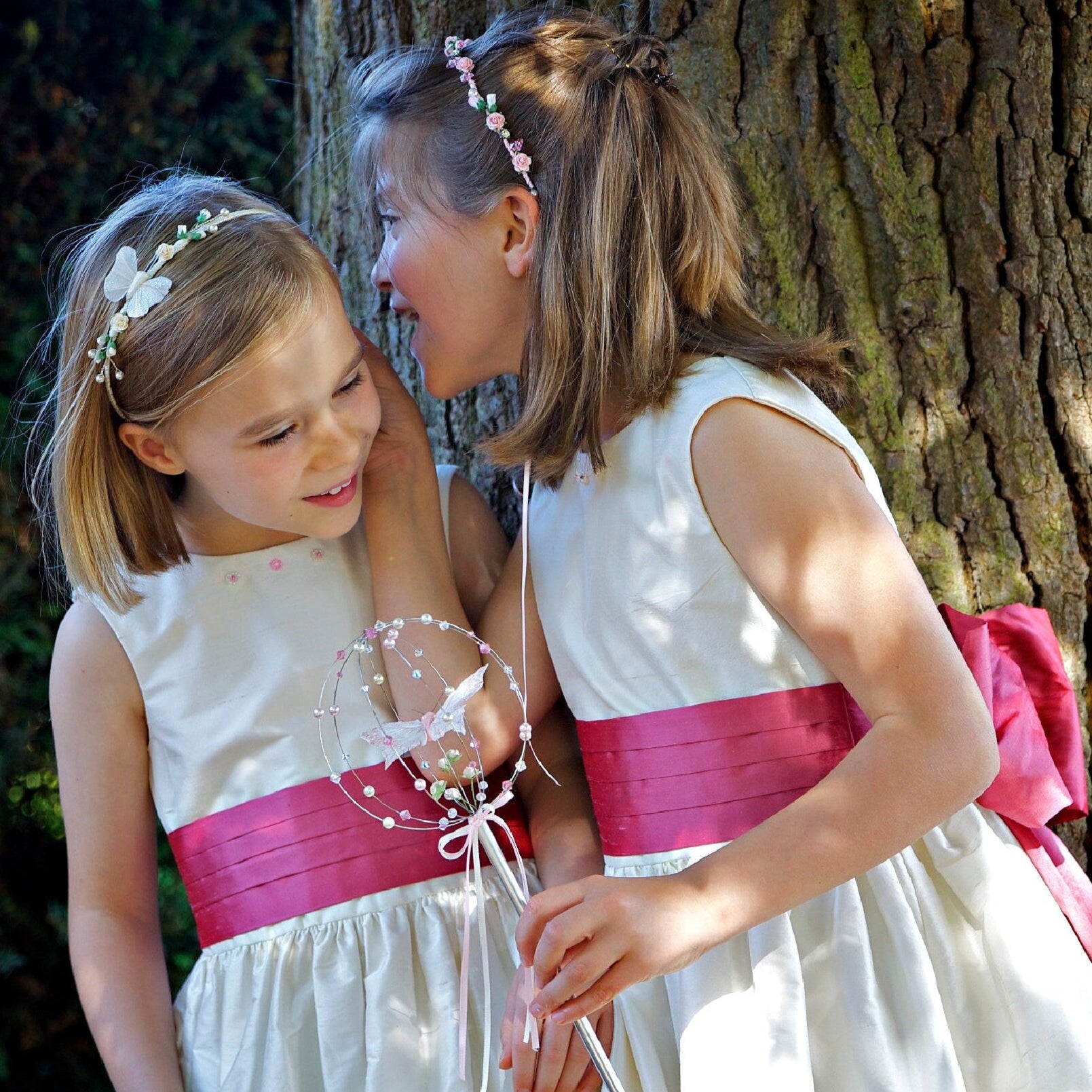
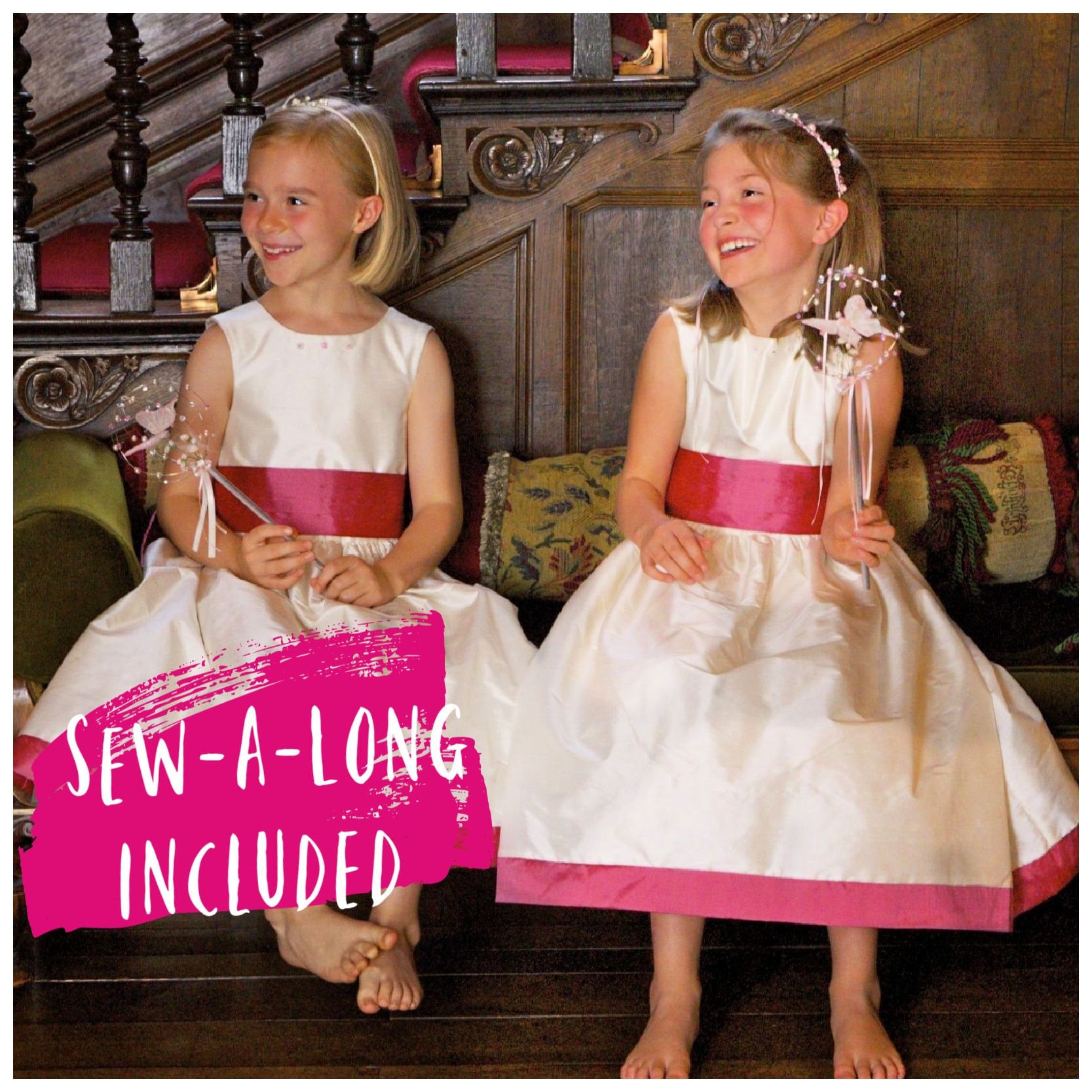
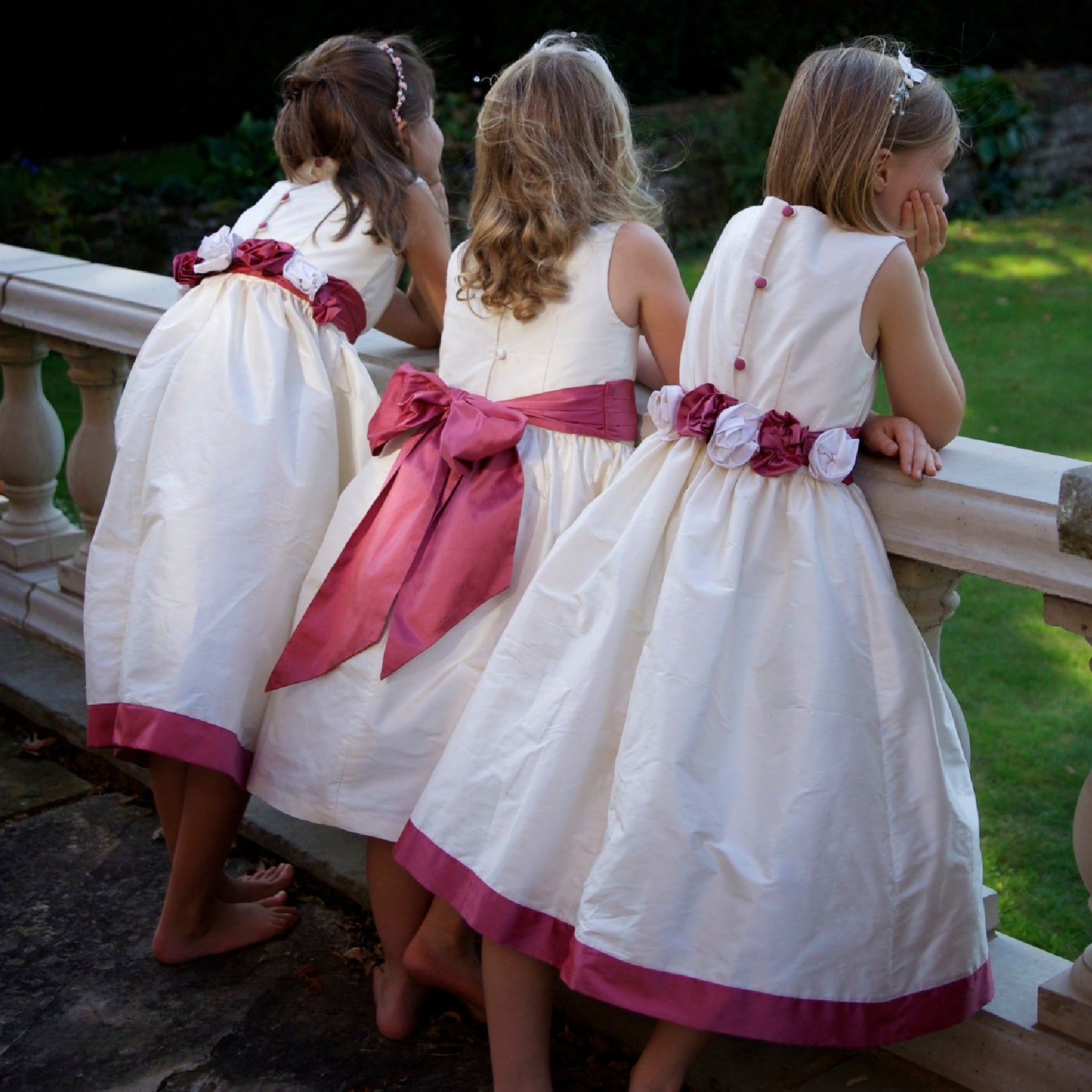
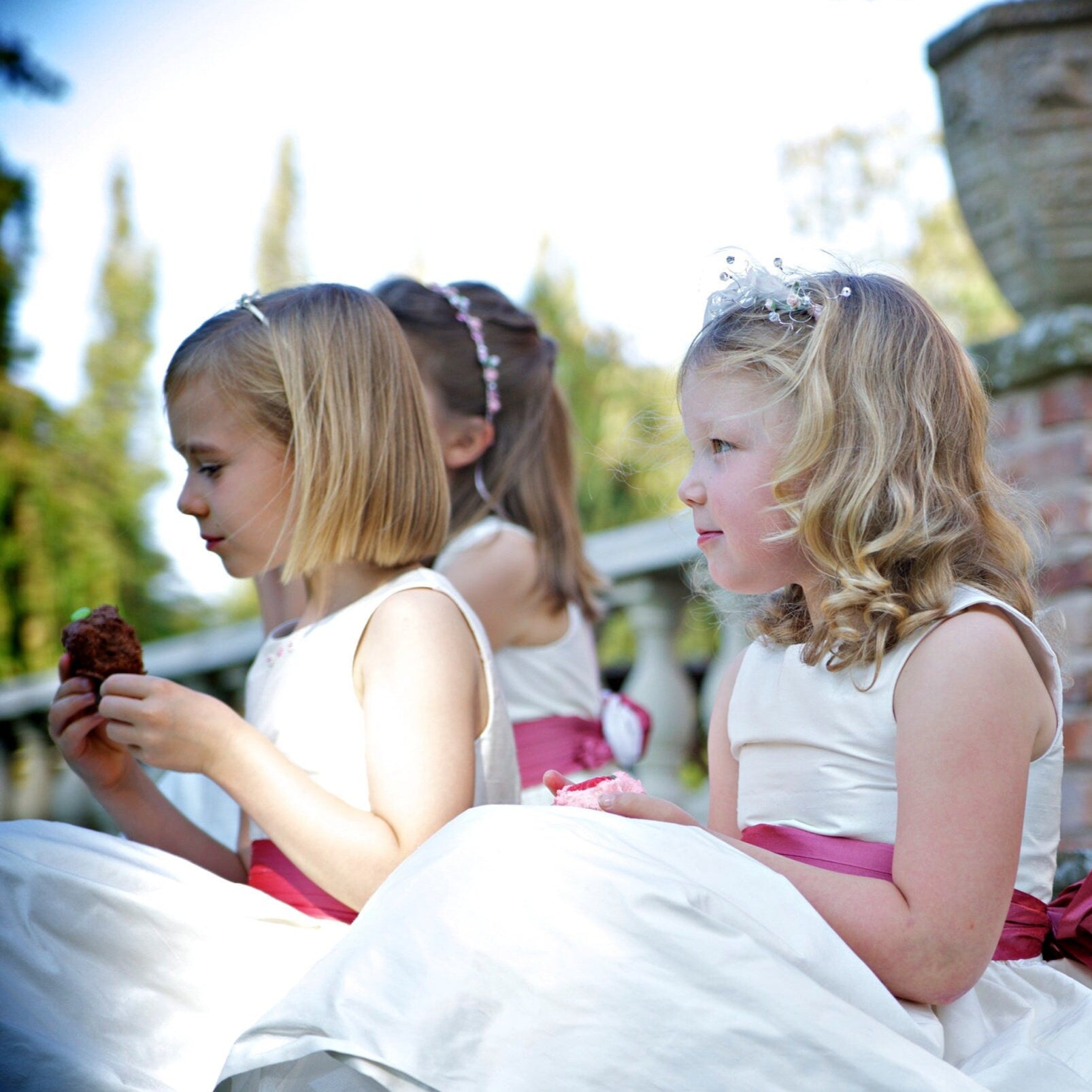
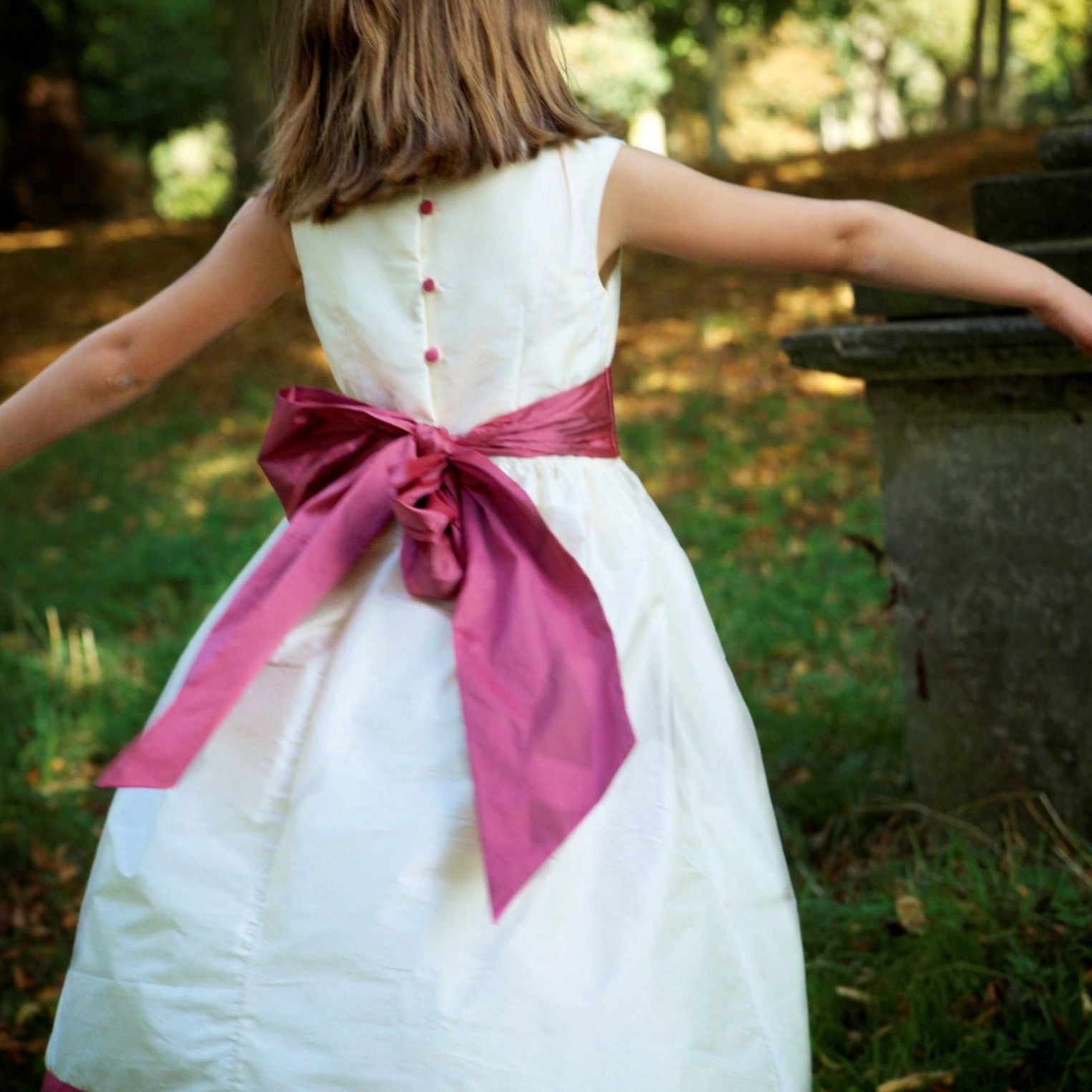
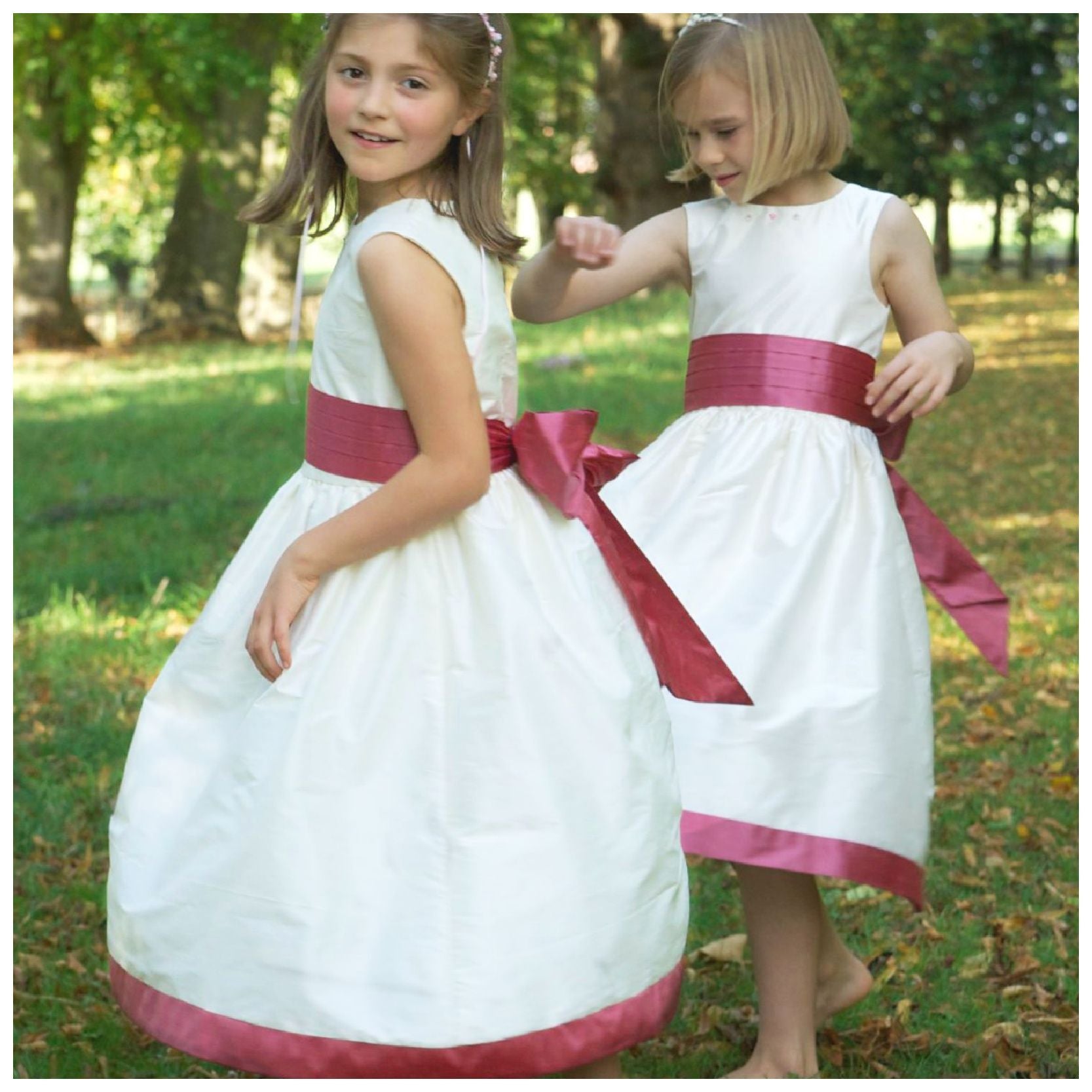
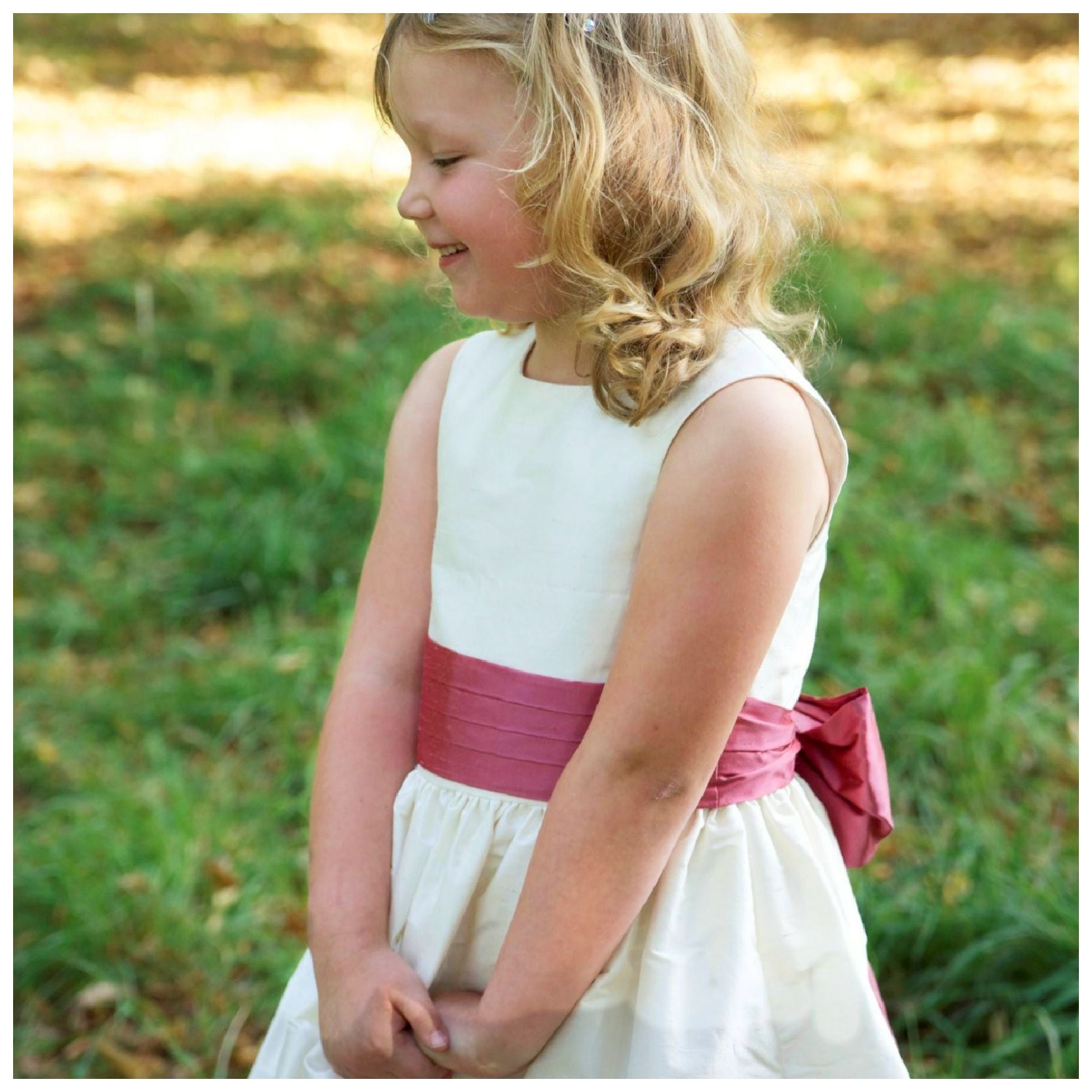
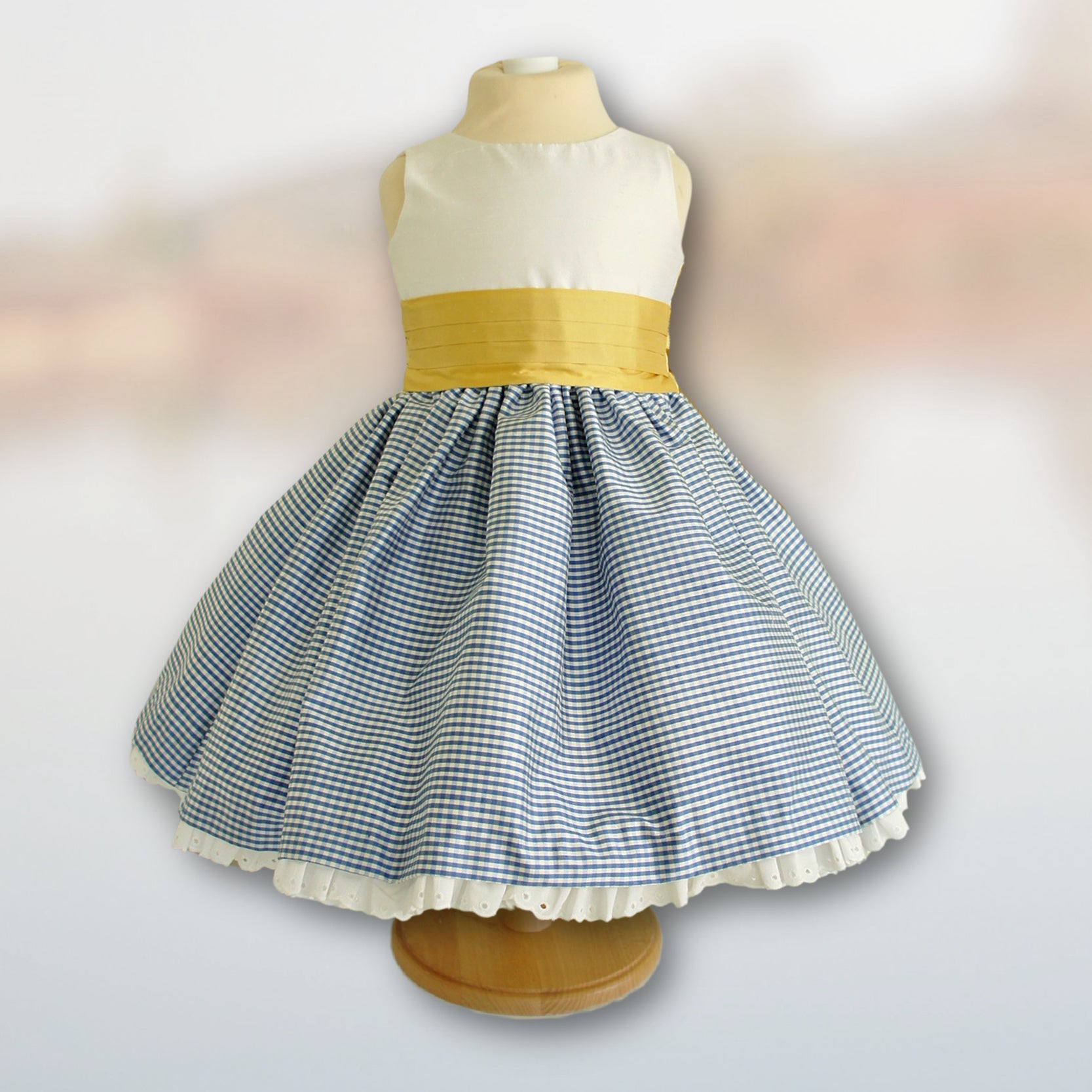
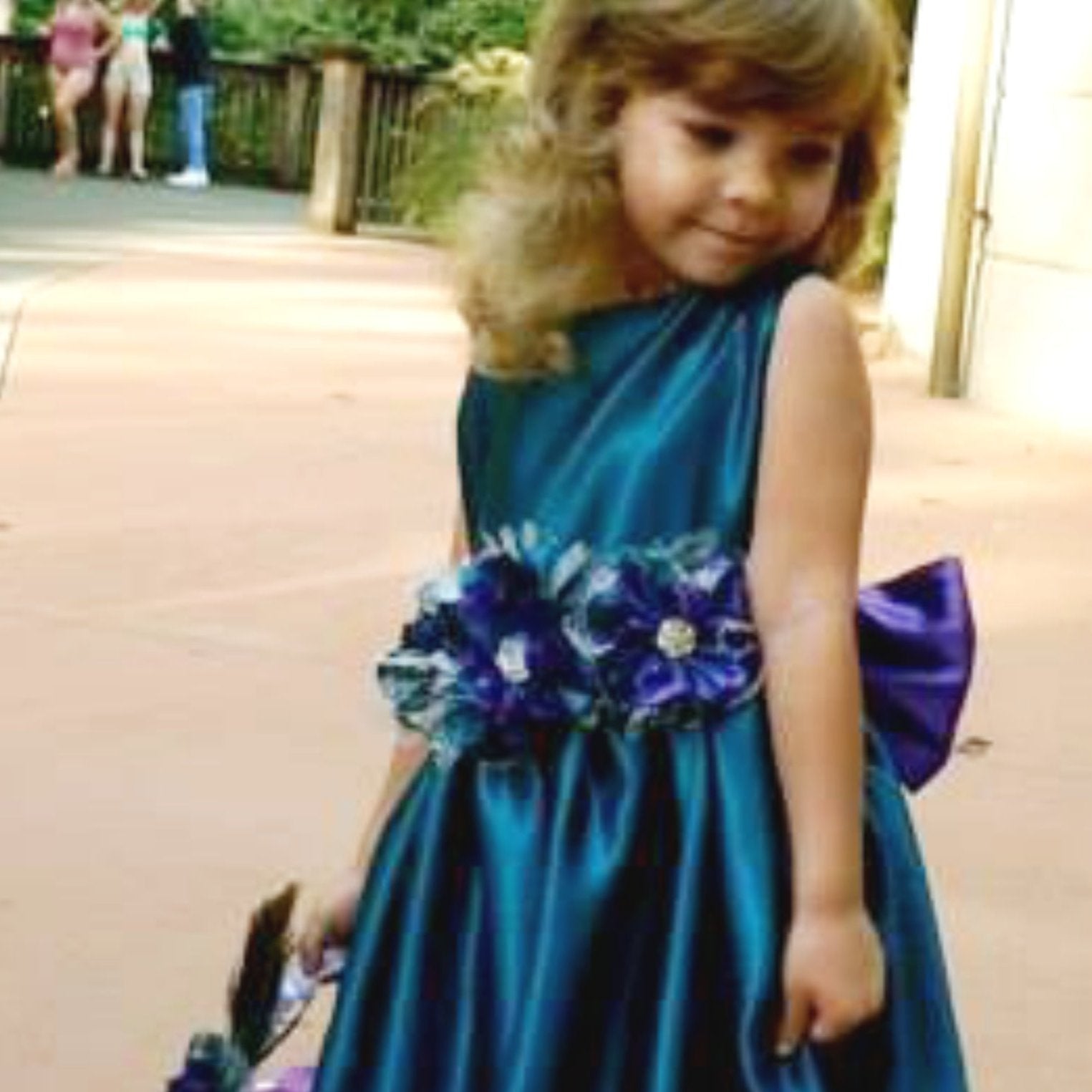
The Flower Girl Dress Pattern is a beautifully crafted design that helps you create a truly unforgettable outfit for her big moment, walking down the aisle at a fairytale wedding.

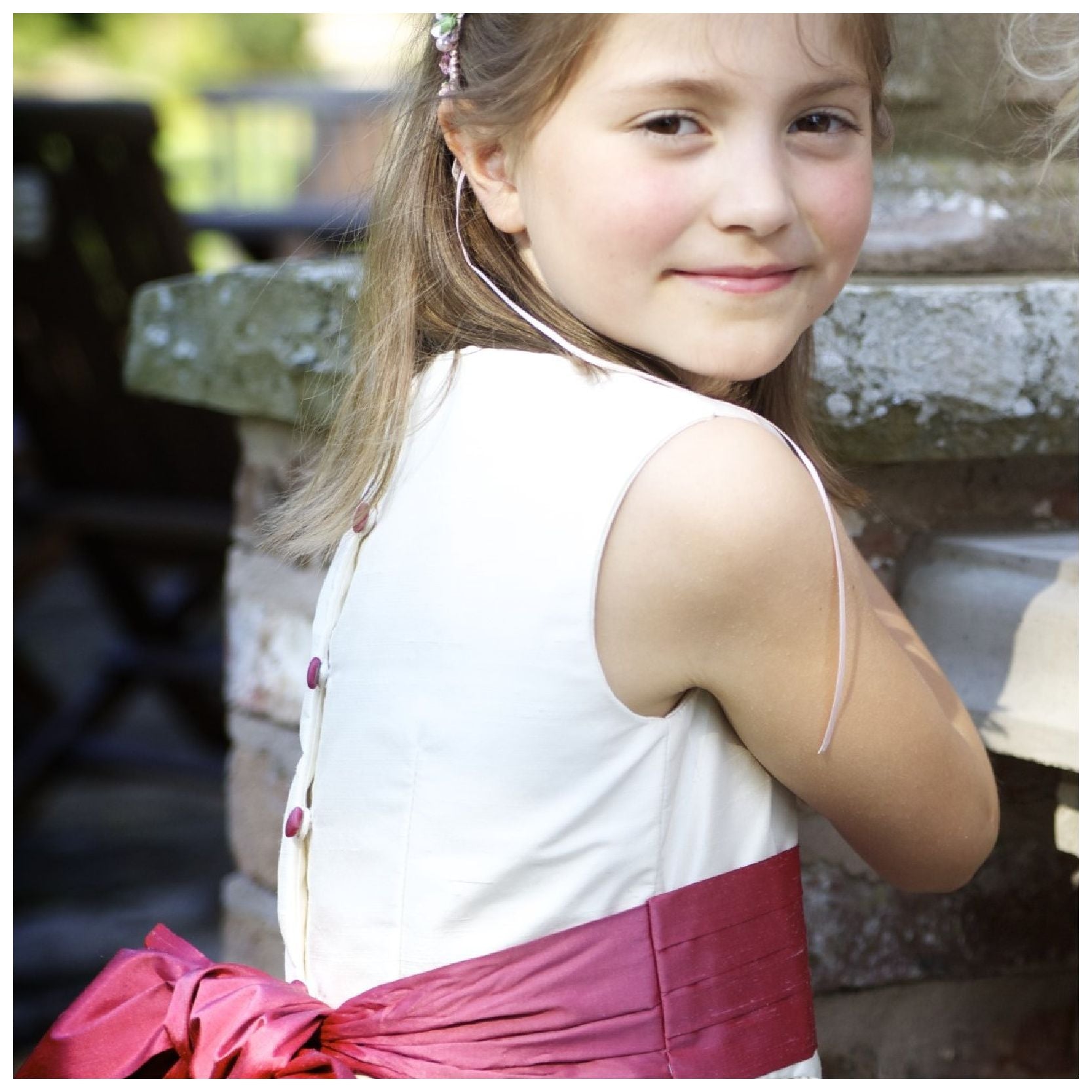
The design also works effortlessly for a baby dress or a classic girls party dress. The princess‑seam bodice pairs perfectly with the ankle length, gathered skirt, and a delicate loop‑back closure adds that lovely handmade finish. 

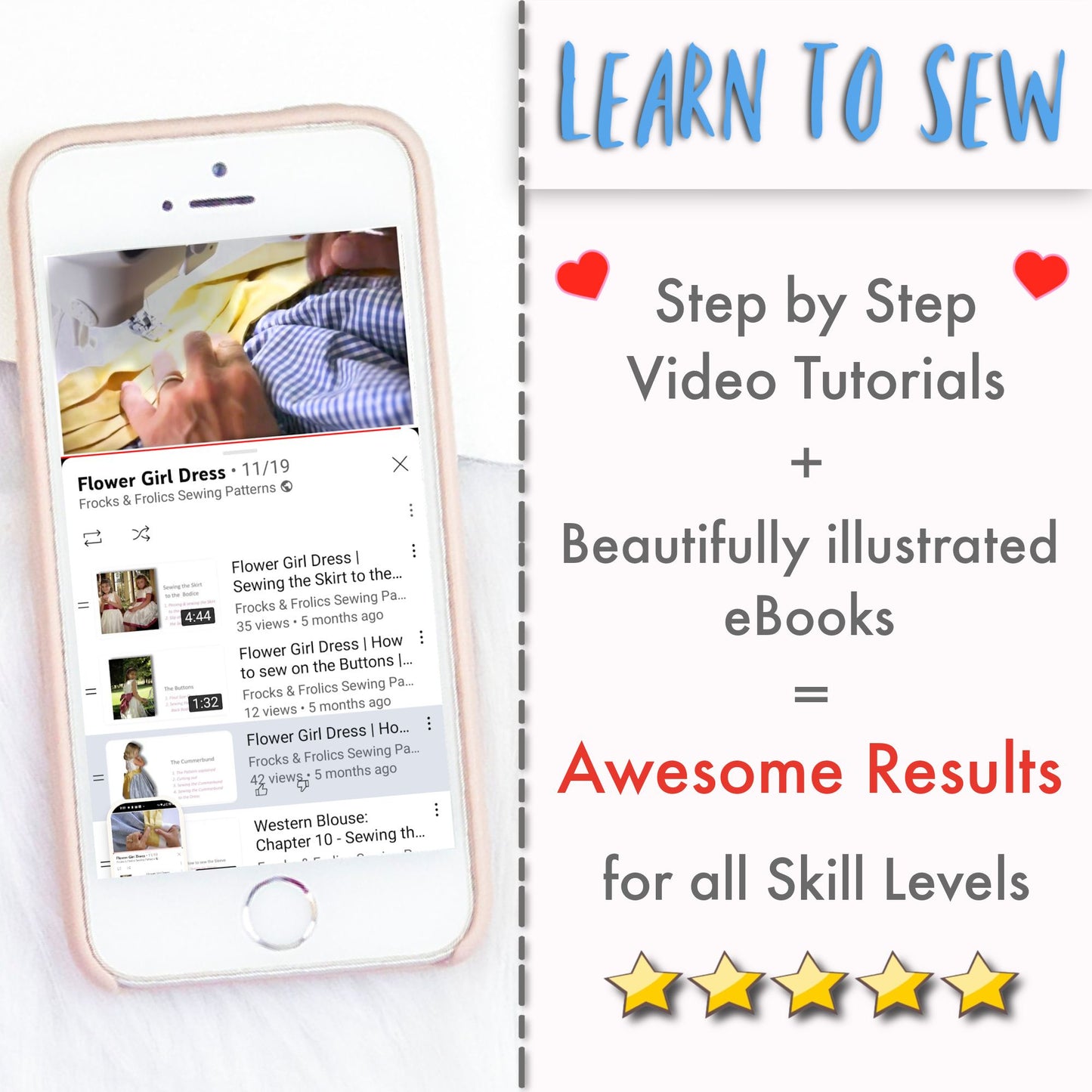
This digital sewing pattern has a free video course waiting for you — just scroll down and follow along with Marina as she walks you through each step.

Pattern Download Includes

  • Instant Download
  • DIN A4 & US Letter Size
  • Individual PDF files for every Size
  • All Sizes included
  • Detailed eBook
  • Video Tutorials

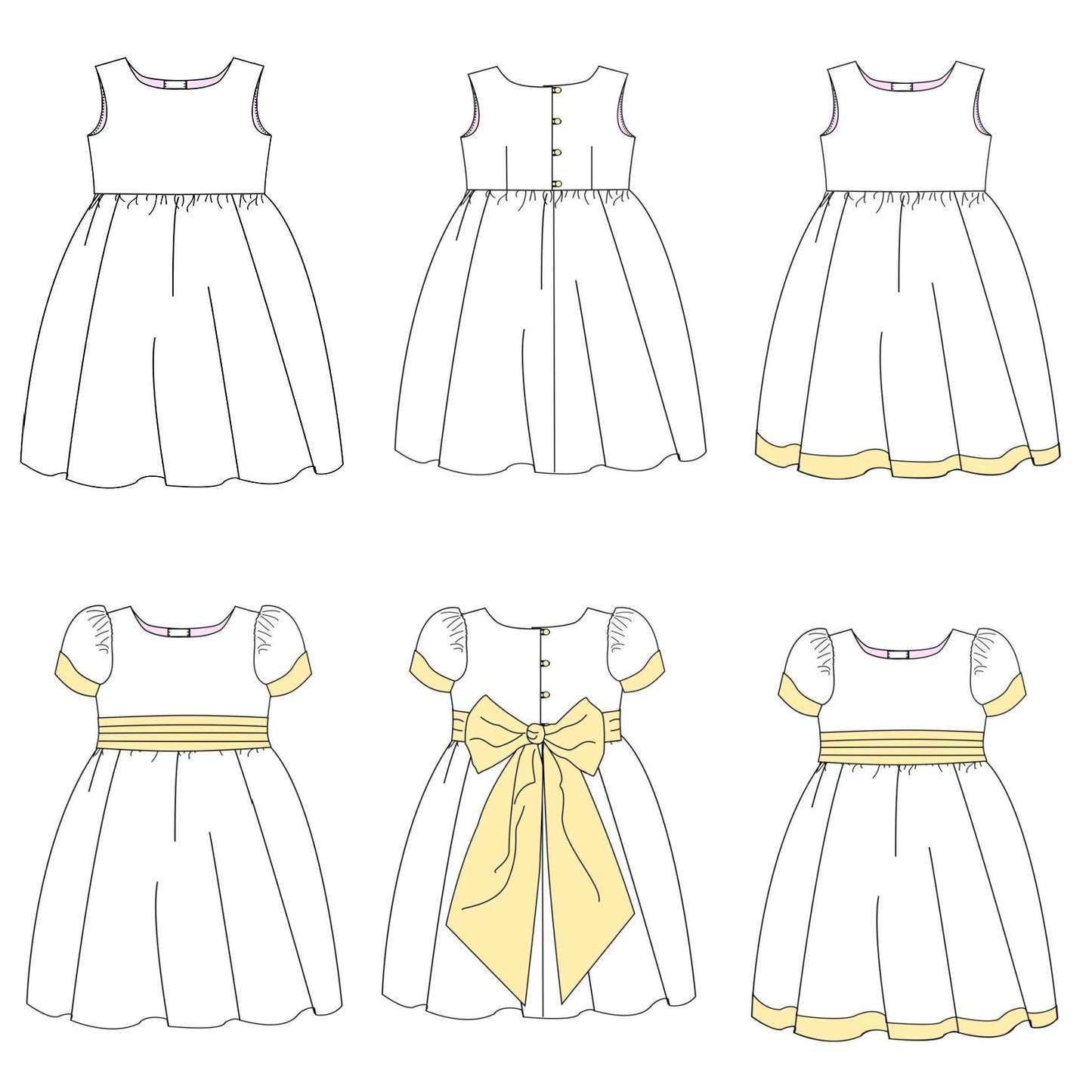
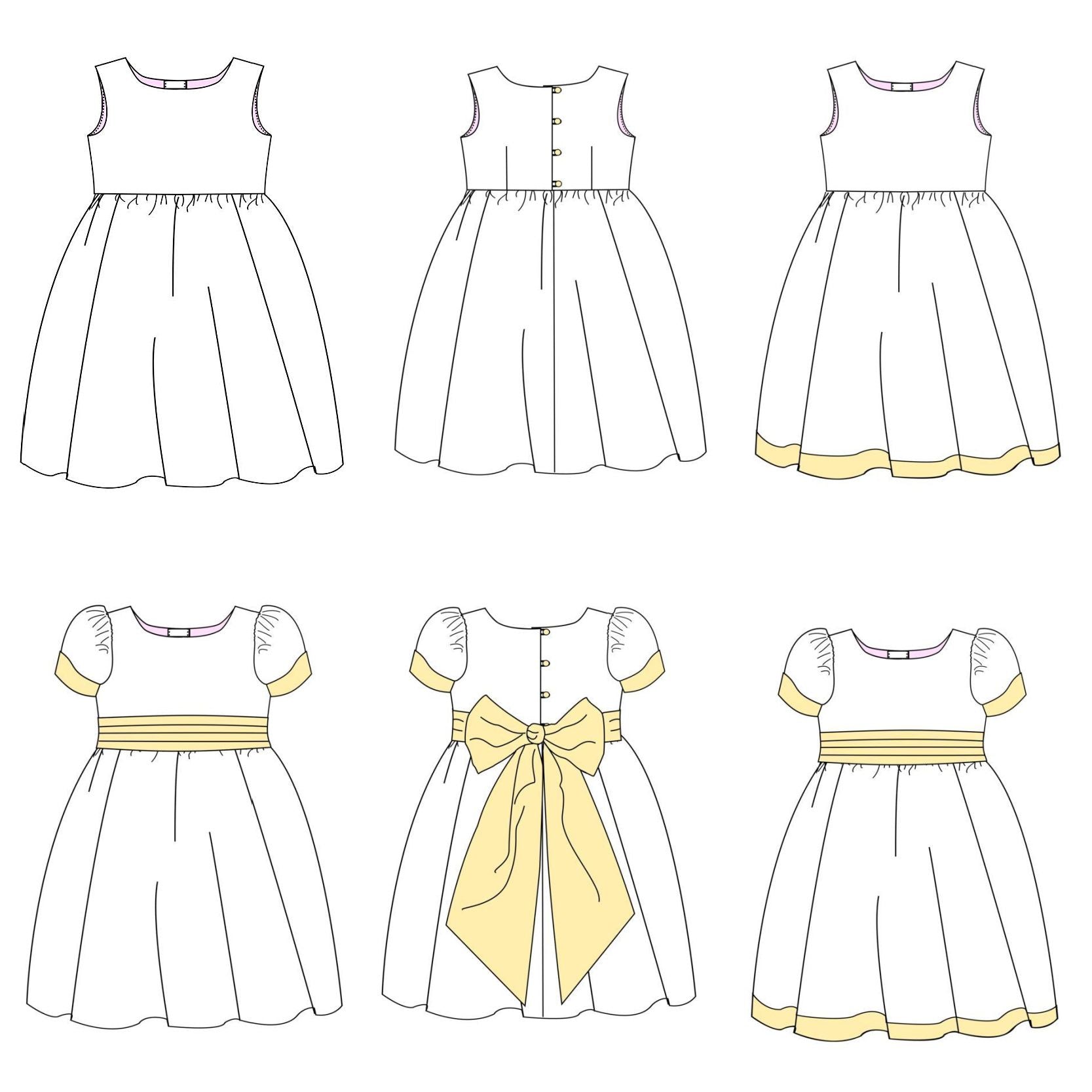
Design Options

  • Sleeveless
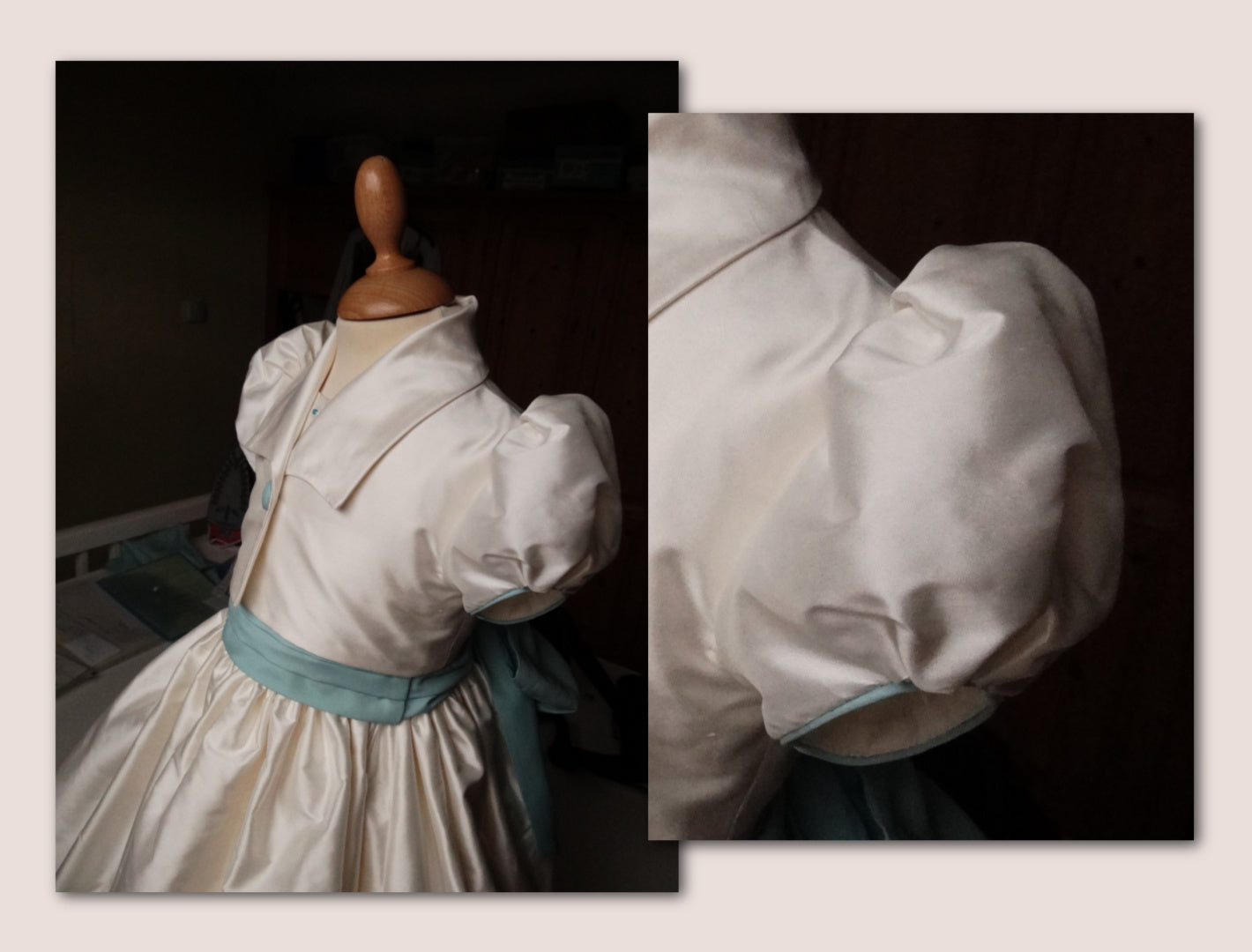
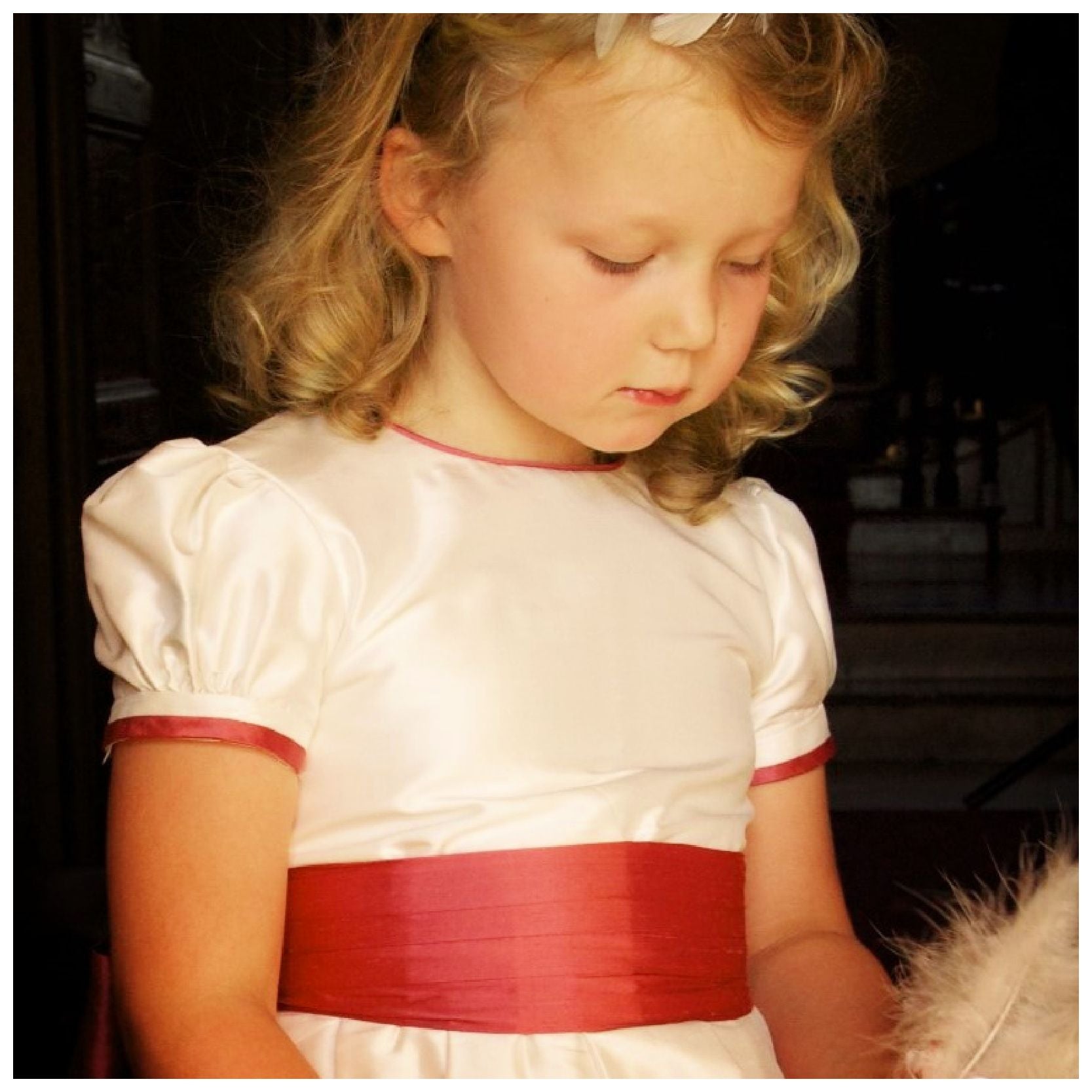
  • Puff sleeves
  • Wider or narrower neckline
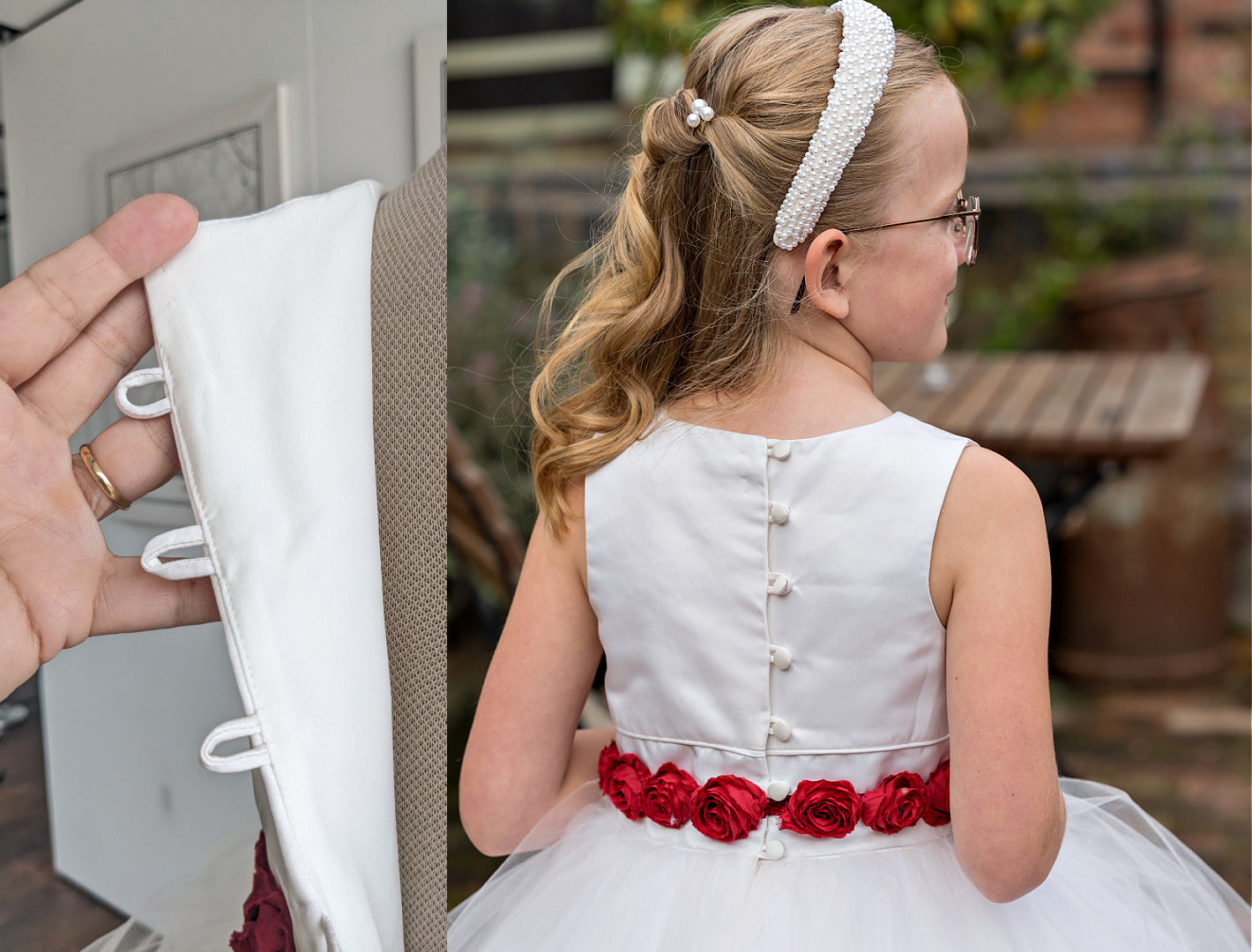
  • Gorgeous loop closure
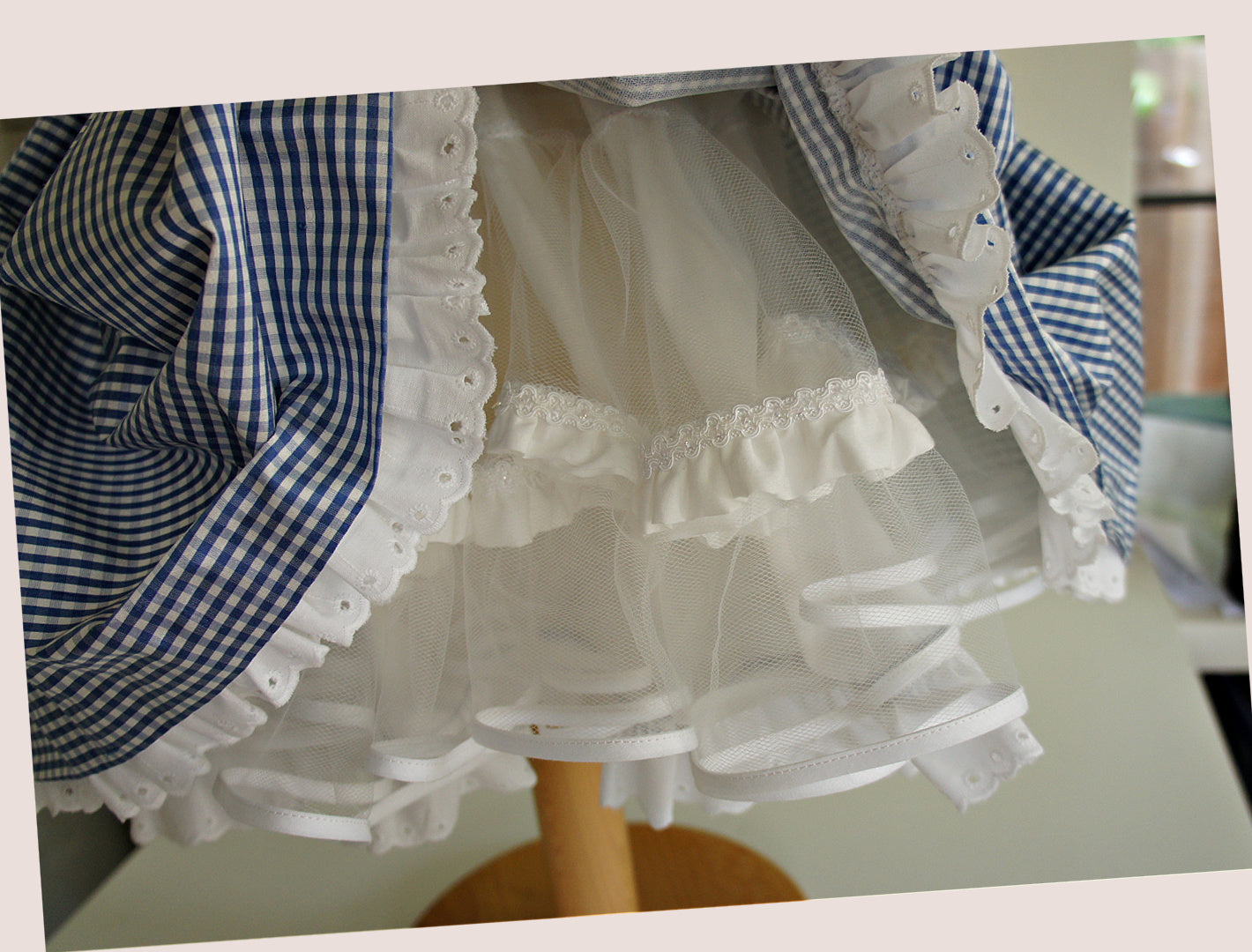
  • Gathered skirt and petticoat
  • Back darts
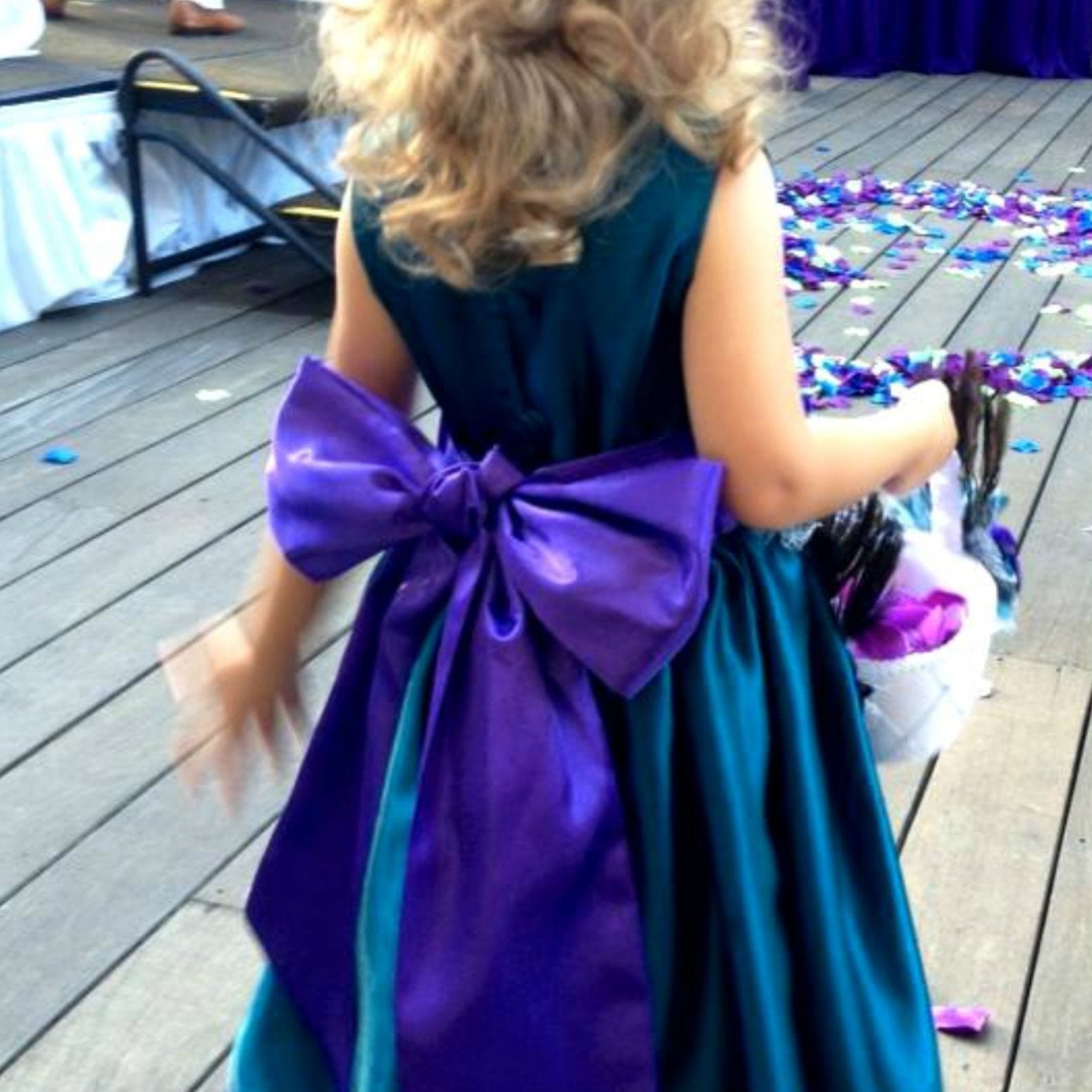
  • Cummerbund with wide long ties

Fabric Requirements

BEST MATERIAL CHOICE
•  Shell: Dupion silk, Duchesse satin, Taffeta, Brocade
•  Interlining: cotton, lightweight for the bodice
•  Lining: cotton or a very good quality satin for the bodice, the skirt can be regular lining satin

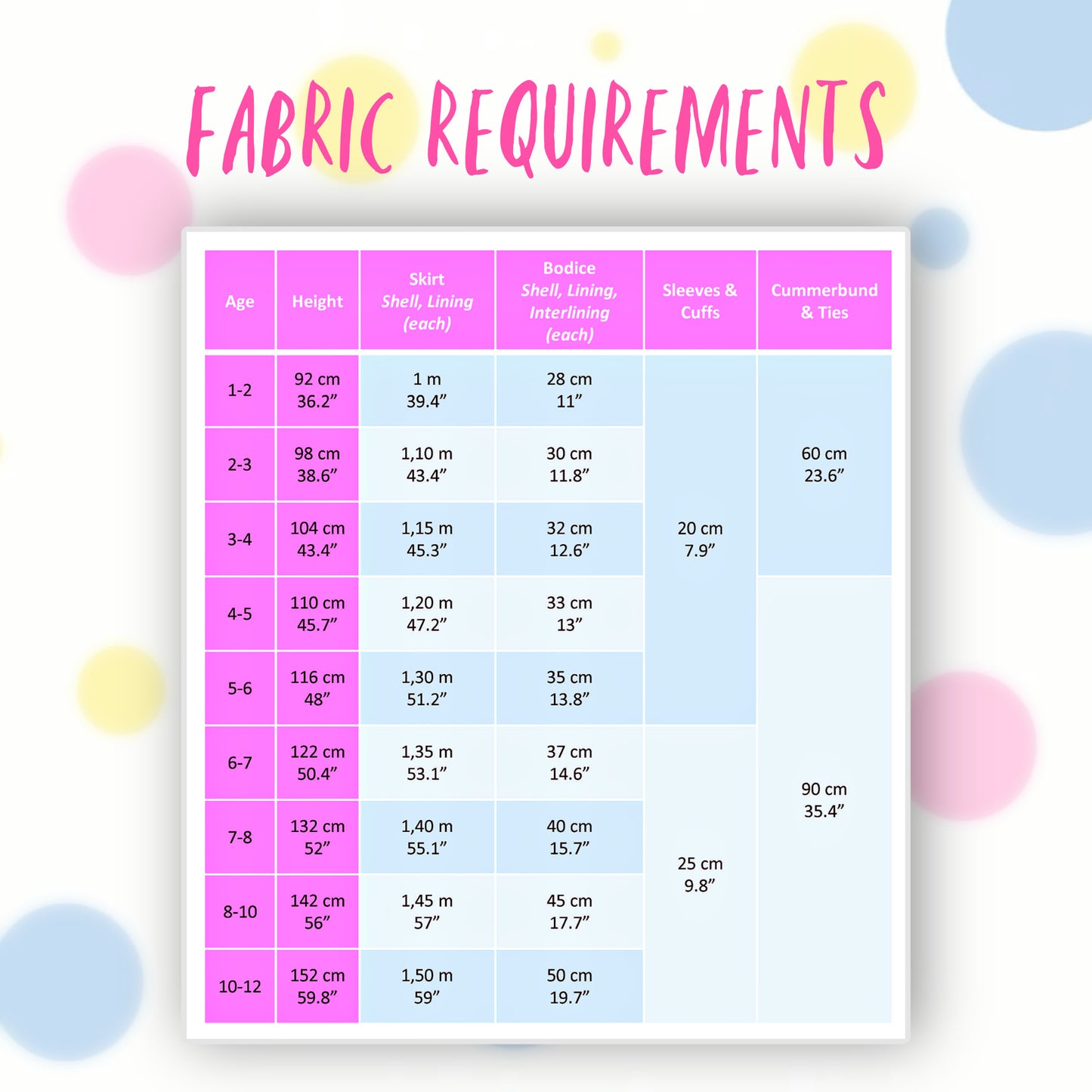
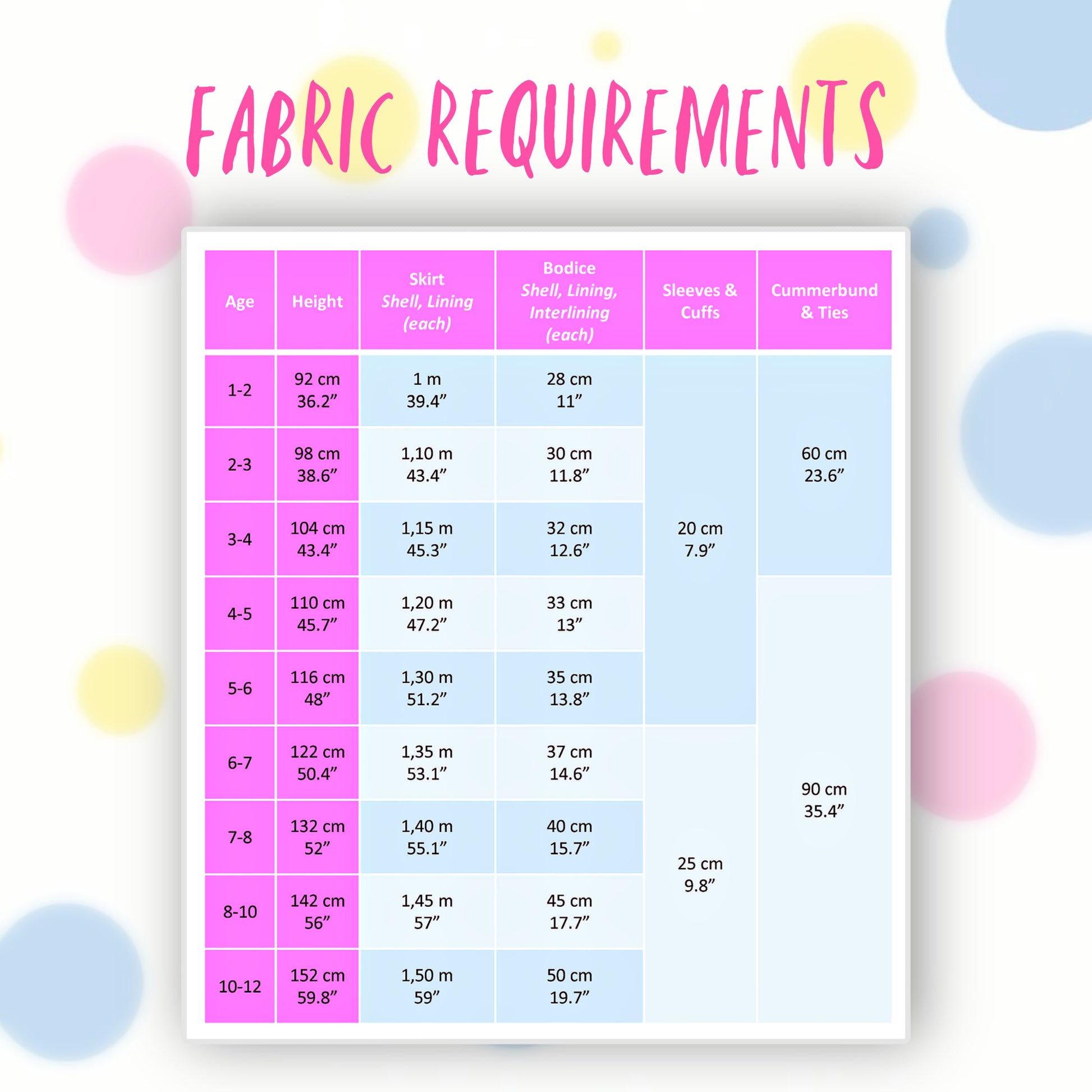
FABRIC REQUIREMENTS
•  Shell, lining & interlining: 51 inches-3 yards (1,3m-2 m)
•  Cummerbund: 24 inches-1 yard (60cm-90cm)

NOTIONS

  • Matching thread
  • Cover buttons: 5-10
  • Very slim piping cord (rouleaux loops)
  • Alternative for loops you elastic headbands

Available Sizes

Sizes: 1-12 Years

Please Read

  1. This is a digital pattern or PDF file, not a physical product. It will be delivered electronically via a download link delivered to the email used for the purchase.
  2. To ensure the pattern prints at its actual size, it's recommended that you use Adobe Acrobat Reader.
  3. The pattern creator, Frocks & Frolics, welcomes small-scale production using their patterns. 

Customers are encouraged to tag Frocks & Frolics when sharing projects made using their patterns on social media.

@frocksandfrolics #frocksandfrolics

View full details

STEP-BY-STEP VIDEO TUTORIALS
Thumbnail
INTRODUCTION TO THE PROJECT
Thumbnail
FABRIC CHOICE
Thumbnail
THE PATTERN
Thumbnail
HOW TO ALTER THE PATTERN
Thumbnail
THE SKIRT & LINING
Thumbnail
ADDING LACE TO THE HEM
Thumbnail
ADDING LINING TO THE CENTER BACK SKIRT
Thumbnail
PREPARING THE BODICE
Thumbnail
JOINING BODICE SHELL FABRIC & LINING
Thumbnail
JOINING THE SKIRT & BODICE
Thumbnail
ADDING BUTTONS
Thumbnail
THE CUMMERBUND
Thumbnail
PUFF SLEEVES
Thumbnail
INSERTING PUFF SLEEVES
Thumbnail
PUFF SLEEVES WITH PIPING
Thumbnail
THE PETTICOAT
Thumbnail
LOOP FASTENING
Thumbnail
FABRIC ROSES
Thumbnail
HOW TO SEW A BOW

VIDEO TEXT

Transcript for the video: Flower Girl Dress - Introduction to the Project

Introduction

Hello everyone, welcome to another one of my tutorials. This time I’m going to show you how to make a little jacket, a Kuma bunt, and a flower girl dress, all based on a Wizard of Oz theme. I’m actually making this for a wedding, and it’s going in the post on Saturday.

Before I start, I also want to show you that you’re going to learn how to make a fantastic petticoat. You don’t need a pattern for that—I’ll show you exactly how it works.

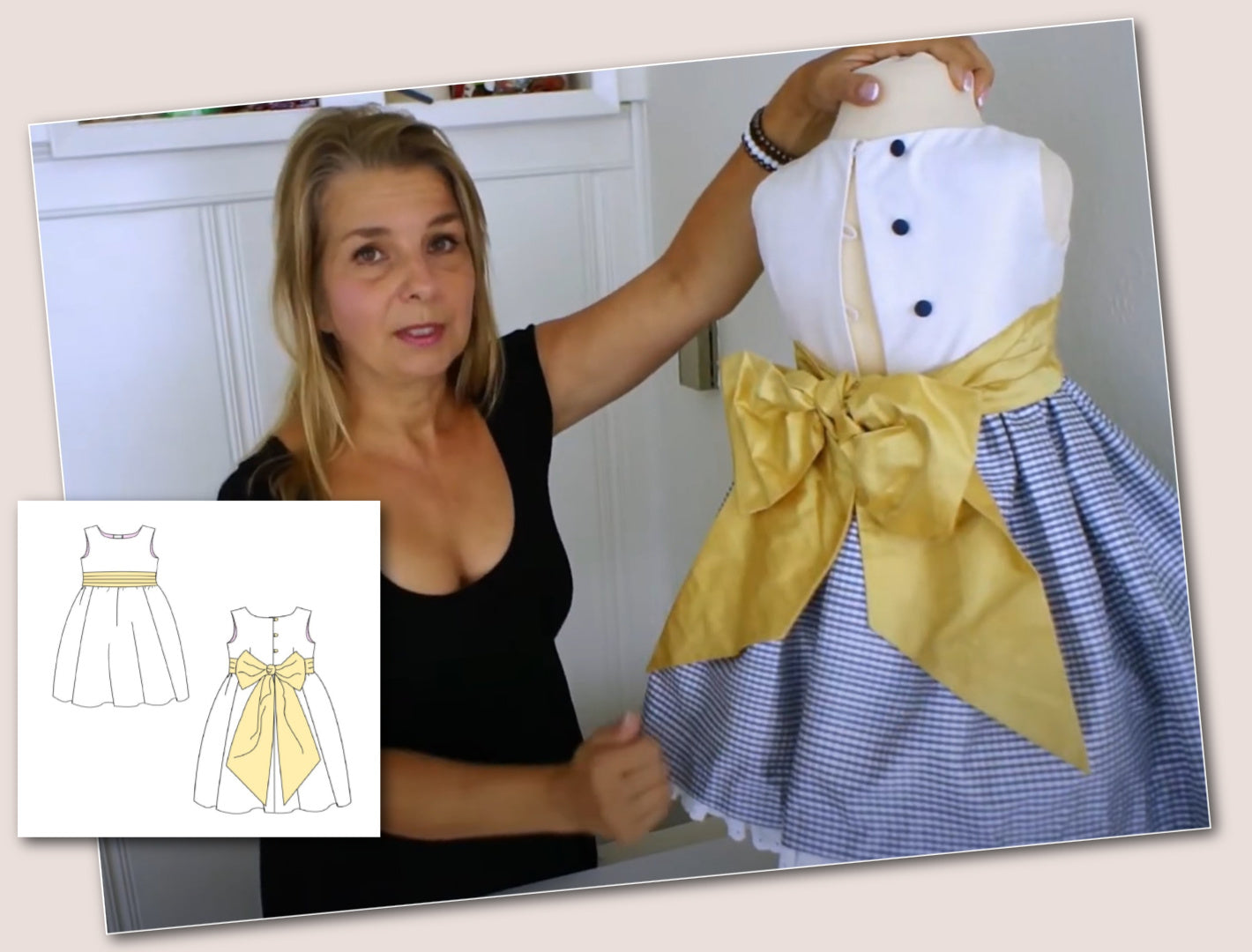
The jacket is called a crop jacket, and you can get it from our website, andy.com. Then we’ve got the Kuma bunt, which is really lovely and has a gigantic bow at the back. You can tie it however you like, but I think it gives a really beautiful line across the dress.

The dress itself has different rouleau loops and buttons, but because it doesn’t quite fit on my dummy (it’s for a one-and-a-half-year-old), I’m just covering it up for now. We’ve got rouleau loops at the back, cover buttons, and the jacket.

The jacket can also be made with buttons, but it won’t close on this dummy because it’s far too big.

Taking Measurements and Choosing Your Pattern

I’m going to start by explaining how to know which pattern to buy.

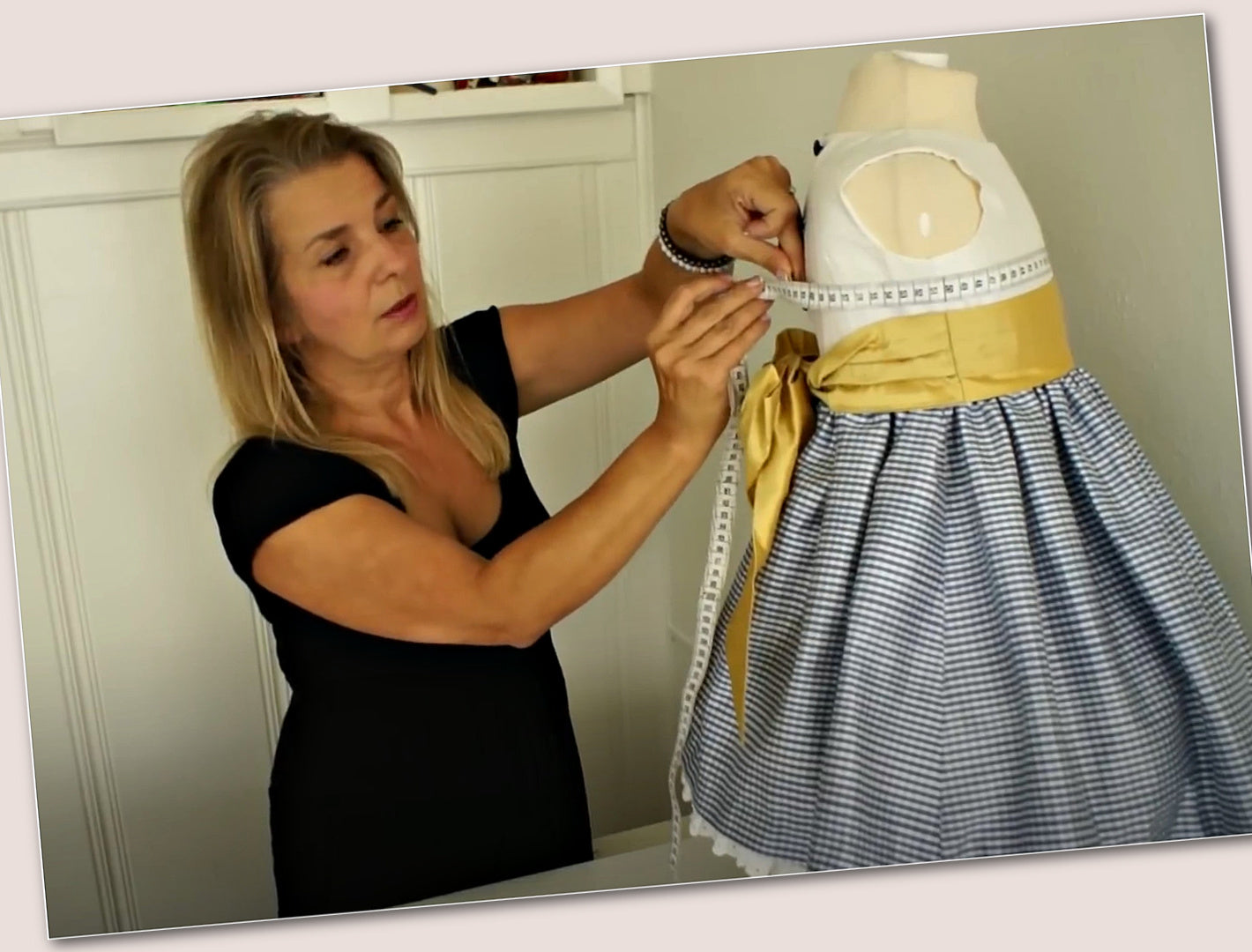
What you want to do is measure your child around the widest part of the chest, just underneath the arm. Your tape measure should not be too tight—just comfortable. In this case, it’s about 62 cm.

When making a flower girl dress, I would always recommend using very high-quality fabric. I’m using three dupion silks here, all of which have already been interfaced by the shop.

Personally, I don’t actually like that. I would recommend interfacing everything yourself. It’s cheaper and easier to work with. So I’ve chosen white for the bodice, check for the skirt, and gold for the accents.

Understanding the Pattern

Let’s have a look at the pattern.

The pattern comes like this, and you also get a scale so you can check that you’ve cut it out correctly. Basically, we need to cut everything out and assemble it.

The front may come in two pieces with an attachment line, and the back depends on the size you are doing.

The skirt comes as one piece for both front and back, and it is labeled with letters from A to F. A and B go together, C and D, and E and F. Then you glue everything together.

It’s a very simple system, but if you don’t know it, it can feel confusing.

So you put the skirt together, then cut the front skirt on the fold, and the back skirt twice. If you really want to, you can add a 1 cm seam allowance to the back skirt, but it’s not necessary because there are gathers, and a small difference won’t matter.

Back Piece and Rouleau Loops

Now this is the front piece.

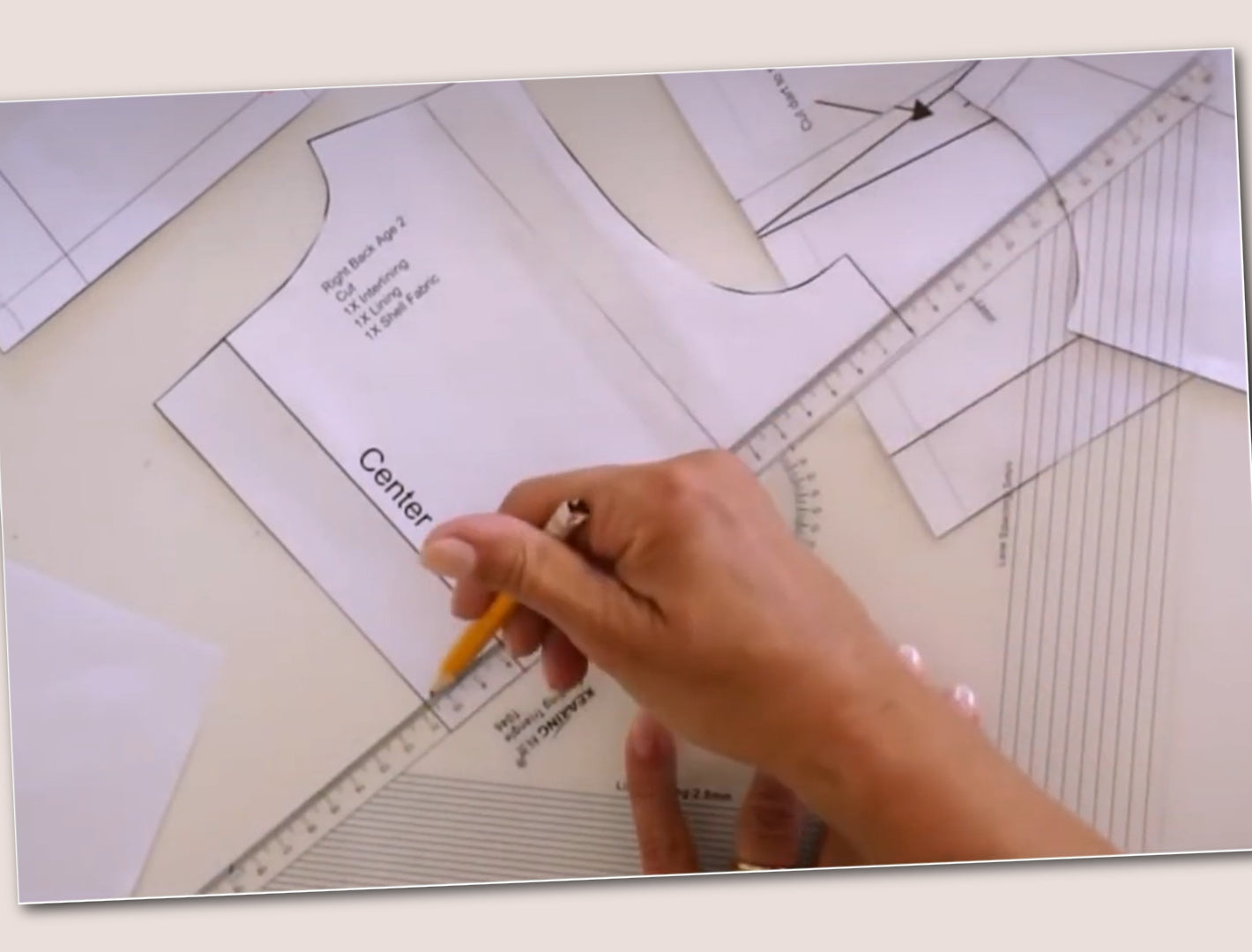
We’ve got two pieces for the back because we’re using rouleau loops. On the side that goes underneath the rouleau loops, we add 2.5 cm extra. On the other side, we only add 1 cm.

This ensures that when the rouleau loops sit over the right-hand side, everything is centered and gives a clean, beautiful line.

So when you put the two back pieces together, you can see they are identical except one is wider than the other.

Sash (Kuma Bunt)

Next we have the Kuma bunt, or sash. There is a separate video explaining this, but basically you attach A4 or letter-size paper to extend the tie.

For smaller sizes, we use four sheets. For larger sizes, five or even six, so the ties hang lower—that looks very pretty.

There is also a front piece for the sash, and I recommend watching the separate video for that.

Measuring and Pattern Adjustments

If I need to adjust the pattern (because I’m making this for a real wedding), I first draw in all seam allowances so I can work accurately.

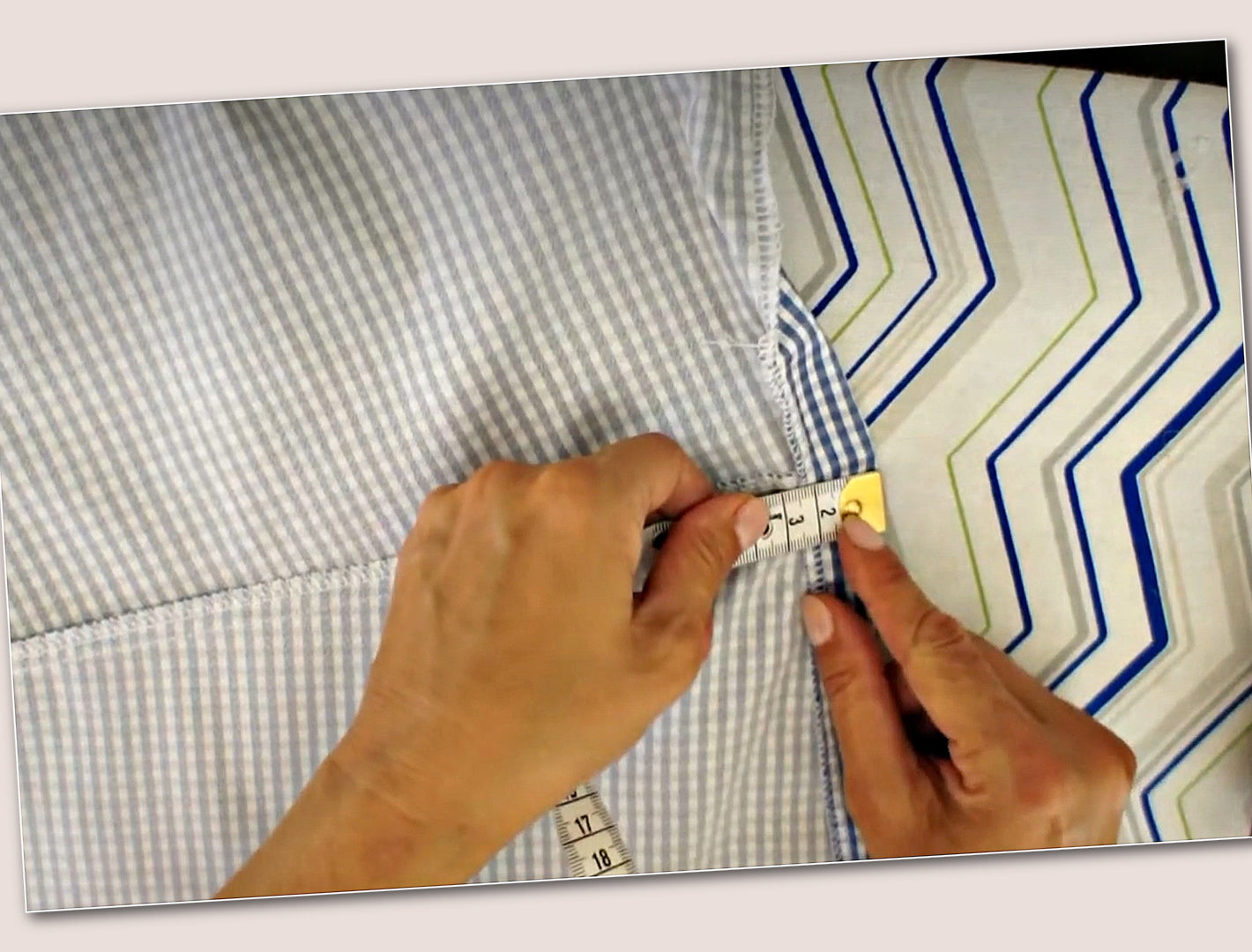
For the front piece, I measure and take note of the width. In this case, I’ve got 5.4 inches (13.5 cm). Since the body has two sides, I double that: 10.8 inches (27 cm).

I repeat the same for the back, measuring across the dart and seam lines.

So overall, the full width is 20.8 inches (53 cm).

Adjusting for the Child’s Size

Now we adjust for the child.

The bride has given me a measurement of 20.8 inches, but the child measures 18.5 inches. However, we always add ease—about 1 to 1.5 inches—so we aim for 19.5 to 20 inches.

That means we reduce the pattern by about 1.3 inches total.

Since the pattern has four sections (two front, two back), we divide that amount by four and adjust each section along the division lines.

Never cut off the side seam only—that will distort the shape.

Once adjusted, I tape everything back together.

Back Pieces and Length Adjustment

I repeat the same process for the back pieces—marking, adjusting, and taping.

Then I measure the length. The bride requested 8 inches, but my pattern is slightly too long, so I need to remove about 2 cm.

We never remove length from the waistline. Instead, we remove it from the middle of the pattern.

I mark it, overlap it, and tape it back together.

Skirt Adjustment

Now I move on to the skirt.

I remove seam allowances and hems, then measure from the shoulder point down to check the length. Mine is still too long by about 2 inches (5 cm), so I mark half on each side and overlap the pattern.

This step is necessary to get the correct proportions for the final dress.

After adjusting, I check again against the required 23 inches. It now matches correctly.

Final Adjustment: Kuma Bunt

The last step is adjusting the Kuma bunt.

There is a separate pattern and video for this, but I mark where it ends and trim it so everything fits correctly.

Now I’m ready to start cutting out the flower girl dress.

Closing

The next video will be the cutting-out process.

Thank you for watching, and I’ll see you next time.

Bye for now.

Fabric and Styling

Transcript for the video: Flower Girl Dress - Fabric Choice

Let’s talk about fabrics and styling.

In this chapter, it is very important that you look at what the bride is actually wearing to decide what kind of flower girl dress you want to make.

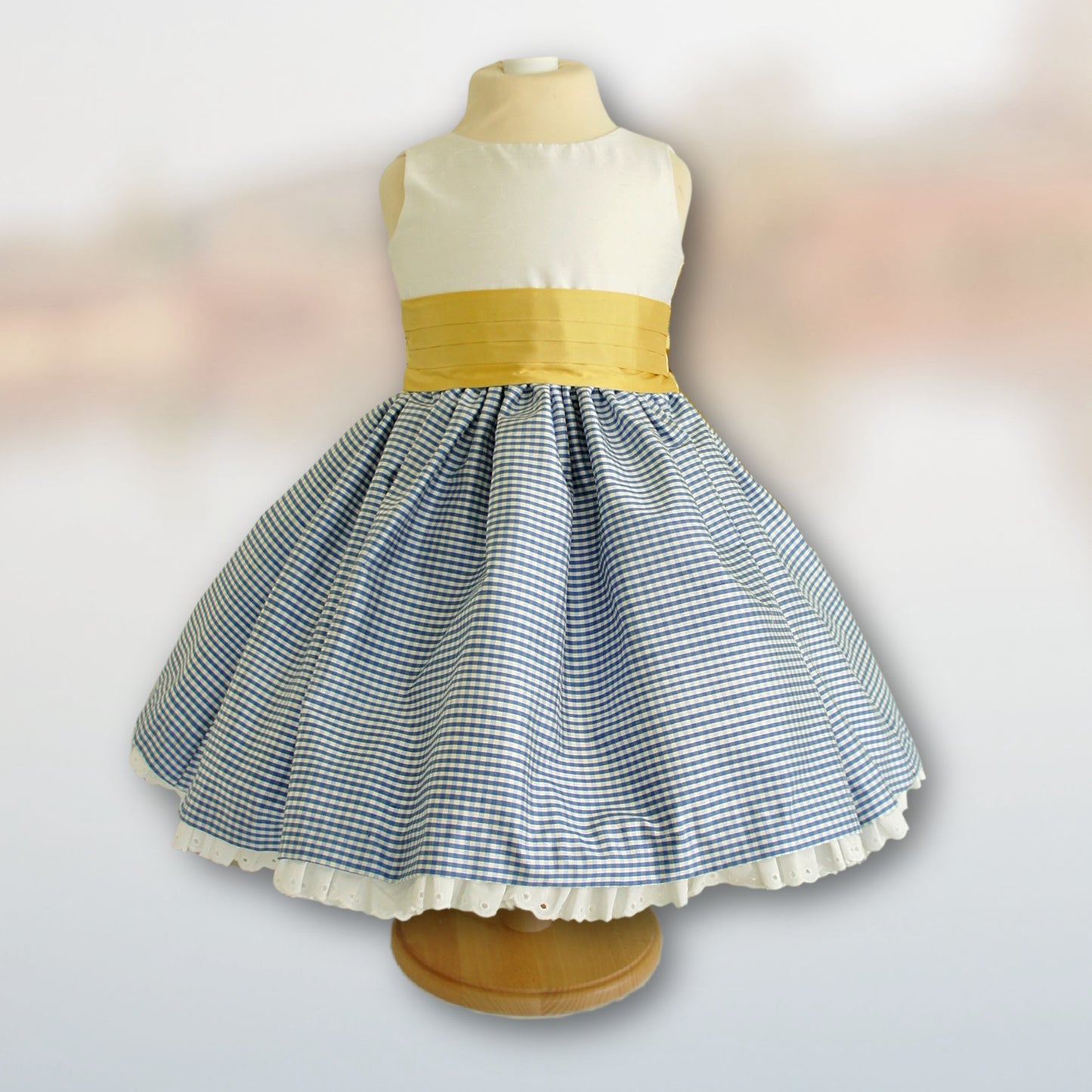
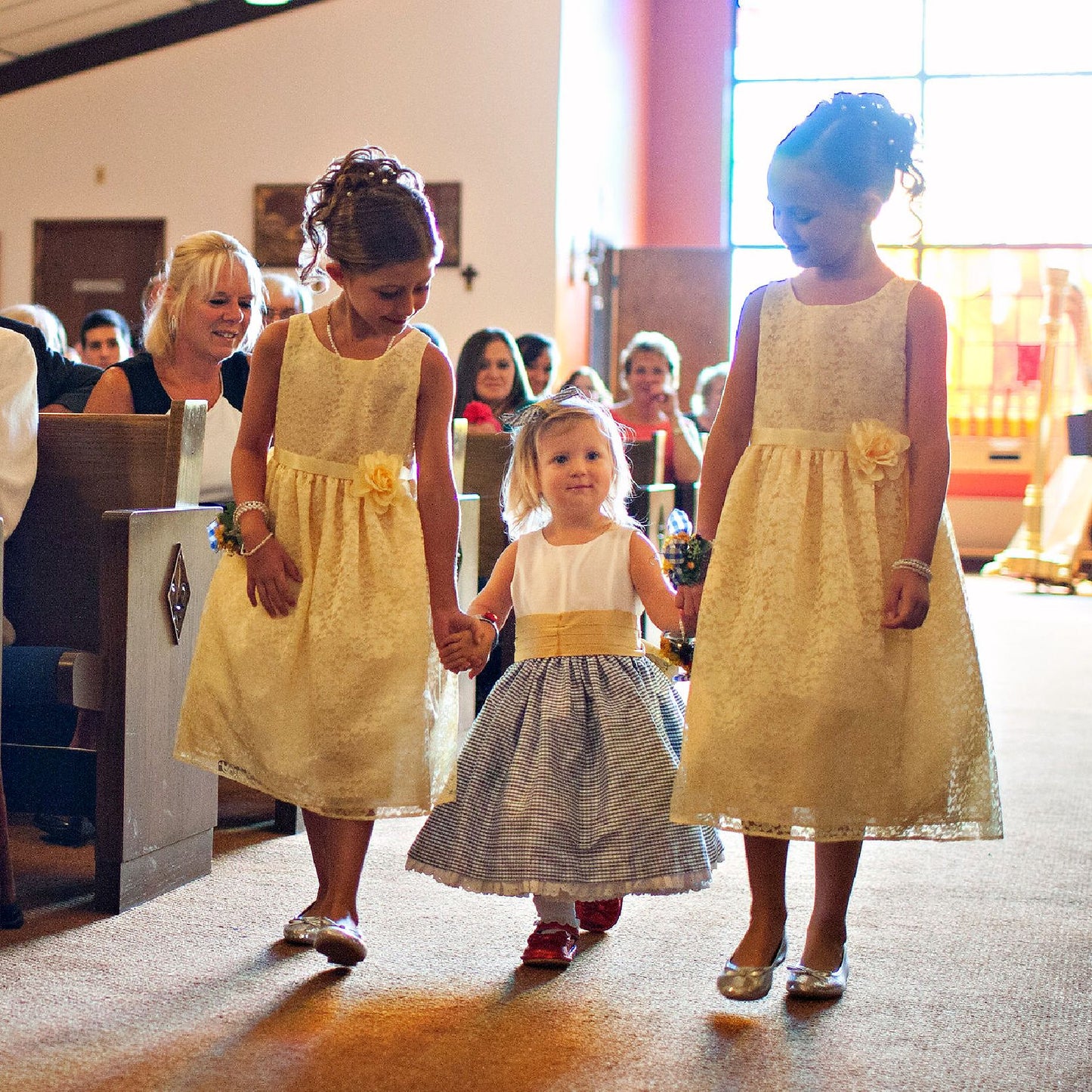
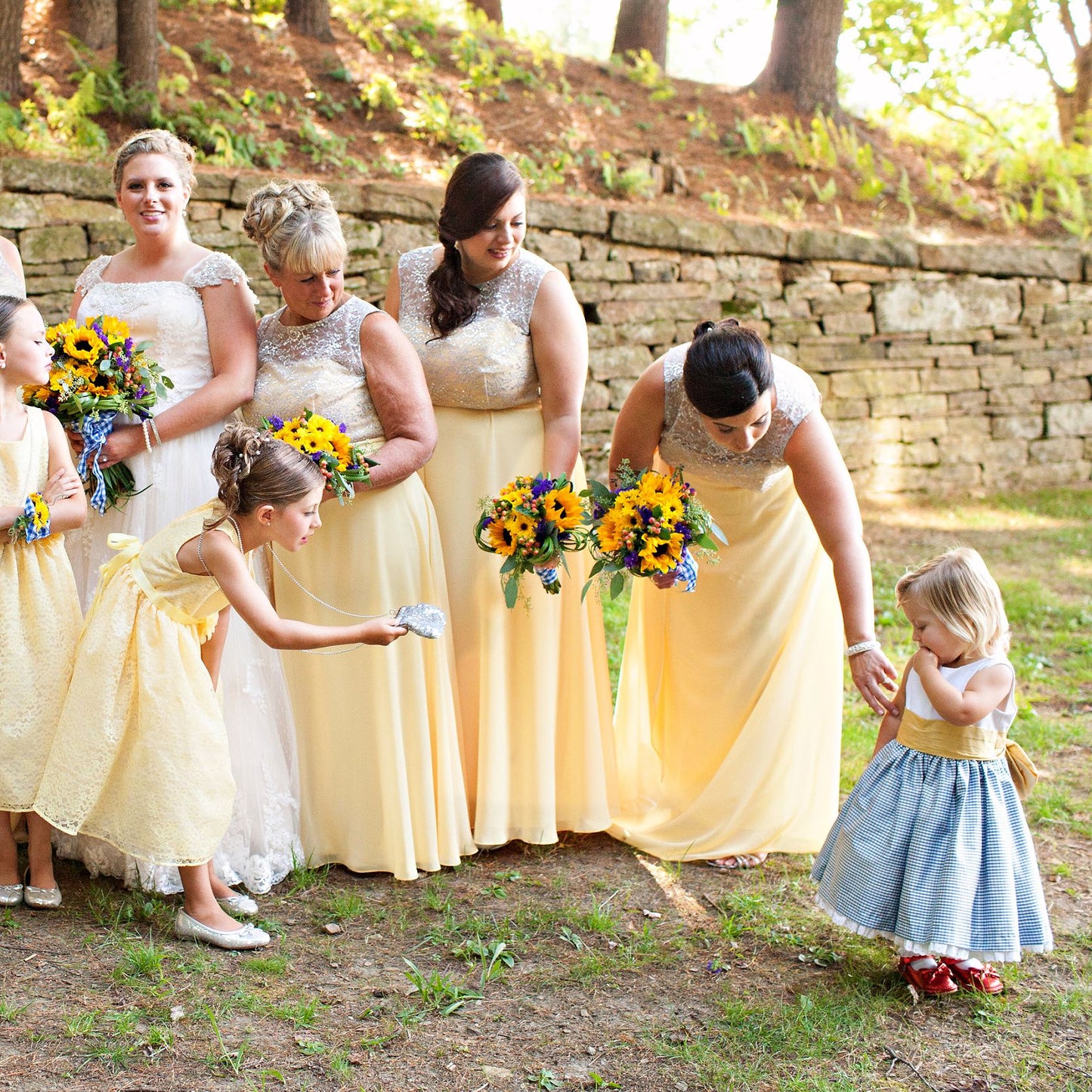
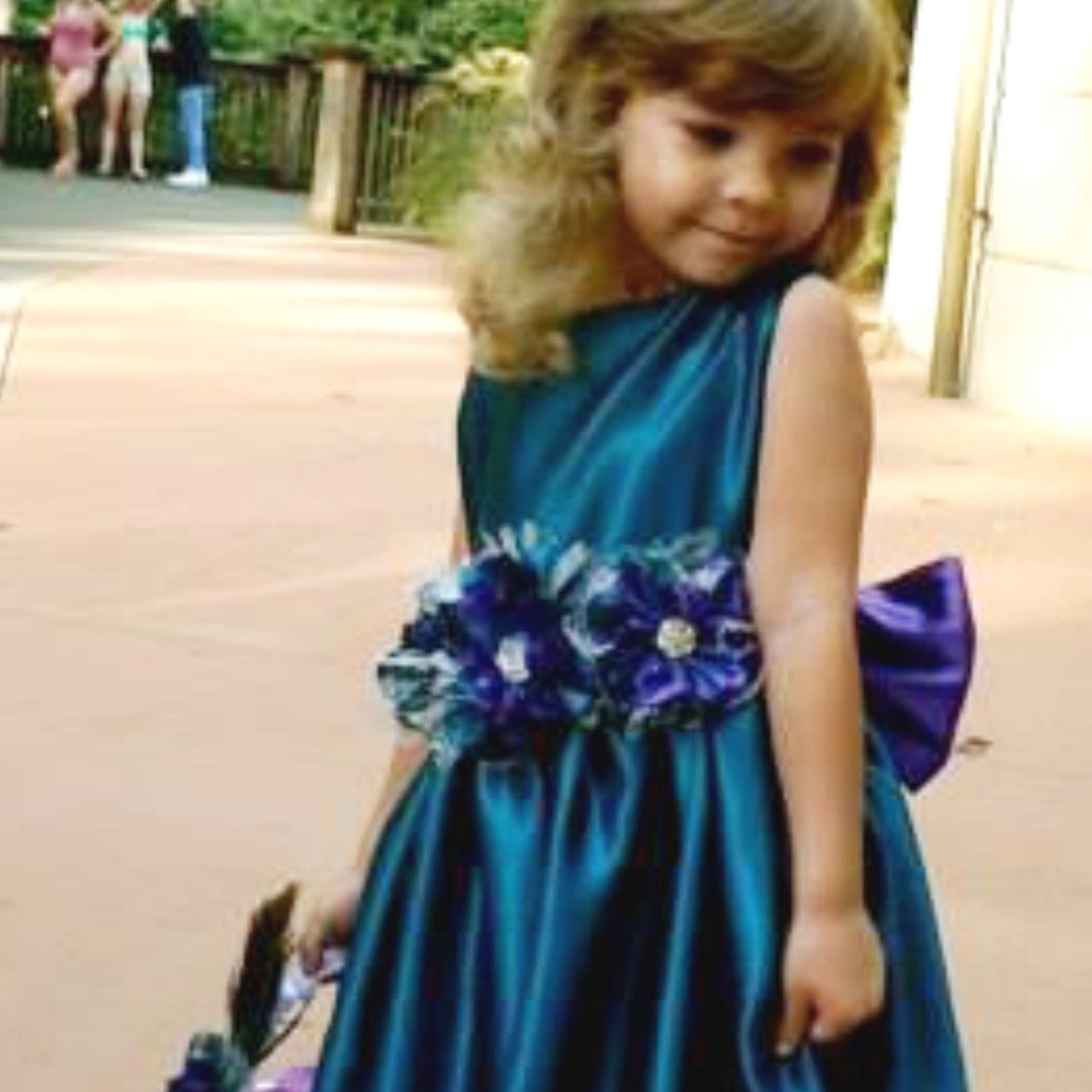
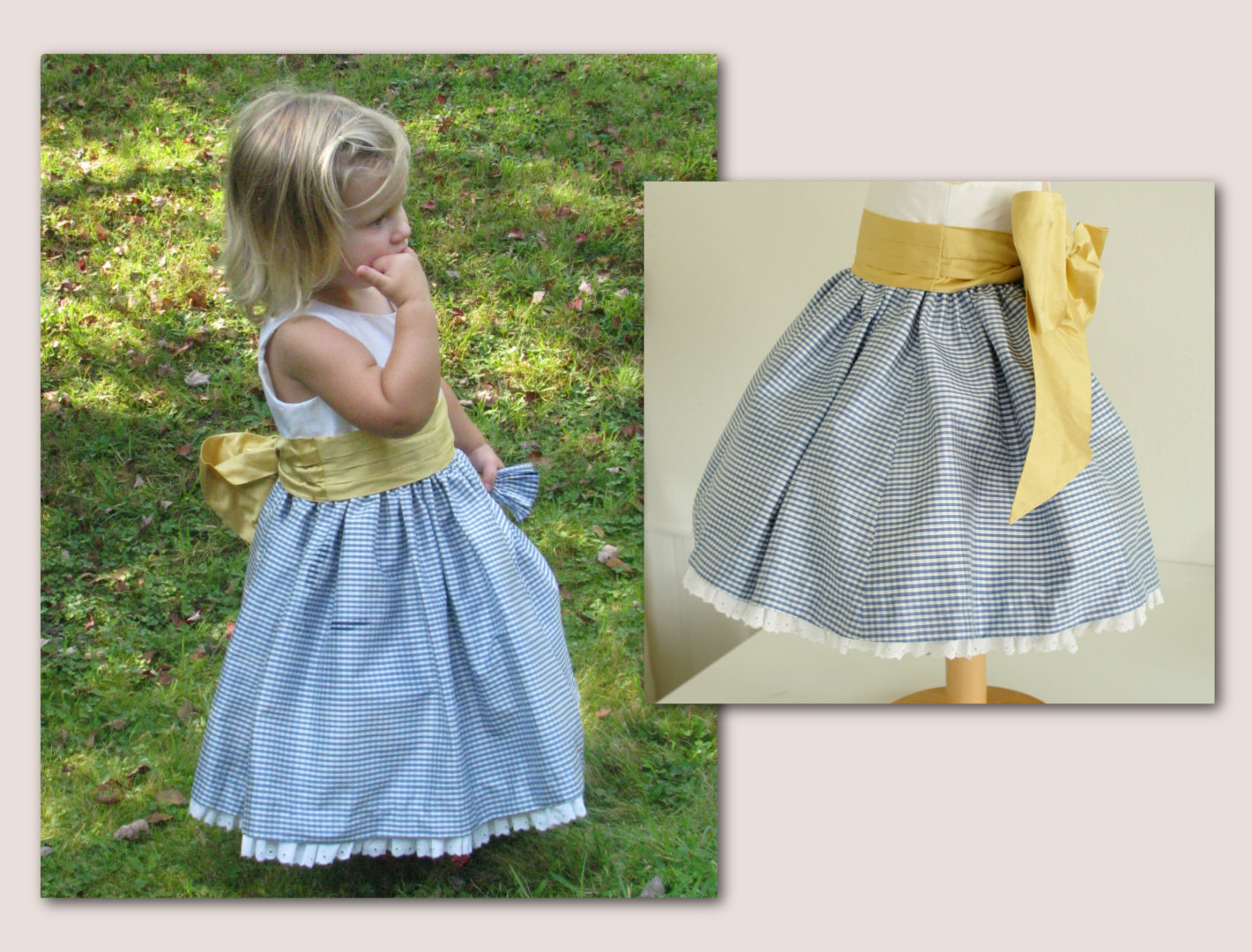
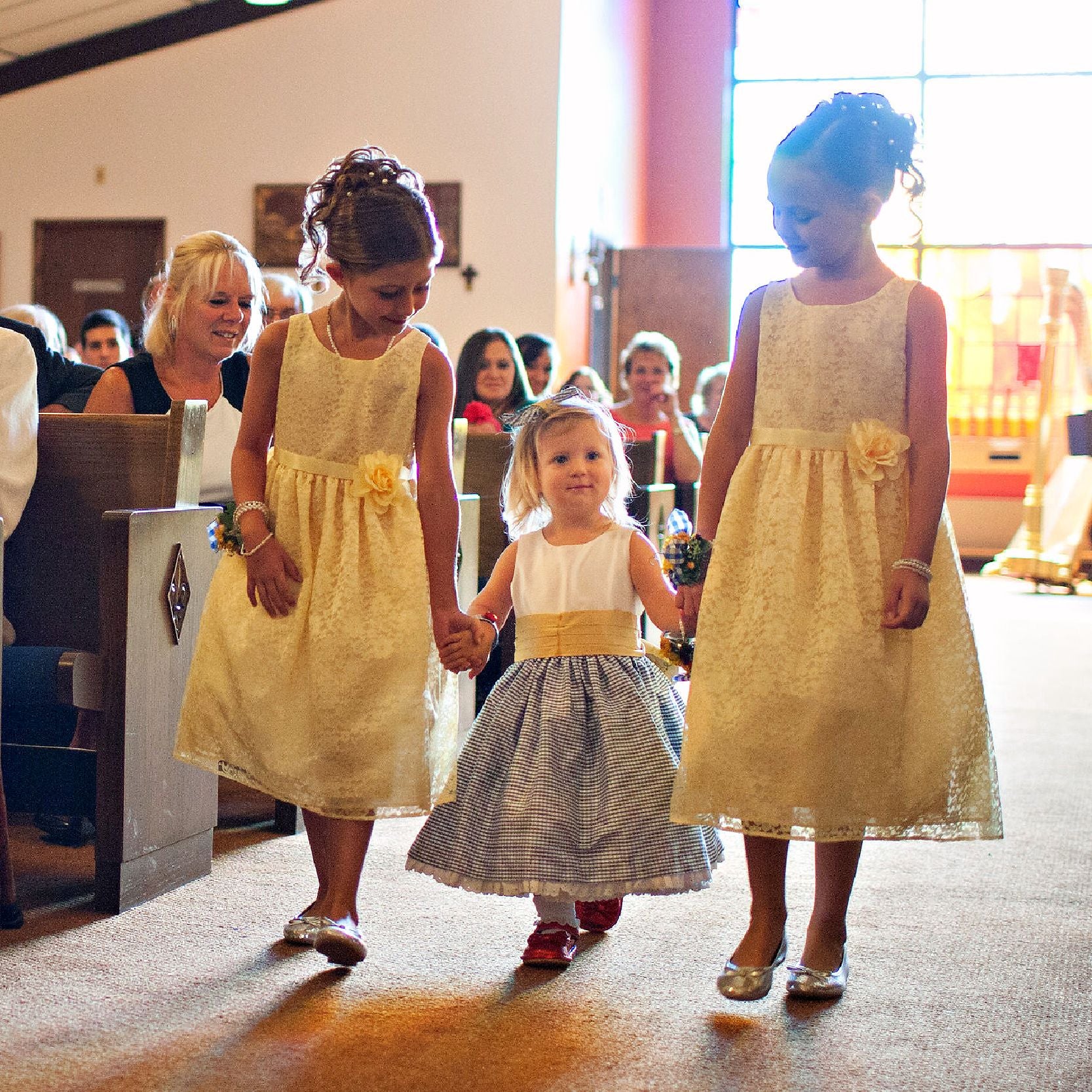
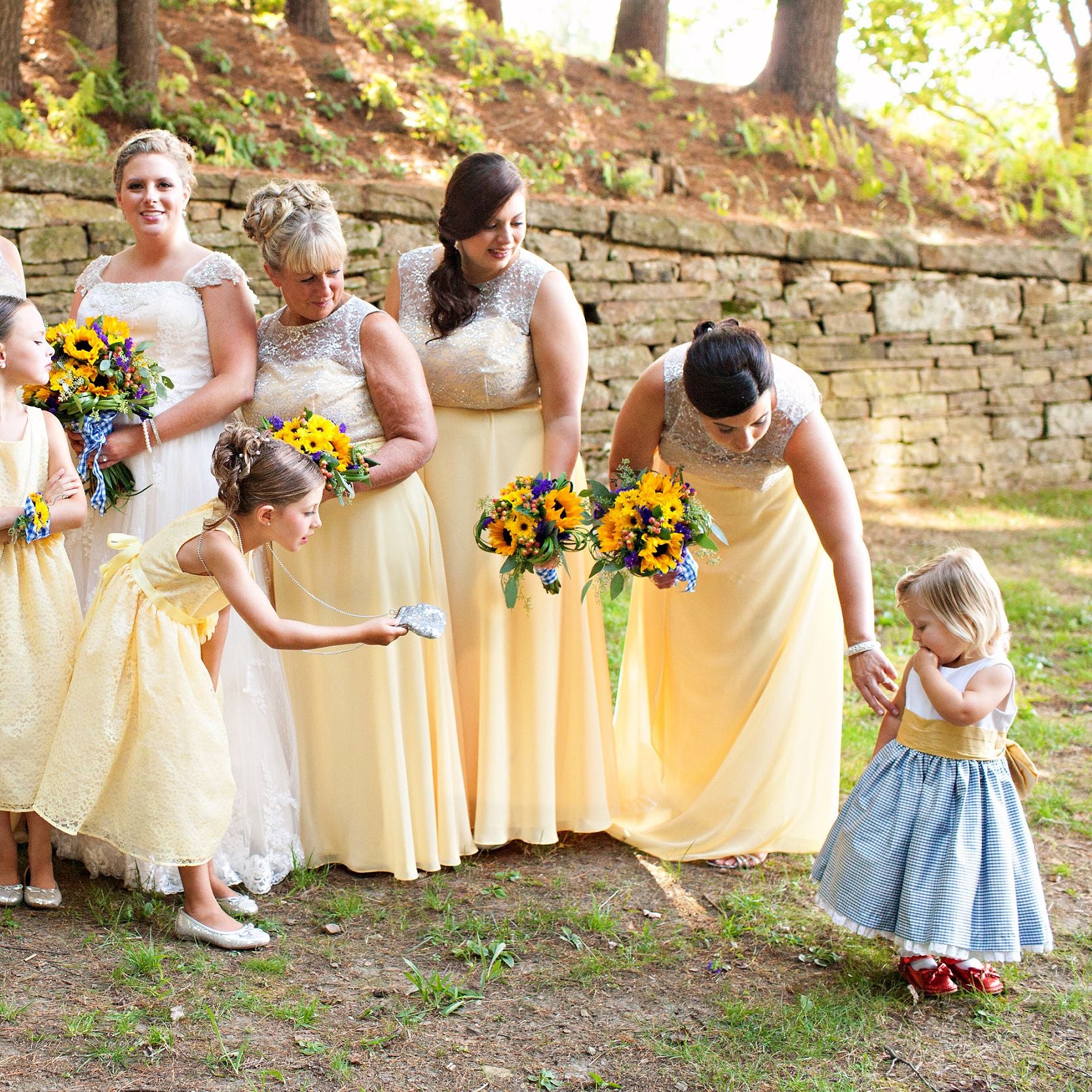
In my case, for the example we are using in this course, it was based on the theme of The Wizard of Oz. The bridesmaids’ dresses were in a lovely yellow, and the bride had an ivory dress with some lace on it. So I used an ivory dupion silk for the bodice.

Because of the Wizard of Oz theme, we also used a check skirt and a yellow or gold sash. This worked very well to bring the theme together and add a bit of interest.

As you can see, the bride was wearing red ruby slippers, and so was the little flower girl, which worked really well. I topped everything off with a Paris bolero, and I used the same sleeves as the flower girl dress. You can also go a size up on the sleeves if you want a bigger effect. This works really well because the jacket sits just above the cummerbunds.

Choosing Dupion Silk

When it comes to dupion silk, there are two main types:

You can get a machine-woven dupion silk, usually from China, which is lighter and often wider (around 140 cm rather than 120 cm). Or you can get Indian dupion silk, which is more structural and heavier.

It really depends on the bride’s wedding dress style, but most of the time it is better to choose something smoother with a slightly taffeta-like appearance, but not as shiny as taffeta.

Dupion silk is a brilliant fabric because you can also add embroidery. Even a few small embroidered flowers on the neckline can make all the difference.

Fabric and Style Examples

Now I want to show you a few examples of dresses you can make with this pattern, so you know what to look for when buying fabric.

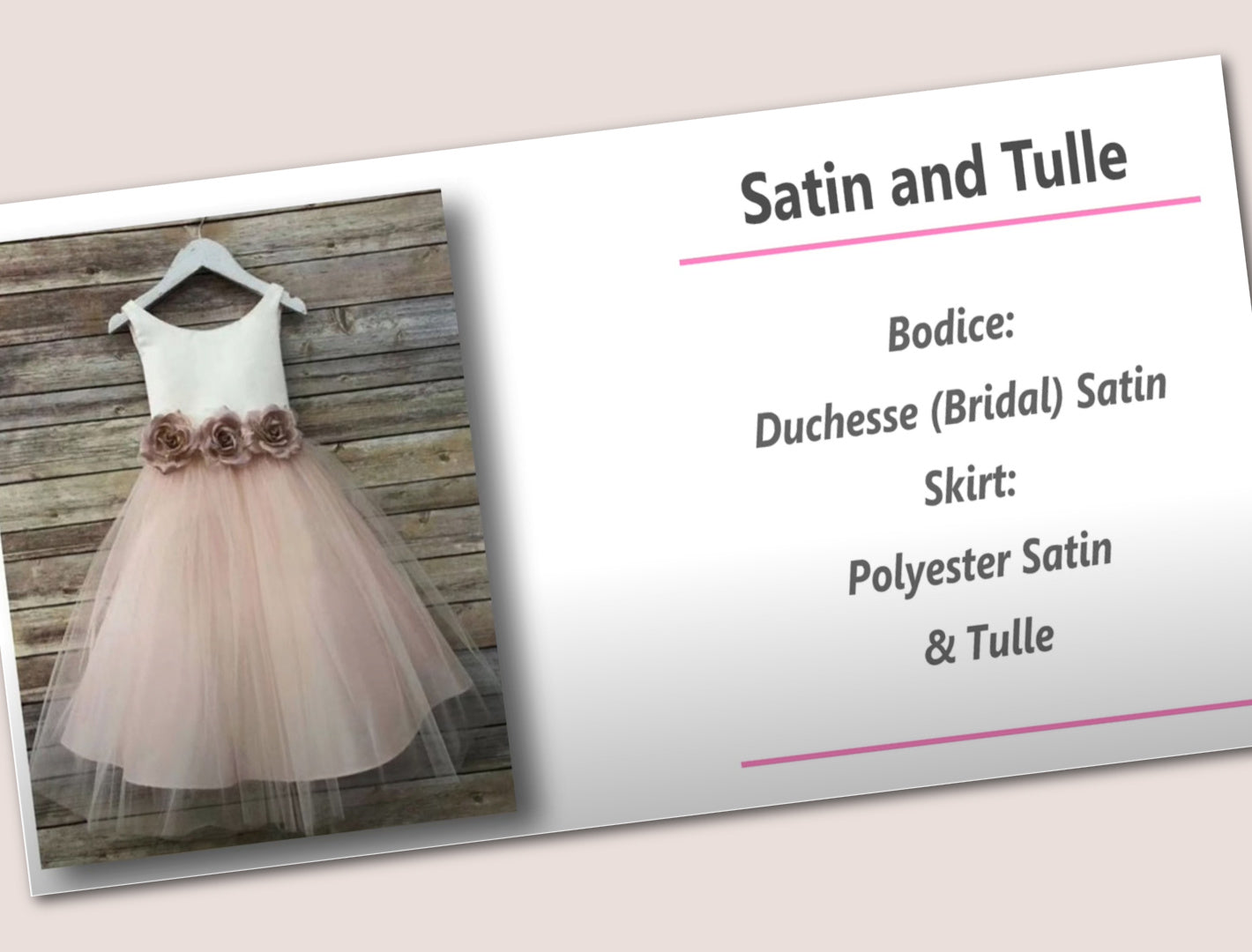
In this example, we have a combination of polyester duchess satin and bridal satin for the bodice, paired with a satin skirt and a tulle overlay. The skirt length can be adjusted depending on preference.

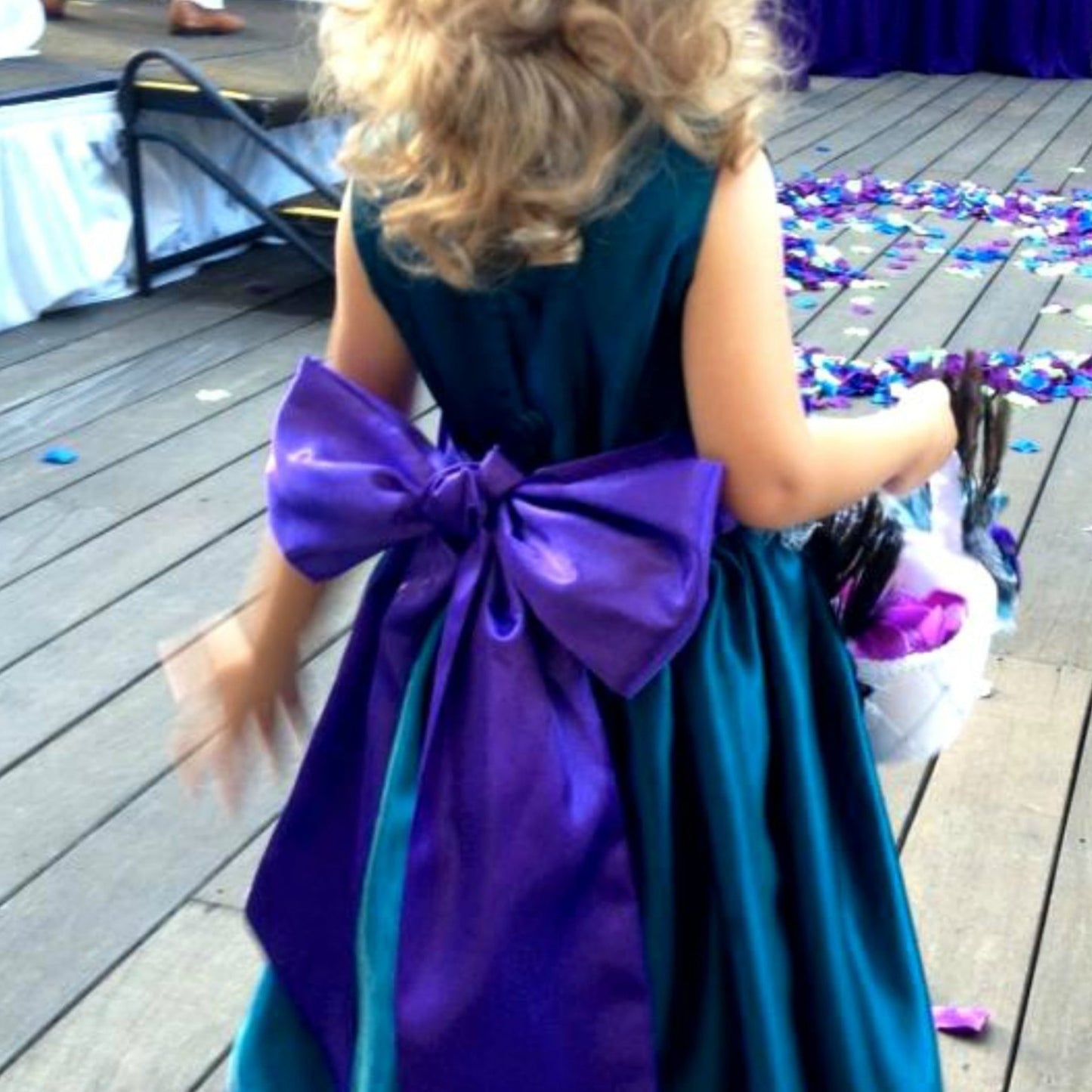
You can also make the entire dress in duchess satin. In some cases, you may even add a bow at the back of the kuma bunt for extra detail.

Another very popular combination is satin for the bodice and tulle for the skirt. I particularly like it when the tulle finishes at the same length as the skirt.

If you choose a lighter silk like shantung for the skirt, you can still use tulle over it with floral details, which looks very elegant.

Notes on Shantung Silk

One example I was not very keen on was a dress made entirely from shantung silk. It is often too light to work as a standalone fabric.

If you do use shantung, I strongly recommend adding a heavy cotton interlining. This helps stabilize the fabric.

Also, the skirt should be cut almost twice as full; otherwise, it will look flat and flimsy. A large petticoat is also essential to give volume.

Important Fit Details

You also need to pay attention to length and proportion.

Make sure the sash ties reach at least the hem of the skirt. If the child is taller than average, always adjust the length accordingly.

In some examples, the fit is perfect because a petticoat or hoop skirt is used underneath to create volume, and the ties sit correctly over the hem.

Design Variations

Another idea is to mix colors. For example, if you are making three flower girl dresses, you could have two in an accent color and one in white, then match all cummerbunds to the dress color.

For extra volume, you can also use a gathered circle skirt instead of a standard skirt. This creates much more fullness. If you already have a circle skirt pattern, you can use that, or you can draft one yourself.

Bodice and Detail Work

You can also create interest through the bodice by using different fabrics such as embroidery, brocade, or textured materials.

Covered buttons are another beautiful detail that can elevate the back of the dress.

Some designs include embroidery along the hem, which looks stunning but is more advanced and time-consuming.

Sleeves and Fit

One important thing to watch is sleeve fit.

Make sure to measure the upper arm properly and add at least 3–4 cm of ease so the sleeve is not tight.

In some examples, the sleeves were too tight, which is something you want to avoid.

Overlays and Volume Tips

Another option is to add a full overlay over the dress.

This can be done using tulle or soft mesh fabrics. When doing overlays, gather the skirt and the overlay separately first, then join them together. This prevents uneven gathers and ensures a clean, uniform finish.

Fabric Cost and Alternatives

Using overlays is also a great way to reduce cost, because the base layer does not need to be expensive silk. You can use polyester underneath and reserve the nicer fabric for the visible layer.

High-quality polyester taffeta or duchess satin can look very close to silk if chosen carefully.

However, if you can afford it, real dupion silk is still the best choice for structure and appearance.

Final Advice

For lining, I always recommend cotton lining combined with interfacing for comfort and structure, especially for children.

Take your time choosing fabrics, because the fabric really defines the final look of the dress.

I wish you lots of success in choosing your fabric and making a beautiful flower girl dress.

Dress Options and Pattern Overview

Transcript for the video: Flower Dress - The Pattern

Let’s look at the options you have for your dress, and then after that we’re going to look at the pattern in detail.

Dress Variations

You can make the dress with a cummerbund and a beautiful hem trim.

You can also leave the hem trim off—this makes no difference to the overall construction.

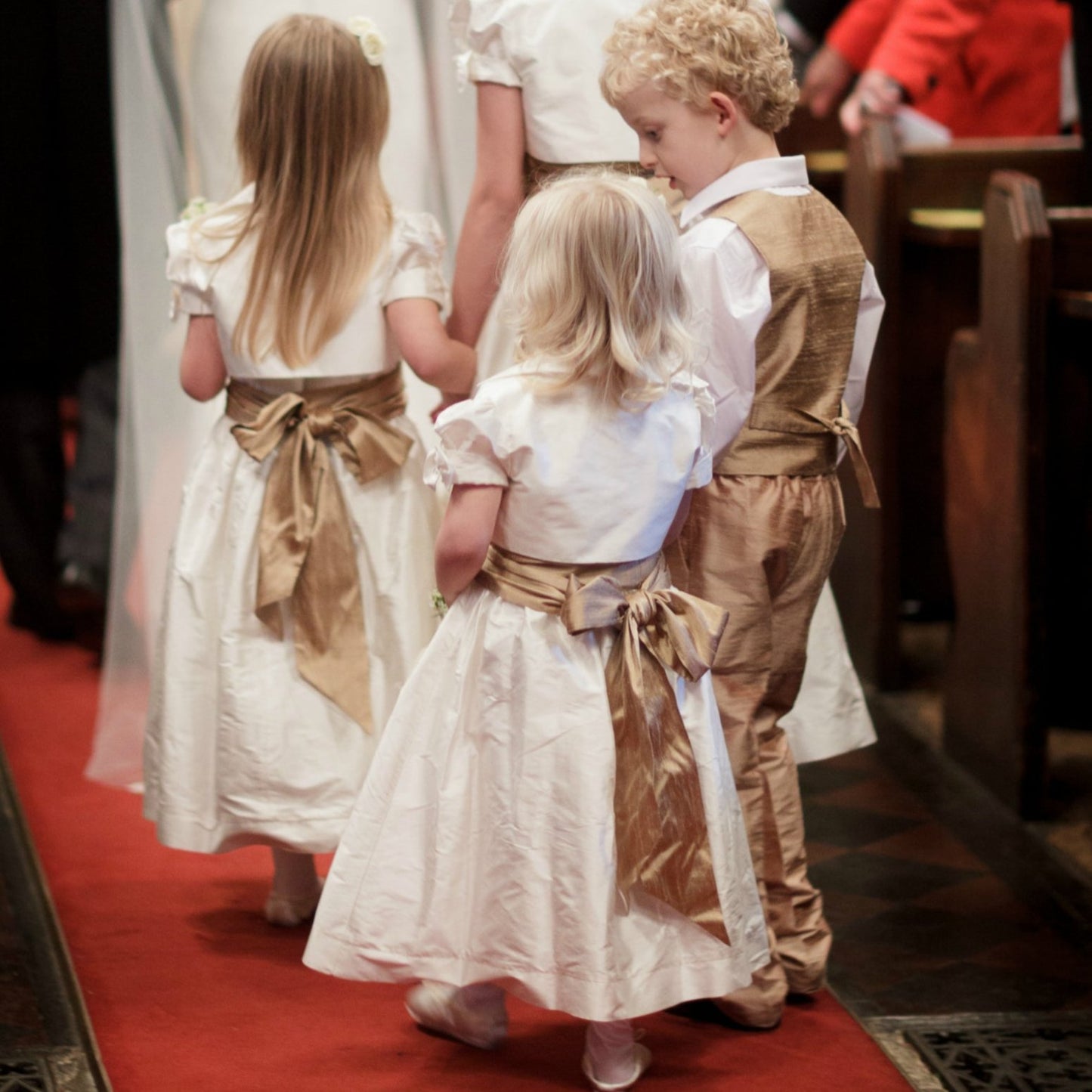
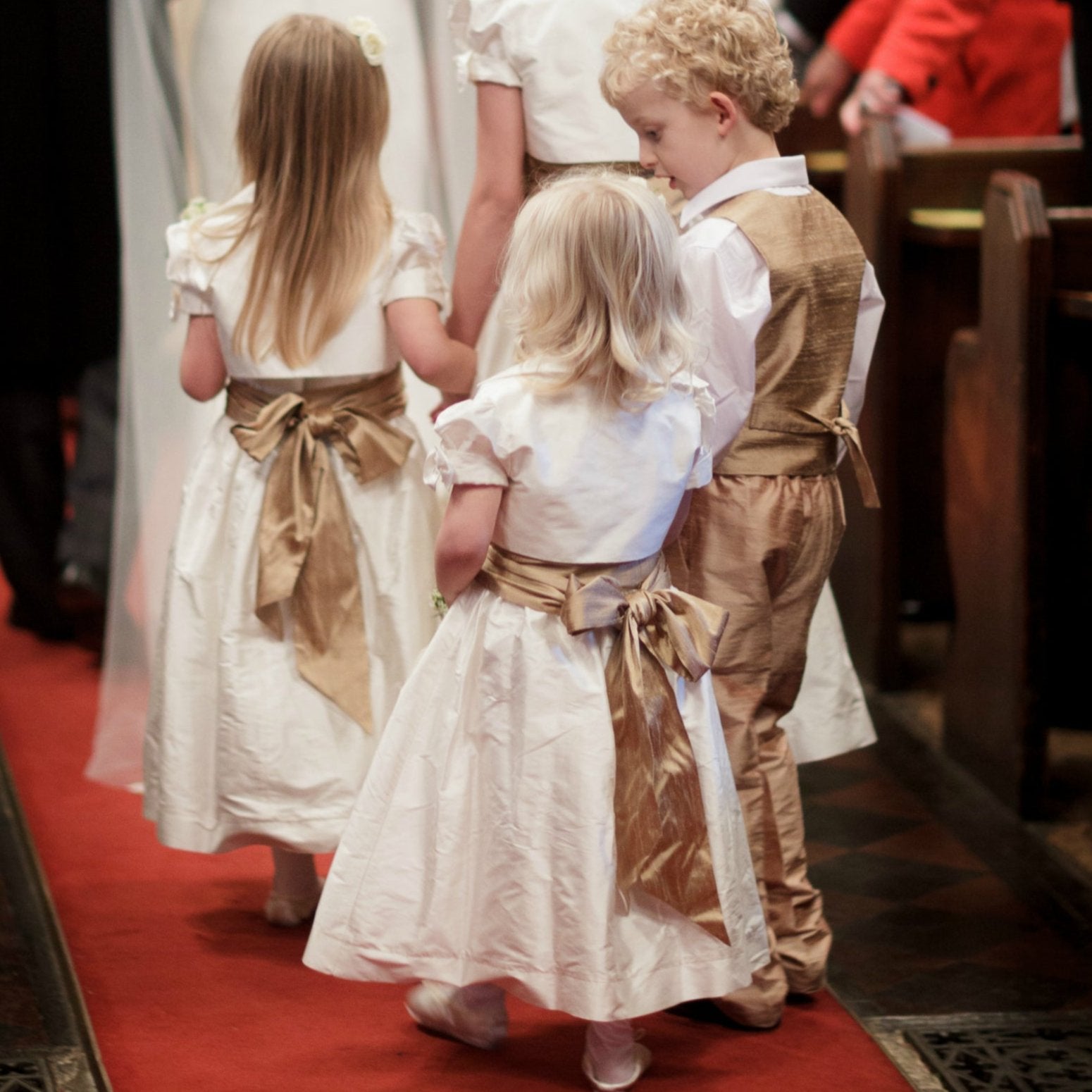
The cummerbund has a beautiful bow at the back. I would recommend making the ties quite long, as I also mention in the ebook, so that they hang right down to the hem.

You can also choose:

  • A hem trim or no hem trim
  • Turn-up sleeves
  • Bound sleeve edges (I also have a video for this)

If you want to make the hem trim, you will find the measurements in your ebook under “variation.” If you don’t want it, you can simply leave it off—your ebook clearly shows all available options.

Cutting the Front Pattern

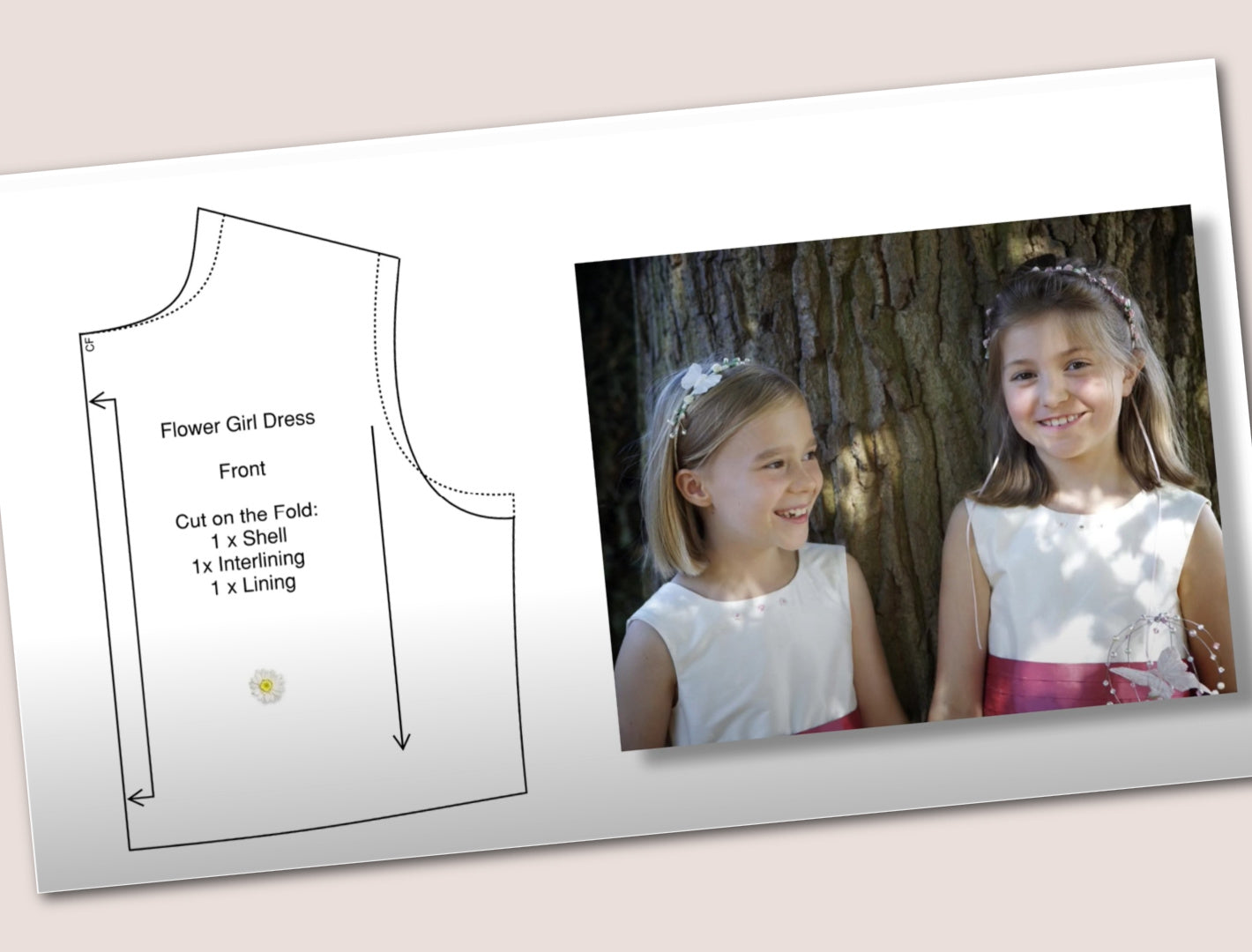
You cut the front on the fold, both in shell fabric and lining.

You can also print the pattern piece twice, then tape it together down the center. This gives you a full pattern piece, which is often easier if you plan to make more than one dress.

Sleeve Options

There are two armhole lines on the pattern:

  • A dotted line for the sleeveless version
  • A solid line for the sleeved version

The dotted line (sleeveless option) sits slightly higher and further in at the shoulder. This prevents the armhole from becoming too deep, which never looks good.

If you are making the sleeved version, cut along the solid line. This gives more room for movement.

The neckline also has an additional dotted line option, which allows you to make it slightly wider. This is especially nice for girls aged 8–12.

Interlining Advice

I strongly recommend using interlining.

It helps create a smooth neckline and armhole and prevents puckering, which is very common in lighter silks.

This is less necessary with heavier fabrics like duchess satin, but for most silks, a light cotton interlining works best.

Back Pattern Pieces

The back consists of two parts:

  • Left back
  • Right back

The left side is narrower because it includes the loop area and underlap. The right side is wider and sits underneath the loops.

This prevents any gaping and ensures a clean closure.

Both sides include the same markings for darts, neckline, and armhole.

You will cut each piece in:

  • Shell fabric
  • Interlining
  • Lining

It is very important to place the pattern correctly:

  • Shell fabric on the right side of the fabric
  • Lining on the wrong side

Darts and Fit

Mark your loops clearly so you know exactly where they go.

For darts, cut right up to the point indicated on the pattern, then sew the edges together for a clean finish.

The back also includes a slight shaping curve at the waist, which improves the fit and follows the natural curve of the body.

Summer Dress Option

If you want to make this as a summer dress, you can cut off 1 cm from the back edge.

You would then cut the right back twice (plus lining), and the same for the left side.

This creates a lighter, more open version of the dress.

Facing Piece

There is also a facing piece for the right-hand back lining.

This adds stability where the buttons are placed and prevents stretching or gaping.

Skirt Pattern

The skirt is made from one main pattern piece.

You cut:

  • Front: once on the fold (shell + lining)
  • Back: twice (shell + lining, mirror image)

There is also a marking for the back opening.

The lining is shorter than the outer fabric, following a dotted trimming line. This ensures the lining does not show and helps create a clean hem finish.

Hem Trim Option

There is an additional line for adding a hem trim.

If used, the skirt becomes slightly longer. You simply cut along the dotted line provided.

Skirt Volume

The skirt is relatively slim (about 1.2 m / 47 inches wide).

For smaller children, this is fine, but for sizes 6–12 it can fall a bit flat.

For more volume, you can:

  • Use a wider fabric (140 cm / 55 inches)
  • Or cut the skirt twice for extra fullness

If you double the skirt, you will get extra panels that create more volume. The seams will sit at the side and become less visible once gathered.

This also allows space for optional pockets.

Circle Skirt Option

You can also use a circle skirt for extra volume.

I have a separate video on drafting one, or you can use my Vivian pattern if you already own it.

Just make sure the skirt circumference matches the bodice measurement.

If you are gathering it, small differences do not matter much, but for pleats it must match exactly.

Sleeve Construction

The sleeve includes:

  • A shaped cap
  • Gathering at the shoulder
  • Gathering at the hem

You must mark where the gathers begin and end, as well as the front of the sleeve.

Cut the sleeve twice in shell fabric (mirror image).

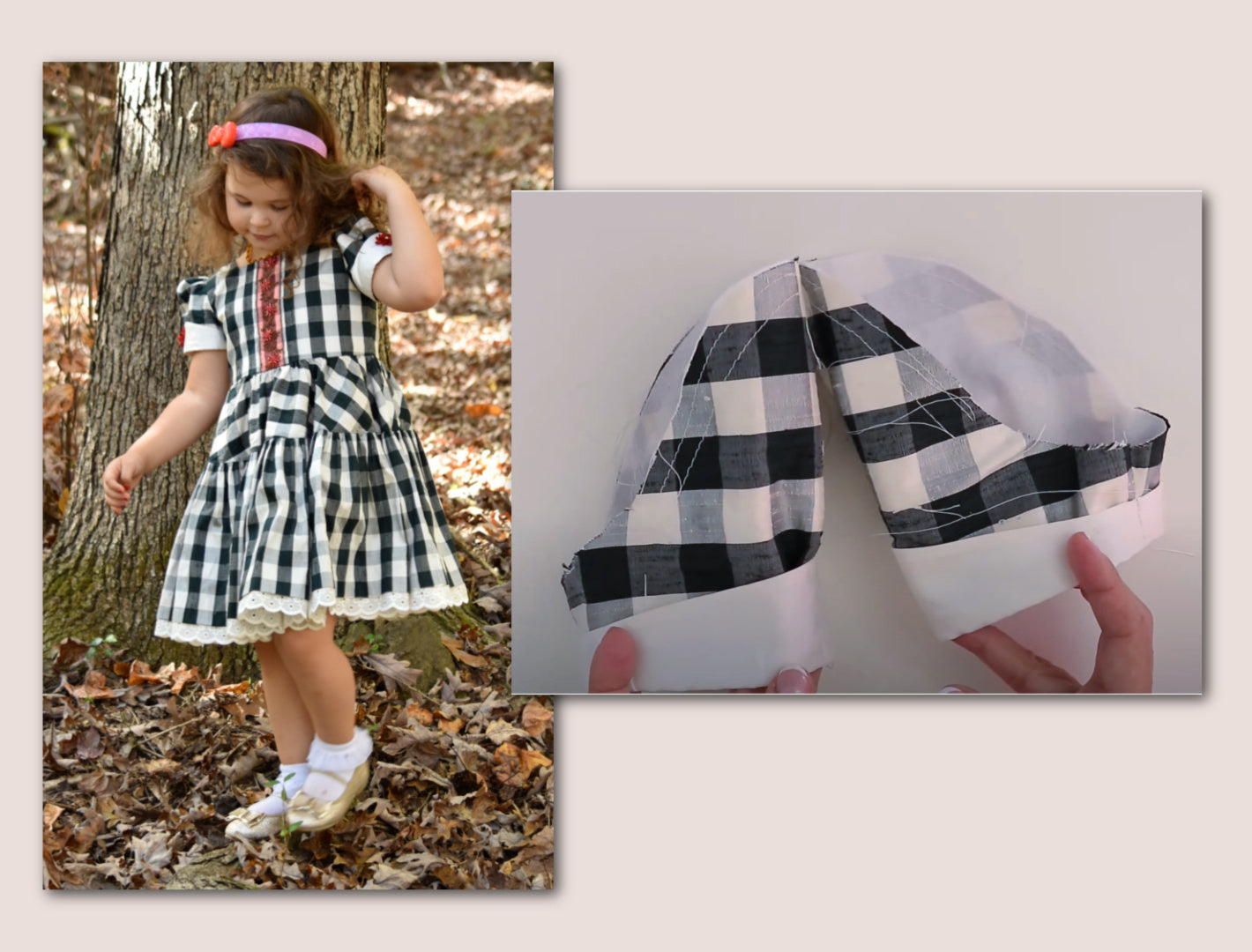
The sleeve turn-up is cut four times for structure and finish.

You can use interfacing or interlining depending on fabric thickness. For duchess satin, I would cut only two shell and two lining pieces instead.

Sleeve Finishing Options

You have several finishing options:

  • Turn-up sleeve
  • Bias binding finish (delicate and light)
  • Piping detail (more decorative)

Bias binding is especially nice for a soft finish and is demonstrated in the academy.

Kuma Bunt (Sash)

The cummerbund has three main pieces and requires interlining for structure.

Mark pleats clearly on both sides before sewing.

The interlining should be firm cotton to support the shape.

Tie Length

Always make the ties long.

Recommended lengths:

  • Small children: around 1.2 m
  • Older children (10–12 years): up to 1.4–1.5 m

You can also widen the ties up to around 35 cm (14 inches) for a more dramatic effect.

Long ties that reach or slightly pass the hem always look best.

Final Notes

For academy members, there is also an add-on showing how to do bias binding for sleeves, as well as piping techniques for finishing edges.

These details add a very refined look to the final dress.

There are many options within this pattern, so you can adapt it depending on fabric choice, age, and style preference.

I hope you now understand the pattern and everything you can do with it.

I wish you every success in making your flower girl dress.

Pattern Measurement and Adjustment

Transcript for the video: Flower Dress - How to Alter the Pattern

Which I might be doing here because I'm making it for an actual wedding. I need to draw out all my seam allowances first so that I do it the right way. This is the front piece here. If you have the largest size, that might come into parts of course and will need to be assembled. So measure that and then you take note in inches or centimeters how much it is.

So I’ve got 5.4 inches and then that’s 13.25 centimeters. I take note of that and because we have got two sides to our body we need to do that twice of course to get the right measurements. So we’ve got 10.8 inches and 27 centimeters.

Back Piece Measurements

Now I repeat the same on the back. I draw around where I have my seam allowances and then I can measure across first just to the dart. Lift it over, there’s five, and then we’ve got 13 here.

In inches we can do the same here, that’s five inches and I need to do exactly the same. Now I need to times two that so that gives me an idea of how big the pattern is actually. Of course you do know that when you look at the chart, but it’s a good thing to always measure through just to make sure for yourself and that you understand the system.

So that’s 20.8 inches and that is 53 centimeters. So that’s the actual measurements.

Adjusting for Child Measurements

Now when you have got a little child in it and you might have to adjust it, first draw these lines across underneath the bust and then through the center. Here I’m leaving it and I’m going a little bit over to the side because I don’t want to get in the way of the dart.

I’ve made a cross on the back here so I can draw my division lines in here as well. Along those division lines I will then alter the pattern.

So I have got my 20.8 inches and the actual measurement of my child is 18.5 inches. But you should always have some ease because otherwise it would be too tight. So you need to add one or one and a half inches to it and that gets you to 19, 19.5 or 20 inches. That is how big you want to make the dress, one and a half inches bigger just so it’s all good.

So I minus that and I come to 1.3 inches there. Now I have to divide that by four because I’ve got four sides, two fronts and two backs.

Adjusting the Pattern Width

Along those division lines, the central one, I’m going to mark how much I need to make it smaller. In my case it is a really small amount but whatever your amount is, you could also make it bigger across that line.

Then I just sellotape that back together. You never take it off just off the side seam, that does not work. It’s going to make it all look very strange.

So that’s my front done, that’s my width done. I still have the length to do but let’s do the width first.

Now I take the other back and I cut that open as well and I have to do exactly the same of course. I have to mark on there the amount that I’m taking off. So I move that over, place it on top, sellotape it, and job done.

Then I have to do the other side of course as well. So cut that apart, mark it out again, place it on top and you’re done.

Adjusting the Length

Now I’ve got all three pieces. I measure also the length and the bride has given me the length of eight inches here. So I can see mine is a little bit too long of course, I’ve got an extra centimeter there as well.

The distance between that and the hem is what I need to take off. In my case that is two centimeters. We never take it out the waistline, we always take it out of the middle.

So I’m going to mark a centimeter on either side, it could be a quarter inch but that’s what I have to take off. Then I’m going to overlap them and sellotape that together and then I have got the right length.

Let’s just make sure that it overlaps my trusted glass, it was so hot when I was filming this.

The back on the other side I don’t have to measure anything. I’m just turning it over and then placing it onto the other one and then I see where I have to go. So just place that on really neatly and then you can sellotape that again.

Of course in an ideal situation you don’t have to do anything to the pattern but sometimes the child could be much bigger in the waist but not the height, so you need to adjust it or much smaller like this one. You’ve got to get it right and you can always measure again to make sure.

Adjusting the Skirt

Now I’m going to go on to my skirt. I take off the seam allowance, I take off the hem, fold up my seam allowance, and now I can measure from the shoulder point all the way down and see if it fits.

Mine is still too long. I have got a measurement of 23 and I’ve got about 25 in length, so I need to take two inches off which is like five centimeters, two and a half on either side, and then I overlap it.

See, that’s quite a lot I’m taking off here but you have to do this in order to get it right. You can make it longer, you can make it wider, you can really play around with it, but this is for a special bride with a Wizard of Oz wedding and I wanted to do it really well for her, so none of the box standard would have done.

So I put a little bit of paper underneath there so I can now even out the skirt. Just cut that bit off and you’ve got the skirt done as well.

And again now I’m doing the same again. I put my front top up and I’m checking is it her requested 23 inches and it is. It’s actually 22 but I have a petticoat underneath it which peeps out.

Final Adjustment: Cummerbund

The last thing I have to do is to adjust my cummerbund. There’s a separate video on the pattern of the cummerbund and how you put that together.

So I mark on there where it ends and I trim my cummerbund pattern as well to make sure that it fits on afterwards. Just a little bit of a snip off and I’m ready to do my flower girl dress.

Thank you for watching and I’ll see you next time. Bye.

Working the Skirt and Lining

Transcript for the video: Flower Dress - Skirt and Lining

Now we’re going to work the skirt and the skirt lining.

First you have to decide whether you want to overlock the edges first and then close the seam and iron the seams apart, or whether you want to close the side seams first and then overlock or finish the edges together. This really depends on how heavy the fabric is that you’re using.

Very often, especially if you use dupion silk from China, it is much lighter than, for example, dupion silk from India. In that case, it makes much more sense to first close the side seams and then overlock or finish off the edges together.

That’s really all the decision-making you have to do at this stage.

Sewing and Finishing the Skirt

In my example here, I overlocked the sides and then closed the center back up to the point that is marked on your pattern piece, where it says “sew up to this point.” This leaves an opening that you need to get in and out of the dress.

I am going to mark that here with a pin.

As you can see here on the side seam, even though this is a fairly firm silk, I’ve stuck with the method of sewing them together, overlocking them together, and then ironing the skirt side seams to the back and the lining side seams to the front so it is nice and flat.

Seam allowance is one centimeter as always.

You can see here how this iron-on facing is already there. I am not a great fan of this because it does make it stiff. On the other hand, it does not crinkle as much and you don’t need to put any other fabric underneath it to give it body. So I am a bit undecided. Definitely something to check out when you are making a dress like that.

Here I am now sewing together the center back only to the point that I have marked where we leave the opening.

Then you overlock the side seams and iron them towards the center back. The center back is then ironed apart.

Hem and Hand Stitching

Then overlock the hem and turn it up 2.5 centimeters. Iron this first, then pin it, and we are going to hand stitch it all the way around.

Here is how to do the hand stitching: you fold over your hem, thread up a needle, put a knot in the end, secure the thread, and then you pick up a tiny bit of your skirt and a little bit more of your hem.

Then you keep pulling it so that you see nothing from the outside. You continue this all the way around.

Lining Construction

The lining is worked exactly like the skirt, but you have to be careful at the top where we have a dotted line. There we need to trim the top because it needs to be a little shorter.

The hem can just be turned up and worked as usual.

If you want to add a little bit of lace to the hem, then you have to trim it at the dotted line again. This is the same line you would use if you are using a hem trim.

Just make sure that the underskirt shows as little or as much of the lace as you want. If you look here, we’ve got three centimeters for the hem. So if you cut there and the lace is four centimeters long, you would hardly see it.

So you just need to pay attention when trimming along this dotted line.

Construction Differences for Light Fabrics

One thing that is a little different to what I would normally advise is due to the fact that my lining was a very light fabric.

What I did here was also close the center back first, then overlock either side. Because it is so light, I could just iron it over to one side and it was no issue at all.

Adding Gathered Lace

If you want to add lace to your skirt, let me show you how that works.

Now I am going to use this fantastic gather foot. You need to take your presser foot off the machine and attach the gather foot.

My gather foot did this beautifully, then broke when I was doing the petticoat, and I actually had to do everything by hand with the overlocker. So I will definitely get another one of these.

As you will see, it is extremely easy.

You place the eyelet lace with the wrong side facing down onto the right side of the skirt. You can adjust with a small screw how much you want to gather.

I usually get a lot of lace, so I buy extra to be safe.

Then you let the lace run through and it gathers it while sewing it onto the skirt at the same time. It is very efficient.

Finishing the Hem Detail

After that you overlock the edge and you get a very clean finish. It is much nicer than just turning it under.

Now you can see the wrong side of the skirt and the right side of the lace going down.

Because I don’t want even this to show, I am adding a ribbon over it. So when she lifts the skirt, you can see the ribbon as well, which is lovely.

These little touches really make a dress, although they do take extra time. You could also just topstitch it down and it would still look nice.

Final Pressing and Petticoat Note

I am just putting bias binding over my stitching line and stitching close to the edge. The ends are tucked in.

Then you go over it again. It is simple, but it does take time.

Give it a really good press with steam to set the gathers properly.

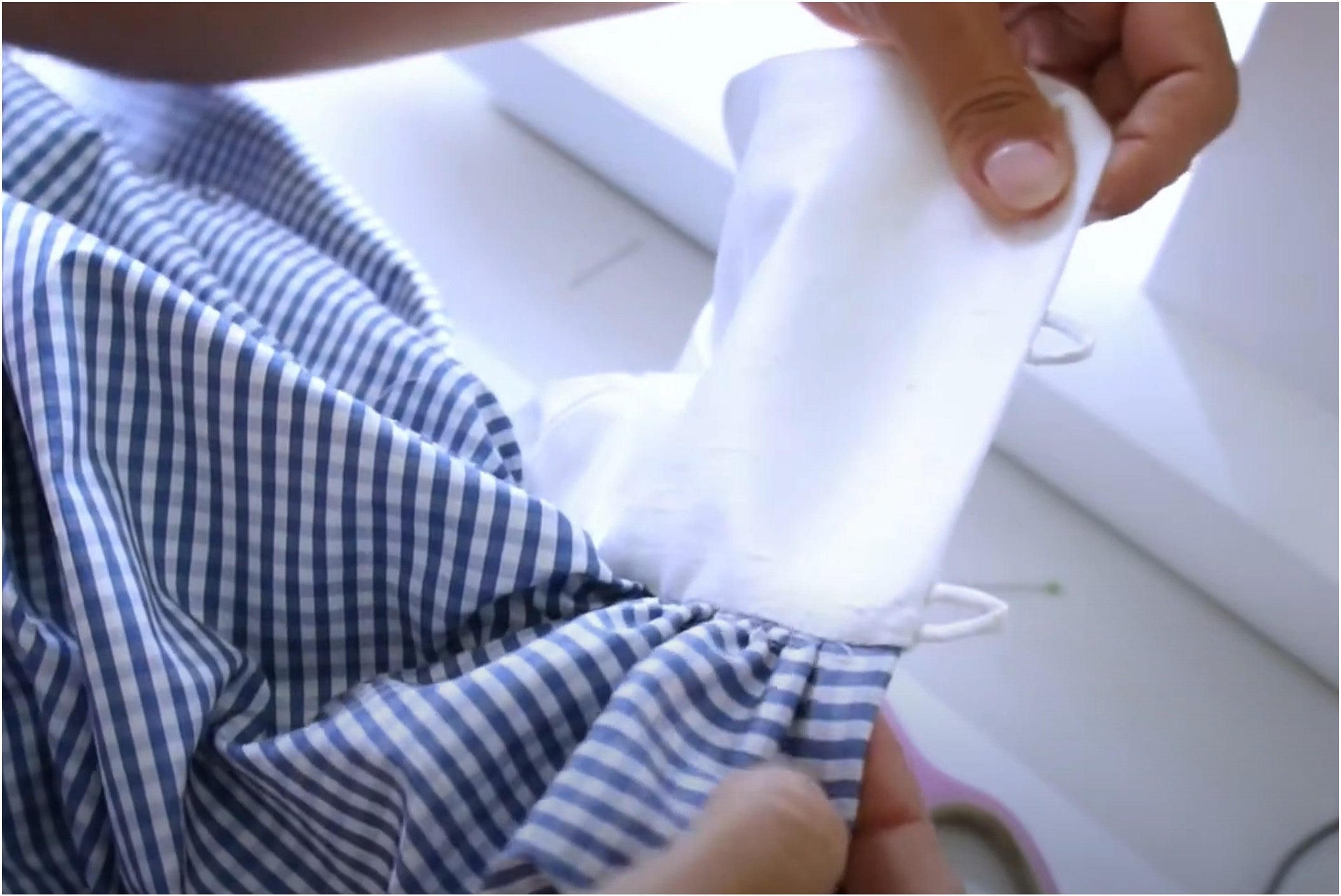
There is another video showing how to make the net petticoat. The petticoat has magically appeared on my skirt, and I tell you, that petticoat was a labor of love as well.

Make sure that whatever you do, you have the petticoat on before you sew the skirts together because it is very difficult to add afterwards due to the amount of fabric.

So if you want to make the petticoat, do that now before moving on to the next step, which is joining the two skirts together at the center back.

See you there. Thank you.

Transcript for the video: Flower Girl Dress - Adding Lace to the Hem

In this chapter, I’m going to show you how to put lace on a skirt so that it looks as if the lace is attached to a petticoat and peeps out. You’ll get a slight over- or underlap here, so the edge of your hem hangs loosely over the lace. That looks much better than simply attaching the lace directly to the hem.

We already did a version of this with the lining. Here, we’re going to attach it to the edge, then turn it up, pin it, and hand stitch it. We’re using a slip stitch for this.

Sewing the Lace to the Skirt

The first step is to go to your sewing machine. With the right sides facing each other, sew the lace to the hem edge.

You’ll notice I’ve already overlocked both the lace and the skirt. That’s because this was an afterthought for this method. Ideally, you should overlock first, then attach the lace, and then move on.

Next, we turn up the hem. In my case, it is 3 cm. Yours may be different, depending on how much lace you want to show.

At this point, go to your ironing board and press everything neatly into place. You can adjust the skirt up or down until the lace shows exactly how you want it to.

What you end up with is a soft overlap from the hem, so you cannot clearly see how the lace is attached. It looks as if it is floating underneath, which gives a much nicer finish.

Adjusting and Pressing

I had already ironed in my 3 cm hem allowance because I originally planned not to use lace, then changed my mind.

If you have not done that yet, you can do it now.

Pin the hem where it needs to sit. When working with a skirt like this, especially with a lot of lace, things can stretch or shift slightly. That’s why it’s important to adjust everything now on the ironing board rather than forcing it into place while sewing.

Press everything carefully until it sits perfectly all the way around.

Slip Stitching the Hem

Now we attach the hem using a slip stitch.

Fold the hem up along the seam allowance. Then stitch the folded edge to the hem allowance.

Keep your thread loose. You can tack it occasionally to make sure it doesn’t tighten too much. If you sew it too tightly, the stitches may show from the outside.

You only need to pick up a few fibers from the skirt and a bit from the hem allowance each time. That’s enough to secure it cleanly.

It is a very simple technique, but it gives a very clean and professional finish.

Finished Look

We’ve already seen one example from a wedding with a Wizard of Oz theme, where the lace was also added under the lining. It created a very soft, layered effect and the dress really benefited from a petticoat underneath.

In that case, the goal was to make the flower girl dress as cute and full as possible for the wedding.

If you want to add lace like this, you now know exactly how to do it. It’s a small detail, but it makes a big difference in the final look.

Final Note

For those watching this on YouTube, there is a full course on the website that goes through the entire flower girl dress process step by step. Everything is linked in the description.

I hope this helps with your own wedding sewing projects, or if you’re passing it on to someone who is making a flower girl dress for you.

Joining the Center Backs

Transcript for the video: Flower Girl Dress - Adding Lining to the Center Back Skirt

The next step is to join the center backs.

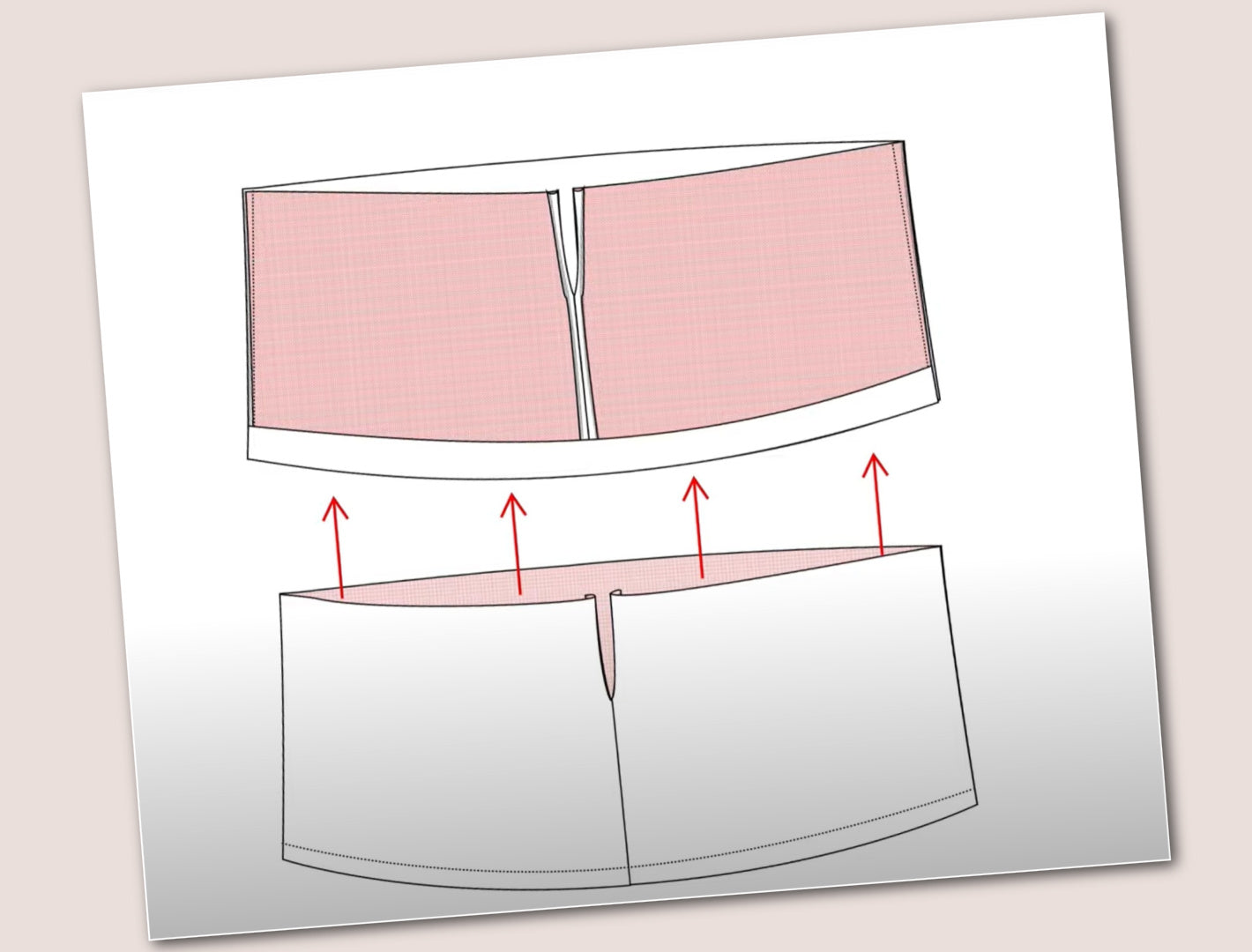
Take the skirts and place them with the right sides facing each other. You want to put your skirt inside the underskirt so that the right sides are together.

Then pin the seam allowances together from the point where you have left the opening. This will create a very neat finish at the center back opening.

Sewing the Back Opening

Now we are going to place the opening of both skirts together, right sides facing, and sew them from the opening down to the end.

Keep everything flat and sew along carefully. You can pin one side first and sew it, because sometimes pins get in the way. Then repeat on the other side.

Sew with a one centimeter seam allowance.

Make sure everything stays flat underneath, because it is very easy to catch extra fabric at the bottom. If needed, you can stop slightly higher to avoid catching anything.

On my example, I caught a bit of fabric, so I had to open it and correct it. That is why it did not go all the way down smoothly.

Repeat the same process on the other side, making sure everything is flat, and sew back up neatly so the finish is clean and precise.

Understitching the Seam

Next, we are going to understitch.

This means the seam allowance is stitched down onto the lining side. Fold the seam allowance toward the lining, then stitch close to the edge.

Do this on both sides. This gives a very clean finish and helps the seam sit nicely inside.

It really makes the skirt look very professional and smooth.

Preparing the Waistline

Next, we pin the top of the skirt together.

At this stage, you can also check the length. If it is not quite right, adjust it slightly so it sits properly before moving on.

Now we add gather threads. Set your sewing machine to the longest stitch length and sew along the top edge.

You may notice that the lining appears slightly larger in places. Do not worry about this. We will gather it anyway, and it will all be adjusted evenly.

Sometimes fabric behaves differently, so it is better to ease it in with gathers or small pleats rather than forcing it.

Then sew a second row of stitching just next to the first, keeping your presser foot aligned with the initial line.

Making the Bodice

Transcript for the video: Flower Girl Dress - Preparing the Bodice

Now we are going to make the bodice.

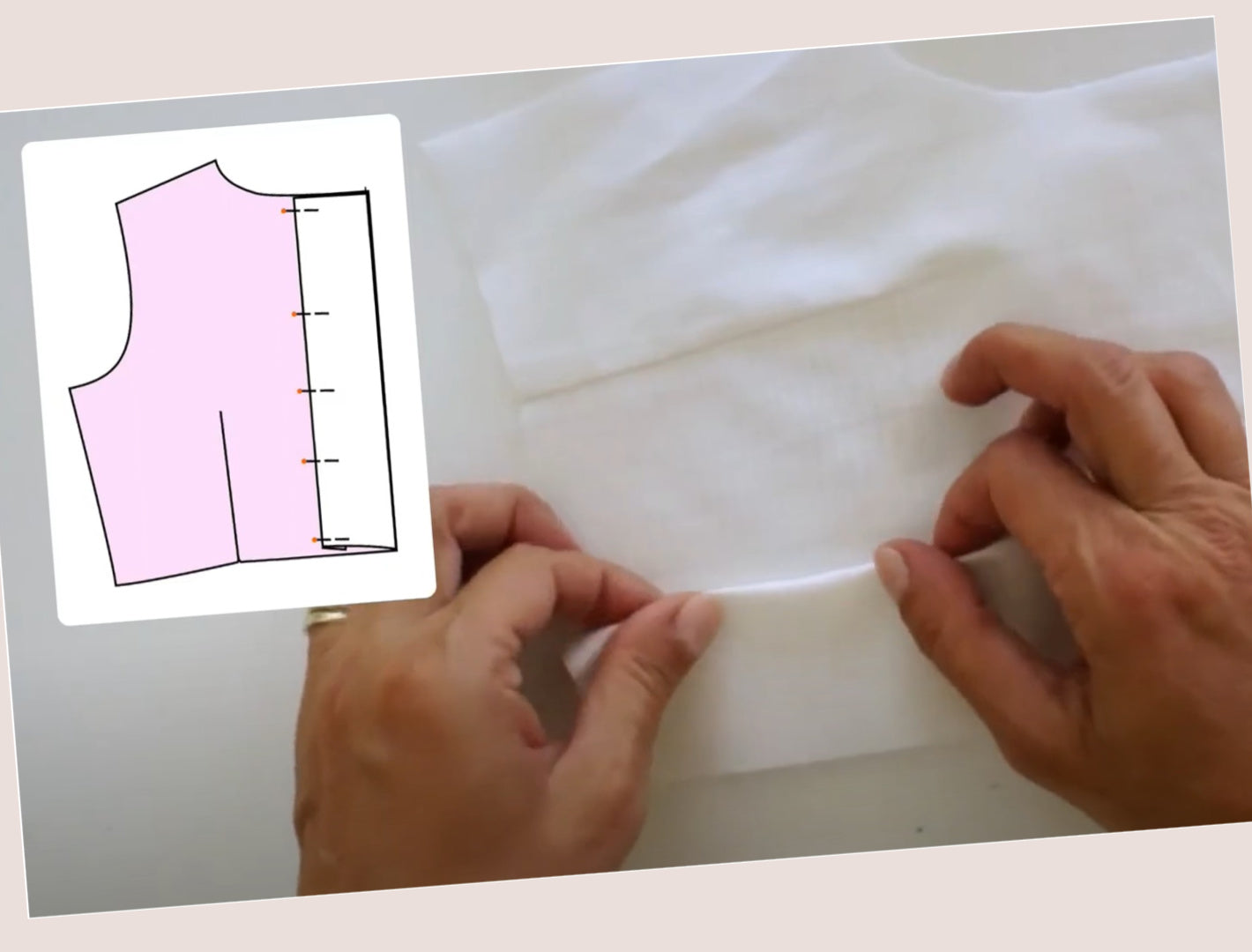
You have your silk, your interlining, and your lining. In my case, the interlining is already interfaced, so I do not need this step. Normally, you would take the wrong side of your fabric and place the interlining on top, then treat both layers as one piece to give the bodice structure.

You can pin around the armholes and edges to keep everything in place so it does not shift while you work.

In my case, I can skip this because it is already interfaced.

Darts

Next, we work the darts.

Where you have snipped and marked the dart on your pattern, place a pin at the lower point. Then fold the fabric up so it lies straight. You can see the alignment here.

The dart ends about one centimeter below the armhole. Pin it in place.

Now open up the lining. Because there is a left and right side, it is easy to mix them up, so always double check before sewing.

Place right sides together and pin the dart carefully.

I have done this many times where I went into autopilot and had to unpick the dart on the lining, so it is worth taking your time here.

You want a slim dart that tapers neatly to the top. You can slightly curve it inward if needed.

If the dart has a little point at the top, it usually means it is not slim enough. The goal is for the dart to disappear completely into the fabric.

Pressing the Darts

Now press the darts into shape.

On the lining, press the dart towards the side seam. On the dupion silk, press the dart towards the center.

This helps everything lie flat and gives a much cleaner finish.

Facing the Edges

Next, we add the facing.

Fold in the edge and stitch it down close to the edge. This adds stability to the inside of the bodice, especially where the buttons will be placed.

If you are using a label, like I am here, you can attach it at this stage. In my case it is my Frocks and Frolics label. I still use them, even though I no longer sell commercially.

Attaching the Ruled Loops

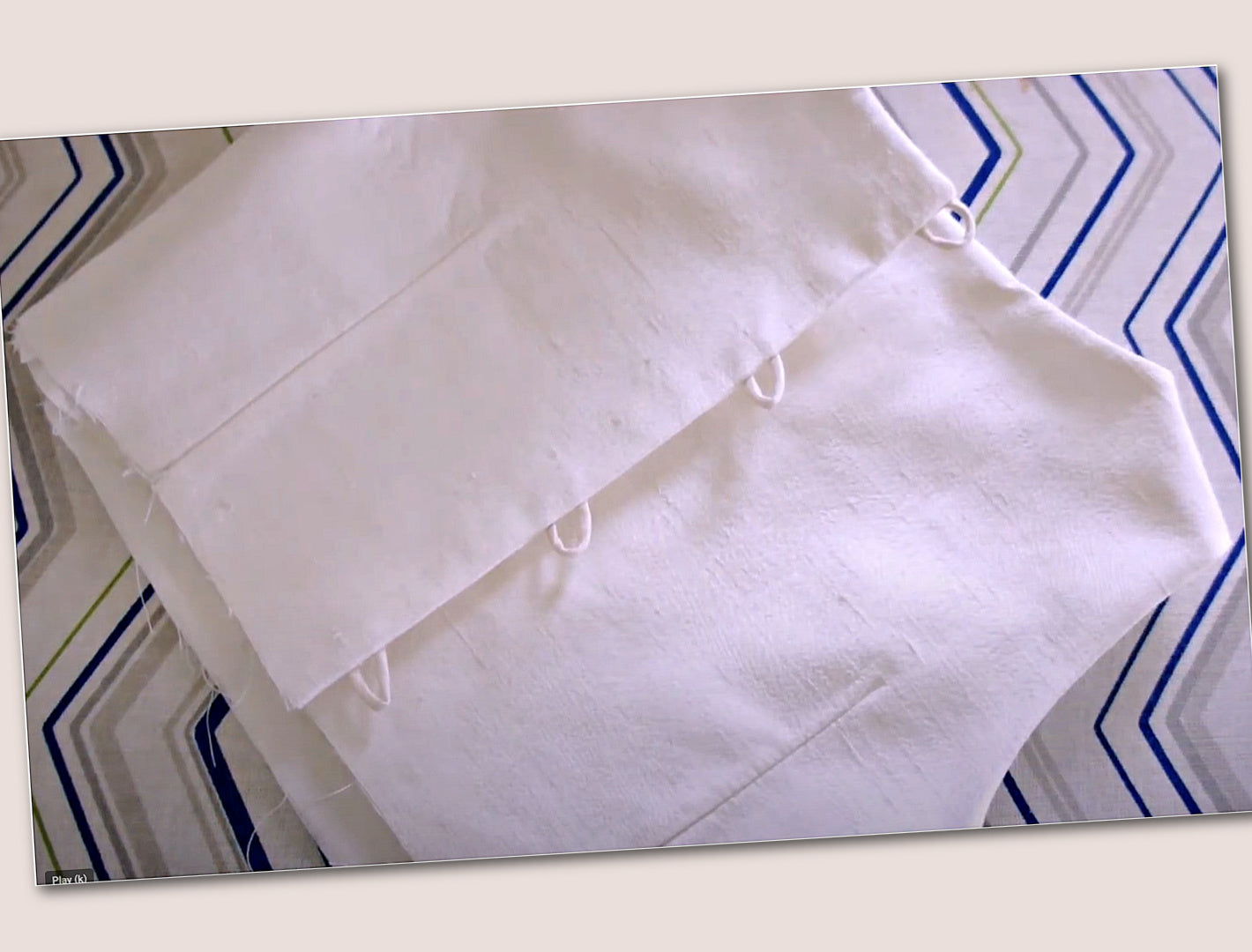
Now we attach the ruler loops.

We are only using the top and bottom loops in this example because I adjusted the measurements slightly.

Make sure the seam is facing upward when you pin them on. This ensures that when they are folded over, the seam will not be visible.

If you are unsure how to make ruler loops, you can refer to the separate video on that technique.

Now divide the spacing into three and place your ruler loops evenly along the marking.

Pin them in place.

Sewing the Loops

When sewing the loops, make sure they are secured very well. The worst thing is for a loop to come loose later.

Use a small stitch length and sew back and forth over each loop several times so they are firmly anchored.

This prevents them from slipping out over time.

Final Result

When you fold everything over, none of the seams show and the finish is very clean.

It is not difficult, but it does take a bit of practice to get it neat and even.

Attaching the Skirt to the Bodice

Transcript for the video: Flower Girl Dress - Joining the Skirt & Bodice

Now, onto the top.

You're going to put a vertical pin in so that it can't go anywhere. Then you're going to find the side seam of the bodice and match it to the side seam of your skirt.

That's how I do it. You don't have to do it that way. You can pre-gather the skirt a little first and then pin it on. Basically, you now pull your gather threads, using only the underside thread. Once the skirt fits nicely, wrap the thread around the pin in a figure-eight and distribute your gathers evenly.

Pin the gathers all the way around the bodice.

I don't tend to over-pin this. I usually do a lot of rearranging while it's under the sewing machine anyway.

Sewing the Skirt to the Bodice

Now we're going to sew this together.

It's very easy to catch something underneath, so keep checking constantly. Make sure you're not catching any fabric where it shouldn't be. Rearrange the gathers as needed and keep everything looking nice and even.

Attaching the Lining

This next step is a little industry trick.

Fold over the lining and stitch as far as you can go.

To be honest, I used to have an employee called Fast Alice, and she was unbelievable. She could sew this together and leave only about three centimeters open in the middle. If you're a very experienced sewer, you can certainly do that.

Coming from a couture background, though, I am used to doing a lot of hand stitching, so I never worked quite that way. I always admired how quickly she could get it done. She was fantastic.

I'm simply going to stitch right up to the dots. If you can go further, that's great, but I am much more likely to stretch something or accidentally catch a layer, so I stop there.

Creating a Clean Finish

Work right into the corner because it lies flatter.

Then all you have to do is pull this over, and you'll see that you get a beautiful finish.

Of course, I like the fact that I don't have to hand stitch that section, and the corner ends up looking really neat and professional.

Hand Stitching the Lining

Next, I'm going to attach the lining.

Make sure that the lining isn't too tight. Too loose is much better than too tight.

Place your pins so that the lining just covers the stitching line. Then we're going to hand stitch it into place.

Thread your needle and hide the knot inside the lining. Push the needle through so that the knot disappears into the inside.

Then tunnel through the lining and pick up a small amount of the skirt fabric. Actually, you can pick up quite a bit because the skirt fabric is thick and it won't show from the outside.

Continue all the way along:

  • Tunnel through the lining.
  • Pick up a little of the skirt.
  • Pull the thread through.

And repeat.

Finishing Up

Now it's almost done. Fantastic.

You can remove all of those gather threads. Just pull them out carefully so everything looks neat and clean.

Attaching the Buttons

Transcript for the video: Flower Girl Dress - Adding Buttons

At this stage, make sure that you measure across the chest and compare that with the actual measurements. This allows you to determine whether the dress needs to be a little bigger or a little smaller.

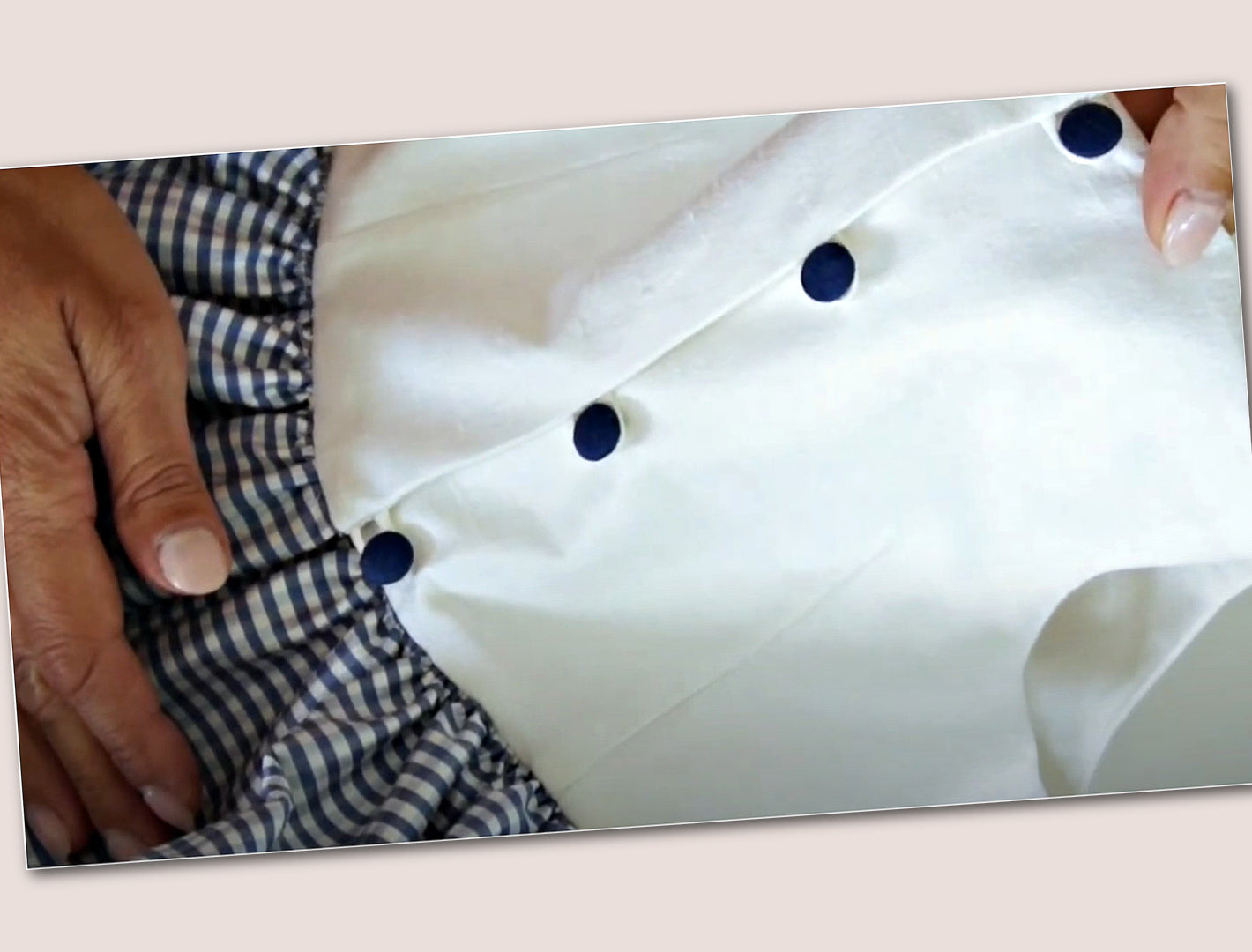
The beauty of using rouleau loops and buttons is that you have a little bit of flexibility in the fit. This is especially useful if you're making the dress for, say, a grandchild who lives in Florida while you're all the way over in California like me. Having that little bit of adjustment room is brilliant.

Start by sewing on the top button first. In my case, the buttons ended up sitting almost off my little placket on the inside, which wasn't my intention, but I just about managed it. The placket provides a little extra support for the button.

Then sew on the bottom button, the one closest to the hem.

Make sure you stitch through several times so that the buttons are securely attached and won't get pulled off. Once you're satisfied, secure your thread and fasten it off neatly.

There we go—beautiful buttons.

I used contrasting covered buttons, of course, but you can use any buttons you like.

Finishing Touches

The buttons are now securely attached, and the back closure is complete. The rouleau loops and covered buttons create a lovely, elegant finish while also allowing for a little flexibility in sizing.

Thank you.

Cummerbund Overview

Transcript for the video: Flower Girl Dress - The Cummerbund

So let's get rid of the jacket.

The cummerbund has got pleats which go downwards: one, two, three pleats. We're going to look at how we do that.

At the back, I know this dress is a bit too small for the dummy, we've got a beautiful big bow. Each one of the stems is 90 centimeters long, which is approximately a yard, so you get a really beautiful effect. Then it's simply sewn into the seam here on top of the dress.

Pattern Pieces

For the cummerbund, you have three pieces:

  • The cummerbund front
  • The ties
  • An interlining

It's a very simple technique.

Basically, where it says "pleat," you pleat down so it gets to this point here, like that. Then another time. Fairly simple. That needs to be quite central here.

Then that is ironed.

This interlining sits on the inside, and you want to arrange it behind your pleats so that it sits right in the center. When I close my cummerbund, this will work perfectly with the seam that goes all the way across, so it will sit right in the center there. That's really important.

The ties are obviously inserted into this, and you can make the ties longer. I think for an older girl, that is quite important.

You can always see that there is a length written onto the pattern piece, so you know exactly how long to make it. All you do is put your letter-size or A4-size paper next to it like that so that you get these beautifully wide and long stems.

Cutting Out the Pieces

Right, let's cut this thing out.

If you're a bit like me, I really don't like pinning, especially not when it's long lines. All you have to do is place something heavy on the pattern. You might have weights. Then, cutting from the left, you cut all the way around.

Next, we're going to cut out our cummerbund front, but we also need to make sure that we snip where the dashed lines are so that we can properly pleat it.

Creating the Pleats

Of course, so let's get started.

I have ironed my piece, I know where my snips are, and I take the first snip and fold it onto the next snip, just like you saw when I showed you this on the pattern. Then I iron it down, and that gives me the shape.

Then I take the next snip and place that onto the next snip after that. Again, I have my next pleat.

I do that three times until I've got the three pleats in position. Make sure that they're really straight.

Positioning the Interlining

Now, on the back, I've flipped this piece over.

I put my interlining in place. It needs to be central.

I'm going to put one pin in here, then I just flip it over and position it properly to make sure. You can see it here. Those three pleats need to be centered on it.

Sewing the Ties

Next, I'm going to sew my ties up.

That's really very simple. All you have to do is start at the end here and sew all the way down.

I would recommend, of course, that you reduce your stitch length when you get around the corner, or for the tip. That basically makes it less likely to fray.

So come down to the corner, put your needle down, turn the fabric, and go down the other side.

There you go.

Cut this back a bit, turn it, and then give it a really good press. Work the seam out with your hands like this. It's a rolling motion. Steam it, and there you go.

Attaching the Ties

With all my beautiful ties done, I now need to position them.

What I do is put them next to my cummerbund, and I want to match up my interlining here.

Then I put my pleats in so that it looks nice. The pleats again have to go down the same way as on the front cummerbund.

Put one in, then put the next one so that it ends where the interlining ends.

Some people might want to gather this instead. That's also possible, of course.

Now we're going to do the other side. Make sure that it fits.

For that, I'm just going to take the other tie and make sure that the tip goes the same way, of course.

I can now put my first pleat in and then the second pleat.

With that done, I can now attach them to the front of the cummerbund.

Turn them over and start where the interlining is. On the other side, put them on very straight.

Then all we have to do is sew across there to fix them.

Take your time. Make sure it's in the right position, and check the other side as well.

Then we're good to go.

Sewing the Cummerbund Together

On the sewing machine, you don't want to use a one-centimeter seam allowance. You want to use something a little bit less so that this stitch will not show when you've finished your cummerbund.

Now we're going to fold it over so we have the right sides facing.

You need to sew across the top, and you also need to leave a gap through which we can turn the stems. That's really important.

So there's my gap, and I'm now going to pull my stem through here so that I can simply sew across the top.

I would have the seam allowance pressed to one side here. It doesn't matter which side you choose. Any side will do, left or right.

Pin it so that the cummerbund ties are really in the corners, and then simply stitch across.

This time we're doing a one-centimeter seam allowance.

When I pull this through, we're almost there. We've already got our cummerbund together.

It's quite a simple technique, but if you don't do it right, of course it won't come out very well, so take your time with this.

You'll end up with a beautiful cummerbund just like this.

Finishing the Cummerbund

You also need to make sure that on the inside everything is straight and nothing is crumpled up before you start ironing it.

Then we're going to do a stitch on the inside there just to make sure that the cummerbund stays in position.

Here I've ironed it, and I've also put a pin there. That's where I'm going to stitch.

Sometimes that will even catch it at the back and close your cummerbund, but you could also do that by hand with a few slip stitches.

Just sew right in the corner there. That's also possible.

Then do the same in the other corner, and it won't go anywhere.

Your cummerbund is finished.

Attaching the Cummerbund to the Dress

We're just stitching the cummerbund straight onto the side seam.

Now we're going to sew in the seam to attach the cummerbund.

You don't go all the way down. You start at the top and only go as far as the end of the bodice.

The thread needs to be an exact match to the color of your cummerbund; otherwise, it might show.

But you can see here that if you pull it apart, it actually won't show.

Final Dress

So this is the end. This is the entire dress.

Of course, you can check out the other videos which show you how to amend the pattern and how to do the petticoat to create that dream dress.

Thank you.

Transcript for the video: Flower Girl Dress - Puff Sleeves

In this video, I'm going to show you how to work the bodice.

It's a little bit different from what you would do if you have the little cap sleeve. Here, we are closing the side seams for our upper bodice and then also the side seams for the lining of the bodice. Both are joined with a one-centimeter seam allowance.

I would try this on your child just in case you want to make it a little bit smaller, or indeed if you want to take less of a seam allowance because you need a little bit more room. It's worthwhile checking this if your child is just within the margins recommended on the pattern.

Then we sew those together and iron the seams apart.

Pinning the Lining

The next step is to pin the lining to the upper material with some pins that face vertically to whatever seam we're going to sew. This allows us to leave them in place, and they sit quite nicely.

Setting the Sleeves

Now we're going to put the sleeve in.

Find the snip for the front, then take the sleeve and pull it through into the bodice.

I'm going to first place the underarm seams on top of each other, and then I'm going to pin the top of the sleeve, the sleeve head, to the shoulder seam.

After that, I pin from the underarm seam upward. It's about two pins that you put in. While I do this, I roll the fabric over my fingers. My left hand is really in there to make sure that this sleeve will not sit tightly.

It's very easy to make that mistake, and we don't want to do that. The sleeve should sit in very evenly, so it's important that you roll that edge slightly.

I do the same on both sides.

Gathering the Sleeve Head

Now I can start pulling in my gather threads to make it fit.

Again, I want to pull my gather threads up so that I have about two centimeters, or at most two and a half centimeters, on either side of the shoulder seam.

I made the gathers for these puff sleeves very dense. I think it's really lovely to do that, and the sleeve is also cut in a way that allows it to stand up a little over the shoulder.

I'm going to put another pin in there and now measure it. It's an inch and a half, which is okay. Really, it's a little bit more than two and a half centimeters, but I can adjust that in a minute if I want to.

Now I'm going to pull it from the other side, and again I put another pin in there.

You can also secure that gather thread now so that it can't go anywhere and can't become loose anymore. Put the pin in vertically and wrap your thread around it in a figure of eight.

Now I can distribute the gathers without them slipping out again.

Checking the Gather Placement

Take the sleeve to the outside. This is one of the most important things to do. Check that everything is even and looks really nice.

I think that's quite good. Really pretty.

I do the other side as well, and then I compare both sides to make sure that my gathers start and end at exactly the same point.

If they don't, this is the time to correct them.

Sewing the Sleeves

Now I can sew both sleeves in.

It's really hard to show what you're doing here, as you can see, but we've already done it on the other sleeve.

Here we're simply sewing around, checking that everything is nice and flat underneath and making sure that none of the gathers push over the edge and make the sleeve area smaller.

We don't want that.

We keep everything edge to edge, and if necessary, you can adjust the gathers with a pin.

Finishing the Seam

When the sleeves have been sewn in, all I have to do is serge the edge.

Make sure that you have removed all the pins.

I also tend to cut off all the threads. I don't want anything hanging in there. Even though I'm trimming things away, if the threads come from the seam line, you want to cut them off first. You don't want them left inside at all.

After that, all we have to do is iron that seam flat.

[Applause]

Final Thoughts

And that's the end of our Isabella dress.

Really, this is the final clip. I hope you enjoyed it.

Don't forget that you can watch all the other little clips from the Western Blouse, which give you a lot more options for the cuffs of the sleeves. They're really interesting, so go and have a look at those as well.

Come back for another project.

Bye for now.

Transcript for the video: Flower Girl Dress - Inserting Puff Sleeves

In this video, I'm going to show you how to work the bodice.

It's a little bit different from what you would do if you have the little cap sleeve. Here, we are closing the side seams for our upper bodice and then also the side seams for the lining of the bodice. Both are joined with a one-centimeter seam allowance.

Now, I would try this on your child just in case you want to make it a little bit smaller, or indeed if you want to take less of a seam allowance because you need a little bit more room. It's worthwhile checking this if your child was just within the margins recommended on the pattern.

Then we sew those together and iron the seams apart.

Attaching the Lining

The next step is to pin the lining to the upper material with some pins that face basically vertical to whatever seam we're going to sew, so that we can leave them in and they sit quite nicely.

Setting the Sleeve

Now we're going to put the sleeve in.

Find the snip for the front, and then take that sleeve and pull it through into the bodice.

I'm going to first put the underarm seams on top of each other, and then I'm going to pin the top of the sleeve, the sleeve head, to the shoulder seam.

Then I will pin from the underarm seam up, and it's about two pins that you put in. While I do this, I roll the fabric over my fingers, so the left hand is really in there to make sure that this sleeve will not sit tightly.

It's very easy to do that, and we don't want to do that. It should sit in very evenly, so it's important that you roll that edge slightly.

I do the same on both sides.

Gathering the Sleeve

Now I can start pulling in my gather threads to make it fit.

Again, I want to pull my gather threads up so that I have about two centimeters, or at most two and a half centimeters, on either side of the shoulder seam.

I made the gathers for these puff sleeves very dense. I think it's really lovely to do that, and it's also cut in a way that the puff sleeve will stand up a little bit over the shoulder.

I'm going to put another pin in there and now measure it. It's an inch and a half, which is okay. Really, it's a little bit more than two and a half centimeters, but I can adjust that in a minute if I want to.

Now I'm going to pull it from the other side, and again I put another pin in there.

You could also now secure that gather thread so that it can't go anywhere and can't become loose anymore. Put the pin in vertically and then just wrap your thread around it in a figure of eight.

Now I can distribute the gathers without them slipping out again.

Checking the Gathers

Take this to the outside. This is one of the most important things: just check that it's all even and looks really nice.

I think that's quite good. Really pretty.

I do the other side as well, and then what I do is compare both sides and make sure that my gathers start and end at exactly the same point.

If they don't, this is the time to put it right.

Sewing the Sleeves

Now I can go and sew both my sleeves in.

It's really hard to show what you're doing here, as you can see, but we've done it on the other sleeve already.

Here we're just sewing around, obviously checking that everything is nice and flat underneath and making sure that none of the gathers push over the edge and therefore make it all a little bit smaller in the sleeve area.

We don't want that.

We keep everything edge to edge, and if need be, you can adjust the gathers with a pin.

Finishing the Seam

When the sleeves have been sewn in, all I have to do is serge the edge.

Make sure that you have removed all the pins.

I also tend to cut off all the threads. I don't want anything hanging in there. Even though I'm cutting things off, if the threads come from the seam line, you want to cut them off first. You don't want them in there at all.

After that, all we have to do is iron that seam flat.

Final Thoughts

And that's the end of our Isabella Dress.

Now, really, this is the final clip. I hope you enjoyed it.

Don't forget that you can watch all the other little clips from the Western Blouse, which give you a lot more options for the cuffs of the sleeves. They're really interesting, so go have a look at those as well.

Come back for another project.

Bye for now.

Transcript for the video: Flower Girl Dress - Puff Sleeves With Piping

In this video, I'm going to show you how to create a very beautiful puff sleeve with a piped edge, just like this one.

I'm Marina from Frocks and Frolics, and in this video I'm going to use one of my own patterns, which has a little bit of gathering at the hem as well. But if you're just here for the method, you can use this without the gathers. The method stays the same.

Preparing the Sleeves

When you're putting in a sleeve, make sure you have a right sleeve and a left sleeve. They should be mirror images of each other.

Now we're going to learn how to put the piping on so it looks really, really good.

Making the Piping

First of all, we need to make the piping. You can cut bias strips first, then use a fairly slim piping cord. I'm using a very slim cord here, although I later changed it and made it a little thicker.

Place the piping cord in the center of your bias binding. The good side of the fabric should face outward.

Using a piping foot, or a zipper foot if you don't have one, stitch very close to the cord. If you have a piping foot, you can keep the same stitch setting. You may need to adjust your needle position to get a neat finish.

Do a few trial runs until you get a clean and even result.

Trimming and Preparing the Sleeve Edge

I usually cut my bias wider than needed. This one is about three centimeters wide, and once folded I still have enough to trim back. I'm aiming for a one-centimeter seam allowance. A millimeter more or less doesn't really matter.

Because this sleeve is gathered at the lower edge, I first sew gather threads close to the edge, up to the marked points on the fabric, then a second line of stitching just next to it.

Then I gather the fabric before attaching the piping.

If you're using my pattern, you will find the exact measurements in your ebook. The important thing is that the gathers are dense. Sometimes silk tries to pleat instead of gathering, so you need to adjust it carefully.

You can also measure the sleeve or try it on the child to check fit. Comfort is more important than perfect measurements. You should allow about four to five centimeters of ease around the biceps.

Attaching the Piping

Now we're ready to attach the piping.

Place the piping along the edge with right sides together. The good side of the fabric should be facing up. With silk, this can be tricky, so be careful not to mix up left and right sleeves.

Stitch along the edge using your piping foot. I really like using a piping foot. I find it gives the best result.

Place the lining underneath and make sure it matches in length as well.

Sewing the Sleeve Together

Now sew the sleeve together. It is best to sew from the side where the piping has already been attached so you can see what you're doing.

You may notice that I adjusted my piping later and made it thicker. I redid it because it was for a client and I wanted it perfect. Sometimes you just have to redo parts when something doesn't feel right.

Trim your threads and check that the piping sits neatly between the layers.

Understitching

Now we under-stitch the seam so the lining stays in place. Turn the seam toward the lining and stitch very close to the piping. This prevents the lining from rolling out and gives a nice clean finish.

Closing the Sleeve

Next, we close the side seam of the sleeve.

Remove the piping cord at the seam allowance first so it doesn't become too thick. Pull it back slightly and cut it off on both sides.

Then match the raw edges together, making sure the piping aligns properly. Pin and sew the seam.

Some people close the underarm first and then try to attach piping afterward, but this method is much harder. This way works much better.

Snip into the seam if needed to reduce tension, then press the seam open or flat as required.

Setting the Sleeve Head

Now we prepare the sleeve head.

Add gathering stitches at the top so the sleeve can be eased into the armhole later. The sleeve is cut slightly higher at the front to help you identify orientation.

Match underarm seams and shoulder points, then pin carefully.

Roll the fabric slightly under your fingers as you pin to avoid pleats forming. This step is very important.

Gathering and Inserting the Sleeve

Gather about four centimeters toward the front and four centimeters toward the back. This creates a beautiful volume in the sleeve.

Distribute the gathers evenly and check from the outside before sewing.

Start sewing from a straight section, not on the gathers. Take your time and ensure nothing is caught underneath.

Silk is delicate, so go slowly and carefully.

Final Thoughts

And that completes this part of the flower girl dress sewing course.

This sleeve is used in both the flower girl dress and the Paris Bolero, though sizes may vary slightly. It is very versatile and can be adapted for jackets as well.

If you're a sewist making flower girl dresses for others, this gives you a beautiful professional finish you can offer.

Don't forget to share what you make. I wish you all the success in creating something truly special for someone's big day.

Bye for now.

See you soon at frocksandfrolics.com

Making the Petticoat

Transcript for the video: Flower Girl Dress - The Petticoat

Welcome back everyone.

In this tutorial, I'm going to show you how to make this petticoat. Whoosh.

I've added a gathered trim here, and another decorative trim with a diamond-like detail on top. I've also bound the edges of the lowest part of the petticoat.

This little petticoat is put in before the skirt goes on. It takes quite a long time to make, but I think it's well worth it.

Planning the Petticoat

Let's get started.

I'm actually going to do this with different trimmings. You will have one layer of fabric underneath, and another layer that is fed through a gap. What goes through that gap will be pushed in at intervals, gathered, and stitched at the same time. This is excellent because it gathers and sews simultaneously.

I cut about 10 meters of netting and then cut it into equal widths. I will tell you the exact width shortly.

For this example, I also add trim. I will just do a short section so you can see how it works. One piece of fabric is sewn together like this, and then inserted with trim instead of bling for the flower girl version.

Measuring and Cutting

How do we work out the length?

Fold over your hem so it is not too long, and check where the opening is. You start your netting underneath the opening. Use a tape measure from that point down.

In my case, I don't want the petticoat to show under the dress, so I measure carefully. If it's around 31 cm, I choose about 29.5 cm.

It is easier if you work in consistent measurements like 10, 10, 10 so you do not get confused.

Cut multiple strips of the same length.

The first layer is the flat base layer. There is no gathering on this layer. You will need this twice for the back, and again for the front, so cut accordingly. This becomes your top foundation layer, and the rest builds on it.

Using the Ruffler Foot

Next we attach the ruffler foot.

Remove your presser foot and the attachment holder. Unscrew it, attach the ruffler foot, and secure it again. The arm fits over the screw on the right side.

Now you're ready to sew.

Place the plain straight layer underneath, and the fabric to be gathered on top. Line them up.

When one section is finished, simply place the next layer on top. You do not need to sew pieces together first. Just continue layering and feeding them through.

For long petticoats, you continue this process layer by layer. The result is a beautifully full skirt with controlled volume.

Building the Layers

In my sample, I place one layer, then another.

For my bridal version, I did it slightly differently. I first gathered lace, then placed it underneath, and then gathered netting over the top again.

Make sure edges are aligned. If it gathers too much, you can adjust the density using the screw on the foot.

This tool is inexpensive but very effective.

Finishing the Edges

Once complete, you can add ribbon or trim over the top.

Finish everything with a zigzag stitch to secure it. I used an elastic zigzag stitch here. This gives a clean and flexible finish.

You then face your ribbon or trim over the top.

Binding the Hem

Now we finish the edge using binding.

You can use pre-made binding or make your own. Stitch close to the edge, making sure the netting sits neatly in the groove.

Stay close to the edge at all times. Do not stitch in the middle. Keep everything aligned and neat.

If one layer is slightly longer, always keep the shorter side facing up while sewing.

And here we go, the petticoat is finished.

Final Petticoat Assembly

Now we attach the petticoat to the dress.

Make sure the seam is facing up and that it is not too long so it does not show.

Pin it evenly all the way around, matching distances carefully from the top edge.

At the center back, place right sides together and sew the seam, then overlock it.

Secure the overlocked edge so it does not unravel.

Attaching to the Dress

Now press it, pin the final section, and we are ready to sew.

Use a standard straight stitch and remove pins as you go.

Take your time and work all the way around carefully. There is a lot of fabric, so patience is key.

Never try to attach a petticoat after the dress is already fully sewn. It becomes extremely difficult to handle and will not sit evenly.

Final Result

And now we are done.

You can see how much volume this creates. It is a lot of work, but it is absolutely worth it.

This petticoat completes the flower girl dress beautifully.

Don't forget there are also videos for the cummerbund, the full dress, and the jacket coming up.

Thank you for watching, and see you next time.

Bye.

Making a Rouleaux Loop

Transcript for the video: Flower Girl Dress - Loop Fastening

Welcome everyone to a new Sewing Thursday.

Today we're going to have a look at how to make a rouleaux loop, and next week I'm going to show you how to insert a rouleaux loop into a little top like this one I've made. It's in crepe de Chine, and I'm also going to demonstrate how to work with creon something as flirty as this.

But today we're just going to make a rouleaux loop.

Materials You Need

To make your rouleaux loop, you need a bias strip. You can watch my video on bias binding for this. It is cut on a 45-degree angle so that it is nice and stretchy, otherwise it will not work.

You also need piping cord. These come in different widths. You can get piping cord from your haberdashery shop, or you can do what I do and use curtain cord. It is much smoother and easier to work with.

I tend to use the really slim cord for my rouleaux loops. If you want to make spaghetti straps, you would use the slightly thicker one.

Sewing the Rouleaux Loop

We're going to sew both of these in to see how they look.

The idea is that your piping cord goes in the middle. You place the right sides together, encasing the cord inside the bias strip. Then you stitch it down with your zipper foot.

Make sure your needle is positioned just slightly off to the side so you do not catch the cord, but you do stitch very close to it.

Now let's make a rouleaux loop.

I have my curtain cord here. I like this much more than the piping cords you get in shops because they are smoother and do not get stuck.

With the right side facing up, place your piping cord in the middle of your bias strip. Then move it under your zipper foot.

It is important that your needle is just slightly off the edge so you do not catch the cord. You want to stitch very close to it.

Go back and forth a little, wiggle it in, and make sure everything sits properly. Of course, when I am demonstrating it, it never wants to behave.

There we go, now it is tucked in properly.

Now all I have to do is continue stitching all the way to the end.

This is essentially the same method as making piping. You are making piping first, and then turning it into a loop.

Cutting and Turning

Now cut it off.

I'm going to cut it in the middle here so we can also use part of it as piping. If I were making piping, I would leave about a one-centimeter seam allowance or just under, and keep the cord inside.

If we're making a rouleaux loop, we pull the cord out like this.

Then we trim it back so there are about 3 mm remaining. Do not cut too close to the stitch line, otherwise you may rip it. This part needs to stay intact because it will form the rounded shape of the loop.

Turning the Loop

The next step is to use a rouleaux loop turner. It has a hook at the top that catches the fabric and pulls it through.

Push the hook through the fabric and secure it at the top so it does not slip back down as you pull.

Then, with steady tension, pull the fabric through bit by bit.

I always trim off the top end first to make it easier.

And there we have a beautiful rouleaux loop.

If you make it wider, you can also use this technique for spaghetti straps, but for closures, the slimmer version works best.

Thank you for watching, and I'll see you next time.

How to Sew a Fabric Rose

Transcript for the video: Flower Girl Dress - Fabric Roses

Cutting the Fabric

To make a fabric rose, you need a piece of fabric that is 13 inches long and 3 1/2 inches wide.

Fold it lengthwise in half. I would recommend ironing it first.

Then tuck in the end here.

Adding Gather Threads

Now we are going to put gather threads at the open end. This means using the widest stitch on your sewing machine.

Grab the top threads and pull until you get a nice gather.

The tighter you pull it, the more dense your flower will be. You could also make the strip longer and wider to create a bigger flower.

Forming the Rose

Start rolling from the front, keeping your rows nice and even along the folded edge.

When you get to the end, tuck the rough edge in again.

Use the gather threads to wrap around and secure the rose shape.

Securing the Flower

Now we need to secure everything.

Thread a needle with double thread and tie a knot at the end.

Go all the way through the flower.

Cut off the excess threads if needed.

Wrap around again to make sure everything is firmly in place.

Then use your needle to stitch through the flower about five or six times to secure it properly.

Finishing

Open out the petals slightly to shape your flower.

And it is ready to go onto a dress.

Of course, it does not have to be bridal. I have used striped fabric for my Lily dress, and the top is made in linen, which works beautifully too.

You can also use chiffon or satin. The options are endless.

Thank you for watching, and I'll see you next time.

How to Make a Fabric Bow

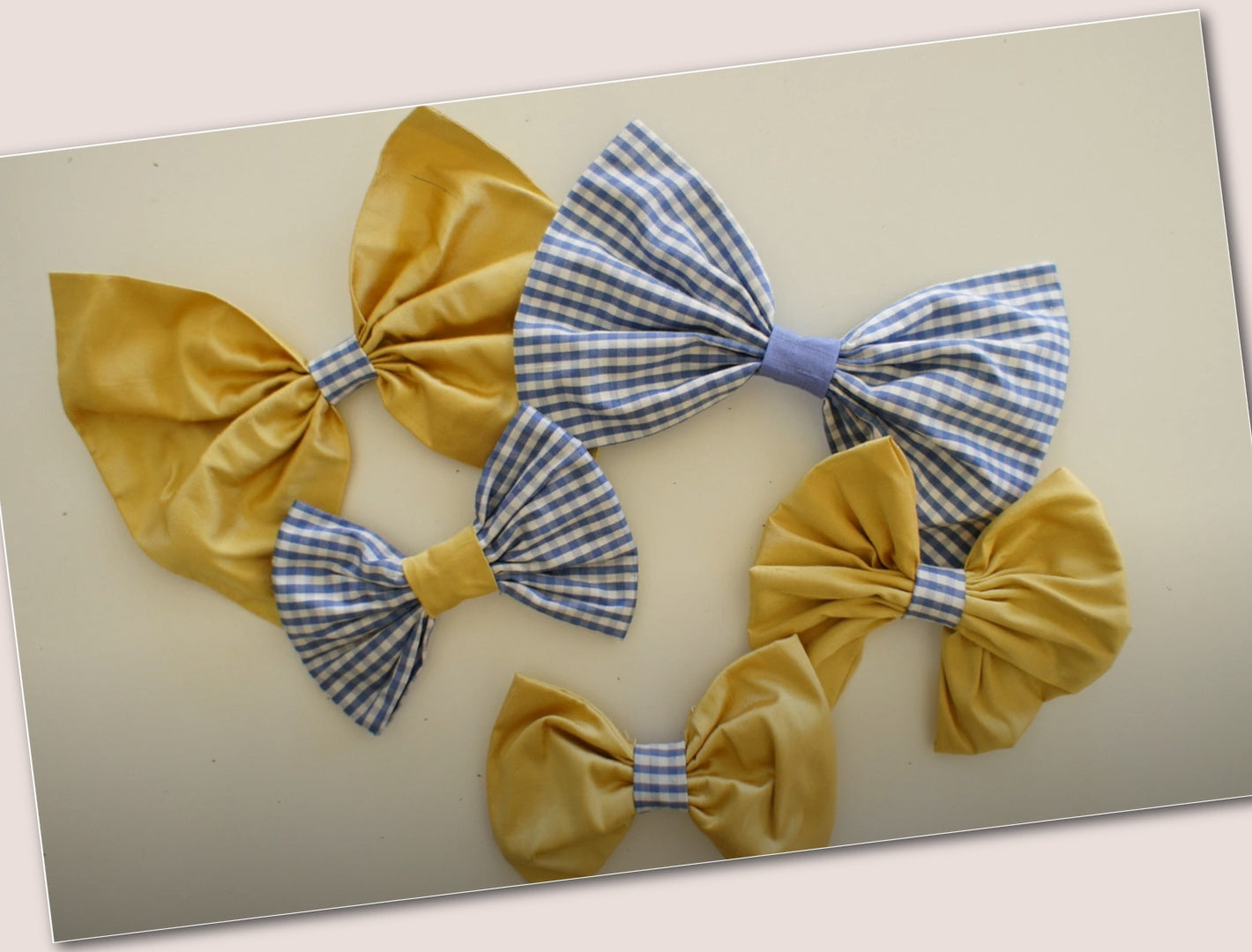
Transcript for the video: Flower Girl Dress - How to Sew a Bow

Hello colleagues, with a new video I'm going to show you how to make a bow with or without a sewing machine.

You need either an A4 piece of paper or a letter size paper. Letter size works really well as it is.

Cutting the Fabric

Take your paper, place it on the fabric you want to use, and simply cut it out.

Bow 1: No Sewing Machine Method

For the first bow, we are not using a sewing machine.

All we're doing is turning in the shorter edges of the fabric in the middle so it catches slightly, not too much.

Then we fold it over from both sides so it does not come apart.

Now I have my needle ready and I am going through the center, doing a running stitch up and down, up and down.

I get quite impatient when things are not fast enough, and my needle is actually quite blunt here, but I do not want to change it right now, so we will just finish this.

Now gently pull the thread so it gathers in the center.

Wrap this around the middle and secure it.

That actually worked quite nicely. If you do not have an overlocker, this is a good way to stop raw edges from peeking out.

Center Band for the Bow

For the center of the bow, you use a piece of fabric about 3.5 cm wide or 1.3 inches.

Iron the edges in so the center strip is about 1.5 cm wide.

Place it over the bow with the good side facing up.

Then simply sew it to the back of the bow in the center.

It is very simple. Even students can do this, and they enjoy wearing it afterwards, especially in textiles lessons where they have to wear school uniform.

The boys were not as excited about the bows. They preferred making juggling bags.

And there we have it, a beautiful little bow.

You can make them in all sorts of fabrics and they will all come out slightly different.

Bow 2: Sewing Machine Method

Now we are going to do the second version using a sewing machine.

Again, use a letter size sheet of paper or an A4 sheet. This will make a slightly larger bow.

Place the two shorter edges of the fabric on top of each other and sew from one end to the other, leaving a turning gap. This gives you a larger bow than the hand-sewn version.

I have sewn across and left a turning gap.

Now we make sure the seam sits in the center and fold it down one way.

We close the sides so there are no visible stitching edges on the outside.

Turn it through the gap and press it.

Now we form the bow. It is very easy.

You can choose to go lengthwise or widthwise depending on the look you want. One gives a longer bow, the other a wider bow.

Because my stitching line is here, it is easier to go this way.

Now we go through the center.

In this case, you actually want the center to be quite stiff. It works better that way.

I think I will make a really big bow using this checked fabric.

Oops, mistakes happen to everyone. Let's try again.

Now I pull it tight like before, making sure it is even.

Wrap it around the center again.

Then I will cut and finish it in a moment.

And there you have it, two beautiful bows. One is slightly larger because it is sewn through, and the other is smaller because it is folded.

Final Note

I have also created a full course on the flower girl dress. This is part of that course, available at frocksandfrolics.com and also on the YouTube playlist.

If you are making your own wedding pieces, I hope you enjoy it and have a wonderful time doing so.

Thank you for watching.

Bye.

YOU MAY ALSO LIKE

Flower Girl

SHOP NOW

Isabella

SHOP NOW

Princess

SHOP NOW

Vivienne

SHOP NOW

Vivienne

SHOP NOW