LOLLIPOP ROMPER
LOLLIPOP ROMPER
Couldn't load pickup availability
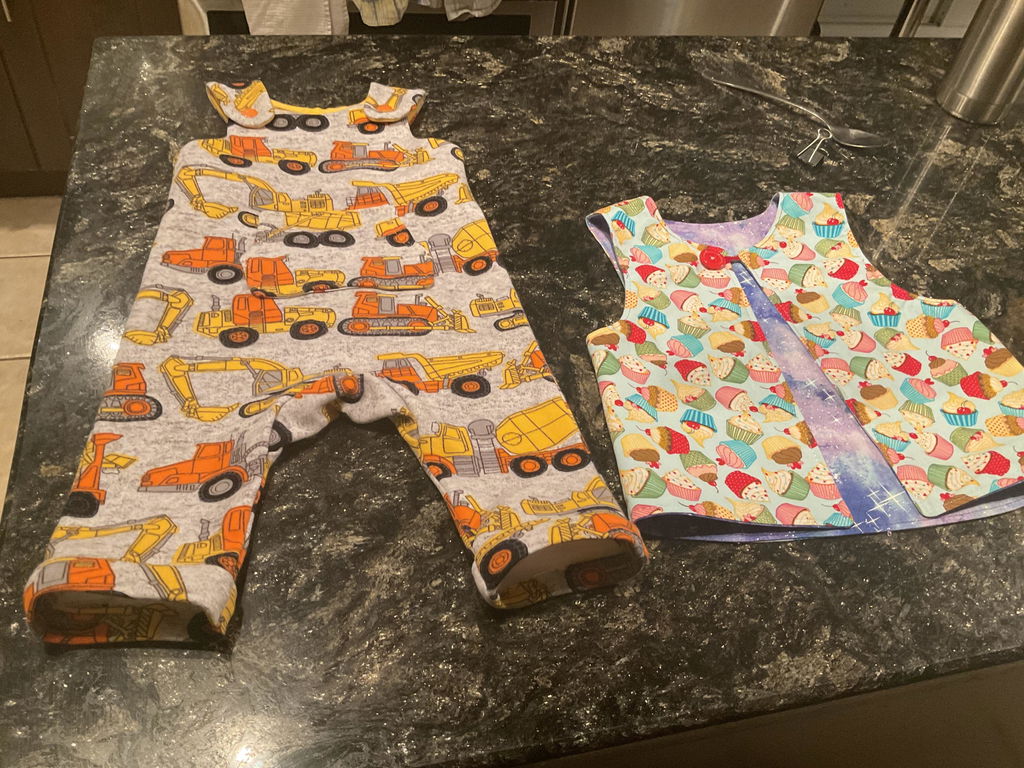
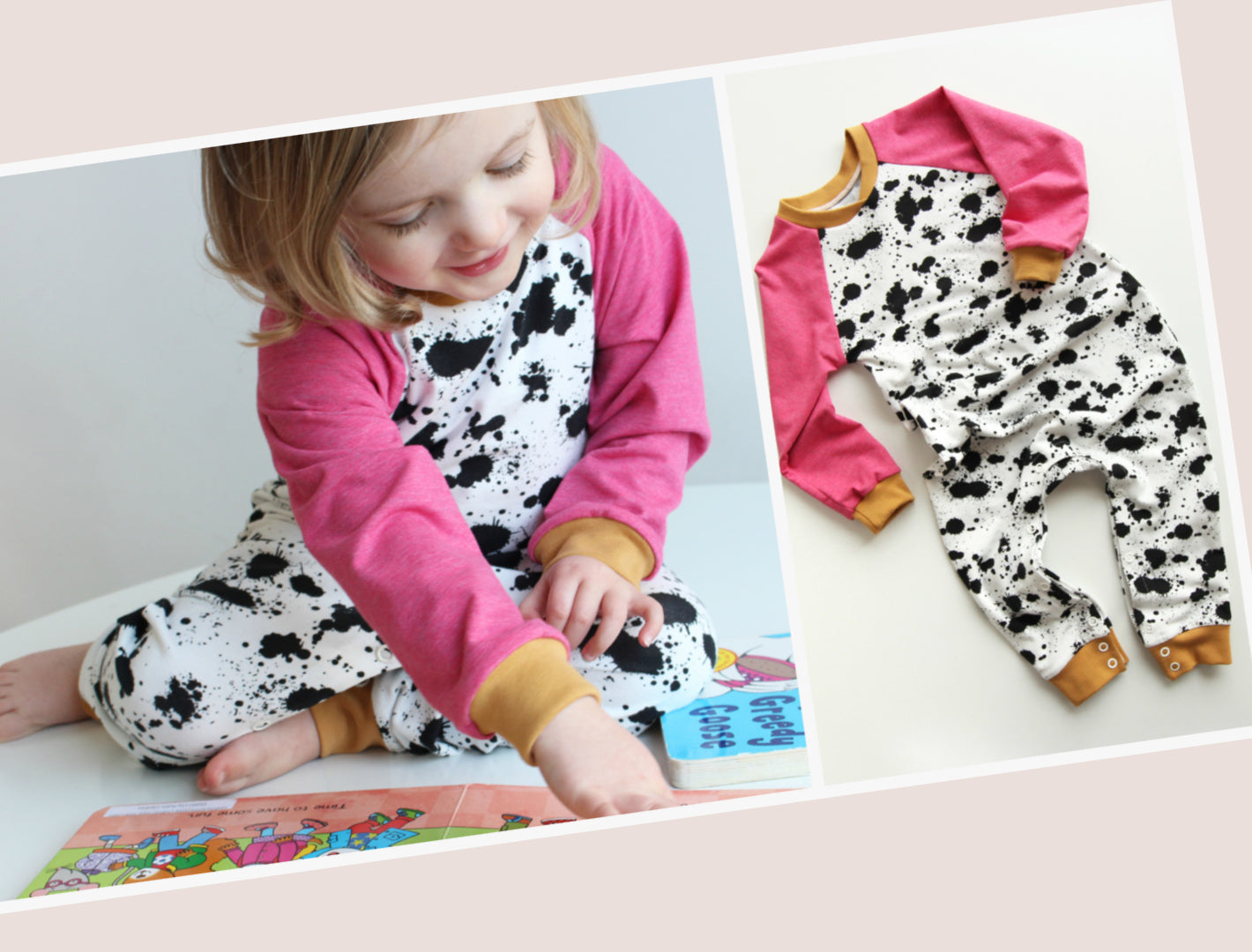
The Lollipop Romper, is the sweetest little PDF sewing pattern for babies and toddlers. Of course I am a little biased but it ticks all the boxes. The raglan sleeves, and handy inner leg snaps work beautifully as cozy pajamas, a cheerful jon‑jon, or an everyday gender‑neutral playsuit.
While the Lollipop Romper isn’t our easiest project, it is packed with support. You’ll find clear video tutorials and a friendly eBook that takes the mystery out of sewing with knits. Scroll down to the video tutorials and see if it’s the perfect next step for you — or one to bookmark for just a little later.
Pattern Download Includes
- Instant Download
- DIN A4 & US Letter Size
- Individual PDF files for every Size
- All Sizes included
- Detailed eBook
- Video Tutorials
Design Options
Design Options
- Snap closure on leg placket
- Gusset for comfort
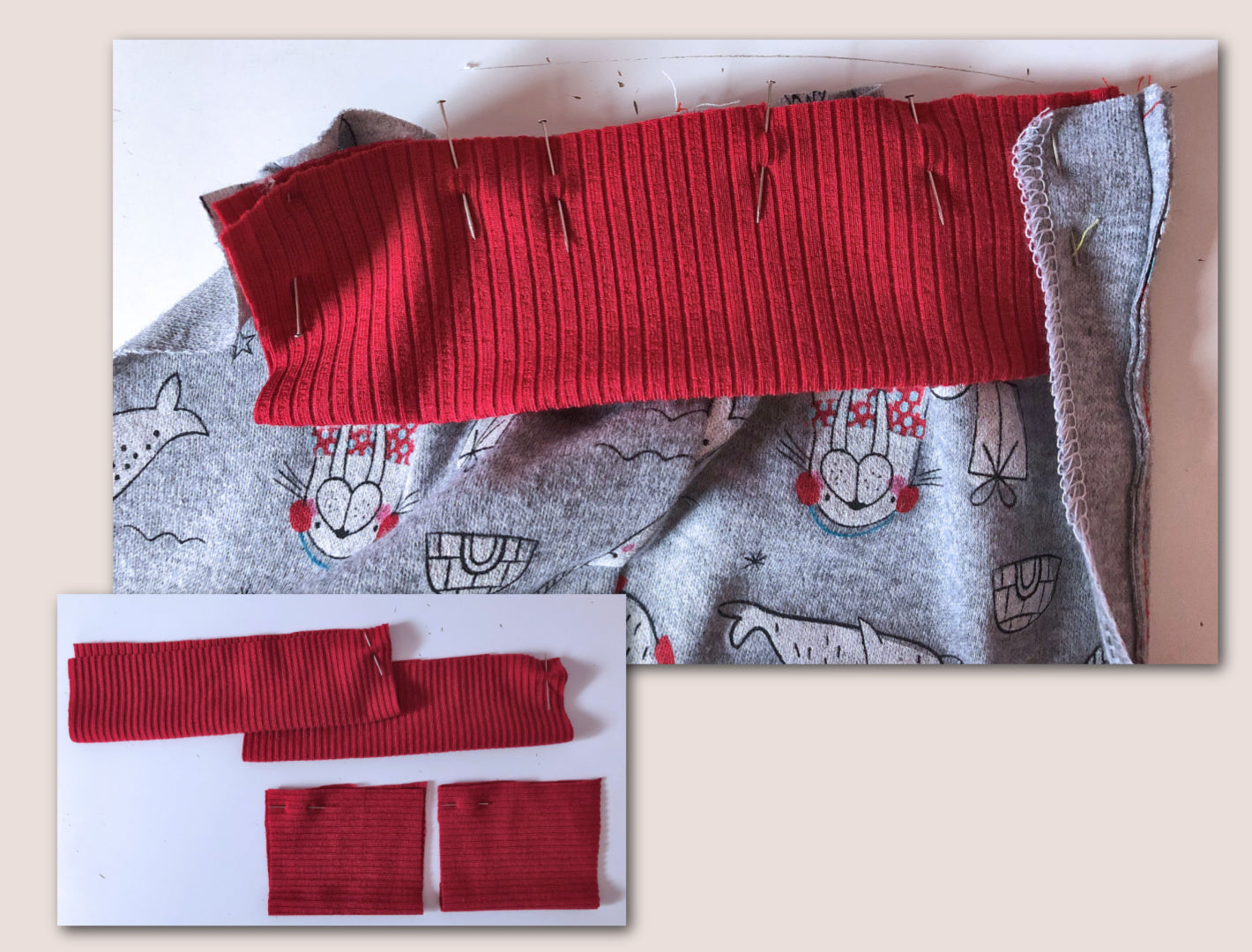
- Cuffs on sleeves and legs in ribbing or interlock
- Neckband in ribbing or interlock
- Raglan sleeves
Fabric Requirements
Fabric Requirements
BEST MATERIAL CHOICE
Interlock and four way stretch fabrics with good recovery.
FABRIC REQUIREMENTS
• Shell Fabric: You will need 20–36 inches (50cm-90cm)
• Cuffs and Neckband: 8 inches (20cm)
• KamSnaps or snap poppers for the seam placket closure
Available Sizes
Available Sizes
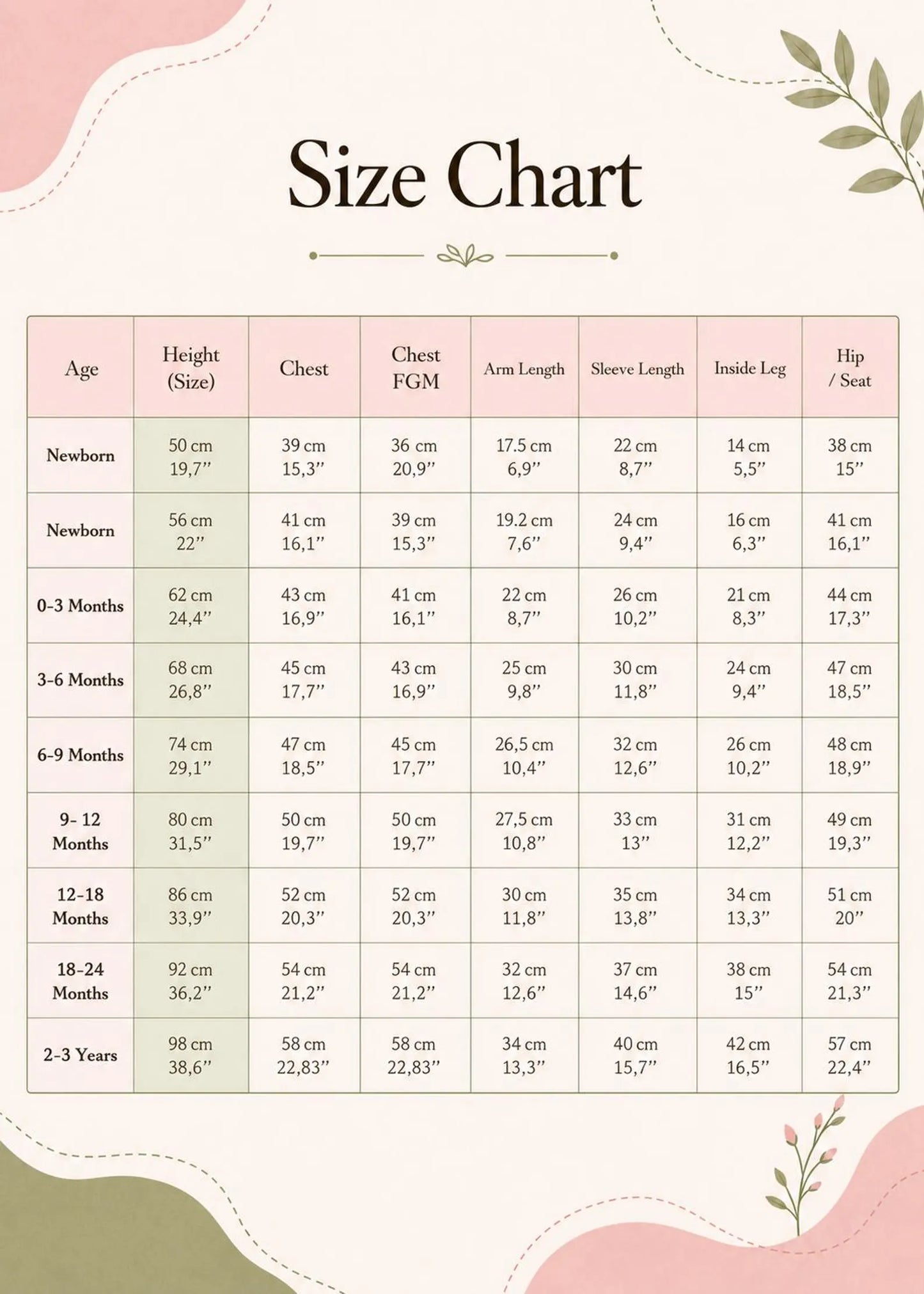
Suitable for babies and toddlers from 0 - 3 Years.
Please Read
Please Read
- This is a digital pattern or PDF file, not a physical product. It will be delivered electronically via a download link delivered to the email used for the purchase.
- To ensure the pattern prints at its actual size, it's recommended that you use Adobe Acrobat Reader.
- The pattern creator, Frocks & Frolics, welcomes small-scale production using their patterns.
Customers are encouraged to tag Frocks & Frolics when sharing projects made using their patterns on social media.
@frocksandfrolics #frocksandfrolics
Share

STEP-BY-STEP VIDEO TUTORIALS
VIDEO TEXT
Welcome to the Romper Course
Transcript for the video: Lollipop Romper - Introduction to the Project
Hi everyone, welcome to the romper course. I’m going to take you through everything you need to know to make a beautiful romper. If you don’t know me already, I’m Marina. I live in LA with my husband, and my grown-up son also lives nearby in Burbank. I run this business making patterns and videos, and I absolutely love it.
This romper project really surprised me—I didn’t think it would be my kind of thing, but I’ve ended up loving it, and I have many more designs planned.
Overview of the Romper Design
This romper has long sleeves and long legs, making it super comfy for babies. It features cuffs on both the sleeves and legs, plus a lovely crossover neckline.
In this course, we’ll go through: fabric selection, suitable snaps, cuff materials, neckline options, and how to build the whole garment step by step.
Choosing the Right Fabric: Stretch Basics
When buying fabric, especially knits, there are two main types: two-way stretch and four-way stretch. Four-way stretch goes both horizontally and vertically, while two-way stretch only stretches in one direction.
You also need to consider fiber content. Cotton knits may stretch, but they often lack recovery—which means they don’t bounce back well after being stretched. That affects fit and durability over time.
A good stretch fabric should contain about 3–5% elastane (also called Lycra or spandex). For this romper, we aim for about 25% stretch. A simple test: mark 10 cm of fabric and stretch it to about 12.5 cm—this tells you it’s suitable.
If it stretches much more than that, it’s closer to swimwear or activewear fabric.
Fabric Types for This Romper
The most common knit is jersey. It may curl slightly at the edges, and thicker jersey is generally easier to sew.
Check fabric weight when buying online. For rompers, you want lightweight to medium-weight jersey—avoid anything too thin or too heavy.
A personal favorite is interlock knit, which is created by two layers of jersey knitted together. This makes it more stable and identical on both sides. It’s also great if it has a bit of Lycra for stretch and recovery.
Interlock is especially useful for baby garments because it’s soft, stable, and easy to work with.
Cuffs and Neckline Fabric
For cuffs and the neckline, you need a fabric with strong recovery. Ribbing is ideal because it can stretch up to 50% and snap back into shape easily.
Interlock can also be used if you don’t want thick ribbing. It still provides good stretch and a smoother finish.
Avoid using the same fabric as the body unless it has enough stretch and recovery—otherwise the cuffs won’t hold their shape.
Snaps and Closures
For closures, you can use either plastic snaps or Kam Snaps.
I tested inexpensive snaps from Amazon, but they were unreliable. A better option is using a proper tool like the Dritz snap pliers, which gives much more consistent results.
Joann’s snaps are also available, but they can be expensive and not always durable.
Kam Snaps are a great alternative and work very well for rompers, especially along the front or inseam.
Summary of Key Requirements
For the romper body:
- Two-way stretch fabric minimum (four-way stretch is even better)
- 25% stretch is ideal
- 3–5% Lycra/spandex content recommended
For cuffs and neckline:
- Ribbing or interlock
- High recovery (around 50% stretch preferred)
For closures:
- Kam Snaps or quality plastic snaps recommended
- Use a proper snap tool for best results
Next Step
Now that we’ve covered fabric and materials, we’ll move on to the pattern and construction in the next section of the course.
Introduction and Materials
Now we’re going to make a really sweet romper, and here’s what you need. For the cuffs and neckband, I’m using a rib jersey with four-way stretch—it’s soft, flexible, and ideal for baby wear. For the main body, I’m using a two-way stretch fabric from Joann’s. It’s not the best quality, but it’s what was available, and it’s soft with a nice print. Ideally, an interlock fabric would be best if you can find it.
You’ll also need metal snap fasteners. I’m using Dritz tools, but the metal snaps from Joann’s are quite expensive, so I recommend sourcing them from Amazon or directly from suppliers online for better value.
Needles, Thread, and Tools
For sewing knit fabric, use a super stretch needle (size 70 or 80). It has a rounded tip that prevents skipped stitches when sewing jersey.
For thread, I always use Gütermann because it’s strong and reliable. I keep multiple cone colors—white, black, and beige—and use whichever matches best.
Printing and Preparing the Pattern
Print your pattern at 100% scale. Always check the test square (either 1 inch or 5 cm) to make sure your print is accurate.
The pattern pieces are color-coded with flowers to make assembly easier:
- White flower: front
- Pink flower: back
- Yellow flower: sleeve
- Plain pieces: cuffs and gusset
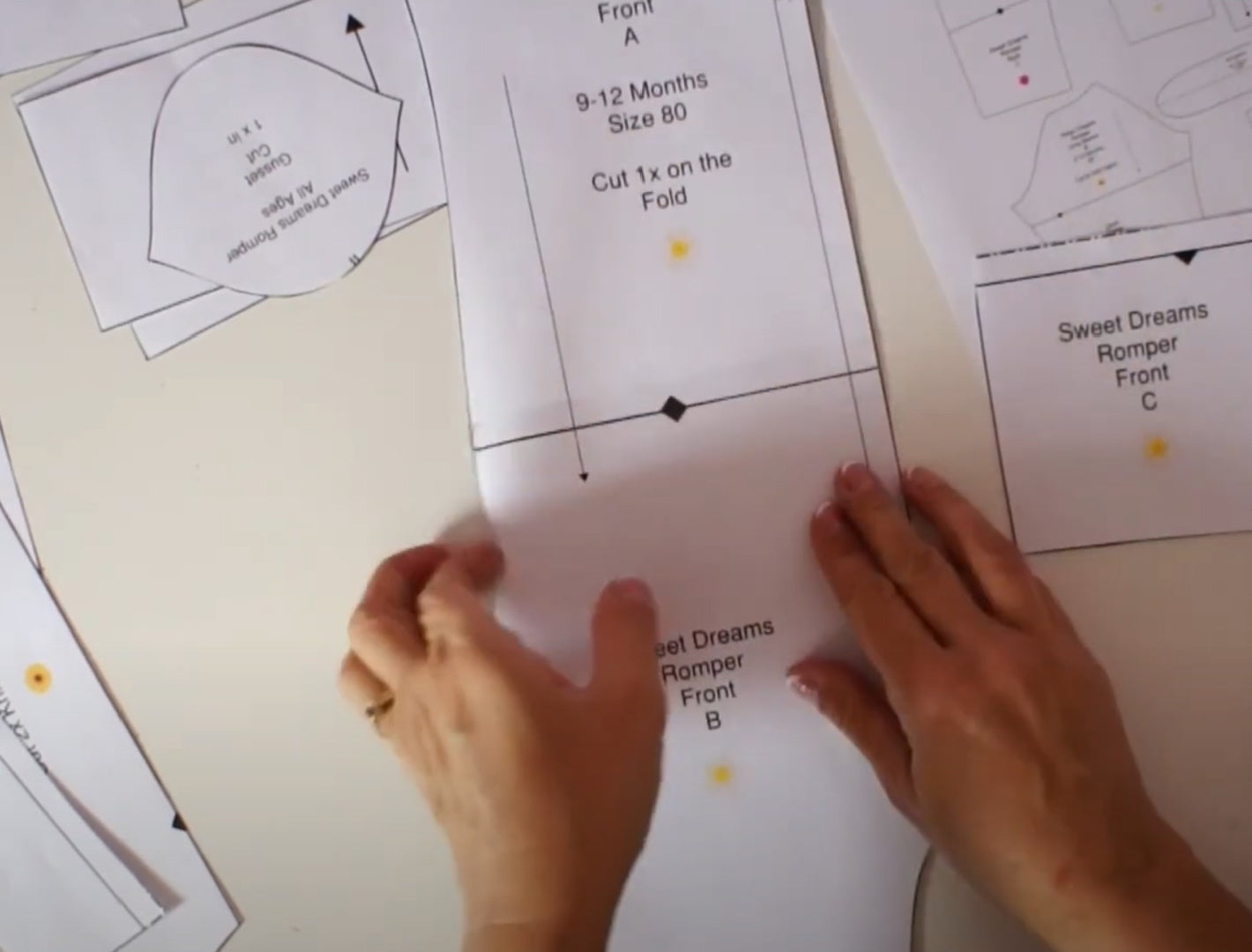
There is also an assembly plan included for each size, since larger sizes require more pages. Cut along all edges, including attachment lines.
Assembling the Pattern
Once printed, match the labeled sections (A, B, C, etc.) and tape them together along the attachment lines. This saves paper and ink since you don’t need full-color printing. Black and white printing works perfectly fine.
Repeat this process for each main piece: front, back, and sleeves.
Understanding the Pattern Pieces
Now let’s look at how everything fits together.
Both front and back are cut on the fold (indicated by the arrow), giving you full mirrored pieces.
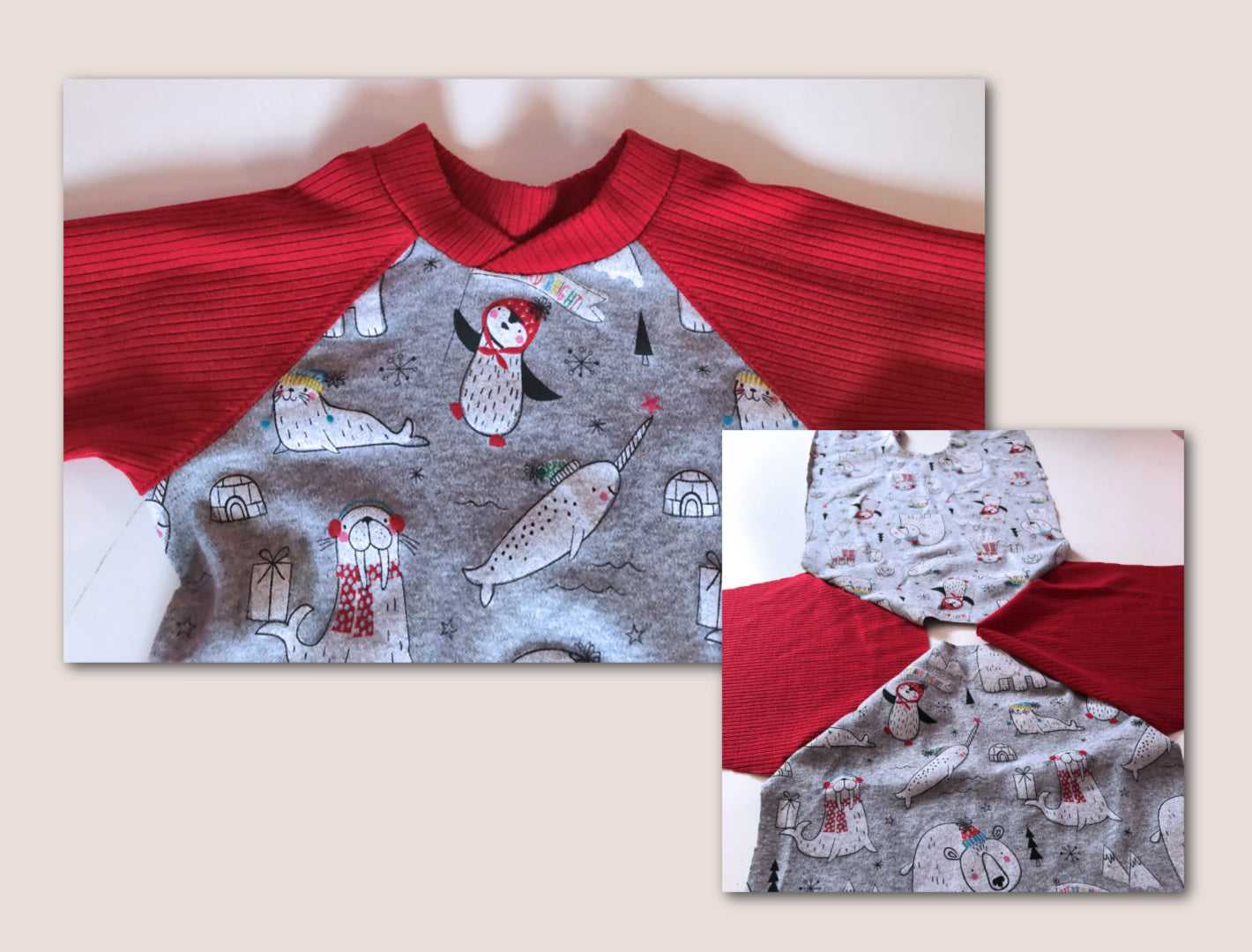
The sleeves are raglan sleeves, meaning they are not set in traditionally. Instead, they attach diagonally between the front and back bodice before sewing the side seams. The front arm curve sits slightly lower than the back, which helps with fit.
Gusset and Inseam Construction
The back inseam includes a curved section where the gusset will be inserted. This gusset allows extra room for nappies and improves comfort and movement.
Once attached, it balances the front and back length so everything aligns evenly.
The gusset is essential for baby rompers and makes the garment much more practical.
Binding and Finishing Details
Binding is used to finish certain edges. There is no separate pattern piece for it—you cut it based on instructions in your guide.
Cut binding on the straight grain (not on the bias) at 5.5 cm width. This keeps it stable for knit fabrics.
Neckband and Cuffs
The neckband is designed to gently pull in the neckline so it holds its shape and doesn’t stretch out over time. It also gives a slightly structured, almost jacket-like finish.
The cuffs are different:
- Wrist cuffs are fully closed before attaching
- Ankle cuffs are partially closed and then attached to the leg openings
Final Overview
Once all pieces are cut and assembled, you’re ready to start construction. The combination of raglan sleeves, gusset design, and stretch fabrics makes this romper both comfortable and practical for everyday wear.
Cutting the Fabric Layout
Transcript for the video: Lollipop Romper - Cutting Out
Now we’re going to cut out the romper. Fold the fabric from both sides for the front and the back pieces. I’m turning mine over here, and I always recommend using only what you need so you can save fabric.
For smaller sizes, you can often get two rompers out of one fabric length—sometimes even three, depending on sleeve placement and layout. The body pieces use the most fabric, so efficient cutting really helps.
Cutting the Main Pieces
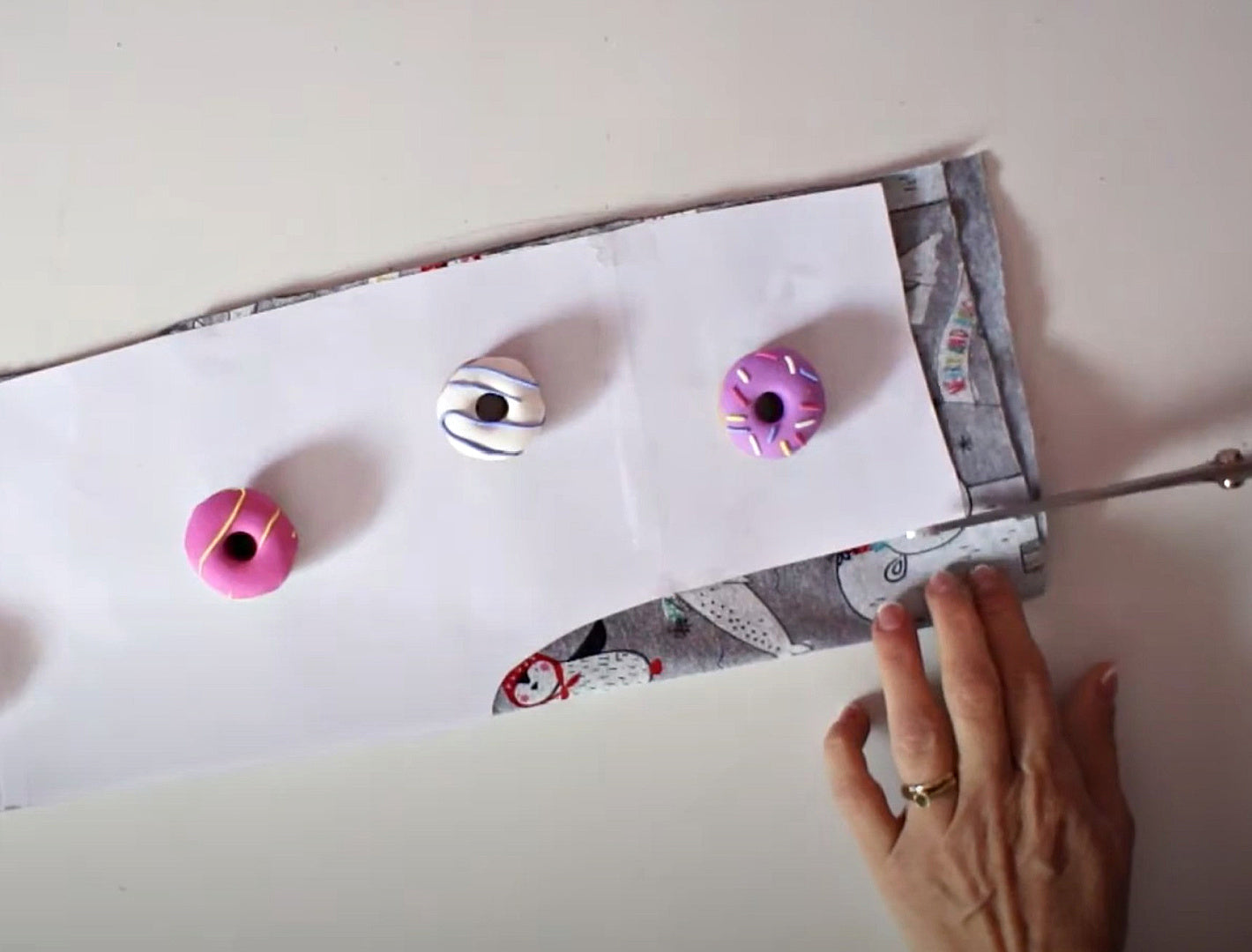
When cutting, keep your scissors on the left side of the paper pattern (for right-handed cutting). This makes it easier to control the fabric and pattern at the same time. Your left hand should hold and guide the fabric while you cut.
Repeat the same process for the back and front pieces, ensuring the fabric is folded correctly according to your layout plan. I’m also using pattern weights here, which help keep everything stable without pins.
Fabric Efficiency and Layout Tips
Try to waste as little fabric as possible. From this single fabric length, I managed to cut two rompers—one size 18–24 months and one size 9–12 months—with some leftover fabric.
This is partly because the sleeves are cut in a contrasting fabric, which saves space on the main layout.
Cutting the Facing
Next, cut the facing pieces, which are also placed on the fold. Lay everything carefully to maximize fabric usage. You can hold pieces in place with weights or pins depending on your preference.
Cutting the Gusset
Now cut the gusset piece. This has two curved edges, and the upper curve is the one that will be inserted into the back leg opening.
Mark the center with a small snip or fold it in half to help with alignment later. This is important so you don’t confuse the top and bottom curves when sewing.
Cutting the Binding
For the binding, you can cut a long continuous strip if you’re experienced, or cut as needed if you prefer working in sections.
The width here is 5.5 cm, cut on the straight grain. The exact length is provided in your pattern instructions, so you can double-check before cutting.
Cutting the Cuffs
Now cut the cuffs. I’m using a ribbed fabric with good stretch and recovery. It wasn’t specifically made for cuffs, but it works very well.
You can also make the entire romper from this type of fabric if you prefer a fully stretchy version.
Cutting the Collar / Neckband
For the neckband, I recommend cutting it as a single piece rather than piecing it together. This helps avoid length inconsistencies and ensures a smoother finish when attached.
Cutting the Sleeves
Finally, cut the sleeves. Use pattern weights again to keep everything in place. Fold the fabric so you can cut a matching pair.
If your fabric is narrow, you may need to cut sleeves individually—just make sure to flip the pattern piece so you get a left and right sleeve, not two identical ones.
Also remember to mark the front of the sleeve with a small snip so you don’t confuse it with the back. The shorter curve always faces the front.
Ready to Sew
And that’s everything cut out. Now we have a full set of pieces ready for sewing, and we can move on to construction.
Preparing and Attaching the Front Facing
Transcript for the video: Lollipop Romper - Inserting the Front Facing
Now we’re going to attach the facing to the front. You can do this later in the process, but I prefer to do it early on. First, overlock around the edge of the facing so it’s neat and finished.
Place the facing onto the front with right sides together. It’s easy to identify the front because the back has a deeper scoop for the gusset.
Sewing the Facing
Sew around the entire edge using a 1 cm seam allowance. Use a standard straight stitch—no need for anything special here because you don’t want this area to stretch.
Gently guide the fabric as you sew without pulling or stretching it. Some patterns use smaller seam allowances, but 1 cm is easier and more consistent, especially if you’re used to it.
Once sewn, trim the seam allowance slightly. This helps reduce bulk and makes turning easier, especially around curves.
Understitching the Facing
Now we’ll under stitch. Fold the seam allowance toward the facing and stitch close to the edge through the facing and seam allowance.
This step is important because it keeps the facing from rolling to the outside and helps the edge stay crisp and flat. Do not stretch the fabric while sewing—the stitch will naturally hold everything in place.
If your fabric is very light, you can add interfacing to the facing for extra stability, but it’s usually not necessary for medium-weight knits. Be mindful not to add too many layers, especially where snaps will be placed later.
Pressing and Shaping
Press the facing thoroughly with steam and heat. This helps set the shape and creates a clean edge. You can also place the pattern piece back on top to check that nothing has stretched out of shape.
If needed, gently steam the fabric back into alignment—this is a normal part of sewing knit garments.
Checking the Front and Gusset Alignment
Once pressed, the front facing is complete. You’ll now see how it sits neatly and holds its shape.
At this stage, you can also check how the gusset aligns when folded up. The lengths should match and sit smoothly together, confirming everything has been cut and assembled correctly so far.
Next Step
We’re not topstitching yet because the cuffs still need to be attached first. Once those are in place, we’ll return to finish the edges.
Transcript for the video: Lollipop Romper - Inserting the Gusset
Preparing the Gusset
Now we’re going to insert the gusset. Start by marking the two snips at the top, and also mark the center of the gusset. Do the same on the leg opening so everything aligns correctly.
Fold the gusset in half so you clearly know which side is the top and which is the bottom. This helps prevent mixing up the orientation during sewing.
Pinning the Gusset
Begin pinning the gusset into the leg opening. Work slowly and carefully, swiveling the fabric as needed so it fits smoothly into place.
Stop slightly before the edge—about 0.5 to 0.7 cm short. This is important because later we will add binding, and if you sew all the way to the edge, you’ll end up with too much bulk in the binding.
Take your time easing the fabric in. It’s similar to setting in a sleeve—you may need to gently distribute the fabric so it sits evenly. With knit fabric, a slight stretch can help, but don’t force it.
Sewing the Gusset
Sew around the gusset using a 1 cm seam allowance (or foot width if you prefer). Go slowly and ensure everything stays aligned as you sew.
Once sewn, overlock the seam allowance to finish the edge. Keep the overlocking slightly closer to the seam line rather than too wide, so it doesn’t add unnecessary bulk.
Pressing the Seam
Press the gusset thoroughly with steam. This step is essential—do not skip it. Press from both sides to help the seam settle flat and smooth.
Good pressing makes a huge difference in how the garment behaves later, especially in stretch fabrics.
Fabric Notes and Fit Check
When you flip the gusset into place, it should align cleanly with the front piece. If everything has been cut and sewn correctly, the lengths will match perfectly.
This fabric behaves a bit like interlock due to its thicker knit structure, but because it is cotton-based, it may shrink after washing. Interlock-style knits are more stable and resist stretching and shrinking, which is why they are often preferred for baby garments.
Next Step
Once pressed and checked, the gusset is fully in place and we can move on to the next stage of construction.
Preparing the Binding
Transcript for the video: Lollipop Romper - Preparing the Binding
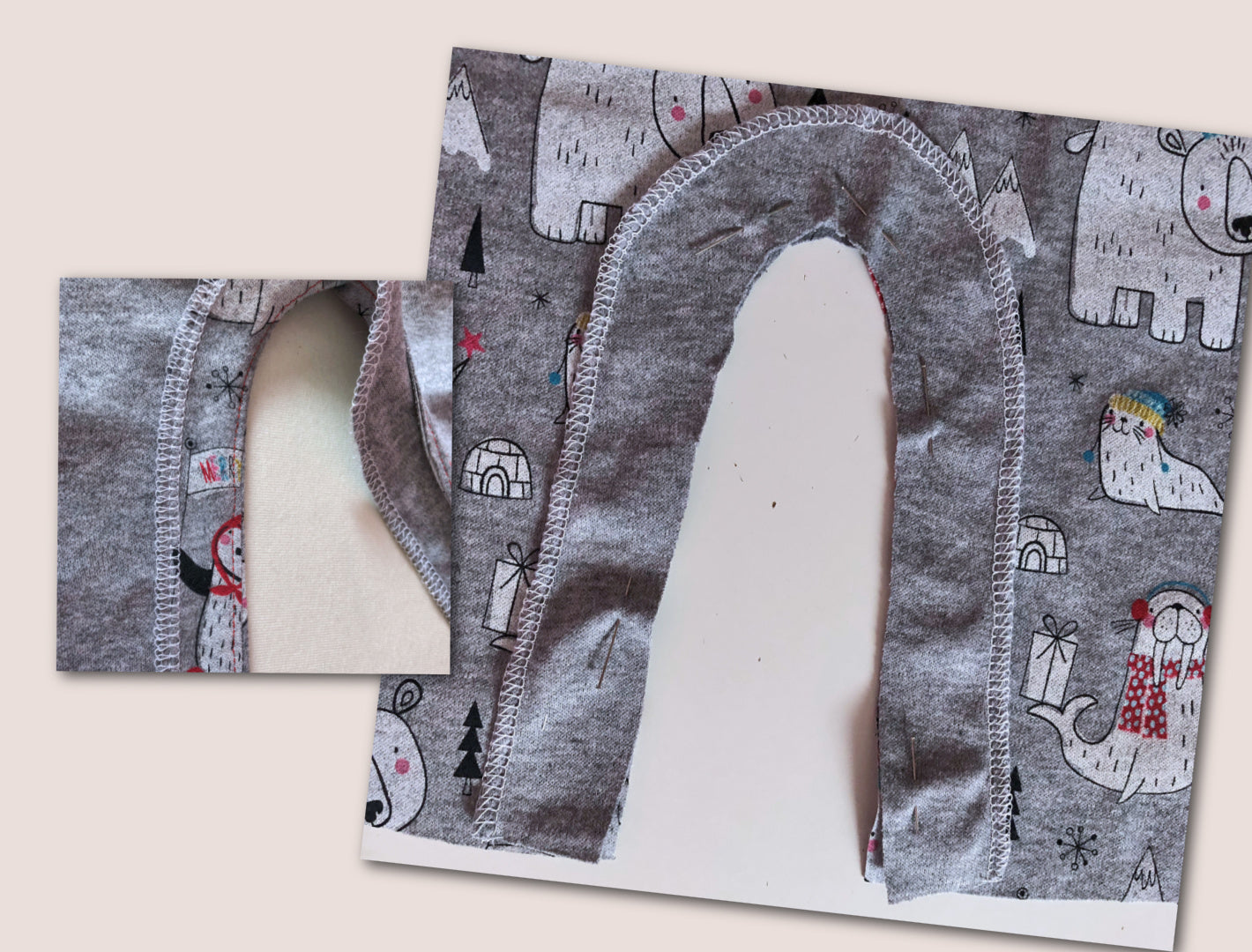
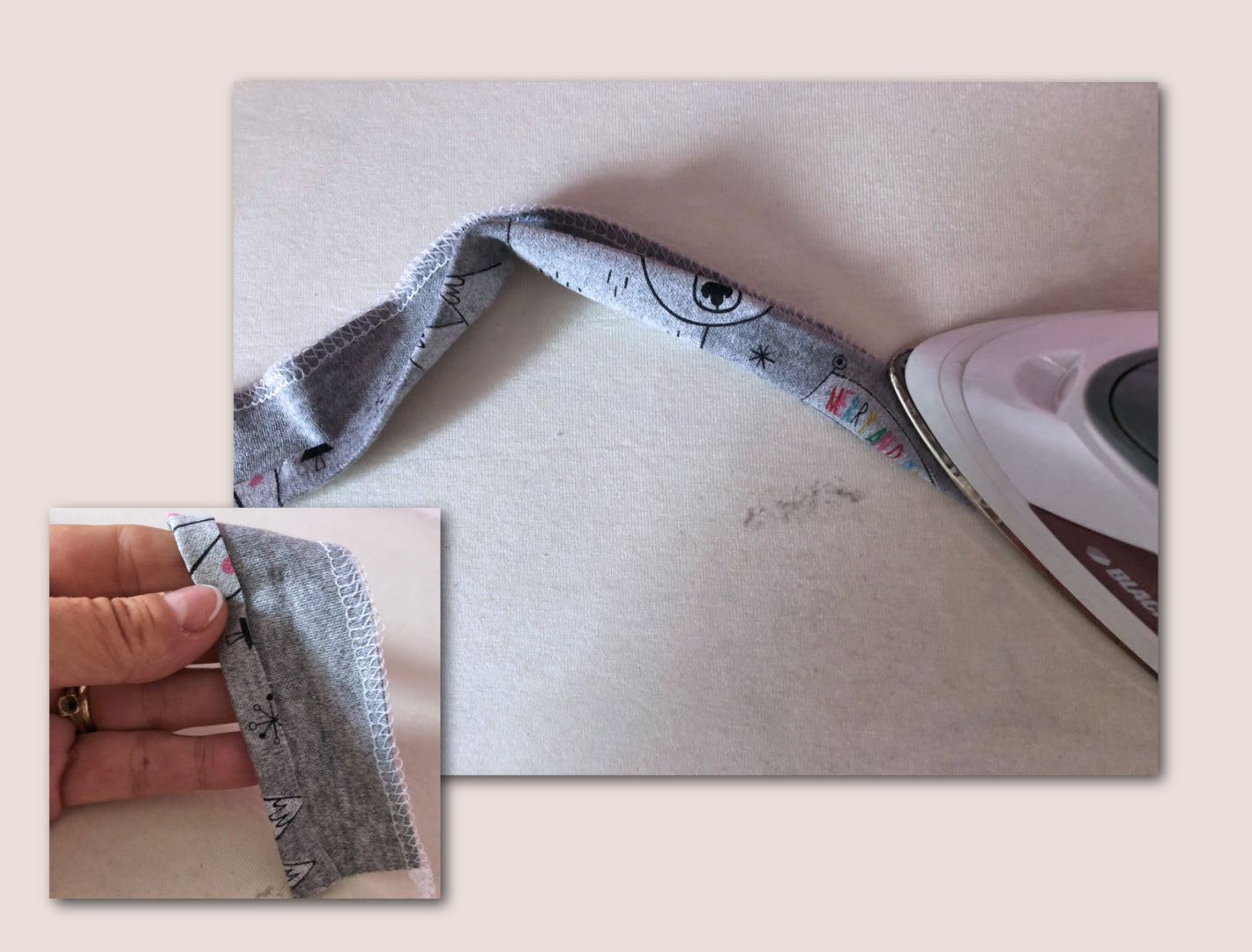
Now I’m going to prepare the binding that will go around the back of the leg. First, overlock one long edge of the binding. Be aware that this can stretch the fabric slightly, so it’s very important to steam it back into shape afterward. Press it well so it lies flat again—this step helps prevent distortion later.
Folding the Binding
Next, turn in the opposite raw edge by about 1 cm (you can go slightly less if needed). It doesn’t need to be exact, as a slightly narrower binding still works fine.
Now fold the binding so that the turned edge wraps over the overlocked edge. This creates a clean enclosed finish, with the overlocked edge hidden underneath and the folded edge sitting neatly on top.
Attaching the Binding
When sewing, the binding will be placed so that the overlocked edge is caught underneath your topstitching. This gives a clean, durable finish along the back leg opening.
Take your time to keep everything even as you sew, ensuring the binding fully covers the raw edge underneath.
Final Check Before Assembly
Once the binding is prepared and pressed, the leg opening is neatly finished and ready for the next stage.
From here, we can move on to preparing the front and back pieces before assembling the romper.
Inserting the Sleeves
Transcript for the video: Lollipop Romper - Inserting the Sleeves
Now we’re going to insert the sleeves into the romper, and it’s a very simple step. You can already identify the front and back of your pieces—the back has a deeper scoop, while the front is flatter and includes the facing.
Match the front of the sleeve with the front of the romper. Place them right sides together and pin into position. If you’re experienced, you might sew without pins, but I recommend at least one pin at the beginning to avoid confusion while sewing.
Sewing the Sleeves
Sew using a standard straight stitch. You don’t need a zigzag or stretch stitch here because the fabric already has natural give, and we don’t want this seam to be overly elastic.
Take your time and guide the fabric gently without pulling. The knit will ease itself in as you sew.
Repeat the same process on the other sleeve, ensuring both are aligned correctly with right sides together.
Overlocking the Seams
Next, overlock the seams. You can trim slightly as you go to reduce bulk, especially before joining side seams later. Keep the seam allowance a bit narrower so everything sits smoothly when assembled.
You’ll notice the fabric still stretches slightly as you sew—that’s normal and expected with knit fabric.
Pressing the Seams
Press all sleeve seams toward the sleeve using plenty of steam. This step is essential for a clean finish and helps the seams settle properly.
You can also check alignment at this stage by laying the pattern piece on top to ensure nothing has stretched out of shape.
Topstitching the Sleeves
Now we topstitch the sleeve seams. You can topstitch either on the sleeve side or the body side—both methods work, but I personally prefer whichever gives better control over the fabric.
Use a stitch length of at least 3.5 to 4. Do not stretch the fabric while sewing. Instead, gently guide it and allow it to feed naturally through the machine.
Use the markings on your presser foot to keep your stitching straight and consistent.
Final Press
Once topstitched, steam everything thoroughly again so the seams lie flat and smooth.
At this stage, the sleeves are fully attached and stabilized, and we’re ready to move on to the next construction step.
Preparing the Neck Band
Transcript for the video: Lollipop Romper - The Neckband
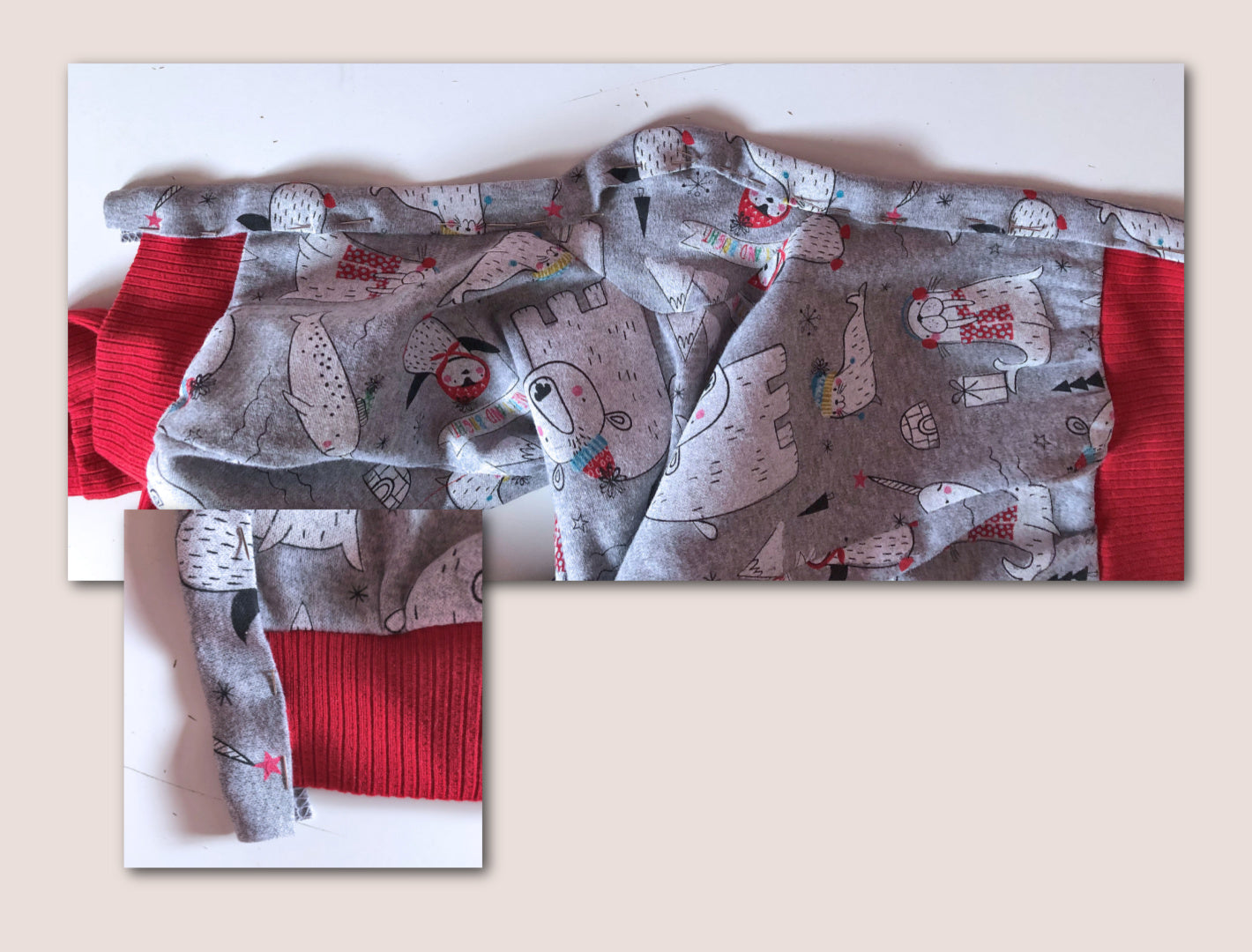
Now I’m going to attach the neck band. First, mark the center front and center back of both the romper and the neck band so everything aligns properly.
Take the neck band and fold it lengthwise in half, then press it. The right side should be facing outward since this band will not be turned later.
Attaching the Front Overlap
At the front, overlap the neckline edges by about 3 cm total (around 1.5 cm on each side). A little more or less is fine, but try to keep it balanced.
Secure this overlap either with a few stitches on the machine or by hand stitching to hold it in place before attaching the full band.
Pre-Stretching and Testing Fit
Before sewing, gently stretch and steam the neck band. This helps it sit more smoothly and makes it easier to fit into the neckline later.
A useful tip: you can even slip the neckline over the child’s head at this stage to check ease. This helps you gauge how much stretch you’ll need when sewing it in.
Pinning the Neck Band
Match the center front of the neck band to the center front of the romper, and do the same at the back.
Work from the inside of the garment so you can easily remove pins as you sew. Avoid pinning from the outside to keep everything neat and controlled.
Because the band has already been slightly stretched, you’ll need very little additional easing as you pin it in place. This helps prevent distorted or wavy necklines.
Sewing the Neck Band
Sew using a triple stretch stitch (the stitch with three parallel lines). This provides strength and flexibility for knit garments.
You will need to gently stretch the neck band as you sew so it matches the neckline length. Without this, the neckline may end up too tight and difficult to pull over the head.
Remember: the original neckline is smaller than the head opening, so controlled stretching during sewing is essential.
Pressing and Finishing
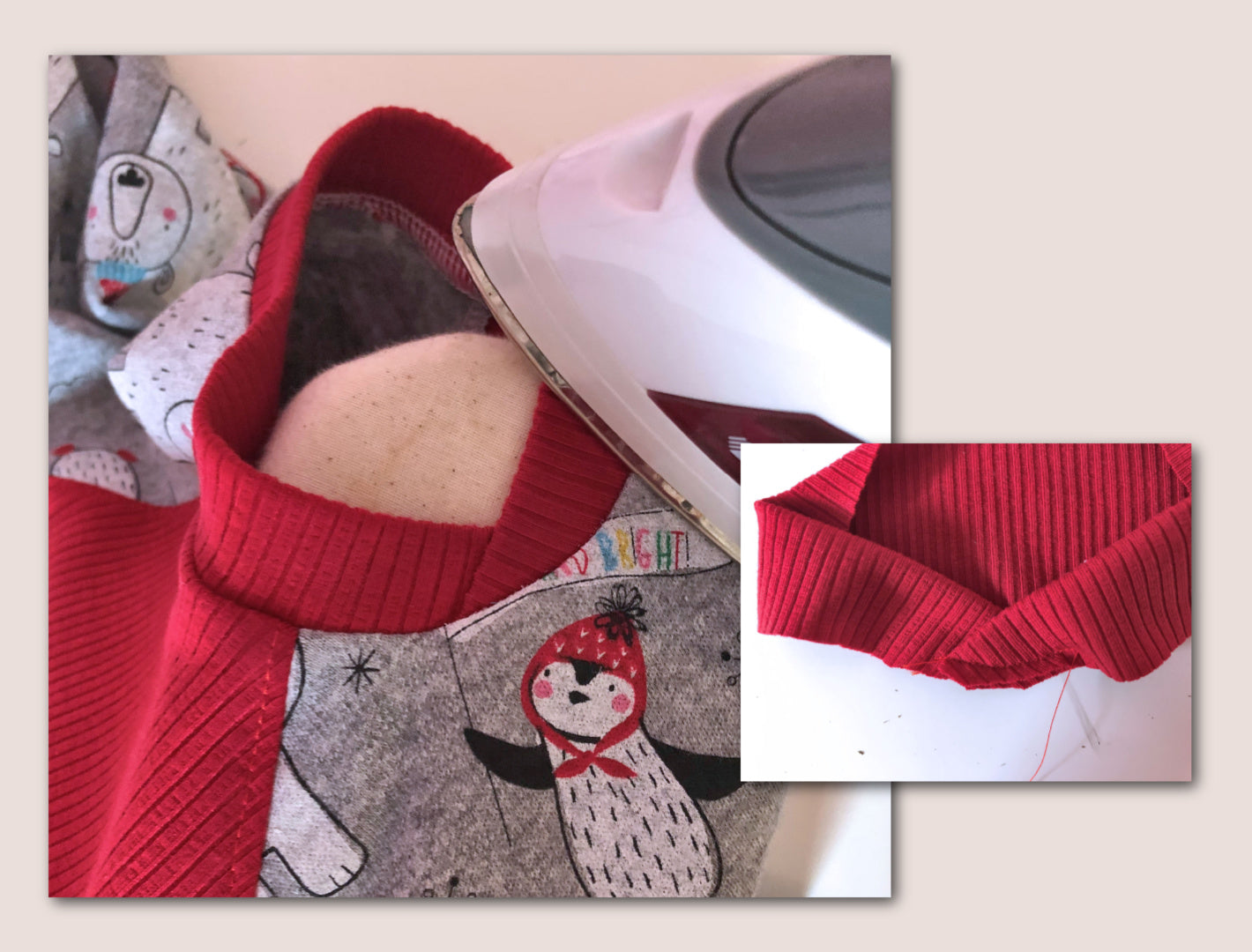
After sewing, steam the neckline thoroughly and press the seam allowance inward into the romper.
If you notice any slight stretching or waviness, use steam to gently shrink it back into shape. This is a normal and important part of working with knits.
At the front overlap, the structure naturally helps pull the neckline into shape, creating a clean finish.
Make sure the seam is pressed inward toward the body for a neat interior.
Next Step
Once the neck band is complete and pressed, the neckline is fully finished and stabilized.
We’re now ready to move on to closing the side seams.
Closing the Side Seams
Transcript for the video: Lollipop Romper - The Side Seams
Now we’re going to close the side seams in one continuous step, which makes this really quick and simple. Take the underarm seam of the sleeve and match it with the side seam of the romper. Place them right sides together and secure with a pin if needed.
Most of you won’t even need to pin this—you can go straight to the sewing machine. I’m pinning it here just so you can clearly see the alignment.
Sewing the Side Seam
Sew from the leg opening all the way up to the end of the sleeve using a standard straight stitch. There is no need for a zigzag or specialty stretch stitch. A normal stitch works perfectly well on knit fabric because the fabric already has natural stretch.
You can gently ease the fabric as you sew, but do not pull or stretch it excessively. It will feed through the machine naturally.
If you have a serger or overlocker, you can sew and finish the seam in one step, which is even faster and cleaner.
Overlocking and Trimming
After sewing, overlock the seam to finish the raw edges. You can trim slightly as you go to reduce bulk, especially in the underarm area where multiple seams meet.
A narrower seam helps the garment sit more comfortably and reduces unnecessary thickness.
Pressing the Seams
Press the entire seam toward the back of the garment. This is an important sewing rule that helps everything sit neatly and consistently.
Take your time with pressing—it makes a big difference to the final finish.
Final Step Before Cuffs
Once the side seams are complete and pressed, the romper is now fully assembled in its main structure.
The next step is to attach the cuffs.
Preparing the Cuffs
Transcript for the video: Lollipop Romper - The Cuffs
Now we’re going to work on the cuffs, and they’re constructed in two different ways. The wrist cuffs are closed on the short edges first—so you sew the short ends together using a standard straight stitch. I gently stretch the fabric just a little as I sew to help with recovery, but the machine will also naturally handle most of the stretch.
Making the Wrist Cuff
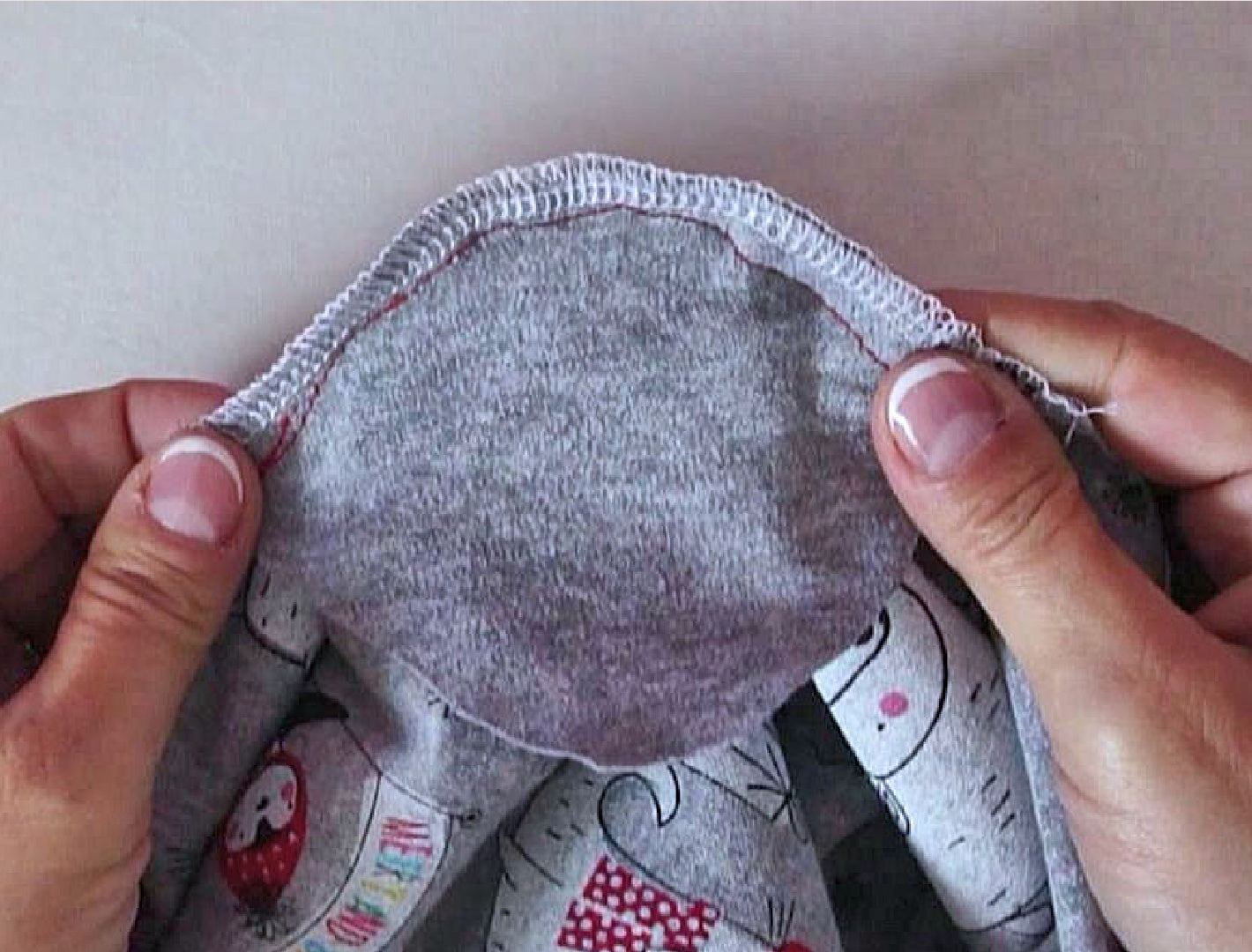
Once the short ends are sewn, press the seam open, then trim back the seam allowance slightly to reduce bulk—especially with thicker ribbing. Fold the cuff in half lengthwise so the raw edges meet, and press it flat. This completes the wrist cuff and it’s now ready to be attached.
Making the Ankle Cuff
The ankle cuff is done slightly differently. Place the long edges together with right sides facing, and sew down one side only. When sewing, come in about 2 mm at the start of the seam to avoid a small “corner bump” that can stick out later. It may look slightly uneven at first, but once pressed, it will sit perfectly straight.
After sewing, trim back the seam allowance to reduce bulk and press the seam flat. This helps the cuff sit neatly when attached to the leg opening.
Attaching the Wrist Cuff
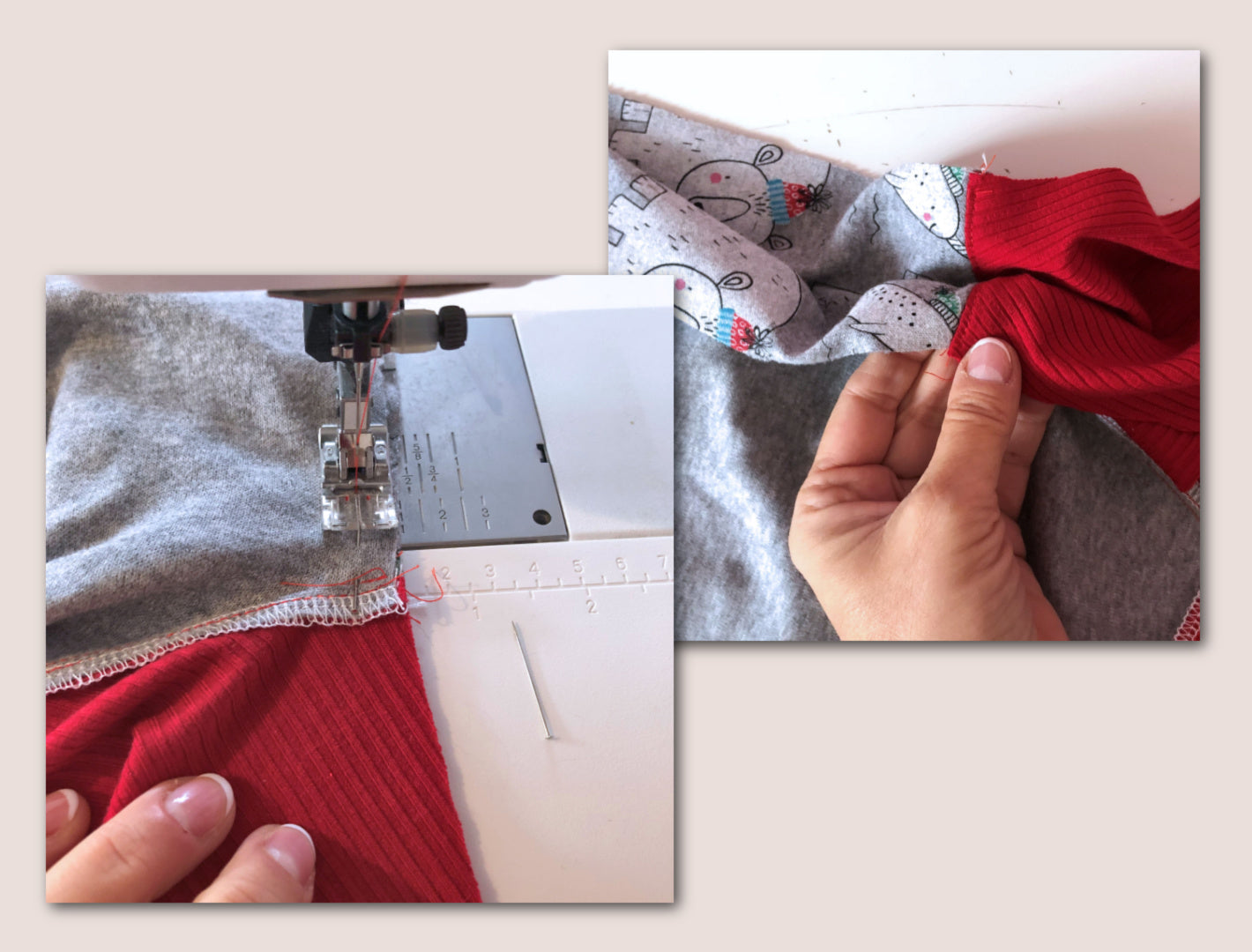
Turn the romper inside out. Match the cuff seam to the sleeve seam and pin in place. Use one or two vertical pins and stretch the cuff gently to fit the sleeve opening evenly.
No need for heavy marking—this is a small circumference, so simple alignment works best. Sew using a standard straight stitch, guiding the fabric gently without pulling it. A foot-width seam allowance works well here.
Pressing and Finishing the Sleeve Cuff
Once attached, overlock the seam to finish. Then press thoroughly with steam, first from the inside and then from the outside. Use steam rather than direct pressure at first to ease the fabric into shape before pressing flat.
This helps the cuff settle neatly and gives a professional finish.
Attaching the Ankle Cuff
Now for the ankle cuff, which uses a slightly different technique. The finished edge should align with the front facing, while the open edge attaches to the back leg opening.
This creates a wrap-style closure that is both functional and comfortable for movement. Stretch the cuff gently as you sew so it fits evenly around the leg opening—there should be a slight ease for comfort.
You can sew without pins if you’re experienced, but pinning is fine if you prefer more control.
Wrapping and Securing the Cuff
Once sewn, wrap the facing around the cuff so it encloses the seam neatly. Trim corners slightly if needed to reduce bulk, especially where snaps will be placed later.
Overlock the seam to secure everything, then press again with steam to smooth it out and shape the curve properly.
Pressing and Final Adjustment
After overlocking, ensure everything lies flat before turning. This step is important for a clean, professional finish.
Once turned, you should see a smooth, structured edge with no bulk or twisting.
Finishing the Front Facing
Before continuing, we need to secure the front facing. Press it well, then topstitch about 2 cm from the edge to keep everything in place. This gives a clean, stable finish and prevents the facing from shifting during wear.
Next Step
Once the facing is topstitched, we can move on to attaching the binding and completing the remaining leg construction.
Sewing the Facing and Topstitching
Transcript for the video: Lollipop Romper - Attaching the Inner Leg Binding
So let’s sew this facing in now before the next step. You don’t necessarily need to pin it, but I added a few pins to keep everything stable because I’m going to sew from the upper side of the romper and don’t want anything to shift.
Topstitch about 2 cm from the edge, keeping everything nice and flat as you sew. Go slowly around the curve and lift the presser foot as needed to pivot smoothly. Make sure the needle stays down when you adjust so nothing moves out of place.
Don’t watch the needle—use the markings on your needle plate and align with your presser foot guide. That will keep your stitching straight and consistent.
Once done, press everything well. Use steam to bring the fabric back into shape and prevent any stretching.
Now we move on to the binding.
Preparing and Attaching the Binding
Take the binding you prepared earlier. Place it along the back leg opening with the raw edge aligned into the fold. Let it extend about 1 cm past the edge.
Pin it in place all the way around, but do not stretch the binding. Keep it relaxed so it sits smoothly.
When you reach the gusset area, you’ll notice a slight extra fullness. That’s intentional—don’t try to force it flat. This prevents bulk when attaching snaps later.
Continue pinning and then sew carefully along the edge, keeping your seam consistent. You can use pins as you go to help guide curves if needed.
As you sew around the gusset, you’ll see a bit of extra fabric ease in—that’s fine and will steam out later.
Once sewn, press everything again thoroughly. Steam helps ease the curve and set the shape.
If needed, you can adjust small areas with steam to make everything lie flat before final finishing.
Now your romper is ready for the final step: adding the snaps.
Transcript for the video: Lollipop Romper - The Snaps
Hi everyone, this is Marina from Frocks and Frolics. I draft sewing patterns and create matching video instructions, as you may know if you’ve watched this channel before. Today I want to show you my new project: a classic long-sleeved romper with a really clean, well-fitting shape and all the finishing details that make it special.
I also have a free ebook on fabric choices for rompers, available on our blog via the link in the description. I’ll also be developing more versions soon, including a summer romper with Kam Snaps, puff sleeves, and gathered “bobble” legs, plus dungarees and other designs in progress.
Today’s focus is a practical sewing trick: how to install Kam Snaps properly on your romper. Let’s head to the workshop.
Tools and Materials for Kam Snaps
For this project, I’m using Kam Snaps pliers, which are compatible with snap fasteners in size 15 (about 9.5 mm / 3/8 inch). You can find both branded and budget-friendly snap sets—some cheaper packs include around 200 sets, which is far more economical than small retail packs.
Each snap set includes:
- Studs (with a raised center)
- Sockets (with a rim that must face outward)
- Pronged caps (which secure the snap in place)
The key thing is correct orientation:
- The stud side has a raised center
- The socket side has a rim that must face up when installed
- The pronged caps always sit against the pliers base
Make sure your pliers match your snap size for a secure fit.
Understanding Snap Placement
On my pattern, I use a template to position snaps:
- Two snaps on the cuff
- One above the cuff seam
- Evenly spaced snaps up the front opening
You can adjust spacing depending on size and design, but symmetry is important. On the front, the stud side is visible externally, while the socket sits on the opposite facing so everything aligns when closed.
Marking the Placement
First, punch holes in your template if needed and position it on the fabric. I use a leather punch tool, but a strong eyelet or craft punch also works well.
Then mark positions using:
- Tailor’s chalk
- Fabric marker (washable or disappearing ink)
Mark both sides carefully so placement is mirrored and even. This step ensures the snaps align perfectly when closed.
Installing the Stud Side
Start with the stud pieces:
- Place the pronged cap into the red section of the pliers
- Insert the stud (raised side facing into the mould)
- Position it slightly in from the edge for stability
Press firmly to secure. Repeat for all marked positions along the front and cuff.
Take your time—once you find your rhythm, placement becomes very consistent.
Installing the Socket Side
Now attach the socket pieces on the opposite side of the opening:
- Place the socket with the rim facing upward
- Insert pronged cap underneath the fabric
- Ensure alignment directly opposite the studs
This step is where accuracy matters most. If the placement is off, the snap will not close properly, so always double-check alignment before pressing.
A useful method is to close the garment first, mark opposite points, and then install sockets directly in line with studs.
Alignment Tips and Troubleshooting
The most common issue is misalignment at the first snap or on curved edges. To avoid this:
- Always center your marking on the binding or facing
- Double-check placement before pressing
- Keep edge seam allowances trimmed to reduce bulk
- Work slowly on the first few snaps until your “eye” develops
If something feels off, stop and realign before pressing permanently.
Final Installation Check
Once all snaps are installed, check alignment by closing the romper. Everything should:
- Line up evenly
- Close smoothly without pulling
- Sit flat along the front edge
If needed, minor adjustments can be made early on, but once fully pressed, snaps are permanent.
Conclusion
And that’s how you install Kam Snaps on a romper. It becomes much easier with practice, and once you’ve done a few, it’s a fast and reliable fastening method for garments.
If you want the full romper course and pattern, it’s available at the Frocks and Frolics Academy via the link in the description. Thank you for watching, and I’ll see you in the next project—dungarees are coming next.
Excellent, the explanation in writing and pictures is also excellent, wonderful, I am very pleased, thank you very much, I would be happy to do it again and best wishes
HIGHLY RECOMMENDED
Lovely pattern! Easy to use!